1830 DENIS, Prosper Sylvain (1799 – 1863)
Recherches expérimentales sur le sang human considérè à l'état sain.
Denis discovered the presence of cholesterol (“cholestérine”) in the blood. This he announced on p. 110 of his Recherches expérimentales.
GMN 13909 · https://historyofmedicine.com/id/16201
1863 VALENTIN, Gabriel Gustav (1810 – 1883)
Der Gebrauch des Spektroskopes zu physiologischen und ärztlichen Zwecken.
The first monograph on medical spectroscopy. After Hoppe-Seyler published the first paper on the application of spectroscopy to blood chemistry in 1862 (No. 870), Valentin decided to publish his own contributions to t…
GMN 14165 · https://historyofmedicine.com/id/16480
1884 GRAM, Hans Christian Joachim (1853 – 1938)
Ueber die isolirte Färbung der Schizomyceten in Schnitt- und Trocken-präparaten.
Gram’s method of staining bacteria (Gram stain). While not all bacteria may be definitively classified in this way, it is almost always the first step in the preliminary identification of a bacterial organism.
GMN 2499 · https://historyofmedicine.com/id/3188
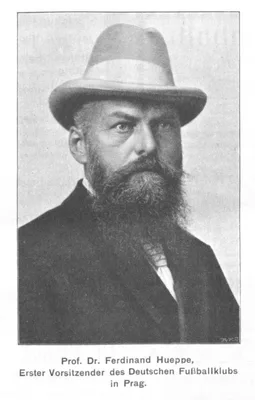
1885 HUEPPE, Ferdinand Adolf Theophil (1852 – 1938)
Die Methoden der Bakterienforschung.
Hueppe, a colleague of Koch, wrote an admirable manual on bacteriological methods, a subject to which he gave several original contributions. English translation, New York, 1886.
GMN 2503 · https://historyofmedicine.com/id/3202
1887 PETRI, Richard Julius (1852 – 1921)
Eine kleine Modification des Koch’schen Plattenverfahrens.
Petri dish. A similar dish was described by Cornil and Babès (see No. 2501) and by Nicati and Rietsch, Arch. Physiol. norm. path., 1885, 6, 72. Petri was an assistant of Koch.
GMN 2505.1 · https://historyofmedicine.com/id/3220
1890 KOCH, Robert Heinrich Hermann (1843 – 1910)
Weitere Mittheilungen über ein Heilmittel gegen Tuberkulose.
In 1890, Koch announced the discovery of tuberculin, a substance derived from tubercle bacilli, which he thought was capable of arresting bacterial development in-vitro and in animals. This news gave rise to tremendou…
GMN 2332 · https://historyofmedicine.com/id/3068
1891 NORDTMEYER, H
Ueber Wasserfiltration durch Filter aus gebrannter Infusorienerde.
Berkefeld kieselguhr filter.
GMN 2506.1 · https://historyofmedicine.com/id/3225
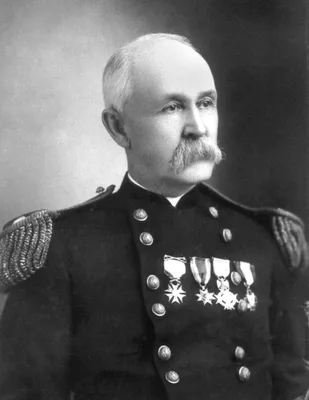
1892 STERNBERG, George Miller (1838 – 1915)
Practical results of bacteriological researches.
Sternberg demonstrated that the serum of an animal recovered from vaccinia possesses the property of neutralizing the activity of the causative virus. His test was readily adaptable for use in various host-systems.
GMN 2545.1 · https://historyofmedicine.com/id/3581
1896 WIDAL, Georges-Fernand Isidor (1862 – 1929); SICARD, Arthur
Recherches de la réaction agglutinante dans le sang et le sérum desséchés des typhiques et dans la sérosité des vesicatoires.
Developing the work of Gruber and Durham, Widal noted that a patient’s serum could be tested with bacteria of known type and his disease identified by this means. They demonstrated specific agglutinins in the blood of…
GMN 2550 · https://historyofmedicine.com/id/3664
1897 KRAUS, Rudolf (1868 – 1932)
Über specifische Reactionen im keimfreien Filtraten aus Cholera, Typhus und Pestbouillonculturen, erzeugt durch homologes Serum.
The precipitin reaction, employed for the qualitative identification of antigens and antibodies. English translation in Bibel, Milestones in immunology,(1988) pp. 265-68.
GMN 2550.1 · https://historyofmedicine.com/id/3665
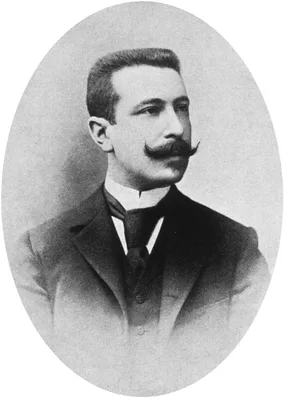
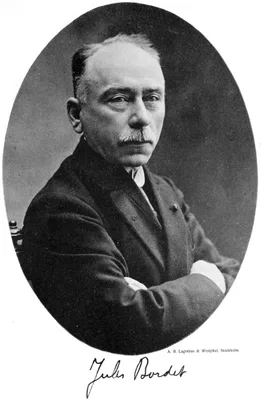
1901 BORDET, Jules Jean Baptiste Vincent (1870 – 1961); GENGOU, Octave (1875 – 1957)
Sur l’existence de substances sensibilisatrices dans la plupart des sérums antimicrobiens.
The Bordet–Gengou complement-fixation reaction is the basis of many tests for infection, notably the Wassermann test for syphilis, and reactions for gonococcus infection, glanders, hydatid disease. English translation…
GMN 2553 · https://historyofmedicine.com/id/3668
1904 NUTTALL, George Henry Falkiner (1862 – 1937)
Blood immunity and blood relationship, a demonstration of certain blood relationships amongst animals by means of the precipitin test for blood.
GMN 2561 · https://historyofmedicine.com/id/3682
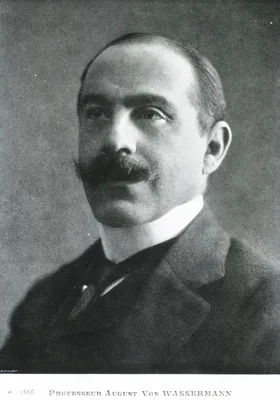
1906 WASSERMANN, August von (1866 – 1925); ET AL
Eine serodiagnostische Reaktion bei Syphilis.
The “Wassermann reaction”, a specific diagnostic blood test for syphilis, and a modification of the complement-fixation reaction of Bordet and Gengou. With A. Neisser and C. Bruck.
GMN 2402 · https://historyofmedicine.com/id/3363
1907 PIRQUET, Clemens Peter Freiherr von (1874 – 1929)
Der diagnostische Wert der kutanen Tuberkulinreaktion bei der Tuberkulose des Kindesalters auf Grund von 100 Sektionen.
Introduction of Pirquet’s test – a cutaneous reaction employed in the diagnosis of tuberculosis.
GMN 2338 · https://historyofmedicine.com/id/3080
1908 MORO, Ernst (1874 – 1951)
Ueber eine diagnostische verwertbare Reaktion der Haul auf Einreibung mit Tuberkulinsalbe.
Moro’s percutaneous tuberculin reaction, employed as a diagnostic measure.
GMN 2339 · https://historyofmedicine.com/id/3083
1908 WOLFF-EISNER, Alfred (1877 – 1948)
Die kutane und konjunktivale Tuberkulinreaktion, ihre Bedeutung für Diagnostik und Prognose der Tuberkulose.
Wolff-Eisner’s conjunctival tuberculin reaction.
GMN 2340 · https://historyofmedicine.com/id/3086
1908 MANTOUX, Charles (1877 – 1947)
Intradermo-réaction de la tuberculine.
Mantoux’s intradermal tuberculin skin test.
GMN 2341 · https://historyofmedicine.com/id/3089
1908 SCHICK, Béla (1877 – 1967)
Kutanreaktion beil Impfung mit Diphtherietoxin.
The Schick test for the determination of susceptibility to diphtheria.
GMN 5065 · https://historyofmedicine.com/id/5896
1908 MENDEL, Felix (1862 – 1925)
Die von Pirquet'sche Hautreaktion und die intravenöse Tuberkulinbehandlung.
First publication on the The Mantoux test or Mendel–Mantoux test (also known as the Mantoux screening test, tuberculin sensitivity test, Pirquet test, or PPD test for purified protein derivative) is a tool for screeni…
GMN 12385 · https://historyofmedicine.com/id/14611
1913 HIJMANS VAN DEN BERGH, Albert Abraham (1869 – 1943); SNAPPER, J
Die Farbstoffe des Blutserums. 1. Eine quantitative Bestimmung des Bilirubins im Blutserum.
The van den Bergh test.
GMN 3647 · https://historyofmedicine.com/id/4725
1913 SCHICK, Béla (1877 – 1967)
Die Diphtherietoxin – Hautreaktion des Menschen als Vorprobe der prophylaktischen Diphtherieheilseruminjektion.
Schick developed his test for use as an indication as to whether or not prophylactic injections of antitoxin are necessary in children already exposed to diphtheria. English translation in J. Mt. Sinai Hosp., 1938, 5,…
GMN 5066 · https://historyofmedicine.com/id/5897
1918 SCHULTZ, Werner (1878 – 1944); CHARLTON, Willy (1889 – )
Serologische Beobachtungen am Scharlachexanthem.
Schultz–Charlton reaction.
GMN 5081 · https://historyofmedicine.com/id/5943
1919 MITSUDA, Kensuke (1876 – 1964)
On the value of a skin reaction to a suspension of leprous nodules.
Mitsuda (lepromin) reaction. English translation by the author in Int. J. Leprosy, 1953, 21, 347-58.
GMN 2440 · https://historyofmedicine.com/id/2914
1919 –1920 GOETSCH, Emil (1883 – 1963)
Epinephrin hypersensitiveness test in the diagnosis of hyperthyroidism.
Goetsch devised a skin reaction test for use in the diagnosis of hyperthyroidism
GMN 3850 · https://historyofmedicine.com/id/4883
1919 FOLIN, Otto Knut Olof (1876 – 1934); WU, Hsien (1893 – 1959)
A system of blood analysis.
Folin–Wu test for blood sugar.
GMN 3922 · https://historyofmedicine.com/id/5053
1919 BROWN, James Howard (1884 – 1956)
The use of blood agar for the study of streptococci.
In this monograph with numerous charts and 34 full-page plates Brown classified streptococci into α, β, A prime and γ based on the type and degree of hemolysis produced by the bacteria on a blood agar plate. He also d…
GMN 12006 · https://historyofmedicine.com/id/14214
1922 KAHN, Reuben Leon (1887 – 1979)
A simple quantative precipitation reaction for syphilis.
Kahn test.
GMN 2412 · https://historyofmedicine.com/id/3402
1922 KOLMER, John Albert (1886 – 1962)
Studies in the standardization of the Wassermann reaction. XXX. A new complement-fixation test for syphilis based upon the results of studies in the standardization of technic.
Kolmer test.
GMN 2413 · https://historyofmedicine.com/id/3404
1924 KASSOWITZ, Karl Erhard (1886 – 1978)
Ueber cutane Hautreaktion mittels Diphtherie-Toxin zum Nachweis der Diphtherie-Immunität.
The “scratch test”, a cutaneous reaction for determination of susceptibility to diphtheria.
GMN 5069 · https://historyofmedicine.com/id/5907
1924 DICK, George Frederick (1881 – 1967); DICK, Gladys Rowena Henry (1881 – 1963)
A skin test for susceptibility to scarlet fever.
The “Dick test” for the determination of individual susceptibility to scarlet fever.
GMN 5082 · https://historyofmedicine.com/id/5946
1926 BENDIEN, Salomo Gerhard Tekla (1872 – 1942)
Haemagglutinegehalte van het bloedserum bij carcinoompatiënten.
Bendien test for the diagnosis of cancer. He published books in German and English on this subject in 1931. Modification by E. C. Lowe, Brit. med. J., 1932, 2, 1060.
GMN 2650 · https://historyofmedicine.com/id/3301
1928 –1929 MØLLER, Eggert Hugo Heiberg (1893 – 1978)
Studies of urea excretion.
Blood urea clearance test. With J. F. Mcintosh and D. D. Van Slyke.
GMN 4246 · https://historyofmedicine.com/id/5127
1928 MCKINNON, Neil E. (1894 – 1985); DEFRIES, Robert Davies (1889 – 1975)
The reaction of the skin of the normal rabbit following intradermal injection of material from smallpox lesions: the specificity of this reaction and its application as a diagnostic test.
McKinnon’s diagnostic test.
GMN 5434 · https://historyofmedicine.com/id/7416
1930 TISELIUS, Arne Wilhelm Kaurin (1902 – 1971)
The moving boundary method of studying the electrophoresis of proteins. (Nova Acta Reg. Soc. Scient. Upsaliensis, IV, 7, No. 4.)
Tilesius's doctoral dissertation introduced the laboratory technique of moving-boundary electrophoresis, a technique for separation of chemical compounds by electrophoresis in free solution. For this work, and the wor…
GMN 12830 · https://historyofmedicine.com/id/15076
1931 ELFORD, William Joseph (1900 – 1952)
A new series of graded collodion membranes suitable for general bacteriological use, especially in filterable virus studies.
In his important studies on the filtration of virus preparations, Elford showed that different viruses possessed different and characteristic sizes.
GMN 2524 · https://historyofmedicine.com/id/3327
1931 BENEDICT, Stanley Rossiter (1884 – 1936)
The analysis of whole-blood. II. The determination of sugar and of saccharoids (non-fermentable copper-reducing substances).
Benedict’s test for blood-sugar.
GMN 3923 · https://historyofmedicine.com/id/5056
1932 EAGLE, Harry (1905 – 1992)
Studies in the serology of syphilis. VII. A new flocculation test for the serum diagnosis of syphilis.
Eagle flocculation test.
GMN 2414.1 · https://historyofmedicine.com/id/3409
1932 AUGUSTINE, Donald Leslie (1895 – ); THEILER, Hans (1894 – )
Precipitin and skin tests as aids in diagnosing trichinosis.
Intradermal test for trichinosis.
GMN 5351.1 · https://historyofmedicine.com/id/6880
1934 SEIBERT, Florence Barbara (1897 – 1991)
The isolation and properties of the purified protein derivative of tuberculin
Purification of tuberculin (PPD). By the 1940s Seibert's PPD was the international standard for tuberculin tests.
GMN 12387 · https://historyofmedicine.com/id/14614
1935 WINTROBE, Maxwell Myer (1901 – 1986); LANDSBERG, J. Walter (1907 – )
A standardized technique for the blood sedimentation test.
Wintrobe’s method for the determination of the erythrocyte sedimentation rate.
GMN 3096 · https://historyofmedicine.com/id/3785
1937 VOLLMER, Hermann (1896 – 1959); GOLDBERGER, Esther White (1905 – )
A new tuberculin patch test.
GMN 2348 · https://historyofmedicine.com/id/3118
1937 TISELIUS, Arne Wilhelm Kaurin (1902 – 1971)
A new apparatus for electrophoretic analysis of colloidal mixtures.
Between 1931 and 1937, with financial support from the Rockefeller Foundation, Tiselius developed his "Tiselius apparatus" for moving boundary electrophoresis. In this paper he demonstrated that electrophoresis separa…
GMN 12831 · https://historyofmedicine.com/id/15077
1937 TISELIUS, Arne Wilhelm Kaurin (1902 – 1971)
Electrophoresis of serum globulin. II- Electrophoretic analysis of normal and immune sera.
Tiselius showed that an antibody that he produced in a rabbit by immunizing it with albumin (ovalbumin) was clearly located in the gamma globulin fraction. He summarized the paper with this statement: "Investigation o…
GMN 12832 · https://historyofmedicine.com/id/15078
1941 HIRST, George Keble (1909 – 1994)
The agglutination of red cells by allantoic fluid of chick embryos infected with influenza virus.
Discovery of virus hemagglutination. Between 1941 and 1942 Hirst developed the hemagglutination assay for quantifying the relative concentration of viruses, bacteria or antibodies.
GMN 2577 · https://historyofmedicine.com/id/4130
1945 COOMBS, Robert Royston Amos ( (1921 – 2006); ET AL
Detection of weak and “incomplete” Rh agglutinins: a new test.
Coombs’s test for detecting antibodies in various clinical scenarios, such as Rh disease and blood transfusion. With A. E. Mourant and R. R. Race. A fuller description appears in Brit. J. exp. Path.,1945, 26, 255-66.
GMN 3104 · https://historyofmedicine.com/id/3805
1945 WIENER, Alexander Solomon (1907 – 1976)
Conglutination test for Rh sensitization.
Conglutination test.
GMN 3105 · https://historyofmedicine.com/id/3808
1946 HARRIS, A
A microflocculation test for syphilis using cardiolipin antigen: preliminary report.
V. D. Research Laboratory test (Harris test). With A. A. Rosenberg and L. M. Riedel.
GMN 2418.1 · https://historyofmedicine.com/id/3423
1950 FRAPPIER, Armand (1904 – 1991); GUY, Roland (1913 – )
A new and practical B.C.G. skin test (the B.C.G. scarification test) for the detection of the total tuberculous allergy.
GMN 2352 · https://historyofmedicine.com/id/3132
1951 HEAF, Frederick Roland George (1894 – 1973)
The multiple-puncture tuberculin test.
The Heaf multiple-puncture tuberculin test.
GMN 2352.1 · https://historyofmedicine.com/id/3135
1966 BAUER, Alfred W.; KIRBY, W. M. M.; SHERRIS, John C.; ET AL
Antibiotic susceptibility testing by a standardized single disk method.
The disk diffusion test, or agar diffusion test, or Kirby–Bauer test (disc-diffusion antibiotic susceptibility test, disc-diffusion antibiotic sensitivity test, KB test), for the antibiotic sensitivity of bacteria. (T…
GMN 11105 · https://historyofmedicine.com/id/13301