1471 NICOLAUS SALERNITANUS, (Nicolaus Praepostius) (1120 – )
Antidotarium. Add: Quid pro quo; Synonyma.
This work, which first circulated in manuscript in 1140, was the first formulary to be printed. It consists of 139 prescriptions and includes the original formula for the “anesthetic sponge” (spongia somnifera), the e…
GMN 1789 · https://historyofmedicine.com/id/1846
1478 GUY DE CHAULIAC, (Guido de Cauliaco) (1298 – 1368); PANIS, Nicolaus
Chirurgia [French]. Translated by Nicolaus Panis.
Guy de Chauliac studied medicine and surgery in Montpellier and Paris, and served as the personal physician to Popes Clement VI, Innocent VI and Urban V. His Chirurgia magna, written in the early 1360s, remained a sta…
GMN 3666.83 · https://historyofmedicine.com/id/5376
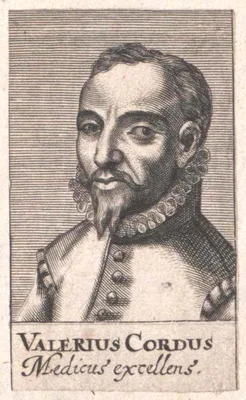
1561 DIOSCORIDES, Pedanius [Πεδάνιος Διοσκουρίδης] (40 – 90); GESNER, Conrad [Konrad Gessner] (1516 – 1565); CORDUS, Valerius (1515 – 1544)
In hoc volumine continentur Valerii Cordi ... Annotationes in Pedacii Dioscoridis Anazarbei De medica materia libros V : longè aliae quàm ante hac sunt evulgatae. Ejusdem Val. Cordi Historiae stirpium Lib. IIII. posthumi, nunc primùm in lucem editi, adjectis etiam stirpium iconibus, & brevissimus annotatiunculis. Sylva, qua rerum fossilium in Germania plurimarum, metallorum, lapidum & stirpium aliquot rariorum notitiam brevissimè persequitur, nunquam hactenus visa. De artificiosis extractionibus liber. Compositiones medicinales aliquot, non vulgares. His accedunt Stocc-Hornii et Nessi in Bernatium Helvetiorum ditione montium, & nascentium in eis stirpium, descriptio Benedicti Aretii ... Item Conradi Gesneri De hortus Germaniae, liber recens, unà cum descriptione tulipae turcarum, chamaecerasi montani, chamaemespili, chamaenerii, & conozoidis ... Omnia summa studio atque industria ... Conr. Gesneri ... collecta, & praefationibus illustrata.
This work not only updated the species listed by Dioscorides, but also listed about 500 new species of plants. Published posthumously, the work was carefully edited by Conrad Gesner. Cordus was the inventor of phytogr…
GMN 1814 · https://historyofmedicine.com/id/2022
1661 BARTHOLIN, Thomas (1616 – 1680)
De nivis usu medico observationes variae…
The first work after Avicenna to discuss the use of snow as an anesthetic.
GMN 5645.90 · https://historyofmedicine.com/id/7277
1784 MOORE, James Carrick (1763 – 1834)
A method of preventing or diminishing pain in several operations of surgery.
Moore revived the ancient concept of nerve compression, developing a special clamp for its use. John Hunter used Moore’s clamp in a leg amputation in 1784 in which analgesia was successfully obtained.
GMN 5645.91 · https://historyofmedicine.com/id/7279
1800 DAVY, Sir Humphrey (1778 – 1829)
Researches, chemical and philosophical, chiefly concerning nitrous oxide.
Davy discovered the anesthetic properties of nitrous oxide and suggested its use during surgical operations. This suggestion was applied until 1844 when the American dentist Horace Wells volunteered to have the effect…
GMN 5646 · https://historyofmedicine.com/id/7281
1805 SERTÜRNER, Friedrich Wilhelm Adam (1783 – 1841)
Darstellung der reinen Mohnsäure (Opiumsäure); nebst einer chemischen Untersuchung des Opiums, mit vorzüglicher Hinsicht auf einen darin neu entdeckten Stoff.
Isolation of morphine from opium. This was the first isolation of an active ingredient from a plant.
GMN 1839 · https://historyofmedicine.com/id/2269
1824 HICKMAN, Henry Hill (1800 – 1830)
A letter on suspended animation, containing experiments showing that it may be safely employed during operations on animals, with a view of ascertaining its probable utility in surgical operations on the human subject.
Hickman was the first to prove that the pain of surgical operations could be abolished by the inhalation of a gas. He rendered animals unconscious, first through partial asphyxiation by the exclusion of air, then by i…
GMN 5647 · https://historyofmedicine.com/id/7282
1825 WATERTON, Charles (1782 – 1865)
Wanderings in South America, the North-West of the United States, and the Antilles, in the years 1812, 1816, 1820, and 1824.
Waterton traveled to the Guyana region of South America to obtain curare. He provided a detailed description of its paralyzing effects, its preparation by distillation, and the blowpipe and darts used to deliver it. O…
GMN 2074 · https://historyofmedicine.com/id/2541
1831 SOUBEIRAN, Eugène (1797 – 1859)
Recherches sur quelques combinaisons du chlore.
Soubeiran, like Liebig and Guthrie, discovered chloroform; it is difficult to determine who was first, as each may have allowed an interval of time to elapse between discovery and publication.
GMN 1851 · https://historyofmedicine.com/id/2347
1832 GUTHRIE, Samuel (1782 – 1848)
New mode of preparing a spirituous solution of chloric ether.
Guthrie in America, Liebig in Germany, and Soubeiran in France discovered chloroform independently of one another. Guthrie discovered the modern method of making chloroform by distilling alcohol with chlorinated lime.…
GMN 1850 · https://historyofmedicine.com/id/2340
1832 LIEBIG, Justus von (1803 – 1873)
Ueber die Verbindungen, welche durch die Einwirkung des Chlors auf Alkohol, Aether, ölbildenes Gas und Essiggeist entstehen.
Discovery, in 1831, of chloroform and chloral. Independently chloroform was discovered by Souberian and by Guthrie.
GMN 1852 · https://historyofmedicine.com/id/2351
1832 ROBIQUET, Pierre Jean (1780 – 1840)
Nouvelles observations sur les principaux produits de l’opium.
Isolation of codeine.
GMN 1853 · https://historyofmedicine.com/id/2357
1842 TOPHAM, Sir William (1810 – 1895); WARD, W. Squire
Account of a case of sccessful amputation of the thigh during the mesmeric state.
The original account of the first major operation performed in England using hypnosis as a form of anesthesia. The amputation was performed by Ward. Topham, a lawyer interested in mesmerism, performed the hypnosis. Th…
GMN 5650.1 · https://historyofmedicine.com/id/7289
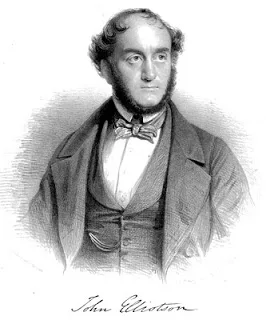
1843 ELLIOTSON, John (1791 – 1868)
Numerous cases of surgical operation without pain in the mesmeric state.
Elliotson was one of the first in England to perform surgical operations with the aid of hypnotism. He was a great friend of Dickens and Thackeray, but his views on hypnotism were bitterly opposed by Thomas Wakley, ed…
GMN 5650.2 · https://historyofmedicine.com/id/7290
1845 RYND, Francis (1801 – 1861)
Neuralgia - introduction of fluid to the nerve.
Rynd, an Irish physician, invented the hollow needle used in hypodermic syringes. The description of his instrument is given in Dublin Quart. J. med. Sci., 1861, 32, 13.
GMN 1968 · https://historyofmedicine.com/id/3749
1846 ESDAILE, James (1808 – 1859)
Mesmerism in India, and its practical application in surgery and medicine.
Esdaile performed a variety of surgical operations on Hindus, upon many of whom he appears successfully to have induced hypnotic anesthesia. However, his similar attempts with Europeans were not so successful.
GMN 5650.3 · https://historyofmedicine.com/id/7291
1846 BIGELOW, Henry Jacob (1818 – 1890)
Insensibility during surgical operations produced by inhalation.
William T. G. Morton used ether as an anesthetic for the first time on 16 October 1846 during at operation by John Collins Warren to remove a benign angioma under the jaw of a patient at Massachusetts General Hospital…
GMN 5651 · https://historyofmedicine.com/id/7292
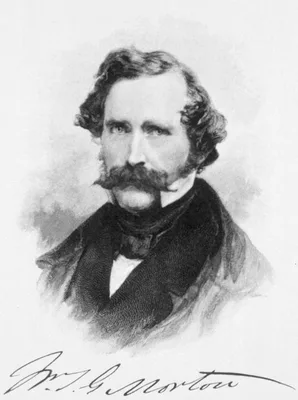
1846 MORTON, William Thomas Green (1819 – 1868)
Circular. Morton’s Letheon.
Unaware of Crawford Long’s results with ether, Morton, having been informed of the anesthetic effects of ether by Charles T. Jackson, promoted its anesthetic effects. To do so he published the above circular, in which…
GMN 5652 · https://historyofmedicine.com/id/7293
1846 MORTON, William Thomas Green (1819 – 1868); JACKSON, Charles Thomas (1805 – 1880)
U. S. Patent No. 4848. The United States of America. To all to whom these Letters Patent shall come.... November 12, 1846.
U.S. Patent No. 4848, issued to Charles T. Jackson and William T. G. Morton on November 12, 1846 for the discovery of sulfuric ether as a surgical anesthetic. This was the first truly significant medical patent ever i…
GMN 7310 · https://historyofmedicine.com/id/9480
1846 BIGELOW, Henry Jacob (1818 – 1890); MORTON, William Thomas Green (1819 – 1868)
Animal magnetism superceded: Discovery of a new hypnopoietic.
The first publication in England of the discovery of ether anesthesia appeared in the "Medical Intelligence" section of the London Medical Gazette on December 18, 1846. Prior to Fulton & Stanton's discovery of this ar…
GMN 11914 · https://historyofmedicine.com/id/14119
1847 MORTON, William Thomas Green (1819 – 1868)
Remarks on the proper mode of administering sulphuric ether by inhalation.
This 44-page pamphlet was the first American manual on the administration of anesthesia. In it Morton announced that his method of producing anesthesia was obtained by the inhalation of sulphuric ether. He subsequentl…
GMN 5653 · https://historyofmedicine.com/id/7294
1847 FLOURENS, Marie Jean Pierre (1794 – 1867)
Note touchant l’action de l’ether sur les centres nerveux.
On 8 March 1847, Flourens announced that chloroform had an anesthetic effect analogous to that of ether. Little notice seems to have been taken of his paper, but later in the year Simpson independently demonstrated th…
GMN 5654 · https://historyofmedicine.com/id/7295
1847 PIROGOV, Nikolai Ivanovich (Pirogoff) (1810 – 1881)
Nouveau procédé pour produire, au moyen de la vapeur d’éther, l’insensibilité chez les individus soumis à des opérations chirurgicales.
Pirogov was the first to practise rectal etherization, suggested by Roux earlier in 1847.
GMN 5655 · https://historyofmedicine.com/id/7296
1847 PIROGOV, Nikolai Ivanovich (Pirogoff) (1810 – 1881)
Recherches pratiques et physiologiques sur l’éthérisation.
Pirogov, the great military surgeon, was with Syme the first in Europe to adopt ether anesthesia, and he left an interesting account of his experiences with it. Digital facsimile from the Hathi Trust at this link.
GMN 5656 · https://historyofmedicine.com/id/7297
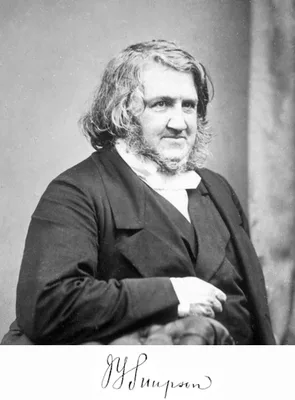
1847 SIMPSON, Sir James Young (1811 – 1870)
Discovery of a new anaesthetic agent, more efficient than sulphuric ether.
In an attempt to find an anesthetic less irritating than ether, Simpson discovered the advantages of chloroform. He had previously used ether with great benefit in midwifery, but now substituted chloroform, being the …
GMN 5657 · https://historyofmedicine.com/id/7298
1847 ROBINSON, James (1813 – 1862)
A treatise on the inhalation of the vapour of ether, for the prevention of pain in surgical operations; containing a numerous collection of cases in which it has been applied, with the names of the operators; history of the discovery - description of the apparatus - method of preparing the ether - remarks as to the time when the operation should commence, etc., etc., etc.
The first textbook of ether anesthesia, published in March, 1847. Robinson, a British dentist, was the first to use anesthesia in England, after receiving information from Henry Jacob Bigelow and Francis Boott. Digita…
GMN 5657.1 · https://historyofmedicine.com/id/7299
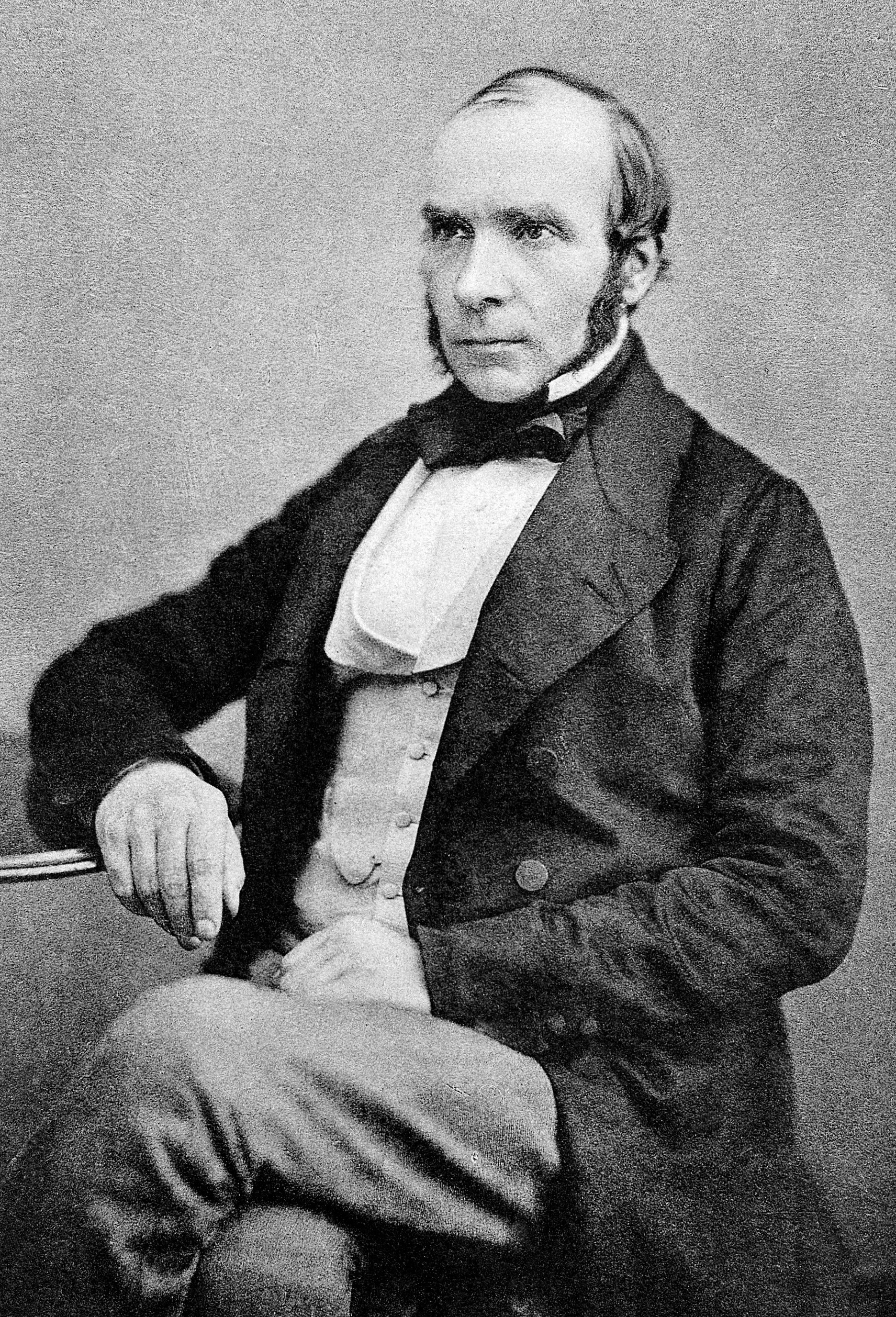
1847 SNOW, John (1813 – 1858)
On the inhalation of the vapour of ether in surgical operations.
Includes an account of Snow’s regulating inhaler, the first to control the amount of ether vapor by the patient. This pamphlet, which appeared in October 1847, was the second treatise on ether anesthesia, after Robins…
GMN 5658 · https://historyofmedicine.com/id/7300
1847 –1848 SYME, James (1799 – 1870)
On the use of ether in the performance of surgical operations.
Syme was, with Pirogov, the first in Europe to adopt ether anesthesia in surgical operations.
GMN 5659 · https://historyofmedicine.com/id/7301
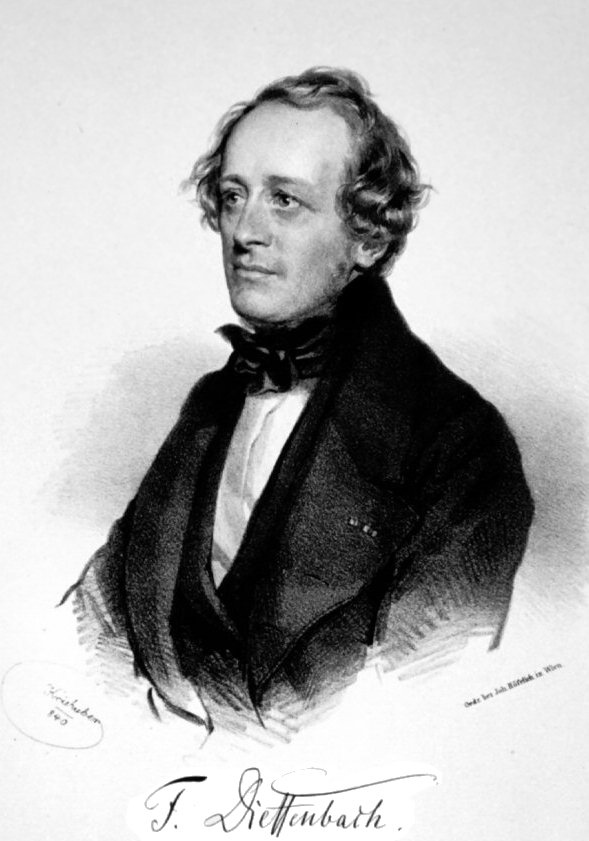
1847 DIEFFENBACH, Johann Friedrich (1792 – 1847)
Die Aether gegen den Schmerz.
First application of ether anesthesia for plastic operations. Dieffenbach made his first use of the anesthetic in reconstructing a nose. He modified Morton’s inhaler. Dieffenbach’s work helped bring about the early ac…
GMN 5659.1 · https://historyofmedicine.com/id/7302
1847 WELLS, Horace (1815 – 1848)
A history of the discovery of the application of nitrous oxide gas, ether, and other vapours, to surgical operations.
In 1844 Wells, a Hartford dentist, successfully used nitrous oxide as a dental anesthetic. To publicize his discovery, he arranged a demonstration at Harvard Medical School in January 1845, but this proved a fiasco. W…
GMN 5660 · https://historyofmedicine.com/id/7303
1847 JACKSON, Charles Thomas (1805 – 1880)
Première Lettre. Boston, le 13 november 1846.
Jackson, a physician, geologist and chemist in Boston, wrote this letter to Élie de Beaumont in Paris on November 13, 1846, the day after he and William T. G. Morton jointly received U.S. Patent No. 4848 for Improveme…
GMN 7249 · https://historyofmedicine.com/id/9418
1847 BOOTT, Francis (1792 – 1863)
Surgical operations performed during insensibility, produced by the inhalation of sulphuric ether.
The first use of ether as an anesthetic in Britain (for a dental procedure) was conducted in Boott's house at 24 Gower Street on 19 December 1846. Boott issued the second announcement of ether anesthesia published in …
GMN 7882 · https://historyofmedicine.com/id/10054
1847 HAYWARD, George (1791 – 1863)
Some account of the first use of sulphuric ether by inhalation in surgical practice. [Read before the Boston Society for Medical Improvement, April 12, 1847.]
Hayward's case report of the first major operation performed under ether anesthesia, which he performed at the Massachusetts General Hospital on November 7, 1846, three weeks after Warren's first operation using ether…
GMN 11913 · https://historyofmedicine.com/id/14118
1847 LONGET, François Achille (1811 – 1871)
Experiences relatives aux effets de l'inhalation de l'ether sulfurique sur le systême nerveux. (Mémoire lu à l'Académie Royale de Medicine)
The first scientific analysis of the effects of ether anesthesis. Though ether anesthesia was invented in America, its inventors and early users were either scientifically untrained like Morton, or men of practical sc…
GMN 12870 · https://historyofmedicine.com/id/15117
1847 SNOW, John (1813 – 1858)
On the inhalation of the vapour of ether.
Appearing in March, 1847, this was Snow's first publication on anesthesia. It contains the first description and illustration of his regulating inhaler, the first such device to control the amount of ether vapor recei…
GMN 12954 · https://historyofmedicine.com/id/15201
1848 BIGELOW, Henry Jacob (1818 – 1890)
Ether and chloroform: a compendium of their history, surgical use, dangers and discovery.
Bigelow’s speedy publication of Morton’s discovery (No. 5651), and his subsequent advocacy of ether as an anesthetic assured its adoption throughout the civilized world. The above work deals with the priority claims o…
GMN 5730 · https://historyofmedicine.com/id/6486
1848 CHANNING, Walter (1786 – 1876)
A treatise on etherization in childbirth.
Channing was an early advocate of anesthesia in obstetrics. In his book, and in several earlier papers, he brought the importance of this branch of anesthesia into the foreground.
GMN 5661 · https://historyofmedicine.com/id/7304
1848 HEYFELDER, Johann Ferdinand Martin (1798 – 1869)
Die Versuche mit dem Schwefeläther, Salzäther und Chloroform.
Introduction of ethyl chloride in anesthesia.
GMN 5662 · https://historyofmedicine.com/id/7307
1848 SNOW, John (1813 – 1858)
On the inhalation of chloroform and ether. With description of an apparatus.
Snow’s chloroform inhaler.
GMN 5663 · https://historyofmedicine.com/id/7310
1848 WARREN, John Collins (1778 – 1856)
Etherization: With surgical remarks.
Warren performed the first surgical operation under anesthesia at Massachusetts General Hospital on October 16, 1846. This work presents his experience with anesthesia in the year following. Digital facsimile from U.S…
GMN 11727 · https://historyofmedicine.com/id/13928
1849 LONG, Crawford Williamson (1815 – 1878)
An account of the first use of sulphuric ether by inhalation as an anaesthetic in surgical operations.
There is no doubt that Long was the first successfully to use ether vapor as an anesthetic. This was on 30 March 1842, at Jefferson, Georgia. Unfortunately he did not publish his results until others, notably Morton, …
GMN 5664 · https://historyofmedicine.com/id/7313
1849 WARREN, John Collins (1778 – 1856)
Effects of chloroform and of strong chloric ether, as narcotic agents.
“On October 16, 1846, at Massachusetts General Hospital, Warren participated in the first public demonstration of anesthesia for surgery. He was the surgeon for the first surgical patient given ether anesthesia, and W…
GMN 14327 · https://historyofmedicine.com/id/16652
1850 SNOW, John (1813 – 1858)
On narcotism by the inhalation of vapours.
Snow attempted carbon dioxide absorption.
GMN 5665 · https://historyofmedicine.com/id/7317
1850 BOUISSON, Étienne-Frédéric (1813 – 1884)
Traité théorique et pratique de la méthode anesthésique appliquée a la chirurgie et aux différentes branches de l'art de guérir.
Of particular interest for the introductory chapter 2 on pain produced in surgical operations and chapter 3 on the history of the understanding and attempts at treatment of pain, surgical and otherwise, before ether a…
GMN 9383 · https://historyofmedicine.com/id/11566
1855 WOOD, Alexander (1817 – 1884)
New method of treating neuralgia by the direct application of opiates to the painful joints.
Wood of Edinburgh was the first (1853) to employ hypodermic injection that used a true syringe and hollow needle as a therapeutic procedure. He referred to his invention as "subcutaneous" rather than hypodermic. See a…
GMN 1969 · https://historyofmedicine.com/id/3750
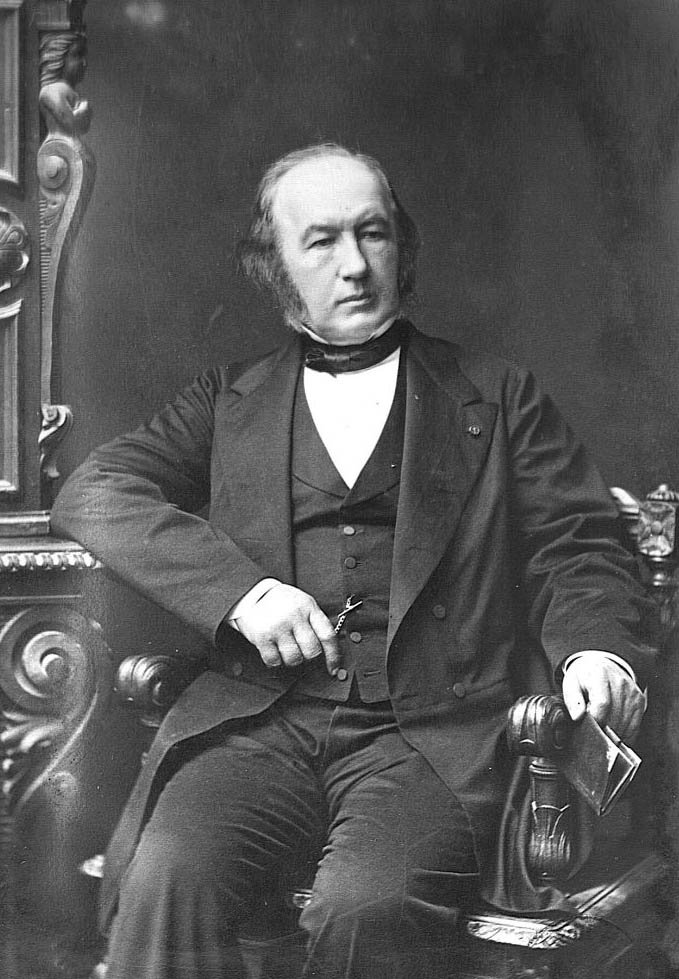
1856 BERNARD, Claude (1813 – 1878)
Analyse physiologique des propriétés des systèmes musculaires et nerveux au moyen de curare.
Bernard paralysed motor nerve-endings with curare and demonstrated the independent excitability of muscle. He showed that curare acted by stopping the transmission of impulses from motor nerves to voluntary muscles.
GMN 2079 · https://historyofmedicine.com/id/499
1858 RICHARDSON, Sir Benjamin Ward (1828 – 1896); SNOW, John (1813 – 1858)
On chloroform and other anaesthetics: Their action and administration. Edited, with a memoir of the author, by Benjamin W. Richardson.
Snow, the first specialist in anesthesiology, delivered Queen Victoria with the aid of chloroform in 1853 and 1857. This work was edited for publication after Snow's premature death by Richardson, who included a biogr…
GMN 5666 · https://historyofmedicine.com/id/8959
1860 NIEMANN, Albert (1834 – 1861)
Ueber eine neue organische Base in den Cocablättern.
Isolation of cocaine, 1859, from the coca leaf, brought from Peru by Scherzer.
GMN 1865 · https://historyofmedicine.com/id/2423
1861 JACKSON, Charles Thomas (1805 – 1880)
A manual of etherization: Containing directions for the employment of ether, chloroform, and other anaesthetic agents, by inhalation, in surgical operations, Intended for military and naval surgeons, and all who may be exposed to surgical operations, with Instructions for the preparation of ether and chloroform, and for testing them for Impurities. comprising, also, a brief history of the discovery of anaesthesia.
Jackson's most detailed exposition of anesthesia, including a summary of the early history of its discovery, written for American Civil War physicians and surgeons. Digital facsimile from the Internet Archive at this …
GMN 7867 · https://historyofmedicine.com/id/10039

![DIOSCORIDES, Pedanius [Πεδάνιος Διοσκουρίδης] (40 – 90)](/media/portraits/2028)