1519 ABULCASIS (ABU AL-QASIM KHALAF IBN AL-ABBAS AL-ZAHRAWI; أبو القاسم خلف بن العباس الزهراوي), [Albucasis] (936 – 1013)
Liber theoricae nec non practicae Alsaharavii.
This is the first printing of the medical and therapeutic section of Abul Qasim’s medical encyclopedia or al-Tasrif. It contains what is probably the earliest description of hemophilia (fol. 145). Digital facsimile fr…
GMN 3048 · https://historyofmedicine.com/id/3653
1554 RUFUS OF EPHESUS, (Ῥοῦφος ὁ Ἐφέσιος) (60 – 100); GOUPYL, Jacques (Goupil) (1525 – 1564)
De vesicae renumque morbis. De purgantibus medicamentis. De partibus corporis humani...
First printed edition in Greek, edited by Jacques Goupyl. Rufus was a Greek physician who lived during the rule of Trajan. He wrote wrote treatises on dietetics, pathology, anatomy, and patient care. His De partibus c…
GMN 23 · https://historyofmedicine.com/id/41
1554 LANGE, Johann (1485 – 1565)
Medicinalium epistolarum miscellanea.
Epistle xxi, pp. 74-77, contains the first definite description of chlorosis. “De morbo virgineo”. English translation in No. 2241.
GMN 3109 · https://historyofmedicine.com/id/3840
1556 RODRIGUES DE CASTELO BRANCO, João (Amato Lusitano; Amatus Lusitanus) (1511 – 1568)
Curationum medicinalium centuriae quatuor.
Contains (Cent. iii, curat. 70, p. 286) first recorded case of purpura as a separate entity, not associated with fever. English translation of this section in Major, Classic descriptions of disease, 3rd. ed., 1945, p.…
GMN 3049 · https://historyofmedicine.com/id/3655
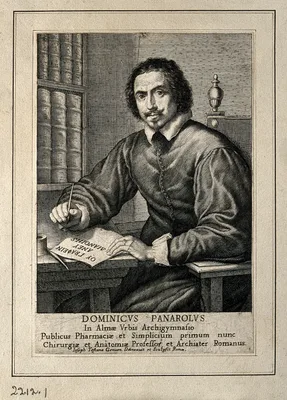
1652 PANAROLI, Domenico (1587 – 1657)
Iatrologismorum seu medicinalium observationum pentecostae quinque utilibus praeceptis.
Panaroli described hemolytic jaundice of the newborn.
GMN 3050 · https://historyofmedicine.com/id/3657
1667 BARBATO, Girolamo
Hieronimi Barbati ... Dissertatio elegantissima De sanguine et eius sero, in qua praeter varia lectu dignissima, Conringj. Lindeni & Barthol. circa sanguificationem opiniones, Stenoniana sanguinisdealbatio, VVillisii succi neruorum vis, Regij transitus chyli ad liene, liceti nutitio embryonis, VVarthoni & Charletonis lactis expositio, Haruei masculini seminis retentio rejecta, Moebij spirituum animalium materia, & alia clarissimorum neotericorum prolata, doctè & politè exponuntur.
Barbato discovered the blood serum. Another version of these texts was published in Paris by Robert de Ninville in 1667. Priority of these editions is unknown. Digital facsimile of the Frankfurt version from Google Bo…
GMN 10711 · https://historyofmedicine.com/id/12905
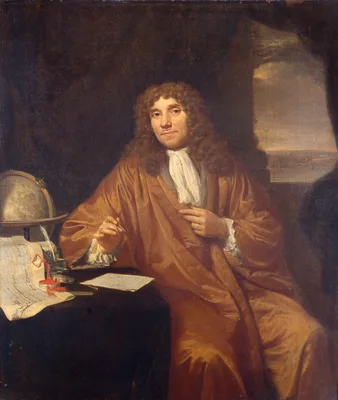
1674 LEEUWENHOEK, Antonie van (1632 – 1723)
Microscopical observations concerning blood, milk, bones, the brain, spittle, and cuticula, etc.
First really accurate description of the red blood corpuscles, which Swammerdam had noted in 1658.
GMN 860 · https://historyofmedicine.com/id/758
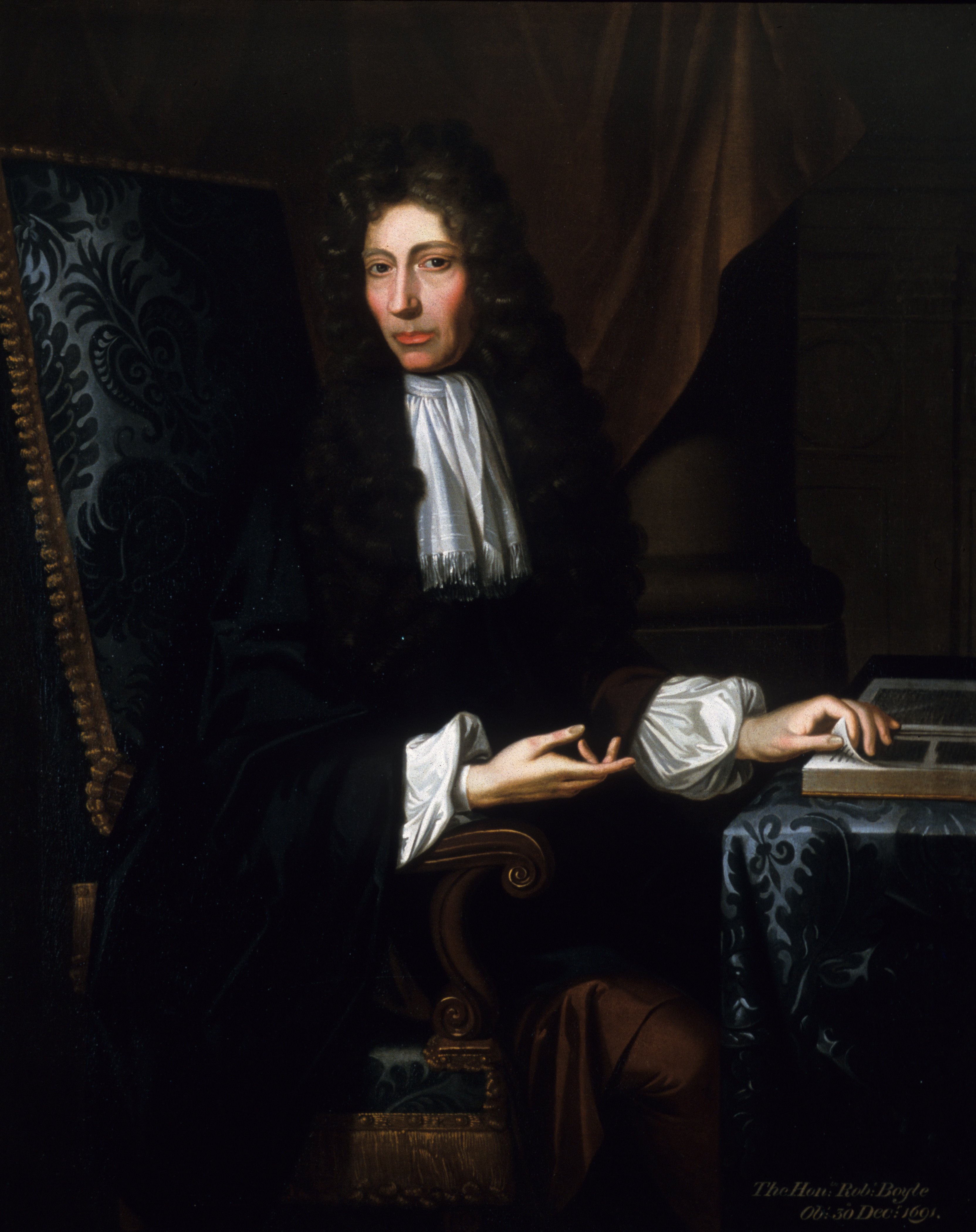
1684 BOYLE, Robert (1627 – 1691)
Memoirs for the natural history of humane blood, especially the spirit of that liquor.
The first analysis of blood, Boyle’s Memoirs may be considered the first scientific study in physiological chemistry, exhibiting methods which have become universally adopted. This is Boyle’s most important medical work.
GMN 861 · https://historyofmedicine.com/id/766
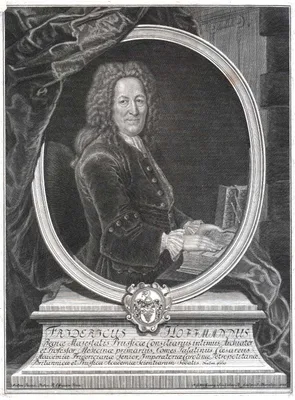
1731 HOFFMANN, Friedrich (1660 – 1742); EMMRICH, Gottfried August (1909 – )
Godofredus Augustus Emmrich: Disseratione inauguralis De genuina chlorosis indole, origine et curatione. Von der wahren Eigenschaft, Ursprung und Cur der Bleichsucht.
Classic description of chlorosis. Lange accurately diagnosed this condition, but it was left to Hoffmann to separate it as a definite entity. Hoffmann published his contribution to this subject in the thesis of his st…
GMN 3110 · https://historyofmedicine.com/id/3862
1735 BEHRENS, Rudolph August (1700 – 1748)
Epistolica dissertatio altera pro spicilegio observationum de morbo maculoso haemorrhagico et noxiis nonnulis mytulis perscripta.
Behrens gave the name “morbus maculosus haemorrhagicus” to the disease purpura haemorrhagica. His paper is reprinted in Werlhof’s Opera medica, Hannover, 1775, 2,615-36.
GMN 3051 · https://historyofmedicine.com/id/3672
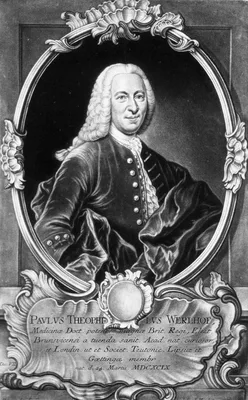
1735 WERLHOF, Paul Gottlieb (1699 – 1767)
Disquisitio medica et philologica de variolis et anthracibus.
Werlhof gave a classic description of purpura haemorrhagica (“Werlhof’s disease”).
GMN 3052 · https://historyofmedicine.com/id/3675
1746 MENGHINI, Vincenzo (1704 – 1759)
De ferrearum particularum sede in sanguine.
Discovery of iron in the blood.
GMN 862 · https://historyofmedicine.com/id/771
1771 HEWSON, William (1739 – 1774)
1. Experiments on the blood, with some remarks on its morbid appearances (pp. 368-83). 2. On the degree of heat which coagulates the lymph, and the serum of the blood; with an inquiry into the causes of the inflammatory crust, or size, as it is called (pp. 384-97). 3. Further remarks on the properties of the coagulable lymph, on the stopping of haemorrhages, and on the effects of cold upon the blood (pp. 398-413).
In papers 2 and 3 of this set of 3 contiguously published papers Hewson was the first to describe fibrinogen. "Before Hewson, although the fibrin mesh had been recognised and admired from as far back as Plato, it was …
GMN 863 · https://historyofmedicine.com/id/777
1775 BORDEU, Théophile de (1722 – 1776)
Recherches sur les maladies chroniques. Vol. 1. Analyse médicinale du sang.
De Bordeu first conceived the idea of internal secretion by his hypothesis that every organ, tissue, and cell discharges into the blood products which influence other parts of the body. His work was published in a col…
GMN 1117 · https://historyofmedicine.com/id/1198
1775 –1776 WERLHOF, Paul Gottlieb (1699 – 1767)
Opera medica. 3 vols.
Werlhof, a contemporary and friend of Haller, is remembered for his classic description of purpura haemorrhagica (see No. 3052). He was Court physician at Hannover.
GMN 75 · https://historyofmedicine.com/id/1292
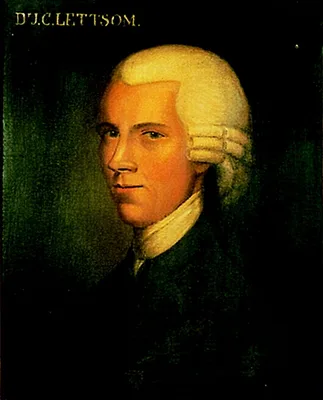
1795 LETTSOM, John Coakley (1744 – 1815)
Hints respecting the chlorosis of boarding schools.
GMN 3111 · https://historyofmedicine.com/id/3864
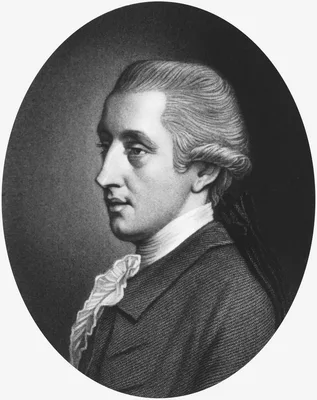
1797 WELLS, William Charles (1757 – 1817)
Observations and experiments on the colour of blood.
Wells showed that the coloring matter in the blood was not iron but a complex organic substance subsequently identified as hematin.
GMN 863.1 · https://historyofmedicine.com/id/782
1801 LE GALLOIS, Julien Jean César (Legallois) (1770 – 1814)
Le sang, est-il identique dans tous les vaisseaux qu’il parcourt?
Like de Bordeu, and more definitely, Legallois anticipated the conception of internal secretions. He surmised from the identity in composition of all varieties of arterial blood and the diversity of venous blood in di…
GMN 1118 · https://historyofmedicine.com/id/1200
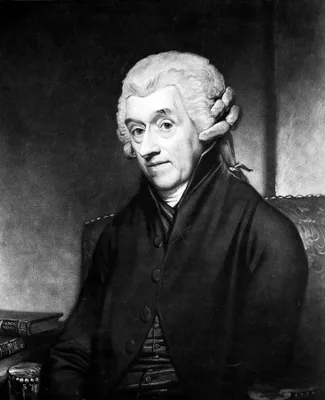
1802 HEBERDEN, William Sr. (1710 – 1801)
Commentarii de morborum historia et curatione.
Samuel Johnson called Heberden “the last of our learned physicians”. The above work included all his important papers, which had earned him his great reputation, and which are dealt with elsewhere in this database (se…
GMN 2207 · https://historyofmedicine.com/id/3677
1803 OTTO, John Conrad (1774 – 1844)
An account of an haemorrhagic disposition existing in certain families.
Otto recognized and adequately described hemophilia, noting that females are not affected but may transmit the disease. His paper is one of the first great contributions to medicine in North America. Reproduced in Maj…
GMN 3054 · https://historyofmedicine.com/id/3680
1811 BURNS, Allan (1781 – 1813)
Observations on the surgical anatomy of the head and neck.
Burns was the first to suggest (p. 31) ligature of the innominate artery. His book describes “Burns’s space”, the fascial space at the suprasternal notch. The first recorded case of chloroma (myeloid sarcoma, granuloc…
GMN 3055 · https://historyofmedicine.com/id/832
1820 NASSE, Christian Friedrich (1778 – 1851)
Von einer erblichen Neigung zu tödtlichen Blutungen.
In his description of hemophilia Nasse stressed the immunity of females, despite their ability to transmit the disease. This fact has become known as “Nasse’s law”.
GMN 3056 · https://historyofmedicine.com/id/3692
1821 PRÉVOST, Jean-Louis (1790 – 1850); DUMAS, Jean-Baptiste André (1800 – 1884)
Examen du sang et de son action dans les divers phénomènes de la vie.
First successful use of defibrinated blood for animal transfusions. This was the first attempt to prevent coagulation during transfusion.
GMN 2016 · https://historyofmedicine.com/id/1990
1824 COMBE, James Scarth (1796 – 1883)
History of a case of anaemia.
First description of pernicious anemia. Paper read May 1, 1822.
GMN 3112 · https://historyofmedicine.com/id/3867
1825 ENGELHART, Johann Friedrich Philipp (1797 – 1837)
Commentatio de vera materiae sanguini purpureum colorem impertientis natura.
Engelhart’s dissertation, presented before the medical faculty at the University of Göttingen, contains the first determination of the molecular mass of a protein (hemoglobin). Engelhart proved that the ratio of iron …
GMN 14177 · https://historyofmedicine.com/id/16492
1827 HODGKIN, Thomas (1798 – 1866); LISTER, Joseph Jackson (1786 – 1869)
Notice of some microscopic observations of the blood and animal tissues.
Hodgkin and Lister determined that blood cells are bioconcave discs and accurately measured their diameter as "1/5000 of an inch." Digital facsimile from Google Books at this link.
GMN 13262 · https://historyofmedicine.com/id/15528
1830 DENIS, Prosper Sylvain (1799 – 1863)
Recherches expérimentales sur le sang human considérè à l'état sain.
Denis discovered the presence of cholesterol (“cholestérine”) in the blood. This he announced on p. 110 of his Recherches expérimentales.
GMN 13909 · https://historyofmedicine.com/id/16201
1832 BLAUD, Pierre (Jean-Pierre) (1774 – 1859)
Sur les maladies chlorotiques et sur un mode de traitement spécifique dans ces affections.
For the treatment of chlorosis Blaud prescribed a pill (Blaud’s pill) composed of sulphate of iron and carbonate of potassium. Preliminary report in Bull. gén. Thérap.,1832, 2,154-55.
GMN 3113 · https://historyofmedicine.com/id/3869
1832 FOEDISCH, Ferdinand
Die krankhafte Mischung des Blutes, vorzüglich bei Chlorose, Hysterie und Pneumonie, durch chemische Versuche ausgemittelt, und der Uebergang in den Darmcanal eingebrachten Eisens.
Foedisch showed chlorotic blood to be deficient in iron. See also Gaz. méd. Paris, 1837, 2 sér. 5,7.
GMN 3114 · https://historyofmedicine.com/id/3873
1836 NASSE, Hermann (1807 – 1892)
Das Blut in mehrfacher Beziehung physiologisch und pathologisch untersucht.
Nasse gave the first clear description of anemia in pregnancy; he also noticed erythrocyte sedimentation in certain pathological conditions.
GMN 3115 · https://historyofmedicine.com/id/3878
1837 MAGNUS, Heinrich Gustav (1802 – 1870)
Ueber die im Blute enthaltenen Gase, Sauerstoffe, Stickstoff, und Kohlensäure.
First quantitative analysis of the blood gases. Magnus proved that the arterial blood contains a higher concentration of oxygen than venous blood and that the latter had a higher carbon dioxide content.
GMN 929 · https://historyofmedicine.com/id/145
1837 SCHÖNLEIN, Johann Lucas (1793 – 1864)
Peliosis rheumatica. In his Allgemeine und specielle Pathologie und Therapie, 2, 48-49.
“Schönlein’s disease” (purpura) first described. English translation in No. 2241.
GMN 3058 · https://historyofmedicine.com/id/3698
1839 MAGENDIE, François (1783 – 1855)
Lectures on the blood, and on the changes which it undergoes during disease: Delivered at the College of France in 1837-8.
Pp. 244-49: Magendie showed that secondary or subsequent injections of egg/albumin caused death in rabbits who had tolerated an initial injection. This was the first experiment in anaphylaxis, though Jenner in 1798 ha…
GMN 2585 · https://historyofmedicine.com/id/4372
1840 –1841 LANE, Samuel Armstrong (1802 – 1892)
Successful transfusion of blood.
Blood transfusion used in treatment of hemophilia.
GMN 3058.1 · https://historyofmedicine.com/id/3700
1840 HÜNEFELD, Friedrich Ludwig (1799 – 1882)
Der Chemismus in der thierischen Organisation.
Hünefeld accidentally observed the first protein crystals— those of hemoglobin—in partically dried samples of mammalian blood blood pressed between glass plates. On page 160 Hünefeld noted that he had seen, in some sa…
GMN 6921 · https://historyofmedicine.com/id/9086
1842 DONNÉ, Alfred François (1801 – 1878)
De l’origine des globules du sang, de leur mode de formation et de leur fin.
Announces the discovery of the blood platelets.
GMN 864 · https://historyofmedicine.com/id/786
1842 CHANNING, Walter (1786 – 1876)
Notes on anhaemia, principally in its connections with the puerperal state, and with functional disease of the uterus: with cases.
First description of pernicious anemia of pregnancy. Digital facsimile from the U.S. National Library of Medicine at this link.
GMN 3116 · https://historyofmedicine.com/id/3880
1843 ADDISON, William (1802 – 1881)
Experimental and practical researches on the structure and function of blood corpuscles; on inflammation; and on the origin and nature of tubercles in the lungs.
Addison gave an important account of the process of inflammation. See L.J. Rather, Addison and the white corpuscles: An aspect of nineteenth-century biology. London, Wellcome Institute, 1972. See also No. 3059.
GMN 2294 · https://historyofmedicine.com/id/2926
1843 ADDISON, William (1802 – 1881)
Experimental and practical researches on inflammation and on the origin and nature of tubercles of the lungs.
Addison made important observations on the blood corpuscles. He is by some considered “the world’s first hematologist”. He gave the first description of leucocytosis, so named by Virchow in 1858, and he anticipated Co…
GMN 3059 · https://historyofmedicine.com/id/3703
1843 ANDRAL, Gabriel (1797 – 1876)
Essai d’hématologie pathologique.
The first monograph on hematology in its "modern" sense. Andral established analysis of the blood on the basis of exact knowledge of the blood components. He analysed the blood fibrin and albumin. He recognized severa…
GMN 3060 · https://historyofmedicine.com/id/3706
1844 –1845 DONNÉ, Alfred François (1801 – 1878); FOUCAULT, Jean Bernard Léon (1819 – 1868)
Cours de microscopie. 1 vol. and atlas.
Donne's and Foucault's work was the first biomedical textbook to be illustrated with images made from photomicrographs, in this case daguerreotypes of blood cells. Among its noteworthy images are the first microphotog…
GMN 267.1 · https://historyofmedicine.com/id/8743
1844 BECQUEREL, Louis Alfred (1814 – 1862); RODIER, Marie-Jean-Alexandre
Recherches sur la composition du sang dans l’état de santé et dans l’état de maladie.
Becquerel and Rodier analyzed the blood components present in various diseases including typhoid fever, tuberculosis, Bright’s disease, anemia, heart disease and syphilis, as well as in pregnancy and childbirth. Their…
GMN 11521 · https://historyofmedicine.com/id/13720
1845 BUCHANAN, Andrew (1798 – 1882)
On the coagulation of blood and other fibriniferous liquids.
Buchanan extracted the fibrin ferment of blood. He showed that it was capable of coagulating blood and other serous fluids not in themselves coagulable.
GMN 865 · https://historyofmedicine.com/id/790
1845 BENNETT, John Hughes (1812 – 1875)
Case of hypertrophy of the spleen and liver, in which death took place from suppuration of the blood.
First definite description of leukemia as a blood disorder; a case under the care of Sir R. Christison but reported by Bennett. On p. 400 of the same journal is a report of a case by D. Craigie, referring to a patient…
GMN 3061 · https://historyofmedicine.com/id/3711
1845 VIRCHOW, Rudolf Ludwig Karl (1821 – 1902)
Weisses Blut.
Only six weeks after Bennett, Virchow independently published a report on the necropsy of a case of leukemia. He gave the condition its present name. For translation, see Major, Classic descriptions of disease, 3rd. e…
GMN 3062 · https://historyofmedicine.com/id/3713
1846 HEWSON, William (1739 – 1774); GULLIVER, George (1804 – 1882)
The works. Edited with an introduction and notes by George Gulliver.
Hewson was a pupil of the Hunters. In 1769 his memoir on the lymphatics in fishes won for him the Copley Medal of the Royal Society. See also Nos. 863, 1102. The editor of this edition provided a detailed historical i…
GMN 79 · https://historyofmedicine.com/id/1371
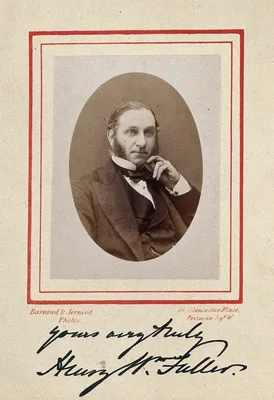
1846 FULLER, Henry William (1820 – 1873)
Particulars of a case in which enormous enlargement of the spleen and liver, together with dilatation of all the blood vessels of the body, were found coincident with a peculiarly altered condition of the blood.
Leukemia diagnosed during life as the result of a blood examination.
GMN 3062.1 · https://historyofmedicine.com/id/3714
1847 BENNETT, H. N.
Puerperal anaemia; or a peculiar anaemic condition, occurring in gestating and lactating females.
Bennett described the anemia of pregnancy and defined it as resulting from the process of reproduction.
GMN 3117 · https://historyofmedicine.com/id/3882
1848 REICHERT, Karl Bogislaus (1811 – 1883)
Beobachtungen über eine eiweissartige Substanz in Krystallform.
Reichert obtained hemoglobin crystals in the guinea pig. Digital facsimile from ECHO at this link.
GMN 865.1 · https://historyofmedicine.com/id/795
1849 ADDISON, Thomas (1793 – 1860)
Anaemia; disease of the supra-renal capsules.
Addison included a classic description of pernicious (Addisonian) anemia in his papers on the condition later known as “Addison’s disease”. Although preceded by Combe, his account was more important in bringing the di…
GMN 3118 · https://historyofmedicine.com/id/3884