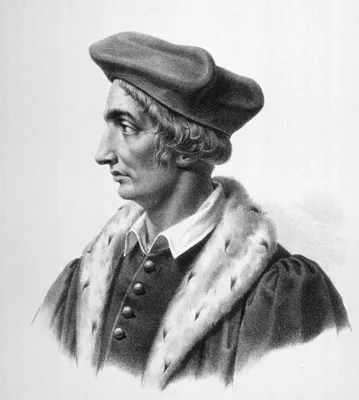
1533 PHILARETOS, (Philaretus) (820 – 1075); THORER, Alban (1489 – 1550)
De pulsuum scientia libellus utilis & necessarius. Theophili ... de exacta retrimentorum vesicae cognitione, commentariolus, Albano Torino interprete.
First separate, and perhaps the first complete printed edition of the Byzantine physician's De pulsibus, edited by Alban Thorer. This text, in the Galenic tradition "largely mediated through the pseudo-Galenic tract "…
GMN 12591 · https://historyofmedicine.com/id/14831
1551 RODRIGUES DE CASTELO BRANCO, João (Amato Lusitano; Amatus Lusitanus) (1511 – 1568)
Curationum medicinalium centuria prima, multiplici variaque rerum cognitione referta. Praexfixa est eiusdem auctoris commentatio, in qua docetur, quomodo se medicus habere debeat in introitu ad aegrotantem, simulque de crisi, & diebus decretoriis, in qui artem medicam exercent, & quotidie pro salute aegrotorum in collegium descendunt longe utilissima.
Lusitano has been credited with early recognition of the circulation of the blood. How much he might have understood the circulation remains in doubt; however, through dissections of the Azygos vein, he was the first …
GMN 12945 · https://historyofmedicine.com/id/15192
1552 HIPPOCRATES, [Ἱπποκράτης; Hippocrates of Kos] (-460 – -370); DIOCLES OF CARYSTUS, (Διοκλῆς ὁ Καρύστιος) (-375 – -295); MELETIUS OF TIBERIOPOLIS (750 – 800); POLEMON, Marcus Antonius (Polemon of Laodicea) (90 – 144); PETREIUS, Nicolas (1500 – 1568)
Meletius, De natura structuraque hominis opus. Polemonis Atheniensis, Naturae signorum interpretationis. Hippocratis, De hominis structura. Diocles, De tuenda valetudine epistola. Melampus, De nevis corporis tractatus. Omnia haec non prius edita. Nicolao Petreio Corcyraeo interprete.
This collection of Late Antique and Byzantine medicine edited by Nicolas Petreius begins with a Byzantine treatise on anatomy, probably written in the eighth century by Meletius, a Christian monk and physician from Ph…
GMN 7807 · https://historyofmedicine.com/id/9979
1553 SERVETUS, Michael [Miguel Serveto Conesa; also known as Miguel Servet, Miguel Serveto, Revés, or Michel de Villeneuve] (1511 – 1553)
Christianismi restitutio.
Contains (pp. 168-73) the first printed description of the lesser circulation. Because of the heretical nature of this book on the reform of Christianity, it was printed secretly and anonymously at Vienne, France. Cop…
GMN 754 · https://historyofmedicine.com/id/1741
1554 FERNEL, Jean François (1497 – 1558)
Medicina. 3 pts.
The first systematic treatise on pathology, which also introduced the names for the sciences of pathology and physiology. In the second part, entitled “Pathologia”, Fernel provided the first systematic essay on the su…
GMN 2271 · https://historyofmedicine.com/id/2838
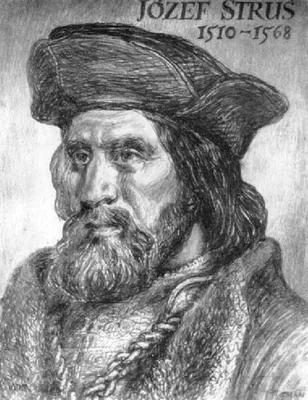
1555 STRUTHIUS, Josephus (Józef Struś) (1510 – 1568)
Sphygmicae artis iam mille ducentos annos perditae et desideratae libri V.
Considered the most significant work on the pulse between Galen and Harvey. The work includes what is probably the earliest graphic representation of the pulse. Struthius provided a useful mnemonic of the five simple …
GMN 10601 · https://historyofmedicine.com/id/12794
1559 COLOMBO, Matteo Realdo [Renaldus Columbus] (1515 – 1559)
De re anatomica libri xv.
Colombo was a pupil of Vesalius, and succeeded him in the chair of anatomy at Padua before proceeding to chairs first at Pisa and later at Rome. His book, published just after his death, rectified a number of anatomic…
GMN 378.1 · https://historyofmedicine.com/id/560
1563 –1564 EUSTACHI, Bartolomeo [EUSTACHIUS] (1510 – 1574)
Opuscula anatomica.
Eustachius is credited with several anatomical discoveries, among them the tensor tympani muscle and the Eustachian tube, published in his chapter entitled De auditus organis. In the last respect, however, he was anti…
GMN 1093 · https://historyofmedicine.com/id/159
1571 CESALPINO, Andrea [CAESALPINUS] (1525 – 1603)
Peripateticarum quaestionum libri quinque.
Cesalpino preceded Harvey in the discovery of the concept of the circulation, and Harvey must have known of his ideas, but Cesalpino’s idea of the circulation was not supported by convincing experimental work or quant…
GMN 755 · https://historyofmedicine.com/id/1742
1582 RAUWOLF, Leonhard (1535 – 1596)
Aigentlich Beschreibung der Raiss, so er vor diser Zeit gegen Auffgang inn die Morgenländer, fürnemlich Syriam, Iudaeam, Arabiam, Mesopotamiam, Babyloniam, Assyriam, Armeniam etc....
Rauwolf provided the first modern descriptions of the flora of the area east of the Levantine coast. He was also the first to describe the riparian flora of the Euphrates, and the first European to publish an account …
GMN 7327 · https://historyofmedicine.com/id/9498
1587 RUDIUS, Eustachius (1551 – 1611)
De virtutibus et viciis cordis libri tres. Primus agit de virtutibus & functionibus cordis. Secundus de palpitatione cordis. Tertius de syncope.
The earliest separate treatise on cardiac physiology and pathology. Digital facsimile from Google Books at this link.
GMN 10660 · https://historyofmedicine.com/id/12853
1593 CESALPINO, Andrea [CAESALPINUS] (1525 – 1603)
Quaestionum peripateticum, libri V.
A greatly expanded second edition. The results of tying a vein and the centripetal flow in veins were first recorded in print by Cesalpino (lib. ii, Qu. xvii, p. 234). See the English translation, with commentary, of …
GMN 756 · https://historyofmedicine.com/id/1743
1597 PINEAU, Séverin ( – 1619)
Opusculum physiologum & anatomicum in duos libellos distinctum: In quibus primùm, de integritatis & corruptionis virginum notis, deinde, de grauiditate & partu naturali mulierum in quo ossa pubis & ilium distrahi, dilucidè tractatur ....
In 1595 Pineau demonstrated the vestigial foramen ovale in the adult heart, settling the question of the perviousness of the septum of the heart. His work was first published in 1597. He published this study in a fran…
GMN 802 · https://historyofmedicine.com/id/163
1603 FABRIZIO, Girolamo [FABRICIUS AB AQUAPENDENTE] (1537 – 1619)
De venarum ostiolis.
Fabricius, teacher of Harvey at Padua, discovered the venous valves, and illustrated them in life-size copperplates in this monograph. He failed to recognize their true function, however, considering their function si…
GMN 757 · https://historyofmedicine.com/id/1744
1603 SASSONIA, Ercole [HERCULES DE SAXONIA] (1551 – 1607)
De pulsibus libri tres nunc primum in lucem editi.
Sassonia emphasized the importance of the pulse in diagnosis, and provided the first recorded description of heart block. Pages 57-61 contain graphic representations of the pulse using dashes of unequal length. Digita…
GMN 2726 · https://historyofmedicine.com/id/4465
1618 ALBERTINI, Annibale
De affectionibus cordis. Libri tres. Qvorum primus agit de naturalibus. Secundus & tertius De preternaturalibus, de paliptatione nempe, & syncope, atque earum curatione.
The first book on heart disease. "The recognition of heart disease as of clinical interest and importance was exceedingly slow. In 1618, one hundred and eleven years after the pioneer publication of Benivieni of the p…
GMN 10502 · https://historyofmedicine.com/id/12695
1624 SAPORTA, Antoine de ( – 1573); GRAS, Henri ( – 1665)
De tumoribus praeter naturam libri quinque. Ex instructissima Bibliotheca Ranchiniana eruti, & publici iuris facti, cura & studio Henric Gras...Accessit Ioannis Saportae Tractatus de lue venerea.
IN 1554 Saporta gave the earliest description of an aortic aneurysm. Many years after Saporta's death Henri Gras of Lyon discovered the manuscript of Saporta's book, and edited it for publication. Digital facsimile fr…
GMN 2971 · https://historyofmedicine.com/id/5080
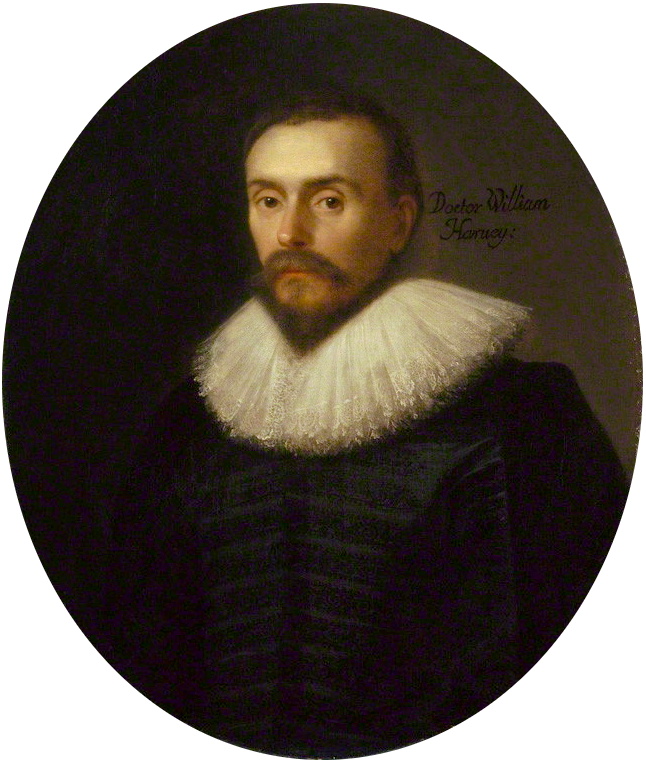
1628 HARVEY, William (1578 – 1657)
Exercitatio anatomica de motu cordis et sanguinis in animalibus.
Discovery and experimental proof of the circulation of the blood. Together with Vesalius’s Fabrica (1543), Harvey’s De motu cordus shares the honor as the greatest book in the history of medicine. Since antiquity, ide…
GMN 759 · https://historyofmedicine.com/id/1746
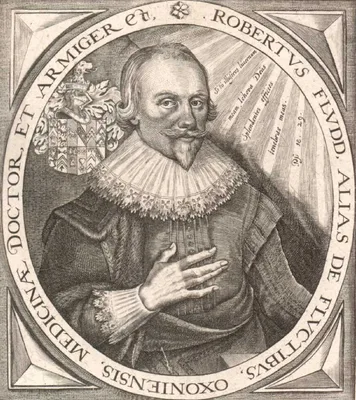
1629 –1631 FLUDD, Robert (1574 – 1637)
Integrum morborum mysterium, sive medicinæ catholicæ tomi primi tractatus secundus. [Pulsus seu nova et arcana pulsuum historia ... Hoc est, portionis tertiae pars tertia, de pulsuum scientia ... medicorum ... sive tomi primi tractatus secundi, sectio secunda, de morborum signis ... hoc est, divinatio per urinam.] In sectiones distributus duas : quorum ...
Fludd's Pulsus seu nova et arcana pulsuum historia contain's Fludd's chief medical writings. Dated 1629, but issued in this form, Fludd's Pulsus was the first published endorsement of Harvey's theory of the circulatio…
GMN 11597 · https://historyofmedicine.com/id/13796
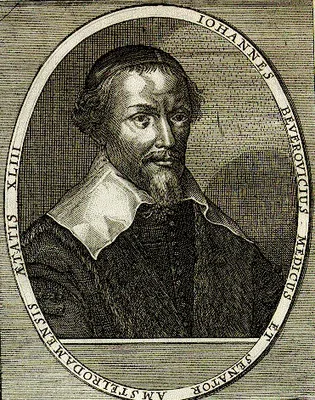
1638 BEVERWIJCK, Johan van (Johannes Beverovicius) (1594 – 1647)
De calculo renum & vesicae liber singularis. Cum epistolis & consultationibus magnorum virorum.
The first medical book to contain an endorsement of Harvey's theory of the circulation of the blood (originally published ten years earlier in 1628). Beverwijck began his work with a treatise on urinary and renal calc…
GMN 11647 · https://historyofmedicine.com/id/13848
1645 SPIEGHEL, Adriaan van der [SPIGELIUS] (1578 – 1625); LINDEN, Johannes Antonides van der (1609 – 1664)
Opera quae extant omnia. Ex recension Joh. Antonidae vander Linden.
Spieghel succeeded Casseri in the chair of anatomy at Padua. This edition of his collected writings contains the second printing of the 97 copperplates first printed in Casseri’s Tabulae anatomicae (No. 381) plus 9 ex…
GMN 61.2 · https://historyofmedicine.com/id/8777
1648 RIOLAN, Jean The Younger (1577 – 1657)
Encheiridium anatomicum, et pathologicum, in quo naturali constitutione partium, recessus a naturali statu demonstatur.
In book III, chapter 8 Riolan discusses the heart and presents his views on the circulation of the blood. "Riolan's opinion of the blood movement seems to have arisen from his attempt to reconcile strict Galenic belie…
GMN 11609 · https://historyofmedicine.com/id/13809
1649 HARVEY, William (1578 – 1657)
Exercitatio anatomica de circulatione sanguinis.
In this work Harvey first described the circulation of blood through the coronary arteries. Harvey also described experiments that he made to provide further support to his theory of the circulation since the publicat…
GMN 10658 · https://historyofmedicine.com/id/12851
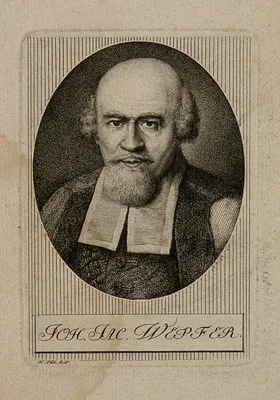
1658 WEPFER, Johann Jacob (1620 – 1695)
Observationes anatomicae, ex cadaveribus eorum, quos sustulit apoplexia.
Wepfer showed apoplexy to be a result of hemorrhage into the brain. He described four cases, with clinical and post mortem findings. He preceded Willis (No. 1378) in describing the “circle of Willis”. Partial English …
GMN 2703 · https://historyofmedicine.com/id/359
1660 BOTALLO, Leonardo (BOTALLUS) (1519 – 1587)
Opera omnia medica et chirurgica.
“Botallo’s duct”, the ductus arteriosus; “Botallo’s foramen”, the foramen ovale interauriculare; and “Botallo’s ligament”, the ligamentum arteriosum, are described in this work. However two of these traditional attrib…
GMN 802.1 · https://historyofmedicine.com/id/559
1661 MALPIGHI, Marcello (1628 – 1694)
De pulmonibus observations anatomicae.
Discovery of the capillary circulation. Malpighi demonstrated that the pulmonary tissues are vesicular in nature and showed that the trachea ends in bronchial filaments. His De pulmonibus includes his demonstration of…
GMN 760 · https://historyofmedicine.com/id/1747
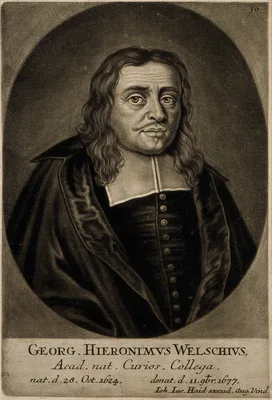
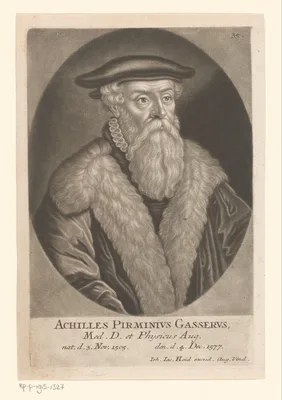
1667 VESALIUS, Andreas (1514 – 1564); WELSCH, Georg Hieronymous (Velschius) (1624 – 1677); GASSER, Achilles Pirmin (1505 – 1577); RUMLER, Johannes Udalricus
Vesalius: Una cum D. Bartholomaei Velseri literis, Tuas, doctissime et mihi amicissime D. Achilles, accepi.... IN: Welsch, G. H., Sylloge curationum et observationum medicinalum centurias vi complectens (J. U. Rumler, Observationes medicae e bibliotheca Georgi Hieronymi Velschii, cum eius dem notis LXXXXI, p. 47).
In 1555 Vesalius was the first to diagnose an aneurysm of the thoracic and abdominal aorta in a living person. Vesalius wrote this consilium to Achilles Pirmin Gasser on July 18, 1557; it was not published until more …
GMN 2972 · https://historyofmedicine.com/id/5096
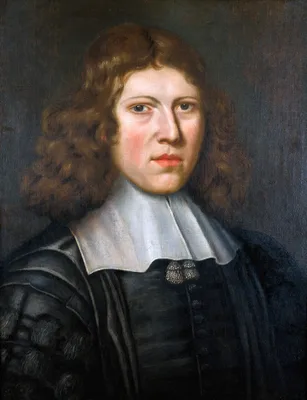
1669 LOWER, Richard (1631 – 1691)
Tractatus de corde.
Lower was the first to demonstrate the scroll-like structure of the cardiac muscle. He was one of the first to transfuse blood. Chapter III of the above work records how Lower injected dark venous blood into the insuf…
GMN 761 · https://historyofmedicine.com/id/1748
1671 –1672 STENO, Nicolas [Niels Steensen, Nicholaus Stenonis] (1638 – 1686)
Embryo monstro affinis Parisiis dissectus.
First known description of the “tetralogy of Fallot” (see No. 2792). Reprinted in his Opera philosophica, ed. W. Maar, Vol. 2, Copenhagen, V. Tryde, 1910, pp. 49-53. For translation see Proc. Mayo Clin., 1948, 23, 317.
GMN 2726.1 · https://historyofmedicine.com/id/4468
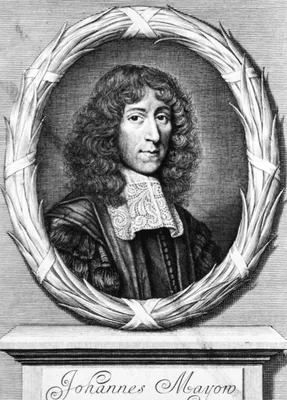
1674 MAYOW, John (1643 – 1679)
Tractatus quinque medico-physici.
Mayow was the first to locate the seat of animal heat in the muscles; he discovered the double articulation of the ribs with the spine and came near to discovering oxygen in his suggestion that the object of breathing…
GMN 2726.2 · https://historyofmedicine.com/id/366
1674 RIVIÈRE, Lazare [RIVERIUS] (1589 – 1655)
Opera medica universa.
Riverius was the first to note aortic stenosis (p. 638 of the above).
GMN 2727 · https://historyofmedicine.com/id/4479
1680 –1681 BORELLI, Giovanni Alfonso (1608 – 1679)
De motu animalium. 2 pts.
Borelli originated the neurogenic theory of the heart’s action and first suggested that the circulation resembled a simple hydraulic system. He was the first to insist that the heart beat was a simple muscular contrac…
GMN 3669.3 · https://historyofmedicine.com/id/1749
1683 BELLINI, Lorenzo (1643 – 1704)
De urinis et pulsibus de missione sanguinis de febribus de morbis capitis, et pectoris.
Bellini began to develop his hydraulic iatromechanics in this work, in which he considered the blood as a physical fluid with simple mechanical and mathematicizable properties. He realized the value of the urine as an…
GMN 4162 · https://historyofmedicine.com/id/1845
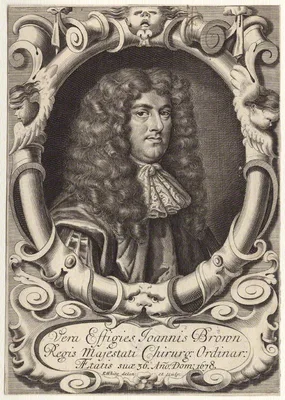
1684 LOWER, Richard (1631 – 1691); BROWNE, John (1642 – 1702)
Myographia nova, or a graphical description of all the muscles in the human body; with one and forty copper-plates.
Browne's treatise on the muscles consisted of six lectures, illustrated by copperplates. It was, however, a plagiarism, as was pointed out by James Yonge: it put together text from the Muskotomia by William Molins wit…
GMN 11684 · https://historyofmedicine.com/id/13885
1685 VOSSIUS, Isaak (Isaac Voss) (1618 – 1689)
Variarum observationum liber.
Vossius, a Dutch scholar and manuscript collector, was one of the first European writers to suggest that the Chinese had anticipated William Harvey's discovery of the circulation of the blood. In his chapter on Chines…
GMN 11718 · https://historyofmedicine.com/id/13919
1686 BOHN, Johannes (1640 – 1718)
Circulus anatomico-physiologicus.
Bohn's approach was mechanistic in that he grave predominately physical interpretations of vital processes. He experimented on the decapitated frog, declaring the reflex phenomena to be entirely material and mechanica…
GMN 1355 · https://historyofmedicine.com/id/1631
1691 GERBEC, Marko [GERZEBIUS] (1658 – 1718)
Pulsus mira inconstantia.
First reported case of temporary cardiac arrest with syncopal attacks, the syndrome to which the names of Stokes (No. 2756) and Adams (No. 2745) were later attached.
GMN 2728 · https://historyofmedicine.com/id/4482
1698 CHIRAC, Pierre (1657 – 1732)
De motu cordis adversaria analytica.
In this pioneering experimental study of coronary function, describing the first experimental tying of a coronary vessel, Chirac demonstrated that cardiac arrest occurs in response to coronary ligation. “A special pos…
GMN 10657 · https://historyofmedicine.com/id/12850
1705 VIEUSSENS, Raymond (1641 – 1715)
Novum vasorum corporis humani systema.
Vieussens was among the first to describe the morbid changes in mitral stenosis, the throbbing pulse in aortic insufficiency, and the first correctly to describe the structure of the left ventricle, the course of the …
GMN 2729 · https://historyofmedicine.com/id/4484
1706 COWPER, William (1666 – 1709)
Of ossifications or petrifications in the coats of arteries, particularly in the valves of the great artery.
First description of aortic insufficiency. Reproduced in Willius & Keys: Cardiac classics, 1941, pp. 109-14.
GMN 2730 · https://historyofmedicine.com/id/4488
1706 VIEUSSENS, Raymond (1641 – 1715)
Nouvelles découvertes sur le cœur, expliquées dans une lettre écrite à Monsieur Boudin ....
The first description of “Vieussen’s valve,” “Vieussens’s ring,” and the “Thebesian veins” of the heart. "These ‘ducti carnosi’ were ultimately named ‘Thebesian veins’ after subsequent work completed by Adam Christian…
GMN 9471 · https://historyofmedicine.com/id/11655
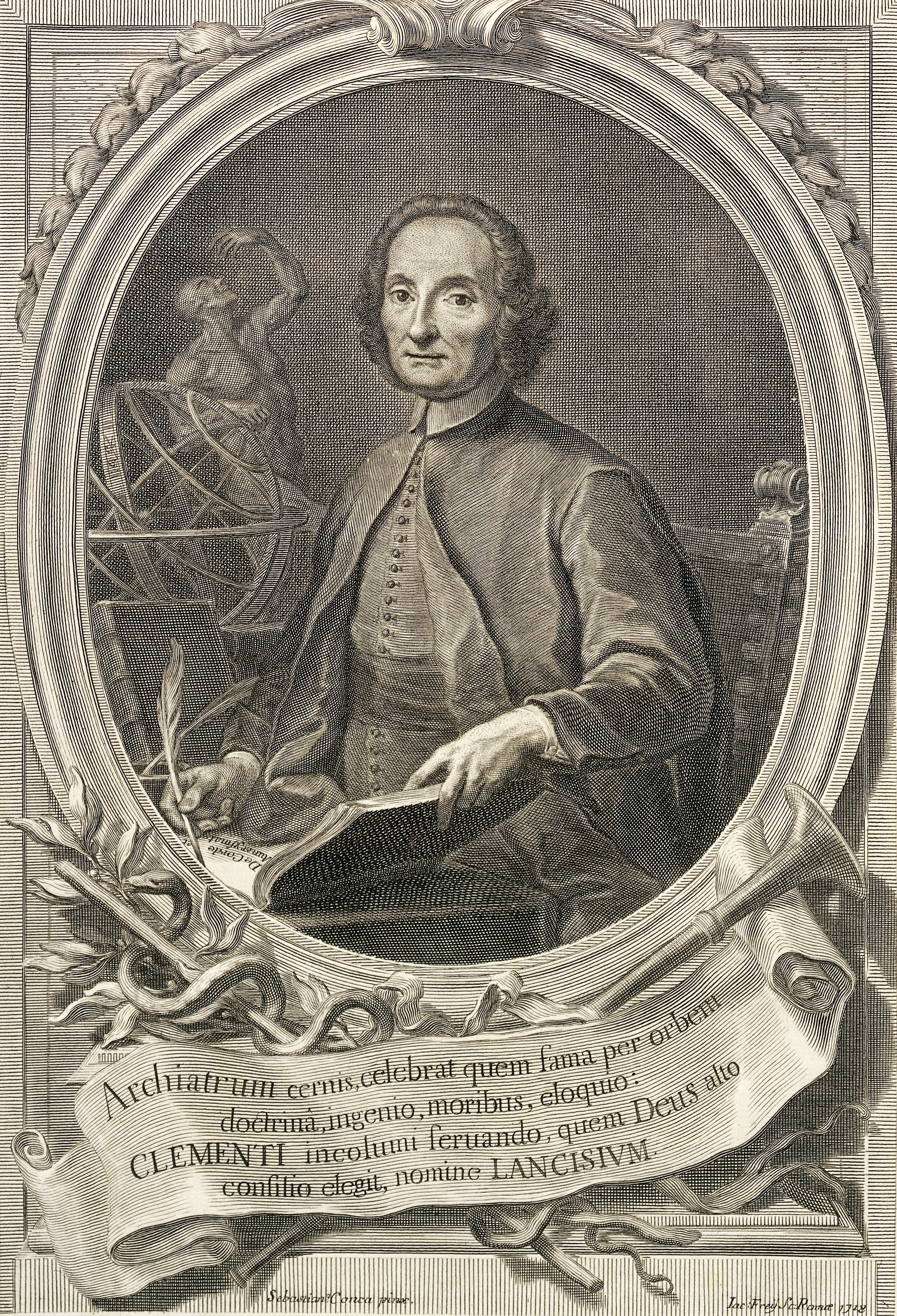
1707 LANCISI, Giovanni Maria (1654 – 1720)
De subitaneis mortibus libri duo.
In the above work Lancisi noted cardiac hypertrophy and dilatation as causes of sudden death. He was the first to describe valvular vegetation, and his book gives a classification of the cardiac diseases then recogniz…
GMN 2731 · https://historyofmedicine.com/id/4492
1708 THEBESIUS, Adam Christian (1686 – 1732)
Disputatio medica inauguralis de circulo sanguinis in corde.
First description of the coronary valves and the venae thebesii.
GMN 763 · https://historyofmedicine.com/id/1750
1708 KEILL, James (1673 – 1719)
An account of animal secretion, the quantity of blood in the humane body, and muscular motion.
Keill applied measurement and mathematics in his researches, claiming the "first calculations of the absolute velocity at which blood travels through the aorta and smaller vessels; he also recognized that the blood's …
GMN 11673 · https://historyofmedicine.com/id/13874
1715 VIEUSSENS, Raymond (1641 – 1715)
Traité nouveau de la structure et des causes du mouvement naturel du coeur. IN: Oeuvres françoises de M. Vieussens dédiées a nosseigneurs des états de la province de Languedoc.
The first work on cardiac anatomy and pathology. Vieussens was the first to describe the course of the coronary arteries and the coronary sinus. He also described collateral vessels connecting the left anterior descen…
GMN 7247 · https://historyofmedicine.com/id/9416
1718 LANCISI, Giovanni Maria (1654 – 1720); ASSALTI, Pietro (1680 – 1728)
Jo. Mariae Lancisii archiatri pontificii. Opera quae hactenus prodierunt omnia; dissertationibus nonnullis adhuc dum ineditis locupletata, & ab ipso auctore, recognita atque emendata. Collegit, ac in ordinem digessit Petrus Assaltus. 2 vols.
Lancisi's collected works edited by Pietro Assalti. Lancisi was the first to describe cardiac syphilis; he was also notable as an epidemiologist, with a clear insight into the theory of contagion. He was physician to …
GMN 71 · https://historyofmedicine.com/id/1266
1724 SERVETUS, Michael [Miguel Serveto Conesa; also known as Miguel Servet, Miguel Serveto, Revés, or Michel de Villeneuve] (1511 – 1553); ANONYMOUS
An impartial history of Michael Servetus, burnt alive at Geneva for heresie.
Authorship of this early English account of Servetus and his martyrdom for heresy has never been determined, according to Geoffrey Sill, "The authorship of An impartial history of Michael Servetus," Papers of the Bibl…
GMN 12698 · https://historyofmedicine.com/id/14943
1727 –1733 HALES, Stephen (1677 – 1761)
Vegetable staticks: Or, an account of some statical experiments on the sap in vegetables. Statical essays, containing haemastaticks. 2 vols.
Hales initiated a new stage in physiological experimentation with his "statical" methods, which were characterized by precise quantitative measurements, repetition and the used of controls, and were based on the assum…
GMN 765 · https://historyofmedicine.com/id/1752
1727 SERVETUS, Michael [Miguel Serveto Conesa; also known as Miguel Servet, Miguel Serveto, Revés, or Michel de Villeneuve] (1511 – 1553); MOSHEIM, Johann Lorenz von (1693 – 1755); ALLWOERDEN, Heinrich von (1703 – )
Historia Michaelis Serveti Quam praeside Io. Laur. Mosheimio...auctor Henricus ab Allwoerden.
An early biographical account of Servetus and his martyrdom for heresy, prepared under the direction of Johann Lorenz von Mosheim whose Kaisergeschichte (2 vols, 1746-48) initiated the modern, objective historiography…
GMN 12697 · https://historyofmedicine.com/id/14942
1728 LANCISI, Giovanni Maria (1654 – 1720)
De motu cordis et aneurysmatibus.
Lancisi noted the frequency of cardiac aneurysm and showed the importance of syphilis, asthma, palpitation, violent emotions, and excess as causes of aneurysms. He was the first to describe cardiovascular syphilis. La…
GMN 2973 · https://historyofmedicine.com/id/5101

![HIPPOCRATES, [Ἱπποκράτης; Hippocrates of Kos] (-460 – -370)](/media/portraits/50)