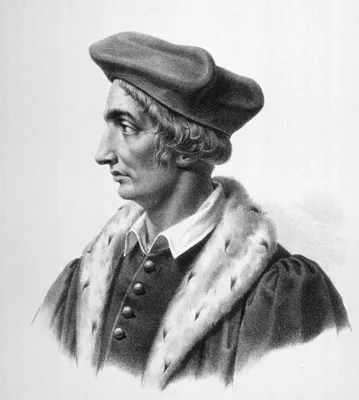
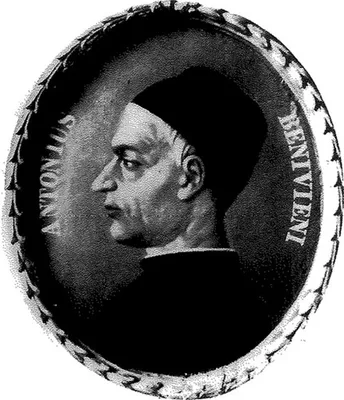
1507 BENIVIENI, Antonio (1443 – 1502); BENIVIENI, Girolamo (1453 – 1542)
De abditis nonnulus ac mirandis morborum et sanationum causis. Edited by Girolamo Benivieni.
Antonio Benivieni's The hidden causes of diseases was the first book on pathological anatomy, presenting the first reports of autopsies made specifically to determine the cause of death. The work records twenty post-m…
GMN 2270 · https://historyofmedicine.com/id/2836
1513 GALEN, [Κλαύδιος Γαληνός; Galen of Pergamon] (129 – 216); COPP, Wilhelm (1460 – 1532)
Galen: De affectorum locorum notitia libri vi.
First separate dated Latin translation of De locis affectis, made by Wilhelm Copp of Basel. In this work devoted to pathology, Galen made many valuable deductions on inflammation and on tumors. He was familiar with ch…
GMN 2269 · https://historyofmedicine.com/id/2834
1528 GALEN, [Κλαύδιος Γαληνός; Galen of Pergamon] (129 – 216); BENIVIENI, Antonio (1443 – 1502); GUINTER VON ANDERNACH, Johannes [Johannes Guinterius; Johannes Winter; Jean Guenther] (1505 – 1574); APULEIUS PLATONICUS, (Pseudo-Apuleius) (350 – ); POLYBUS ( – -375)
Claudii Galeni ... Liber de plenitudine. Polybus De salubri victus ratione privatorum. Guinterio Ioanne Andernaco interprete. Apuleius Platonicus De herbarum virtutibus. Antonii Benivenii Libellus de abditis nonnullis ac mirandis morboru & sanitationum causis.
First separate edition of Galen's Liber de plenitudine and Polybus's De salubri victus ratione privatorum, edited by Johan Guinter von Andernach. Digital facsimile from Biodiversity Heritage Library at this link.
GMN 13148 · https://historyofmedicine.com/id/15407
1554 FERNEL, Jean François (1497 – 1558)
Medicina. 3 pts.
The first systematic treatise on pathology, which also introduced the names for the sciences of pathology and physiology. In the second part, entitled “Pathologia”, Fernel provided the first systematic essay on the su…
GMN 2271 · https://historyofmedicine.com/id/2838
1600 SCHENCK VON GREAFENBERG, Johann (1530 – 1598)
Observationum medicarum, rararum, novarum, etc. 2 vols.
Schenck was the greatest compiler of his day. His Observationes form the easiest source-book for the pathological observations of Sylvius, Vesalius, and Columbus, and represent a lifetime of medical reading and experi…
GMN 2272 · https://historyofmedicine.com/id/2840
1602 –1603 PLATER, Felix [PLATTER] (1536 – 1614)
Praxeos seu de cognoscendis, praedicendis, praecavendis, curandisque affectibus homini incommodantibus. 2 vols.
The first attempt at a classification of diseases according to symptoms. Over a period of 50 years Platter dissected more than 300 bodies and made many observations of value to pathological anatomy.
GMN 2195 · https://historyofmedicine.com/id/1459
1632 SEVERINO, Marco Aurelio [SEVERINUS] (1580 – 1656)
De recondita abscessuum natura.
The first textbook of surgical pathology. It treats of all kinds of swelling under the term “abscess” and describes neoplasms of the genital organs and sarcoma of bones. Tumors of the breast are classified into four g…
GMN 2273 · https://historyofmedicine.com/id/2841
1679 BONET, Théophile (1620 – 1689)
Sepulchretum, sive anatomia practica ex cadaveribus morbo denatis. 2 vols.
This is the first collection of systematized pathological anatomy. It contains clinical and pathological descriptions of nearly 3,000 cases selected from the literature from the time of Hippocrates, but mainly from th…
GMN 2274 · https://historyofmedicine.com/id/2843
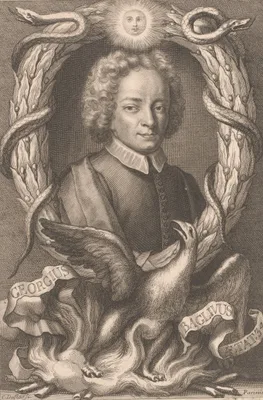
1704 BAGLIVI, Giorgio (1668 – 1707)
Opera omnia medico-practica et anatomica.
Baglivi, Professor of Anatomy at Rome, had a short but brilliant career. He wrote Praxis medica and De fibra motrice, and originated the so-called “solidar” pathology; he also devoted much time to experimental physiol…
GMN 68 · https://historyofmedicine.com/id/1252
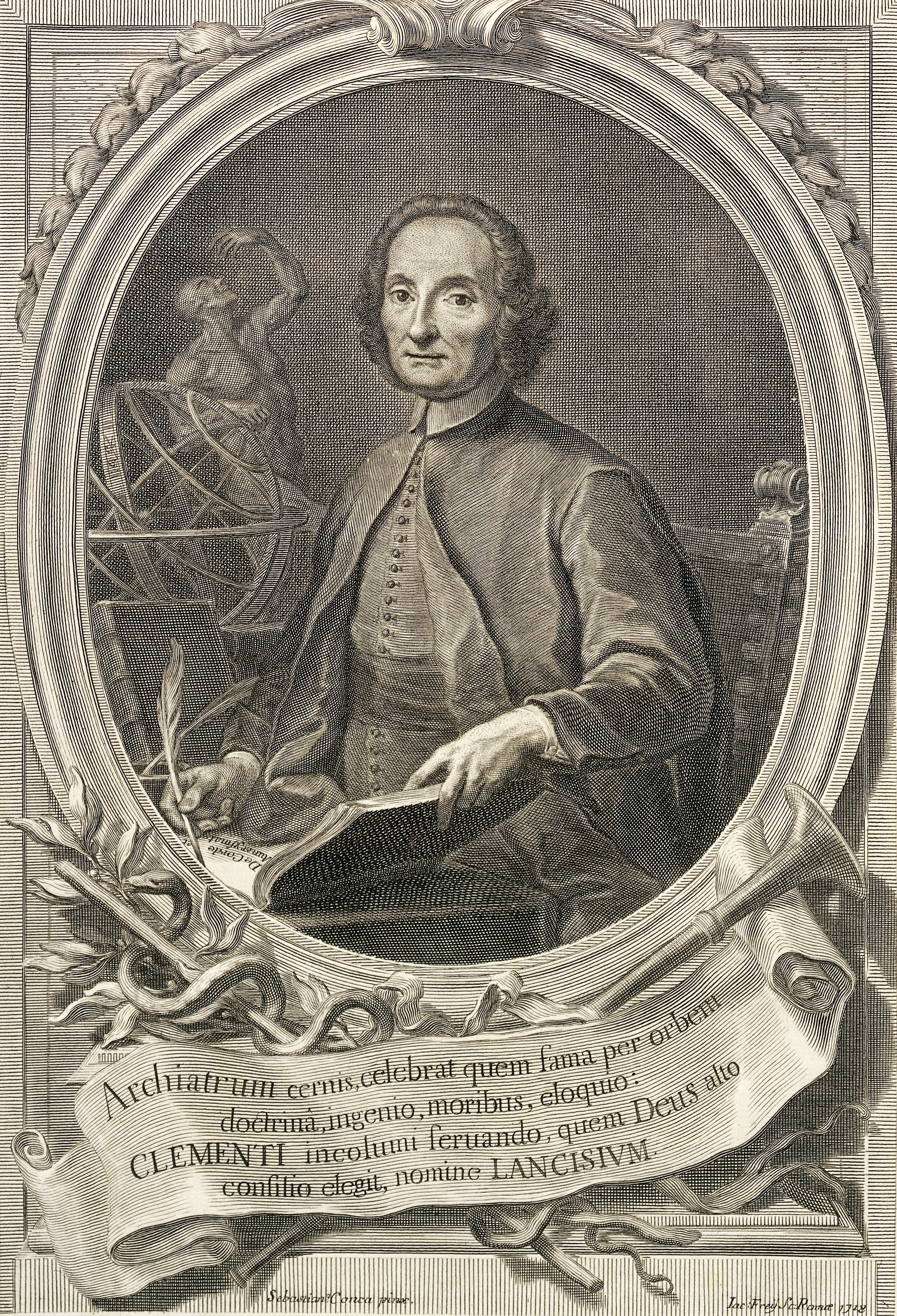
1728 LANCISI, Giovanni Maria (1654 – 1720)
De motu cordis et aneurysmatibus.
Lancisi noted the frequency of cardiac aneurysm and showed the importance of syphilis, asthma, palpitation, violent emotions, and excess as causes of aneurysms. He was the first to describe cardiovascular syphilis. La…
GMN 2973 · https://historyofmedicine.com/id/5101
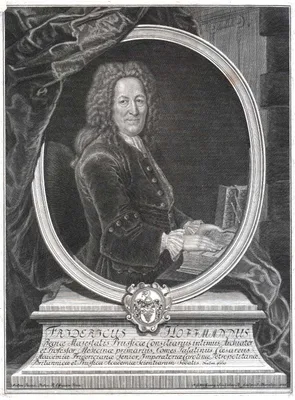
1731 HOFFMANN, Friedrich (1660 – 1742); SONTAG, Samuel
Samuel Sontag: Dissertatio inauguralis medica de metastasi sive sede morborum mutata oder: Wie sich öffters eine Kranckheit in die andere verwandele. Praeside Hoffmanno.
Recamier (1829) is credited with coining the term metastasis with respect to cancer. It is evident that Hoffmann and his pupil Sontag used the term nearly 100 years earlier in this general thesis on disease. They did …
GMN 2275 · https://historyofmedicine.com/id/2845
1746 WATSON, Sir William (1715 – 1787)
An account of what appeared on opening the body of an asthmatic person.
Probably the earliest comprehensive clinical and pathological account of emphysema.
GMN 3166.1 · https://historyofmedicine.com/id/4122
1761 MORGAGNI, Giovanni Battista (1682 – 1771)
De sedibus, et causis morborum per anatomen indagatis libri quinque. 2 vols.
Morgagni was the founder of modern pathological anatomy. The work was completed in Morgagni’s 79th year and consists of a series of 70 letters reporting about 700 cases and necropsies. As best he could, he correlated …
GMN 2276 · https://historyofmedicine.com/id/2846
1763 CLOSSY, Samuel (1724 – 1786)
Observations on some of the diseases of the parts of the human body. Chiefly taken from the dissections of morbid bodies.
Clossy, an Irish physician, previously at Trinity College, Dublin, gave the first anatomy classes and dissections at King’s College in New York City (now Columbia) in 1763. Clossy worked closely with other King’s Coll…
GMN 10989 · https://historyofmedicine.com/id/13185
1772 HUNTER, John (1728 – 1793)
On the digestion of the stomach after death.
GMN 2277 · https://historyofmedicine.com/id/2892
1774 ESPER, Johann Friedrich (1732 – 1781)
Ausfürliche Nachricht von neuentdeckten Zoolithen, unbekannter vierfüsiger Thiere…
Esper was the first to record the finding, in Gailenreuth Cave, of human bones alongside the remains of unknown and probably extinct animals. The implications of this dramatic observation published in a color plate bo…
GMN 203.7 · https://historyofmedicine.com/id/3834
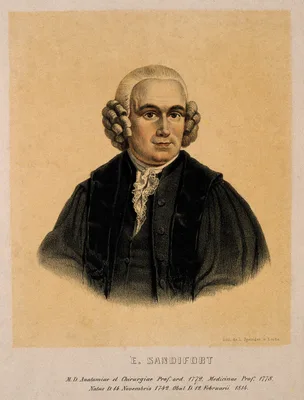
1777 –1781 SANDIFORT, Eduard (1742 – 1814)
Observationes anatomicae-pathologicae. 4 vols.
Sandifort’s beautifully illustrated work on pathological anatomy included records of ulcerative aortic endocarditis, renal calculi, hemias, bony ankyloses, and congenital abnormalities. A good account of the “tetralog…
GMN 2278 · https://historyofmedicine.com/id/2893
1785 WALTER, Johann Gottlieb (1734 – 1818)
Von den Krankheiten des Bauchfells und dem Schlagfluss.
Text in Latin and German. Includes an accurate description of peritonitis.
GMN 2279 · https://historyofmedicine.com/id/2895
1787 DENMAN, Thomas (1733 – 1815)
A collection of engravings, tending to illustrate the generation and parturition of animals, and of the human species.
An idiosyncratic collection of rarely reproduced images with explanatory commentaries in English and French, concerning reproduction and obstetric complications in animals and humans. Topics include: The Funis of a nu…
GMN 12163 · https://historyofmedicine.com/id/14373
1788 BAILLIE, Matthew (1761 – 1823)
An account of a remarkable transportation of the viscera.
Baillie recorded a case of congenital dextrocardia with complete situs inversus viscerum. Reprinted in Willius & Keys, Cardiac classics, 1941, pp. 257-62.
GMN 2280 · https://historyofmedicine.com/id/2896
1793 BAILLIE, Matthew (1761 – 1823)
The morbid anatomy of some of the most important parts of the human body.
Baillie was a nephew and pupil of William Hunter. The above is the first systematic textbook of morbid anatomy, treating the subject for the first time as an independent science. See also Nos. 2736, 3167.1. Baillie wa…
GMN 2281 · https://historyofmedicine.com/id/2898
1793 –1835 SANDIFORT, Eduard (1742 – 1814); SANDIFORT, Gerard (1779 – 1848)
Museum anatomicum academiae Lugduno-Batavae. 4 vols.
This work, complete in over 1000 pages, with hundreds of full page plates, was begun by Eduard Sandifort and completed 42 years later by his son Gerard. Many of the plates illustrate diseases of bone. Digital facsimil…
GMN 11312 · https://historyofmedicine.com/id/13510
1794 HUNTER, John (1728 – 1793)
A treatise on the blood, inflammation, and gun-shot wounds.
It was while serving with the army at Belle Isle during the Seven Years’ War that Hunter collected the material for his epoch-making book on inflammation and gunshot wounds. His studies on inflammation in particular a…
GMN 2283 · https://historyofmedicine.com/id/2900
1797 BAILLIE, Matthew (1761 – 1823)
The morbid anatomy of some of the most important parts of the human body. 2nd ed.
First clinical description of chronic obstructive pulmonary emphysema. The lung on which Baillie performed an autopsy before describing this condition is said to have been that of Samuel Johnson. P. 46: Baillie sugges…
GMN 2736 · https://historyofmedicine.com/id/4126
1799 –1803 BAILLIE, Matthew (1761 – 1823)
A series of engravings, accompanied with explanations, which are intended to illustrate the morbid anatomy of some of the most important parts of the human body.
The first systematic atlas of pathology. This work was intended to illustrate No. 2281, but, with its extensive descriptive text for each plate, it may be appreciated separately. The black & white engravings were prep…
GMN 2282 · https://historyofmedicine.com/id/2899
1800 BICHAT, Marie François Xavier (1771 – 1802)
Traité des membranes en général et diverses membranes en particulier.
Bichat conceived the idea of a science of anatomy and pathology based upon an accurate classification of the various tissues of the body, their distribution in the various organs and parts, and their particular suscep…
GMN 537 · https://historyofmedicine.com/id/164
1804 ABERNETHY, John (1764 – 1831)
Surgical observations, containing a classification of tumours, with cases to illustrate the history of each species; - an account of diseases which strikingly resemble the venereal disease; - and various cases illustrative of different surgical subjects.
Abernethy published the first classification of tumors based on pathologic anatomy. "Abernethy is best known for his lectures and writings on surgery and for the first attempt at classification of tumors, some of whic…
GMN 13225 · https://historyofmedicine.com/id/15489
1812 –1816 MECKEL, Johann Friedrich (1781 – 1833)
Handbuch der pathologischen Anatomie. 2 vols.
Meckel classified malformations systematically, on the basis of altered developmental mechanisms, basing his work on embryology. See No. 2284.
GMN 534.56 · https://historyofmedicine.com/id/1809
1817 –1826 MECKEL, Johann Friedrich (1781 – 1833)
Tabulae anatomico-pathologicae. 4 pts.
Meckel’s work on embryology brought a better understanding of congenital malformations, which had previously been attributed by many to supernatural influence. This work illustrates a number of anomalies and other dis…
GMN 2284 · https://historyofmedicine.com/id/2902
1817 ALIBERT, Jean Louis Marc (1768 – 1837)
Nosologie naturelle, ou les maladies du corps humain distribuées par familles. Tome premier. (All published.)
This unfinished work with 22 spectacular plates included some full body images of patients, and unlike other illustrated works by Alibert, it concerned more than skin diseases. Vol. 2 was never published but a second,…
GMN 12746 · https://historyofmedicine.com/id/14992
1822 –1823 BROUSSAIS, François-Joseph-Victor (1772 – 1838)
Traité de physiologie appliquée à la pathologie. 2 vols.
Broussais was the inventor of "physiological medicine", a crucial step in the development of modern scientific medicine. (Ackerknecht, Bull. Hist. Med. 27, 320). Translated into English by John Bell and R. La Roche as…
GMN 10070 · https://historyofmedicine.com/id/12259
1825 GRANVILLE, Augustus Bozzi (1783 – 1872)
An essay on Egyptian mummies; with observations on the art of embalming among the ancient Egyptians.
Granville was the first to perform a dissection of an Egyptian mummy. He reported histological observations of samples from a twenty-seventh dynasty Egyptian mummy that he dissected, and he illustrated dissected views…
GMN 7702 · https://historyofmedicine.com/id/9874
1826 HOOPER, Robert (1773 – 1835)
The morbid anatomy of the human brain.
Based on over 4000 autopsies performed over 30 years, and illustrated with fine hand-colored plates.
GMN 2284.1 · https://historyofmedicine.com/id/2904
1826 BLEULAND, Jan (1756 – 1838)
Descriptio musei anatomici.
Bleuland's catalogue of his museum of anatomical and pathological specimens. Digital facsimile from Universiteit Utrecht at this link.
GMN 7511 · https://historyofmedicine.com/id/9683
1827 –1831 BRIGHT, Richard (1789 – 1858)
Reports of medical cases, selected with a view of illustrating the symptoms and cure of diseases by a reference to morbid anatomy. 2 vols. in 3.
Beside's Bright's classic description of chronic non-suppurative nephritis, known eponymically as “Bright’s disease”, the Reports contain numerous other outstanding contributions to general pathology, neuropathology, …
GMN 2285 · https://historyofmedicine.com/id/2906
1827 GÜNTZ, Eduard Wilhelm (1800 – 1880)
Der Leichnam des Menschen in seinen physischen Verwandlungen nach Beobachtungen und Versuchen.
The human corpse in its physical transformations according to observations and experiments.
GMN 14285 · https://historyofmedicine.com/id/16608
1828 BILLARD, Charles-Michel (1800 – 1832)
Traité des maladies des enfans nouveau-nés et à la mamelle. 1 vol. and atlas.
The first significant work on the pathological anatomy of infants. Billard performed several hundred autopsies on infants and children and correlated the data obtained with clinical observations he had made. This pion…
GMN 2285.1 · https://historyofmedicine.com/id/2908
1828 ANNESLEY, Sir James (1780 – 1847)
Researches into the causes, nature and treatment of the more prevalent diseases of India, and of warm climates generally. Illustrated with cases, post mortem examinations, and numerous coloured engravings of morbid structures. 2 vols.
A landmark in geographical pathology, superbly illustrated. Annesley’s cases, collected over many years’ service throughout India, represented the most complete treatment of diseases on the sub-continent to date. Digi…
GMN 1776.1 · https://historyofmedicine.com/id/3342
1828 BLEULAND, Jan (1756 – 1838)
Otium academicum, continens descriptionem speciminum nonnullarum partium corporis humani et animalium subtilioris anatomiae ope in physiologicum usum praeparatarum, aliarumque, quibus morborum organicorum natura illustrator.
Issued in 12 fascicules from 1826 to 1828. Consists of 3 parts concerning anatomy and physiology, comparative anatomy specimens and pathological specimens. Includes 37 plates printed in color; 35 plates in black & whi…
GMN 7512 · https://historyofmedicine.com/id/9684
1829 –1842 CRUVEILHIER, Jean (1791 – 1874)
Anatomie pathologique du corps humain. 2 vols.
The fine hand-colored lithographs of gross pathology make this one of the greatest works of its kind. Cruveilhier, first Professor of Pathological Anatomy in Paris, gave the first description of multiple sclerosis (in…
GMN 2286 · https://historyofmedicine.com/id/2912
1829 HORNER, William Edmonds (1793 – 1853)
A treatise on pathological anatomy.
First American work on pathology. Horner was Professor of Anatomy at Pennsylvania, and made several anatomical discoveries.
GMN 2287 · https://historyofmedicine.com/id/2913
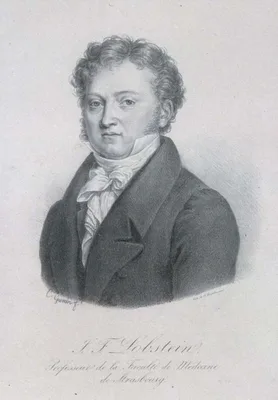
1829 –1833 LOBSTEIN, Jean Georges Chrétien Frédéric Martin (1777 – 1835)
Traité d’anatomie pathologique. 2 vols. and atlas.
Includes a historical review of the subject from the time of the Ancient Egyptians to Corvisart, and a summary of the advances in pathology during the preceding 50 years. Vol. 2, pp. 553-600 deals with diseases of the…
GMN 2288 · https://historyofmedicine.com/id/2915
1829 COOPER, Sir Astley Paston (1768 – 1841)
Illustrations of the diseases of the breast.
Includes one of the earliest descriptions of hyperplastic cystic disease of the breast, which Cooper referred to as “hydatid disease”.
GMN 5769 · https://historyofmedicine.com/id/6794
1829 –1836 LARREY, Dominique Jean (1766 – 1842)
Clinique chirurgicale, exercée particulièrement dans les camps et les hôpitaux militaires depuis 1792 jusqu’en 1829. 5 vols. plus atlas to vols. 1-3, and atlas to vol. 5.
Larrey’s most comprehensive surgical treatise, and the only one of his works that is extensively illustrated. Many of the plates concern surgical pathology.
GMN 5589.1 · https://historyofmedicine.com/id/7048
1829 HODGKIN, Thomas (1798 – 1866)
A catalogue of the preparations in the anatomical museum of Guy’s Hospital arranged and edited, by desire of the Treasurer of the Hospital, and of the teachers of the Medical and Surgical School.
Digital facsimile of Part II, Morbid Anatomy, from the Internet Archive at this link.
GMN 7497 · https://historyofmedicine.com/id/9669
1832 –1834 DUPUYTREN, Guillaume, Le Baron (1777 – 1835)
Leçons orales de clinique chirurgicale. 4 vols.
Dupuytren was born in poverty and died a millionaire. He became the best surgeon of his time in France. He was a “shrewd diagnostician, an operator of unrivaled aplomb, a wonderful clinical teacher, and a good experim…
GMN 2247 · https://historyofmedicine.com/id/7051
1832 –1862 ALBERS, Johann Friedrich Hermann (1805 – 1867)
Atlas der pathologischen Anatomie für praktische Aerzte. 4 parts in 1. With: Erläuterung zu dem Atlasse der pathologischen Anatomie für praktischen Aertze. 4 vols. in 5.
Albers' atlas of pathology, with 257 lithographed plates (93 hand-colored) covers diseases of the brain and spinal cord (Part 1), the throat (Part 2), the thorax (Part 3) and the abdomen (part 4); the five text volume…
GMN 14348 · https://historyofmedicine.com/id/16678
1834 HOPE, James (1801 – 1841)
Principles and illustrations of morbid anatomy.
Hope left a fine pathological atlas with brilliantly hand-coloured lithographs from his own drawings. While the book does not equal the atlases of Cruveilhier and Carswell, it is important as being a great stimulus to…
GMN 2289 · https://historyofmedicine.com/id/2916
1834 MORTON, Samuel George (1799 – 1851)
Illustrations of pulmonary consumption.
Morton published an important collection of illustrations delineating pulmonary tuberculosis which epitomized the knowledge of his time. It was also the first book on the subject published in the United States. Digita…
GMN 3222 · https://historyofmedicine.com/id/5011
1834 –1840 HOUSTON, John (1802 – 1845)
Descriptive catalogue of the preparations in the Museum of the Royal College of Surgeons in Ireland. Vol. I. (Anatomy). Vol. 2. (Pathology).
Digital facsimile from the Internet Archive at this link.
GMN 10380 · https://historyofmedicine.com/id/12572

![GALEN, [Κλαύδιος Γαληνός; Galen of Pergamon] (129 – 216)](/media/portraits/21)