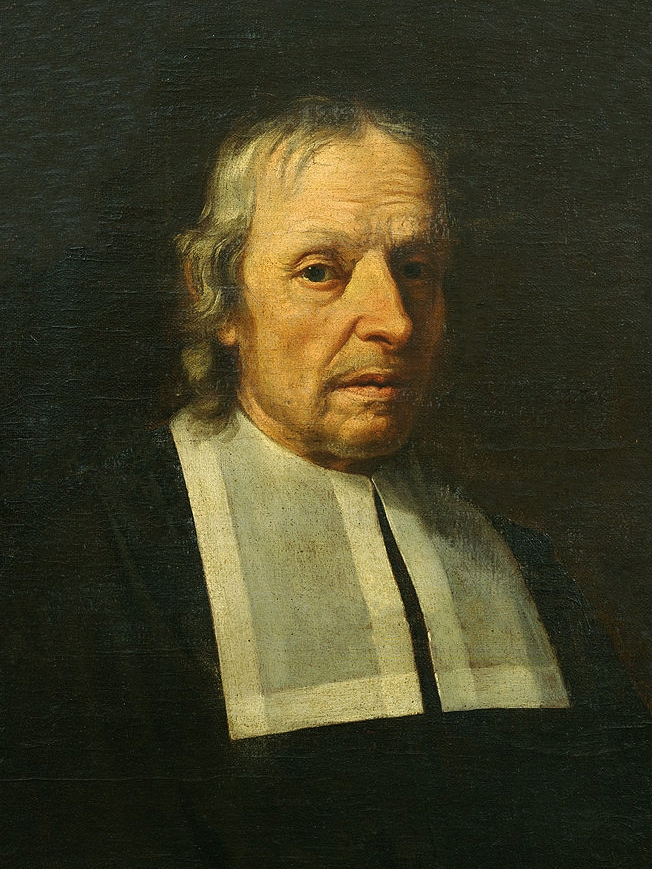
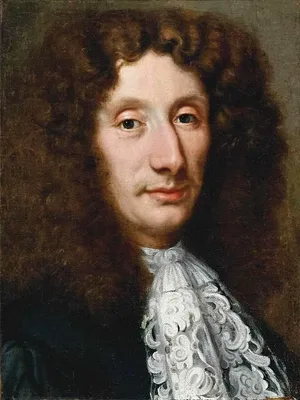
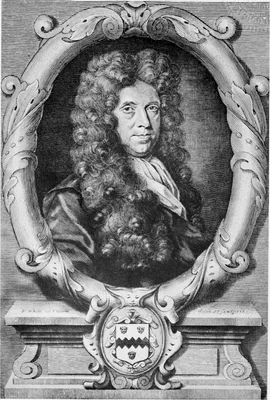
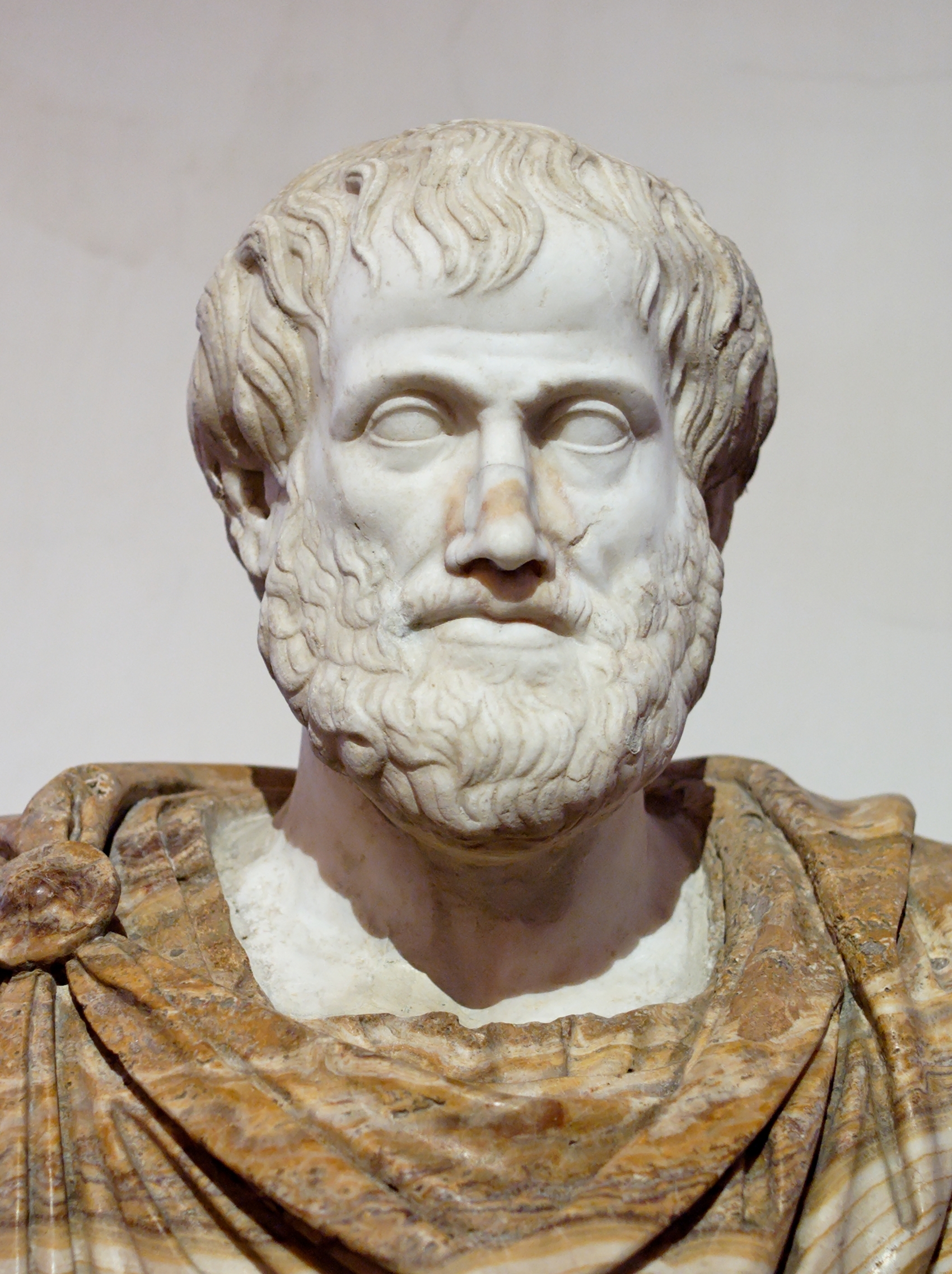
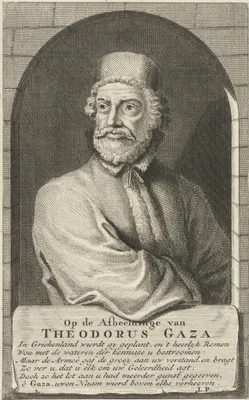
1476 ARISTOTLE (ἈΡΙΣΤΟΤΈΛΗΣ) (-384 – -322); PODOCATARO, Ludovico (Ludovicus Podocatharus) (1429 – 1504); GAZA, Theodorus (Θεόδωρος Γαζῆς) (1398 – 1475)
De animalibus. Translated by Theodorus Gaza. Edited by Ludovicus Podocarthus.
Includes Aristotle's De historia animalium, De partibus animalium, and De generatione animalium. Aristotle was the first scientist to gather empirical evidence about the biological world through observation. By his ca…
GMN 274 · https://historyofmedicine.com/id/14354
1479 ARISTOTLE (ἈΡΙΣΤΟΤΈΛΗΣ) (-384 – -322); WILLEM VAN MOERBEKE, (Gulielmus de Moerbecum; William of Moerbeke) (1215 – 1286); BOËTHIUS, Anicius Manlius Severinus (420 – 524); PORRÉE, Gilbert de la [Gilbert of Poitiers, Gilbertus Poretanus or Pictaviensis] (1085 – 1154); JACOBUS VENETICUS, [James of Venice, Giacomo da Venezia, Jacobus Veneticus Grecus, Jacobus de Venetiis] (1100 – 1165)
Opera. In four parts dated: I) 15 Sept. 1479; II) 13 Oct. 1479; III) 21 Oct. 1479; IV) 8 Nov. 1479. Contents: [I] Praedicamenta, De interpretatione, Analytica priora (Tr: Boethius). Add: Porphyrius: Isagoge in Aristotelis Praedicamenta (Tr: Boethius). Gilbertus Porretanus: Liber sex principiorum. Boethius: Divisiones. [II] Analytica posteriora (Tr: Jacobus Veneticus). [III] Sophistici elenchi, Topica (Tr: Boethius). [IV] Physica (Tr: Guilelmus de Moerbeka).
Aristotle, at one time tutor to Alexander the Great, was, among other things, the first observational biologist, and the founder of comparative anatomy. His views had a profound influence in determining the direction …
GMN 17 · https://historyofmedicine.com/id/39
1531 GALEN, [Κλαύδιος Γαληνός; Galen of Pergamon] (129 – 216); GUINTER VON ANDERNACH, Johannes [Johannes Guinterius; Johannes Winter; Jean Guenther] (1505 – 1574)
De anatomicis administrationibus libri novem.
First separate printed edition in Latin, translated by Johann Guinter von Andernach, of Galen's dissection manual, in which Galen both described his dissection techniques and described anatomical details that were pre…
GMN 359 · https://historyofmedicine.com/id/310
1537 ZERBI, Gabriele (1445 – 1505); DRYANDER, Johann [EICHMANN] (1500 – 1560); COPHO OF SALERNO (1150 – )
Anatomiae, hoc est, corporis humani dissectionis pars prior.
Dryander was among the first to make illustrations after his own dissections. His unfinished guide to dissection entitled Anatomiae, expanded from the Anatomia published the previous year, is one of the most important…
GMN 371 · https://historyofmedicine.com/id/467
1551 BELON, Pierre [Pierre Belon du Mans; Petrus Bellonius Cenomanus] (1517 – 1564)
L'histoire naturelle des estranges poissons marins, avec la vraie peincture & description du daulphin, & de plusieurs autres de son espece.
This, Belon’s first biological work, is regarded as the earliest modern scientific work in the field of comparative anatomy. Finely illustrated with woodcuts. Digital facsimile from the Internet Archive at this link.
GMN 278 · https://historyofmedicine.com/id/8813
1554 –1555 RONDELET, Guillaume [RONDELETIUS] (1507 – 1566)
Libri de piscibus marinis, in quibus verae piscium effigies expressae sunt. (Universae aquatilium pars altera.) 2 vols.
Rondelet wrote this book with the idea of verifying Aristotle, but in it he described many forms of fishes for the first time. The book is an accurate account of his investigation of Mediterranean fishes and marine an…
GMN 282 · https://historyofmedicine.com/id/8818
1555 BELON, Pierre [Pierre Belon du Mans; Petrus Bellonius Cenomanus] (1517 – 1564)
L'histoire de la nature des oyseaux, avec leurs descriptions, et naïfs portraicts retirez du naturel escrite en sept livres.
Belon’s book on birds is well illustrated, including plates of the skeletons of man and bird side by side and in the same posture, to compare them bone for bone. Digital facsimile from the Internet Archive at this link.
GMN 283 · https://historyofmedicine.com/id/8819
1563 –1564 EUSTACHI, Bartolomeo [EUSTACHIUS] (1510 – 1574)
Opuscula anatomica.
Eustachius is credited with several anatomical discoveries, among them the tensor tympani muscle and the Eustachian tube, published in his chapter entitled De auditus organis. In the last respect, however, he was anti…
GMN 1093 · https://historyofmedicine.com/id/159
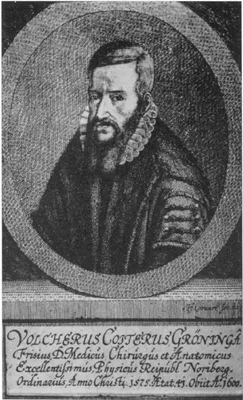
1572 –1573 COITER, Volcher (1534 – 1576)
Externarum et internarum principalium humani corporis partium tabulae.
Coiter made several important contributions to the study of human anatomy, and was the first to elevate comparative anatomy to the rank of an independent branch of biology. His Externarum et internarum principalium hu…
GMN 1539 · https://historyofmedicine.com/id/1251
1575 FALLOPPIO, Gabriele [FALLOPPIUS] (1523 – 1562); COITER, Volcher (1534 – 1576)
Lectiones Gabrielis Falloppi de partibus similaribus humani corporis, ex diversis exemplari eus a Volchero Coiter summa cum diligentia collecta. His accessere diversorum animalium sceletorum explicationes iconibus artificiosis, et genuinis illustratae.
Coiter, a pupil of Fallopius and Eustachius, became town physician of Nuremberg. His book on comparative osteology, contained in his edition of the lectures of Fallopius, extended his studies begun in his work of 1572…
GMN 284 · https://historyofmedicine.com/id/8820
1598 RUINI, Carlo (1530 – 1598)
Dell’anotomia, et dell’infermità del cavallo.
In 1598 Conte Ottavio Ruini edited and had published in Bologna, with a dedication to Cardinal Pietro Aldobrandini, Dell'anotomia [sic], et dell'infirmita del cavallo [Book ii: Dell'infirmita del cavallo] by il marche…
GMN 285 · https://historyofmedicine.com/id/8821
1600 –1601 CASSERI, Giulio Cesare [Julius Casserius Placentinus; Giulio Casserio] (1552 – 1616)
De vocis auditusque organis historia anatomica. 2 pts.
Casseri, originally a servant to Fabrizio, was personally trained by his employer and eventually succeeded to Fabrizio’s chair of anatomy. Like Fabrizio, who studied the development of the chick for clues to human emb…
GMN 1540 · https://historyofmedicine.com/id/2863
1621 FABRIZIO, Girolamo [FABRICIUS AB AQUAPENDENTE] (1537 – 1619)
De formatione ovi et pulli.
GMN 466 · https://historyofmedicine.com/id/1260
1645 SEVERINO, Marco Aurelio [SEVERINUS] (1580 – 1656); COPHO OF SALERNO (1150 – )
Zootomia Democritaea: Id est, anatome generalis totius animantium opificii....
One of the most important of the early works on comparative anatomy. It includes the Anatomia porci, attributed to Copho of Salerno. Severinus dissected many animals and was convinced that the microscope would throw l…
GMN 289 · https://historyofmedicine.com/id/8830
1662 –1669 GOEDAERT, Jan [GOEDARTIUS] (1620 – 1668)
Metamorphosis naturalis, ofte historische beschryvinghe.... 3 vols.
Engraved frontispieces in Latin; text in Dutch. None of the volumes is dated. An edition in Latin, also undated, was issued by the same publisher in 3 vols. during the same years with the following title: Metamorphosi…
GMN 291 · https://historyofmedicine.com/id/8833
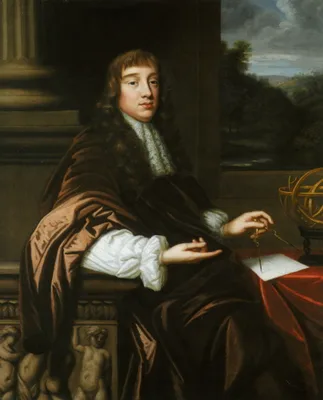
1665 HOOKE, Robert (1635 – 1703)
Micrographia, or some physiological descriptions of minute bodies made by magnifying glasses; with observations and inquiries thereupon.
Hooke, at one time research assistant to Robert Boyle, was one of the greatest inventive geniuses of all time. This was the first book devoted entirely to microscopical observations, and also the first book to pair it…
GMN 262 · https://historyofmedicine.com/id/8735
1667 STENO, Nicolas [Niels Steensen, Nicholaus Stenonis] (1638 – 1686)
Elementorum myologiae specimen.
In this work Stensen, in collaboration with the mathematician Vincenzio Viviani (1622-1703), a pupil of Galileo, developed a geometrical description of muscular contraction, and attempted to show theoretically that mu…
GMN 577 · https://historyofmedicine.com/id/358
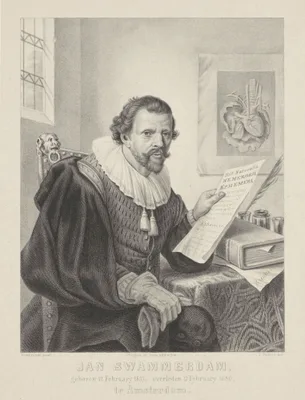
1667 –1673 BLASIUS, Gerard "Gerrit" Leendertszoon [Blaes] (162 – 1682); SWAMMERDAM, Jan (1637 – 1680); PRIVATE COLLEGE OF AMSTERDAM, (Collegium Privatum Amstelodamense)
Observationes anatomicae selectiores. [Part II: Observationum anatomicarum… pars altera]. 2 vols.
The only publications of one of the earliest scientific societies, active from 1664 to 1672. Founded by Gerard Blaes, and numbering Jan Swammerdam among its members, the college devoted itself to comparative anatomica…
GMN 292.1 · https://historyofmedicine.com/id/8835
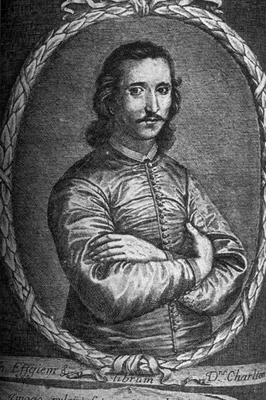
1668 CHARLETON, Walter (1619 – 1707)
Onomasticon zoicon, plerorumque animalium differentias & nomina propria pluribus linguis exponens. Cui accedunt mantissa anatomica, et quaedam de variis fossilium generibus.
Gives a list of the English, Latin, and Greek names of all the then known animals. Digital facsimile from the Internet Archive at this link.
GMN 292 · https://historyofmedicine.com/id/8834
1669 MALPIGHI, Marcello (1628 – 1694)
Dissertatio epistolica de bombyce.
Malpighi’s work on the silkworm represents the first monograph on an invertebrate and records one of the most striking pieces of research work on his part. He dissected the silkworm under the microscope with great ski…
GMN 293 · https://historyofmedicine.com/id/8836
1671 REDI, Francesco (1626 – 1697)
Esperienze intorno a diverse cose naturali…
Includes the first scientific study of an electric fish. While the torpedo’s peculiar properties had provoked scientific speculation since at least the time of Aristotle, Redi was the first to perform an actual dissec…
GMN 294.1 · https://historyofmedicine.com/id/8839
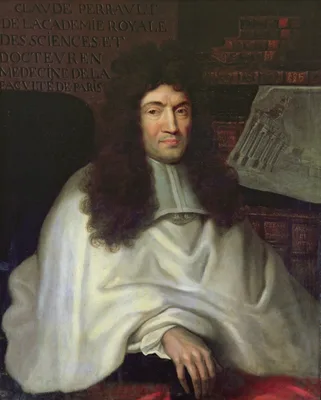
1671 –1676 PERRAULT, Claude (1613 – 1688)
Mémoires pour servir à l’histoire des animaux. 2 vols.
Perrault was the leader of a team of comparative anatomists that included Guichard Joseph Duverney, Jean Pecquet, Moyse Charas and Philippe de la Hire; they were often called the “Parisians” in contemporary literature…
GMN 295 · https://historyofmedicine.com/id/8840
1673 BLASIUS, Gerard "Gerrit" Leendertszoon [Blaes] (162 – 1682)
Miscellanea anatomica, hominis, brutorumque variorum, fabricam diversam magna parte exhibentia.
The "first comprehensive manual of comparative anatomy based on the original and literary researches of a working anatomist. Blasius's observation on human anatomy are followed by eighty five pages devoted to the anat…
GMN 9676 · https://historyofmedicine.com/id/11863
1681 BLASIUS, Gerard "Gerrit" Leendertszoon [Blaes] (162 – 1682)
Anatome animalium, terrestrium variorum, volatilium, aquatilium, serpentum, insectorum, ovorumque, structuram naturalem, ex veterum, recentiorum, propriisque observationibus proponens, figuris variis illustrata.
“The first comprehensive manual of comparative anatomy based on the original and literary researches of a working anatomist” (Cole). Blaes anticipated Cowper in finding the Cowper’s glands, which he illustrated in his…
GMN 296 · https://historyofmedicine.com/id/8842
1681 GREW, Nehemiah (1641 – 1712)
Musaeum Regalis Societatis, or a catalogue and description of the natural and artificial rarities belonging to the Royal Society and preserved at Gresham College. Whereunto is subjoyned the comparative anatomy of stomachs and guts.
Grew, secretary to the Royal Society, compiled this illustrated catalogue of its museum, then housed at Gresham College. Published with the catalogue is Grew’s study of the stomach organs, which is the first zoologica…
GMN 297 · https://historyofmedicine.com/id/8845
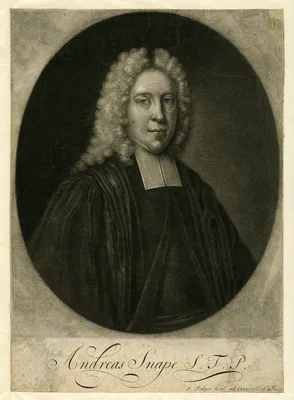
1683 SNAPE, Andrew (1675 – 1742)
The anatomy of an horse.
First book in English on equine anatomy, largely a translation of Ruini (No. 285).
GMN 298 · https://historyofmedicine.com/id/8846
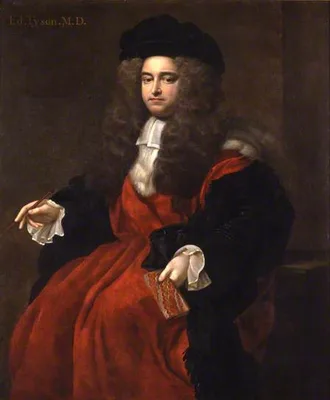
1699 TYSON, Edward (1650 – 1708)
Orang-outang, sive homo sylvestris: Or, the anatomy of a pygmie compared with that of a monkey, an ape, and a man.
The earliest work of importance in comparative morphology. Tyson compared the anatomy of man and monkeys and between the two he placed the chimpanzee, which he regarded as the typical pygmy. This was the origin of the…
GMN 153 · https://historyofmedicine.com/id/2767
1720 VALENTINI, Michael Bernhard (1657 – 1729)
Amphitheatrum zootomicum.
“First extensive work on the comparative anatomy of vertebrates” (Casey Wood).
GMN 303 · https://historyofmedicine.com/id/236
1733 CHESELDEN, William (1688 – 1752)
Osteographia, or the anatomy of the bones.
This splendidly designed and illustrated work contained full and accurate descriptions of all the human bones, as well as many of animals. Cheselden is the first person to have used the camera obscura to gain precisio…
GMN 395 · https://historyofmedicine.com/id/671
1762 LYONET, Pierre (1707 – 1789)
Traité anatomique de la chénille, qui ronge le bois de saule. Augmenté d'une explication abrégée des planches, et d'une description de l'instrument et des outils dont l'auteur s'est servi pour anatomiser à la loupe et au microscope, & pour déterminer la forcer de ses verres, suivant les règles de l'optique, & méchaniquement.
Lyonet’s monograph on the goat moth caterpillar remains a famous example of anatomical examination. It is also a thorough treatise on the microscope and lenses that Lyonet used. Digital facsimile from Biodiversity Her…
GMN 305 · https://historyofmedicine.com/id/239
1766 STUBBS, George (1724 – 1806)
The anatomy of the horse.
The first original work on equine anatomy after Ruini (No. 285). Stubbs, the great painter of animals, prepared his own dissections of horse carcasses, and personally engraved the 24 double folio plates for this work,…
GMN 308.1 · https://historyofmedicine.com/id/119
1767 FONTANA, Felice (1730 – 1805)
Ricerche fisiche sopra il veleno della vipera.
The starting point of modern investigations of serpent venoms and their antidotes. This work also includes Fontana’s description of the ciliary canal in the eye of an ox. This structure does not appear in the human ey…
GMN 2103 · https://historyofmedicine.com/id/2601
1772 LAFOSSE, Philippe Étienne (1738 – 1820)
Cours d'hippiatrique, ou traité complet de la médecine des chevaux.
The leading 18th century French work on these subjects; some copies were issued with hand-colored plates. Digital facsimile of an uncolored copy from BnF Gallica at this link.
GMN 7767 · https://historyofmedicine.com/id/9939
1778 GEOFFROY, Étienne Louis (1725 – 1810)
Dissertations sur l’organe de l’ouie. 1. De l’homme. 2. Des reptiles. 3. Des poissons.
GMN 1551 · https://historyofmedicine.com/id/1133
1782 CAMPER, Petrus (Pieter) (1722 – 1789)
Natuurkundige verhandelingen van Petrus Camper over den orang outang; en eenige andere aap-soorten. Over den rhinoceros met den dubbelen horen; en over het rendier.
Having dissected five orang-outang cadavers, Camper showed that the Bornean orang-outang was a previously undescribed species, and showed that the structure of its vocal organs did not permit speech. Digital facsimile…
GMN 7376 · https://historyofmedicine.com/id/9548
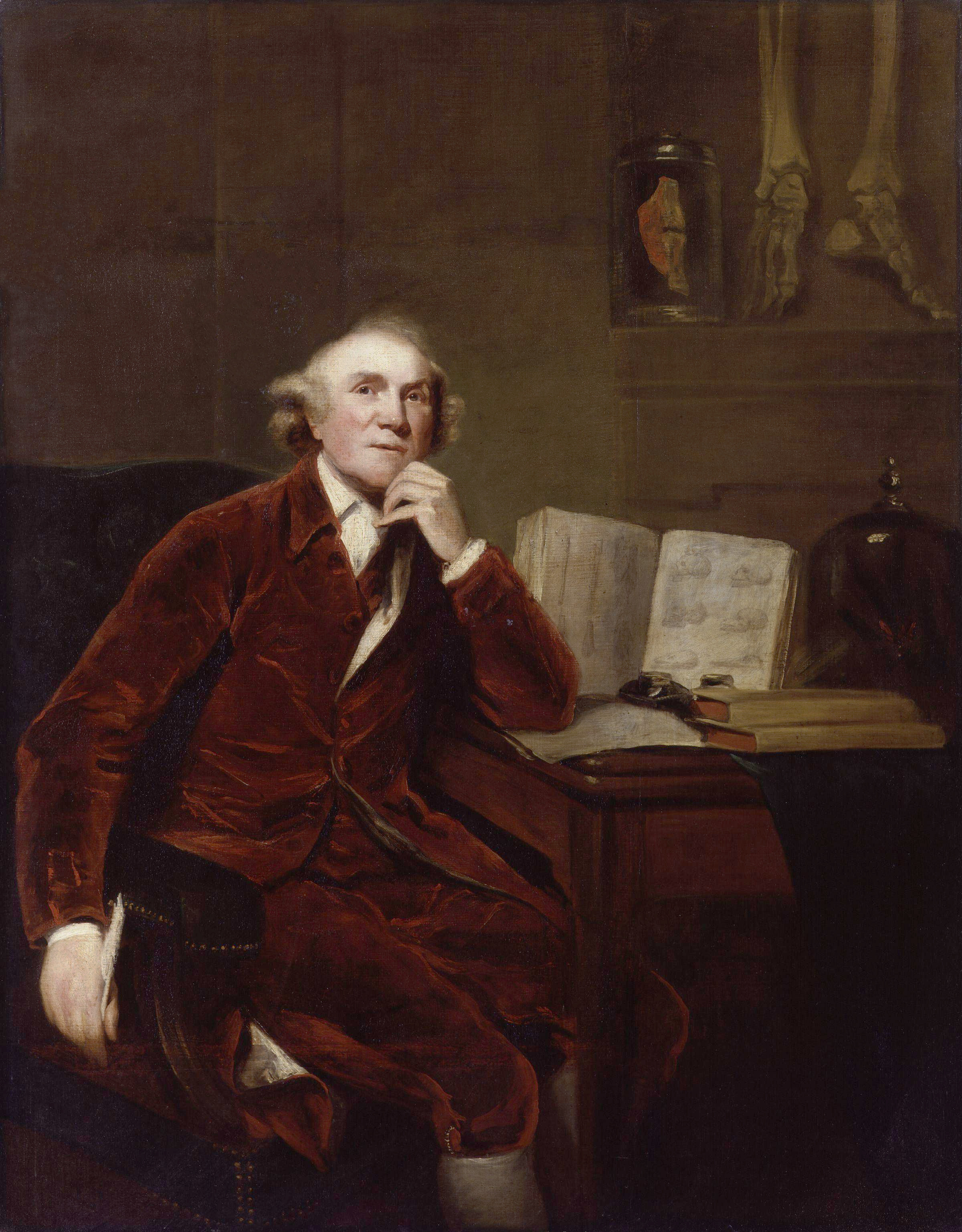
1786 HUNTER, John (1728 – 1793)
Observations on certain parts of the animal oeconomy.
Includes John Hunter’s observations on the secondary sexual characteristics in birds, on the descent of the testis, on the air sac in birds, on the structure of the placenta, etc., together with the original descripti…
GMN 309 · https://historyofmedicine.com/id/124
1789 COMPARETTI, Andrea (1746 – 1801)
Observationes anatomicae de aure interna comparata.
GMN 1552 · https://historyofmedicine.com/id/1136
1789 SCARPA, Antonio (1752 – 1832)
Anatomicae disquisitiones de auditu et olfactu.
Scarpa made important researches concerning the auditory and olfactory apparatus of fishes, birds, reptiles, and man. See L. Sellers and B. Anson, [Scarpa’s] Anatomical observations on the round window, Arch. Otolaryn…
GMN 1453 · https://historyofmedicine.com/id/2342
1799 CUVIER, Jean Léopold Chrétien Frédéric "Georges" (1769 – 1832)
Mémoire sur les espèces d’éléphans vivantes et fossiles.
Using comparative anatomy, Cuvier demonstrated that the African elephant was a separate species from the Indian elephant, and that the fossil or “mammoth” elephant was yet another species distinct from the two living …
GMN 7292 · https://historyofmedicine.com/id/9462
1800 –1805 CUVIER, Jean Léopold Chrétien Frédéric "Georges" (1769 – 1832); DUMÉRIL, André Marie Constant (1744 – 1860); DUVERNOY, George Louis (1777 – 1855)
Leçons d’anatomie comparée. 5 vols.
Cuvier played a leading part in the development of paleontology and stimulated the study of comparative anatomy. He ranks with von Baer as one of the founders of modern morphology. Vols. 1-2 ed. by C. Duméril, and vol…
GMN 311 · https://historyofmedicine.com/id/202
1805 BLUMENBACH, Johann Friedrich (1752 – 1840)
Handbuch der vergleichenden Anatomie.
Blumenbach, physiologist and anthropologist, was Professor of Medicine at Göttingen. He was the first to show the value of comparative anatomy in the study of anthropology; his classic text went through many editions;…
GMN 312 · https://historyofmedicine.com/id/129
1805 VICQ D’AZYR, Félix (1748 – 1794); MOREAU DE LA SARTHE, Jacques-Louis (1771 – 1826)
Oeuvres de Vicq-d'Azyr recueillie et publiées avec des notes et un discours sur sa vie et ses ouvrages par Jacq[ues] L[ouis]- Moreau [de la Sarthe]. 6 vols. and atlas.
Vicq d’Azyr has been called the greatest comparative anatomist of the 18th century. The mammillo-thalamic tract is named the “bundle of Vicq d’Azyr”. See No. 401.2. Digital facsimile of from the Internet Archive at th…
GMN 313 · https://historyofmedicine.com/id/133
1808 –1812 MECKEL, Johann Friedrich (1781 – 1833)
Beyträge zur vergleichenden Anatomie. 2 vols. in 3.
Digital facsimile facsimile from the Hathi Trust at this link.
GMN 314 · https://historyofmedicine.com/id/139
1814 –1828 HUNTER, John (1728 – 1793); HOME, Sir Everard (1756 – 1832)
Lectures on comparative anatomy, in which are explained the preparations in the Hunterian collection
Home plagiarized this large work from the manuscripts of John Hunter, his late father-in-law, and, as a result, of immense importance for publication of Hunter’s researches, and for aspects of Hunter's collection on w…
GMN 315 · https://historyofmedicine.com/id/146
1821 –1833 MECKEL, Johann Friedrich (1781 – 1833)
System der vergleichenden Anatomie. 6 vols.
Meckel is considered the greatest comparative anatomist before Johannes Müller. Digital facsimile from the Hathi Trust Digital Library at this link.
GMN 318 · https://historyofmedicine.com/id/157
1821 TIEDEMANN, Friedrich (1781 – 1861)
Icones cerebri simiarum et quorundam mammalium rariorum.
"Although a few more reports were published furing the next hundred years [after Tyson] it was Tiedemann alone who gave a more detailed account, on monkeys, in his... Icones Simiarum.... In monkeys he found the brain …
GMN 9700 · https://historyofmedicine.com/id/11887
1824 GEOFFROY SAINT-HILAIRE, Étienne (1772 – 1844)
Système dentaire des mammifères et des oiseaux, sous le point de vue de la composition et de la détermination de chaque sorte de ses parties, embrassant sous de nouveaux rapports les principaux faites de l'organisation dentaire chez l'homme.
Digital facsimile from Google Books at this link.
GMN 12861 · https://historyofmedicine.com/id/15108
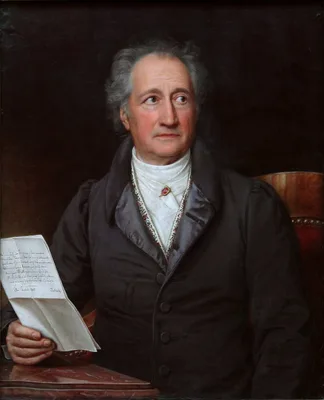
1831 GOETHE, Johann Wolfgang von (1749 – 1832)
Über den Zwischenkiefer des Menschen und der Thiere von Goethe. Jena, 1786. Mit 5 Kupfertafeln.
Goethe believed that in 1784 he demonstrated the presence of the intermaxillary (premaxillary) bone in man, proving an anatomical connection between man and the lower animals, and certifying to Goethe that there is no…
GMN 200 · https://historyofmedicine.com/id/3544
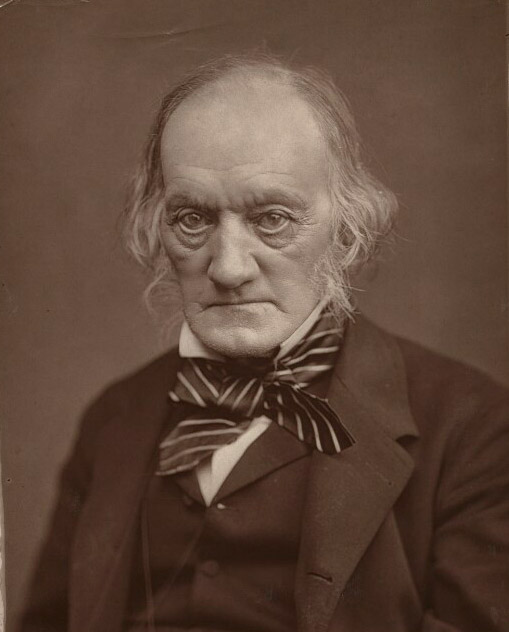
1832 OWEN, Sir Richard (1804 – 1892)
Memoir on the pearly nautilus (Nautilus pompilius, Linn.).
GMN 325 · https://historyofmedicine.com/id/167
1833 –1840 HUNTER, John (1728 – 1793); OWEN, Sir Richard (1804 – 1892)
Descriptive and illustrated catalogue of the physiological series of comparative anatomy contained in the Museum [of the Royal College of Surgeons of England]. 5 vols.
I. Organs of motion and digestion. 1833.--II. Absorbent, circulating, respiratory, and urinary systems. 1834.--III. pt. I. Nervous system and organs of sense. pt. II. Connective and tegumentary systems and peculiariti…
GMN 326 · https://historyofmedicine.com/id/188

![GALEN, [Κλαύδιος Γαληνός; Galen of Pergamon] (129 – 216)](/media/portraits/21)
![BELON, Pierre [Pierre Belon du Mans; Petrus Bellonius Cenomanus] (1517 – 1564)](/media/portraits/9632)