1477 SCOT, Michael [Michael Scotus] (1175 – 1232)
Liber phsionomiae [and other works].
"Composed between 1209 and 1226, the first of the two primary texts discusses human generation — anatomy, physiology, astrology, sexual behavior, conception and the health of the fetus. The second part, the Physiognom…
GMN 10725 · https://historyofmedicine.com/id/12919
1586 PORTA, Giovanni Battista della (1536 – 1615)
De humana physiognomonia libri IIII.
Della Porta preceded Lavater in attempting to estimate human character by the features. This is one of the first works on the ancient “science” of physiognomy to be extensively illustrated.
GMN 150 · https://historyofmedicine.com/id/2735
1607 BARRIOS, Juan de (1562 – 1645)
Verdadera medicina, cirugía y astrologia en tres libros dividida.
Concerns medicine of the Aztecs, etc. Digital facsimile from Google Books at this link.
GMN 8844 · https://historyofmedicine.com/id/11022
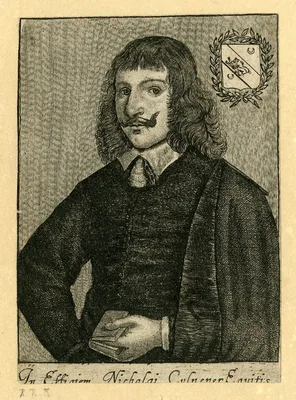
1651 CULPEPER, Nicholas (1616 – 1654)
Semeiotica uranica, or an astrological judgment of diseases from the decumbiture of the sick; 1. From Aven Ezra by the way of introduction. 2. From Noel Duret by way of direction. Wherein is layd down, the way and manner of finding out the cause, change and end of a disease. Also whether the sick be likely to live or dye, and the time when recovery or death is to be expected. To which is added the signs of life or death by the body of the sick party according to the judgment of Hippocrates.
Digital text from quod.lib.umich.edu at this link
GMN 13742 · https://historyofmedicine.com/id/16026
1652 CULPEPER, Nicholas (1616 – 1654)
The English physitian: Or, an astrologo-physical discourse of the vulgar herbs of this nation. Being a compleat method of physick, whereby a man may preserve his body in health; or cure himself, being sick, for three pence charge, with such things only as grow in England, as they being most fit for English bodies. Herein is also shewed, 1. The way of making plaisters, oyntments, oyls, pultisses, syrups, julips, or waters, of all sorts of physical herbs, that you may have them readie for your use at all times of the yeer. 2. What planet governeth every herb or tree (used in physick) that groweth in England. 3. The time of gathering all herbs, both vulgarly, and astrologically. 4. The way of drying and keeping the herbs all the yeer. 5. The way of keeping their juyces ready for use at all times. 6. The way of making and keeping all kind of useful compounds made of herbs. 7. The way of mixing medicines, according to cause and mixture of the disease, and part of the body afflicted.
"Culpeper attempted to make medical treatments more accessible to laypersons by educating them about maintaining their health. Ultimately his ambition was to reform the system of medicine by questioning traditional me…
GMN 8588 · https://historyofmedicine.com/id/10765
1658 CARDANO, Girolamo [Gerolamo; Hieronymus Cardanus] (1501 – 1576)
Metoposcopia libris tredecim et octingentis faciei humanae eiconibus complexa.
Contains 800 illustrations of the human face. Cardan, Professor of Medicine at Padua as well as a celebrated mathematician and scientist, claimed to be able to draw horoscopes from the appearance of the face. A French…
GMN 152 · https://historyofmedicine.com/id/2744
1661 RAMESAY, William (RAMSAY) (1627 – 1672)
Thanasima, kai dēlētēria: Tractatus de venenis. Or, a treatise of poysons. Their sundry sorts, names, natures and virtues, with their severall symptomes, signes diagnosticks, prognosticks, and antidotes. Wherein, are divers necessary questions discussed; the truth by the most learned, confirmed, by many instances, examples & stories illustrated; and, both philosophically and medically handled.
GMN 9671 · https://historyofmedicine.com/id/11858
1663 CARDANO, Girolamo [Gerolamo; Hieronymus Cardanus] (1501 – 1576)
Opera omnia: Tam hactenus excusa, hîc tamen aucta & emendata, quàm nunquam aliàs visa ac primùm ex auctoris ipsius autographis eruta curâ Caroli Sponii .... 10 vols.
Digital facsimile from the Università degli Studi di Milano at this link.
GMN 9576 · https://historyofmedicine.com/id/11763
1677 SAUNDERS, Richard (1613 – 1687)
The astrological judgement and practice of physick, deduced from the position of the heavens at the decumbiture of a sick person.
Saunders "practised astrology and cheiromancy during the golden age of the pseudo-sciences in England." The DNB characterizes this work as "a systematic exposition of astrological therapeutics, based largely upon exam…
GMN 12041 · https://historyofmedicine.com/id/14249
1682 CLEYER, Andreas (1634 – 1698)
Specimen medicinae Sinicae.
One of the earliest studies of Chinese medicine published in the West. (See also Nos. 6472.10 et seq.). Cleyer edited these translations of Chinese medical texts, reproducing a series of 30 plates dealing with Chinese…
GMN 6492 · https://historyofmedicine.com/id/7995
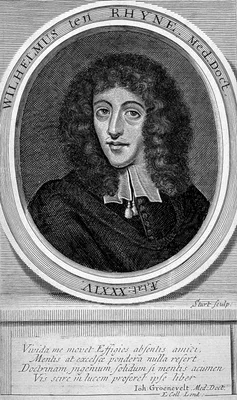
1683 TEN RHIJNE, Willem (1647 – 1700)
Dissertatio de arthritide: mantissa schematica: de acupunctura: et orationes tres…
This work by the resident physician at Deshima, the Dutch East India Company’s trading station in Nagasaki Bay, Japan, contains the first detailed description of acupuncture, and the first illustration of acu-points p…
GMN 6374.1 · https://historyofmedicine.com/id/8316
1685 GARCÍA CONDÉ, Pedro (1603 – )
Verdadera albeyteria. Divido en quatro libros....Lleva diferentes estampas, donde vàn delineadas las enfermedades que sobrevienen en el cuerpo, braços, y piernas del cavallo....
Includes both anatomical engravings and engraving that relate to astrological influences. Digital facsimile from the Hathi Trust at this link.
GMN 10190 · https://historyofmedicine.com/id/12379
1686 BOYM, Michal Piotr (1612 – 1659)
Clavis medica ad Chinarum doctrinam de pulsibus. Autore R.P. Michaele Boymo, e Soc. Jesu, & in China missionario. Huius operis ultra viginti annos iam sepulti fragmenta, hinc inde dispersa, collegit & in gratiam medicae facultatis in lucem Europaeam produxit Cl. Dn. Andreas Cleyerus, M.D. & Societatis Batavo-Orientalis Proto-Medicus. A quo nunc demum mittitur totius operis exemplar, e China recens allatum, & a mendis purgatum, Procuratore R.P. Philippo Copletio, Belga, e Soc. Jesu, Chinensis missionis Romam misso.
Translations of Chinese treatises on pulse medicine with illustrations of hands and wrists to illustrate pulse-taking. The texts published here are different from those published by Cleyer in No. 6492. Previously publ…
GMN 6492.1 · https://historyofmedicine.com/id/7998
1712 KAEMPFER, Engelbert (1651 – 1716)
Amoentitatum exoticarum politico-physico-medicarum fasciculi V.
Kaempfer’s illustrated accounts of Japanese acupuncture and moxibustion are among the best of the 17th century. They appeared for the first time in the above work and were translated into English in his The History of…
GMN 6374.11 · https://historyofmedicine.com/id/8317
1772 LAVATER, Johann Caspar (1741 – 1801)
Von der Physiognomik.
Lavater was the last of the descriptive physiognomists. He expanded the above work into Physiognomische Fragmente zur Beförderung der Menschenkenntnis und Menschenliebe, 1775-78. This was translated into English by H.…
GMN 154 · https://historyofmedicine.com/id/2771
1774 –1780 PEYRILHE, Bernard (1735 – 1804); DUJARDIN, François (1738 – 1775)
Histoire de la chirurgie depuis son origine jusqu’a nos jours. 2 vols.
Dujardin seems to be the first European to discuss acupuncture within its historical context as an ancient remedy still found to be of practical value. His section on Chinese and Japanese medicine appears on pp. 75-10…
GMN 6374.12 · https://historyofmedicine.com/id/8318
1796 HAHNEMANN, Christian Friedrich Samuel (1755 – 1843)
Versuch über ein neues Prinzip zur Auffindung der Heilkräfte der Arzneisubstanzen, nebst einigen Blicken auf die bishberigan.
Hahnemann's first presentation of his new system of medicine. English translation in The Lesser Writings of Samuel Hahnemann, Collected and Translated by R. E. Dudgeon, London: W. Headland, 1851, 195-357.
GMN 6849 · https://historyofmedicine.com/id/9013
1805 HAHNEMANN, Christian Friedrich Samuel (1755 – 1843)
Fragmenta de viribus medicamentorum positivis sive in sano corpore humano observatis. 2 vols.
Hahnemann's first published homeopathic book, his first title on Materia Medica and Repertory, and the first collection of drug provings on the healthy body. The book lists the health effects of 27 drugs in common use…
GMN 6850 · https://historyofmedicine.com/id/9014
1805 HAHNEMANN, Christian Friedrich Samuel (1755 – 1843)
Heilkunde der Erfahrung.
Also published as a monograph, Berlin: In commission bei L. W. Wittich. 1805.
GMN 6851 · https://historyofmedicine.com/id/9015
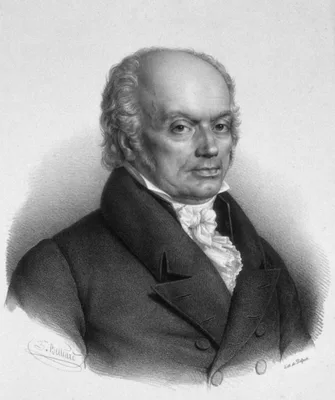
1810 –1819 GALL, Franz Joseph (1758 – 1828); SPURZHEIM, Johann Caspar (1776 – 1832)
Anatomie et physiologie du système nerveux en général, et du cerveau en particulier. 4 vols. and atlas.
Introduced the theory of localization of cerebral function, although in a somewhat fantastic form. This pioneer attempt to map out the cerebral cortex according to function gave rise to the pseudo-science of phrenolog…
GMN 1389 · https://historyofmedicine.com/id/1922
1810 HAHNEMANN, Christian Friedrich Samuel (1755 – 1843)
Organon der rationellen Heilkunde.
Hahnemann, the founder of homeopathy, embodied his theories in the Organon. The minute doses set down by him did much to correct the evils of the polypharmacy of his time, in which overdosage was pervasive. Hahnemann …
GMN 1966 · https://historyofmedicine.com/id/3745
1811 –1821 HAHNEMANN, Christian Friedrich Samuel (1755 – 1843)
Reine Arzneimittellehre. 6 vols.
Known as the Materia Medica Pura. Second edition, 6 vols, 1822-27. For the third edition, Hahnemann only wrote vols. 1 & 2 (1830-33).
GMN 6852 · https://historyofmedicine.com/id/9016
1816 BERLIOZ, Louis V. J. (1776 – 1848)
Mémoires sur les maladies chroniques, les évacuations sanguines et l’acupuncture.
Berlioz, father of the composer, published the first French monograph on acupuncture. He had his best success with muscle and joint stiffness after falls, and rheumatic and arthritic states. Digital facsimile from Goo…
GMN 6374.13 · https://historyofmedicine.com/id/8319
1821 CHURCHILL, James Morss (1796 – 1863)
A treatise on acupuncturation, being a description of a surgical operation originally peculiar to the Japonese and Chinese, and by them denominated zin-king, now introduced into European practice, with directions for its performance, and cases illustrating its success.
The first English monograph on acupuncture. Churchill had most success with rheumatic conditions, sciatica, back-pain, etc. Digital facsimile from the Internet Archive at this link. The German translation of Churchill…
GMN 6374.14 · https://historyofmedicine.com/id/8321
1822 THOMSON, Samuel (1769 – 1843)
New guide to health; or botanic family physician, containing a complete system of practice, upon a plan entirely new; with a description of the vegetables made use of, and directions for preparing and adminstering them to cure disease. To which is prefixed a narrative of the life and medical discoveries of the author.
The "Bible" of Thomsonism or "Thomsonian medicine", which employed botanical remedies, often based on native American medicines. Digital facsimile from the Medical Heritage Library, Internet Archive, at this link.
GMN 6988 · https://historyofmedicine.com/id/9154
1822 THOMSON, Samuel (1769 – 1843)
A narrative of the life and medical discoveries of Samuel Thomson: Containing an account of his system of practice, and the manner of curing disease with vegetable medicine, upon a plan entirely new; to which is added an introduction to his New Guide to Health, or Botanic Family Physician containing the principles upon which the system is founded, with remarks on fevers, steaming, poison &c.
Thomson issued this introductory work shortly before publication of his New Guide. Three issues appeared in 1822: one with 180 pages, another with 182 pages including testimonials, and a 204 page issue with the introd…
GMN 10751 · https://historyofmedicine.com/id/12947
1824 CALDWELL, Charles (1772 – 1853)
Elements of phrenology.
The first book on phrenology written by an American. Digital facsimile from U.S. National Library of Medicine at this link.
GMN 13719 · https://historyofmedicine.com/id/16003
1825 SARLANDIÈRE, Jean-Baptiste (1787 – 1838)
Mémoires sur l’électro-puncture, considerée comme moyen nouveau de traiter efficacement la goutte, les rheumatisme et les affections nerveuses…
The first treatise on electro-puncture – the only significant Western contribution to acupuncture, and one of the most widely used methods of acupuncture today.
GMN 6374.16 · https://historyofmedicine.com/id/8328
1825 GRAM, Hans Burch (1786 – 1840)
The characteristics of homoeopathia. From Hahnemann's "Geist der Homöopathischen Heil-lehre."
The first publication on homeopathy issued in the United States— a translation of Hahnemann's essay. The 24-page pamphlet was dedicated to David Hosack of New York, and gratuitously distributed to leading physicians t…
GMN 6861 · https://historyofmedicine.com/id/9025
1825 MORAND, J.
Mémoire sur l'acupuncture, suivi d'une série d'observations recueillies sous les yeux de M. Jules Cloquet by M. Morand.
Little is known about Morand. He refers to his teacher, Jules Cloquet throughout. Cloquet's book on acupuncture was published the following year in 1826. (No. 6829). Digital facsimile of Morand's book from BnF Gallica…
GMN 14163 · https://historyofmedicine.com/id/16478
1826 BACHE, Franklin (1792 – 1864)
Cases illustrative of the remedial effects of acupuncturation.
The first original study of acupuncture published in North America, and one of the earliest American publications on the alleviation of pain. Franklin Bache, great-grandson of Benjamin Franklin, was the first American…
GMN 6828 · https://historyofmedicine.com/id/8992
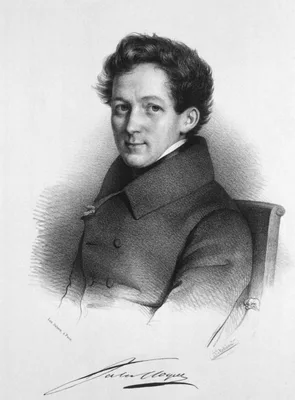
1826 CLOQUET, Jules Germain (1790 – 1883); DANTU, T. M.
Traité de acupuncture, d'après les observations de M. Jules Cloquet. Édité par Dantu de Vannes.
As adjunct chief surgeon at the Hôpital St. Louis, Cloquet had an ample number of patients at his disposal, and he was able to test acupuncture on upwards of 300 cases with mostly beneficial results. Cloquet did not p…
GMN 6829 · https://historyofmedicine.com/id/8993
1828 –1830 HAHNEMANN, Christian Friedrich Samuel (1755 – 1843)
Die chronischen Krankheiten, ihre eigenthümliche Natur und homöopathische Heilung. 4 vols.
Second edition, 6 vols., 1835-39.
GMN 6853 · https://historyofmedicine.com/id/9017
1828 COMBE, George (1788 – 1858)
The constitution of man considered in relation to external objects.
"Combe argues that the human mind is best understood through Phrenology, and that the relative size of the various regions of the brain defined by Phrenology determines a persons behavior and potential interactions wi…
GMN 10071 · https://historyofmedicine.com/id/12260
1831 VELPEAU, Alfred Armand Louis Marie (1795 – 1867)
Mémoire sur la piqûre ou l’acupuncture des artères dans le traitement des anévrismes.
First attempt at operative treatment of aneurysm.
GMN 2977 · https://historyofmedicine.com/id/5123
1833 BÖNNINGHAUSEN, Clemens Marie Franz von (1785 – 1864)
Systematisches Alphabetisches Repertorium der antipsorischen Arzneien mit Einschluss der antisyphilitic und antipsorischen Arzneien.
Foreward by Hahnemann. Translated into English from the second German edition by C. M. Roger, as A Systematic, Alphabetic Repertory of Homoeopathic Remedies. Part First. Embracing the Antisporic, Antisyphilitic, and A…
GMN 6855 · https://historyofmedicine.com/id/9019
1834 QUIN, Frederick Hervey Foster (1799 – 1878)
Pharmacopoeia Homoeopathica.
The first systematic work on homeopathy published in England. A rather late work to be published in Latin.
GMN 13091 · https://historyofmedicine.com/id/15343
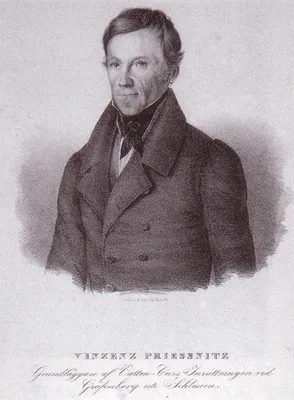
1835 PRIESSNITZ, Vincenz (1799 – 1851)
The coldwater cure, its principles, theory, and practice.
Priessnitz, a peasant farmer in Gräfenberg, Austrian Silesia, is generally considered the founder of modern hydrotherapy, which is used in alternative and orthodox medicine. Priessnitz stressed remedies such as suitab…
GMN 1992 · https://historyofmedicine.com/id/3828
1835 –1838 HERING, Constantine (1800 – 1880)
The homoeopathist, or domestic physician. 2 vols.
The first book on domestic homeopathy published in the United States. The names of the medicines are not given, but are referred to by numbers. Digital facsimile from the National Library of Medicine at this link.
GMN 6864 · https://historyofmedicine.com/id/9028
1837 HERING, Constantine (1800 – 1880)
Wirkungen des Schlangengiftes, zum aerztichen Gebrauche vergleichend zusammengestellt. Mit einer Einleigung über das Studium der homöopathischen Arzneimittellehr.
An early American homeopathic title on The Effects of Snake Poison Comparatively Arranged for Therapeutic Use. Hering assumed an analogy between snake venom and bacterial toxins. He drew his work from provings and tes…
GMN 6865 · https://historyofmedicine.com/id/9029
1837 SEWALL, Thomas (1786 – 1845)
An examination of phrenology; in two lectures.
This may be the earliest work incorporating anatomical images that was written in opposition to phrenology. Sewall, a physician from New England, was a founding member of the medical department at Columbian College (n…
GMN 13101 · https://historyofmedicine.com/id/15353
1838 GRIFFITH, Mary (1772 – 1846)
Barn-Yard rhymes; showing what opinions the turkey, the cock, the goose, and the duck, enterain of allopathia, homopathia, electro-galvanism and the animalcule doctrines.
A critique of medical practice and procedures in 80 pages of rhymed couplets voiced by farmyard animals. Mary Griffith, who published these satirical poems anonymously, dedicated the work to the Philadelphia physician…
GMN 11431 · https://historyofmedicine.com/id/13630
1839 BAUMGÄRTNER, Karl Heinrich (1798 – 1886)
Physiognomice pathologica – Krankenphysiognomik. Text in quarto; atlas in folio with 72 hand-colored lithographs.
A second edition in octavo format with 80 small plates was published in 1842. Baumgärtner, a pupil of Friedrich Tiedemann and Leopold Gmelin at Heidelberg, taught that it was possible to make a correct diagnosis with …
GMN 10589 · https://historyofmedicine.com/id/12782
1841 COMBE, George (1788 – 1858)
Notes on the United States of North America during a phrenological visit in 1838-9-40. 3 vols.
Digital facsimile from the Hathi Trust at this link.
GMN 10072 · https://historyofmedicine.com/id/12261
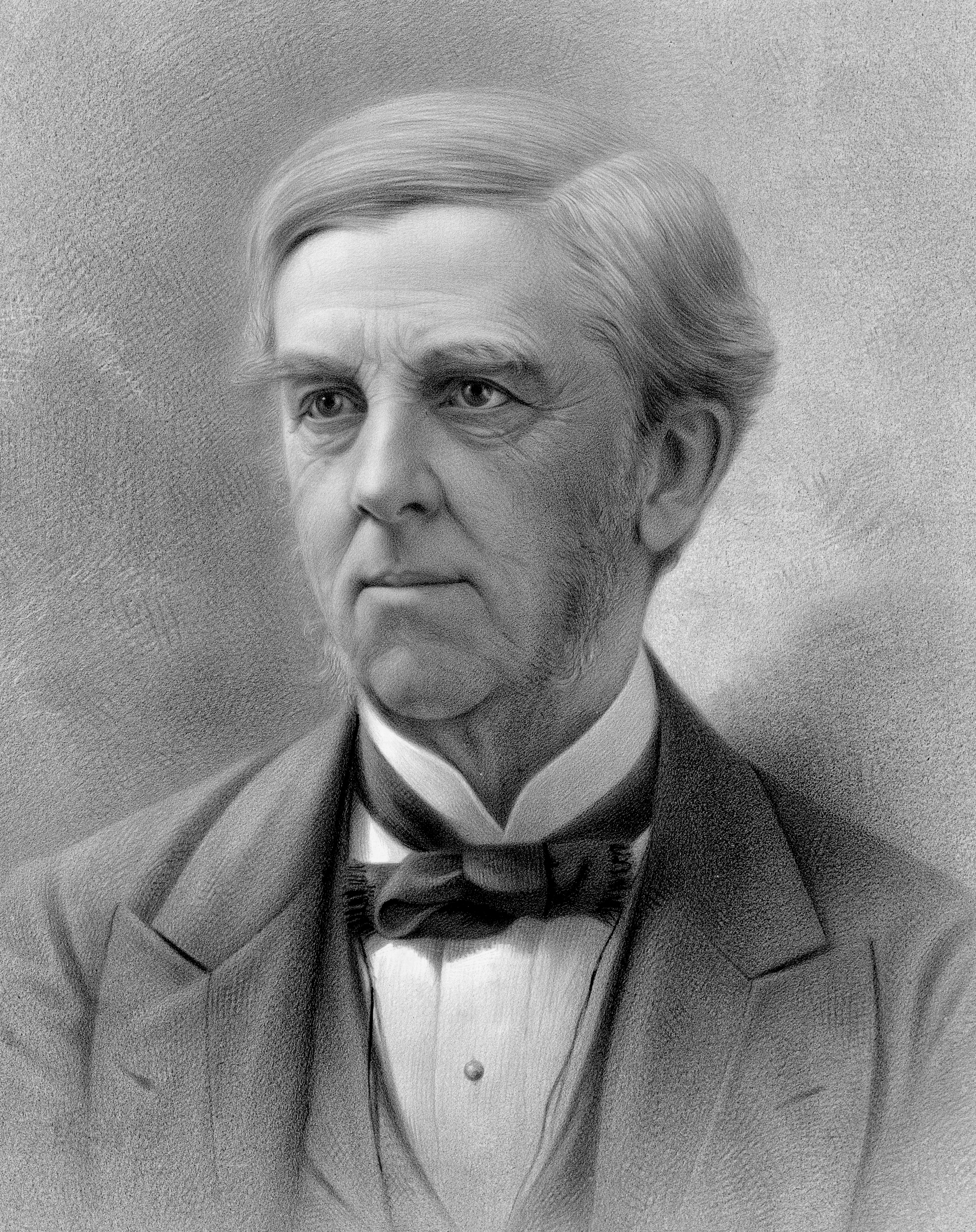
1842 HOLMES, Oliver Wendell Sr. (1809 – 1894)
Homoeópathy, and its kindred delusions; Two lectures delivered before the Boston Society for the Diffusion of Useful Knowledge.
Digital facsimile from the Internet Archive at this link.
GMN 11260 · https://historyofmedicine.com/id/13457
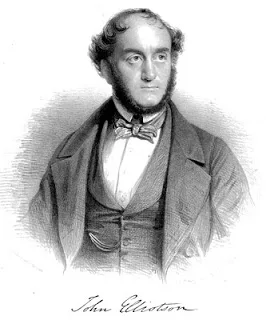
1843 –1856 ELLIOTSON, John (1791 – 1868); ESDAILE, James (1808 – 1859)
The Zoist: A journal of cerebral physiology & mesmerism, and their applications to human welfare. Edited by John Elliotson. 13 vols.
The most comprehensive source about British mesmerism of the period, and an invaluable reference for contemporary ideas and developments not only in mesmerism (hypnosis) but also in phrenology, neurology and psychiatr…
GMN 9256 · https://historyofmedicine.com/id/11438
1846 BÖNNINGHAUSEN, Clemens Marie Franz von (1785 – 1864)
Therapeutisches Taschenbuch für Homöopathische Aerzte.
Frequently reprinted. "Bönninghausen's Therapeutic Pocketbook of 1846 was the first homeopathic repertory to grade individual remedies by their strength of relationship with each symptom, and each other. This so-calle…
GMN 6856 · https://historyofmedicine.com/id/9020
1849 CORFE, George
The physiognomy of diseases.
Corfe was Resident Medical Officer at London's Middlesex Hospital, Fellow of the Royal College of Physicians of Edinburgh, and author of works on various medical subjects. Digital facsimile from the Internet Archive a…
GMN 9814 · https://historyofmedicine.com/id/12002
1851 BENNETT, John Hughes (1812 – 1875)
The Mesmeric mania of 1851, with a physiological explanation of the phenomena produced. A lecture.
Bennett provided a scientific explanation for then current mass hysteria or group hypnosis in Edinburgh. Digital facsimile from Google Books at this link.
GMN 12424 · https://historyofmedicine.com/id/14655
1852 –1853 HAMILTON, Edward (1815 – 1903)
The flora homoeopathica: Or, illustrations and descriptions of the medicinal plants used as homoeopathic remedies. 2 vols.
Hamilton detailed the symptoms of poisoning, records of successful use of the plant, and a description of its homeopathic uses. Finely illustrated with hand-colored plates, mostly by Henry Sowerby and his sister Charl…
GMN 10129 · https://historyofmedicine.com/id/12318

![SCOT, Michael [Michael Scotus] (1175 – 1232)](/media/portraits/12461)
![CARDANO, Girolamo [Gerolamo; Hieronymus Cardanus] (1501 – 1576)](/media/portraits/7679)