1521 BERENGARIO DA CARPI, Giacomo (1460 – 1530)
Commentaria cum amplissimis additionibus super anatomia Mundini una cum textu ejusdem in pristinum et verum nitorem redacto.
Giacomo Berengario da Carpi (Jacobus Berengarius Carpensis, Jacopo Barigazzi, Giacomo Berengario da Carpi or simply Carpus) introduced iconography and independent anatomical observation into the teaching of anatomy. H…
GMN 367 · https://historyofmedicine.com/id/441
1561 FALLOPPIO, Gabriele [FALLOPPIUS] (1523 – 1562)
Observationes anatomicae.
Observationes anatomicae, a work of 232 leaves printed in the comparatively small octavo format, with no illustrations, was the only work Fallopio published before his death from tuberculosis at age thirty-nine, and i…
GMN 1208 · https://historyofmedicine.com/id/562
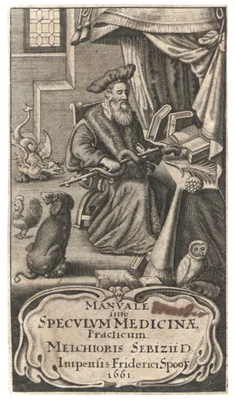
1630 SEBISCH, Melchior The Younger (1578 – 1674)
Disputatio medica de notis virginitatis.
Details the methods of previous and contemporary writers concerning the determination of virginity. Digital facsimile from Google Books at this link.
GMN 1721 · https://historyofmedicine.com/id/2998
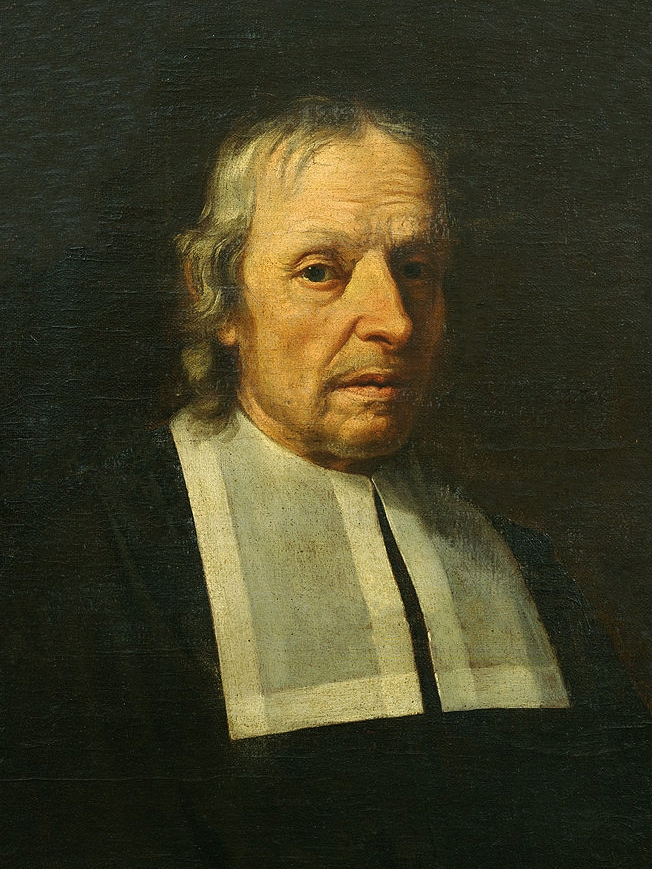
1662 BELLINI, Lorenzo (1643 – 1704)
Exercitatio anatomica de structura et usu renum.
Classic description of the gross anatomy of the kidney. Bellini discovered the renal excretory ducts (“Bellini’s ducts”) and advanced a physical theory of the secretion of the urine. A translation of an extract from t…
GMN 1229 · https://historyofmedicine.com/id/1948
1666 MALPIGHI, Marcello (1628 – 1694)
De viscerum structura exercitatio anatomica.
Includes (pp. 71-100) his essay, De renibus, in which he described the uriniferous tubules and the “Malpighian bodies”. The great detail and clarity of Malpighi’s description was unsurpassed until Bowman (No. 1231). T…
GMN 1230 · https://historyofmedicine.com/id/153
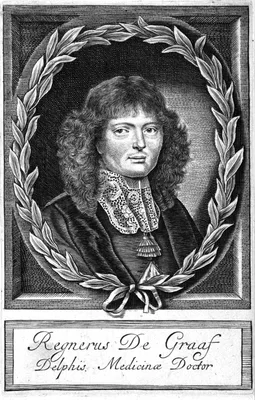
1668 GRAAF, Regnier de (1641 – 1673)
De virorum organis generationi inservientibus, de clysteribus et de usu siphonis in anatomia.
Exact and detailed account of the male reproductive system. This work and No. 1209 were translated into English and published as Suppl. 17 to J. Reprod. Fertil, 1972. Facsimile of originals, Nieuwkoop, De Graaf, 1965.
GMN 1210 · https://historyofmedicine.com/id/1867
1672 GRAAF, Regnier de (1641 – 1673)
De mulierum organis generationi inservientibus.
De Graaf demonstrated ovulation anatomically, pathologically and experimentally. In the above work he included the first account of the “Graafian follicle”. Translation of Chapter XII, dealing with the ovaries, by G. …
GMN 1209 · https://historyofmedicine.com/id/1863
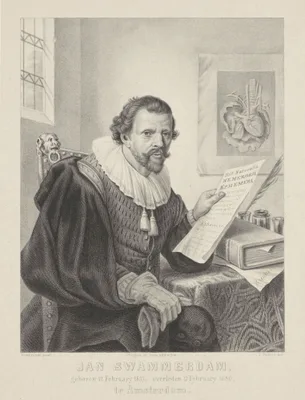
1672 SWAMMERDAM, Jan (1637 – 1680)
Miraculum naturae, sive uteri muliebris fabrica.
After de Graaf published his work on ovulation (No. 1209), Swammerdam asserted his priority in the above work, noting that his researches had been acknowledged in 1668 by van Horne.
GMN 1211 · https://historyofmedicine.com/id/1869
1684 MÉRY, Jean (1645 – 1722)
Observations anatomiques.
Includes a brief description of “Cowper’s glands”.
GMN 1212 · https://historyofmedicine.com/id/1877
1691 NUCK, Anton (1650 – 1692)
Adenographia curiosa et uteri foeminei anatome nova.
Description of the “canal of Nuck”.
GMN 1213 · https://historyofmedicine.com/id/1883
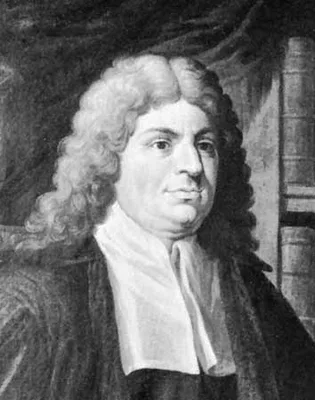
1699 COWPER, William (1666 – 1709)
An account of two new glands and their excretory ducts, lately discovered in human bodies.
Cowper’s description of the glands which bear his name. He was forestalled in their discovery by Jean Méry.
GMN 1214 · https://historyofmedicine.com/id/1885
1707 NABOTH, Martin (1675 – 1721)
De sterilitate mulierum.
The Nabothian cysts and glands of the cervix uteri first described (sect. xv).
GMN 1216 · https://historyofmedicine.com/id/1891
1719 LITTRÉ, Alexis (1658 – 1726)
Description de l’urèthre de l’homme.
“Littre’s glands” described.
GMN 1215 · https://historyofmedicine.com/id/1889
1730 DOUGLAS, James (1675 – 1742)
A description of the peritonaeum, and of that part of the membrane cellularis which lies on its outside. With an account of the true situation of all the abdominal viscera, in respect of these two membranes.
Douglas described the peritoneum in detail; his name is perpetuated in the “pouch”, “line”, and “fold of Douglas”. He was a friend of John Hunter and brother of John Douglas, the lithotomist.
GMN 1217 · https://historyofmedicine.com/id/1894
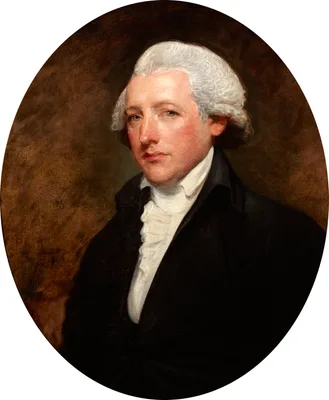
1797 CRUIKSHANK, William Cumberland (1745 – 1800)
Experiments in which, on the third day after impregnation, the ova of rabbits were found in the Fallopian tubes, and on the fourth day after impregnation in the uterus itself, with the first appearances of the foetus.
Cruikshank showed that the impregnated ovum stayed in the Fallopian tube for a period before implantation in the uterus.
GMN 1218 · https://historyofmedicine.com/id/1897
1841 KÖLLIKER, Rudolph Albert von (1817 – 1905)
Beiträge zur Kenntniss der Geschlechtsverhältnisse und der Samenflüssigkeit wirbelloser Thiere.
GMN 1219 · https://historyofmedicine.com/id/1900
1841 KÖLLIKER, Rudolph Albert von (1817 – 1905)
Ueber das Wesen der sogenannten Saamenthiere.
Demonstration of the cellular origin of spermatozoa.
GMN 1220 · https://historyofmedicine.com/id/1904
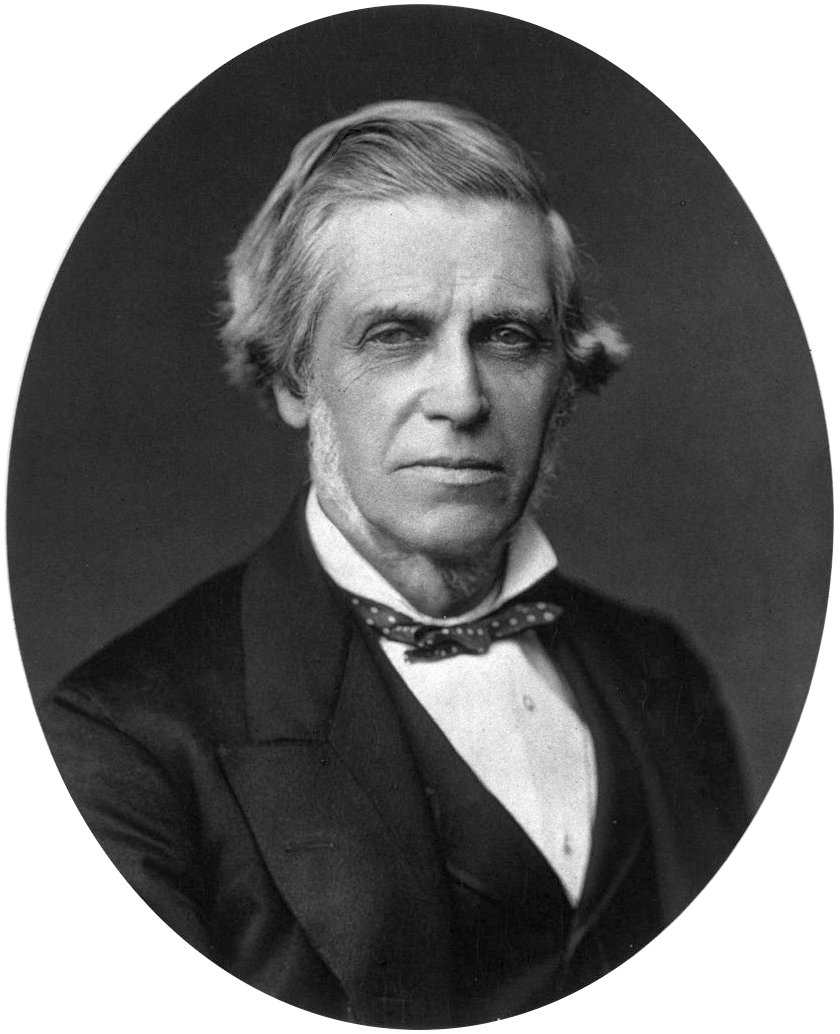
1842 BOWMAN, Sir William (1816 – 1892)
On the structure and use of the Malpighian bodies of the kidney with observations on the circulation through that gland.
“Bowman’s capsule”. Bowman provided convincing evidence that the glomerular corpuscle is continuous with the renal tubule and gave the first adequate description of the vascular supply of the nephron. He described the…
GMN 1231 · https://historyofmedicine.com/id/1955
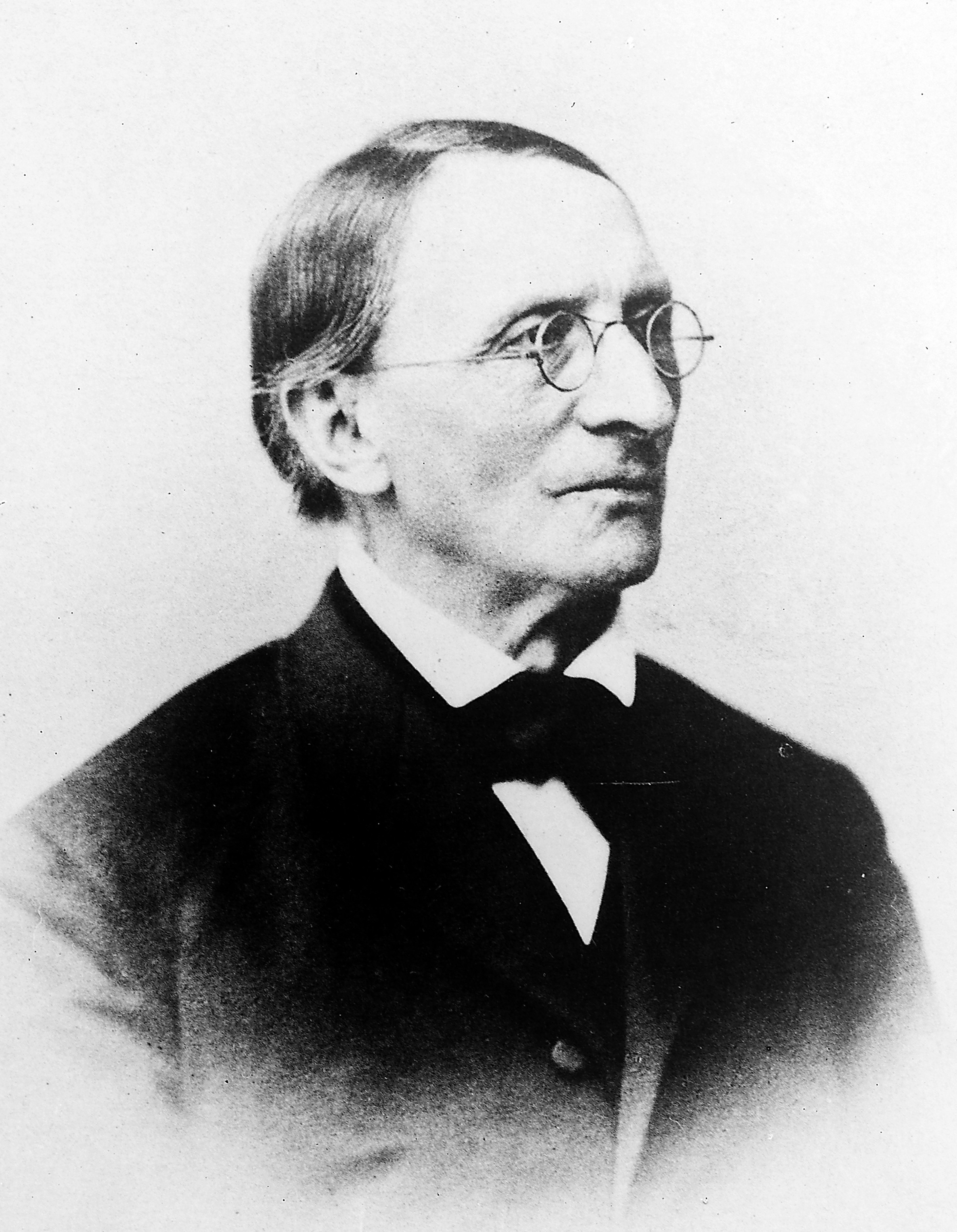
1843 LUDWIG, Carl Friedrich Wilhelm (1816 – 1895)
Beiträge zur Lehre vom Mechanismus der Harnsecretion.
Ludwig wrote a classic monograph on renal secretion. He theorized that urine formation could be explained purely in terms of the laws of physics and chemistry, and that under the hydrostatic pressure of the blood in t…
GMN 1232 · https://historyofmedicine.com/id/1960
1849 RETZIUS, Anders Adolf (1796 – 1860)
Ueber das Ligamentum pelvoprostaticum oder den Apparat, durch welchen die Harnblase, die Prostata und die Harnröhre an den untern Beckenöffnung befestigt sind.
The “cave of Retzius” described.
GMN 1221 · https://historyofmedicine.com/id/1905
1850 LEYDIG, Franz (1821 – 1908)
Zur Anatomie der männlichen Geschlechtsorgane un Analdrüsen der Säugethiere.
Leydig was the first to describe the interstitial cells of the testis (“Leydig cells”).
GMN 1222 · https://historyofmedicine.com/id/1908
1857 ISAACS, Charles Edward (1811 – 1860)
Researches into the structure and physiology of the kidney.
GMN 1233 · https://historyofmedicine.com/id/1963
1857 ISAACS, Charles Edward (1811 – 1860)
On the function of the Malpighian bodies of the kidney.
Isaacs confirmed and corrected the findings of Bowman; he introduced dye experiments in the study of the kidney, from which he drew the important conclusion that the Malpighian bodies are the most important agency in …
GMN 1234 · https://historyofmedicine.com/id/8971
1859 BERNARD, Claude (1813 – 1878)
Leçons sur les propriétés physiologiques et les altérations pathologiques des liquides de l’organisme.
Bernard was the first to describe an effect of the renal nerves on urine flow.
GMN 1234.1 · https://historyofmedicine.com/id/1970
1863 ECKHARD, Conrad (1822 – 1915)
Untersuchungen über die Erection des Penis beim Hunde.
Important studies of the erector mechanism.
GMN 1223 · https://historyofmedicine.com/id/1910
1865 SCHWEIGGER-SEIDEL, Franz Wilhelm (1834 – 1871)
Ueber die Samenkörperchen und ihre Entwicklung.
Proof that the spermatozöon possesses a nucleus and cytoplasm.
GMN 1224 · https://historyofmedicine.com/id/1911
1874 HEIDENHAIN, Rudolf Peter Heinrich (1834 – 1897)
Versuche über den Vorgang der Harnabsonderung.
Heidenhain’s “secretion” theory of renal function.
GMN 1235 · https://historyofmedicine.com/id/1974
1880 SKENE, Alexander Johnston Chalmers (1838 – 1900)
The anatomy and pathology of two important glands of the female urethra.
“Skene’s glands” described.
GMN 1225 · https://historyofmedicine.com/id/1915
1881 EBSTEIN, Wilhelm (1836 – 1912)
Ueber Drüsenepithelnekrosen beim Diabetes mellitus mit besonderer Berücksichtigung des diabetischen Coma.
“Ebstein’s disease”, hyaline degeneration and necrosis of the epithelial cells of the renal tubules, sometimes seen in diabetes mellitus.
GMN 3944 · https://historyofmedicine.com/id/5185
1895 MACKENRODT, Alwin Karl (1859 – 1925)
Ueber die Ursachen der normalen und pathologischen Lagen des Uterus.
“Mackenrodt’s ligaments”, the uterosacral ligaments.
GMN 1226 · https://historyofmedicine.com/id/1916
1898 TIGERSTEDT, Robert Adolf Armand (1853 – 1923); BERGMAN, Per Gustaf (1874 – 1955)
Niere und Kreislauf.
Discovery that a pressor substance (renin) is produced by the kidneys and enters the circulation by the renal veins. Abridged English translation in No. 3160.1.
GMN 1236 · https://historyofmedicine.com/id/1975
1901 STARLING, Ernest Henry (1866 – 1927); MAGNUS, Rudolf (1873 – 1927)
The action of pituitary extracts on the kidney.
Magnus and Starling reported that pituitary extracts caused expansion of the kidney and a marked and often prolonged diuresis. This was the first indication that the neurohypophysis plays a part in the regulation of u…
GMN 1236.1 · https://historyofmedicine.com/id/1977
1909 STARLING, Ernest Henry (1866 – 1927)
The fluids of the body.
Starling put forward the idea that renal excretion of salt (and water) was conditioned by the volume of body fluids, particularly the blood volume. He suggested that the sum total of body fluids was arranged so that t…
GMN 1236.2 · https://historyofmedicine.com/id/1981
1917 CUSHNY, Arthur Robertson (1866 – 1926)
The secretion of the urine.
Cushny’s theory of urinary secretion was similar to that of Ludwig, with some modifications. Subsequent work of Richards and his co-workers confirmed his theory.
GMN 1237 · https://historyofmedicine.com/id/1985
1923 MARSHALL, Eli Kennerly Jr. (1889 – 1966); VICKERS, J. L.
The mechanism of the elimination of phenolsulphonephthalein by the kidney–a proof of secretion by the convoluted tubules.
Proof of tubular secretion in mammals.
GMN 1237.1 · https://historyofmedicine.com/id/1998
1924 RICHARDS, Alfred Newton (1876 – 1966); SCHMIDT, Carl Frederic (1893 – 1988)
A description of the glomerular circulation in the frog’s kidney and observations concerning the action of adrenalin and various other substances upon it.
Richards made many experiments concerning the secretion of urine. Among other things he collected and analysed the fluid from a single glomerulus; his work confirmed the theories of Ludwig and Cushny.
GMN 1238 · https://historyofmedicine.com/id/2002
1924 RICHARDS, Alfred Newton (1876 – 1966); WEARN, Joseph Treloar (1893 – 1984)
Observations on the composition of glomerular urine with particular reference to the problem of reabsorption in the renal tubules.
Experimental proof that the initial step in urine production is the formation in Bowman’s space of a protein-free ultrafiltrate of plasma and that reabsorption of certain substances must occur in the tubules since the…
GMN 1239 · https://historyofmedicine.com/id/2011
1924 –1925 STARLING, Ernest Henry (1866 – 1927); VERNEY, Ernest Basil (1894 – 1967)
The secretion of urine as studied on the isolated kidney.
Demonstration that the anti-diuretic action of vasopressin is exerted directly on the kidney, and that tubules of the kidney reabsorb water.
GMN 1240 · https://historyofmedicine.com/id/2016
1926 STIEVE, Hermann (1886 – 1952)
Die Unfruchtbarkeit als Folge unnatürlicher Lebensweise.
Investigation of the effect of starvation and overfeeding on the gonads and on sexual capacity.
GMN 1227 · https://historyofmedicine.com/id/1918
1926 REHBERG, Poul Brandt (1895 – 1985)
Studies on kidney function.
First attempt to determine the glomerular filtration rate in man.
GMN 1241 · https://historyofmedicine.com/id/2020
1927 HAYMAN, Joseph Marchant (1896 – )
Estimation of afferent arteriole and glomerular capillary pressures in the frog kidney.
GMN 1242 · https://historyofmedicine.com/id/2027
1929 MARSHALL, Eli Kennerly Jr. (1889 – 1966)
The aglomerular kidney of the toadfish (Opsanus tau).
Proof that the tubules of the kidney of a vertebrate could secrete foreign substances.
GMN 1243 · https://historyofmedicine.com/id/2031
1934 RHOADS, Cornelius Packard (1898 – 1959)
A method for explantation of the kidney.
GMN 1244 · https://historyofmedicine.com/id/2034
1941 WALKER, Arthur M.; OLIVER, Jean Redman (1889 – 1976); ET AL
Methods for the collection of fluid from single glomeruli and tubules of the mammalian kidney, and the collection and analysis of fluid from single nephrons of the mammalian kidney.
This was the first (and for many years) the only application of the Wearn-Richards procedure (No. 1239) to the mammalian kidney.
GMN 1244.1 · https://historyofmedicine.com/id/2038
1947 VERNEY, Ernest Basil (1894 – 1967)
The antidiuretic hormone and the factors which determine its release.
Verney elucidated the factors that determine the release of antidiuretic hormone, and introduced the osmoreceptor concept.
GMN 1244.2 · https://historyofmedicine.com/id/2041
1947 TRUETA I RASPALL, Josep (1897 – 1977); ET AL
Studies of the renal circulation.
With A. E. Barclay, P. M. Daniel, K. J. Franklin, and M. M. L. Prichard. In studying the anurias which follow injury, especially crushing injuries and burns, Trueta’s team demonstrated that both the processes of filtr…
GMN 1245 · https://historyofmedicine.com/id/2044
1951 SMITH, Homer William (1895 – 1962)
The kidney: structure and function in health and disease.
An encyclopaedic presentation of kidney physiology, including the many contributions of the author.
GMN 1246 · https://historyofmedicine.com/id/2048
1951 HARGITAY, Bart; KUHN, Werner (1899 – 1963)
Das Multiplikationsprinzip als Grundlage der Harnkonzentrierung in der Niere.
A theoretical treatment of the countercurrent hypothesis accompanied by data from a working model.
GMN 1246.01 · https://historyofmedicine.com/id/2054
1951 WIRZ, Heinrich (1914 – ); ET AL
Lokalisation des Konzentrierungsprozesses in der Niere durch direkte Kryoskopie.
The initial experimental evidence advanced in support of the countercurrent hypothesis. With B. Hargitay and W. Kuhn.
GMN 1246.1 · https://historyofmedicine.com/id/2056
1959 GOTTSCHALK, Carl William (1922 – 1997); MYLLE, Margaret
Micropuncture study of the mammalian urinary concentrating mechanism: Evidence for the countercurrent hypothesis.
Proof that tubular fluid is first concentrated in the loop of Henle, then diluted in the ascending limb of the loop before its final concentration in the collecting ducts, as predicted by the countercurrent hypothesis.
GMN 1246.2 · https://historyofmedicine.com/id/2060