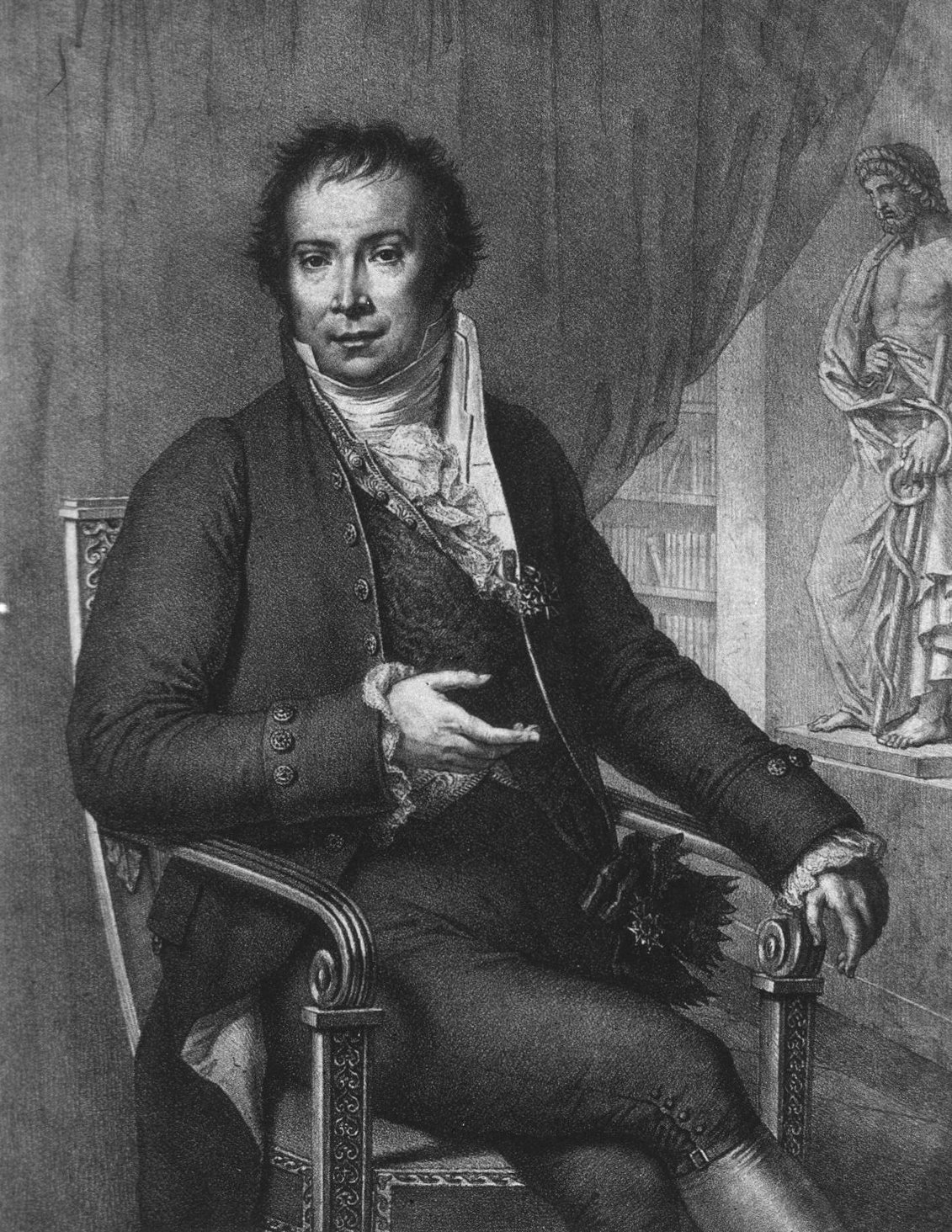
1563 ORTA, Garcia de [Garcia d'Orta] (1501 – 1568)
Colóquios dos simples, e drogas he cousas mediçinais da Índia e assi dalgũas frutas achadas nella onde se tratam algũas cousas tocantes a medicina, pratica, e outras cousas boas pera saber.
The first account of Indian materia medica and the first textbook on tropical medicine written by a European. It includes a classic account of Asiatic cholera, the first account of this disease by a European. This is …
GMN 1815 · https://historyofmedicine.com/id/2046
1598 WATESON, George
The cures of the diseased, in remote regions. Preventing mortalitie, incident in forraine attempts, of the English nation.
This book is the earliest work in English devoted to tropical medicine. It discusses sunstroke, tabardilla (possibly typhus or yellow fever), prickly heat, dysentery, erysipelas and scurvy. Facsimile reproduction, wit…
GMN 2262 · https://historyofmedicine.com/id/2805
1623 ABREU, Aleixo de (1568 – 1630)
Tratado de las siete enfermedades, de la inflammacion universal del higado, zirbo, pyloron, y riñones, y de la obstrucion, de la satiriasi, de la terciana y febre maligna, y passion hipocondriaca. Lleva otros tres tratados, del mal de Loanda, del guzano, y de las fuentes y sedales.
The first important work on tropical diseases. Only six copies of the original edition of this book are known. It includes full accounts of malaria, typhoid, and scurvy, and the first accurate descriptions of yellow f…
GMN 2262.1 · https://historyofmedicine.com/id/2808
1642 BONDT, Jacob de [Jacobus Bontius] (1592 – 1631)
De medicina Indorum.
Bontius was probably the first to regard tropical medicine as an independent branch of medical science. He spent the last four years of his life in the Dutch East Indies, and his book incorporates the experience he ga…
GMN 2263 · https://historyofmedicine.com/id/2816
1648 PISO, Willem [Guillaume le Pois] (1611 – 1678); MARGGRAF, Georg (Marcgrave) (1610 – 1644)
Historia naturalis Brasiliae.
Piso's study of the natural history of Brazil was also a pioneer work on tropical medicine, and also the largest work from the standpoint of format published by the Elzeviers. The folio includes De medicina brasiliens…
GMN 2263.1 · https://historyofmedicine.com/id/2828
1658 PISO, Willem [Guillaume le Pois] (1611 – 1678); BONDT, Jacob de [Jacobus Bontius] (1592 – 1631)
De Indiae utriusque re naturali et medica libri quatuordecim.
This is an extensively revised and enlarged second edition of Piso’s Historia naturalis Brasiliae (1648). In this edition Piso reprinted Bontius's De medicina Indorum (1642) with two additional books on Asian flora an…
GMN 1825 · https://historyofmedicine.com/id/2125
1667 DU TERTRE, Jean Baptiste (1610 – 1687)
Histoire générale des Antilles habités par les Français. Tom. 1.
Du Tertre, a priest, described (pp. 81, 99, 423) the outbreaks of yellow fever at Guadeloupe in 1635, 1640, and 1648.
GMN 5450 · https://historyofmedicine.com/id/7513
1679 TRAPHAM, Thomas ( – 1692)
A discourse of the state of health in the island of Jamaica. With a provision therefore calculated from the air, the place, and the water: the customs and manners of living, &c.
The first English book on tropical medicine. Digital facsimile from Google Books at this link.
GMN 9909 · https://historyofmedicine.com/id/12097
1685 DELLON, Charles Gabriel (1649 – 1710)
Traité des maladies particulières aux pays orientaux, et dans la route, et de leurs Remèdes. Par M.C.D.D.E.M.
At the age of 17, Dellon, who is sometimes referred to as Gabriel Dellon, embarked as second surgeon aboard the ship La Force. He arrived at Darman, in the Portuguese Indies, in 1673, where he was doctor to Luis de Me…
GMN 11128 · https://historyofmedicine.com/id/13324
1694 ROSA, João Ferreira da (Ferreyra da Rosa)
Trattado unico da constituiçam pestilencial de Pernambuco, offerecido a ElRey N.S. por ser servido ordenar por seu Governador aos Medicos da America, que assistem aonde ha este contagio, que o compusessem para se conferirem pelos Coripheos da Medicina aos dictames com que he trattada esta pestilencial febre.
The first scientific description of yellow fever in Brazil by the first European physician to treat the disease in Brazil, and perhaps in all of Latin America. It includes the description of the first autopsy of a yel…
GMN 8930 · https://historyofmedicine.com/id/11108
1707 PIMENTA, Miguel Dias (1661 – 1715)
Noticias do que he o achaque do bicho, diffiniçam do seu crestame[n]to, subimento corrupçaõ, sinaes, & cura atè, o quinto grao, ou intensaõ delle, suas differenças, & co[m]plicaços, com que se ajunta.
This book has been "considered by some authors to be the first reference to the chagasic megaesophagus and megacolon that appeared in history. In descriptions considered to refer megaesophagus, although dysphagia, the…
GMN 8938 · https://historyofmedicine.com/id/11116
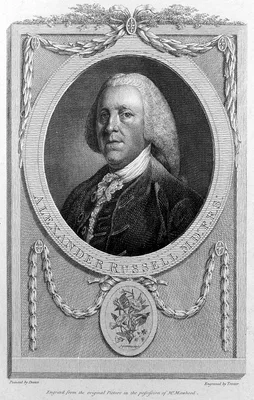
1756 RUSSELL, Alexander (1715 – 1768)
Natural history of Aleppo and parts adjacent.
Includes (Chap, iv) a good account of “Aleppo boil”, which Russell found to be endemic in Aleppo. Digital facsimile from the Internet Archive at this link.
GMN 5290 · https://historyofmedicine.com/id/6404
1756 BROWNE, Patrick (1720 – 1790)
The civil and natural history of Jamaica. In three parts, containing 1. An accurate description of that Island, its situation and soil; with a brief account of its former and present state, government, revenues, produce, and trade. II. A history of the natural productions, including the various sorts of native fossils, perfect and imperfect vegetables, quadrupedes, birds, fishes, reptiles and insects; with their properties and uses in mechanics, diet, and physic. III. An account of the nature of climate in general, and their different effects upon the human body; with a detail of the diseases arising from this source, particularly within the tropics....illustrated with fifty copper-plates...in natural size....
Digital facsimile from Google Books at this link.
GMN 13448 · https://historyofmedicine.com/id/15721
1764 GRAINGER, James (1721 – 1766)
An essay on the more common West-India diseases and the remedies which that country itself produces: To which are added some hints on the management, &c. of negroes.
Though the title suggests tropical medicine in general, this work mainly concerns the selection and medical care of slaves. Digital facsimile of the second edition (Edinburgh, 1802) expanded "with practical notes and …
GMN 9509 · https://historyofmedicine.com/id/11694
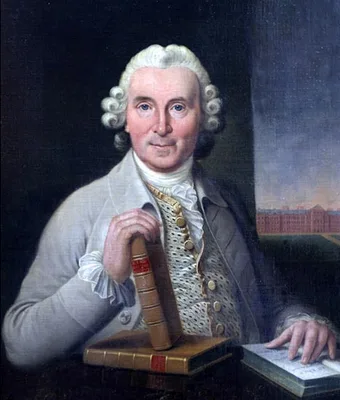
1768 LIND, James (1716 – 1794)
An essay on diseases incidental in Europeans in hot climates.
Lind came near to discovering the connection between malaria and mosquitoes. He is best remembered for his work on scurvy (No. 3713), but the above book is one of the more important early works on tropical medicine.
GMN 2264 · https://historyofmedicine.com/id/2819
1769 BANCROFT, Edward (1774 – 1821)
Essay on the natural history of Guiana, in South America. Containing a description of many curious productions in the animal and vegetable systems of that country. Together with an account of the religion, manners, and customs of several tribes of its Indian inhabitants. Interspersed with a variety of literary and medical observations. In several letters....
Bancroft was an English physician who lived for many years in South America. He noted the transmission of yaws by flies (p. 385 of his book). Digital facsimile from the Internet Archive at this link.
GMN 5304 · https://historyofmedicine.com/id/6554
1770 POUPPÉ DESPORTES, Jean-Baptiste-René (1704 – 1748)
Histoire des maladies de S. Domingue. 3 vols. Title of vol. 3: Traité ou abregé des plantes usuelles de S. Dominique.
Posthmously published; vol. 1 contains a life of the author. Digital facsimile from Google Books at this link.
GMN 9913 · https://historyofmedicine.com/id/12101
1773 CLARK, John (1744 – 1805)
Observations on the diseases in long voyages to hot countries, and particularly on those which prevail in the East Indies.
Digital facsimile of the third edition, "revised and enlarged" (1793) from the Internet Archive at this link.
GMN 8813 · https://historyofmedicine.com/id/10991
1779 ROBERTSON, Robert (1742 – 1829)
A physical journal kept on board H. M. Ship Rainbow during three voyages to the coast of Africa and the West Indies, in the years 1772, 1773, and 1774: To which is prefixed, a particular account of the remitting fever which happened on board of His Majesty's Sloop Weasel, on that coast, in 1769.
GMN 9501 · https://historyofmedicine.com/id/11686
1780 BYLON, David
Korte aantekening wegens eene algemeene ziekte, doorgaans genaamd knokkel-koorts.
Bylon described an epidemic of dengue which appeared in the Dutch East Indies in 1779, the first definite description of the disease. O. H. P. Pepper published a photographic reproduction of the article in Ann. med. H…
GMN 5469 · https://historyofmedicine.com/id/7605
1780 ROLLO, John ( – 1809)
Observations on the diseases which appeared in the army on St. Lucia....To which are prefixed remarks calculated to assist in ascertaining the causes, and in explaining the treatment of those diseases.
Digital facsimile from Google Books at this link. Revised and expanded edition, 1781; digital facsimile of the 1781 edition from Google Books at this link.
GMN 9466 · https://historyofmedicine.com/id/11649
1784 GARDANNE, Jacques-Joseph de (1726 – 1786)
Des maladies des créoles en Europe avec la maniere de les traiter et des observations sur celles des gens de mer et sur quelques autres plus fréquemment observées dans les climats chauds.
Digital facsimile from Google Books at this link.
GMN 13363 · https://historyofmedicine.com/id/15634
1788 DAZILLE, Jean Barthélémy (1733 – 1812)
Observations sur le tétanos; Ses différences, ses causes, ses symptômes, avec le traitement de cette maladie & les moyens de la prévenir. Précédées d'un discours sur les moyens de perfectionner la médecine-pratique sous la zone torride. Suivies d'observations sur la santé des femmes enceintes dans ces régions; leurs maladies aux différentes époques de la grossesse; l'accouchement & les suites; la conservation des nouveau-nés jusqu'à l'adolescence. Terminées par le rapprochement des vices & des abus des hôpitaux d'entre les tropiques, & les moyens d'y remédier. Par M. Dazille. Pour servir de développement & de suite à ce que cet auteur a écrit du tétanos dans ses ouvrages sur les maladies des nègrse [sic], & sur les maladies des climats chauds.
Primarily concerning the diseases of black slaves. Digital facsimile from the Internet Archive at this link.
GMN 8216 · https://historyofmedicine.com/id/10392
1788 ARTHAUD, Charles (1748 – 1791); CERCLE DES PHILADELPHES
Les eaux minérales et thermales de Saint-Dominique. Tome 1 (All Published).
One of the earliest medical publications printed in Haiti. Duvivier, Bibliographie générale et méthodique d'Haiti, 2, p. 206.
GMN 13366 · https://historyofmedicine.com/id/15637
1791 JACKSON, Robert (1750 – 1827)
A treatise on the fevers of Jamaica, with some observations on the intermitting fever of America, and an appendix containing some hints on the means of preserving the health of soldiers in hot climates.
Digital facsimile from the Internet Archive at this link.
GMN 10111 · https://historyofmedicine.com/id/12300
1798 –1801 DESGENETTES, René-Nicolas Dufriche (1762 – 1837)
Opuscules du C[itoy]en Desgenettes, Médecin en chef de l'Armée d'Orient.
A collection of nine separately printed pamphlets issued by Napoleon's press in Cairo during his Egyptian campaign. See J.-F. Hutin, "La littérature médicale de la campagne d'Égypte", Histoire des sciences medicales, …
GMN 10577 · https://historyofmedicine.com/id/12770
1799 AZEREDO, José Pinto de (1766 – 1810)
Ensaios sobre algumas enfermidades d'Angola....
Azeredo noted that the tropical fevers found in Brazil and Angola were very similar. He claimed to have achieved excellent results with his “new method” of treatment, which included the use of quinine, nux vomica, ars…
GMN 9070 · https://historyofmedicine.com/id/11249
1800 –1801 LARREY, Dominique Jean (1766 – 1842)
Mémoire sur l’ophtalmie régnante en Egypte.
The great military surgeon Larrey served during the Napoleonic campaign in Egypt, where he was the first to observe the contagiousness of trachoma shortly after the successful invasion in 1798. The disease spread to E…
GMN 5837 · https://historyofmedicine.com/id/7120
1803 WINTERBOTTOM, Thomas Masterman (1765 – 1859)
An account of the native Africans in the neighbourhood of Sierra Leone; to which is added, an account of the present state of medicine among them. 2 vols.
In his travels in Africa, Winterbottom, physician to the Colony of Sierra Leone (now Republic of Sierra Leone) on the west coast of Africa, saw sleeping sickness, which he described in vol. 2, pp. 29-31, as a species …
GMN 5266 · https://historyofmedicine.com/id/8561
1807 VETCH, John (1783 – 1835)
An account of the ophthalmia which has appeared in England since the return of the British Army from Egypt.
Vetch described trachoma.
GMN 5839 · https://historyofmedicine.com/id/7142
1807 CURTIS, Charles
An account of the diseases of India, as they appeared in the English fleet, and in the naval hospital at Madras, in 1782 and 1783; with observations on ulcers, and the hospital sores of that country, &c. & c. To which is prefixed a view of the diseases of an expedition and passage of a fleet and armament to India, in 1781.
Digital facsimile from Google Books at this link.
GMN 8814 · https://historyofmedicine.com/id/10992
1813 JOHNSON, James (1777 – 1845)
The influence of tropical climates, more especially the climate of India, on European constitutions; the principal effects and diseases thereby induced, their prevention or removal, and the means of preserving health in hot climates, rendered obvious to to Europeans in every capacity: An essay .
Digital facsimile from the Internet Archive at this link. Enlarged and retitled second edition: The influence of tropical climates on European constitutions: to which is added tropical hygiene, or the preservation of …
GMN 8211 · https://historyofmedicine.com/id/10387
1822 GOMES, Bernardino António (1769 – 1823)
Memoria sobre a virtude toenifuga da romeira, com observações zoologicas e zoonomicas relativas á toenea, e com huma estampa.
On the use of a root medicine to treat tapeworms, roundworms and similar parasites. The author refers to cases from Portuguese Africa, India and Brazil, and gives clinical observations based on his own case studies, s…
GMN 9071 · https://historyofmedicine.com/id/11250
1828 ANNESLEY, Sir James (1780 – 1847)
Researches into the causes, nature and treatment of the more prevalent diseases of India, and of warm climates generally. Illustrated with cases, post mortem examinations, and numerous coloured engravings of morbid structures. 2 vols.
A landmark in geographical pathology, superbly illustrated. Annesley’s cases, collected over many years’ service throughout India, represented the most complete treatment of diseases on the sub-continent to date. Digi…
GMN 1776.1 · https://historyofmedicine.com/id/3342
1829 ALIBERT, Jean Louis Marc (1768 – 1837)
Sur la pyrophlyctide endémique, ou pustule d’Aleppo.
Important description of “Aleppo boil”, furunculosis orientalis.
GMN 5291 · https://historyofmedicine.com/id/6412
1831 BOYLE, James
A practical medico-historical account of the western coast of Africa: Embracing a topographical description of its shores, rivers, and settlements, with their seasons and comparative healthiness: Together with the causes, symptoms, and treatment, of the fevers of western Africa, and a similar account respecting the other diseases which prevail there.
Digital facsimile from the Internet Archive at this link.
GMN 10790 · https://historyofmedicine.com/id/12986
1837 MARTIN, James Ranald (1796 – 1874)
Notes on the medical topography of Calcutta.
Digital facsimile from the Internet Archive at this link.
GMN 8803 · https://historyofmedicine.com/id/10981
1844 WEBB, Allan (1803 – 1863)
Pathologia Indica, or, The anatomy of Indian diseases, medical and surgical: Based upon morbid specimens from all parts of India in the museum of the Calcutta Medical College; illustrated by detailed cases, with the prescriptions and treatment employed, and comments, physiological, practical and historical.
Significantly expanded second edition, in two parts (Calcutta: Thacker & Co., 1848). Digital facsimile of the 1848 edition from the Internet Archive at this link.
GMN 8810 · https://historyofmedicine.com/id/10988
1846 WILSON, John (1788 – 1870)
Medical notes on China.
Wilson served as Inspector of Hospitals and Fleets from 1841 to 1843 onboard the Minden, a British hospital ship deployed in China at Chusan and Hong Kong at the end of 1841 to treat casualties in the First Opium War …
GMN 13739 · https://historyofmedicine.com/id/16023
1847 PRUNER, Franz Ignaz [PRUNER-BEY] (1808 – 1882)
Die Krankheiten des Orient’s: vom Standpunkte der vergleichenden Nosologie betrachtet.
Digital facsimile from the Medical Heritage Library, Internet Archive, at this link.
GMN 2265 · https://historyofmedicine.com/id/2821
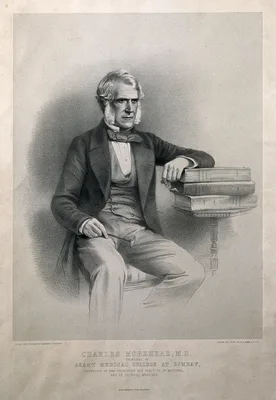
1856 MOREHEAD, Charles (1807 – 1882)
Clinical researches on disease in India. 2 vols.
One of the most comprehensive studies of disease in India during the mid-19th century; includes 556 case reports. Digital facsimile from the Internet Archive at this link
GMN 10112 · https://historyofmedicine.com/id/12301
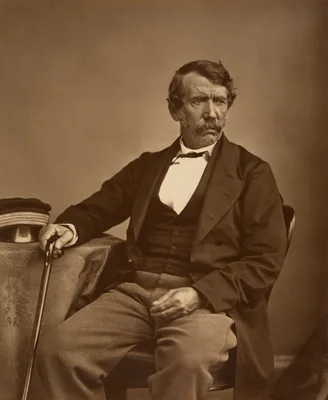
1857 LIVINGSTONE, David (1813 – 1873)
Missionary travels and researches in South Africa.
Livingstone gave an accurate account of the tsetse fly Glossina morsitans and of the disease in cattle following its bite (see pp. 80-83; picture of the tsetse fly on p. 571). In his time the bite of the fly was thoug…
GMN 5269 · https://historyofmedicine.com/id/8570
1858 LIVINGSTONE, David (1813 – 1873)
Arsenic as a remedy for the tsetse bite.
Livingstone was probably the first to administer arsenic for the treatment of “nagana”, a disease of horses caused by trypanosomes. This followed a suggestion by James Braid. Digital facsimile from PubMedCentral at th…
GMN 5270 · https://historyofmedicine.com/id/8572
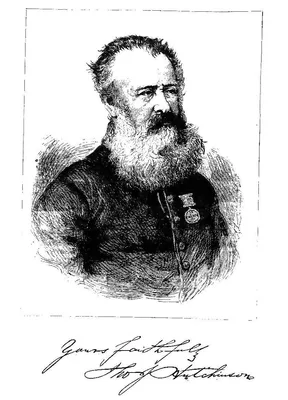
1858 HUTCHINSON, Thomas Joseph (1820 – 1885)
Impressions of Western Africa. With remarks on the diseases of the climate and a report on the peculiarities of trade up the rivers in the Bight of Biafra.
Digital facsimile from Google Books at this link.
GMN 12482 · https://historyofmedicine.com/id/14715
1860 BARCLAY, Alexander (1822 – 1874)
Contributions to the natural history of insolatio.
Barclay, an army surgeon in India, wrote an important paper on heat-stroke.
GMN 2249 · https://historyofmedicine.com/id/2773
1861 JOURDANET, Denis (1815 – 1892)
Les altitudes de l’Amérique tropicale comparées au niveau des mers au point de vue de la constitution médicale.
Jourdanet discovered the anoxemia theory of high altitude sickness. See No. 943.1. Digital facsimile of the 1861 edition from bibliotecavirtual.ranm.es at this link.
GMN 935.2 · https://historyofmedicine.com/id/168
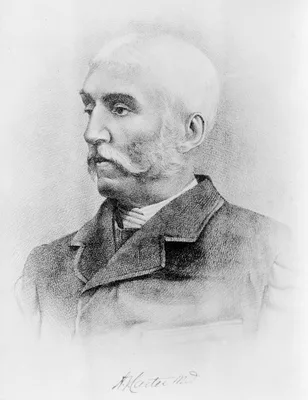
1861 CARTER, Henry Vandyke (1831 – 1897)
On a new and striking form of fungus disease, principally affecting the foot, and prevailing endemically in many parts of India.
First modern description of mycetoma of the foot – “Madura foot”, “Carter’s mycetoma”. It was mentioned by E. Kaempfer in his Amoenitates exoticae, Lemgo, 1712, p. 561. Colebrook at the Madura Dispensary is said to ha…
GMN 4047 · https://historyofmedicine.com/id/5379
1864 JOURDANET, Denis (1815 – 1892)
Le Mexique et l'Amérique tropicale: climats, hygiène et maladies.
Digital facsimile from the Internet Archive at this link.
GMN 8109 · https://historyofmedicine.com/id/10285
1870 HEBRA, Hans von (1847 – 1902)
Ueber ein eigenthümliches Neugebilde an der Nase – Rhinosclerom.
Rhinoscleroma is considered a tropical disease, mostly endemic to Africa and Central America, and less common in the United States.
GMN 3277 · https://historyofmedicine.com/id/3998
1874 CARTER, Henry Vandyke (1831 – 1897)
On mycetoma, or the fungus disease of India.
See No. 4047.
GMN 4066 · https://historyofmedicine.com/id/5459

![ORTA, Garcia de [Garcia d'Orta] (1501 – 1568)](/media/portraits/2236)