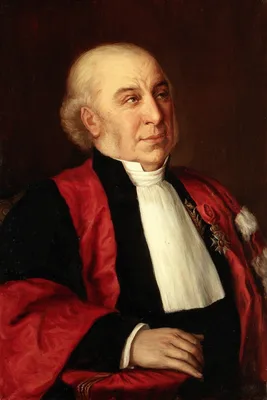
1472 ABANO, Pietro d' [Petrus de Abano] (1257 – 1316)
Conciliator differentiarum philosophorum et medicorum. Add: De venenis.
Includes the first printed book on toxicology; one of the more elegantly printed of medical incunabula, printed in folio format. For an English translation, see Ann. med. Hist., 1924, 6, 26-53. ISTC No. ip00431000. Di…
GMN 2070 · https://historyofmedicine.com/id/2492
c. 1481 –c. 1482 APULEIUS PLATONICUS, (Pseudo-Apuleius) (350 – )
Herbarium Apulei.
The first printed herbal with illustrations was an illustrated edition of the Herbarium Apulei by Apuleius Platonicus or Pseudo-Apuleius, originally compiled circa 400 CE or earlier, and issued in Rome by the printer …
GMN 6811 · https://historyofmedicine.com/id/8974
1492 ARDOINI, Sante (Arduino, Arduini, Ardoynis) (1390 – ); CANALI, Dominicus de
De venenis. Ed: Dominicus de Canali.
Compiled in the years, 1424-1426, from Greek, Arabic and Latin works on medicine and nature. "Although Ardoini quotes previous authors at great length, his work is no mere compilation, since he does not hesitate to di…
GMN 7791 · https://historyofmedicine.com/id/9963
1499 DIOSCORIDES, Pedanius [Πεδάνιος Διοσκουρίδης] (40 – 90); NICANDER OF COLOPHON (ΝΊΚΑΝΔΡΟΣ Ὁ ΚΟΛΟΦΏΝΙΟΣ; NIKANDER) (-125 – )
Dioscorides, De materia medica [Greek]. Add: Pseudo- Dioscorides, De venenis, De venenatis animalibus [Greek]; Add: Nicander, Theriaca; Add: Alexipharmaca; Scholia [Greek].
Nicander was a Greek poet and physician. His Theriaca, in 958 hexameters, dealt with the symptoms and treatment of poisoning by the bites of poisonous animals; the Alexipharmaca considered intoxications through animal…
GMN 2069 · https://historyofmedicine.com/id/2486
1524 ELLENBOG, Ulrich (1435 – 1499)
Von den gifftigen besen Tempffen und Reuchen.
Written in 1473 but not published until 1524, this pamphlet on the diseases of miners is the first known work on industrial hygiene and toxicology. A reprint of the text appears in Münch. Beitr. Lit. Naturwiss. Med., …
GMN 2118 · https://historyofmedicine.com/id/2628
1528 PAUL OF AEGINA (ΠΑΥ͂ΛΟΣ ΑἸΓΙΝΉΤΗΣ; PAULUS AEGINETA) (625 – 690)
In principio singulorum librorum omnia indicantur, quae in eo libro continentur. [Title in Greek and Latin].
Paul of Aegiina was the most famous physician and surgeon in the Byzantine Empire during the seventh century, and probably thereafter. According to Eugene F. Rice, "Paulus Aegineta", Catalogus translationum et comment…
GMN 36 · https://historyofmedicine.com/id/8760
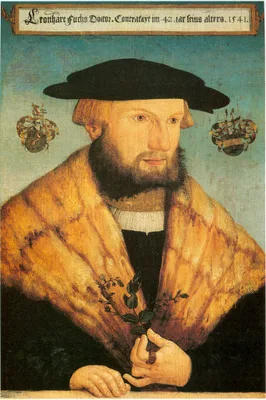
1549 MYREPSOS, Nicolas (Nicolaus Myrepsus, Νικόλαος Μυρεψός) (1240 – ); FUCHS, Leonhart (1501 – 1566)
Medicamentorum opus in sectiones quadragintaocto digestum, hactenus in Germania non uisum, omnibus tum medicis, tum seplasiarns mirum in modum utile, a Leonharto Fuchsio...
The “Antidotarium magnum” by the Byzantine physician Nicolaus Myrepsus. It was the largest strictly pharmaceutical work that had appeared up to the time of its writing (about 1270-1280); it contained more than 2,500 p…
GMN 1793 · https://historyofmedicine.com/id/1884
1567 PARACELSUS, [Philippus Aureolus Theophrastus Bombastus von Hohenheim] (1493 – 1541)
Von der Bergsucht oder Bergkranckheiten drey Bücher…
Paracelsus’s book on the diseases of miners was the first full monograph on the diseases of an occupational group. The first section covers the diseases, mainly pulmonary affections, of miners, including the etiology,…
GMN 2118.1 · https://historyofmedicine.com/id/2630
1568 GRÉVIN, Jacques (1538 – 1570)
Deux livres des venins, ausquels il est amplement discouru des bestes venimeuses, thériaques, poisons & contre-poisons, par Jacques Grévin,... Ensemble les oeuvres de Nicandre,... traduictes en vers françois.
Grévin's work "marks the beginning of a new era in biotoxinological studies. With Grévin we see a crude attempt being made to compile systematically and evaluate the total knowledge of toxic organisms which had accrue…
GMN 9664 · https://historyofmedicine.com/id/11851
1586 BACCI, Andrea (1524 – 1600)
De venenis, et antidotis prolegomena: seu communia praecepta ad humanam vitam tuendam saluberrima; in quibus diffinitiva methodus venenorum proponitur per genera, ac differentias suas, partes, & passiones, praeservandi modum, & communia ad eorum curationem antidota complectens; de canis rabiosi morsu, et eius curatione.
Digital facsimile from cervantesvirtual.com at this link.
GMN 10634 · https://historyofmedicine.com/id/12827
1616 CITOIS, François [CITESIUS] (1572 – 1652)
De novo et populari apud Pictones dolore colico bilioso diatriba.
Citois described Poitou colic, “colica Pictonum”, in great detail, and it was this description which was responsible for the condition being recognized as a definite syndrome. Partial English translation in No. 2241.
GMN 2092 · https://historyofmedicine.com/id/2582
1617 SEBISCH, Melchior The Younger (1578 – 1674)
Discursus medico-philosophicus de casu adolescentis [...]: qui [...] mortuus in quodam paternarum aedium loco, adjacente ipsi serpente, à domesticis inventus fuit.
An extensively illustrated work on death from snake bites and species of venomous snakes instigated by the sudden death from snake bite of an otherwise healthy young man. Digital facsimile from the Hathi Trust at this…
GMN 13780 · https://historyofmedicine.com/id/16067
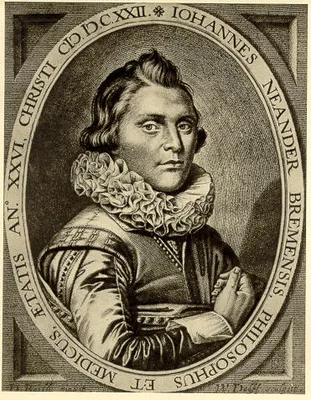
1622 NEANDER, Johann (1596 – 1630)
Tabacologia: Hoc est, tabaci, seu nicotianae descriptio medico-cheirurgico-pharmaceutica: Vel eius praeparatio & usus in omnibus corporis humani incommodis.
Neander described tobacco, its processing, and medical-pharmaceutical use. His book Includes images of the plants, of Indian, Oriental and European types of pipes, as well as depictions of cultivation and processing b…
GMN 9633 · https://historyofmedicine.com/id/11820
1656 STOCKHAUSEN, Samuel (1619 – 1656)
Libellus de lithargyrii fumo noxio morbifico eiusque metallico frequentiori morbo vulgo dicto: Die Hütten Katze Oder Hütten Rauch: Cum Appendice de montano ffaectu asthmatico metallicidis familiari, quem Germanica lingua appellamus Die Bergsuche oder Berg Kranckheit.
Stockhausen had considerable experience in treating the diseases of miners. His book on industrial diseases did much to clarify contemporary knowledge regarding the relative toxicity of lead, mercury, arsenic, cobalt,…
GMN 2120 · https://historyofmedicine.com/id/2632
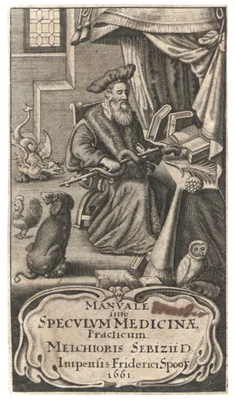
1661 RAMESAY, William (RAMSAY) (1627 – 1672)
Thanasima, kai dēlētēria: Tractatus de venenis. Or, a treatise of poysons. Their sundry sorts, names, natures and virtues, with their severall symptomes, signes diagnosticks, prognosticks, and antidotes. Wherein, are divers necessary questions discussed; the truth by the most learned, confirmed, by many instances, examples & stories illustrated; and, both philosophically and medically handled.
GMN 9671 · https://historyofmedicine.com/id/11858
1664 REDI, Francesco (1626 – 1697)
Osservazioni intorno alle vipere.
The first methodical work on snake-poison. Redi demonstrated for the first time that, for the poison to produce its effect, it must be injected under the skin.
GMN 2102 · https://historyofmedicine.com/id/2599
1675 STERBEECK, Francis van (1631 – 1693)
Theatrum fungorum oft het tooneel der Campernoelien. Waer inne vertoont wort de gedaente, ken-teeckens, natuere, crachten, voetsel, deught ende ondeught; mitsgaders het voorsichtigh schoonmaken ende bereyden van alderhande Fungien....
The first separate general work on fungi, describing edible and poisonous varieties. Digital facsimile from the Hathi Trust at this link.
GMN 12998 · https://historyofmedicine.com/id/15247
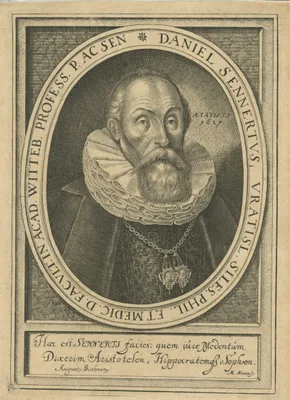
1676 SENNERT, Daniel (1572 – 1637)
Opera. 6 vols.
Besides giving early accounts of scarlatina and rubella, Sennert added to the knowledge of scurvy, dysentery and alcoholism. He was an able clinician and also a believer in witchcraft. His Opera was first published in…
GMN 61 · https://historyofmedicine.com/id/975
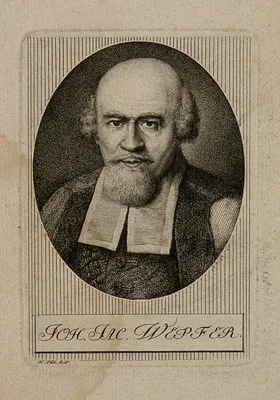
1679 WEPFER, Johann Jacob (1620 – 1695)
Cicutae aquaticae historia et noxae.
This is primarily a work on the poisonous water hemlock, its dangerous effects, its medicinal uses, and antidotes to counter the poison. However, it also contains the first description of the tiny glands in the mucosa…
GMN 974.1 · https://historyofmedicine.com/id/576
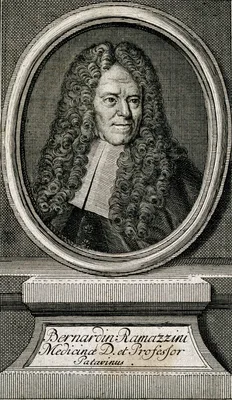
1700 RAMAZZINI, Bernardino (1633 – 1714)
De morbis artificum diatriba.
Ramazzini's study of the diseases of workers, De morbis artificium diatriba, was the first comprehensive and systematic treatise on occupational medicine; it was also the foundation work in ergonomics. It deals with p…
GMN 2121 · https://historyofmedicine.com/id/79
1700 JONES, John [English] (1645 – 1709)
The mysteries of opium revealed.
Includes the earliest English description of drug addiction, and withdrawal. Jones attempted to use wine as a partial substitute until withdrawal was complete.
GMN 2070.1 · https://historyofmedicine.com/id/2498
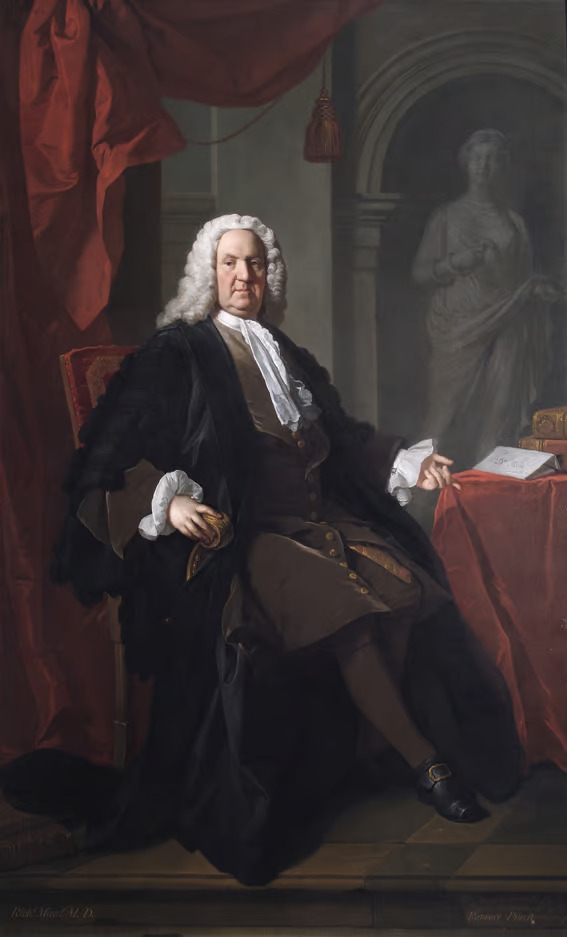
1702 MEAD, Richard (1673 – 1754)
A mechanical account of poisons in several essays.
Mead performed numerous experiments, including tests with viper venom which lead to his book on poisons. His book describes their effects on the body in accordance with the precepts of the Iatrophysical School, which …
GMN 9569 · https://historyofmedicine.com/id/11755
1739 HUXHAM, John (1692 – 1768)
De morbo colico Damnoniensi.
Huxham left a vivid account of the “Devonshire colic”. He was at fault, however, in ascribing it to the tartar extracted from apples in the process of making cider.
GMN 2093 · https://historyofmedicine.com/id/2584
1745 CADWALADER, Thomas (1708 – 1779)
An essay on the West-India dry-gripes… to which is added, an extraordinary case in physick.
Cadwalader, an American pupil of Cheselden, left a classical account of lead colic and lead palsy. This was later shown by Benjamin Franklin, printer of the above work, to be due to the consumption of Jamaica rum whic…
GMN 2094 · https://historyofmedicine.com/id/2586
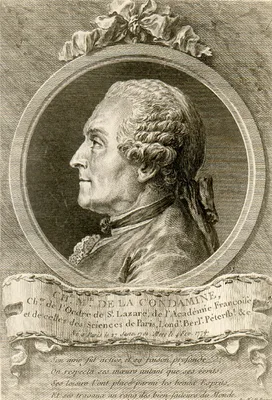
1751 –1752 LA CONDAMINE, Charles Marie de (1701 – 1774)
Journal du voyage fait par ordre du Roi, a l'équateur, servant d'introduction historique a la mesure des trois premiers degrés du méridien. Supplément au Journal historique du voyage a l'Équateur: et au livre de la Mesure des trois premiers degrés du méridien, servant de réponse à quelques objections. 2 vols.
La Condamine's journal of his ten year long voyage to South America, the scientific results of which included proof that the earth is a spheroid flattened at the poles. Other scientific observations including botanica…
GMN 12873 · https://historyofmedicine.com/id/15120
1757 TRONCHIN, Théodore (1709 – 1781)
De colica pictonum.
Tronchin, sometime physician to Voltaire, showed that the so-called “Poitou colic” was caused by drinking water which had passed through lead gutters. Tronchin introduced inoculation into Holland, France, and Switzerl…
GMN 2095 · https://historyofmedicine.com/id/2587
1759 HILLARY, William (1697 – 1763)
Observations on the changes of the air and the concomitant epidemical diseases, in the Island of Barbados.
Hillary included good accounts of lead colic and infective hepatitis, and probably the first description of sprue (celiac disease).
GMN 1770 · https://historyofmedicine.com/id/3314
1760 STÖRCK, Anton von (1731 – 1803)
An essay on the medicinal nature of hemlock.
"Störck is remembered for his clinical research of various herbs, and their associated toxicity and medicinal properties. His studies are considered to be the pioneering work of experimental pharmacology and his metho…
GMN 9902 · https://historyofmedicine.com/id/12090
1761 HILL, (Sir) John (1714 – 1775)
Cautions against the immoderate use of snuff. Founded on the known qualities of the tobacco Plant; and the effects it must produce when this way taken Into the body: And by instances of persons who have perished miserably of diseases, occasioned, or rendered incurable by its use,
First clinical report (pp. 30-31) of an association between tobacco and cancer, in this case “polypusses” of the nose caused by taking snuff. Hill was a distinguished botanist and apothecary, although regarded by some…
GMN 2607.1 · https://historyofmedicine.com/id/3063
1762 MEAD, Richard (1673 – 1754)
The medical works of Richard Mead.
GMN 11523 · https://historyofmedicine.com/id/13722
1767 BAKER, Sir George (1722 – 1809)
An essay concerning the cause of the endemial colic of Devonshire.
Baker demonstrated that the cider of Devonshire contained lead, while that made in other parts of England did not. He further showed that it was common practice in Devon to line cider presses with lead, and proved tha…
GMN 2096 · https://historyofmedicine.com/id/2588
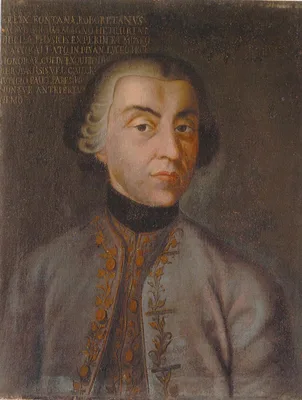
1767 FONTANA, Felice (1730 – 1805)
Ricerche fisiche sopra il veleno della vipera.
The starting point of modern investigations of serpent venoms and their antidotes. This work also includes Fontana’s description of the ciliary canal in the eye of an ox. This structure does not appear in the human ey…
GMN 2103 · https://historyofmedicine.com/id/2601
1768 LAURENTI, Josephus Nicholaus (1735 – 1805)
Specimen medicum: Exhibens synopsin reptilium emendatam cum experimentis circa venena et antidota reptilium austriacorum.
"Laurenti is considered the auctor of the class Reptilia (reptiles) through his authorship of Specimen Medicum, Exhibens Synopsin Reptilium Emendatam cum Experimentis circa Venena (1768) on the poisonous function of r…
GMN 9517 · https://historyofmedicine.com/id/11702
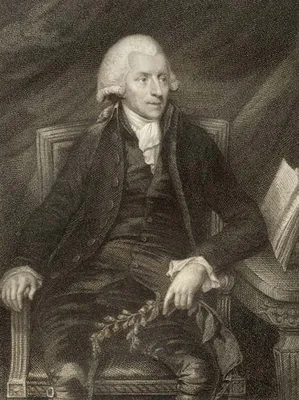
1776 WITHERING, William (1741 – 1799)
A botanical arrangement of all the vegetables naturally growing in Great Britain, with descriptions of the genera and species, according to the system of the celebrated Linnaeus. Being an attempt to render them familiar to those who are unacquainted with the learned languages. Under each species are added, the most remarkable varieties, the natural places of growth, the duration, the time of flowering, the peculiarities of structure, the common English names; the names of Gerard, Parkinson, Ray and Bauhine. The uses as medicines, or as poisons; as food for men, for brutes, and for insects. With their application in oeconomy and in the arts. With an easy introduction to the study of botany. Shewing the method of investigating plants, and directions how to dry and preserve specimens. The whole illustrated by copper plates and a copious glossary. 2 vols.
The first flora of Great Britain using Linnean binomial nomenclature, and the first complete scientific classification and description of British plants in the English language. Withering included much information on …
GMN 1833.1 · https://historyofmedicine.com/id/2178
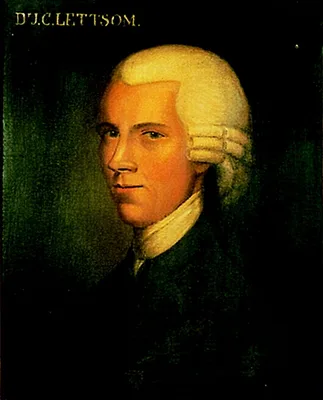
1779 –1787 LETTSOM, John Coakley (1744 – 1815)
Some remarks on the effects of lignum quassiae amarae.
Includes (p. 151) “original account of alcoholism, which is incidentally the first paper on the drug habit” (Garrison).
GMN 2071 · https://historyofmedicine.com/id/2523
1784 HALLE, Johann Samuel (1727 – 1810)
Die Deutsche [sic] Giftpflanzen, zur Verhütung der tragischen Vorfälle in den Haushaltungen, nach ihren botanischen Kennzeichen, nebst den Heilungsmitteln.
On poisonous plants in Germany, for prevention of tragic household accidents, and remedies for the poisons. Illustrated with 16 plates. Digital facsimile from Google Books at this link.
GMN 14210 · https://historyofmedicine.com/id/16526
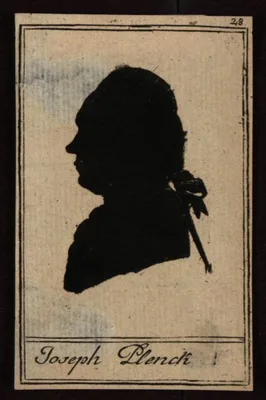
1785 PLENCK, Joseph Jacob von (1738 – 1807)
Toxicologia seu doctrina de venenis et antidotis.
Plenck provided the first classification of poisons based on origin: 1. Animal poisons. 2. Vegetable poisons. 3. Mineral poisons. 4. Poisonous vapors, gases, and dust. Plenck also issued this work in German from the s…
GMN 7639 · https://historyofmedicine.com/id/9811
1787 HALLE, Johann Samuel (1727 – 1810)
Gifthistorie des Thier- Pflanzen- und Mineralreichs, nebst den Gegengiften, und der medicinischen Anwendung der Gifte, nach den neuesten Toxicologen.
This work was not illustrated. Digital facsimile from Bayerische StaatsBibliothek at this link.
GMN 10480 · https://historyofmedicine.com/id/12673
1793 CRUMPE, Samuel (1766 – 1796)
An inquiry into the nature and properties of opium: Wherein its component principles, mode of operation, and use or abuse in particular diseases, are experimentally investigated, and the opinions of former authors on these points impartially examined.
Crumpe undertook extensive experiments to understand the effects of opium. His book provided the first detailed description of the effects of narcotic withdrawal. Digital facsimile from the Hathi Trust at this link.
GMN 10590 · https://historyofmedicine.com/id/12783
1795 SOEMMERRING, Samuel Thomas von (1755 – 1830)
De morbis vasorum absorbentium corporis humani.
Soemmerring noted an association between pipe smoking and cancer of the lip (p. 109).
GMN 2609.1 · https://historyofmedicine.com/id/3088
1796 RUSSELL, Patrick (1727 – 1805)
An account of Indian serpents collected on the coast of Coromandel: containing descriptions and drawings of each species, together with experiments and remarks on their several poisons.
First attempt at a description of Indian serpents and serpent venoms. Includes the original description of Russell’s viper, Daboia russellii. Digital facsimile from the Linda Hall LIbrary at this link.
GMN 310 · https://historyofmedicine.com/id/127
1803 MÉRAT DE VAUMARTOISE, François Victor (1780 – 1851)
Sur la colique, vulgairement appelée colique des peintres, des plombiers, du plomb, etc.
GMN 2097 · https://historyofmedicine.com/id/2590
1804 TROTTER, Thomas (1760 – 1832)
An essay, medical, philosophical, and chemical, on drunkenness, and its effects on the human body.
The first book on alcoholism, expanded from Trotter's MD dissertation: Dissertatio medica inauguralis, quædam de ebrietate, ejusque effectibus in corpus humanum complectens, quam ... pro gradu doctoris ... (Edinburgh:…
GMN 2071.1 · https://historyofmedicine.com/id/2527
1809 MAGENDIE, François (1783 – 1855)
Examen de l'action de quelques végétaux sur la moelle épinière. Lu a l'Institut, le vingt-quatre avril 1809.
In 1809 Magendie presented to the Académie des Sciences and to the Société Philomatique the results of his first experimental work, which he carried out in collaboration with the botanist and physician Alire Raffeneau…
GMN 9578 · https://historyofmedicine.com/id/11765
1813 SUTTON, Thomas (1767 – 1835)
Tracts on Delirium tremens, on peritonitis, and on some other internal inflammatory affections, and on the gout.
Sutton named and described alcoholic delirium tremens, differentiating the condition from phrenitis. Digital facsimile from the Internet Archive at this link.
GMN 4925 · https://historyofmedicine.com/id/6126
1814 –1815 ORFILA, Mathieu Joseph Bonaventure (1787 – 1853)
Traité des poisons tirés des règnes minéral, végétal et animal; ou, toxicologie générale. 2 vols, each in 2 parts.
Orfila, pioneer toxicologist, was the leading medico-legal expert of his time. He was born in Minorca, studied at Valencia, Barcelona, and Paris, and was one of the founders of the Académie de Médecine. Digital facsim…
GMN 2072 · https://historyofmedicine.com/id/2533
1817 KERNER, Christian Andreas Justinus (1786 – 1862)
Vergiftung durch verdorbene Würste.
Botulism first described. Kerner published an expanded study as Neue Beobachtungen über die in Würtemberg so häufig vorfallenden tödtlichen Vergiftung durch den Genuss geräuchter Würstem, Tübingen, 1820. He published …
GMN 2468 · https://historyofmedicine.com/id/3039
1818 ORFILA, Mathieu Joseph Bonaventure (1787 – 1853)
Secours à donner aux personnes empoisonnées ou asphyxiées, suivis des moyens propres à reconnaître les poisons et les vins frelatés et à distinguer la mort réelle de la mort apparente.
Translated into English by B. H. Black and published in 1819 as Directions for the treatment of persons who have taken poison, and those in a state of apparent death: Together with the means of detecting poisons and a…
GMN 9508 · https://historyofmedicine.com/id/11693
1819 PELLETIER, Pierre Joseph (1788 – 1842); CAVENTOU, Joseph Bienaimé (1795 – 1877)
Mémoire sur un nouvel alcali végétal (la strychnine) trouvé dans la fève de Saint-Ignace, la noix vomique, etc.
Isolation of strychnine.
GMN 1844 · https://historyofmedicine.com/id/2292
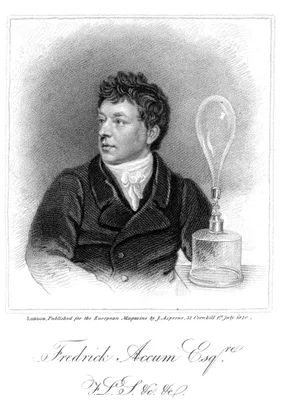
1820 ACCUM, Friedrich (1769 – 1838)
A treatise on the adulterations of food and culinary poisons: Exhibiting the fraudulent sophistications of bread, beer, wine, spirituous liquors, tea, coffee, cream, confectionery, vinegar, mustard, pepper, cheese, olive oil, pickles and other articles employed in domestic economy; and methods of detecting them.
One of the earliest exposures of food adulteration, written by a German chemist who spent most of his career in England. This sensational popular scientific work exposed established scandalous practices within the foo…
GMN 1604.2 · https://historyofmedicine.com/id/1865

![DIOSCORIDES, Pedanius [Πεδάνιος Διοσκουρίδης] (40 – 90)](/media/portraits/2028)