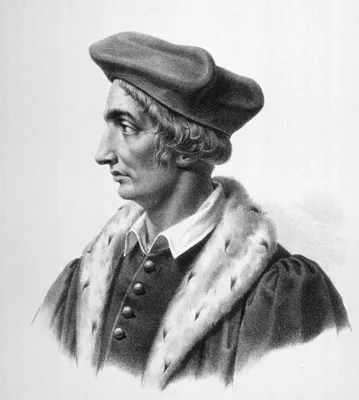
1472 BAGELLARDO, Paolo (1420 – 1494)
De infantium aegritudinibus et remediis.
The first printed book dealing exclusively with pediatrics. This was also the first medical treatise, and probably also the first scientific treatise, to make its original appearance in printed form rather than having…
GMN 6315 · https://historyofmedicine.com/id/8068
1525 HIPPOCRATES, [Ἱπποκράτης; Hippocrates of Kos] (-460 – -370); CALVO, Marco Fabio [Marcus Fabius Calvus, Fabius Rhavennatus] (1450 – 1527)
Hippocratis Coi medicorum omnium longe principis, octoginta volumnia quibus maxima ex parte, annorum circiter duo millia Latina caruit lingua. . . .translated by Marco Fabio Calvo
The first collected edition of the Hippocratic collection in the Latin translation of Marco Fabio Calvo of Ravenna, dedicated to Pope Clement VII. "This volume, which preceded the first, Aldine, edition of the Greek t…
GMN 6820 · https://historyofmedicine.com/id/8983
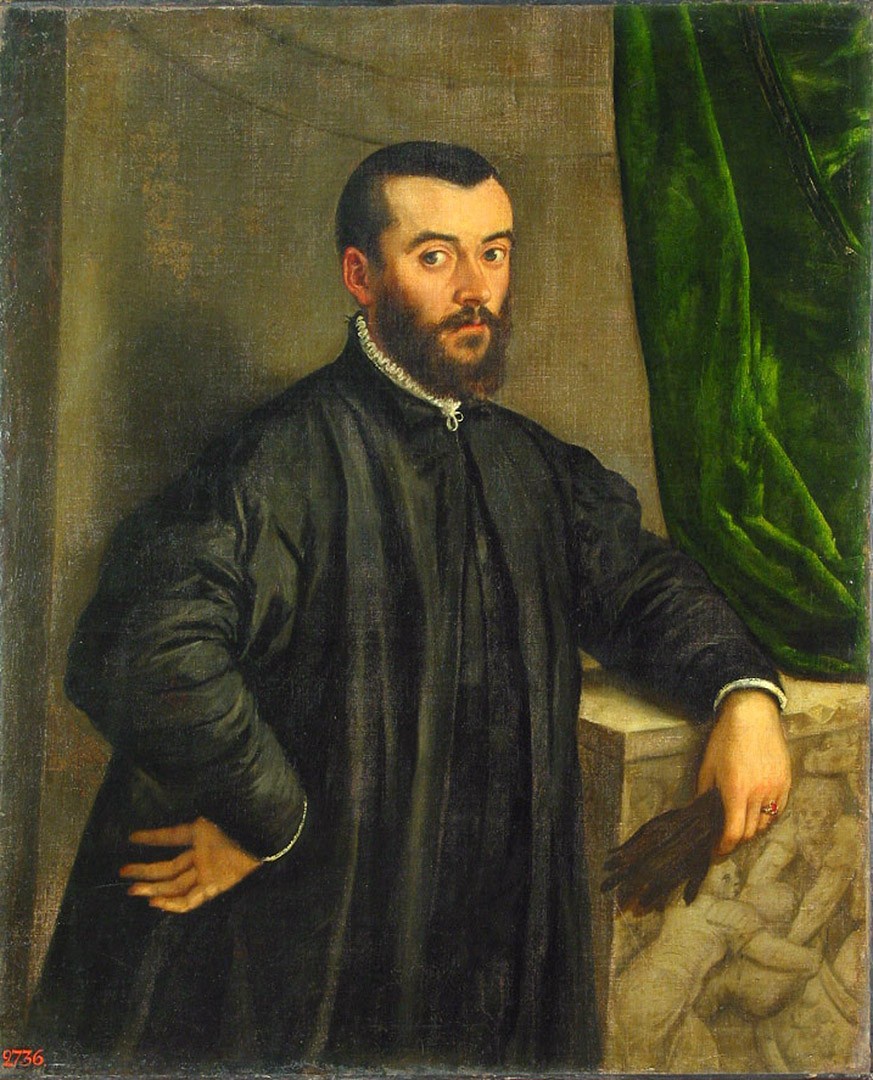
1539 VESALIUS, Andreas (1514 – 1564)
Epistola docens venam axillarem dextri cubiti in dolore laterali secandam: & melancholium succum ex venae portae ramis ad sedem pertinentibus, purgari.
In this early study, written in the form of a letter to his friend and mentor Imperial Physician, Nicolaus Florenas, who had encouraged him to study medicine, Vesalius reported his study of the venous system of the hu…
GMN 10165 · https://historyofmedicine.com/id/12354
1545 ESTIENNE, Charles [Stephanus] (1504 – 1564); LA RIVIÈRE, Estienne de (1500 – )
De dissectione partium corporis humani.
De dissectione partium corporis humani libri tres by French physician, writer, and translator, Charles Estienne, of the Estienne printing dynasty, is one of the most interesting woodcut books of the French Renaissance…
GMN 378 · https://historyofmedicine.com/id/546
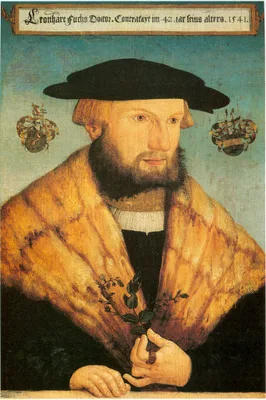
1555 –1556 FUCHS, Leonhart (1501 – 1566)
Le benefice commun de tout le monde, ou commodité de vie d’vn chascun, pour la conseruation de santé: Remedes segretz tirées des plantes contre toutes maladies. 3 vols.
A vernacular guide for living a healthy life compiled from the writings of Fuchs. Includes herbal and dietary remedies, recipes for oils, pills and other preparations to treat maladies such as fever, plague and wounds.
GMN 9773 · https://historyofmedicine.com/id/11961
1563 WEYER, Johann [WIER] (1515 – 1588)
De praestigiis daemonum.
Weyer was the first European physician to take an empirical, scientific approach to the study of mental illness. At the height of the witchcraft delusion he argued that witches were mentally ill women who deserved hum…
GMN 4916 · https://historyofmedicine.com/id/6054
1570 ALEXANDER OF TRALLES [ἈΛΈΞΑΝΔΡΟΣ Ὁ ΤΡΑΛΛΙΑΝΌΣ; ALEXANDER TRALLIANUS] (525 – 605); MERCURIALE, Girolamo (1530 – 1606)
Hieronymi Mercurialis Variarum lectionum libri quatuor. In quibus complurium, maximeq́ue medicinae scriptorum infinita paenè loca vel corrupta restituuntur, vel obscura declarantur. Alexandri Tralliani De lumbricis epistola, ejusdem Mercurialis opera, & diligentia Graecè, & Latinè nunc primùm edita ...
Includes the first printed edition of the Greek text and Latin translation by Mercuriale of Alexander's De vermis epistola. Alexander's original description of worms and vermifuges make him the first parasitologist. D…
GMN 35 · https://historyofmedicine.com/id/8758
1583 BARTISCH, Georg (1535 – 1606)
̓Oφθαλμоδоύλεια das ist, Augendienst.
In this treatise on ophthalmic surgery Bartisch, who limited his practice to ophthalmology and hernia repair, left the first extensively illustrated account of any surgical specialty. Bartisch was a skilful operator a…
GMN 5817 · https://historyofmedicine.com/id/7024
1587 MONTANUS, Johannes Baptista [Giovanni Battista Monte] (1498 – 1551); WEINRICH, Martin [Martinus Weindrich]
Medicina universa, ex lectiones eius caeterisque opusculis, tum impressis, tum scriptis collecta, & in tres tomos nunc primum decenti ordine digesta, studio & opera Martini Weindrichii.
Montanus became a professor of practical medicine at Ferrara and at the University of Padua in 1539. His greatest innovation was to introduce clinical medicine into the curriculum as a way to integrate medical theory …
GMN 11101 · https://historyofmedicine.com/id/13297
1644 PARACELSUS, [Philippus Aureolus Theophrastus Bombastus von Hohenheim] (1493 – 1541); LOCATELLI, Lodovico (1600 – 1657)
Theatro d’Arcani del medico Lodovico Locatelli da Bergamo; nel quale si tratta dell’arte chimica, et suoi arcani, con gli afforismi d’Ippocrate commentati da Paracelso, et l’espositione d’alcune cifre, et caratteri oscuri de filosofi.
‘It is apparent that by the 1640’s Paracelsian medicine had gained momentum in Italy and that iatrochemical theories were being adopted by a number of Italian physicians. […] In 1644 there appeared the first Italian t…
GMN 11858 · https://historyofmedicine.com/id/14062
1841 VESALIUS, Andreas (1514 – 1564); BURGGRAEVE, Adolphe (1806 – 1902)
Études sur André Vésale: Précédées d'une notice historique sur sa vie et ses écrits.
Digital facsimile from Google Books at this link.
GMN 12685 · https://historyofmedicine.com/id/14930
1906 WICKERSHEIMER, Charles Adolphe Ernest (1880 – 1965)
La médecine et les médecins en France à l’époque de la Renaissance.
Wickersheimer, librarian of University of Strasbourg, contributed several scholarly works on the history of medicine.
GMN 6554 · https://historyofmedicine.com/id/8230
1911 –1916 LEONARDO DA VINCI (1452 – 1519); FONAHN, Adolf Mauritz (1873 – 1940); VANGENSTEN, Ove Conrad Langaard (1880 – 1946); HOPSTOCK, Halfdan (1866 – 1925)
Leonardo da Vinci: Quaderni d’anatomia I-VI. Fogli della Royal Library di Windsor, pubblicati da Ove C.L. Vangensten, A. Fonahn, H. Hopstock. 6 vols.
Leonardo, “the greatest artist and scientist of the Italian Renaissance, was the founder of iconographic and physiologic anatomy” (Garrison). He made over 750 sketches of all the principal organs of the body, drawings…
GMN 365 · https://historyofmedicine.com/id/422
1923 –1958 THORNDIKE, Lynn (1882 – 1965)
A history of magic and experimental science. 8 vols.
Vols. 1-2 deal with the first 13 centuries of the Christian era; vols. 3-4 with the 14th and 15th centuries, vols. 5-6 with the 16th century, and vols. 7-8 with the 17th century.
GMN 6422 · https://historyofmedicine.com/id/8415
1930 LAIGNEL-LAVASTINE, Paul-Marie Maxime (1875 – 1953); VINCHON, Jean
Les malades de l’esprit et leurs médecins du XVIe siècle. Les étapes des connaissances psychiatriques de la Renaissance à Pinel.
GMN 5010 · https://historyofmedicine.com/id/6584
1934 CASTIGLIONI, Arturo (1874 – 1953)
The renaissance of medicine in Italy … The Hideyo Noguchi Lectures.
GMN 6564 · https://historyofmedicine.com/id/8253
1943 VESALIUS, Andreas (1514 – 1564); CUSHING, Harvey Williams (1869 – 1939)
A bio-bibliography of Andreas Vesalius.
The standard annotated bibliography of Vesalius's works, known for its unusual system of numbering entries. Posthumously edited for publication by John F. Fulton and Arturo Castiglioni. Digital facsimile of the 1943 e…
GMN 8096 · https://historyofmedicine.com/id/10272
1952 LEONARDO DA VINCI (1452 – 1519); O’MALLEY, Charles Donald (1907 – 1970); SAUNDERS, John Bertrand deCusance Morant (1903 – 1991)
Leonardo da Vinci on the human body. The anatomical, physiological, and embryological drawings of Leonardo da Vinci. With translations, emendations, and biographical introduction by Charles D. O'Malley and J. B. de C. M. Saunders.
Includes 215 plates.
GMN 366 · https://historyofmedicine.com/id/430
1961 GALEN, [Κλαύδιος Γαληνός; Galen of Pergamon] (129 – 216); DURLING, Richard Jasper (1932 – 1999)
A chronological census of Renaissance editions and translations of Galen.
Digital facsimile from Jstor at this link.
GMN 8421 · https://historyofmedicine.com/id/10598
1964 O’MALLEY, Charles Donald (1907 – 1970); VESALIUS, Andreas (1514 – 1564)
Andreas Vesalius of Brussels, 1514-1564.
GMN 12693 · https://historyofmedicine.com/id/14938
1965 –1995 PARACELSUS, [Philippus Aureolus Theophrastus Bombastus von Hohenheim] (1493 – 1541); GOLDHAMMER, Kurt (1916 – 1997)
Theoprast von Hohenheim Gennant Paracelsus sämtliche Werke. Edited by Kurt Goldammer.
Annotation from the Zurich Paracelsus Edition online: "After the failure of the Matthiessen edition of Paracelsus' theological writings in 1935, Sudhoff succeeded in engaging the newly appointed Leipzig professor of t…
GMN 14361 · https://historyofmedicine.com/id/16692
1969 VOGT, Helmut
Das Bild des Kranken. Die Darstellung äusserer Veränderungen Durch innere Leiden und ihrer Heilmassnahmen von der Renaissance bis in unsere Zeit.
GMN 6610.8 · https://historyofmedicine.com/id/8596
1979 WEBSTER, Charles
Health, medicine and mortality in the sixteenth century. Edited by Charles Webster.
Chapter 11 is an analysis of the life and work of librarian and key early pioneer in medical informatics, Sanford V. Larkey by Margaret Pelling. Another chapter, by Paul Slack, “Mirrors of health and treasures of poor…
GMN 9769 · https://historyofmedicine.com/id/11957
1980 LEONARDO DA VINCI (1452 – 1519); KEELE, Kenneth David (1909 – 1987); PEDRETTI, Carlo (1928 – 2018)
Corpus of the anatomical studies in the collection…at Windsor Castle. Edited by K.D. Keele and C. Pedretti. 3 vols.
Splendid edition reproducing all of the drawings in color, and with the original chronology and integrity of the drawings restored. Text provides transliteration of Leonardo’s notes in the original Italian plus Englis…
GMN 366.1 · https://historyofmedicine.com/id/434
1985 PARK, Katharine
Doctors and medicine in early Renaissance Florence.
GMN 11949 · https://historyofmedicine.com/id/14154
1987 SIRAISI, Nancy G. (1932 – )
Avicenna in Renaissance Italy. The Canon and medical teaching in Italian Universities after 1500.
GMN 6565.02 · https://historyofmedicine.com/id/8264
1990 SIRAISI, Nancy G. (1932 – )
Medieval & Early Renaissance medicine: An introduction to knowledge and practice.
GMN 8049 · https://historyofmedicine.com/id/10225
1991 –2007 PRIORESCHI, Plinio (1930 – 2014)
A history of medicine. 6 vols.
Vol. 1: Primitive and Ancient Medicine (1991/1995), Vol. 2: Greek Medicine (1996), Vol. 3: Roman Medicine (1998), Vol. 4: Byzantine and Islamic Medicine (2001), Vol. 5: Medieval Medicine (2003), Vol. 6: Renaissance Me…
GMN 7415 · https://historyofmedicine.com/id/9587
1991 REEDS, Karen M.
Botany in medieval and renaissance universities.
Reprints Reeds, "Publishing scholarly books in the sixteenth century," Scholarly Publishing (April, 1983), 259-274.
GMN 10265 · https://historyofmedicine.com/id/12456
1992 RIDDLE, John M. (1937 – )
Contraception and abortion from the ancient world to the Renaissance.
Riddle argued that the ancient world possessed effective and safe contraceptives and abortifacients; however this knowledge about fertility control, widely held in the ancient world, was gradually lost over the course…
GMN 7043 · https://historyofmedicine.com/id/9210
1994 CARLINO, Andrea (1960 – )
La fabbrica del corpo: Libri e dissezione nel Rinascimento.
Translated into English by John Tedeschi and Anne C. Tedeschi as Books of the body: Anatomical ritual and Renaissance learning, Chicago: University of Chicago Press, 1999.
GMN 7547 · https://historyofmedicine.com/id/9719
1995 SCHLEINER, Winfried
Medical ethics in the Renaissance.
The first comprehensive examination of medical ethics in the Renaissance.
GMN 8129 · https://historyofmedicine.com/id/10305
1997 SIRAISI, Nancy G. (1932 – )
The clock and the mirror: Girolamo Cardano and Renaissance medicine.
GMN 8051 · https://historyofmedicine.com/id/10227
1999 TALVACCHIA, Bette
Taking positions. On the erotic in Renaissance culture.
Of particular relevance to the history of medical literature is Chapter 8: "Mythology, Sexuality, and Science in Charles Estienne's Manual of Anatomy" (pp. 161-188). This refers to Estienne's De dissectione partium co…
GMN 7032 · https://historyofmedicine.com/id/9199
1999 STANNARD, Jerry Willmert (1926 – 1988); STANNARD, Katherine E.; KAY, Richard
Herbs and herbalism in the Middle Ages and Renaissance
GMN 7153 · https://historyofmedicine.com/id/9320
1999 CARLINO, Andrea (1960 – )
Paper bodies: A catalogue of anatomical fugitive sheets 1538-1687. (Medical History, Supplement No. 19)
Describes bibliographically and illustrates the approximately 60 different surviving fugitive sheets together with essays on "The visual culture of Renaissance anatomy," "Anatomical fugitive sheets: Printing, prints a…
GMN 7546 · https://historyofmedicine.com/id/9718
1999 MIKKELI, Heikki
Hygiene in the early modern medical tradition.
GMN 9748 · https://historyofmedicine.com/id/11936
2000 MIDELFORT, Hans Christian Erik (1942 – )
A history of madness in sixteenth-century Germany.
GMN 8229 · https://historyofmedicine.com/id/10405
2004 FERNEL, Jean François (1497 – 1558); FORRESTER, John M.; HENRY, John
Jean Fernel's On the hidden causes of things: Forms, souls and occult diseases in Renaissance medicine.
GMN 11503 · https://historyofmedicine.com/id/13702
2006 RIFKIN, Benjamin A. (1960 – ); ACKERMAN, Michael J.; FOLKENBERG, Judith
Human anatomy: A visual history from the Renaissance to the digital age.
A popular history, with excellent illustrations; probably the first history of anatomy to include a chapter (by Ackerman, project director for the National Library of Medicine's Digital Human Project) on "Anatomy in t…
GMN 7629 · https://historyofmedicine.com/id/9801
2006 HENDERSON, John
The Renaissance hospital: Healing the body and healing the soul.
GMN 8323 · https://historyofmedicine.com/id/10499
2007 ILARDI, Vincent (1926 – 2009)
Renaissance vision from spectacles to telescopes.
Through an examination of original economic documents, as well as scientific documents, Ilardi discovered that Florence rather than Venice was the 15th-century center for making eye glasses and that lenses for farsigh…
GMN 7775 · https://historyofmedicine.com/id/9947
2007 SIRAISI, Nancy G. (1932 – )
History, medicine, and the traditions of Renaissance learning.
GMN 8050 · https://historyofmedicine.com/id/10226
2008 PARACELSUS, [Philippus Aureolus Theophrastus Bombastus von Hohenheim] (1493 – 1541); GANTENBEIN, Urs Leo
The Zurich Paracelsus Project. General editor: Urs Leo Gantenbein. Digital Edition.
A digital edition from the Center for Medieval Studies Zurich: https://www.paracelsus.uzh.ch/index.html "Alterius not sit, qui suus esse potest." "Who can be himself, shall not belong to someone else." "This was the m…
GMN 14360 · https://historyofmedicine.com/id/16691
2013 MCHAM, Sarah Blake
Pliny and the artistic culture of the Italian Renaissance.
GMN 7997 · https://historyofmedicine.com/id/10173
2016 TOUWAIDE, Alain (1953 – )
A census of Greek medical manuscripts: From Byzantium to the Renaissance.
An amended and updated index of Diels' catalogue (No. 6767), and a list of items missed or overlooked in Diels, or located since.
GMN 7518 · https://historyofmedicine.com/id/9690
2016 LONGO, Lawrence D. (1926 – 2016); REYNOLDS, Lawrence P.
Wombs with a view: Illustrations of the gravid uterus from the Renaissance through the Nineteenth century.
GMN 7861 · https://historyofmedicine.com/id/10033
2016 HASSE, Dag Nikolaus (1969 – )
Success and suppression: Arabic sciences and philosophy in the Renaissance.
A bibliographically oriented historical analysis of the numerous Renaissance translations of Arabic medical, scientific and philosophical works into Latin from the Arabic, which the author argues reached a peak in the…
GMN 9401 · https://historyofmedicine.com/id/11584
2017 KYLE, Sarah R.
Medicine and humanism in late medieval Italy: The Carrara herbal in Padua.
GMN 8570 · https://historyofmedicine.com/id/10747
2017 ALVAREZ, Pablo
The art and science of healing from antiquity to the Renaissance. Exhibition catalogue Kelsey Museum of Archaeology - University of Michigan Library 10 February - 30 April 2017.
Finely illustrated and annotated catalogue including objects and rare books and manuscripts collected by Le Roy Crummer, Lewis Stephen Pilcher, and Campbell Bonner. Until publication of this catalogue material in the …
GMN 10752 · https://historyofmedicine.com/id/12948

![HIPPOCRATES, [Ἱπποκράτης; Hippocrates of Kos] (-460 – -370)](/media/portraits/50)
![GALEN, [Κλαύδιος Γαληνός; Galen of Pergamon] (129 – 216)](/media/portraits/21)