1469 CICERO, Marcus Tullius (-106 – -43)
De officiis. Add: Paradoxa Stoicorum; Laelius, sive de amicitia; Cato maior, sive de senectute.
Of the 71 editions of Cicero's classical work on aging and death printed in the 15th century, Cato major de senectute, the Incunabula Short Title Catalogue cites 71, indicating the extreme popularity of Cicero's works…
GMN 9635 · https://historyofmedicine.com/id/11822
1489 ZERBI, Gabriele (1445 – 1505)
Gerontocomia.
The first printed book on geriatrics – a guide to proper hygiene, physical and mental, and particularly to the diet of the aged. Translated into English by L.R. Lind as Gerontocomia: on the care of the aged and Maximi…
GMN 1589.1 · https://historyofmedicine.com/id/1814
1558 CORNARO, Alvise (Luigi) (1467 – 1566)
Trattato de la vita sobria.
Garrison considered this “the best treatise on personal hygiene and the simple life in existence”. Cornaro was called the Apostle of Senescence. "When he was about 40, Cornaro found himself exhausted and in poor healt…
GMN 1592 · https://historyofmedicine.com/id/1695
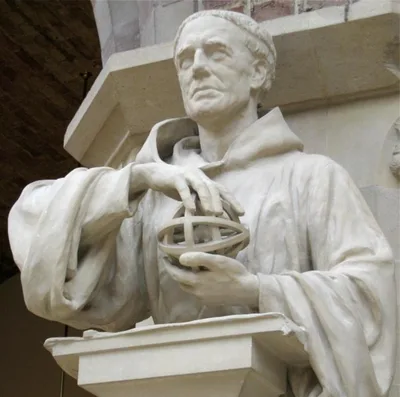
1590 BACON, Roger (1219 – 1292); WILLIAMS, John ( – 1613)
Libellus Rogerii Baconi Angli doctissimi mathematici et medici, De retardandis senectutis accidentibus et de sensibus conservandis.... opera Johannis Williams Oxoniensis.
Translated into English by Richard Browne as The cure of old age and preservation of youth by Roger Bacon, a Franciscan frier (London, 1683). Digital facsimile of the 1683 edition from the Internet Archive at this link.
GMN 10962 · https://historyofmedicine.com/id/13158
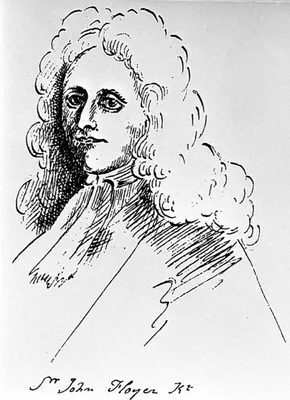
1724 FLOYER, Sir John (1649 – 1734)
Medicina gerocomica; or the Galenic art of preserving old men’s healths.
The first English book devoted to gerontology. Digital facsimile of the second edition (1725) from the Internet Archive at this link.
GMN 1595 · https://historyofmedicine.com/id/1705
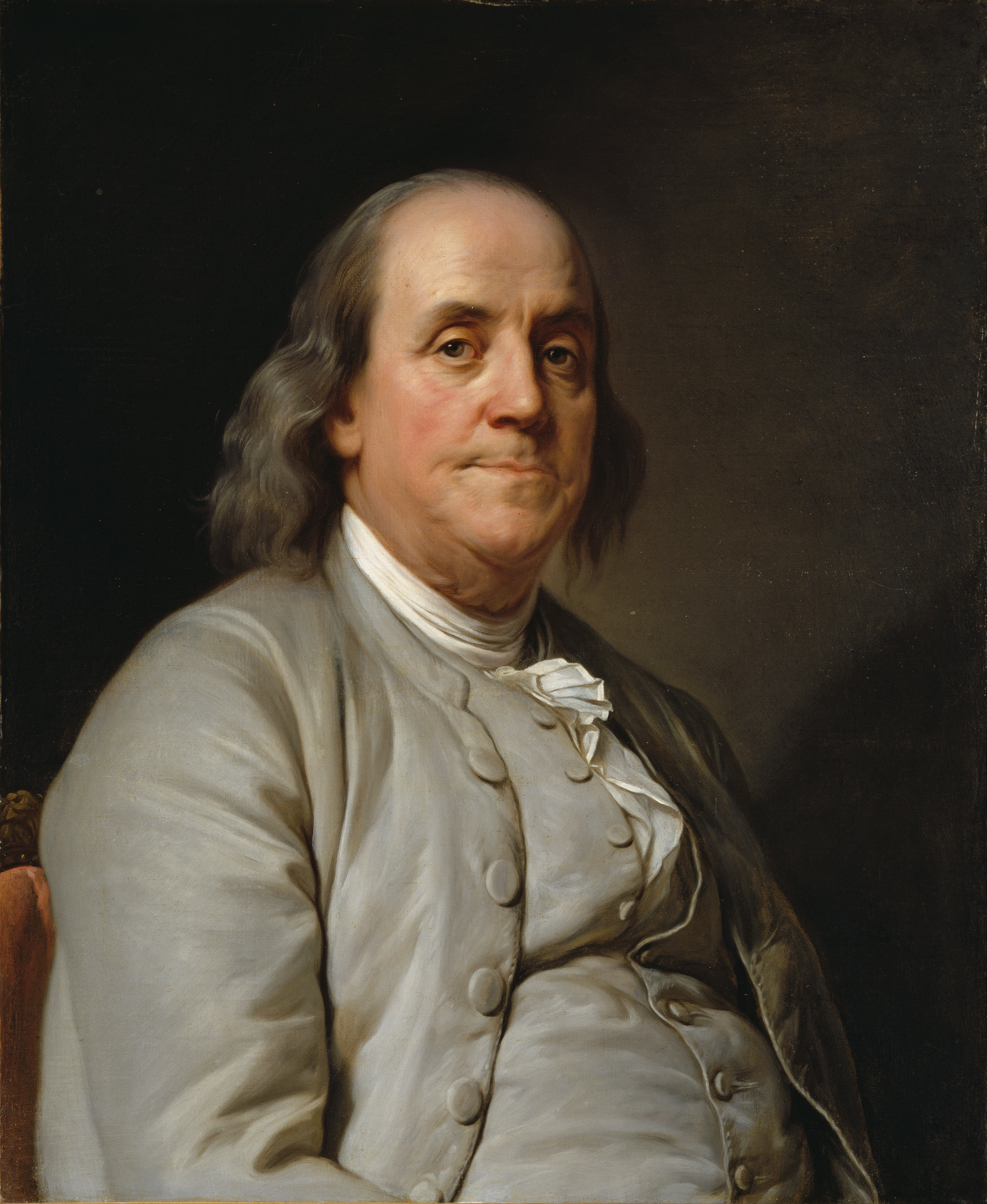
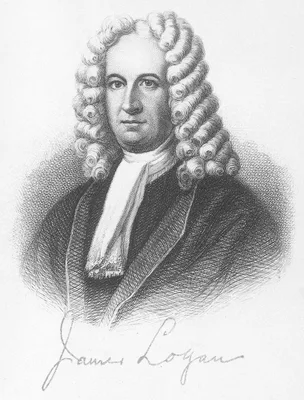
1744 FRANKLIN, Benjamin (1706 – 1790); LOGAN, James (1674 – 1751); CICERO, Marcus Tullius (-106 – -43)
M. T. Cicero's Cato major, or his course of old-age: with explanatory notes.
This work was Banjamin Franklin's personal favorite of the works printed by him, and is one of the finest books to emanate from a Colonial American press. It was the first classical text printed in North America, and …
GMN 9341 · https://historyofmedicine.com/id/11523
1768 SPALLANZANI, Lazzaro (1729 – 1799)
Prodromo di un opera da imprimersi sopra le riproduzione animali.
In this preliminary to a larger work on regeneration which was never published, Spallanzani described regenerative capacities of remarkable complexity and repetitiveness in the land snail, salamander and toad and frog…
GMN 101 · https://historyofmedicine.com/id/1507
1807 SINCLAIR, Sir John (1754 – 1835)
The code of health and longevity; or, a concise view of the principles calculated for the preservation of health, and the attainment of long life. 4 vols.
One of the most comprehensive works on gerontology ever written, with a bibliography of 1800 references, supplemented by abstracts, translated excerpts from ancient authors, national data, etc.
GMN 1602.1 · https://historyofmedicine.com/id/1727
1817 CARLISLE, Sir Anthony (1868 – 1840)
An essay on the disorders of old age, and on the means of prolonging life.
Carlisle, a distinguished surgeon and anatomist, advised young people to adopt a sound regimen early in life in order to secure longevity. Addressing himself directly to old people he described diseases common to the …
GMN 1604.1 · https://historyofmedicine.com/id/1858
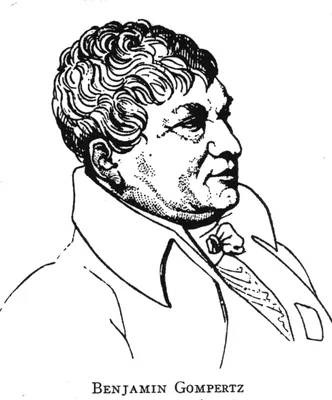
1825 GOMPERTZ, Benjamin (1779 – 1865)
On the nature of the function expressive of the law of human mortality, and on a new mode of determining the value of life contingencies.
Gompertz function. "Gompertz showed that over much of the adult human lifespan, age-specific mortality rates increased in an exponential manner. Gompertz's work played an important role in shaping the emerging statist…
GMN 8375 · https://historyofmedicine.com/id/10552
1839 CANSTATT, Carl Friedrich (1807 – 1850)
Die Krankheiten des höhren Alters und ihre Heilung. 2 vols.
Canstatt’s book is one of the most important in the history of gerontology, summarizing all previous work on the subject. Suffering from tuberculosis, Canstatt himself only lived to the age of 43. Digital facsimile fr…
GMN 1605.1 · https://historyofmedicine.com/id/1874
1849 DAY, George Edward (1815 – 1872)
A practical treatise on the domestic management and most important diseases of advanced life. With an appendix, containing a series of cases illustrative of a new and successful mode of treating lumbago and other forms of chronic rheumatism, sciatica and other neuralgic affections, and certain forms of paralysis.
Digital facsimile from wellcomelibrary.org at this link.
GMN 13167 · https://historyofmedicine.com/id/15427
1860 MAKEHAM, William Matthews (1826 – 1891)
On the law of mortality and the construction of annuity tables.
Gompertz-Makeham law. Makeham proposed the age-independent Makeham term that, together with the exponentially age-dependent Gompertz term, compose the Gompertz-Makeham law of mortality--one of the most effective theor…
GMN 8376 · https://historyofmedicine.com/id/10553
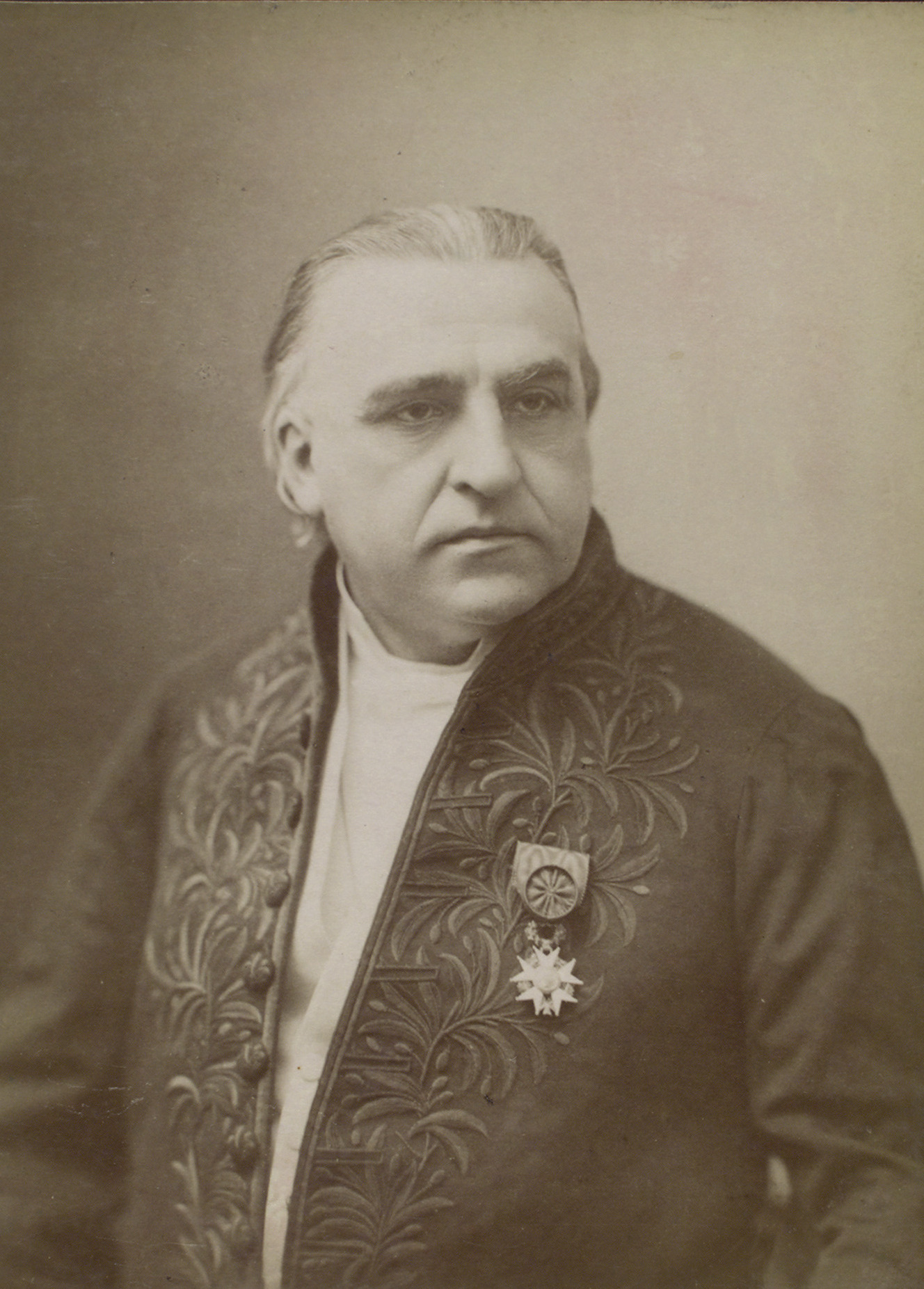
1867 CHARCOT, Jean Martin (1825 – 1893)
Leçons sur les maladies des vieillards et les maladies chroniques.
Charcot inaugurated a course of study of geriatrics, at the Salpêtrière, in 1866; his lectures are embodied in the above work. English translation, 1881.
GMN 2222 · https://historyofmedicine.com/id/3764
1889 HUMPHRY, Sir George Murray (1820 – 1896)
Old age: The results of information received respecting nearly nine hundred persons who had attained the age of eighty years, including seventy-four centenarians.
Analysis, illustrated with Woodburytype photographs, of data collected by the "Collective Investigation Committee" of the British Medical Association. Note that in the 1880s attaining the age of 80 was considered wort…
GMN 10618 · https://historyofmedicine.com/id/12811
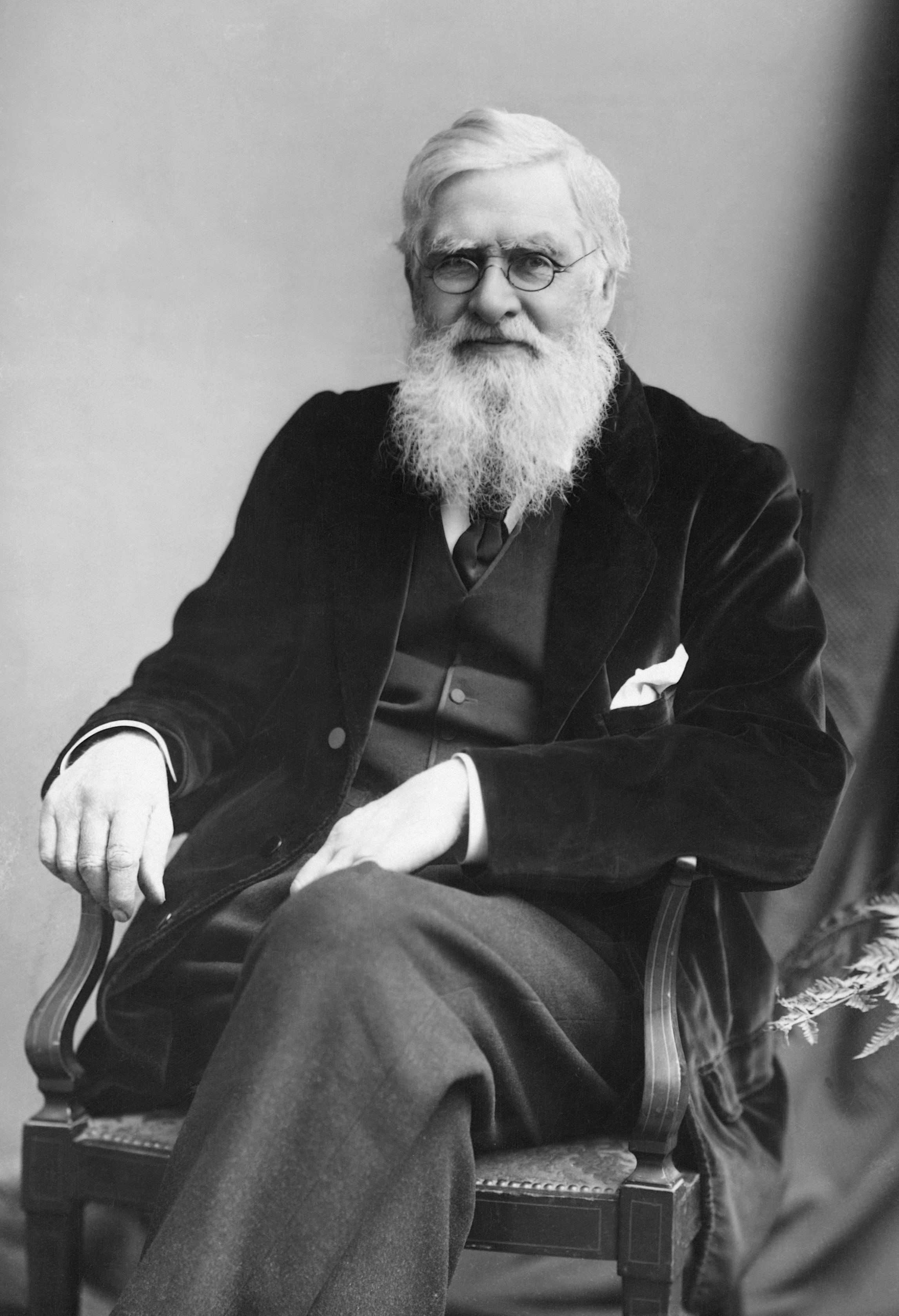
1889 WALLACE, Alfred Russel (1823 – 1913); WEISMANN, August Friedrich Leopold (1834 – 1914)
The action of natural selection in producing old age, decay, and death. In Essays upon heredity and kindred biological problems by August Weismann; authorized translation edited by Edward B. Poulton, Selmar Schönland and Arthur E. Shipley, Chapter 1, "The duration of life," page 23.
Wallace proposed the first evolutionary theory of aging. He stated that if too many people lived for a long time they would compete for resources needed for other members of the species that were of reproduction age. …
GMN 14344 · https://historyofmedicine.com/id/16674
1908 MINOT, Charles Sedgwick (1852 – 1914)
The problem of age, growth and death.
Minot’s theory of aging, based on cytomorphosis and the rate of growth. This work first appeared as a paper in vol. 7 of the Popular Science Monthly, 1907.
GMN 132 · https://historyofmedicine.com/id/2149
1914 NASCHER, Ignatz Leo (1863 – 1944)
Geriatrics: The diseases of old age and their treatment, including physiological old age, home and institutional care, and medico-legal relations.
The first modern treatise on the subject. Nascher coined the term “geriatrics” in a paper of that name in N.Y. med. J., 1909, 90, 358-59.
GMN 1641.1 · https://historyofmedicine.com/id/2117
1923 ROBERTSON, Thorburn Brailsford (1884 – 1930)
The chemical basis of growth and senescence.
GMN 138 · https://historyofmedicine.com/id/2251
1928 WITHINGTON, Edward Theodore (1860 – 1947); BACON, Roger (1219 – 1292); LITTLE, A. G. (1863 – 1945)
De retardatione accidentium senectutis cum aliis opusculis de rebus medicinalibus. Nunc primum ediderunt A. G. Little [and] E. Withington.
New edition edited from the 1590 printed edition in comparison with existing medieval manuscripts.
GMN 10950 · https://historyofmedicine.com/id/13146
1934 MCCAY, Clive Maine (1898 – 1967); CROWELL, Mary F.
Prolonging the life span.
McCay proved that caloric restriction increases the life span of rats, a discovery that triggered extensive further research and experiments in the field of nutrition and longevity.
GMN 7245 · https://historyofmedicine.com/id/9414
1935 WORCESTER, Alfred (1855 – 1951)
The care of the aged, the dying and the dead.
Digital facsimile of the 2nd edition (1940) from the Hathi Trust at this link.
GMN 10057 · https://historyofmedicine.com/id/12246
1951 SHOCK, Nathan Wetherill (1906 – 1989)
A classified bibliography of gerontology and geriatrics.
Supplements, in 1957 and 1963.
GMN 1671.11 · https://historyofmedicine.com/id/2284
1961 HAYFLICK, Leonard (1928 – 2024); MOORHEAD, Paul Sidney (1924 – )
The serial cultivation of human diploid cell strains.
The Hayflick limit. Hayflick demonstrated that a population of normal human fetal cells in a cell culture will divide between 40 and 60 times. The population then enters a senescence phase.
GMN 8381 · https://historyofmedicine.com/id/10558
1965 LÜTH, Paul Egon Heinrich (1921 – 1986)
Geschichte der Geriatrie. Dreitausend Jahre Physiologie, Pathologie und Therapie des alten Menschen.
GMN 1671.61 · https://historyofmedicine.com/id/2301
1970 SACHER, George A. (1917 – 1981); FINCH, Caleb Ellicott (1939 – ); HAYFLICK, Leonard (1928 – 2024)
George A Sacher, Life table modification and life prolongation. IN: Handbook of the biology of aging, edited by Caleb E. Finch and Leonard Hayflick, pp. 582–638.
"The building of a connection between the Gompertz equation and the biology of ageing owes much to the work of biophysicist George Sacher [10] of the Argonne National Laboratory, whose introduction to ageing stemmed f…
GMN 8380 · https://historyofmedicine.com/id/10557
1978 GALL, Joseph Grafton (1928 – ); BLACKBURN, Elizabeth Helen (1948 – )
A tandemly repeated sequence at the termini of the extrachromosomal ribosomal RNA genes in Tetrahymena.
In 1975–1977, Blackburn, working as a postdoctoral fellow at Yale University with Gall, discovered the unusual nature of telomeres, with their simple repeated DNA sequences composing chromosome ends.
GMN 8387 · https://historyofmedicine.com/id/10564
1979 FREEMAN, Joseph T.
Aging: Its history and literature.
Includes bibliographies of classic works, of the history of geriatrics, and of periodicals devoted to the subject.
GMN 1671.9 · https://historyofmedicine.com/id/2317
1985 BLACKBURN, Elizabeth Helen (1948 – ); GRIEDER, Carolyn Widney (1961 – )
Identification of a specific telomere terminal transferase activity in Tetrahymena extracts.
Blackburn and Grieder discovered telomerase in the ciliate Tetrahymena. In 2009 Blackburn and Grieder shared the Nobel Prize in Physiology or Medicine with Jack W. Szostak "for the discovery of how chromosomes are pro…
GMN 8388 · https://historyofmedicine.com/id/10565
1995 ALBERT, Daniel Myron (1936 – ); ACHENBAUM, W. Andrew (1947 – )
Profiles in gerontology: A biographical dictionary
GMN 7020 · https://historyofmedicine.com/id/9187
1995 ACHENBAUM, W. Andrew (1947 – )
Crossing frontiers: Gerontology emerges as a science.
GMN 7021 · https://historyofmedicine.com/id/9188
2001 RILEY, James C. (1943 – )
Rising life expectancy: A global history.
"Between 1800 and 2000 life expectancy at birth rose from about 30 years to a global average of 67 years, and to more than 75 years in favored countries. This dramatic change was called a health transition, characteri…
GMN 8396 · https://historyofmedicine.com/id/10573
2003 GRUMAN, Gerald Joseph (1926 – 2007)
A history of ideas about the prolongation of life: The evolution of prolongevity hypotheses to 1800.
GMN 7244 · https://historyofmedicine.com/id/9413
2004 SCHÄFER, Daniel (1964 – )
Alter und Krankheit in der Frühen Neuzeit. Der ärztliche Blick auf die letzte Lebensphase.
Translated into English by Patrick Baker as Old age and disease in early modern medicine (London & New York: Routledge, 1911).
GMN 10498 · https://historyofmedicine.com/id/12691
2006 TAVORMINA, Mary Teresa (1951 – )
Sex, aging, & death in a medieval medical compendium. Trinity College Cambridge MS R.14.52, its texts, language and scribe. Edited by M. Teresa Tavormina.
GMN 11062 · https://historyofmedicine.com/id/13258
2013 ABEL, Emily K. (1942 – )
The inevitable hour: A history of caring for dying patients in America.
GMN 8185 · https://historyofmedicine.com/id/10361