1524 ELLENBOG, Ulrich (1435 – 1499)
Von den gifftigen besen Tempffen und Reuchen.
Written in 1473 but not published until 1524, this pamphlet on the diseases of miners is the first known work on industrial hygiene and toxicology. A reprint of the text appears in Münch. Beitr. Lit. Naturwiss. Med., …
GMN 2118 · https://historyofmedicine.com/id/2628
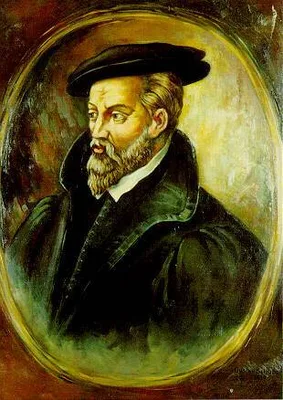
1556 AGRICOLA, Georgius (Georg Bauer) (1494 – 1555)
De re metallica.
Agricola, a physician, wrote several pioneering works on physical geology, systematic minerology, and mining technology. The twelve books of his masterwork, De re metallica (On Metals), illustrated with over 270 woodc…
GMN 13252 · https://historyofmedicine.com/id/15517
1567 PARACELSUS, [Philippus Aureolus Theophrastus Bombastus von Hohenheim] (1493 – 1541)
Von der Bergsucht oder Bergkranckheiten drey Bücher…
Paracelsus’s book on the diseases of miners was the first full monograph on the diseases of an occupational group. The first section covers the diseases, mainly pulmonary affections, of miners, including the etiology,…
GMN 2118.1 · https://historyofmedicine.com/id/2630
1589 –1591 PARACELSUS, [Philippus Aureolus Theophrastus Bombastus von Hohenheim] (1493 – 1541); HUSER, Johannes (1545 – 1604)
Der Bücher und Schriften des Edlen, Hochgelehrten und Bewehrten Philosophi und Medici, Philipi Thephrasti Bombast von Hohen hem, Paracelsi genannt. Edited by Johannes Huser. 10 vols.
First edition of Paracelsus's collected works. Though all the autographs of Paracelsus's writings were later lost, Huber, who was born shortly after Paracelsus's death, was able to collect a great number of autographs…
GMN 8466 · https://historyofmedicine.com/id/10643
1614 PANSA, Martin (1580 – 1626)
Consilium Peripneumoniacum: Das ist Ein getrewer Rath in der beschwerlichen Berg und Lungensucht : darinnen verfasset, was die fürnemsten Ursachen seyn beyderley Beschwerungen, beydes der gifftigen, die vom Bergwerck entstehet: so wol der gemeinen, die von Flüssen herrühret: Zuvor aber, wie der Mensch mit der kleinen Welt, und mit dem Bergwerck artlich zu vergleichen, und wie beyde Suchten zu vertreiben seyn.
Martin Pansa, a pupil of Georg Agricola, wrote the most important work on occupational disease before Ramazzini. He described the symptoms of the lung diseases of miners and smelters. Digital facsimile from the Bayeri…
GMN 2119 · https://historyofmedicine.com/id/2631
1656 STOCKHAUSEN, Samuel (1619 – 1656)
Libellus de lithargyrii fumo noxio morbifico eiusque metallico frequentiori morbo vulgo dicto: Die Hütten Katze Oder Hütten Rauch: Cum Appendice de montano ffaectu asthmatico metallicidis familiari, quem Germanica lingua appellamus Die Bergsuche oder Berg Kranckheit.
Stockhausen had considerable experience in treating the diseases of miners. His book on industrial diseases did much to clarify contemporary knowledge regarding the relative toxicity of lead, mercury, arsenic, cobalt,…
GMN 2120 · https://historyofmedicine.com/id/2632
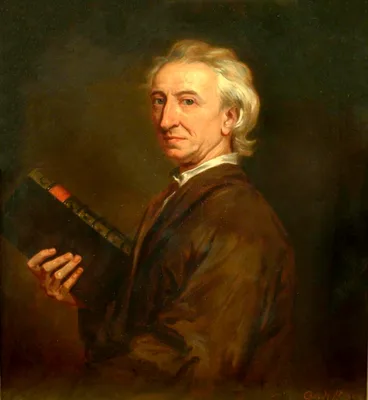
1661 EVELYN, John (1620 – 1706)
Fumifugium: or the inconveniencie of the aer and smoak of London dissipated. Together with some remedies humbly proposed.
A pioneering attack on air pollution caused by “the hellish and dismall cloud of sea-coal” which perpetually enveloped London. Of course, the problems Evelyn wrote about did not go away, and the work continued to be r…
GMN 145.5 · https://historyofmedicine.com/id/8791
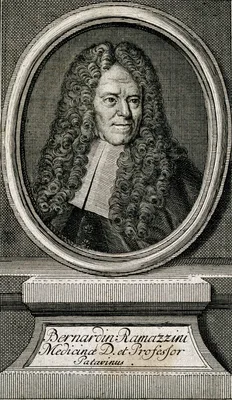
1700 RAMAZZINI, Bernardino (1633 – 1714)
De morbis artificum diatriba.
Ramazzini's study of the diseases of workers, De morbis artificium diatriba, was the first comprehensive and systematic treatise on occupational medicine; it was also the foundation work in ergonomics. It deals with p…
GMN 2121 · https://historyofmedicine.com/id/79
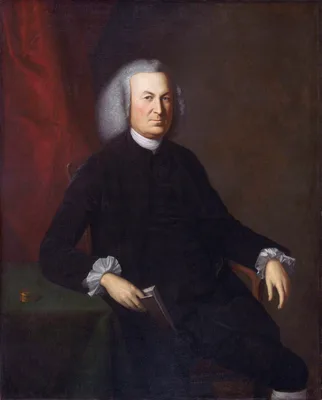
1745 CADWALADER, Thomas (1708 – 1779)
An essay on the West-India dry-gripes… to which is added, an extraordinary case in physick.
Cadwalader, an American pupil of Cheselden, left a classical account of lead colic and lead palsy. This was later shown by Benjamin Franklin, printer of the above work, to be due to the consumption of Jamaica rum whic…
GMN 2094 · https://historyofmedicine.com/id/2586
1745 HENCKEL, Johann Friedrich (1678 – 1744)
Berg-Raths Medicinischer Aufstand und Schmelz-Bogen Von der Bergsucht und Hütten-Katze auch einigen andern, Denen Bergleuten und Hütten-Arbeitern zustoßenden Krankheiten, Vor dieselben und diejenigen So in Stein, Erz, Metall und Feuer arbeiten, ausgestellet.
A key early work on the Bergsucht or miner's phthisis.
GMN 10474 · https://historyofmedicine.com/id/12667
1757 TRONCHIN, Théodore (1709 – 1781)
De colica pictonum.
Tronchin, sometime physician to Voltaire, showed that the so-called “Poitou colic” was caused by drinking water which had passed through lead gutters. Tronchin introduced inoculation into Holland, France, and Switzerl…
GMN 2095 · https://historyofmedicine.com/id/2587
1767 BAKER, Sir George (1722 – 1809)
An essay concerning the cause of the endemial colic of Devonshire.
Baker demonstrated that the cider of Devonshire contained lead, while that made in other parts of England did not. He further showed that it was common practice in Devon to line cider presses with lead, and proved tha…
GMN 2096 · https://historyofmedicine.com/id/2588
1768 TISSOT, Samuel Auguste André David (1728 – 1797)
La santé des gens de lettres.
Digital facsimile from BnF Gallica at this link. Translated into English by James Kirkpatrick as An essay on the disorders of people of fashion, and a treatise on the diseases incident to literary and sedentary person…
GMN 10475 · https://historyofmedicine.com/id/12668
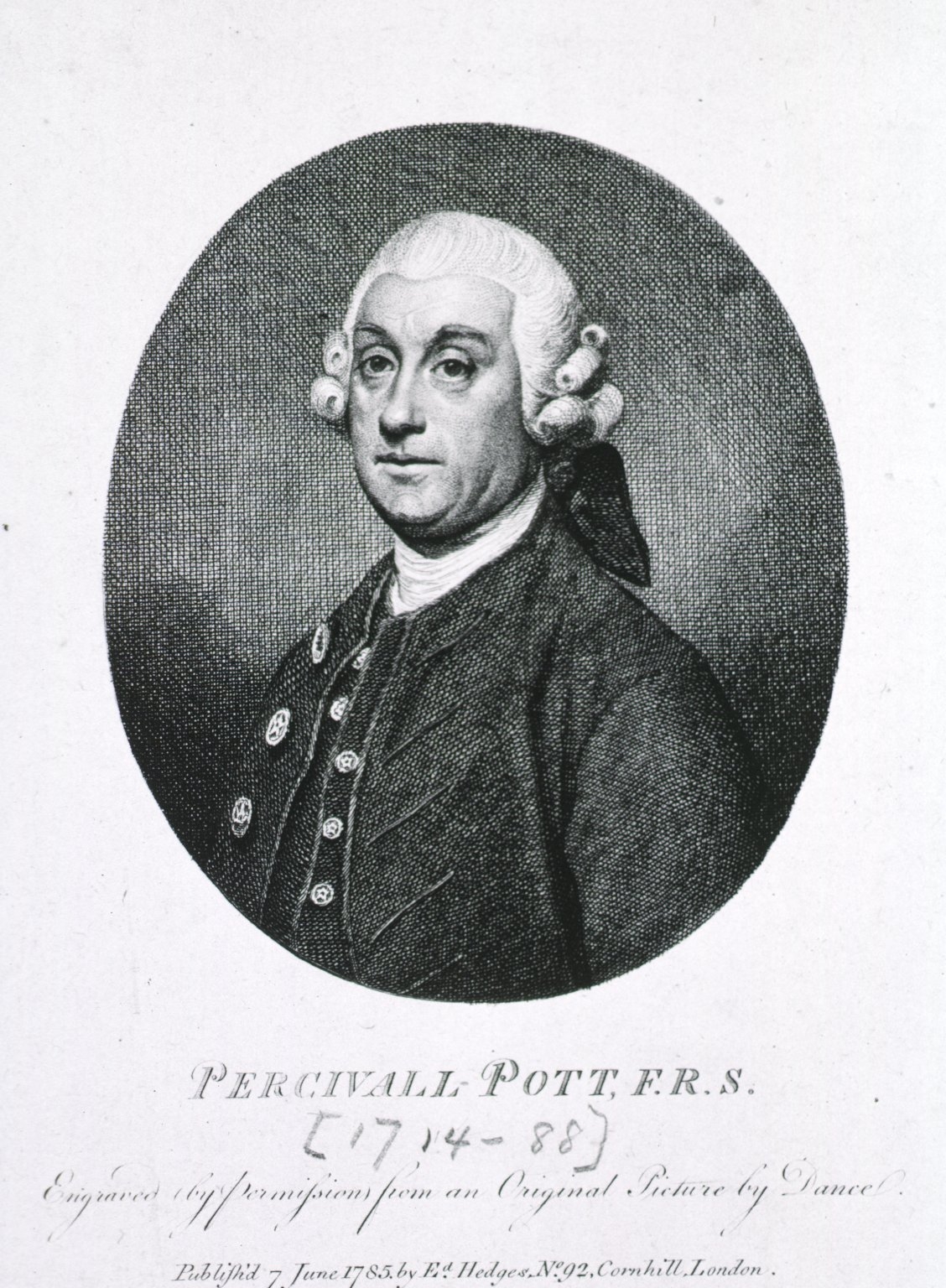
1775 POTT, Percivall (1714 – 1788)
Chirurgical observations relative to the cataract, the polypus of the nose, the cancer of the scrotum, etc.
Includes the first description of occupational cancer. By describing chimney sweeps” cancer of the scrotum, Pott was the first to trace the origin of a type of cancer to a specific external cause. The above work also …
GMN 2122 · https://historyofmedicine.com/id/2635
1776 FOTHERGILL, John (1712 – 1780)
Observations on disorders to which painters in water colours are exposed.
Concerning lead poisoning from artists' paints.
GMN 10388 · https://historyofmedicine.com/id/12580
1784 MASDEVALL, Josep (José)
Dictamen del mismo doctor Don Joseph Masdevall dado de órden del rey sobre Si las fábricas de algodon y lana son perniciosas ó no á la salud pública de las ciudades donde están establecidas. IN: Relacion de las epidemias de calenturas putridas y malignas....
Digital facsimile of Masdevall's work on occupational medicine from helvia.uco.es at this link. Digital facsimile of the complete epidemiological work from Google Books at this link.
GMN 10484 · https://historyofmedicine.com/id/12677
1787 HALLE, Johann Samuel (1727 – 1810)
Gifthistorie des Thier- Pflanzen- und Mineralreichs, nebst den Gegengiften, und der medicinischen Anwendung der Gifte, nach den neuesten Toxicologen.
This work was not illustrated. Digital facsimile from Bayerische StaatsBibliothek at this link.
GMN 10480 · https://historyofmedicine.com/id/12673
1789 FALCONER, William (1744 – 1824)
An essay on the preservation of the health of persons employed in agriculture, and on the cure of the diseases incident to that way of life.
Digital facsimile from Google Books at this link.
GMN 10387 · https://historyofmedicine.com/id/12579
1791 BALME, Claude Delonne (1742 – 1805)
Recherches diététiques du médecin patriote sur la santé et sur les maladies observées dans les séminaires, dans les pensionnats, et chez les ouvrières en dentelle. Suivies de réflexions sur le traitement de la petite vérole, et d’un mémoire sur le régime des convalescens et des valètudinaires.
Includes a study of the diseases of women lace workers. Digital facsimile from the Internet Archive at this link.
GMN 10469 · https://historyofmedicine.com/id/12662
1794 EBELL, Georg August (1745 – 1824)
Die Bleyglasur de irdenen Küchengeschirrs als eine unerkannte Hauptquelle vieler unserer Krankheiten und Mitursache der Abnahme körperlicher Kräfte der Menschen.
On the lead glaze of earthen kitchen utensils as an unrecognized source of many diseases.
GMN 10470 · https://historyofmedicine.com/id/12663
1797 KENTISH, Edward ( – 1832)
An essay on burns: Principally upon those which happen to workmen in mines from the explosions of inflammable air (or hydrogen gas)....
Digital facsimile of the 1817 edition reprinting the 1797 work and the continuation (1800): A second essay on burns : in which an attempt is made to refute the opinions of Mr. Earle, and Sir W. Farquhar, lately advanc…
GMN 10481 · https://historyofmedicine.com/id/12674
1803 MÉRAT DE VAUMARTOISE, François Victor (1780 – 1851)
Sur la colique, vulgairement appelée colique des peintres, des plombiers, du plomb, etc.
GMN 2097 · https://historyofmedicine.com/id/2590
1803 COLLINS, David
Practical rules for the management and medical treatment of negro slaves in the sugar colonies
Collins, a British doctor and planter, spent fourteen years in the Caribbean island of Saint Vincent. Written from the utilitarian perspective of a master, this handbook on slave medicine was intended to maximize the …
GMN 8025 · https://historyofmedicine.com/id/10201
1803 ADELMANN, Georg (1777 – 1865)
Über die Krankheiten der Künstler und Handwerker, nach den Tabellen des Instituts für Kranke Gesellen der Künstler und Handwerker in Würzburg von den Jahren 1786 bis 1802 .
Digital facsimile from the Hathi Trust at this link.
GMN 13856 · https://historyofmedicine.com/id/16146
1822 RAMAZZINI, Bernardino (1633 – 1714); PATISSIER, Philibert (1791 – 1863)
Traité des maladies des artisans, et de celles qui résultent des diverse professions, d'après Ramazzini; Ouvrage dans lequel on indique les précautions que doivent prendre, sous le rapport de la salubrité publique et particulière, les fabricans, les manufacturiers, les chefs d'ateliers, les artistes, et toutes les personnes qui exercent des professions insalubres.
This second French edition of Ramazzini's De morbis artificum diabriba by Philibert Patissier provides so much new material on the diseases of workers in France as to virtually double the length of Ramazzini’s text. D…
GMN 9326 · https://historyofmedicine.com/id/11508
1825 BUNIVA, Michele Francesco (1761 – 1834)
Igiene dé tipografi.
Probably the first separate publication on the diseases of printers and typesetters. Digital facsimile from Google Books at this link.
GMN 10385 · https://historyofmedicine.com/id/12577
1831 THACKRAH, Charles Turner (1795 – 1833)
The effects of the principal arts, trades and professions, and of civic states and habits of living on health and longevity.
The first systematic publication in Great Britain on industrial disease and its prevention. For comprehensiveness, first-hand clinical experience and constructive proposals for improvements, Thackrah’s monograph is su…
GMN 2123 · https://historyofmedicine.com/id/2637
1832 TREBUCHET, Adolphe (1801 – 1865)
Code administratif des établissemens dangereux, insalubres ou incommodes.
Trebuchet's work sets out the rules and regulations governing dangerous and unhealthy work environments (particularly those involving steam engines) and public nuisances. Pages 281-301 contain a table of businesses cl…
GMN 10393 · https://historyofmedicine.com/id/12586
1832 KAY-SHUTTLEWORTH, Sir James Phillips (1804 – 1877)
The moral and physical condition of the working classes employed in the cotton manufacture in Manchester
"At first engaged in a Rochdale bank, in 1824 he [Kay-Shuttleworth] became a medical student at the University of Edinburgh. Settling in Manchester about 1827, he was instrumental in setting up the Manchester Statisti…
GMN 10395 · https://historyofmedicine.com/id/12588
1833 GASKELL, Peter (1806 – 1841)
The manufacturing population of England, its moral, social, and physical conditions, and the changes which have arisen from the use of steam machinery; with an examination of infant labour.
Gaskell, a physician, addressed social, political and public health problems that resulted from the Industrial Revolution. Gaskell issued a revised edition of this work in 1836 under a different title: Artisans and Ma…
GMN 10389 · https://historyofmedicine.com/id/12581
1836 –1837 MCCREADY, Benjamin William (1813 – 1892)
On the influence of trades, professions, and occupations, in the United States in the production of disease.
The first American work devoted entirely to occupational diseases. Reprinted with introduction, Baltimore, Johns Hopkins Press, 1943.
GMN 2123.1 · https://historyofmedicine.com/id/2639
1838 SANTY, Justin (1818 – )
Des maladies les plus fréquentes à bord des navires baleiniers, et de leur traitement.
On injuries and diseases of the crews of whaling voyages in particular. This was Santy's medical dissertation; dissertation and commercially published issues appeared from the same publisher the same year. Digital fac…
GMN 13790 · https://historyofmedicine.com/id/16077
1839 TANQUEREL DES PLANCHES, Louis Jean Charles Marie (1810 – 1862)
Traité des maladies de plomb ou saturnines. 2 vols.
Classical description of the diseases found among lead workers. Reporting on 1200 cases of lead poisoning, Tanquerel’s studies were so complete that later studies added little to knowledge of the symptoms and signs of…
GMN 2098 · https://historyofmedicine.com/id/2592
1840 BURTON, Henry (1799 – 1849)
On a remarkable effect upon the human gums produced by the absorption of lead.
Burton was the first to note the blue line on the gums in lead poisoning – “Burton’s blue line" – an important diagnostic sign. He was physician to St. Thomas’s Hospital, London.
GMN 2099 · https://historyofmedicine.com/id/2594
1840 VILLERMÉ, Louis-René (1782 – 1863)
Tableau de l'état physique et moral des ouvriers employés dans les manufactures de coton, de laine et de soie, ouvrage entrepris par ordre... de l'Académie des sciences morales et politiques. 2 vols.
Digital facsimile from BnF Gallica at this link.
GMN 9555 · https://historyofmedicine.com/id/11741
1843 ANDRAL, Gabriel (1797 – 1876)
Essai d’hématologie pathologique.
The first monograph on hematology in its "modern" sense. Andral established analysis of the blood on the basis of exact knowledge of the blood components. He analysed the blood fibrin and albumin. He recognized severa…
GMN 3060 · https://historyofmedicine.com/id/3706
1843 HOLLAND, George Calvert (1801 – 11865)
Diseases of the lungs from mechanical causes; and inquiries into the condition of the artisans exposed to the inhalation of dust.
Digital facsimile from the Internet Archive at this link.
GMN 10390 · https://historyofmedicine.com/id/12583
1845 LORINSER, Friedrich Wilhelm (1817 – 1895)
Necrose der Kieferknochen, in Folge der Einwikrung von Phosphor-Dämpfen. Ein Beitrag zur Ätiologie der Knochen-Krankheiten.
The production of matches with white phosphorus in German-speaking countries started in 1833. Between 1839 and 1845 Lorinser saw nine cases of what he called "phosphorimus chronicus" in workers with white phosphorus, …
GMN 9546 · https://historyofmedicine.com/id/11732
1845 HALFORT, A. C. L.
Entstehung, Berlauf und Behandlung der Krankheiten der Künstler und Gewerbetreibenden. Nach dem neuesten Standpunkte der Medizin, Chemie, Mechanik und Technologie, so wie nach den Mittheilungen berühmter Gewertsärzte des In-und Auslandes und eigenen Forschungen bearbeitet.
See Karbe, "The significance of A.C.L. Halfort's work on The development, course and treatment of diseases in artists and tradesmen (Berlin 1845)," Z. Gesamte Hyg. 21 (1975) 74-8. Digital facsimile from Google Books a…
GMN 10479 · https://historyofmedicine.com/id/12672
1846 HUTCHINSON, John (1811 – 1861)
On the capacity of the lungs, and on the respiratory functions, with a view of establishing a precise and easy method of detecting disease by the spirometer.
Invention of the spirometer, making possible the determination of the vital capacity of the lungs. Hutchinson used the spirometer while evaluating candidates for life insurance as a physician for Brittania Life. Parti…
GMN 930 · https://historyofmedicine.com/id/149
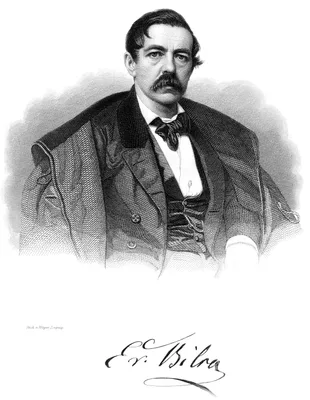
1847 BIBRA, Ernst Freiherr von (1806 – 1878); GEIST, Lorenz Melchior (1807 – 1867)
Die Krankheiten der Arbeiter in den Phospherzündholzfabriken, insbesondere das Leiden der Kieferknochen durch Phosphordämpfe. Vom chemisch-physiologischen, medicinisch-chirurgischen und medicinisch-polizeylichen Standpunkt. Text plus atlas of 9 plates.
An early illustrated work on phosphorus poisoning in the match industry. Digital facsimile from Google Books at this link.
GMN 10384 · https://historyofmedicine.com/id/12576
1849 TARDIEU, Auguste Ambroise (1818 – 1879)
Mémoire sur les modifications physiques et chimiques que détermine dans certaines parties du corps l’exercice des diverse professions, pour servir à la recherche médico-légale de l’identité.
In this comprehensive work on occupational marks, Tardieu states that Corvisart, Dupuytren, and Trousseau would take pride in identifying the professions of their patients at first sight, using knowledge of occupation…
GMN 2123.2 · https://historyofmedicine.com/id/2641
1850 TYSON, James Lawrence
Diary of a physician in California; being the results of actual experience, including notes of the journey by land and water, and observations on the climate, soil, resources of the country, etc.
Tyson sailed from Baltimore for California in January 1849, crossing the Isthmus and sailing on to San Francisco. His book recounts his 1849 tour of the Northern Mines in search of a likely place for his medical pract…
GMN 10426 · https://historyofmedicine.com/id/12619
1851 BROCKMANN, Carl Heinrich
Die metallurgischen Krankheiten des Oberharzes.
Brockmann's book on the pulmonary disease of miners, including black lung disease, was first book on occupational health published in Germany. Brockmann published a preliminary paper on the subject in 1845. Digital fa…
GMN 8942 · https://historyofmedicine.com/id/11121
1852 GEIST, Lorenz Melchior (1807 – 1867)
Die regeneration des unterkiefers nach totaler necrose durch phosphordampfe.
Geist and von Bibra proved that the phosphorus necrosis of the lower jaw of matchmakers was caused by phosphorus fumes and that carious teeth ormed the starting point for this typical industrial disease. Digital facsi…
GMN 10471 · https://historyofmedicine.com/id/12664
1852 ROOT, Harmon Knox
The people's medical lighthouse; a series of popular and scientific essays on the nature, uses, and diseases of the lungs, heart, liver, stomach, kidneys, womb and blood; also a key to the causes, prevention, remedies, and cure of pumonary and other kinds of consumption;....Marriage guide....
One of the more comprehensive American works on popular medicine from the mid-19th century, frequently reprinted. The author, who published the work himself from his address in New York City, describes himself as A.M.…
GMN 13308 · https://historyofmedicine.com/id/15574
1854 POL, B; WATELLE, T. J. J.
Mémoire sur les effets de la compression de l’air.
An early paper on “caisson sickness”.
GMN 2124 · https://historyofmedicine.com/id/2644
1854 TARDIEU, Auguste Ambroise (1818 – 1879)
Dictionnaire d'hygiène publique et de salubrité ou répertoire de toutes les questions relatives à la santé publique, considérées dans leurs rapports avec les subsistances, les épidémies, les professions, les établissements et institutions d'hygiène et de salubrité, complété par le texte des lois, décrets, arrêtés, ordonnances et instructions qui s'y rattachen. 3 vols.
For the second edition (1862) Tardieu expanded the work to 4 volumes. Tardieu described the terrible working conditions of children in factories and mines. He also reported the ill consequences of theses conditions on…
GMN 8892 · https://historyofmedicine.com/id/11070
1866 ERICHSEN, Sir John Eric (1818 – 1896)
On railway and other injuries of the nervous system.
The first book to discuss the injuries now widely known as whiplash, which first appeared as the by-product of the increased speed of railway travel. Digital facsimile from the Internet Archive at this link.
GMN 4538.1 · https://historyofmedicine.com/id/399
1867 THIERSCH, Carl (1822 – 1895)
De maxillarum necrosi phosphorica.
Classical description of phosphorus necrosis of the jaw, or "phossy jaw".
GMN 2125 · https://historyofmedicine.com/id/2646