1490 LANFRANC OF MILAN, Guido [Lanfranchi, Lanfranco, Lanfrancus Mediolanensis] (1250 – 1306); YVOIRE, Guillaume (1450 – 1500)
La chirurgie da Lanfranc traduit du latin par Guillaume Yvoire.
Lanfranc, the founder of French surgery, was a pupil of William of Salicet. He enjoyed a great reputation for his lecturing and bedside teaching. His Chirurgia magna was completed in 1296. According to Hirsch and othe…
GMN 5553 · https://historyofmedicine.com/id/6866
1553 INGRASSIA, Giovanni Filippo (Ioannis Philippi Ingrassiae) (1510 – 1580)
De tumoribus praeter naturam.
This treatise on tumors includes (p. 194) the first known description of an epidemic disease resembling scarlet fever. This was a malady prevalent in Italy, and was commonly called rossania or rossalia. Ingrassia was …
GMN 5073 · https://historyofmedicine.com/id/5915
1624 SAPORTA, Antoine de ( – 1573); GRAS, Henri ( – 1665)
De tumoribus praeter naturam libri quinque. Ex instructissima Bibliotheca Ranchiniana eruti, & publici iuris facti, cura & studio Henric Gras...Accessit Ioannis Saportae Tractatus de lue venerea.
IN 1554 Saporta gave the earliest description of an aortic aneurysm. Many years after Saporta's death Henri Gras of Lyon discovered the manuscript of Saporta's book, and edited it for publication. Digital facsimile fr…
GMN 2971 · https://historyofmedicine.com/id/5080
1632 SEVERINO, Marco Aurelio [SEVERINUS] (1580 – 1656)
De recondita abscessuum natura.
The first textbook of surgical pathology. It treats of all kinds of swelling under the term “abscess” and describes neoplasms of the genital organs and sarcoma of bones. Tumors of the breast are classified into four g…
GMN 2273 · https://historyofmedicine.com/id/2841
1652 TULP, Nicolaes (1593 – 1674)
Observationes medicae.
One of the earliest accounts of beri-beri is on pp. 300-05 of this work. Tulp, notable as the demonstrator in Rembrandt’s “Anatomy Lesson”, was among the first, in the same book, to describe the ileo-caecal valve (“Tu…
GMN 3737 · https://historyofmedicine.com/id/4530
1666 MALPIGHI, Marcello (1628 – 1694)
De viscerum structura exercitatio anatomica.
Includes (pp. 71-100) his essay, De renibus, in which he described the uriniferous tubules and the “Malpighian bodies”. The great detail and clarity of Malpighi’s description was unsurpassed until Bowman (No. 1231). T…
GMN 1230 · https://historyofmedicine.com/id/153
1683 DU VERNEY, Guichard-Joseph (Guichard Joseph Duverney) (1648 – 1730)
Traité de l’organe de l’ouie; contenant la structure, les usages et les maladies de toutes les parties de l’oreille.
The first scientific account of the structure, function and diseases of the ear. Du Verney showed that the bony external meatus develops from the tympanic ring and that the mastoid air cells communicate with the tympa…
GMN 1545 · https://historyofmedicine.com/id/2867
1695 RIDLEY, Humphrey (1653 – 1708)
The anatomy of the brain.
The first book on the brain in the English language, including the first account of the circular venous sinus which Ridley names, and the first English account of a pineal tumor. In it Ridley gives the first account o…
GMN 1379.1 · https://historyofmedicine.com/id/1785
1731 HOFFMANN, Friedrich (1660 – 1742); SONTAG, Samuel
Samuel Sontag: Dissertatio inauguralis medica de metastasi sive sede morborum mutata oder: Wie sich öffters eine Kranckheit in die andere verwandele. Praeside Hoffmanno.
Recamier (1829) is credited with coining the term metastasis with respect to cancer. It is evident that Hoffmann and his pupil Sontag used the term nearly 100 years earlier in this general thesis on disease. They did …
GMN 2275 · https://historyofmedicine.com/id/2845
1752 KALTSCHMIED, Carl Friedrich (1706 – 1769)
De tumore scirrhoso trium cum quadrante librarum glandulae parotidis extirpato.
First description of parotid tumor.
GMN 3424.1 · https://historyofmedicine.com/id/5351
1757 LE DRAN, Henri François (1685 – 1770)
Mémoire avec un précis de plusieurs observations sur le cancer.
Le Dran discarded the humoral conception of cancer for the first time. He regarded cancer as a local disease in its early stage and knew that it spread via the lymphatics to regional nodes, and from there into the gen…
GMN 2607 · https://historyofmedicine.com/id/3056
1758 –1763 HAEN, Anton de (1704 – 1776)
De cranii ustione in pertinacioribus capitis vitiis. In his: Ratio medendi in nosocomio practico, 6, 239-287. 8 vols.
Haen provided the first description of amenorrhea in connection with a pituitary tumor. He recorded the case history of a young woman suffering from amenorrhea as well as many neurological symptoms assumed to result f…
GMN 3878 · https://historyofmedicine.com/id/4940
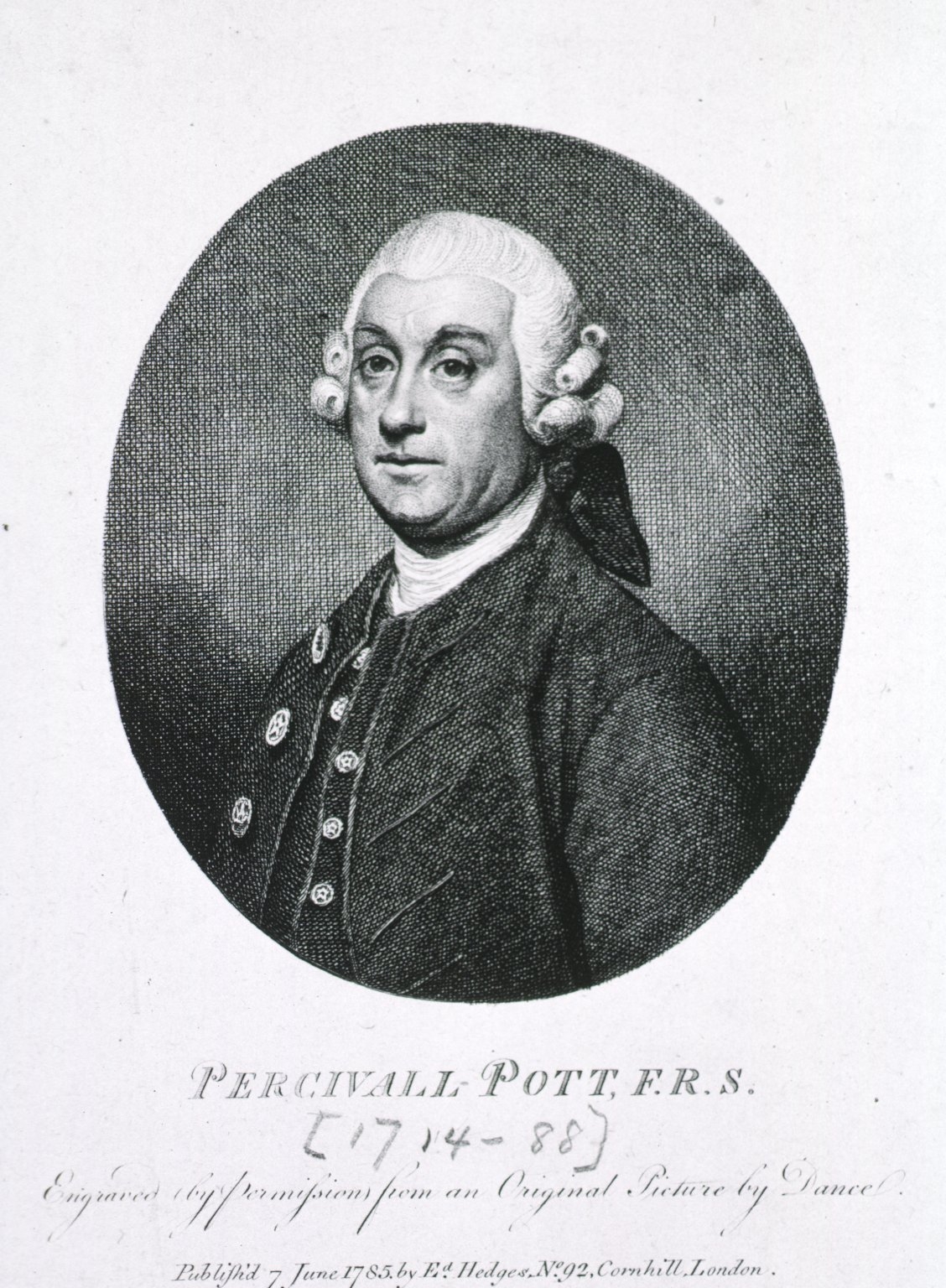
1760 POTT, Percivall (1714 – 1788)
Observations on the nature and consequences of wounds and contusions of the head, fractures of the skull, concussions of the brain, etc.
This book, which showed Pott’s extensive knowledge of surgical literature, systematized the treatment of head injuries. It shows what a variety of injuries of the head could be sustained even before the advent of the …
GMN 4850.5 · https://historyofmedicine.com/id/5590
1761 HILL, (Sir) John (1714 – 1775)
Cautions against the immoderate use of snuff. Founded on the known qualities of the tobacco Plant; and the effects it must produce when this way taken Into the body: And by instances of persons who have perished miserably of diseases, occasioned, or rendered incurable by its use,
First clinical report (pp. 30-31) of an association between tobacco and cancer, in this case “polypusses” of the nose caused by taking snuff. Hill was a distinguished botanist and apothecary, although regarded by some…
GMN 2607.1 · https://historyofmedicine.com/id/3063
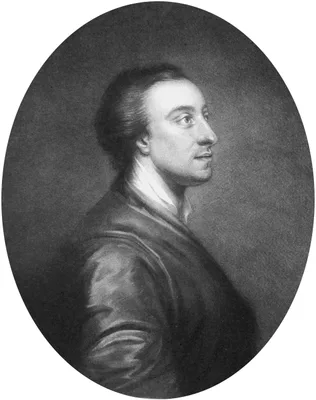
1768 AKENSIDE, Mark (1721 – 1770)
Observations on cancers.
First recorded description of multiple neurofibromatosis. Akenside was better known as a poet; he was caricatured as the republican doctor of Tobias Smollett's The Adventures of Peregrine Pickle.
GMN 4015.1 · https://historyofmedicine.com/id/5252
1774 PEYRILHE, Bernard (1735 – 1804)
Dissertatio academica de cancro.
Peyrilhe was the first to attempt an experimental study to determine the nature of cancer. He injected fluid from human mammary cancer into a dog; however, the dog howled and aggravated his housekeeper, who drowned it…
GMN 2608 · https://historyofmedicine.com/id/3066
1775 POTT, Percivall (1714 – 1788)
Chirurgical observations relative to the cataract, the polypus of the nose, the cancer of the scrotum, etc.
Includes the first description of occupational cancer. By describing chimney sweeps” cancer of the scrotum, Pott was the first to trace the origin of a type of cancer to a specific external cause. The above work also …
GMN 2122 · https://historyofmedicine.com/id/2635
1791 PLAIGNAUD, M.
Observation sur un fongus du sinus maxillaire.
First successful operation on a tumor of the maxillary sinus, 1789.
GMN 3250 · https://historyofmedicine.com/id/3901
1795 SOEMMERRING, Samuel Thomas von (1755 – 1830)
De morbis vasorum absorbentium corporis humani.
Soemmerring noted an association between pipe smoking and cancer of the lip (p. 109).
GMN 2609.1 · https://historyofmedicine.com/id/3088
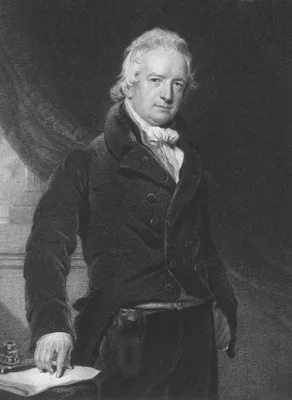
1804 ABERNETHY, John (1764 – 1831)
Surgical observations, containing a classification of tumours, with cases to illustrate the history of each species; - an account of diseases which strikingly resemble the venereal disease; - and various cases illustrative of different surgical subjects.
Abernethy published the first classification of tumors based on pathologic anatomy. "Abernethy is best known for his lectures and writings on surgery and for the first attempt at classification of tumors, some of whic…
GMN 13225 · https://historyofmedicine.com/id/15489
1811 BURNS, Allan (1781 – 1813)
Observations on the surgical anatomy of the head and neck.
Burns was the first to suggest (p. 31) ligature of the innominate artery. His book describes “Burns’s space”, the fascial space at the suprasternal notch. The first recorded case of chloroma (myeloid sarcoma, granuloc…
GMN 3055 · https://historyofmedicine.com/id/832
1817 LANGSTAFF, George (1780 – 1846)
Cases of Fungus haematodes, with observations.
Prostatic carcinoma first reported (p. 279).
GMN 4258 · https://historyofmedicine.com/id/5207
1818 –1819 COOPER, Sir Astley Paston (1768 – 1841); TRAVERS, Benjamin (1783 – 1858)
Surgical essays. 2 vols.
Cooper, the pupil and great interpreter of Hunter, was the most popular surgeon in London during the Regency. In 1802 he gained the Copley Medal of the Royal Society. Travers was surgeon to St. Thomas’s Hospital, and …
GMN 2941 · https://historyofmedicine.com/id/7037
1820 PARIS, John Ayrton (1785 – 1856)
Pharmacologia; or the history of medicinal substances, with a view to establish the art of prescribing. 3rd ed.
First description of cancer caused by arsenic (p. 133).
GMN 2073 · https://historyofmedicine.com/id/2539
1822 MOTT, Valentine (1785 – 1865)
Case of osteo-sarcoma in which the right side of the lower jaw was removed successfully after tying the carotid artery.
Mott resected the entire half of the bone, necessitating a disarticulation at the temporo-mandibular joint.
GMN 4447 · https://historyofmedicine.com/id/6356
1824 ROGERS, David L. (1799 – 1877)
Case of osteo-sarcoma of the superior maxillary bone, with the operation for its removal.
Rogers removed nearly all of the upper jaw. Operation performed in 1810.
GMN 4449 · https://historyofmedicine.com/id/56
1824 GALEN, [Κλαύδιος Γαληνός; Galen of Pergamon] (129 – 216); KÜHN, Karl Gottlob (1754 – 1840)
De tumoribus praeter naturam. In his Opera omnia, ed. cur. C.G. Kühn. 7, 705-32.
Galen’s classification of tumors persisted for more than 1,000 years. He considered neoplasms to be due to an excess of black bile, which solidified in certain sites. He advocated purges to dissolve the black bile, an…
GMN 2606 · https://historyofmedicine.com/id/3053
1824 SIEBOLD, Adam Elias Von (1775 – 1826)
Ueber den Gebärmutterkrebs, dessen Entstehung und Verhütung.
Classic account of cancer of the uterus.
GMN 6025 · https://historyofmedicine.com/id/7241
1824 ANDRAL, Gabriel (1797 – 1876)
Recherches pour server à l'histoire des maladies du système lymphatique.
First description of lymphangitis carcinomatosa. See L. Doyle, "Gabriel Andral (1797-1876) and the first reports of lymphangitis carcinomatosa," Journal of the Royal Society of Medicine, 82 (1989) 491-93.
GMN 10184 · https://historyofmedicine.com/id/12373
1828 SYME, James (1799 – 1870)
Case of osteo-sarcoma of the lower jaw.
Syme’s operation of excision of the lower jaw for osteosarcoma.
GMN 4453 · https://historyofmedicine.com/id/60
1828 MOTT, Valentine (1785 – 1865)
An account of a case of osteo-sarcoma of the left clavicle, in which exsection of that bone was successfully performed.
Valentine Mott was an outstanding figure in American surgery during the first half of the 19th century. A pupil of Astley Cooper, he particularly distinguished himself in vascular surgery and in operations involving t…
GMN 4452 · https://historyofmedicine.com/id/132
1828 –1829 WOOD, William (1774 – 1857)
Observations on neuroma.
Neuroma first described.
GMN 4523 · https://historyofmedicine.com/id/384
1829 RÉCAMIER, Joseph Claude Anthelme (1774 – 1852)
Recherches sur le traitement du cancer par la compression méthodique. 2 vols.
Récamier was the first to recognize the process of metastasis. He also described for the first time invasion of veins by cancer.
GMN 2610 · https://historyofmedicine.com/id/3090
1830 HOME, Sir Everard (1756 – 1832)
A short tract on the formation of tumours, and the peculiarities that are met with in the structure of those that have become cancerous; with their mode of treatment.
Contains the first illustrations of microscopic sections of cancer; however, Home drew no worthwhile conclusion from his microscopic studies. Digital facsimile from the Internet Archive at this link.
GMN 2611 · https://historyofmedicine.com/id/3093
1830 LISFRANC DE ST. MARTIN, Jacques [Lisfranc] (1790 – 1847)
Mémoire sur l'excision de la partie inférieure du rectum, devenue carcinomateuse.
“The first successful operation for rectal cancer was performed by Lisfranc in 1826. This consisted of excising the anus and rectum via the perineum, which resulted in the functional equivalent of a perineal colostomy…
GMN 11150 · https://historyofmedicine.com/id/13347
1832 HODGKIN, Thomas (1798 – 1866)
On some morbid appearances of the absorbent glands and spleen.
First full description of lymphadenoma, which Wilks in 1865 referred to as “Hodgkin’s disease”. This is more typically designated as Hodgkin's lymphoma. In 1666 Malpighi had vaguely outlined the condition. Hodgkin was…
GMN 3762 · https://historyofmedicine.com/id/4624
1833 BOIVIN, Marie Anne Victoire (1773 – 1841); DUGÈS, Antoine Louis (1798 – 1838)
Traité pratique des maladies de l’utérus et de ses annexes. 2 vols. and atlas.
Boivin and Dugès practiced amputation of the cervix for chronic ulceration. On page 648 of vol. 2 is the first recorded case of cancer of the female urethra. English translation, 1834.
GMN 6028 · https://historyofmedicine.com/id/7255
1837 HENLE, Friedrich Gustav Jakob (1809 – 1885)
Symbolae ad anatomiam villorum intestinalium, imprimis eorum epithelii et vasorum lacteorum.
Henle first described the epithelia of the skin and intestines, and defined the structure and function of columnar and ciliated epithelium. He applied the term “epithelium” to all mucous membranes in the body. Modern …
GMN 539 · https://historyofmedicine.com/id/170
1837 WARREN, John Collins (1778 – 1856)
Surgical observations on tumours, with cases and operations.
The first North American book on tumors, with 16 hand-colored plates by David Claypoole Johnston (1799-1865).
GMN 2611.1 · https://historyofmedicine.com/id/3100
1838 MÜLLER, Johannes Peter (1801 – 1858)
Ueber den feinern Bau und die Formen der krankhaften Geschwülste. Lief. 1.
This classic work showed that Müller realized the necessity of the cell theory for the comprehension of the nature of cancer. He recognized cells, their nuclei and nucleoli, and could distinguish various types of tumo…
GMN 2612 · https://historyofmedicine.com/id/3106
1839 STAFFORD, Richard Anthony (1801 – 1854)
A case of enlargement from melanoid tumour of the prostate gland, in a child of five years of age.
Sarcoma of the prostate was first recorded by Stafford.
GMN 4259 · https://historyofmedicine.com/id/5210
1840 BRODIE, Sir Benjamin Collins (1783 – 1862)
Lecture on sero-cystic tumors of the breast.
“Brodie’s tumor”. Reprinted in Med. Classics, 1938, 2, 941-54.
GMN 5770 · https://historyofmedicine.com/id/6801
1841 BÉRARD, Auguste (1802 – 1846)
Maladies de la glande parotide et de la région parotidienne.
First important treatise on parotid tumors.
GMN 3444 · https://historyofmedicine.com/id/5481
1843 MOTT, Valentine (1785 – 1865)
A nasal operation for the removal of a large tumour filling up the entire nostril and extending to the pharynx.
Removal of a fibrous growth from the nostril by division of the nasal and maxillary bones, July 8, 1841. Preliminary note in the same journal, 1842, 3, 257.
GMN 3259 · https://historyofmedicine.com/id/3933
1844 REYBARD, Jean François (1790 – 1863)
Mémoire sur une tumeur cancéreuse affectant l’iliaque du colon; ablation de la tumeur et de l’intestin; réunion directe et immédiate des deux bouts de cet organe. Guérison.
First intestinal resection for cancer.
GMN 3447 · https://historyofmedicine.com/id/5500
1844 –1859 NÉLATON, Auguste (1807 – 1873)
Elémens de pathologie chirurgicale. 5 vols.
Nélaton was a great teacher and operator at the Hôpital St. Louis. He invented several surgical instruments. The description of “Nélaton’s tumor” of bone appears in vol.. 2, p. 46, and on p. 441, “Nélaton’s line”.
GMN 5597 · https://historyofmedicine.com/id/7082
1844 –1845 DONNÉ, Alfred François (1801 – 1878); FOUCAULT, Jean Bernard Léon (1819 – 1868)
Cours de microscopie. 1 vol. and atlas.
Donne's and Foucault's work was the first biomedical textbook to be illustrated with images made from photomicrographs, in this case daguerreotypes of blood cells. Among its noteworthy images are the first microphotog…
GMN 267.1 · https://historyofmedicine.com/id/8743
1845 BENNETT, John Hughes (1812 – 1875)
Case of hypertrophy of the spleen and liver, in which death took place from suppuration of the blood.
First definite description of leukemia as a blood disorder; a case under the care of Sir R. Christison but reported by Bennett. On p. 400 of the same journal is a report of a case by D. Craigie, referring to a patient…
GMN 3061 · https://historyofmedicine.com/id/3711
1845 VIRCHOW, Rudolf Ludwig Karl (1821 – 1902)
Weisses Blut.
Only six weeks after Bennett, Virchow independently published a report on the necropsy of a case of leukemia. He gave the condition its present name. For translation, see Major, Classic descriptions of disease, 3rd. e…
GMN 3062 · https://historyofmedicine.com/id/3713
1845 BENNET, James Henry (1816 – 1891)
A practical treatise on inflammation, ulceration, and induration of the neck of the uterus.
Bennet was the first to differentiate between benign and malignant uterine tumors.
GMN 6036 · https://historyofmedicine.com/id/7335

![GALEN, [Κλαύδιος Γαληνός; Galen of Pergamon] (129 – 216)](/media/portraits/21)