1528 VEGETIUS RENATUS, Publius Flavius (365 – )
Vegetii Renati Artis veterinariae, sive mulomedicinae libri quatuor, iam primum typis in lucem aediti.
The earliest surviving work on veterinary medicine, by a writer from Late Antiquity, presumably in the Western Roman Empire. Digital facsimile from BayerischeStaatsbibliothek at this link.
GMN 8427 · https://historyofmedicine.com/id/10604
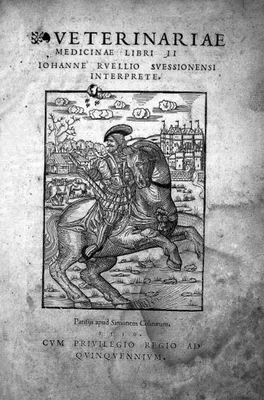
1530 RUEL, Jean (Ruelle; Ioannes Ruellius) (1474 – 1537)
Veterinariae medicina libri II Johanne Ruellio Suessionensi interprete. [Hippiatrika].
Ruel, a native of Soissons, was physician to François I. This book, commissioned by the king, was a Latin translation of a collection of excerpts from Greek veterinary writers on equine disease, compiled circa 900 CE:…
GMN 7197 · https://historyofmedicine.com/id/9364
1551 –1587 GESNER, Conrad [Konrad Gessner] (1516 – 1565)
Historia animalium. 5 vols.
Gesner's Historia animalium is considered one of the starting points of modern zoology; it contains 4,500 pages and nearly 1,000 woodcuts, some by Albrecht Dürer. The illustrations are the first original zoological il…
GMN 280 · https://historyofmedicine.com/id/8815
1598 RUINI, Carlo (1530 – 1598)
Dell’anotomia, et dell’infermità del cavallo.
In 1598 Conte Ottavio Ruini edited and had published in Bologna, with a dedication to Cardinal Pietro Aldobrandini, Dell'anotomia [sic], et dell'infirmita del cavallo [Book ii: Dell'infirmita del cavallo] by il marche…
GMN 285 · https://historyofmedicine.com/id/8821
1599 HÉROARD, Jean (1551 – 1568)
Hippostologie, c’est a dire, discours des os du cheval.
The first work on equine anatomy published in France. Héroard wrote the work in 1579 and the manuscript was preserved in the library of Château de Chantilly, but it was not published until 1599, one year after the pub…
GMN 13240 · https://historyofmedicine.com/id/15505
1600 –1601 CASSERI, Giulio Cesare [Julius Casserius Placentinus; Giulio Casserio] (1552 – 1616)
De vocis auditusque organis historia anatomica. 2 pts.
Casseri, originally a servant to Fabrizio, was personally trained by his employer and eventually succeeded to Fabrizio’s chair of anatomy. Like Fabrizio, who studied the development of the chick for clues to human emb…
GMN 1540 · https://historyofmedicine.com/id/2863
1678 WINTER VON ADLERSFLÜGEL, Georg Simon (1629 – 1702)
Georgii Simonis Winteri Hippiater Expertus, Seu Medicina Equorum Absolutissima : Tribus Libris comprehensa: Quorum I. Agit de Equorum Temperamentis; Aetate cognoscenda; Morbis omnibus internis Capitis; Oculorum; Aurium; Narium; Linguae; Dentium; Oris; aliisque his similibus; II. De Affectibus internis Thoracis & Abdominis ... ; III. De omnis generis Unguentis; Oleis; Balsamis & Emplastris in genere; item de quibuscunque Morbis ac Symptomatibus externis; ut: Tumoribus, Ulceribus & Vulneribus cujuscunque generis ...
Digital facsimile from Bayerische StaatsBibliothek at this link.
GMN 10158 · https://historyofmedicine.com/id/12347
1681 BLASIUS, Gerard "Gerrit" Leendertszoon [Blaes] (162 – 1682)
Anatome animalium, terrestrium variorum, volatilium, aquatilium, serpentum, insectorum, ovorumque, structuram naturalem, ex veterum, recentiorum, propriisque observationibus proponens, figuris variis illustrata.
“The first comprehensive manual of comparative anatomy based on the original and literary researches of a working anatomist” (Cole). Blaes anticipated Cowper in finding the Cowper’s glands, which he illustrated in his…
GMN 296 · https://historyofmedicine.com/id/8842
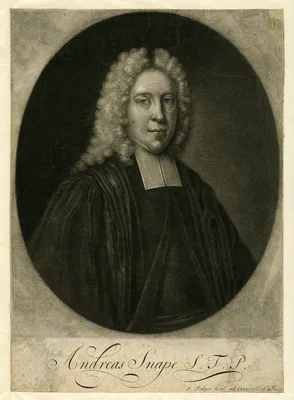
1683 SNAPE, Andrew (1675 – 1742)
The anatomy of an horse.
First book in English on equine anatomy, largely a translation of Ruini (No. 285).
GMN 298 · https://historyofmedicine.com/id/8846
1685 GARCÍA CONDÉ, Pedro (1603 – )
Verdadera albeyteria. Divido en quatro libros....Lleva diferentes estampas, donde vàn delineadas las enfermedades que sobrevienen en el cuerpo, braços, y piernas del cavallo....
Includes both anatomical engravings and engraving that relate to astrological influences. Digital facsimile from the Hathi Trust at this link.
GMN 10190 · https://historyofmedicine.com/id/12379
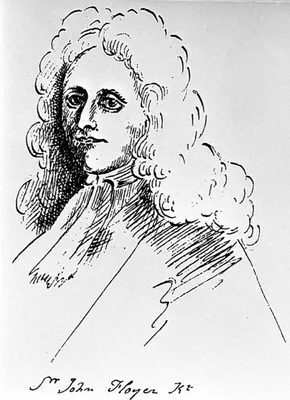
1698 FLOYER, Sir John (1649 – 1734)
A treatise of the asthma.
Floyer provided the first clear descriptions of cases of bronchial asthma. Floyer himself suffered from asthma for over 30 years. He recognized the influence of heredity in asthma. The above includes (p. 239) an impor…
GMN 3166 · https://historyofmedicine.com/id/4120
1714 COGROSSI, Carlo Francesco (1682 – 1769)
Nuovo idea del male contagioso de’ buoi.
In this study of an epizootic Cogrossi formulated much of the modern theory of infection. He speculated that infection might occur at the microscopic level, and argued that infected individuals should be isolated and …
GMN 2529.2 · https://historyofmedicine.com/id/3502
1721 GIBSON, William (1680 – 1750)
The farriers dispensatory, in three parts. Containing I. A description of the medicinal simples, commonly made use of in the diseases of horses, with their virtues and manner of operation, distributed into proper classes, &c. II. The preparations of simples, vegetable, animal and mineral ; with an explanation of the most usual terms, both in the chymical and galenical pharmacy. III. A number of useful compositions and receipts suited to the cure of all diseases, never before published; as also those of greatest account from Solleysell, Ruini, Blundevill, and other most celebrated authors, digested under their proper heads of powders, balls, drinks, ointments, charges, &c. The proper Method of compounding and making them, with many other useful observations and improvements tending to their right administration. To which is also added, a compleat index of all the medicines contained in the book, whether simple or compound, with a table of diseases pointing to the remedies proper in each malady.
GMN 13695 · https://historyofmedicine.com/id/15977
1750 –1753 BOURGELAT, Claude (1712 – 1779)
Éléments d'hippiatrique, ou nouveau principes sur la connoissance et sur la médecine des chevaux. 3 vols.
Digital facsimile from BnFGallica at this link.
GMN 10156 · https://historyofmedicine.com/id/12345
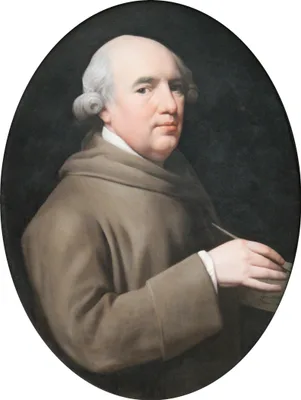
1766 STUBBS, George (1724 – 1806)
The anatomy of the horse.
The first original work on equine anatomy after Ruini (No. 285). Stubbs, the great painter of animals, prepared his own dissections of horse carcasses, and personally engraved the 24 double folio plates for this work,…
GMN 308.1 · https://historyofmedicine.com/id/119
1770 BOURGELAT, Claude (1712 – 1779)
Élements de l'art vétériniare. Essai sur les appareils et sur les bandages propres aux quadrupèdes. A l'usage des élèves des Écoles Royales Vétérinaires.
This work includes 21 folding plates of devices and bandages.
GMN 14346 · https://historyofmedicine.com/id/16676
1771 VITET, Louis (1736 – 1809)
Médecine vétérinaire. 3 vols. Tome premier, contenant l'exposition de la structure & les fonctions du cheval & du boeuf. Tome second, contenant l'exposition des maladies du cheval, du boeuf, de la brebis &c. Tome troisieme, contenant l'exposition des médicaments nécessaires au maréchal, & l'analyse des auteurs qui ont écrit sur l'art vétérinaire, depuis Végece jusqu'à nos jours.
Vitet was a medical doctor who later became mayor of Lyon. Baas, Outlines of the history of medicine III, 716 writes that he "introduced the experimental method into veterinary medicine." Volume 3 contains both an ana…
GMN 10131 · https://historyofmedicine.com/id/12320
1772 LAFOSSE, Philippe Étienne (1738 – 1820)
Cours d'hippiatrique, ou traité complet de la médecine des chevaux.
The leading 18th century French work on these subjects; some copies were issued with hand-colored plates. Digital facsimile of an uncolored copy from BnF Gallica at this link.
GMN 7767 · https://historyofmedicine.com/id/9939
1775 LAFOSSE, Philippe Étienne (1738 – 1820)
Dictionnaire raisonné d'hippiatrique, cavalerie, manège et maréchallerie. 4 vols.
Digital facsimile from BnFGallica at this link.
GMN 10137 · https://historyofmedicine.com/id/12326
1777 BOURGELAT, Claude (1712 – 1779)
Règlemens pour les Écoles Royales Vétérinaires de France, divisés en deux parties; la première, contenant la police & la discipline générale: la seconde, concernant l'enseignement en général, l'enseignement en particulier & la police des études.
Bourgelat founded the first veterinary school in Lyon, 1761. He later developed the French system of veterinary schools. Digital facsimile from BnFGallica at this link.
GMN 10157 · https://historyofmedicine.com/id/12346
1780 CHABERT, Philibert (1737 – 1814)
Description et traitement du charbon dans les animaux.
First important clinical description of anthrax. For some time after the appearance of Chabert’s short book, the condition was known as “Chabert’s disease”. Chabert was Directeur & Inspecteur général of the Écoles Roy…
GMN 5162 · https://historyofmedicine.com/id/6227
1782 CHABERT, Philibert (1737 – 1814)
Mémoire sur la morve.
Chabert, the most celebrated veterinarian of his time, left a fine account of glanders.
GMN 5152 · https://historyofmedicine.com/id/6196
1782 CHABERT, Philibert (1737 – 1814)
Traité des maladies vermineuses dans les animaux.
Includes two plates printed in color by Edouard Dagoty. These were not included in later editions. Digital facsimile of th 1782 edition from the Internet Archive at this link; of the 1787 edition at this link.
GMN 8040 · https://historyofmedicine.com/id/10216
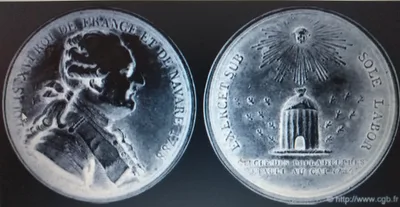
1788 ARTHAUD, Charles (1748 – 1791); CERCLE DES PHILADELPHES
Recherches, mémoires et observations sur les maladies épizootiques de Saint-Dominique, recueillis & publiés par le Cercle des Philadelphes du Cap-François.
The Cercle des Philadelphes, of which Charles Arthaud was president, was an academic scientific society in Saint-Domingue, in existence between 1784 and 1791. It was the most prominent academic society in the Americas…
GMN 9896 · https://historyofmedicine.com/id/12084
1802 VILLALBA, Joaquín de (1752 – 1807)
Epidemiologia española o historia cronológica de las pestes, contagios, epidemias y epizootias que han acaecido en España: Desde la venida de los cartagineses hasta el año 1801.... 2 vols.
A chronological history of epidemics (plagues, contagions and epizootics) occurring in Spain to the end of the 18th century. Digital facsimile from Google Books at this link.
GMN 1676 · https://historyofmedicine.com/id/2341
1802 BLAINE, Delabere Pritchett (1768 – 1845)
The outlines of the veterinary art, or the principles of medicine as applied to a knowledge of the structure, functions, and oeconomy of the horse, the ox, the sheep, and the dog, and to a more scientific and successful manner of treating their various diseases, the whole illustrated by anatomical plates. 2 vols.
Includes the earliest record in the English of the origin and growth of veterinary literature. Digital facsimile from Google Books at this link.
GMN 12078 · https://historyofmedicine.com/id/14287
1804 ZINKE, Georg Gottfried (1813 – )
Neue Ansichten der Hundswuth, ihrer Ursachen und Folgen, nebst einer sichem ehandlungsart der von tollen Thieren gebissenen Menschen.
Zinke transmitted rabies from a rabid dog to a normal one, and to a rabbit and a hen, by injection of saliva and proved the disease to be infectious. Digital facsimile from wellcomecollection.org at this link.
GMN 5481 · https://historyofmedicine.com/id/6370
1805 BOURGELAT, Claude (1712 – 1779); GROGNIER, Louis-Furcy (1774 – 1837)
Notice historique et raisonnée sur C. Bourgelat, fondateur des ecoles vétérinaires; où l’on trouve un aperçu statistique sur cet établissement. Par L. F. Grognier.
Bourgelat, a French lawyer, observed that certain diseases were devastating French herds, and forsaking his law practice, devoted his time to seeking out a remedy for the epizootic (rinderpest). In the process Bourgel…
GMN 10155 · https://historyofmedicine.com/id/12344
1807 –1810 POZZI, Giovanni
La zooiatria. 3 vols.
Pozzi was the firector of the newly formed Royal Veterinary School, Milan, and professor of pathology and hygiene. Digital facsimile from Google Books at this link.
GMN 11857 · https://historyofmedicine.com/id/14061
1810 AMOREUX, Pierre-Joseph (1741 – 1824)
Précis historique de l'art vétérinaire pour servir d'introduction a une bibliographie vétérinaire générale.
Digital facsimile from Google Books at this link.
GMN 8073 · https://historyofmedicine.com/id/10249
1810 MUSSET-PATHAY, Victor-Donatien de (1768 – 1832)
Bibliographie agronomique, ou dictionnaire raisonné des ouvrages sur l'économie rurale et domestique et sur l'art vétérinaire ... par un des collaborateurs du Cours complet d'agriculture pratique.
Second edition, Paris: Institut Agronomique, 1991. Digital facsimile of the 1810 edition from BnFGallica at this link.
GMN 10136 · https://historyofmedicine.com/id/12325
1823 BÜRGER, Heinrich
Bibliothek de Veterinairkunde.
An early attempt at a bibliography of the literature of veterinary medicine, including historical works. Strangely, the author cited publication dates only by their last 3 digits, thus 1800 is printed as 800, etc. Dig…
GMN 9579 · https://historyofmedicine.com/id/11766
1826 KRÜGELSTEIN, Franz Christian Karl (1779 – 1864)
Die Geschichte der Hundswuth und der Wasserscheu und deren Behandlung.
A full account of rabies, summarizing current knowledge, with a bibliography of about 300 items.
GMN 5481.1 · https://historyofmedicine.com/id/6372
1831 –1849 GURLT, Ernst Friedrich (1794 – 1882)
Lehrbuch der pathologischen Anatomie der Haus-Saugethiere. 3 vols.
The most comprehensive treatise on malformations of domesticated animals, as well as an important contribution to general teratology. The superb atlas illustrates many rare animal terata. See also his Uber thierische …
GMN 534.59 · https://historyofmedicine.com/id/1817
1831 YOUATT, William (1776 – 1847)
The horse; with a treatise on draught; and a copious index. Published under the Superintendence of the Society for the Diffusion of Useful Knowledge.
Youatt was one of the most widely published writers on veterinary medicine during the 19th century. This very practical work, originally published via the Society for the Diffusion of Useful Knowledge, underwent many …
GMN 13280 · https://historyofmedicine.com/id/15546
1837 BIGGER, Samuel Lenox L. (1809 – 1891)
An inquiry into the possibility of transplanting the cornea, with the view of relieving blindness…
Bigger, a Dublin surgeon, successfully grafted a cornea of one gazelle onto that of another. According to this paper, he first performed this operation in 1835 while he was “a prisoner with a Nomadic tribe of Arabs, a…
GMN 5850.1 · https://historyofmedicine.com/id/7181
1843 GRUBY, David (1810 – 1898)
Recherches et observations sur une nouvelle espèce d’hématozoaire, Trypanosoma sanguinis.
Gruby discovered trypanosomes in the frog. He first suggested the name “trypanosome” to describe the parasite.
GMN 5268 · https://historyofmedicine.com/id/8569
1850 RAYER, Pierre François Olive (1793 – 1867)
Inoculation du sang de rate.
Rayer inoculated sheep with blood of other sheep dead of anthrax. Microscopically he saw the anthrax bacillus in the blood of the inoculated sheep. Rayer was associated with Davaine, who later, in Bull. Acad. Méd., 18…
GMN 5163 · https://historyofmedicine.com/id/6231
1851 GILCHRIST, William
A practical treatise on the treatment of the diseases of the elephant, camel, and horned cattle, with instructions for preserving their efficiency.
GMN 11754 · https://historyofmedicine.com/id/13954
1852 –1860 ABŪ BAKR IBN BADR AL-DĪN AL-MUNDIR AL-BAYTĀR (1309 – 1340); PERRON, Nicolas (1798 – 1876)
Le Nâċérî. La perfection des deux arts ou traité complet d'hippologie et d'hippiatrie arabes. Traduit de l'arabe d'Abū Bakr Ibn Bedr par M. [Nicolas] Perron. 3 vols.
The author was Chief Veterinarian of the Sultan Mamluk of Egypt Nāṣir al-Dīn Muḥammad ibn Qalāwūn. (reigned three times between 1293 and 1341). His work focuses on the treatment of horses and falcons. It is divided in…
GMN 10700 · https://historyofmedicine.com/id/12893
1855 POLLENDER, Franz Aloys Antoine (1799 – 1879)
Mikroskopische und mikrochemische Untersuchung des Milzbrandblutes sowie über Wesen und Kurdes Milzbrandes.
Pollender discovered the B. anthracis in 1849, but did not record this fact until 1855. He gave a more exact account of the organism than did Rayer (No. 5163).
GMN 5164 · https://historyofmedicine.com/id/6234
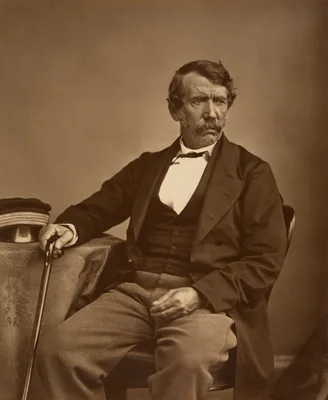
1858 LIVINGSTONE, David (1813 – 1873)
Arsenic as a remedy for the tsetse bite.
Livingstone was probably the first to administer arsenic for the treatment of “nagana”, a disease of horses caused by trypanosomes. This followed a suggestion by James Braid. Digital facsimile from PubMedCentral at th…
GMN 5270 · https://historyofmedicine.com/id/8572
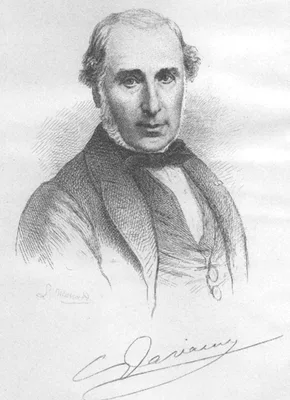
1863 DAVAINE, Casimir Joseph (1812 – 1882)
Recherches sur les infusoires du sang dans la maladie connue sous le nom de sang de rate.
Davaine showed that anthrax could be transmitted to sheep, horses, cattle, guinea-pigs, and mice, and that in such animals the bacilli did not appear in the blood until 4-5 hours before death.
GMN 5165 · https://historyofmedicine.com/id/6237
1865 DAVAINE, Casimir Joseph (1812 – 1882)
Recherches sur la nature et la constitution anatomique de la pustule maligne.
Davaine was the first conclusively to prove that a definite disease (anthrax) was due to a definite micro-organism (B. anthracis), and was thus one of the first to prove the germ theory of disease. He showed that the …
GMN 5166 · https://historyofmedicine.com/id/6239
1866 GAMGEE, John (1831 – 1894)
The cattle plague; with office reports of the International Veterinary Comgresses, held in Hamburg, 1863, and in Vienna, 1865.
"Druing the cattle plague crisis of 1865-66, Gamgee was one of the prtincipal witnesses called to give evidence by the Cattle Plague Commissioners and amongst the first to recommend a policy of restriction of movement…
GMN 11761 · https://historyofmedicine.com/id/13962
1870 BOLLINGER, Otto (1843 – 1909)
Mycosis der Lunge beim Pferde.
Botriomycosis first described.
GMN 5526 · https://historyofmedicine.com/id/6632
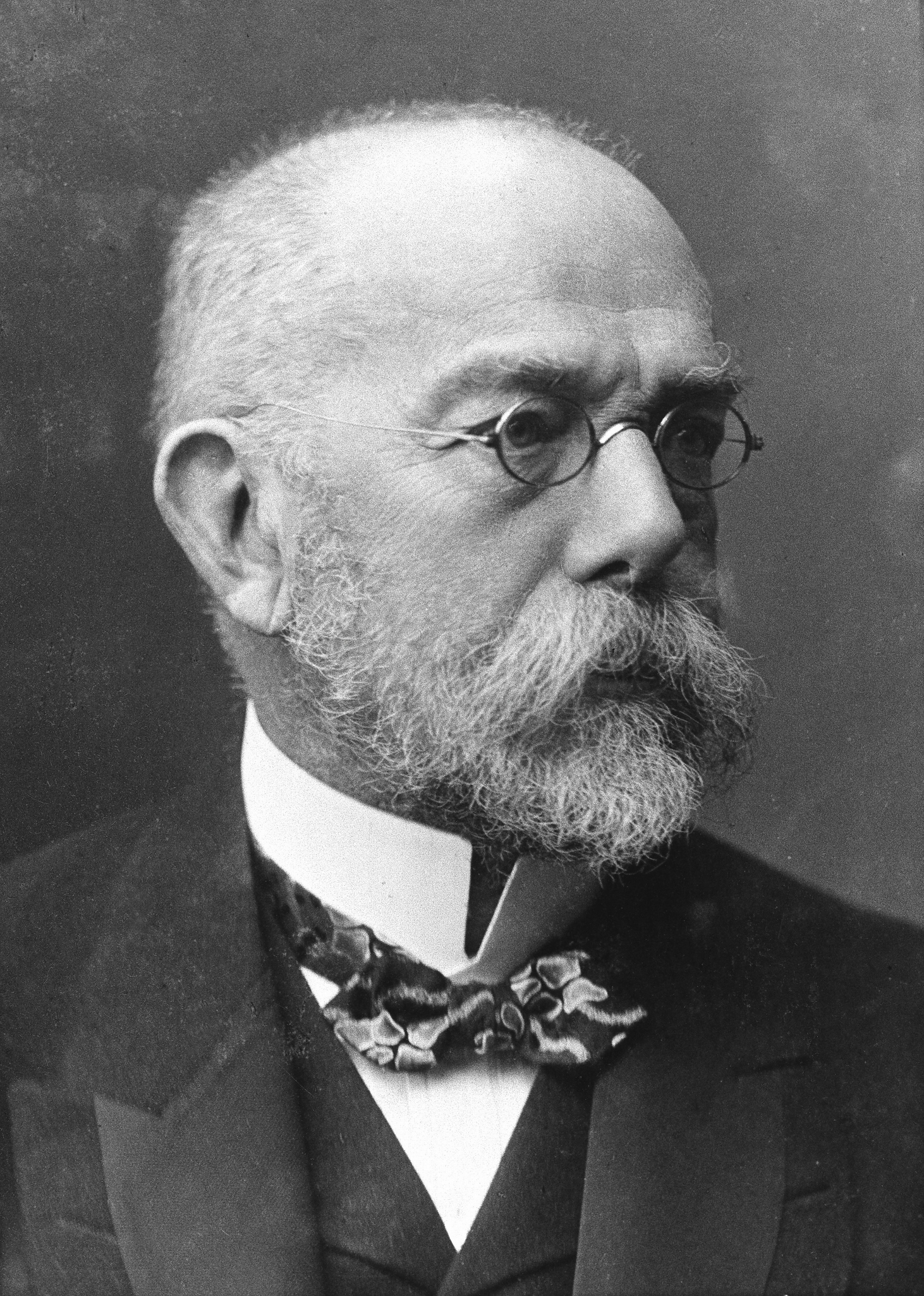
1876 KOCH, Robert Heinrich Hermann (1843 – 1910)
Die Aetiologie der Milzbrand-Krankheit, begründet auf die Entwicklungsgeschichte des Bacillus anthracis.
In 1876 Koch first obtained pure cultures of B. anthracis and described its complete life history. With Davaine (Nos. 5165-66) he did much to prove that infectious diseases are caused by living reproductive microorgan…
GMN 5167 · https://historyofmedicine.com/id/6243
1877 PASTEUR, Louis (1822 – 1895); JOUBERT, Jules François (1834 – 1910)
Étude sur la maladie charbonneuse.
Pasteur confirmed Koch’s results regarding anthrax; with Joubert he carried the bacillus through 100 generations and succeeded in producing anthrax from the last, thus disposing of the idea of a separate virus.
GMN 5168 · https://historyofmedicine.com/id/6246
1877 BOLLINGER, Otto (1843 – 1909)
Ueber eine neue Pilzkrankheit beim Rinde.
First effective description of Actinomyces bovis.
GMN 5510 · https://historyofmedicine.com/id/6511
1878 SLYM, Martinus Johannes
Elephants and their treatment in health and disease.
Expanded from a "small" edition issued in 1873 at the request of the Conservator of Forests, British Burma to "answer the purpose of a guide for the management of those animals, in a more direct and complete form; and…
GMN 10721 · https://historyofmedicine.com/id/12915