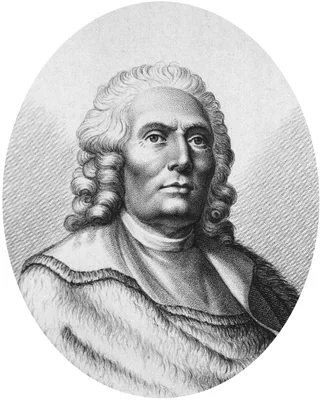
1490 AVENZOAR [IBN ZUHR (ARABIC: ابن زهر ] (1092 – 1162); AVERROËS [IBN RUSHD (ARABIC: ابن رشد), FULL NAME ʾABŪ L-WALĪD MUḤAMMAD IBN ʾAḤMAD IBN RUŠD] (1126 – 1198); PARAVICIUS, [Paravicinus, Patavinus] (1250 – ); JACOBUS HEBRAEUS (1250 – )
Liber Teisir, sive rectificatio medicationis et regiminis. Antidotarium. Translated from Arabic into Hebrew by Jacobus Hebraeus; into Latin by Paravicius. Add: Averroes: Colliget.
This is a Latin translation from a Hebrew version dating from 1280. Avenzoar, the greatest Muslim physician of the Western Caliphate, described the itch-mite, Sarcoptes scabiei, serous pericarditis, mediastinal absces…
GMN 47 · https://historyofmedicine.com/id/8768
1496 –1497 GRÜNPECK, Josef (1473 – 1532)
Tractatus de pestilentiali scorra sive mala de Franzos: originem remediaqu[ue] eiusdem continens.
Grünpeck was first to record mixed primary lesions, multiple primary lesions, and to note the second incubation period of syphilis. A translation of the above is in Arch. Derm. Syph. (Chicago), 1930, 22, 430. Digital …
GMN 2362 · https://historyofmedicine.com/id/3177
1572 MERCURIALE, Girolamo (1530 – 1606)
De morbis cutaneis, et omnibus corporis humani excrementis tractatus.
The first systematic textbook on diseases of the skin. English translation by R. L. Sutton Jr, Kansas City, Missouri, Lowell Press, 1986. Mercuriali enjoyed a great reputation in his day; he wrote on many medical subj…
GMN 3980 · https://historyofmedicine.com/id/4797
1577 FERRARI, Ognibene (Omnibonus Ferrarius) ( – 1599)
De arte medica infantium libri quatuor. Quorum duo Priores de tuenda eorum sanitate, posteriores de curandis morbis agunt.
An early illustrated work on pediatrics. The three parts of his book deal with the management of the nurse and her milk, the care and feeding of the new-born, and diseases of children, including skin diseases, and cha…
GMN 7990 · https://historyofmedicine.com/id/10166
1586 DONATI, Marcello (1538 – 1602)
De medica historia mirabili.
An early history of diseases, with extensive sections on ophthalmology (ff. 66-77) and urology (ff. 260-271). Lib. IV, Cap. iii, page 196 contains the first recorded case of gastric ulcer. Lib. VI. cap. iii contains t…
GMN 3417 · https://historyofmedicine.com/id/5319
1653 HARTMAN [HARTMANNUS]
Thesis de carbunculo.
GMN 5160 · https://historyofmedicine.com/id/6222
1685 COBER, Tobias (1625 – )
Observationum medicarum Castrensium Hungaricarum.
Pp. 49-51: Cober, a German physician, reported the relationship between typhus and pediculosis.
GMN 5373 · https://historyofmedicine.com/id/7020
1687 BONOMO, Giovanni Cosimo (1663 – 1696); CESTONI, Giacinto (Diacinto) (1637 – 1718)
Osservazioni intorno a’ pellicelli del corpo umano.
First clinical and experimental proof of infection by a microparasite. Bonomo observed Sarcoptes scabiei, the scabies mite. This gave researchers grounds to think in terms of objective, exogenous pathogenic agents as …
GMN 2529.1 · https://historyofmedicine.com/id/5177
1714 TURNER, Daniel (1667 – 1742)
De morbis cutaneis. A treatise of diseases incident to the skin.
Turner may be regarded as the founder of British dermatology. His book, the first English text on the subject, gives a good idea of contemporary knowledge of skin diseases. Turner began his career as a barber surgeon,…
GMN 3981 · https://historyofmedicine.com/id/4800
1730 FULLER, Thomas (1654 – 1734)
Exanthematologia ; or, an attempt to give a rational account of eruptive fevers, especially of the measles and small pox, In two parts. Parts I Of the blood, the air, venoms, Infection: fever of all kinds in general with their varieties, descriptions, names & C but more professedly and fully of the measles ... Part II Of the small pox ... To which is added. An appendix concerning inoculation.
Includes the first clear account of chicken pox as a distinct disease, and the first distinction between the spots made by flea bites from those seen in eruptive fevers.
GMN 10109 · https://historyofmedicine.com/id/12298
1731 MACHIN, John ( – 1751)
An extract from the minutes of the Royal Society, March 16, 1731, containing an uncommon case of a distempered skin.
First known description of Ichthyosis hystrix, a group of rare skin disorders in the ichthyosis family of skin disorders characterized by massive hyperkeratosis with an appearance like spiny scales. Digital facsimile …
GMN 4013 · https://historyofmedicine.com/id/5180
1754 CRUSIO, Carlo [CURZIO] (1725 – )
An account of an extraordinary disease of the skin and its cure. Extracted from the Italian of Carlo Crusio, with a letter of the Abbé Nollet to Mr. William Watson by Robert Watson.
The early history of scleroderma is confused with that of leprosy, ichthyosis, and keloid. Crusio appears to be the first to differentiate it. Gintrac in 1847 coined the term “scleroderma”. It is now included among th…
GMN 4014 · https://historyofmedicine.com/id/5202
1756 RUSSELL, Alexander (1715 – 1768)
Natural history of Aleppo and parts adjacent.
Includes (Chap, iv) a good account of “Aleppo boil”, which Russell found to be endemic in Aleppo. Digital facsimile from the Internet Archive at this link.
GMN 5290 · https://historyofmedicine.com/id/6404
1759 ASTRUC, Jean (1684 – 1766)
Traité de tumeurs et des ulcères, où l'on a tâché de joindre à une théorie solide, la pratique la plus sûre et la mieux éprouvée ; avec deux lettres : I. Sur la composition de remèdes dont on vante l'utilité et dont on cache la préparation : II. Sur la nature et le succès des nouveaux remèdes qu'on propose pour la guérison des maladies vénériennes. 2 vols.
The earliest French work on dermatology, and one of the earliest works in dermatopathology, including tumors of the skin. Digital facsimile of the 1768 second edition from Google Books at this link.
GMN 11137 · https://historyofmedicine.com/id/13333
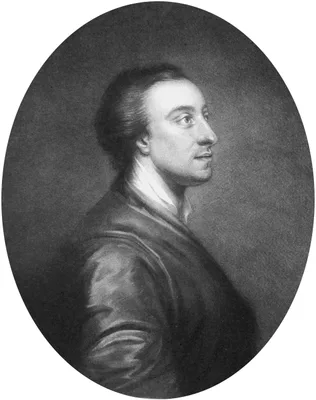
1768 AKENSIDE, Mark (1721 – 1770)
Observations on cancers.
First recorded description of multiple neurofibromatosis. Akenside was better known as a poet; he was caricatured as the republican doctor of Tobias Smollett's The Adventures of Peregrine Pickle.
GMN 4015.1 · https://historyofmedicine.com/id/5252
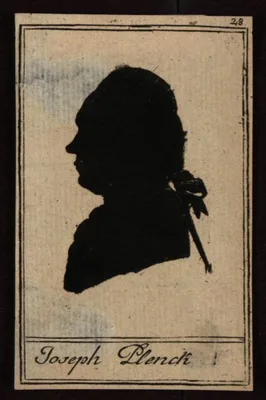
1776 PLENCK, Joseph Jacob von (1738 – 1807)
Doctrina de morbis cutaneis.
A classification of skin diseases upon the basis of their clinical appearance. Until the time of Willan, von Plenck’s book was the greatest authority on dermatology. He mentioned 115 different skin diseases, all that …
GMN 3982 · https://historyofmedicine.com/id/4802
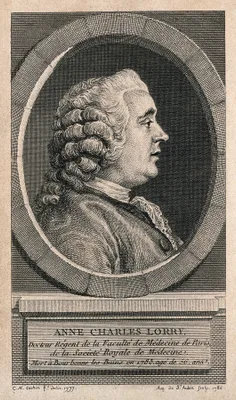
1777 LORRY, Anne-Charles (1726 – 1783)
Tractatus de morbis cutaneis.
Lorry is regarded as the founder of French dermatology. A pupil of Jean Astruc, his most important work was his Tractatus, in which he attempted the classification of diseases on the basis of essential relations, thei…
GMN 3983 · https://historyofmedicine.com/id/4805
1784 UNDERWOOD, Michael (1737 – 1820)
A treatise on the diseases of children.
Underwood laid the foundation of modern pediatrics. His work was superior to anything that had previously appeared and remained the most important book on the subject for sixty years, passing through many editions. Th…
GMN 2734.4 · https://historyofmedicine.com/id/8101
1786 WICHMANN, Johann Ernst (1740 – 1802)
Aetiologie der Krätze.
Wichmann definitely established the parasitic aetiology of scabies.
GMN 4016 · https://historyofmedicine.com/id/5254
1791 HOME, Sir Everard (1756 – 1832)
Observations on certain horny excrescences of the human body.
Original description of cornu cutaneum.
GMN 4017 · https://historyofmedicine.com/id/5256
1792 JACKSON, Seguin Henry (1750 – 1816)
Dermato-pathologia; or practical observations, from some new thoughts on the pathology and proximate cause of diseases of the true skin.
An attempt to classify skin diseases upon the basis of their pathology.
GMN 3984 · https://historyofmedicine.com/id/4989
1792 DANZ, Ferdinand Georg (1761 – 1793)
Von Menschen ohne Haare und Zähne.
Hereditary ectodermal dysplasia first described. Digital facsimile from Google Books at this link.
GMN 6358 · https://historyofmedicine.com/id/8255
1796 –1808 WILLAN, Robert (1757 – 1812)
On cutaneous diseases. Vol. 1 [All published].
Modern dermatology may be said to start with Willan. His classification of skin diseases gained him the Fothergillian Medal of the Medical Society of London in 1790. He established a standard nomenclature which is sti…
GMN 3985 · https://historyofmedicine.com/id/4992
1802 TILESIUS VON TILENAU, Wilhelm Gottlieb (1769 – 1857)
Ausführliche Beschreibung und Abbildung der beiden sogenannten Stachelschweinmenschen aus der bekannten engelischen Familie Lambert, oder, the porcupine man.
Tilesius continued the study of the Lambert family of sufferers from ichthyosis hystrix begun by Machin and Baker (see No. 4013). Notably Tilesius illustrated the bizarre condition with several color plates. In 2016 o…
GMN 7971 · https://historyofmedicine.com/id/10147
1806 ALIBERT, Jean Louis Marc (1768 – 1837)
Description des maladies de la peau observées à l’hôpital Saint Louis.
The largest and most spectacular of the early classics of dermatology, with hand-colored illustrations unsurpassed for their quality of execution. The illustrations are also the first on the subject in a French book. …
GMN 3986 · https://historyofmedicine.com/id/4998
1807 –1808 STOKES, Whitley (1763 – 1845)
On an eruptive disease of children.
First description of ecthyma terebrans, “pemphigus gangrenosa”.
GMN 4020 · https://historyofmedicine.com/id/5272
1810 –1818 ALIBERT, Jean Louis Marc (1768 – 1837)
Précis théorique et pratique sur les maladies de la peau. 2 vols.
GMN 3987 · https://historyofmedicine.com/id/5004
1813 BATEMAN, Thomas (1778 – 1821)
A practical synopsis of cutaneous diseases according to the arrangement of Dr. Willan.
This was the most influential textbook of dermatology of the 19th century, and the work which conveyed Willan’s system to most of the medical world. Included in the book was material by Willan which remained unpublish…
GMN 4021 · https://historyofmedicine.com/id/5276
1814 WILLAN, Robert (1757 – 1812); SMITH, Ashby ( – 1831)
Practical treatise on porrigo, or scald head, and on impetigo, the humid or running teter
This treatise on infantile eczema is the only fascicule of the second volume of Willan’s On cutaneous diseases (No.4018) that ever appeared in print. It was edited for publication after Willan's death by his stepson-i…
GMN 4021.1 · https://historyofmedicine.com/id/5282
1814 CARMICHAEL, Richard (1779 – 1849)
An essay on the venereal diseases which have been confounded with syphilis, and the symptoms which exclusively arise from that poison. Illustrated by drawings of the cutaneous eruptions of true syphilis, and the resembling diseases.
Carmichael "subdivided venereal infections into four major classes, each of which he maintained had a distinct exciting poison, a peculiar primary manifestation and a separate series of constitutional affections. From…
GMN 12762 · https://historyofmedicine.com/id/15008
1816 ALIBERT, Jean Louis Marc (1768 – 1837)
Note sur la keloide.
First accurate description of keloid (“Alibert’s keloid”), although it was mentioned by Retz in 1790.
GMN 4023 · https://historyofmedicine.com/id/5293
1817 BATEMAN, Thomas (1778 – 1821)
Delineations of cutaneous diseases exhibiting the characteristic appearances of the principal genera and species comprised in the classification of the late Dr. Willan; and completing the series of engravings begun by that author.
Bateman, the pupil of Willan, continued his teacher’s classification of skin diseases. The above work is notable for its 72 colored plates. Strictly speaking it is the first atlas of dermatology, as Willan’s work fall…
GMN 3988 · https://historyofmedicine.com/id/5006
1817 ALIBERT, Jean Louis Marc (1768 – 1837)
Nosologie naturelle, ou les maladies du corps humain distribuées par familles. Tome premier. (All published.)
This unfinished work with 22 spectacular plates included some full body images of patients, and unlike other illustrated works by Alibert, it concerned more than skin diseases. Vol. 2 was never published but a second,…
GMN 12746 · https://historyofmedicine.com/id/14992
1820 GOMES, Bernardino António (1769 – 1823)
Ensaio dermosographico ou Succinta e systematica descripção das doenças cutaneas, conforme os principios e observações dos doutores Willan, e Bateman, com indicacão dos respectivos remedios aconselhados por estes celebres authores, e alguns outros.
The first book on dermatology published in Portuguese. Digital facsimile from the Internet Archive at this link.
GMN 9072 · https://historyofmedicine.com/id/11251
1823 PURKYNĔ, Jan Evangelista [PURKINJE] (1787 – 1869)
Commentatio de examine physiologico organi visus et systematis cutanei.
Purkynĕ was first to examine the interior of the human eye and the dog eye, using only a candle and a concave spherical lens. He thus invented the ophthalmoscope three decades before Helmholtz (1851; No. 5866). Reprin…
GMN 1492.1 · https://historyofmedicine.com/id/8806
1824 PLUMBE, Samuel (1795 – 1837)
A practical treatise on the diseases of the skin, comprehending an account of such facts as have been recorded on these subjects, with original observations. The whole arranged with a view to illustrate the constitutional causes of these diseases, as well as their local characters.
Plumbe was one of the most outspoken critics of Willan and Bateman’s morphological system of skin disease classification. In his Practical Treatise he was the first dermatologist to attempt to produce a classification…
GMN 11156 · https://historyofmedicine.com/id/13353
1825 ALIBERT, Jean Louis Marc (1768 – 1837)
Description des maladies de la peau. 2me. édition. 2 vols.
Contains (vol. 2, p. 214) first description of sycosis barbae (“Alibert’s mentagra”).
GMN 4024 · https://historyofmedicine.com/id/5296
1826 –1827 RAYER, Pierre François Olive (1793 – 1867)
Traité théorique et pratique des maladies de la peau. 2 vols, and atlas.
In this summary of dermatological literature of the period Rayer first described adenoma sebaceum and xanthoma multiplex. He was the first to differentiate between acute and chronic eczema. The second edition, Paris, …
GMN 3989 · https://historyofmedicine.com/id/5009
1826 DEVERGIE, Marie-Guillaume-Alphonse (1798 – 1879)
Clinique de la maladie syphilitique. Enrichie d’observations communiquées par messieurs Cullerier oncle, Cullerier neveu, Bard, Gama, Desruelles et autre médecins. Text and atlas.
Includes 126 hand-colored engraved plates from drawings by Dupont the elder, assisted by Delestre the younger and Verollot, engraved by Johann Theodor Susemihl, a German engraver working in Paris, known for his zoolog…
GMN 10529 · https://historyofmedicine.com/id/12722
1827 JACOB, Arthur (1790 – 1874)
Observations respecting an ulcer of peculiar character, which attacks the eyelids and other parts of the face.
Arthur Jacob, Professor of Anatomy and physiology in Dublin, described “Jacob’s ulcer”, rodent ulcer attacking the face, especially the eyelid.
GMN 4025 · https://historyofmedicine.com/id/5299
1827 GÜNTZ, Eduard Wilhelm (1800 – 1880)
Der Leichnam des Menschen in seinen physischen Verwandlungen nach Beobachtungen und Versuchen.
The human corpse in its physical transformations according to observations and experiments.
GMN 14285 · https://historyofmedicine.com/id/16608
1828 CAZENAVE, Pierre Louis Alphée (1795 – 1877); SCHEDEL, Henry Edward (1804 – 1856)
Abrégé pratique des maladies de la peau.
This book codified and published the lectures, doctrines and observations of Laurent Biett (1781-1840), the leading clinical teacher in dermatology of the early 19th century, who published very little himself. Cazenav…
GMN 3990 · https://historyofmedicine.com/id/5013
1829 ALIBERT, Jean Louis Marc (1768 – 1837)
Sur la pyrophlyctide endémique, ou pustule d’Aleppo.
Important description of “Aleppo boil”, furunculosis orientalis.
GMN 5291 · https://historyofmedicine.com/id/6412
1831 REULIHET
Traité des maladies cutanées des pieds, telles que cors, oignon, durillons, verrues, ongles, etc.
Probably the first book specifically on the skin diseases of the feet, including the functions and nature of the skin of the feet and the manner in which perspiration takes place in the feet. Nothing is known regardin…
GMN 9354 · https://historyofmedicine.com/id/11536
1832 ALIBERT, Jean Louis Marc (1768 – 1837)
Monographie des dermatoses.
This includes the first published illustration of Alibert’s famous “family tree” for the classification of skin diseases, a concept which Alibert borrowed freely from Torti (No. 5231). This classification was never wi…
GMN 3990.1 · https://historyofmedicine.com/id/5021
1834 RASPAIL, François-Vincent (1794 – 1878)
Mémoire comparatif sur l'histoire naturelle de l'insecte de la gale.
Raspail first described and illustrated the Sarcoptes scabei, diffrentiating it from the horse's sarcopt and the cheese moth that Galès and Patrix, followed by Alibert, had confused with the scabies parasite. Raspail …
GMN 13415 · https://historyofmedicine.com/id/15687
1835 RENUCCI, Simon François (1794 – 1874)
Thèse inaugurale sur la découverte de l’insecte qui produit la contagion de la gale, du prurigo et du phlyzacia.
Demonstration of the human itch-mite, Sarcoptes scabiei. It was due to Renucci that the Sarcoptes was recognized as the one cause of scabies and its parasitic nature finally accepted.
GMN 4027 · https://historyofmedicine.com/id/5301
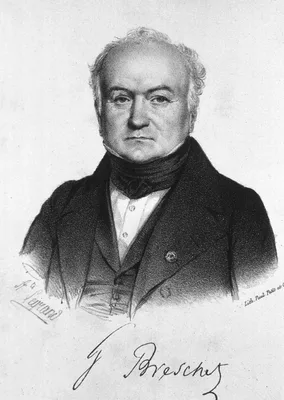
1835 BRESCHET, Gilbert (1784 – 1845); ROUSSEL DE VAUZEME, Augustin
Nouvelles recherches sur la structure de la peau.
Beschet emphasized "the relevance of anatomic investigation to dermatologic problems" (Crissey and Parish, Dermatology and syphilology of the nineteenth century, 117). In this book the authors first described the anat…
GMN 14105 · https://historyofmedicine.com/id/16416
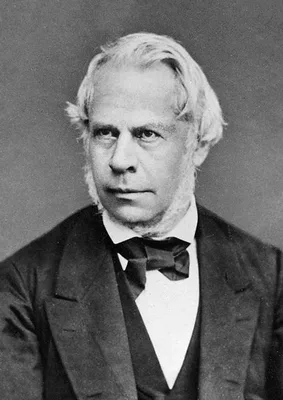
1837 HENLE, Friedrich Gustav Jakob (1809 – 1885)
Symbolae ad anatomiam villorum intestinalium, imprimis eorum epithelii et vasorum lacteorum.
Henle first described the epithelia of the skin and intestines, and defined the structure and function of columnar and ciliated epithelium. He applied the term “epithelium” to all mucous membranes in the body. Modern …
GMN 539 · https://historyofmedicine.com/id/170
1838 HENLE, Friedrich Gustav Jakob (1809 – 1885)
Ueber die Ausbreitung des Epithelium im menschlichen Korper.
Henle broadened the scope of his study of epithelium (No. 539) to include the covering layers of the true body cavities.
GMN 540 · https://historyofmedicine.com/id/272