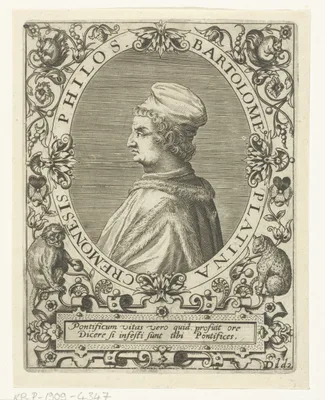
1475 PLATINA, Bartolomeo (1421 – 1481)
De honesta voluptate et valetudine.
The first two editions of De honesta voluptate et valetudine, the first printed work on cookery, diet, and health, by Italian humanist and papal librarian Bartholomeo Platina (Sacchi) appeared at roughly the same time…
GMN 10733 · https://historyofmedicine.com/id/12927
c. 1477 –c. 1483 ARNALD OF VILLANOVA, (Arnaldus de Villa Nova; Arnau de Vilanova; Arnaldus Villanovanus; Arnaud de Ville-Neuve; Arnaldo de Villanueva) (1240 – 1311)
Regimen sanitatis Salernitanum (With commentary by [Pseudo-Arnoldus de Villa Nova]). Add: Arnoldus de Villa Nova: Regimen sanitatis ad regem Aragonum.
Probably originating about 1160, the Regimen sanitatis from the medical school at Salerno (where medicine was first treated as a separate science) had greater popular influence than virtually any other medieval medica…
GMN 1959.3 · https://historyofmedicine.com/id/8802
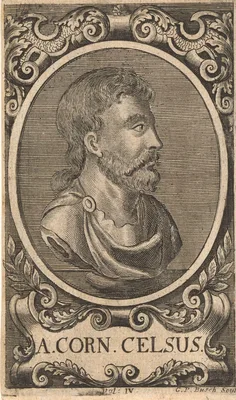
1478 CELSUS, Aulus Aurelius Cornelius (-25 – 50); FONTE, Bartolomeo della (Bartholomaeus Fontius) (1446 – 1513)
De medicina. Ed: Bartholomaeus Fontius.
De Medicina is the oldest Western medical document after the Hippocratic writings. Written about 30 CE, it remains the greatest medical treatise from ancient Rome, and the first Western history of medicine. Celsus’s s…
GMN 20 · https://historyofmedicine.com/id/4660
1478 ARNALD OF VILLANOVA, (Arnaldus de Villa Nova; Arnau de Vilanova; Arnaldus Villanovanus; Arnaud de Ville-Neuve; Arnaldo de Villanueva) (1240 – 1311); HIRNKOFEN, Wilhelm von (1450 – )
Von Bewahrung und Bereitung der Weine.
The first printed book on wine, its production and preservation, translated from the Latin by Wilhelm von Hirnkofen. It discusses the value of wine in diet and as a medication. Wine has been called the oldest document…
GMN 1959.2 · https://historyofmedicine.com/id/8798
1478 OPPIANUS, [Ὀππιανός; Oppian of Anazarbus, of Corycus, or of Cilicia] (140 – ); LIPPIUS, Laurentius (Lorenzo Lippi) (1440 – 1485)
Halieutica, sive de piscatu. [Translated by Lorenzo Lippi, with recipes for cooking added by Lippi.]
The didactic poem on fish and fishing by Oppian of Anazarbus, a 2nd-century Greco-Roman poet, survived the Middle Ages essentially in its entirety, consisting of 3500 lines in Greek. The poem was dedicated to the empe…
GMN 7086 · https://historyofmedicine.com/id/9253
1487 ISAAC JUDAEUS [ABU YA'QUB ISHAQ IBN SULAIMAN AL ISRA’ILI’], (Isaac Israeli ben Solomon) (832 – 932)
De particularibus diaetis.
The first separately printed treatise on diet was written by the Egyptian-Jewish physician and philosopher Isaac Judaeus who lived from about 832 to 932 CE. He was also known as Isaac Israeli ben Solomon and Abu Ya'qu…
GMN 1961 · https://historyofmedicine.com/id/8805
1489 ZERBI, Gabriele (1445 – 1505)
Gerontocomia.
The first printed book on geriatrics – a guide to proper hygiene, physical and mental, and particularly to the diet of the aged. Translated into English by L.R. Lind as Gerontocomia: on the care of the aged and Maximi…
GMN 1589.1 · https://historyofmedicine.com/id/1814
1491 GAZIO, Antonio (Antonius Gazius) (1461 – 1528)
Corona florida medicinae, sive De conservatione sanitatis.
A popular guide to healthy living, dealing with such topics as sleep, exercise, sex, hygiene, drugs, and especially diet, with an emphasis on the qualities and properties of foods, including their cooking and preparat…
GMN 11871 · https://historyofmedicine.com/id/14075
1505 SAVONAROLA, Giovanni Michele (1385 – 1468)
De gotta la preservation e cura.
The earliest separately printed treatise on gout by the physician/humanist grandfather of the Dominican friar Girolamo Savonarola. Giovanni Savonarola emphasized the dietary causes of gout, and the dangers of eating r…
GMN 11107 · https://historyofmedicine.com/id/13303
1531 IBN BUTLĀN, Abuʾl-Ḥasan Al-Mukhtār Ibn ʿAbdūn Ibn SaʿDūn. ابو الحسن المختار ابن عبدون ابن بطلان (Elluchasem Elimithar) ( – 1068); IBN AL-WAFID, Ali Ibn al-Husain (Abenguefit) (997 – 1074); AL-KINDĪ, Abu Yūsuf Yaʻqūb ibn ʼIsḥāq aṣ-Ṣabbāḥ ;أبو يوسف يعقوب بن إسحاق الصبّاح الكندي ( Alkindus) (801 – 873); WEIDITZ, Hans The Younger (1495 – 1537)
Tacuini sanitatis Elluchasem Elimithar Medici de Baldath, de sex rebus non naturalibus, earum naturis, operationibus, & rectificationibus, publico omnium usui, conseruandae sanitatis, recens exarati. Albengnefit De uirtutibus medicinarum, & ciborum. Iac. Alkindus De rerum gradibus.
A Christian physician of Baghdad, Ibn Butlān traveled widely, eventually settling in Antioch. His treatise on hygiene and dietetics, Taqwām al-sihhah (The Almanac of Health) presented a guide to medical regimen in tab…
GMN 7627 · https://historyofmedicine.com/id/9799
1538 SETH, Simeon (Simeo Sethus; Συμεὼν Μάγιστρος Ἀντιοχείας τοῦ Σήθι, (1050 – ); GIRALDI, Giglio Gregorio (1479 – 1552)
Simeonis Sethi, magistri Antiochiae, Syntagma per literarum ordinem de cibariorum facultate, Lilio Gregorio Gyraldo,... interprete.
First printed edition of Seth's Byzantine encyclopedia of foods, nutrition, and diatetics from plants and animals, with Greek text and Latin translation by scholar and poet Giglio Gregorio Giraldi. Simeon Seth was an …
GMN 6969 · https://historyofmedicine.com/id/9134
1545 RYFF, Walther Hermann [RYF, REIFF, REIF, RUEFF, RUFF] (1500 – 1548)
New Kochbüch für die Krancken.
A cookbook with recipes to restore the health of convalescents.
GMN 10734 · https://historyofmedicine.com/id/12928
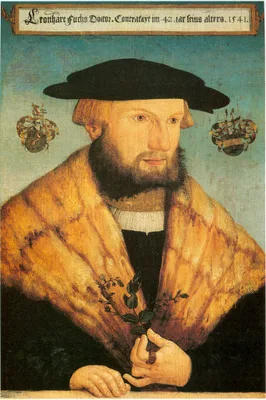
1555 –1556 FUCHS, Leonhart (1501 – 1566)
Le benefice commun de tout le monde, ou commodité de vie d’vn chascun, pour la conseruation de santé: Remedes segretz tirées des plantes contre toutes maladies. 3 vols.
A vernacular guide for living a healthy life compiled from the writings of Fuchs. Includes herbal and dietary remedies, recipes for oils, pills and other preparations to treat maladies such as fever, plague and wounds.
GMN 9773 · https://historyofmedicine.com/id/11961
1558 CORNARO, Alvise (Luigi) (1467 – 1566)
Trattato de la vita sobria.
Garrison considered this “the best treatise on personal hygiene and the simple life in existence”. Cornaro was called the Apostle of Senescence. "When he was about 40, Cornaro found himself exhausted and in poor healt…
GMN 1592 · https://historyofmedicine.com/id/1695
1564 RONSSE, Boudewijn [Balduinus Ronsseus] (1525 – 1597)
De magnis Hippocratis lienibus, Pliniique stomacace, ac sceletyrbe, seu vulgo dicto scorbuto, libellus.
Jean de Joinville was probably the first, about 1250, to describe scurvy; Vasco da Gama noted its occurrence at sea, and Jacques Cartier mentioned it. Ronsse gave an early medical account describing how sailors cured …
GMN 3710 · https://historyofmedicine.com/id/4462
1569 MERCURIALE, Girolamo (1530 – 1606)
Artis gymnasticae apud antiquos celeberrimae, nostris temporibus ignoratae.
A history, based on extensive study of the classical literature, of the attitudes and practices of the Greeks and Romans concerning diet, hygiene, bathing, and exercise. This is one of the earliest books to discuss th…
GMN 1986.1 · https://historyofmedicine.com/id/3781
1571 BACCI, Andrea (1524 – 1600)
De thermis …libri septem. Opus ... in quo agitur de universa aquarum natura, deque differentiis omnibus, ac mistionibus cum terris, cum ignibus, cum metallis, de lacubus, fontibus, fluminibus, de balneis totius orbis, & de methodo medendi per balneas, deque lavationum simul atque exercitationum institutis in admirandis thermis Romanorum....
A comprehensive study of mineral waters, dealing with all the spas of the then-known world. Besides exhaustive coverage of the baths of antiquity and of Bacci’s own time, the work gives considerable attention to wines…
GMN 1986.2 · https://historyofmedicine.com/id/3784
1596 BACCI, Andrea (1524 – 1600)
De naturali vinorum historia de vinis Italiae et de conviviis antiquorum libri septem....Accessit de factitiis ac cervisiis de q[ue] Rheni, Galliae, Hispaniae et de totius Europa vinis et de omni vinorum usu compendiaria tractatio.
A comprensive study of the production, storage, characteristics, and use of wines. Book two considers wine in relation to health. Digital facsimile from Google Books at this link.
GMN 7968 · https://historyofmedicine.com/id/10144
1598 WATESON, George
The cures of the diseased, in remote regions. Preventing mortalitie, incident in forraine attempts, of the English nation.
This book is the earliest work in English devoted to tropical medicine. It discusses sunstroke, tabardilla (possibly typhus or yellow fever), prickly heat, dysentery, erysipelas and scurvy. Facsimile reproduction, wit…
GMN 2262 · https://historyofmedicine.com/id/2805
1617 WOODALL, John (1570 – 1643)
The surgions mate, or, A treatise discouering faithfully and plainely the due contents of the surgions chest: the uses of the instruments, the vertues and operations of the medicines, the cures of the most frequent diseases at sea: namely, wounds, apostumes, vlcers, fistulaes, fractures, dislocations, with the true maner of amputation, the cure of the scuruie, the fluxes of the belly, of the collica and illiaca passio, tenasmus, and exitus ani, the callenture; with a briefe explanation of sal, sulphur, and mercury; with certaine characters, and tearmes of arte.
Woodall was the surgeon-general to the East India Company. This was the first textbook for naval surgeons. Woodall, surgeon to Saint Bartholomew's Hospital, was an early advocate of limes and lemons as a preventive me…
GMN 2144 · https://historyofmedicine.com/id/2726
1623 ABREU, Aleixo de (1568 – 1630)
Tratado de las siete enfermedades, de la inflammacion universal del higado, zirbo, pyloron, y riñones, y de la obstrucion, de la satiriasi, de la terciana y febre maligna, y passion hipocondriaca. Lleva otros tres tratados, del mal de Loanda, del guzano, y de las fuentes y sedales.
The first important work on tropical diseases. Only six copies of the original edition of this book are known. It includes full accounts of malaria, typhoid, and scurvy, and the first accurate descriptions of yellow f…
GMN 2262.1 · https://historyofmedicine.com/id/2808
1642 BONDT, Jacob de [Jacobus Bontius] (1592 – 1631)
De medicina Indorum.
Bontius was probably the first to regard tropical medicine as an independent branch of medical science. He spent the last four years of his life in the Dutch East Indies, and his book incorporates the experience he ga…
GMN 2263 · https://historyofmedicine.com/id/2816
1645 WHISTLER, Daniel (1619 – 1684)
Disputatio medica inauguralis, de morbo puerili Anglorum, quem patrio idiomate indigenae vocant The Rickets.
In his 26th year Whistler published his graduation thesis at Leiden; this was the first description of rickets as a definite disease manifesting itself by a more or less constant association of symptoms. Still (No. 63…
GMN 3727 · https://historyofmedicine.com/id/4502
1649 BOATE, Arnold [BOOTIUS]. (1600 – 1653)
Observationes medicae de affectibus omissis.
Boate who spent many years in Ireland, included a full first-hand account of rickets in Chapter 12 of the above book (“De tabe pectorea”). He showed how widespread the disease was at that time. Reprinted in Opuscula S…
GMN 3728 · https://historyofmedicine.com/id/4506
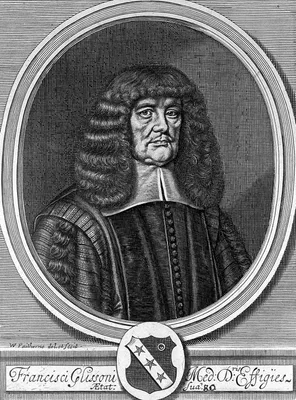
1650 GLISSON, Francis (1597 – 1677); BATE, George (1608 – 1668); REGEMORTER, Ahasuerus (Assuerus Regimorter) (1614 – 1650)
De rachitide sive morbo puerili, qui vulgo The Rickets dicitur tractatus.
Although anticipated by Whistler and others in the description of infantile rickets, Glisson’s account was the fullest that had till then appeared. He was first (Chap. 22) to describe infantile scurvy. Glisson’s book …
GMN 3729 · https://historyofmedicine.com/id/4509
1652 TULP, Nicolaes (1593 – 1674)
Observationes medicae.
One of the earliest accounts of beri-beri is on pp. 300-05 of this work. Tulp, notable as the demonstrator in Rembrandt’s “Anatomy Lesson”, was among the first, in the same book, to describe the ileo-caecal valve (“Tu…
GMN 3737 · https://historyofmedicine.com/id/4530
1655 MOFFET, Thomas (Muffet, Mouffet, Moffett) (1553 – 1604); BENNET, Christopher (1617 – 1655)
Health's improvement, or rules for preparing all sorts of food used in this nation. Written by that ever famous Thomas Muffet, Doctor in physick: Corrected and enlarged by Christopher Bennet, Doctor in Physick, and fellow of the Colledg of Physitians in London.
Moffet's work in nutrition was collected in his book Health's Improvement, which was designed more for the layman than for physicians. It also contains the first list of British wildfowl, recognizing for the first tim…
GMN 9324 · https://historyofmedicine.com/id/11506
1683 TRYON, Thomas (1634 – 1703)
The way to health, long life and happiness, or, a discourse of temperance and the particular nature of all things requisit for the life of man as all sorts of meats, drinks, air, exercise, &c. with special directions how to use each of them to be the best advantage of the body and mind. Shewing from the true ground of nature whence most diseases proceed, and how to prevent them. To which is added, a treatise of most sorts of English herbs ... the like never before published / communicated to the world for a general good, by Philotheos Physiologus.
Tryon, an English merchant, was the author of popular self-help books and an early advocate of vegetarianism. Digital facsimile from the Hathi Trust at this link.
GMN 9308 · https://historyofmedicine.com/id/11490
1685 DELLON, Charles Gabriel (1649 – 1710)
Traité des maladies particulières aux pays orientaux, et dans la route, et de leurs Remèdes. Par M.C.D.D.E.M.
At the age of 17, Dellon, who is sometimes referred to as Gabriel Dellon, embarked as second surgeon aboard the ship La Force. He arrived at Darman, in the Portuguese Indies, in 1673, where he was doctor to Luis de Me…
GMN 11128 · https://historyofmedicine.com/id/13324
1687 BLÉGNY, Nicolas de (1652 – 1722)
Le bon usage du the, du caffe, et du chocolat pour la preservation & pour la guerison des maladies.
Digital facsimile from Biodiversity Heritage Library at this link.
GMN 13624 · https://historyofmedicine.com/id/15904
1689 MORTON, Richard (1637 – 1698)
Phthisiologia, seu exercitationes de phthisi.
The first application of the principles of pathology to the study of pulmonary tuberculosis. Morton showed that the formation of tubercles is a necessary part of the development of this lung disease, and pointed out t…
GMN 3216 · https://historyofmedicine.com/id/4388
1730 SHORT, Thomas (1690 – 1772)
A dissertation upon tea, explaining its nature and properties by many new experiments; and demonstrating from philosophical principles, the various effects it has on different constitutions. To which is added the natural history of tea; and a detection of the several frauds used in preparing it. Also a discourse on the virtues of sage and water, and an enquiry into the reasons why the same food is not equally agreeable to all constitutions....
Digital facsimile from wellcomecollection.org at this link.
GMN 13626 · https://historyofmedicine.com/id/15906
1752 KNOLL, Johann Christian Friedrich (1726 – 1757)
Sendschreiben von den Wirkungen des Kafeetranks.
Discussing the consumption and reception of coffee from Britain to Turkey, Knoll dismissed criticisms of coffee, including that it reduced beauty and virility, or that it was contrary to Islam, instead promoting the m…
GMN 11719 · https://historyofmedicine.com/id/13920
1753 LIND, James (1716 – 1794)
A treatise of the scurvy.
Lind, founder of naval hygiene in England, wrote a classic treatise on scurvy, in which he described many important experiments he made on the disease. These experiments have been called “the first deliberately planne…
GMN 3713 · https://historyofmedicine.com/id/4467
1755 THIÉRY, François [THIERRY] (1719 – )
Description d’une maladie appelée mal de la rosa.
Thiérry wrote an account of pellagra from what he had seen or heard of Casal’s cases. His work antedates that of Casal in date of publication but is not a first-hand description. English translation in No. 2241.
GMN 3749 · https://historyofmedicine.com/id/4570
1757 LIND, James (1716 – 1794)
An essay on the most effectual means, of preserving the health of seamen, in the Royal Navy.
Lind is regarded as the founder of naval hygiene in England. Besides his work on scurvy (see No.3713), he is notable for the above book, which deals not only with the men but also with the appalling conditions in whic…
GMN 2151 · https://historyofmedicine.com/id/2746
1760 FLEMYNG, Malcolm ( – 1764)
A discourse on the nature, causes, and cure of corpulency. Illustrated by a remarkable case, Read before the Royal Society, November 1757. And now first published.
Digital facsimile from Google Books at this link.
GMN 7060 · https://historyofmedicine.com/id/9227
1762 CASAL JULIÁN, Gaspar (1680 – 1759)
Historia natural, y medica de el Principado de Asturias.
The first recognizable description of pellagra is included on pp. 327-60 of this book, which was written in 1735 but not published until 1762, after the writer’s death. He called the disease mal de la rosa. Reprinted,…
GMN 1771 · https://historyofmedicine.com/id/3318
1771 FRAPOLLI, Francesco ( – 1773)
Animadversiones in morbum, vulgo pellagram.
In Frapolli’s careful description of pellagra, the disease was first given its present name. This book is also the first Italian account of the malady. Partial English translation in No. 2241.
GMN 3751 · https://historyofmedicine.com/id/4583
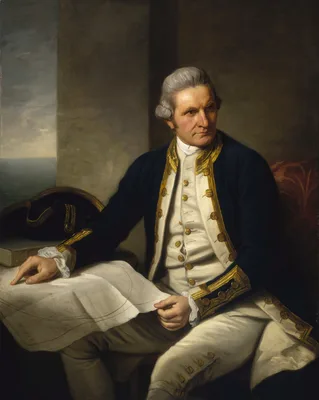
1776 PRINGLE, Sir John (1707 – 1782); COOK, James (1728 – 1779)
The method taken for preserving the health of the crew of H.M.S. the Resolution during her late voyage round the world. In: Sir John Pringle, A discourse upon some late improvements in the means for preserving the health of mariners.
Following the scurvy-preventing suggestions of James Lind, Cook lost only one man to disease on his second voyage from 1768-1771. Reprinted in Phil. Trans., 1776, 66, 402-06. See No. 2156.
GMN 3714 · https://historyofmedicine.com/id/4470
1785 BLANE, Sir Gilbert (1749 – 1834)
Observations on the diseases incident to seamen.
William Hunter recommended Blane as private physician to Admiral Rodney; Blane sailed with him to the W. Indies and became physician to the British Fleet. He was held in great esteem in the navy and was instrumental i…
GMN 2158 · https://historyofmedicine.com/id/842
1786 TROTTER, Thomas (1760 – 1832)
Observations on the scurvy.
GMN 3716 · https://historyofmedicine.com/id/4478
1786 –1789 STRAMBIO, Gaetano (1752 – 1831)
De pellagra. 3 vols.
By 1776, pellagra had attained serious proportions in Italy; Strambio was placed in charge of a hospital for the treatment of pellagrins, and he left an important account of the disease. He and Casal y Julian (No. 375…
GMN 3752 · https://historyofmedicine.com/id/4590
1793 MAI, Franz Anton (1742 – 1814)
Medcinische Fastenpredigten, oder Vorlesungen über Körper und Seelendiätetik zur Verbesserung der Gesundheit und Sitten. 2 vols.
Digital facsimile from Google Books at this link.
GMN 9059 · https://historyofmedicine.com/id/11238
1794 BARHAM, Henry
Hortus Americanus, containing an account of the trees, shrubs, and other vegetable productions of South-America and the West-India islands, and particularly of the island of Jamaica; interspersed with many curious and useful observations, respecting their uses in medicine, diet, and mechanics.
Digital facsimile from Biodiversity Heritage Library at this link.
GMN 9989 · https://historyofmedicine.com/id/12178
1797 HUFELAND, Christoph Wilhelm (1762 – 1836)
Die Kunst das menschliche Leben zu verlängern
Hufeland’s “Makrobiotik”, one of the most popular books of its time on personal hygiene. It was translated into all European languages. Hufeland was court physician at Weimar. English translation, 1797.
GMN 1602 · https://historyofmedicine.com/id/1724
1803 YOUNG, John Richardson (1782 – 1804)
An experimental inquiry into the principles of nutrition, and the digestive process.
Young, one of the first American experimental physiologists, showed the solvent principle in the gastric juice to be an acid, but wrongly inferred that it was phosphoric acid. He also deduced the association and synch…
GMN 982 · https://historyofmedicine.com/id/630
1803 BALME, Claude (1766 – 1850)
Observations et réflexions sur le scorbut, d'après celui qui a régné parmi les troupes françaises formant la garnison d'Alexandrie (en Egypte), pendant le Blocus et le Siége de cette ville, en l'an IX (1801), par les Armées combinées des Turcs et des Anglais.
The author was a military surgeon on Napoleon's Egyptian campaign. Digital facsimile from BnF Gallica at this link. (32pp.)
GMN 13611 · https://historyofmedicine.com/id/15891
1806 CADET DE VAUX, Antoine-Alexis (1743 – 1828); CADET, Charles-Louis (1769 – 1821)
Dissertation sur le café; son historique, ses propriétés, et le procédé pour en obtenir la boisson la plus agréable, la plus salutaire et la plus économique; Par Ant.-Alexis Cadet-de-Vaux...Suivie de son analyse; par Charles-Louis Cadet.
Cadet de Vaux discussed the history of coffee, including the origins of the coffee bean and plant, the proper climate for growing coffee, coffee drinking culture and its introduction to Europe. He also described the b…
GMN 11630 · https://historyofmedicine.com/id/13830
1810 APPERT, Nicolas (1742 – 1841)
L’Art de conserver, pendant plusieurs années, toutes les substances animales et végétales….
The first workable process for canning foods. In 1795 Appert began developing the process under Napoleon’s auspices as a way to maintain food on military expeditions. For strategic reasons he was not allowed to publis…
GMN 2467.1 · https://historyofmedicine.com/id/3037