1481 HIPPOCRATES, [Ἱπποκράτης; Hippocrates of Kos] (-460 – -370); BRENTIUS, Andreas (1454 – 1484)
De natura hominis. Add: De victu; De tuenda valetudine; Medicinae lex; Iusiurandum; Demonstratio quod artes sunt; Invectiva in obtrectatores medicinae. Tr: Andreas Brentius.
The writings of Hippocrates began to appear in print in the 1480s, and only a few of the works attributed to Hippocrates were printed in the 15th century. Though the date of this edition is unstated within the book it…
GMN 6929 · https://historyofmedicine.com/id/9094
1529 CAELIUS AURELIANUS (500 – ); SORANUS OF EPHESUS (ΣΩΡΑΝΌΣ) (100 – 150); ORIBASIUS (ὈΡΕΙΒΆΣΙΟΣ), [Oreibasius] (320 – 403); SICARD, Johannes [Sichardt;Sichardus] (1499 – 1552)
Caelii Aureliani Siccensis Tardarum passionum libri V. D. Oribasii Sardi Iuliani Caesaris archiatri Euporiston lib: III. Medicinae comperi: lib: 1. Curationum lib: 1. Trochiscoru confect: lib: 1.
From a clinical point of view, the two works of Caelius Aurelianus, which were translated into Latin from Greek originals by Soranus of Ephesus that were later lost, represent the high-point of Graeco-Roman medical ac…
GMN 1959.1 · https://historyofmedicine.com/id/6052
1563 WEYER, Johann [WIER] (1515 – 1588)
De praestigiis daemonum.
Weyer was the first European physician to take an empirical, scientific approach to the study of mental illness. At the height of the witchcraft delusion he argued that witches were mentally ill women who deserved hum…
GMN 4916 · https://historyofmedicine.com/id/6054
1567 PARACELSUS, [Philippus Aureolus Theophrastus Bombastus von Hohenheim] (1493 – 1541)
Von den Kranckheyten so die vernunfft berauben als da sein S. Veyts Thantz…
In this work on the “diseases that deprive man of his reason” Paracelsus anticipated the descriptive method in psychiatry, giving a purely medical account of the clinical manifestations of epilepsy, mania, and hysteri…
GMN 4916.1 · https://historyofmedicine.com/id/6060
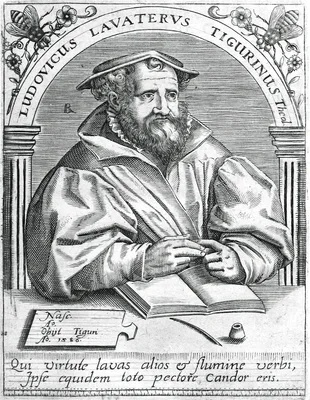
1570 LAVATER, Ludwig (1527 – 1586)
De spectris…
This work on ghosts is one of the earliest works on psychic experiences illusions, hallucinations, and delusions. The English translation, London 1572, probably gave Shakespeare some pointers on the behavior of the gh…
GMN 4916.2 · https://historyofmedicine.com/id/6066
1582 RAUWOLF, Leonhard (1535 – 1596)
Aigentlich Beschreibung der Raiss, so er vor diser Zeit gegen Auffgang inn die Morgenländer, fürnemlich Syriam, Iudaeam, Arabiam, Mesopotamiam, Babyloniam, Assyriam, Armeniam etc....
Rauwolf provided the first modern descriptions of the flora of the area east of the Levantine coast. He was also the first to describe the riparian flora of the Euphrates, and the first European to publish an account …
GMN 7327 · https://historyofmedicine.com/id/9498
1584 SCOT, Reginald [SCOTT] (1538 – 1599)
The discoverie of witchcraft.
Scot identified as mentally ill a large group of people who had hitherto been considered to be involved in witchcraft.
GMN 4917 · https://historyofmedicine.com/id/6072
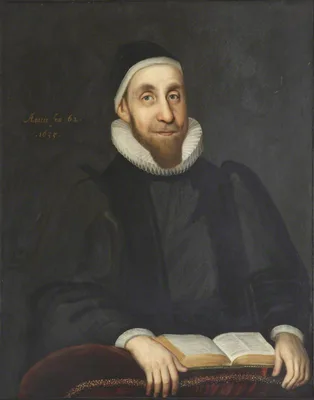
1586 BRIGHT, Timothy (1551 – 1615)
A treatise of melancholie, containing the causes thereof.
First comprehensive description of depression in English. Bright also produced the first noteworthy geometrical system of shorthand, consisting of circles, half-circles, and straight lines (Characterie, London, 1588).
GMN 4918 · https://historyofmedicine.com/id/6076
1589 –1591 PARACELSUS, [Philippus Aureolus Theophrastus Bombastus von Hohenheim] (1493 – 1541); HUSER, Johannes (1545 – 1604)
Der Bücher und Schriften des Edlen, Hochgelehrten und Bewehrten Philosophi und Medici, Philipi Thephrasti Bombast von Hohen hem, Paracelsi genannt. Edited by Johannes Huser. 10 vols.
First edition of Paracelsus's collected works. Though all the autographs of Paracelsus's writings were later lost, Huber, who was born shortly after Paracelsus's death, was able to collect a great number of autographs…
GMN 8466 · https://historyofmedicine.com/id/10643
1603 JORDEN, Edward (1569 – 1633)
A brief discourse of a disease called the suffocation of the mother. Written uppon occasion which hath beene of late taken thereby, to suspect possession of an evill spirit, or some such like supernaturall power. Wherin is declared that divers strange actions and passions of the body of man, which the common opinion, are imputed to the Divell, have their true naturall causes, and do accompanie this disease.
Jorden was the first English physician who viewed women accused of witchcraft as unfortunate persons suffering from some medical condition. "Asserting that there were natural causes for their afflictions, Jorden often…
GMN 13553 · https://historyofmedicine.com/id/15830
1621 BURTON, Robert (1577 – 1640)
The anatomy of melancholy, what it is. With all the kindes, causes, symptomes, prognostickes, and severall cures of it.
The first psychiatric encyclopedia, citing nearly 500 medical authors, and also a literary tour de force. Burton was prompted write this book because of his own bouts with depression. It is one of the most popular psy…
GMN 4918.1 · https://historyofmedicine.com/id/6080
1666 GREATRAKES, Valentine [GREATOREX] (1629 – 1683)
A brief account of Mr Valentine Greatrakes, and divers of the strange cures by him lately performed. Written by himself in a letter addressed to the Honourable Robert Boyle Esq., 1666.
The earliest scientific account, by a practitioner, and corroborated by witnesses, of healing by the “laying-on of hands”. Greatrakes became known as “the Irish stroker” because of his method of healing by stroking th…
GMN 4992 · https://historyofmedicine.com/id/6496
1670 WILLIS, Thomas (1621 – 1675)
Affectionum quae dicuntur hystericae e hypochondriacae pathologia spasmodica vindicata…
In this treatise on hysteria and hypochondria, Willis showed that hysteria was a nervous disease and not a uterine disorder as had been traditionally believed. He compared hysteria in women to hypochondria in men. He …
GMN 4839 · https://historyofmedicine.com/id/3606
1673 WIRDIG, Sebastian (1613 – 1687)
Nova medicina spirituum: Curiosa scientia & doctrina, unanimiter hucusque neglecta, & à nemine meritò exculta, medicis tamen & physicis utilissima. In quâ Primo Spirituum naturalis constitutio, vita, sanitas temperamenta, ingenia, calidum innatum, phantasiae vires, ideae, astrorum influentiae, μετεμψύχωσις, rerum magnetissimi, sympatiae & antipatiae, qualitates hactenus occultae, aliaq; caeteroquin abstrusa & paradoxa; Dehinc spirituum praeternaturalis seu morbosa Dispositio, causae, curationes per naturam, per diaetam, per arcana majora, palingenesiam, magnetissimum seu sympatheismum, transplantationes, amuleta, ingenuè & dilucidè demonstrantur.
”A very curious work, attributing the causes of many diseases to spirits and basing their cure on this theory. There is a great deal on insanity. The methods of treatment are partly chemical, partly magnetical, even s…
GMN 12972 · https://historyofmedicine.com/id/15220
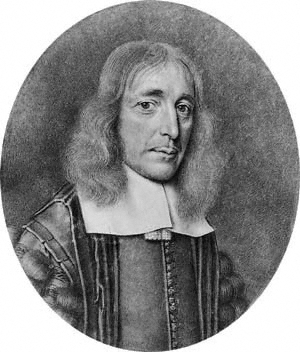
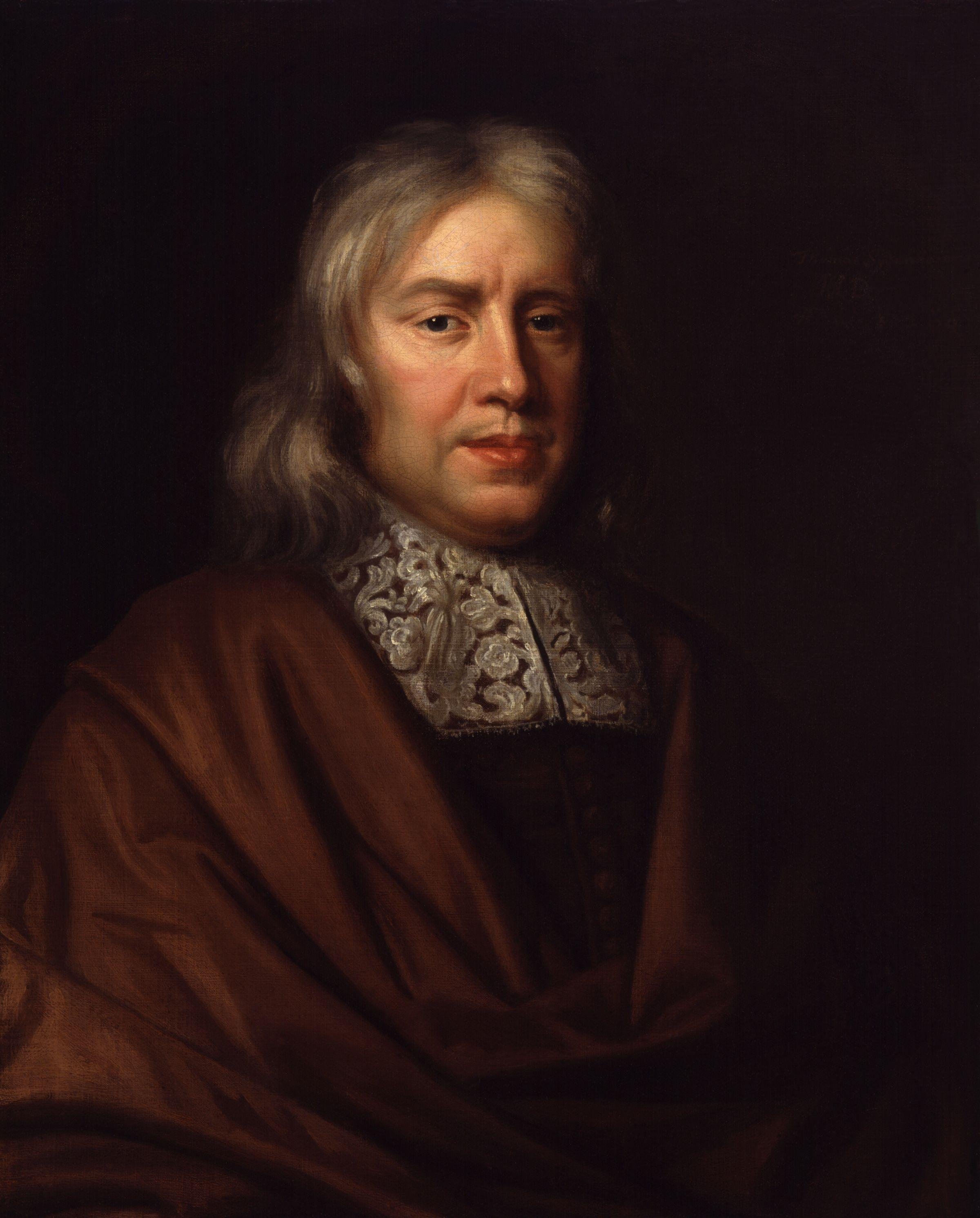
1682 SYDENHAM, Thomas (1624 – 1689)
Dissertatio epistolaris . . . de observationibus nuperis circa curationem variolarum confluentium nec non de affectione hysterica.
"Sydenham so precisely describes the symptoms of hysteria that even today little can be added to what he said. He maintained that is was the most common chronic disease, and he recognized that in spite of the fact tha…
GMN 9198 · https://historyofmedicine.com/id/11379
1689 MORTON, Richard (1637 – 1698)
Phthisiologia, seu exercitationes de phthisi.
The first application of the principles of pathology to the study of pulmonary tuberculosis. Morton showed that the formation of tubercles is a necessary part of the development of this lung disease, and pointed out t…
GMN 3216 · https://historyofmedicine.com/id/4388
1722 MANDEVILLE, Bernard de (1670 – 1733)
A treatise of the hypochondriack and hysterick passions.
Probably the first psychiatric self-help book. Hunter and Macalpine call Mandeville's work "the first book on minor mental maladies `writ by way of Information to Patients' rather than `to teach other Practitioners' .…
GMN 10703 · https://historyofmedicine.com/id/12896
1733 CHEYNE, George (1671 – 1743)
The English malady; or, a treatise of nervous diseases of all kinds.
Cheyne attributed hypochondria (“Cheyne’s disease”) to the moisture of the air and variability of the weather in the British Isles. Cheyne himself suffered from this disease and the work includes a careful account of …
GMN 4840 · https://historyofmedicine.com/id/3610
1758 BATTIE, William (1703 – 1776)
Treatise on madness.
Battie was among the first to teach psychiatry at the bedside. His book is the first English text book on the subject. Reprinted with J. Monro’s Remarks on Dr. Battie’s treatise on madness, London, Dawsons, 1962.
GMN 4919.1 · https://historyofmedicine.com/id/6101
1765 WHYTT, Robert (1714 – 1766)
Observations on the nature, causes, and cure of those disorders which have been commonly called nervous hypochondriac, or hysteric, to which are prefixed some remarks on the sympathy of the nerves.
“First important English work on neurology after Willis” (Garrison).
GMN 4841 · https://historyofmedicine.com/id/3614
1768 WHYTT, Robert (1714 – 1766)
The works of Robert Whytt, M.D. Late physician to his Majesty.... Published by his son.
Digital facsimile from the Internet Archive at this link.
GMN 11733 · https://historyofmedicine.com/id/13934
1769 BUC'HOZ, Pierre-Joseph (1731 – 1807); MARQUET, François-Nicolas (1687 – 1759)
Nouvelle méthode facile et curieuse pour connoitre le pouls par les notes de la musique, par feu M.F.N. Marquet. Seconde édition, augmentée de plusieurs observations et réflexions critiques, & d'une dissertation en forme de thèse sur cette méthode; d'un mémoire sur la manière de guérir la mélancholie par la musique, & de l'éloge historique de M. Marquet. Par Pierre-Joseph Buc'hoz.
Buc'hoz applied his father-in-laws theories of music therapy to the treatment of depression. Digital facsimile from loc.gov at this link.
GMN 13008 · https://historyofmedicine.com/id/15258
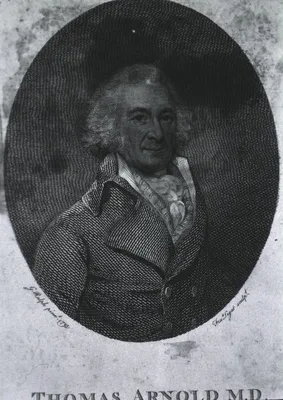
1782 –1786 ARNOLD, Thomas (psychiatrist) (1742 – 1816)
Observation on the nature, kinds, causes and prevention of insanity, lunacy, or madness. 2 vols.
Best historical account to the time. 2nd ed., 1806.
GMN 4920 · https://historyofmedicine.com/id/6103
1784 CULLEN, William (1710 – 1790)
First lines on the practice of physic. 4th ed. Vol. 3.
Cullen introduced the term “neuroses” (pp. 121-23).
GMN 4920.1 · https://historyofmedicine.com/id/6105
1788 FALCONER, William (1744 – 1824)
A dissertation on the influence of passions upon disorders of the body.
A treatise on the psychosomatic aspects of certain diseases. Digital facsimile from the Internet Archive at this link.
GMN 10004 · https://historyofmedicine.com/id/12193
1789 CHIARUGI, Vincenzo (1739 – 1820)
Remarks and rules set by him in: Regolamento dei Regi Spedali di Santa Maria Nuova & di Bonifazio.
Chiarugi’s regulations for the Bonifazio mental asylum mark the first appearance in print of his landmark reforms in the humane treatment of the mentally ill. Chiarugi was the first to practise the humanitarian treatm…
GMN 4920.2 · https://historyofmedicine.com/id/6108
1789 BLACK, William (1749 – 1829)
An arithmetical and medical analysis of the diseases and mortality of the human species.
Black analyzed the London bills of mortality from 1701-1776. His work was the only study to provide a numerical account of insanity, a disease on people's minds because of George III's illness.
GMN 8371 · https://historyofmedicine.com/id/10548
1792 PASTA, Giuseppe (1742 – 1823)
Del coraggio nelle malattie. Trattato.
Pasta was a pioneer in promoting the value of psychological support for treating patients with severe physical disaease. His paper, printed by the celebrated Giambattista Bodoni, promotes courage and philosophical tol…
GMN 13154 · https://historyofmedicine.com/id/15413
1793 –1794 CHIARUGI, Vincenzo (1739 – 1820)
Della pazzia in genere, e in specie, trattato medico-analitico, con una centuri di osservatzioni. 3 vols.
Chiarugi was the first in Europe to abandon chains and fetters in a mental hospital. He required a case history for each patient, hygienic rooms with segregation of the sexes, no restraint beyond strait jacket and cot…
GMN 4921 · https://historyofmedicine.com/id/6112
1794 FRANCO, Francisco de Mello (1757 – 1822)
Medicina theologica, ou supplica humilde, feita a todos os senhores confessores e directores, sobre o modo de proceder com seus penitentes na emenda dos peccados, principalmente da lascivia, colera, e bebedice.
The first Portuguese work on psychosomatic medicine. The author was a Brazilian who worked in Portugal. Digital facsimile from Wellcomelibrary.org at this link.
GMN 11782 · https://historyofmedicine.com/id/13983
1798 HASLAM, John (1764 – 1844)
Observations on insanity.
Haslam was among the first to describe general paralysis; he recorded three cases (pp. 64, 67, 92, 120).
GMN 4794 · https://historyofmedicine.com/id/1541
1798 CRICHTON, Alexander (1763 – 1856)
An inquiry into the nature and origin of mental derangement: comprehending a concise system of the physiology and pathology of the human mind, and a history of the passions and their effects. 2 vols.
In chapter 2 of vol. 1, pp. 254-90, “On Attention and its Diseases” Crichton described a mental state much like the inattentive subtype of Attention Deficit Hyperactivity Disorder (ADHD). He did not mention any sympto…
GMN 7978 · https://historyofmedicine.com/id/10154
1801 PINEL, Philippe (1745 – 1826)
Traité médico-philosophique sur l’aliénation mentale ou la manie.
Pinel founded the French School of Psychiatry. He was among the first to treat the insane humanely; he dispensed with chains and placed his patients under the care of specially selected physicians. Garrison considered…
GMN 4922 · https://historyofmedicine.com/id/6117
1803 ALDINI, Giovanni (1762 – 1834)
An account of the late improvements in galvanism…
Nephew of Galvani (see No. 593), Aldini developed and promoted animal electricity. His sensational experiments on the body of a criminal executed at Newgate, conducted with Carpue (No. 1989) were significant for the p…
GMN 1989.1 · https://historyofmedicine.com/id/3817
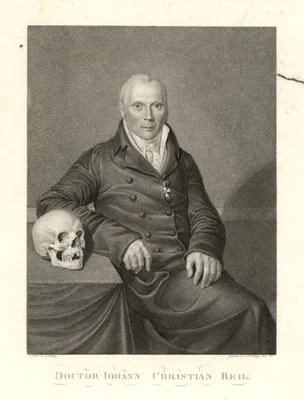
1803 REIL, Johann Christian (1759 – 1813)
Rhapsodieen über die Anwendung der psychischen Curmethode auf Geisteszerrüttungen.
The versatile Reil, physician and physiologist, was an early advocate of humane treatment for the insane. He was instrumental in the establishment of the first journal devoted to mental disease – the Magazin für Nerve…
GMN 4923 · https://historyofmedicine.com/id/6120
1810 HASLAM, John (1764 – 1844)
Illustrations of madness: exhibiting a singular case of insanity… with a description of the tortures experienced by bomb-bursting, lobster-cracking and lengthening the brain.
The first medical book devoted to a single case of insanity, and the first illustration of an influencing machine, commonly complained of by paranoid patients.
GMN 4924.1 · https://historyofmedicine.com/id/6124
1812 RUSH, Benjamin (1745 – 1813)
Medical inquiries and observations upon the diseases of the mind.
The first American textbook on psychiatry, and, considering the state of that science in Rush’s time, one of the most noteworthy. It underwent four editions.
GMN 4924 · https://historyofmedicine.com/id/6121
1813 TUKE, Samuel (1784 – 1857)
Description of The Retreat, an institution near York, for insane persons…
The pioneer work by an Englishman advocating humane treatment of the mentally ill. Tuke set out in this work the successful results of his experience with the “mild system of treatment” which had been instituted at Th…
GMN 4925.1 · https://historyofmedicine.com/id/6135
1814 ADAMS, Joseph (1756 – 1818)
A treatise on the supposed hereditary properties of diseases, containing remarks on the unfounded terrors and ill-judged cautions consequent on such erroneous opinions; with notes, illustrative of the subject, particularly in madness and scrofula.
Adams was a pioneer in medical genetics. He distinguished between familial and hereditary diseases, saw that an increase in hereditary disease frequency in isolated areas could be caused by inbreeding, and suggested t…
GMN 216.1 · https://historyofmedicine.com/id/4032
1817 HASLAM, John (1764 – 1844)
Medical jurisprudence as it relates to insanity, according to the laws of England.
The first English work on the forensic aspects of mental illness. Digital facsimile from Wellcome Forensics Collection, Internet Archive, at this link.
GMN 7108 · https://historyofmedicine.com/id/9275
1818 HEINROTH, Johann Christian August (1773 – 1843)
Lehrbuch der Störungen des Seelenlebens.
Heinroth drew his psychology from the Bible and maintained that mental health was maintained only by piety and that sin engendered madness; for him treatment was by repentance and a return to the fold. English transla…
GMN 4926 · https://historyofmedicine.com/id/6139
1822 BAYLE, Antoine Laurent Jessé (1799 – 1858)
Recherches sur l’arachnitis chronique, la gastrite et la gastro-entérite chroniques, et la goutte: Considerées comme causes de l'aliénation mentale. Thèse No. 247.
First description of general paresis, or paralytic dementia, general paralysis of the insane, or "maladie de Bayle". This is considered the first demonstation of an organic cause for a "psychiatric" disorder; it was i…
GMN 4795 · https://historyofmedicine.com/id/1545
1824 DELAYE, J. B.
Considérations sur une espèce de paralysie qui affecte particulièrement les aliénés. Thèse [pour le doctorat en médecin] No. 224.
Delaye, a pupil of Esquirol, selected for his thesis the subject of “incomplete general paralysis of the insane”, which he differentiated from other forms of paralysis. He recorded the early signs of the disease, emph…
GMN 4796 · https://historyofmedicine.com/id/1548
1825 HEINROTH, Johann Christian August (1773 – 1843)
System der psychisch-gerichtlichen Medizin, oder theoretisch-praktische Anweisung zur wissenschaftlichen Erkenntniss und gutachtlichen Darstellung der krankhaften persönlichen Zustände, welche vor Gericht in Betracht kommen.
The first important work exclusively on medico-legal aspects of insanity. Digital facsimile from the Internet Archive at this link.
GMN 1736 · https://historyofmedicine.com/id/3060
1825 MORISON, Alexander (1779 – 1866)
Outlines of lectures on mental diseases.
Of particular note for the greatly expanded second edition published in 1826. That edition contained 150 pages compared to 72 pages in the first edition. The second edition also contained 13 plates derived from images…
GMN 10744 · https://historyofmedicine.com/id/12940
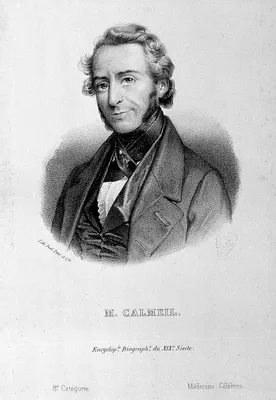
1826 CALMEIL, Louis-Florentin (1798 – 1895)
De la paralysie consideree chez les aliénés.
Classic description of general paralysis. Calmeil’s work complements Bayle’s earlier delineation of general paralysis (No. 4795). Between the two of them they established the clinical picture of general paralysis of t…
GMN 4797 · https://historyofmedicine.com/id/1552
1830 NEWNHAM, William (1790 – 1865)
Essay on superstition; being an inquiry into the effects of physical influence on the mind, in the production of dreams, visions, ghosts, and other supernatural appearances.
Newnham argued that argued that apparitional experiences, dreams and spiritual visions had a physiological rather than a supernatural basis. Digital facsimile from Google Books at this link.
GMN 13201 · https://historyofmedicine.com/id/15462
1832 HECKER, Justus Friedrich Karl (1795 – 1850)
Die Tanzwuth, eine Volkskrankheit im Mittelalter.
A study of the dancing mania of the Middle Ages. An English translation (see No. 1678) appeared in 1835.
GMN 6516 · https://historyofmedicine.com/id/8084
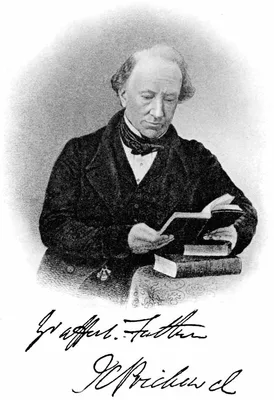
1835 PRICHARD, James Cowles (1786 – 1848)
A treatise on insanity and other disorders affecting the mind.
Prichard, better known for his work in the field of anthropology (No. 159), was the first to describe moral insanity. He described a syndrome he called incoherence or senile dementia. Alzheimer (No. 4956) may have des…
GMN 4928 · https://historyofmedicine.com/id/6141
1835 FRIEDREICH, Johann Baptist (1796 – 1862)
Systematisches Handbuch der gerichtlichen Psychologie für Medicinalbeamte, Richter und Vertheidiger.
A comprehensive manual on forensic psychiatry, preceding Isaac Ray's book by three years. Digital facsimile from Google Books at this link.
GMN 11750 · https://historyofmedicine.com/id/13950

![HIPPOCRATES, [Ἱπποκράτης; Hippocrates of Kos] (-460 – -370)](/media/portraits/50)