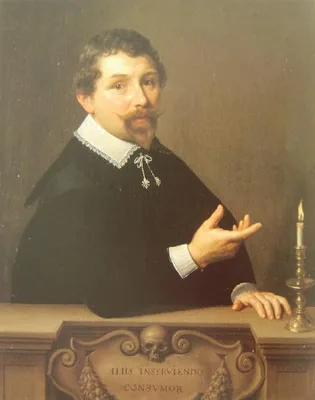
1652 TULP, Nicolaes (1593 – 1674)
Observationes medicae.
One of the earliest accounts of beri-beri is on pp. 300-05 of this work. Tulp, notable as the demonstrator in Rembrandt’s “Anatomy Lesson”, was among the first, in the same book, to describe the ileo-caecal valve (“Tu…
GMN 3737 · https://historyofmedicine.com/id/4530
1655 LA PEYRÈRE, Isaac (1596 – 1576)
Prae-Adamitae, sive exercitatio super versibus duodecimo, decimotertio, & decimoquarto, capitis quinti Epistolae D. Pauli ad Romanos: Quibus inducuntur primi homines ante Adamum conditi.
"In his Prae-Adamitae, published in Latin in 1655 and in English as Men Before Adam in 1656, La Peyrère argued that Paul's words in Chapter 5, verses 12-14 of his Epistle to the Romans should be interpreted such that …
GMN 10146 · https://historyofmedicine.com/id/12335
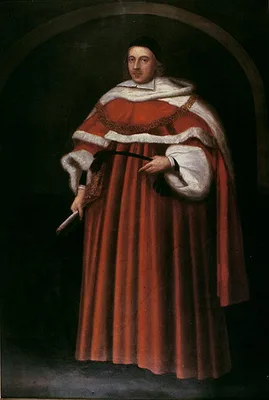
1677 HALE, Sir Matthew (1609 – 1676)
The primitive organization of mankind considered and examined according to the light of nature.
In response to Isaac de la Peyrere‘s theory of polygenesis, Hale, Chief Justice of the King’s Bench, advanced his own theory that the earth was not eternal, but rather had a spontaneous “beginning,” and defended “the …
GMN 215 · https://historyofmedicine.com/id/3967
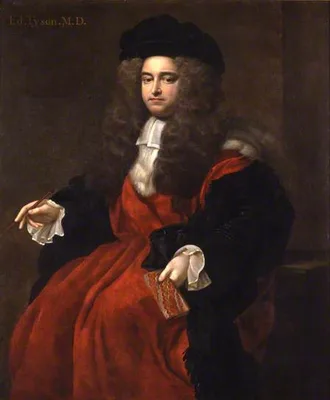
1699 TYSON, Edward (1650 – 1708)
Orang-outang, sive homo sylvestris: Or, the anatomy of a pygmie compared with that of a monkey, an ape, and a man.
The earliest work of importance in comparative morphology. Tyson compared the anatomy of man and monkeys and between the two he placed the chimpanzee, which he regarded as the typical pygmy. This was the origin of the…
GMN 153 · https://historyofmedicine.com/id/2767
1715 BAGFORD, John (1650 – 1716)
A letter to the publisher, written by the ingenious Mr. John Bagford, in which are many curious remarks relating to the city of London, and some things about Leland. In: John Leland, Joannis Lelandi antiquarii de rebus britannicis collectanea, ed. Thomas Hearne, I, pp. lviii-lxxxvi.
Includes an account of the discovery by Bagford’s friend and fellow antiquarian John Conyers of a flint handaxe in London, unearthed circa 1680 near the bones of what was then thought to be an elephant, as neither the…
GMN 7303 · https://historyofmedicine.com/id/9473
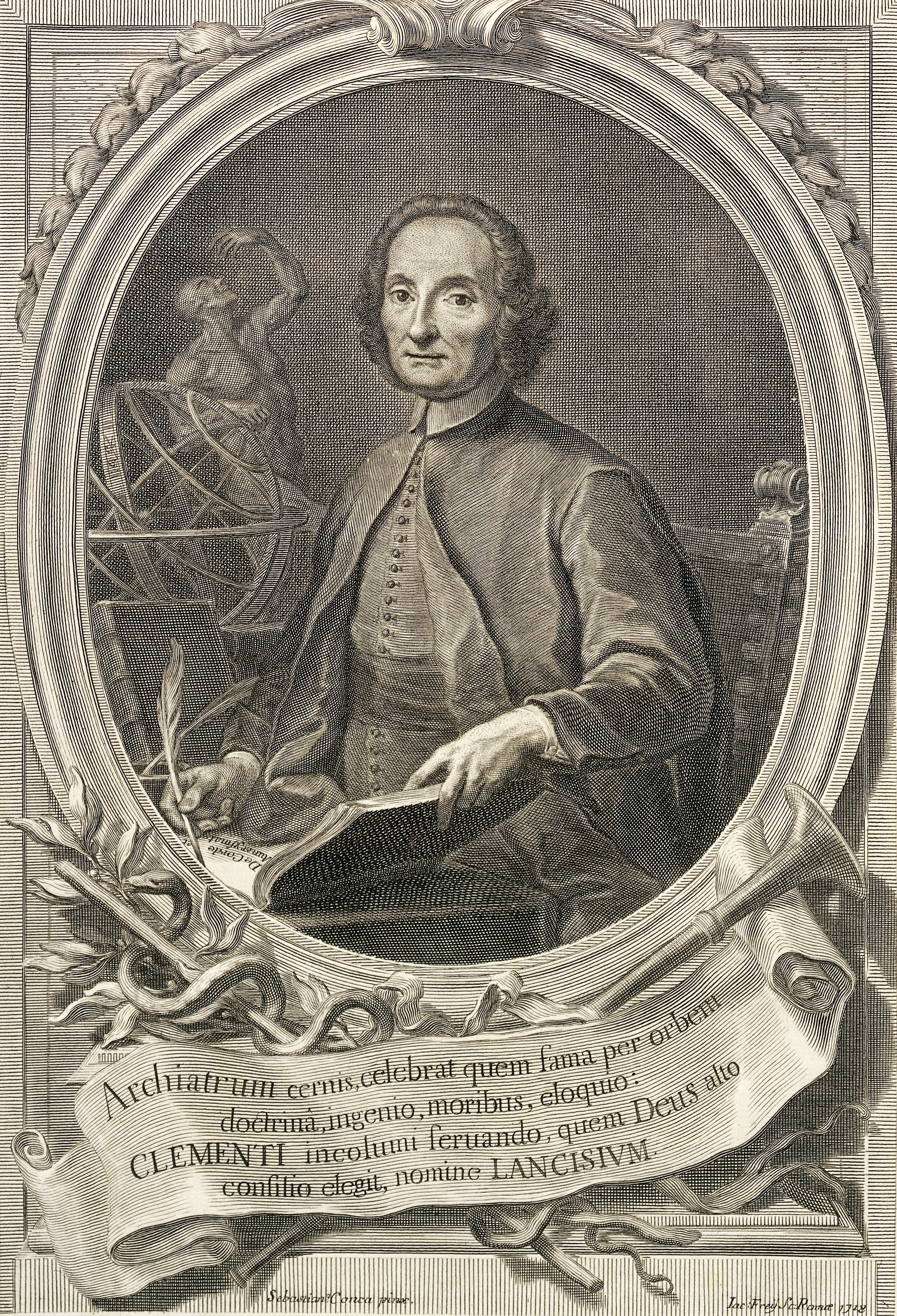
1717 LANCISI, Giovanni Maria (1654 – 1720); MERCATI, Michele (1541 – 1593)
Metallotheca opus posthumum, auctoritate, & munificentia Clementis undecimi pontificis maximi e tenebris in lucem eductum; opera autem, & studio Ioannis Mariae Lancisii archiatri pontificii illustratum.
In 1717 papal physician Giovanni Maria Lancisi published the catalogue of the Vatican "armaria" series housing the natural history museum collected by one of his predecessors at the Vatican, the 16th century papal phy…
GMN 11515 · https://historyofmedicine.com/id/13714
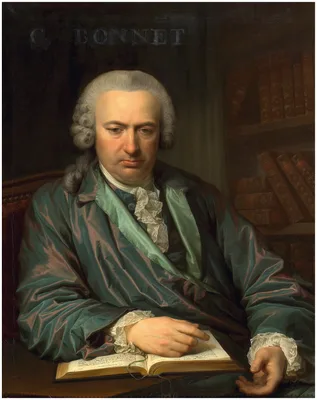
1745 BONNET, Charles (1720 – 1793)
Traité d’insectologie.
This pioneering work on experimental entomology incorporates Bonnet’s most important discovery–parthenogenetic reproduction–based on his study of aphids. Bonnet used the result of this and other discoveries as a basis…
GMN 308 · https://historyofmedicine.com/id/115
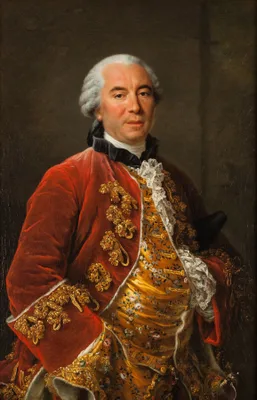
1749 –1789 BUFFON, Georges-Louis Leclerc, Comte de (1707 – 1788)
Histoire naturelle générale et particulière…. 44 vols., plus atlas.
This vast work is divided into seven parts. I: Histoire naturelle générale et particulière…15 vols., by Buffon and L.J.M. Daubenton (1749-67). II: Histoire naturelle des oiseaux. 9 vols., by Buffon, P. Guéneau de Mont…
GMN 324 · https://historyofmedicine.com/id/193
1774 ESPER, Johann Friedrich (1732 – 1781)
Ausfürliche Nachricht von neuentdeckten Zoolithen, unbekannter vierfüsiger Thiere…
Esper was the first to record the finding, in Gailenreuth Cave, of human bones alongside the remains of unknown and probably extinct animals. The implications of this dramatic observation published in a color plate bo…
GMN 203.7 · https://historyofmedicine.com/id/3834
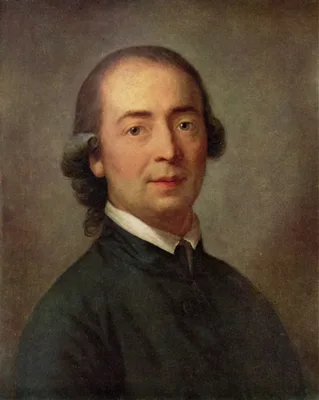
1784 –1791 HERDER, Johann Gottfried von (1744 – 1803)
Ideen zur Philosophie der Geschichte der Menschheit. 4 vols.
Herder’s history has long been regarded as a very strong statement of Darwinian evolution before Darwin: many single passages come close to the evolution theory. Among the passages most often regarded as anticipating …
GMN 215.3 · https://historyofmedicine.com/id/3984
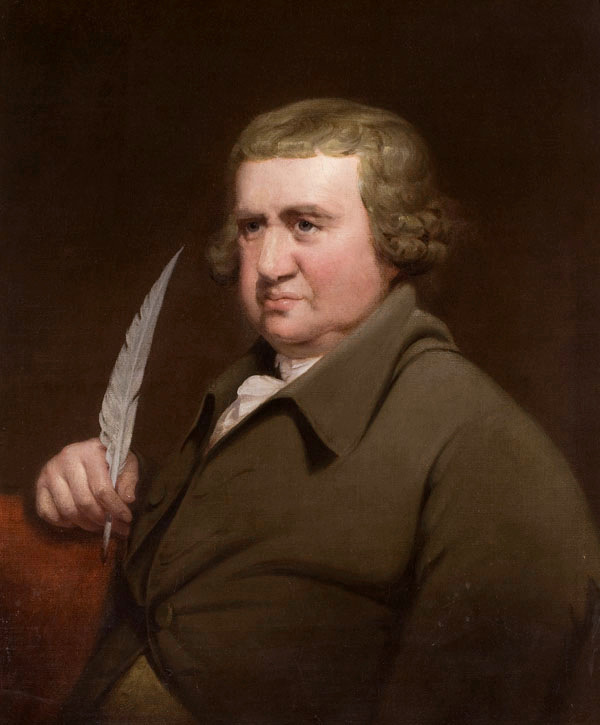
1789 –1791 DARWIN, Erasmus (1731 – 1802)
The botanic garden: A poem in two parts. Part I. Containing the economy of vegetation. Part II. The loves of the plants. With philosophical notes. 2 vols.
The first edition of part 2, preceded part 1, being published in 1789. This poem was the chief source of Erasmus Darwin's literary fame during his lifetime. Like his other works, this poem contains a great deal of fre…
GMN 8921 · https://historyofmedicine.com/id/11099
1793 SPRENGEL, Christian Konrad (1750 – 1816)
Das entdeckte Geheimnis der Natur im Bau und in der Befruchtung der Blumen.
Sprengel demonstrated for the first time that the whole structure of nectar-bearing flowers is adapted for fertilization by insects. In his study of the Rose-bay Sprengel discovered dichogamy – that in some plants the…
GMN 104.1 · https://historyofmedicine.com/id/1592
1794 –1796 DARWIN, Erasmus (1731 – 1802)
Zoonomia; or the laws of organic life. 2 vols.
Grandfather of Charles Darwin and Francis Galton, Erasmus Darwin provided in Zoonomia, his major work in medicine and natural science, the first consistent all-embracing hypothesis of evolution. Nevertheless, his gran…
GMN 105 · https://historyofmedicine.com/id/1597
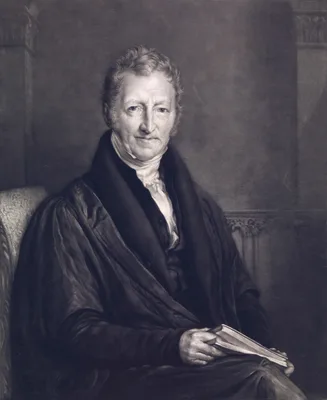
1798 MALTHUS, Thomas Robert (1766 – 1834)
An essay on the principle of population, as it affects the future improvement of society.
Malthus laid down the principle that populations increase in geometrical ratio, but that subsistence increases only in arithmetical ratio. He argued that a stage is reached where increase of populations must be limite…
GMN 1693 · https://historyofmedicine.com/id/8809
1799 CUVIER, Jean Léopold Chrétien Frédéric "Georges" (1769 – 1832)
Mémoire sur les espèces d’éléphans vivantes et fossiles.
Using comparative anatomy, Cuvier demonstrated that the African elephant was a separate species from the Indian elephant, and that the fossil or “mammoth” elephant was yet another species distinct from the two living …
GMN 7292 · https://historyofmedicine.com/id/9462
1800 FRERE, John (1740 – 1807)
Account of flint weapons discovered at Hoxne in Suffolk.
Frere described the discovery of several flint artifacts, which he believed to be “weapons of war,” associated with “some extraordinary bones, particularly a jaw-bone of enormous size of some unknown animal” (p. 204).…
GMN 7291 · https://historyofmedicine.com/id/9461
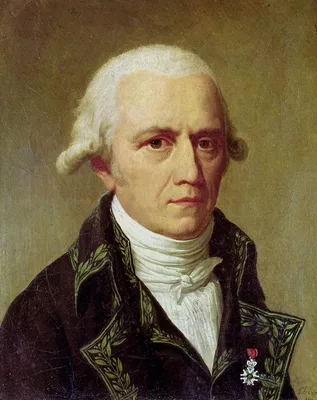
1801 LAMARCK, Jean-Baptiste Pierre Antoine de Monet de (1744 – 1829)
Système des animaux sans vertèbres.
The “Discours d’ouverture” contains Lamarck’s first published statement of the theory of the inheritance of acquired characteristics. See No. 316.
GMN 215.5 · https://historyofmedicine.com/id/4028
1802 –1822 TREVIRANUS, Gottfried Reinhold (1776 – 1837)
Biologie: oder Philosophie der lebenden Natur für Naturforscher und Aerzte. 6 vols.
Simultaneously with Lamarck, Treviranus coined the term “biology” for the study of living things, and he was the first to use it in a book title. This massive work was a summary of all basic knowledge about the struct…
GMN 105.1 · https://historyofmedicine.com/id/1605
1803 DARWIN, Erasmus (1731 – 1802)
The temple of nature; or the origin of society. A poem, with philosophical notes.
Erasmus Darwin's last poem, which mainly expounds his theories of evolution. He traces the progress of life form its origin as microscopic specks in premeval seas to its culmination in a civilized human society. The f…
GMN 8922 · https://historyofmedicine.com/id/11100
1804 DARWIN, Erasmus (1731 – 1802); SEWARD, Anna
Memoirs of the life of Dr. Darwin, chiefly during his residence in Lichfield: With anecdotes of his friends, and criticisms on his writing.
Digital facsimile from the Internet Archive at this link.
GMN 12687 · https://historyofmedicine.com/id/14932
1809 LAMARCK, Jean-Baptiste Pierre Antoine de Monet de (1744 – 1829)
Philosophie zoologique. 2 vols.
Lamarck was one of the greatest of the comparative anatomists. This work is considered the greatest exposition of his argument that evolution occurred by the inheritance of characteristics acquired by animals as a res…
GMN 216 · https://historyofmedicine.com/id/4030
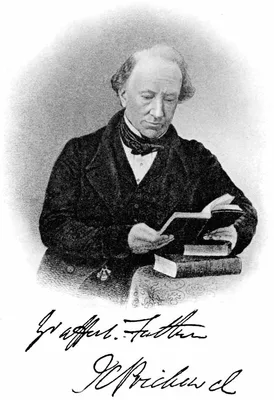
1813 PRICHARD, James Cowles (1786 – 1848)
Researches into the physical history of man.
Prichard, a Bristol physician, classified and systematized facts relating to the races of men better than any previous writer. His interest in anthropology was stimulated by one of the pressing questions of his day: D…
GMN 159 · https://historyofmedicine.com/id/3190
1815 –1822 LAMARCK, Jean-Baptiste Pierre Antoine de Monet de (1744 – 1829)
Histoire naturelle des animaux sans vertèbres ... précédée d'une introduction offrant la détermination des caractères essentiels de l'animal, sa distinction du végétal et des autres corps naturels, enfin, l'exposition des principes fondamentaux de la zoologie. 7 vols in 8.
An elaborate expansion of Lamarck’s one-volume work with the same title published in Paris, 1801 (No.215.5). As a systematist Lamarck made important contributions to biology. He separated spiders and crustaceans from …
GMN 316 · https://historyofmedicine.com/id/150
1818 WELLS, William Charles (1757 – 1817)
Two essays: upon single vision with two eyes; the other on dew…An account of a female of the white race of mankind, part of whose skin resembles that of a negro…
First statement of the theory of natural selection. Wells’s paper on a white woman with patchy brown discoloration of the skin contains an almost complete anticipation of Darwin’s theory of natural selection, although…
GMN 216.2 · https://historyofmedicine.com/id/4034
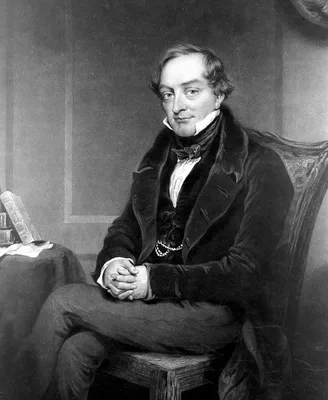
1819 LAWRENCE, Sir William (1783 – 1867)
Lectures on physiology, zoology and the natural history of man.
This work set forth Lawrence's then radical and remarkably advanced ideas concerning evolution and heredity. Arguing that theology and metaphysics had no place in science, Lawrence relied instead on empirical evidence…
GMN 11240 · https://historyofmedicine.com/id/13437
1823 BUCKLAND, William (1784 – 1856)
Reliquiae diluvianae; or, observations on the organic remains contained in caves, fissures, and diluvial gravel, and on other geological phenomena, attesting the action of an universal deluge.
Buckland’s elaborately illustrated Reliquiae diluvianae (Relics of the Flood) describes his geological and paleontological researches of the early 1820s, including his investigations of the Kirkdale and Paviland caves…
GMN 7254 · https://historyofmedicine.com/id/9423
1828 COMBE, George (1788 – 1858)
The constitution of man considered in relation to external objects.
"Combe argues that the human mind is best understood through Phrenology, and that the relative size of the various regions of the brain defined by Phrenology determines a persons behavior and potential interactions wi…
GMN 10071 · https://historyofmedicine.com/id/12260
1829 CHRISTOL, Jules Marie Gabriel de (1802 – 1861)
Notice sur les ossemens humains fossiles des cavernes du Département du Gard, présentée à l’Académie des Sciences le 29 juin 1829.
Christol excavated of the caverns of Pondres and Souvignarges, northeast of Montpellier in the department of Gard. These caverns, which showed no evidence of accidental disturbance, contained human remains intermixed …
GMN 7293 · https://historyofmedicine.com/id/9463
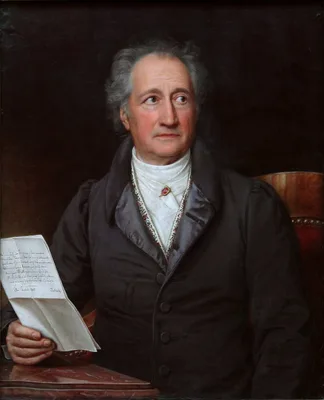
1831 GOETHE, Johann Wolfgang von (1749 – 1832)
Über den Zwischenkiefer des Menschen und der Thiere von Goethe. Jena, 1786. Mit 5 Kupfertafeln.
Goethe believed that in 1784 he demonstrated the presence of the intermaxillary (premaxillary) bone in man, proving an anatomical connection between man and the lower animals, and certifying to Goethe that there is no…
GMN 200 · https://historyofmedicine.com/id/3544
1831 MATTHEW, Patrick (1790 – 1874)
On naval timber and arboriculture.
The “first clear and complete” anticipation of the Darwinian theory of evolution by natural selection. The appendix to Matthew’s work actually uses the expression, “natural process of selection”. See W.J. Dempster, Pa…
GMN 216.3 · https://historyofmedicine.com/id/4037
1833 –1834 SCHMERLING, Phillipe-Charles (1791 – 1836)
Recherches sur les ossemens fossiles découvertes dans les cavernes de la province de Liège. 2 vols. and atlas.
A physician from Delft, Schmerling found extensive human remains and artifacts associated with the remains of extinct animals in the caverns around Liège. These human remains were distinctively different anatomically …
GMN 203.8 · https://historyofmedicine.com/id/3638
1835 DARWIN, Charles Robert (1809 – 1882); HENSLOW, John Stevens (1796 – 1861)
For private distribution. The following pages contain extracts from letters addressed to Professor Henslow by C. Darwin, Esq.
Darwin's teacher, John Stevens Henslow, had some of Darwin's letters to him published for private distribution as a pamphlet while Darwin was on the Beagle circumnavigation. Estimates of the number of copies printed v…
GMN 8920 · https://historyofmedicine.com/id/11098
1836 THOMSEN, Christian Jurgensen (1788 – 1865)
Ledetraad til Nordisk Oldkyndighed.
Thomsen's work established the "Three-Age system," according to which artifacts were first made of stone, then bronze, and then iron. This basic chronology underpins the archaeology of most of the "Old World.”
GMN 7374 · https://historyofmedicine.com/id/9546
1837 LARTET, Édouard (1801 – 1871)
Note sur les ossements fossiles des terrains tertiaires de Simorre, de Sansan, etc., dans le département du Gers, et sur la découverte récente d’une mâchoire de singe fossile.
First published account of the discovery of the first anthropomorphic fossil ape. Lartet's discovery, made in 1836 at Sansan, was the first to challenge Cuvier’s assertion that both humans and apes were products of th…
GMN 7311 · https://historyofmedicine.com/id/9481
1839 DARWIN, Charles Robert (1809 – 1882)
Journal of researches into the geology and natural history of the various countries visited by H. M. S. Beagle ....
Darwin’s first published book, now universally known as The Voyage of the Beagle, is the most often read and the most often printed of all his works, after On the origin of species. Its relation to the background of D…
GMN 7438 · https://historyofmedicine.com/id/9610
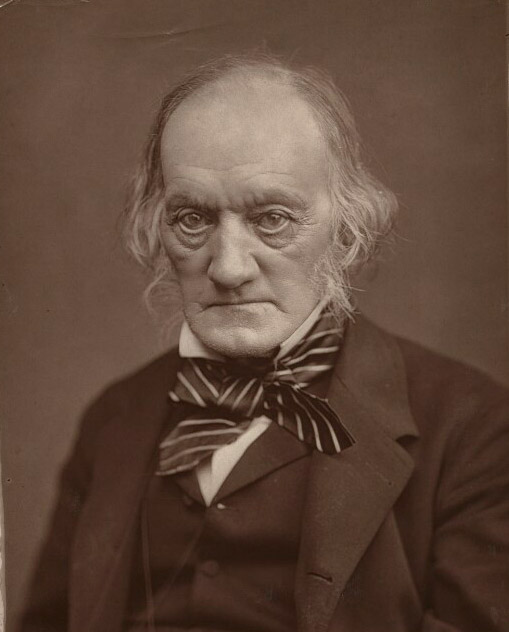
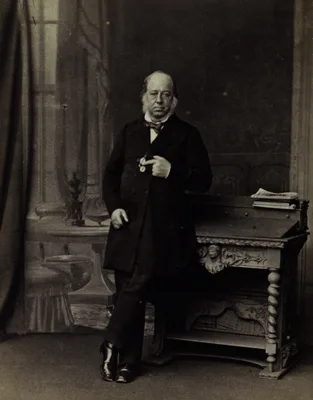
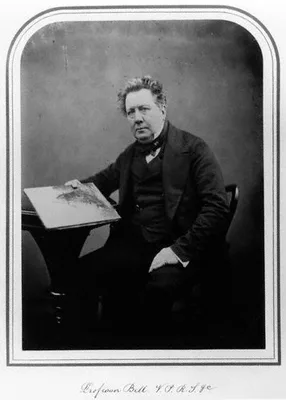
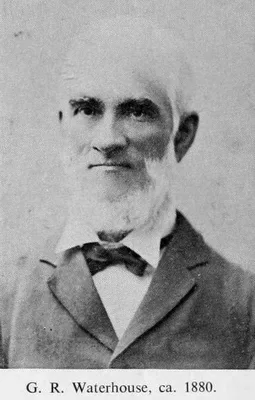
1840 –1843 OWEN, Sir Richard (1804 – 1892); DARWIN, Charles Robert (1809 – 1882); GOULD, John (1804 – 1881); BELL, Thomas (1792 – 1880); WATERHOUSE, George Robert (1810 – 1888); JENYNS, Leonard (1800 – 1893)
The zoology of the voyage of H.M.S. Beagle, under the command of Captain Fitzroy, R. N., during the years 1832 to 1836. Edited by Charles Darwin. 5 pts in 3 vols.
Part 1: Fossil mammalia by Richard Owen; Part 2: Mammalia by George Waterhouse; Part 3: Birds by John Gould; Part 4: Fish by Leonard Jenyns; Part 5: Reptiles by Thomas Bell. Digital facsimile from the Internet Archive…
GMN 7437 · https://historyofmedicine.com/id/9609
1841 GREY, Sir George (1812 – 1898)
Journals of two expeditions of discovery in North-West and Western Australia, during the years 1837, 38, and 39...describing many new discovered, important, and fertile districts, with observations on the moral and physical conditions of the aboriginal inhabitants, &c. &c. 2 vols.
"In 1837, at the age of 25, Grey led an ill-prepared expedition that explored North-West Australia. British settlers in Australia at the time knew little of the region and only one member of Grey's party had been ther…
GMN 13014 · https://historyofmedicine.com/id/15264
1842 DARWIN, Charles Robert (1809 – 1882)
The structure and distribution of coral reefs. Being the first part of the geology of the voyage of the Beagle, under the command of Capt. Fitzroy, R. N. During the years 1832 to 1836.
With slight modification, Darwin's work remains the accepted explanation for these phenomena. "Even if he had done nothing else, the theory of the coral islands alone would have placed Darwin in the very front of inve…
GMN 8916 · https://historyofmedicine.com/id/11094
1844 –1845 CHAMBERS, Robert (1802 – 1871)
Vestiges of the natural history of creation. And: Explanations: A sequel to “Vestiges….” 2 vols.
This outspoken statement of a belief in evolution, published anonymously to protect Chambers’s reputation as a publisher, anticipated Darwin’s Origin by 16 years and generally prepared the public for Darwin’s theories…
GMN 218 · https://historyofmedicine.com/id/4041
1844 MIDDLETON, J.
Comparative analysis of recent and fossil bones.
The presence of fluorine in fossil bones was first reported in 1803 by Italian chemist Domenico Morichini, and by the 1840s scientists had determined that (a) fluorine occurs in teeth and bone; (b) the fluorine conten…
GMN 7300 · https://historyofmedicine.com/id/9470
1844 DARWIN, Charles Robert (1809 – 1882)
Observations on the volcanic islands, visited during the voyage of the H.M.S. Beagle, together with some brief notices on the geology of Australia and the Cape of Good Hope. Being the second part of the geology of the voyage of the Beagle.
GMN 8917 · https://historyofmedicine.com/id/11095
1846 DARWIN, Charles Robert (1809 – 1882)
Geological observations on South America. Being the third part of the geology of the voyage of the Beagle.
The third and last of Darwin's geological reports on the Beagle voyage. In it he described the pampas, the plateaus and the Andres, showing how they had been gradually pushed up in the way that Charles Lyell surmised …
GMN 8918 · https://historyofmedicine.com/id/11096
1847 –1864 BOUCHER DE CRÈVECOEUR DE PERTHES, Jacques (1788 – 1868)
Antiquités celtiques et antédiluviennes. Mémoire sur l'industrie primitive et les arts à leur origine. 3 vols.
Customs inspector at Abbéville and a prolific writer on diverse subjects, Boucher de Perthes found extensive deposits of flint implements in association with the bones of mammoths and other fossil animals. His work pr…
GMN 203.9 · https://historyofmedicine.com/id/3842
1847 LUND, Peter Wilhelm (1801 – 1880)
Notice sur des ossements humains fossiles, trouvés dans une caverne du Brésil.
Lund, a student of Cuvier, excavated extensively in the region of Lagoa Santa, an area rich in caves and karst formations comprising the northern part of Greater Belo Horizonte in Brazil. Between 1835 and 1843 he coll…
GMN 7305 · https://historyofmedicine.com/id/9475
1848 OWEN, Sir Richard (1804 – 1892)
On the archetype and homologies of the vertebrate skeleton.
Owen’s vertebral theory of the origin of the skull, later refuted by Thomas Huxley and others. "Owen began working systematically on problems of transcendental morphology in 1841, as part of his curatorial task to arr…
GMN 330 · https://historyofmedicine.com/id/210
1855 –1856 DUVERNOY, George Louis (1777 – 1855)
Des caractères anatomiques des grands singes pseudo-anthropomorphes.
With 16 lithographed plates, this continues to be one of the most frequently cited of all works in the history of primate anatomy.
GMN 10884 · https://historyofmedicine.com/id/13080
1855 WALLACE, Alfred Russel (1823 – 1913)
On the law which has regulated the introduction of new species.
This paper is sometimes referred to as the Sarawak Law paper since it was written while Wallace was on a specimen collecting expedition in the province of Sarawak (East Malayasian States) on the great island of Borneo…
GMN 13712 · https://historyofmedicine.com/id/15996
1857 SCHAAFHAUSEN, Hermann (1816 – 1893); FUHLROTT, Johann Carl (1804 – 1877)
[On the Feldhofer Neanderthal.]
The first account of the Neanderthal remains (Neanderthal 1), discovered in 1856 in the the Feldhofer cave of the Neander valley. The remains, which consist of a partial skull, pelvis and assorted long bones, were sen…
GMN 7250 · https://historyofmedicine.com/id/9419
1857 GOSSE, Philip Henry (1810 – 1888)
Omphalos: An attempt to untie the geological knot.
In Omphalos, published in 1857, two years before the publication of Darwin's On the Origin of Species, Gosse attempted to reconcile the paleontological record with creationist religious beliefs by arguing that the fos…
GMN 11806 · https://historyofmedicine.com/id/14008
1858 SCHAAFHAUSEN, Hermann (1816 – 1893)
Zur Kenntniss der ältesten Rassenschädel.
The first comprehensive description of the Neanderthal skull, following Schaaffhausen’s and Fuhlrott’s preliminary announcements of the discovery in the Verhandlungen des naturhistorischen Vereines der preussischen Rh…
GMN 204 · https://historyofmedicine.com/id/3844