1490 LANFRANC OF MILAN, Guido [Lanfranchi, Lanfranco, Lanfrancus Mediolanensis] (1250 – 1306); YVOIRE, Guillaume (1450 – 1500)
La chirurgie da Lanfranc traduit du latin par Guillaume Yvoire.
Lanfranc, the founder of French surgery, was a pupil of William of Salicet. He enjoyed a great reputation for his lecturing and bedside teaching. His Chirurgia magna was completed in 1296. According to Hirsch and othe…
GMN 5553 · https://historyofmedicine.com/id/6866
1498 GUY DE CHAULIAC, (Guido de Cauliaco) (1298 – 1368); ROGER OF SALERNO, (Rogerius Salernitanus, Frugard, Frugardi, Roggerio Frugardo, Rüdiger Frutgard, Roger of Parma) (1140 – 1195); LANFRANC OF MILAN, Guido [Lanfranchi, Lanfranco, Lanfrancus Mediolanensis] (1250 – 1306); BERTAPAGLIA, Leonardo (1380 – 1463); BRUNO DA LONGOBURGO (1200 – 1286); CASTELLI, Bonaventura (Bonaventura de Castello) (1300 – 1353); ROLANDO DA PARMA, (Rolandus Parmensis) (1220 – )
Chirurgia. Add: Brunus Longoburgensis: Chirurgia magna et minor; Bonaventura de Castello: Recepta aquae balnei de Porrecta; Theodoricus Cerviensis: Chirurgia; Rolandus: Libellus de chirurgia; Lanfrancus Mediolanensis: Chirurgia; Rogerius: Practica; Leonardus Bertapalia: Recollectae super quarto libro Avicennae.
This late 15th century edition of the surgery of Guy de Chauliac also contained the first printed editions of various lesser-known medieval surgeries such as those by Bruno da Longoburgo and Leonardo Bertapaglia. It a…
GMN 12925 · https://historyofmedicine.com/id/15172
1517 GERSDORFF, Hans von (1455 – 1529)
Feldtbuch der wundartzney.
Gersdorff performed nearly 200 amputations. He opposed Paré’s abandonment of boiling oil for the cauterization of wounds. The book contains some instructive pictures of early surgical procedures and includes the first…
GMN 5560 · https://historyofmedicine.com/id/6919
1518 BERENGARIO DA CARPI, Giacomo (1460 – 1530)
Tractatus de fractura calve sive cranei.
The first separate treatise on head wounds and their surgical treatment. Berengario described several types of skull fractures and grouped the resulting lesions according to their symptoms, citing the relation between…
GMN 4850.2 · https://historyofmedicine.com/id/5578
1561 PARÉ, Ambroise (1510 – 1590)
La méthode curative des playes, & fractures de la teste humaine.
Written after the death of Paré’s patient, Henri II, who was struck in the eye by the shaft of a lance at a tournament in celebration of the marriage of Philip, King of Spain, with Elizabeth of France. Paré discusses …
GMN 4850.3 · https://historyofmedicine.com/id/5583
1567 ARIAS DE BENEVIDES, Pedro (1505 – )
Secretos de chirurgia, en especial de la enfermedades de morbo-galico y lamparones, y asimismo la manera como se curan los indos las llgas y heridas, y otras pasiones en las Indias, muy útil y provechoso par España, y otros muchos secretos de chirugia hasta ahora no escritos.
Arias de Benevides travelled to the New World where he observed native remedies and reported them in this book. In the book he also described his performance in Mexico City (1561) of the first neurosurgical interventi…
GMN 9053 · https://historyofmedicine.com/id/11232
1573 CROCE, Giovanni Andrea Della (1514 – 1575)
Chirurgiae Ioannis Andrea a Cruce, Veneti medici libri septem, Quamplurimis instrumentorum imaginibus arti chirurgicae opportunis suis locis exornati, theoricam, practicam ac verissimam experientiam continentes....
Croce improved the instruments for trephination, and published classic woodcuts depicting the operation, including the first illustration of a neurological surgery operation actually taking place. The work is also imp…
GMN 4850.4 · https://historyofmedicine.com/id/5586
1588 HIPPOCRATES, [Ἱπποκράτης; Hippocrates of Kos] (-460 – -370); JOHN OF ARDERNE (1307 – 1380); ARCEO, Francisco (1493 – 1571); READ, John (1550 – )
A most excellent and compendious method of curing woundes in the head, and in other partes of the body: With other precepts of the same arte, practised and written by that famous man Franciscus Arceus ... and translated into English by Iohn Read, chirurgion: Whereunto is added the exact cure of the caruncle, never before set foorth in the English toung: With a treatise of the fistulae in the fundament, and other places of the body, translated out of Iohannes Ardern: And also the discription of the emplaister called Dia Chalciteos, with its use and vertues: With an apt table for the better finding of the perticular matters, contayned in this present worke.
This translation by surgeon John Read contains the first printing of John of Arderne's writings on his operation for the cure of anal fistula, written originally about 1376. At one time John of Arderne practiced at Ne…
GMN 3416 · https://historyofmedicine.com/id/10207
1632 SEVERINO, Marco Aurelio [SEVERINUS] (1580 – 1656)
De recondita abscessuum natura.
The first textbook of surgical pathology. It treats of all kinds of swelling under the term “abscess” and describes neoplasms of the genital organs and sarcoma of bones. Tumors of the breast are classified into four g…
GMN 2273 · https://historyofmedicine.com/id/2841
1682 YONGE, James (1646 – 1721)
Wounds of the brain proved curable, not only by the opinion and experience of many (the best) authors, but the remarkable history of a child four years old cured of two very large depressions, with the loss of a great part of the skull, a portion of the brain also issuing thorough a penetrating wound of the dura and pia mater…
Probably the first monograph in English on surgery of the head and brain. Yonge was a naval surgeon who set up in practice in Plymouth after he gave up the sea. He had just performed the operation for an injury of the…
GMN 8836 · https://historyofmedicine.com/id/11014
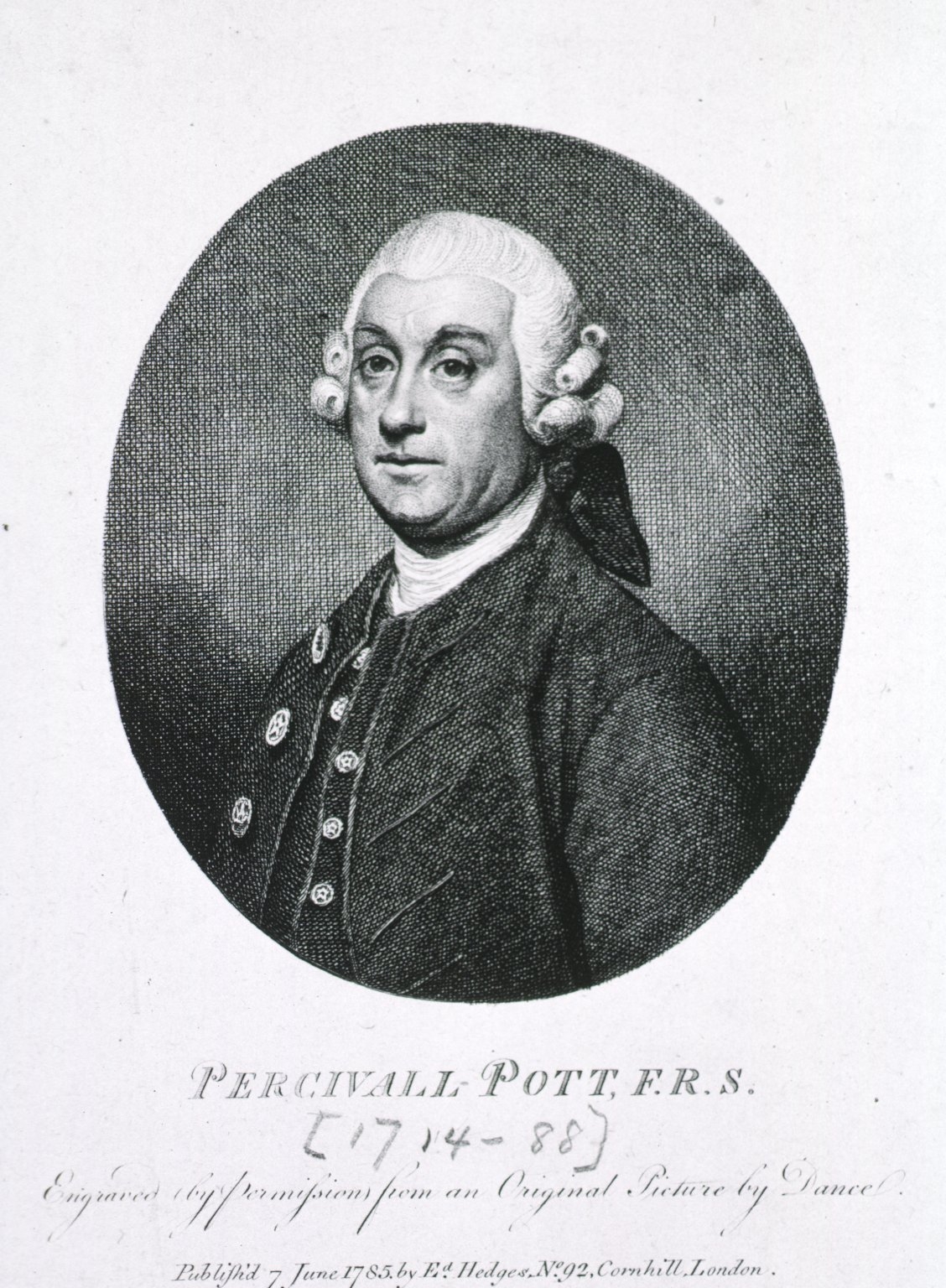
1760 POTT, Percivall (1714 – 1788)
Observations on the nature and consequences of wounds and contusions of the head, fractures of the skull, concussions of the brain, etc.
This book, which showed Pott’s extensive knowledge of surgical literature, systematized the treatment of head injuries. It shows what a variety of injuries of the head could be sustained even before the advent of the …
GMN 4850.5 · https://historyofmedicine.com/id/5590
1768 MORAND, Sauveur-François (1697 – 1773)
Opuscules de chirurgie. Pt. 1.
Records, p. 161, a successful operation for temporo-sphenoidal abscess, 1752. The patient, a monk, had otorrhoea followed by a mastoid abscess, which Morand opened.
GMN 4851 · https://historyofmedicine.com/id/5594
1781 VIGILIIS VON CREUTZENFELD, Stephan Hieronymus de (1750 – 1789)
Bibliotheca chirurgica. 2 vols.
Fulton (No. 6785) points out that this work contains the “most complete bibliographical study of the literature of head injury that had been brought together up to that time”. Digital facsimile from Google Books at th…
GMN 5000 · https://historyofmedicine.com/id/6549
1820 SWAN, Joseph (1791 – 1874)
A dissertation on the treatment of morbid local affections of nerves.
An early discussion of peripheral nerve injuries, tumors, and inflammation of nerves, including issues of pain and healing. Swan was among the first of the 19th-century surgeons to argue that divided nerves that are s…
GMN 7596 · https://historyofmedicine.com/id/9768
1823 DUDLEY, Benjamin Winslow (1785 – 1870)
Case reports: From injuries of the head.
Dudley was for many years the leading surgeon on the western frontier of the United States. This paper reports the first operations on the brain performed in the United States. Three of the five patients were relieved…
GMN 4851.1 · https://historyofmedicine.com/id/5599
1838 VALLEIX, François Louis Isidore (1807 – 1855)
Clinique des maladies des enfants nouveau-nes.
The first work on the diseases of newborns and the first work on child neurology and pediatric neurosurgery.
GMN 13150 · https://historyofmedicine.com/id/15409
1844 –1845 NOTT, Josiah Clark (1804 – 1873)
Exstirpation of the os coccygis for neuralgia.
GMN 4852 · https://historyofmedicine.com/id/5602
1850 DETMOLD, William Ludwig (1808 – 1894)
Abscess in the substance of the brain; the lateral ventricles opened by an operation.
Lateral ventricles of the brain first opened for the treatment of cerebral abscess.
GMN 4853 · https://historyofmedicine.com/id/5606
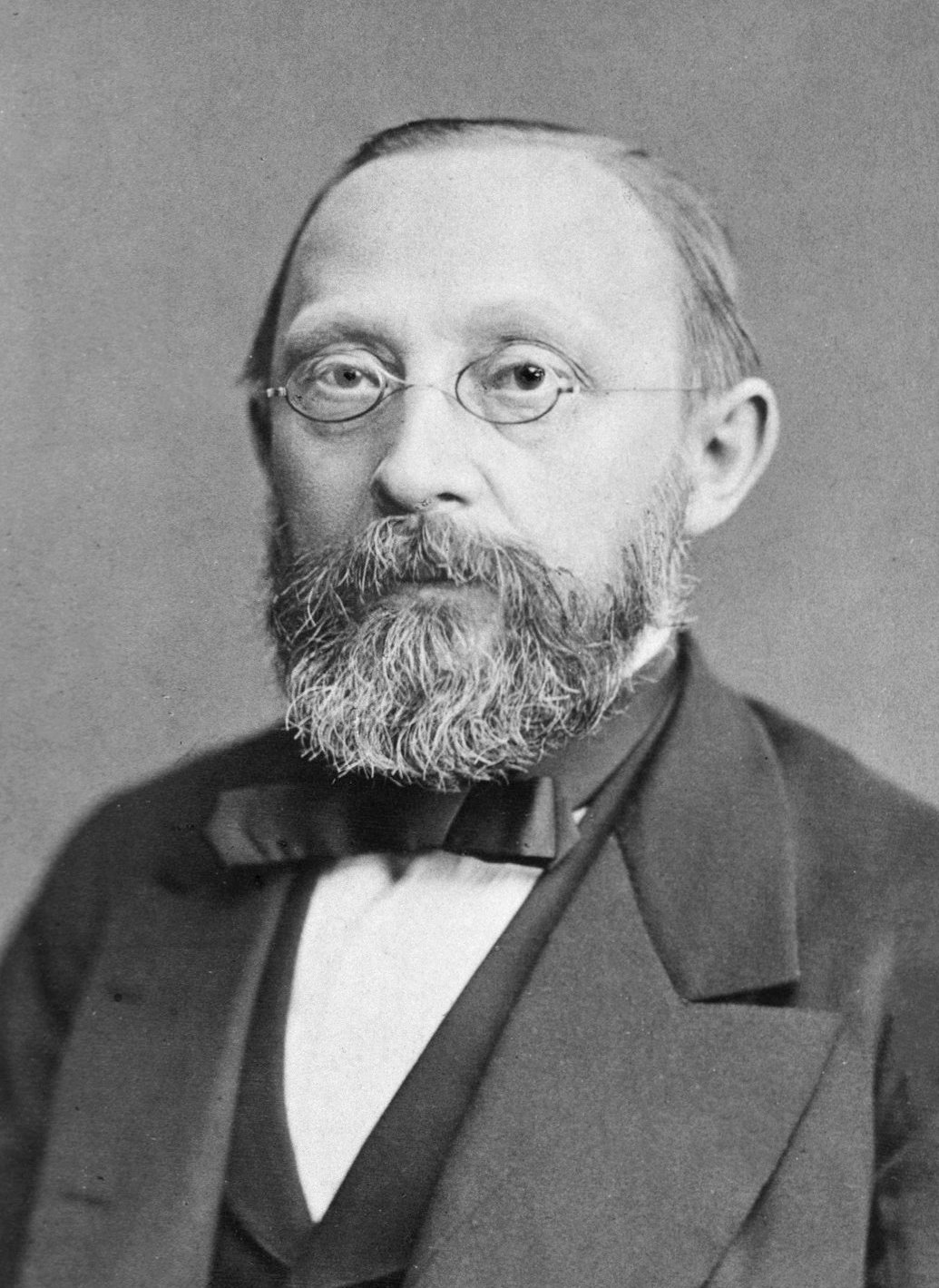
1857 VIRCHOW, Rudolf Ludwig Karl (1821 – 1902)
Untersuchungen uber die Entwickelung des Schädelgrundes im gesunden und krankhaften Zustande und über Einfluss derselben auf Schädelform, Gesichtsbildung und Gehirnbau.
In his Investigations on the development of the base of the skull in healthy and diseased conditions, and on the influence of the same upon skull form, facial structure and brain formation Virchow laid the foundation …
GMN 13248 · https://historyofmedicine.com/id/15513
1858 CARNOCHAN, John Murray (1817 – 1887)
Exsection of the trunk of the second branch of the fifth pair of nerves, beyond the ganglion of Meckel, for severe neuralgia of the face; with three cases.
First excision of the superior maxillary nerve for the treatment of trigeminal neuralgia.
GMN 4854 · https://historyofmedicine.com/id/5612
1867 BROCA, Pierre Paul (1824 – 1880)
Cas singulier de trépanation chez le Incas.
Broca attributed a defect in an ancient Peruvian skull to antemortem trepanation; prior to this paleopathologists and paleoanthropologists were unaware that the Incas practiced trepanation.
GMN 7704 · https://historyofmedicine.com/id/9876
1871 –1872 PANCOAST, Joseph (1805 – 1882)
New operation for the relief of persistent facial neuralgia.
Pancoast devised the operative procedure of sectioning the second and third branches of the fifth pair of nerves as they emerge from the base of the brain. Reported by F. Woodbury.
GMN 4855 · https://historyofmedicine.com/id/5618
1874 PRUNIÈRES, Pierre Marie Barthélémy (1828 – 1893)
Sur les crânes artificiellement perforés à l'époque des dolmens.
Prunières separated postmortem trepanations and rondelles from antemortem operations, and also described tuberculous lesions in Neolithic bones.
GMN 7705 · https://historyofmedicine.com/id/9877
1877 –1878 HIPPOCRATES, [Ἱπποκράτης; Hippocrates of Kos] (-460 – -370); PÉTREQUIN, Joseph Pierre Eléonord (1809 – 1876)
Chirurgie d’Hippocrate. 2 vols
A Greek-French edition with extensive notes and commentaries by J. E. Pétrequin, surgeon-in-chief of the Hôtel-Dieu of Lyon. Operations attributed to Hippocrates included trephination and paracentesis; his most import…
GMN 4850.1 · https://historyofmedicine.com/id/6814
1878 LUCAS-CHAMPIONNIÈRE, Just-Marie-Marcellin (1843 – 1913)
Etude historique et clinique sur la trépanation du crâne; la trépanation guidée par les localisations cérébrales.
Lucas-Chamionnière asserted that the operation was performed by ancient surgeons for both magical and therepeutic reasons, and noted that ancient surgeons prevented lethal hemorrhage from the sagittal sinus by avoidin…
GMN 7706 · https://historyofmedicine.com/id/9878
1879 MACEWEN, Sir William (1848 – 1924)
Tumour of the dura mater–convulsions–removal of tumour by trephining–recovery.
GMN 4856 · https://historyofmedicine.com/id/5622
1884 MEARS, James Ewing (1838 – 1919)
Study of the pathological changes occurring in trifacial neuralgia, with the report of a case in which three inches of the inferior dental nerve were excised.
Mears first suggested Gasserian ganglionectomy for trigeminal neuralgia.
GMN 4857 · https://historyofmedicine.com/id/5626
1885 BENNETT, Alexander Hughes (1848 – 1901); GODLEE, Sir Rickman John (1849 – 1925)
Case of cerebral tumour.
First instance of diagnosis, accurate clinical localization, and operative removal of a tumor of the brain, 25 November, 1884. The patient survived for one month. Preliminary report in Lancet, 1884, 2, 1090-91.
GMN 4858 · https://historyofmedicine.com/id/5632
1885 ROBERTS, John Bingham (1852 – 1924)
The field and limitation of the operative surgery of the human brain.
The first American monograph on surgery on the human brain, also published in 1885 the Transactions of the American Surgical Association. Roberts was "one of the few American surgeons to advocate an aggressive explora…
GMN 12075 · https://historyofmedicine.com/id/14284
1887 BERGMANN, Ernst von (1836 – 1907)
Die chirurgische Behandlung von Hirnkrankheiten.
Bergmann was the first in Germany to undertake an intensive study of the surgical aspects of brain diseases. From his experience as a military surgeon he learned that increased intracranial pressure was a consequence …
GMN 4859 · https://historyofmedicine.com/id/5635
1888 GOWERS, Sir William Richard (1845 – 1915); HORSLEY, Sir Victor Alexander Haden (1857 – 1916)
A case of tumour of the spinal cord. Removal; recovery.
Horsley was the founder of neurosurgery in England. The above paper records the first successful operation for the removal of an extramedullary tumor of the spinal cord.
GMN 4860 · https://historyofmedicine.com/id/5638
1889 KÜSTER, Ernst Georg Ferdinand von (1839 – 1930)
Ueber die Gründsätze der Behandlung von Eiterungen in starrwandigen Höhlen, mit besonderer Berücksichtigung des Empyems der Pleura.
Küster and von Bergmann developed the Operation of radical mastoidectomy.
GMN 3392 · https://historyofmedicine.com/id/5122
1889 ABBE, Robert (1851 – 1928)
A contribution to the surgery of the spine.
Posterior rhizotomy.
GMN 4860.1 · https://historyofmedicine.com/id/5640
1889 ALEXANDER, William (1844 – 1919)
The treatment of epilepsy.
Alexander was the first to attempt the treatment of epilepsy by surgical means. He removed the superior cervical sympathetic ganglia. Digital facsimile from the Internet Archive at this link.
GMN 4861 · https://historyofmedicine.com/id/5643
1889 BENNETT, Sir William Henry (1852 – 1931)
A case in which acute spasmodic pain in the left lower extremity was completely relieved by sub-dural division of the posterior roots of certain spinal nerves, all other treatment having proved useless. Death from sudden collapse and cerebral haemorrhage on the twelfth day after the operation, at the commencement of apparent convalescence.
Posterior rhizotomy.
GMN 4861.1 · https://historyofmedicine.com/id/5649
1889 WAGNER, Wilhelm (1848 – 1900)
Die temporäre Resektion der Schädeldaches an Stelle der Trepanation.
Osteoplastic flap operation. Wagner’s method of opening the skull made a large area of the brain more easily accessible than by trephining. Translation in J. Neurosurg., 1962, 19, 1099.
GMN 4862 · https://historyofmedicine.com/id/5653
1890 ROSE, William (1847 – 1910)
Removal of the gasserian ganglion for severe neuralgia.
Gasserian ganglionectomy for trigeminal neuralgia; the patient lived for at least two years.
GMN 4863 · https://historyofmedicine.com/id/5657
1891 BURCKHARDT, Johann Gottlieb (1836 – 1907)
Ueber Rindenexcisionen, als Beitrag zur operativen Therapie der Psychosen.
Burckhardt, physician at a Swiss mental hospital, performed frontal lobotomy on four patients in 1890, with good results in some cases. Digital facsimile from Universitätsbibliothek Bern at this link.
GMN 4864 · https://historyofmedicine.com/id/5661
1891 HORSLEY, Sir Victor Alexander Haden (1857 – 1916); ET AL
Remarks on the various surgical procedures devised for the relief or cure of trigeminal neuralgia (tic douloureux).
Horsley, with J. Taylor and W. S. Coleman, devised an operation for treatment of trigeminal neuralgia in which the Gasserian ganglion was removed by a temporal approach.
GMN 4865 · https://historyofmedicine.com/id/5667
1891 KEEN, William Williams (1837 – 1932)
Linear craniotomy (miscalled craniectomy) for microcephalus.
Keen was a pioneer in linear craniotomy and one of the first successfully to operate for meningioma. He was Professor of Surgery at Jefferson Medical College.
GMN 4866 · https://historyofmedicine.com/id/5670
1891 KEEN, William Williams (1837 – 1932)
A new operation for spasmodic wry neck, namely, division or exsection of the nerves supplying the posterior rotator muscles of the head.
Spastic torticollis treated by division of spinal accessory nerve and posterior roots of first, second, and third spinal nerves.
GMN 4867 · https://historyofmedicine.com/id/5675
1891 WYNTER, Walter Essex (1860 – 1945)
Four cases of tubercular meningitis in which paracentesis of the theca vertebralis was performed for the relief of fluid pressure.
Lumbar puncture. Reprinted in Middx. Hosp. J., 1951, 51, 147.
GMN 4868 · https://historyofmedicine.com/id/5681
1891 QUINCKE, Heinrich Irenaeus (1842 – 1922)
Die Lumbalpunction des Hydrocephalus.
Quincke popularized lumbar puncture, which he had introduced independently of Wynter and others. He used it both for diagnostic and therapeutic purposes. He first presented his method at the German Congress of Interna…
GMN 4869 · https://historyofmedicine.com/id/5687
1891 ALTUKHOV, Nikolai
Entsefalometriya mozga cheloveka v otnoshenii k polu, vozrastu i cherepnomu ukazatelyu [in Cyrillic].
In 1889, nearly 20 years before Horsley and Clarke published their paper on the use of stereotaxy to examine the brain, Dmitrii Zernov, a professor of anatomy at Moscow University, invented the first prototype of a st…
GMN 7243 · https://historyofmedicine.com/id/9412
1892 HARTLEY, Frank (1856 – 1913)
Intracranial neurectomy of the second and third divisions of the fifth nerve.
Hartley originated the operation of intracranial neurectomy for trigeminal neuralgia.
GMN 4870 · https://historyofmedicine.com/id/5705
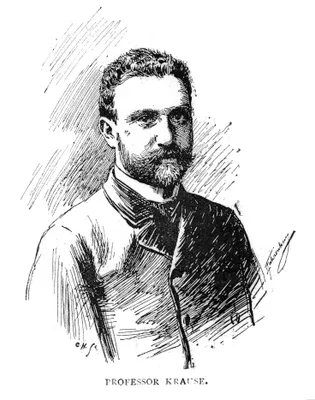
1892 KRAUSE, Fedor (1856 – 1937)
Resection des Trigeminus innerhalb der Schädelhöhle.
Hartley–Krause operation for relief of trigeminal neuralgia (see also No. 4870).
GMN 4871 · https://historyofmedicine.com/id/5710
1893 MACEWEN, Sir William (1848 – 1924)
Atlas of head sections. Fifty-three engraved copperplates of frozen sections of the head, and fifty-three key plates with descriptive texts.
Intended to supplement and illustrate Macewen’s neurosurgical textbook published the same year (No. 4872). Includes coronal, sagittal and horizontal sections with commentary on each.
GMN 431 · https://historyofmedicine.com/id/1035
1893 MACEWEN, Sir William (1848 – 1924)
Pyogenic infective diseases of the brain and spinal cord.
Macewen’s greatest work was in connection with the surgery of the brain. In the above book he included extensive case reports of 65 patients under his care, with details of operative procedures. A biography of Macewen…
GMN 4872 · https://historyofmedicine.com/id/5713
1893 STARR, Moses Allen (1854 – 1932)
Brain surgery.
The first American book on neurosurgery, published the same year as Macewen's pioneering neurosurgical classic (No. 4872). Digital facsimile from the Medical Heritage Library, Internet Archive at this link.
GMN 9637 · https://historyofmedicine.com/id/11824
1894 –1895 CHIPAULT, Antoine Maxime Jules Nicolas (1866 – 1920)
Chirurgie opératoire du système nerveux. 2 vols.
Among the innovations that Chipault made in neurosurgery were the removal of the underlyling dura in meningiomas, a new laminectomy technique, development of small clamps for closing a scalp incision, the treatment of…
GMN 11390 · https://historyofmedicine.com/id/13589

![HIPPOCRATES, [Ἱπποκράτης; Hippocrates of Kos] (-460 – -370)](/media/portraits/50)