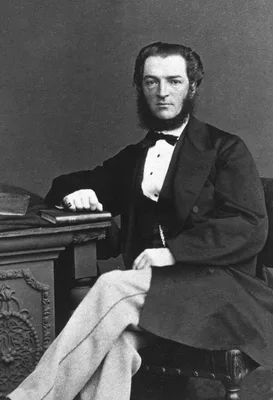
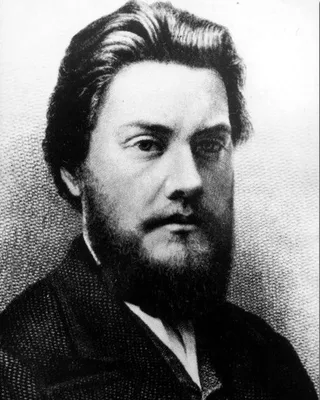
1490 AVENZOAR [IBN ZUHR (ARABIC: ابن زهر ] (1092 – 1162); AVERROËS [IBN RUSHD (ARABIC: ابن رشد), FULL NAME ʾABŪ L-WALĪD MUḤAMMAD IBN ʾAḤMAD IBN RUŠD] (1126 – 1198); PARAVICIUS, [Paravicinus, Patavinus] (1250 – ); JACOBUS HEBRAEUS (1250 – )
Liber Teisir, sive rectificatio medicationis et regiminis. Antidotarium. Translated from Arabic into Hebrew by Jacobus Hebraeus; into Latin by Paravicius. Add: Averroes: Colliget.
This is a Latin translation from a Hebrew version dating from 1280. Avenzoar, the greatest Muslim physician of the Western Caliphate, described the itch-mite, Sarcoptes scabiei, serous pericarditis, mediastinal absces…
GMN 47 · https://historyofmedicine.com/id/8768
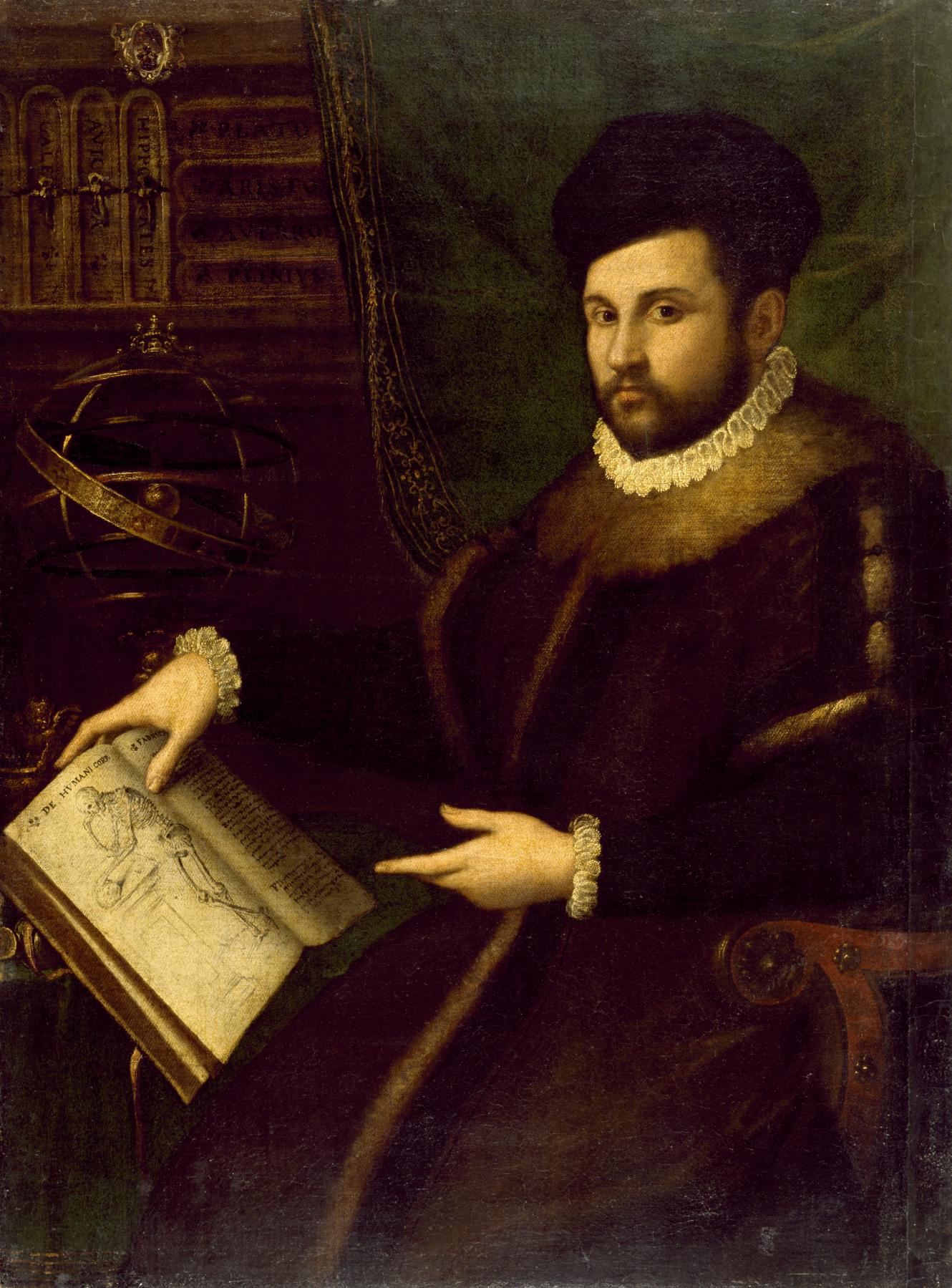
1570 ALEXANDER OF TRALLES [ἈΛΈΞΑΝΔΡΟΣ Ὁ ΤΡΑΛΛΙΑΝΌΣ; ALEXANDER TRALLIANUS] (525 – 605); MERCURIALE, Girolamo (1530 – 1606)
Hieronymi Mercurialis Variarum lectionum libri quatuor. In quibus complurium, maximeq́ue medicinae scriptorum infinita paenè loca vel corrupta restituuntur, vel obscura declarantur. Alexandri Tralliani De lumbricis epistola, ejusdem Mercurialis opera, & diligentia Graecè, & Latinè nunc primùm edita ...
Includes the first printed edition of the Greek text and Latin translation by Mercuriale of Alexander's De vermis epistola. Alexander's original description of worms and vermifuges make him the first parasitologist. D…
GMN 35 · https://historyofmedicine.com/id/8758
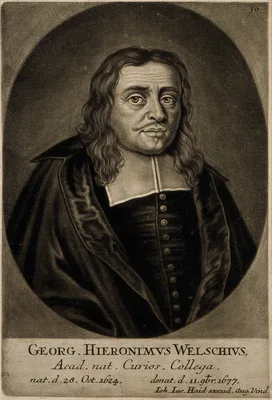
1674 WELSCH, Georg Hieronymous (Velschius) (1624 – 1677)
Exercitatio de vena Medinensi, ad mentem Ebn Sinae [Ibn Sina] sive de dracunaculis veterum. Specimen exhibens novae versionis ex Arabico, cum commentario uberiori. Cui accedit altera, de vermiculis capillaribus infantium.
An exhaustive survey of dracontiasis, or guinea worm disease, based on the Arabic writings of Avicenna. Digital facsimile from Google Books at this link.
GMN 5336.1 · https://historyofmedicine.com/id/6702
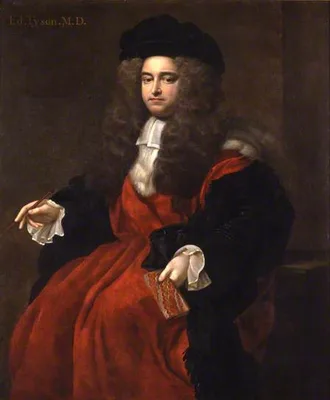
1683 TYSON, Edward (1650 – 1708)
Lumbricus teres, or some anatomical observations on the round worm bred in human bodies.
Tyson gave one of the first descriptions of the anatomy of Ascaris lumbricoides.
GMN 2448 · https://historyofmedicine.com/id/2951
1684 REDI, Francesco (1626 – 1697)
Osservazioni … intomo agli animali viventi che si trovano negli animali viventi.
Redi was among the first of the parasitologists. He demonstrated the reproductive organs of Ascaris lumbricoides and also ascaris eggs. The results of his experiments appear in the above work, which also records his s…
GMN 2448.1 · https://historyofmedicine.com/id/2955
1685 COBER, Tobias (1625 – )
Observationum medicarum Castrensium Hungaricarum.
Pp. 49-51: Cober, a German physician, reported the relationship between typhus and pediculosis.
GMN 5373 · https://historyofmedicine.com/id/7020
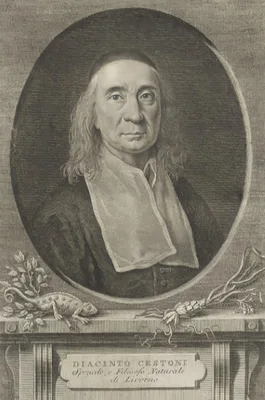
1687 BONOMO, Giovanni Cosimo (1663 – 1696); CESTONI, Giacinto (Diacinto) (1637 – 1718)
Osservazioni intorno a’ pellicelli del corpo umano.
First clinical and experimental proof of infection by a microparasite. Bonomo observed Sarcoptes scabiei, the scabies mite. This gave researchers grounds to think in terms of objective, exogenous pathogenic agents as …
GMN 2529.1 · https://historyofmedicine.com/id/5177
1700 ANDRY, Nicolas (1658 – 1742)
De la géneration des vers dans le corps de l’homme.
The first medical parasitology text– an exhaustive study of the parasites of man, the diseases associated with them and their treatment. Andry’s views were often ahead of his time. Unlike most of his contemporaries, h…
GMN 2448.2 · https://historyofmedicine.com/id/2958
1710 VALLISNERI, Antonio [VALLISNIERI] (1661 – 1730)
Considerazioni, e d'esperienze intorno alla generazione de' vermi ordinari del corpo umano fatte da Antonio Vallisnieri, e da lui scritte al Reverendissimo Padre D. Antonio Borromeo.
In this illustrated work on parasitic worms in the human body Vallisnieri proved that these worms were not due to spontaneous generation, but grew from eggs. Digital facsimile from Google Books at this link.
GMN 12048 · https://historyofmedicine.com/id/14256
1762 REDI, Francesco (1626 – 1697)
Opere. 7 vols.
Redi was a leading physician in Italy. He is best remembered for his experiments discrediting the theory of spontaneous generation and for his pioneer work in the field of parasitology (see No. 2448.1); see also the a…
GMN 65 · https://historyofmedicine.com/id/1177
1770 MONGIN
Sur un ver trouvé sous la conjunctive, à Maribou, isle Saint-Domingue.
First description of the worm Loa loa. Mongin was a French surgeon working in the West Indies. English translation in Kean (No. 2268.1).
GMN 5336.2 · https://historyofmedicine.com/id/6706
1795 CHISHOLM, Colin (1755 – 1825)
An essay on the malignant pestilential fever introduced into the West Indian Islands from Boullam, on the coast of Guinea, as it appeared in 1793 and 1794.
Chisholm, "Surgeon to his Majesty's Ordnance in Grenada," was apparently the first to observe the mode of transmission of the Guinea worm, Dracunculus medinensis. Chishom was also one of the first to recognize that th…
GMN 5336.3 · https://historyofmedicine.com/id/6710
1798 HORN, George
An entire new treatise on leeches, wherein the nature, properties, and use of that most singular and valuable reptile, is most clearly set forth.
Digital facsimiel from WellcomeLibrary.org at this link.
GMN 11796 · https://historyofmedicine.com/id/13998
1808 –1810 RUDOLPHI, Karl Asmund (1771 – 1832)
Entozoorum, sive verminum intestinalium, historia naturalis. 2 vols.
A system of helminthology. Rudolphi gave the name “echinococcus” to the common vesicular hydatid, describing three species. Digital facsimile from Biodiversity Heritage Library at this link .
GMN 2449 · https://historyofmedicine.com/id/2961
1816 JOHNSON, James Rawlins ( – 1840)
A treatise on the medicinal leech; including its medical and natural history, with a description of its anatomical structure; also, remarks upon the diseases, preservation, and management of leeches.
Digital facsimile from the Hathi Trust at this link.
GMN 11799 · https://historyofmedicine.com/id/14001
1819 RUDOLPHI, Karl Asmund (1771 – 1832)
Entozoorum synopsis cui accedunt mantissa duplex et indices locupletissimi.
In this work Rudolphi detailed the life cycle of nematode parasites of mankind, such as the parasitic roundworm Ascaris lumbricoides. Digital facsimile from Biodiversity Heritage Library at this link.
GMN 12115 · https://historyofmedicine.com/id/14324
1821 TIEDEMANN, Friedrich (1781 – 1861)
Description of the calcified cysts of trichinosis in human muscle. (A brief notice with no title).
GMN 5336.4 · https://historyofmedicine.com/id/8610
1822 GOMES, Bernardino António (1769 – 1823)
Memoria sobre a virtude toenifuga da romeira, com observações zoologicas e zoonomicas relativas á toenea, e com huma estampa.
On the use of a root medicine to treat tapeworms, roundworms and similar parasites. The author refers to cases from Portuguese Africa, India and Brazil, and gives clinical observations based on his own case studies, s…
GMN 9071 · https://historyofmedicine.com/id/11250
1825 DERHEIM, Jean Lambert (1798 – )
Histoire naturelle et médicale des sangsues, contenant la description anatomique des organes de la sangsue officinale, avec des considérations physiologiques sur ces organes; des notions très-étendues sur la conservation domestique de ce ver, sa reproduction, ses maladies, son application, etc.
Digital facsimile from Biodiversity Heritage Library at this link.
GMN 11800 · https://historyofmedicine.com/id/14002
1834 RASPAIL, François-Vincent (1794 – 1878)
Mémoire comparatif sur l'histoire naturelle de l'insecte de la gale.
Raspail first described and illustrated the Sarcoptes scabei, diffrentiating it from the horse's sarcopt and the cheese moth that Galès and Patrix, followed by Alibert, had confused with the scabies parasite. Raspail …
GMN 13415 · https://historyofmedicine.com/id/15687
1835 –1836 BASSI, Agostino (1773 – 1856)
Del mal del segno calcinaccio o moscardino malattia che affligge i bachi da seta e sul modo di liberarne le bigattaje anche le piu infestate. 2 vols.
Bassi preceded Louis Pasteur in the discovery that microorganisms can be the cause of disease (the germ theory of disease). He discovered that the muscardine disease of silkworms--a disease that was destroying the sil…
GMN 2532 · https://historyofmedicine.com/id/3515
1835 RENUCCI, Simon François (1794 – 1874)
Thèse inaugurale sur la découverte de l’insecte qui produit la contagion de la gale, du prurigo et du phlyzacia.
Demonstration of the human itch-mite, Sarcoptes scabiei. It was due to Renucci that the Sarcoptes was recognized as the one cause of scabies and its parasitic nature finally accepted.
GMN 4027 · https://historyofmedicine.com/id/5301
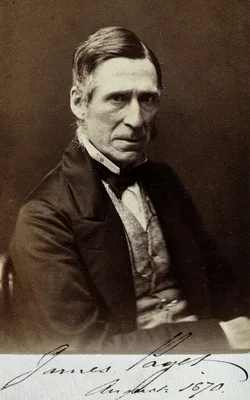
1835 OWEN, Sir Richard (1804 – 1892); PAGET, Sir James (1814 – 1899)
Description of a microscopic entozoon infesting the muscles of the human body.
While a first-year student at St. Bartholomew’s Hospital, James Paget discovered trichina in muscle during dissection. Richard Owen, his teacher, named it Trichina spiralis and published an account, barely mentioning …
GMN 5337 · https://historyofmedicine.com/id/6724
1839 SCHÖNLEIN, Johann Lucas (1793 – 1864)
Zur Pathogenie der Impetigines.
The discovery of a fungus as the cause of favus (Achorion schönleinii). Schönlein communicated this important discovery in a letter of less than 200 words and one illustration. It represents the first conspicuous step…
GMN 4029 · https://historyofmedicine.com/id/5312
1841 GRUBY, David (1810 – 1898)
Mémoire sur une végétation qui constitue la vraie teigne.
Independently of Schönlein (No. 4029) Gruby discovered the achorion of favus, describing it definitely as the cause of the disease, a point about which Schönlein was in doubt.
GMN 4030 · https://historyofmedicine.com/id/5317
1841 VALENTIN, Gabriel Gustav (1810 – 1883)
Ueber ein Entozoon im Blute von Salmo fario.
Valentin was the first to discover a trypanosome; this was in a salmon. English translation in Kean (No. 2268.1).
GMN 5267.1 · https://historyofmedicine.com/id/8563
1842 BOECK, Carl Wilhelm (1808 – 1875)
Om den spedalske sygdom. Elephantiasis graecorum.
Boeck, eminent Norwegian dermatologist and syphilologist, was the first to describe Norwegian itch, scabies crustosa (“Boeck’s scabies”).
GMN 4033 · https://historyofmedicine.com/id/5327
1843 DUBINI, Angelo (1813 – 1902)
Nuovo verme intestinale umano (Agchylostoma duodenale), constituente un sesto genere dei nematoidei proprii dell’uomo.
Dubini first found the hookworm of ankylostomiasis in 1838. His account of 1843, describing it, named it Agchylostoma duodenale, a name etymologically erroneous. Partial English translation in Kean (No. 2268.1).
GMN 5353 · https://historyofmedicine.com/id/6935
1843 GRUBY, David (1810 – 1898)
Recherches et observations sur une nouvelle espèce d’hématozoaire, Trypanosoma sanguinis.
Gruby discovered trypanosomes in the frog. He first suggested the name “trypanosome” to describe the parasite.
GMN 5268 · https://historyofmedicine.com/id/8569
1845 BUDD, George (1808 – 1882)
On diseases of the liver.
Budd was Professor of Medicine at King’s College, London. Section III of the above book includes a description of that form of cirrhosis to which the name “Budd’s disease” has been applied. In the second edition, 1852…
GMN 3619 · https://historyofmedicine.com/id/4559
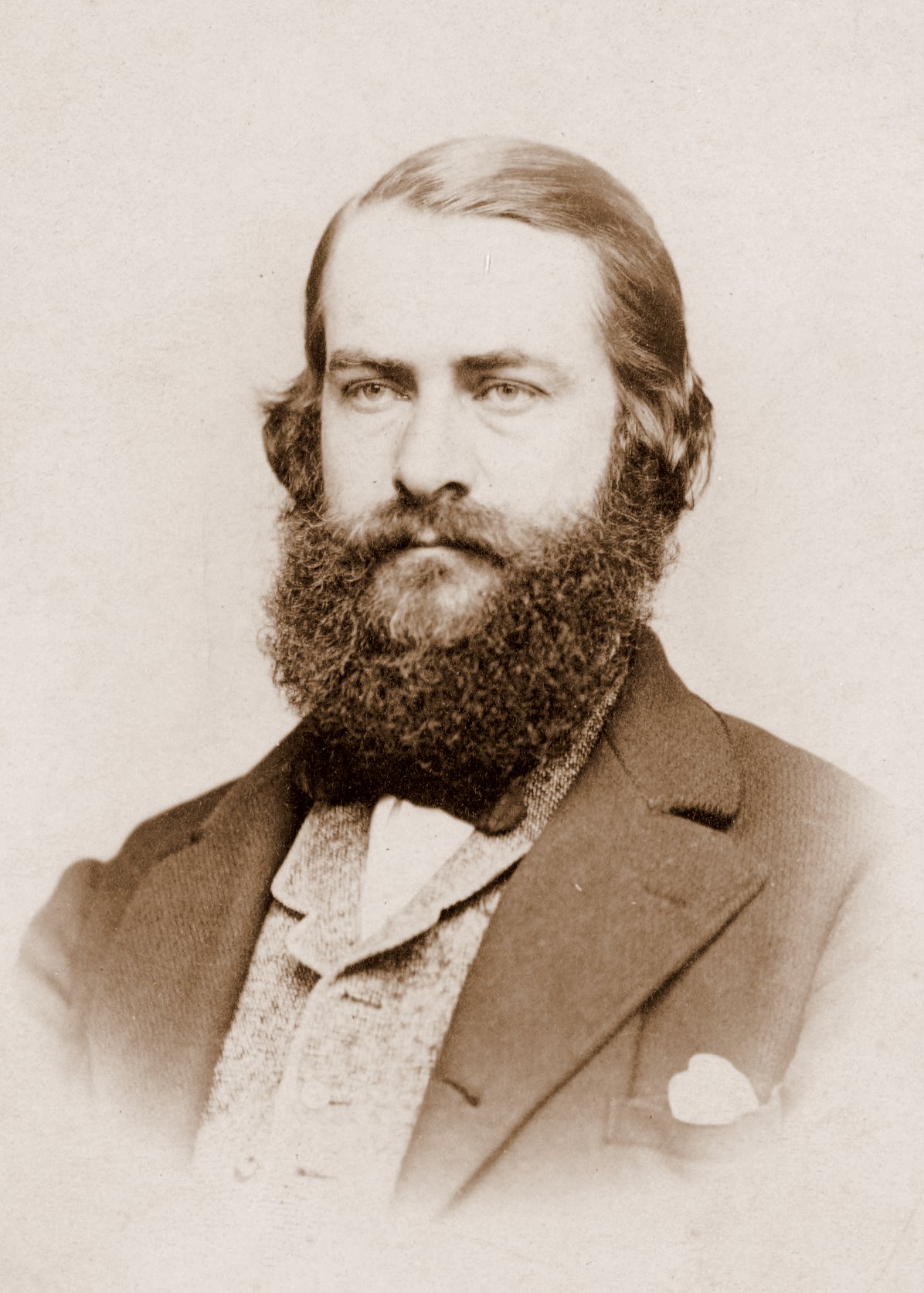
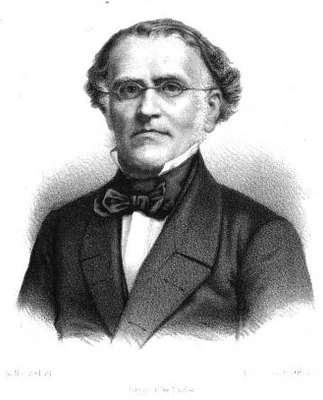
1845 SIEBOLD, Carl Theodor Ernst von [Karl] (1804 – 1885)
Bericht über die Leistungen im Gebiete der Helminthologie während des Jahres 1843 und 1844.
Siebold classified the hookworm as belonging to the Strongyloidae (pp. 220-21).
GMN 5354 · https://historyofmedicine.com/id/6939
1846 LEIDY, Joseph (1823 – 1891)
Entozoon in the superficial part of the extensor muscles of the thigh of the hog. Abstract
First description of trichinosis in the pig.
GMN 5338 · https://historyofmedicine.com/id/8611
1848 SIMON, Gustav (1824 – 1876)
Die Hautkrankheiten durch anatomische Untersuchungen erläutert.
The first textbook of dermatopathology. "Simon dated the preface of his book April 1st, 1848 and wrote (p. vi and vii) that much has been achieved by meticulous clinical description of diseases of the skin but now att…
GMN 7314 · https://historyofmedicine.com/id/9484
1849 GROS, G
Fragments d’helminthologie et de physiologie microscopique.
First observations of entozoic amoebae.
GMN 5183.1 · https://historyofmedicine.com/id/6314
1852 BILHARZ, Theodor Maximilian (1825 – 1862)
Ein Beitrag zur Helminthographia humana aus brieflichen Mittheilungen des Dr. Bilharz in Cairo, nebst Bemerkungen von C. T. v. Siebold.
Discovery, in 1851, of Schistosoma haematobium, the parasite of bilharziasis. Bilharz was Professor of Zoology at Cairo. English translation in Rev. infect. Dis., 1984, 4, 727-32, and in Kean (No. 2268.1).
GMN 5339 · https://historyofmedicine.com/id/8612
1853 KÜCHENMEISTER, Gottlob Friedrich Heinrich (1821 – 1890)
Ueber Cestoden im allgemeinen und die des Menschen insbesondere, hauptsächlich mit Berücksichtigung ihrer Entwickelungsgeschichte, geographischen Verbreitung, Prophylaxe und Abtreibung; für Freunde der Naturwissenschaften, Aerzte, Medicinalpolizei-Beamte, Staats- und Privat-Oekonomen.
Kuchenmeister conducted research on tapeworms, trichinosis, and other parasites and wrote about it several works. In 1852, his theory that bladder-worms are juvenile tapeworms gained the attention of the medical profe…
GMN 2450 · https://historyofmedicine.com/id/2965
1855 KÜCHENMEISTER, Gottlob Friedrich Heinrich (1821 – 1890)
Die in und an dem Körper des lebenden Menschen vorkommenden Parasiten. Ein Lehr- und Handbuch der Diagnose und Behandlung der thierischen und pflanzlichen Parasiten des Menschen. Zum Gebrauche für Studirende der Medicin und der Naturwissenschaften, für Lehrer der Zoologie, Botanik, Physiologie, pathologischen Anatomie und für praktische Ärzte. 2 vols.
English translation of 2nd ed. by Edwin Ray Lankester as On animal and vegetable parasites of the human body: A manual of their natural history, diagnosis, and treatment. 2 vols. London: Sydenham Society, 1857. Digita…
GMN 5341 · https://historyofmedicine.com/id/6749
1856 JIMÉNEZ, Miguel Francisco (1813 – 1876)
Clinica médica. Abcesos del higado.
Jimenez gave a classic account of liver abscess in amoebiasis.
GMN 5183.2 · https://historyofmedicine.com/id/6317
1857 MALMSTEN, Pehr Henrik (1811 – 1883)
Infusorier, sasom intestinaldjur hos menniskan.
Discovery of Balantidium coli, the first parasitic protozoon to be discovered and recognized as such. German translation in Virchows Arch. path. Anat., 1857, 12, 302-09. English translation in Kean et al. (No. 2268.1).
GMN 3455 · https://historyofmedicine.com/id/5581
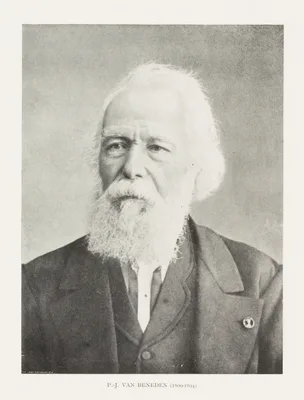
1858 BENEDEN, Pierre-Joseph van (1809 – 1894)
Mémoire sur les vers intestinaux.
Beneden's treatise on the development, transformation, and life-histories of parasitic worms won the Grand prix des sciences physiques of the Institut de France. It was published in the "International Scientific Serie…
GMN 10278 · https://historyofmedicine.com/id/12469
1859 BENEDEN, Pierre-Joseph van (1809 – 1894); GERVAIS, François Louis Paul (1816 – 1879)
Zoologie médicale exposé méthodique du régne animal basé sur l'anatomie, l'embryologie et la paléontologie comprenant la description des espèces employées en médicine de celles qui sont venimuses et de celles qui sont parasites de l'homme et des animaux. 2 vols.
Digital facsimile from Biodiversity Heritage Library at this link.
GMN 13815 · https://historyofmedicine.com/id/16104
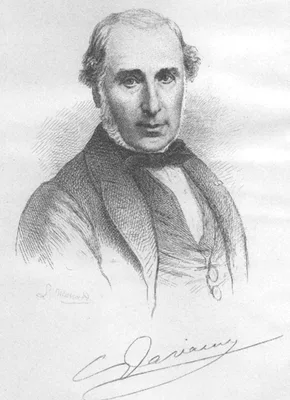
1860 DAVAINE, Casimir Joseph (1812 – 1882)
Traité des entozoaires et des maladies vermineuses.
GMN 2451 · https://historyofmedicine.com/id/2968
1860 ZENKER, Friedrich Albert von (1825 – 1898)
Ueber die Trichinen-Krankheit des Menschen.
The intestinal and muscular forms of trichinosis were first noted by Zenker, who established their connection with the disease. English translation in Kean (No. 2268.1).
GMN 5342 · https://historyofmedicine.com/id/6753
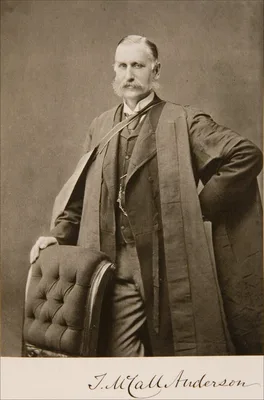
1861 ANDERSON, Sir Thomas McCall (1836 – 1908)
On the parasitic affections of the skin.
Anderson was Professor of Clinical Medicine at Glasgow. Digital facsimile of the second edition (1868) from the Internet Archive at this link.
GMN 3993 · https://historyofmedicine.com/id/5044
1862 –1876 LEUCKART, Karl Georg Friedrich Rudolf (1823 – 1898)
Die menschlichen Parasiten und die von ihnen herrührenden Krankheiten. 2 vols.
Includes the first complete and accurate account of the life history and morphology of Taenia echinococcus. Leuckart proved the relationship between hydatid cysts and minute tape-worms in dogs. English translation, Ed…
GMN 2453 · https://historyofmedicine.com/id/2973
1863 BASTIAN, Henry Charlton (1837 – 1915)
On the structure and nature of the Dracunculus or Guinea worm.
First detailed description.
GMN 5344.2 · https://historyofmedicine.com/id/6768
1863 DEMARQUAY, Jean Nicolas (1811 – 1875)
Note sur une tumeur des bourses contenant un liquide laiteux (galactocèle de Vidal) et renfermant de petits êtres vermiformes que l’on peut considérer comme les helminthes hèmatoïdes à l’étatd’embryon.
Description of the embryonic stage of Wuchereria bancrofti in hydrocele fluid.
GMN 5344.3 · https://historyofmedicine.com/id/6770
1864 –1869 COBBOLD, Thomas Spencer (1828 – 1886)
Entozoa. 2 pts.
Cobbold was the most distinguished helminthologist of his time. He named Filaria bancrofti, Bilharzia haematobia, and several other parasites. He was a friend of Manson, several of whose papers he communicated to the …
GMN 2452 · https://historyofmedicine.com/id/2971
1868 WUCHERER, Otto Eduard Heinrich (1820 – 1873)
Noticiar preliminar sobre vermes de uma especie ainda nao descripta, encontrados na urina de doentes de hematuria intertropical no Brazil.
In 1866 Wucherer saw the embryo form of the filaria worm. Later the name Wuchereria bancrofti was applied to it. English translation in Kean (No. 2268.1).
GMN 5344.6 · https://historyofmedicine.com/id/6781
1869 –1870 FEDCHENKO, Alexei Pavlovich (Aleksei FEDTSCHENKO) (1844 – 1873)
On the structure and reproduction of Filaria medinensis L.
Fedchenko, a Russian naturalist and explorer of central Asia, elucidated the life cycle of Dracunculus medinensis, the parasite of dracunculiasis. He discovered its means of transmission via copepod intermediate hosts…
GMN 5344.7 · https://historyofmedicine.com/id/8616

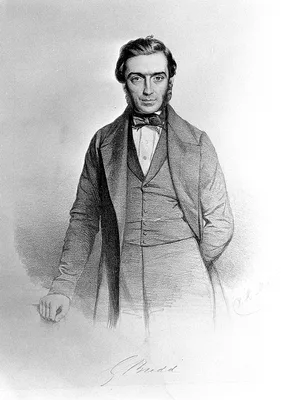
![SIEBOLD, Carl Theodor Ernst von [Karl] (1804 – 1885)](/media/portraits/231)