1480 BERNARD DE GORDON, (Bernardus de Gordonio) (1250 – 1330)
Practica, seu Lilium medicinae.
Includes descriptions of plague, tuberculosis, scabies, epilepsy, anthrax, and leprosy. ISTC No. ib00447000.
GMN 8369 · https://historyofmedicine.com/id/10546
1512 NEMESIUS (ΝΕΜΈΣΙΟΣ), Bishop of Emesa (350 – )
Divini Gregorii Nyssae episcopi qui fuit frater Basilii Magni libri octo. I. De homine. II. De anima. III. De elementis. IIII. De viribus animae. V. De voltario etinuoltario. VI. De fato. VII. De libero arbitrio. VIII. De prouidentia.
Nemesius’ De natura hominis, a physiological and psychological study of man, was highly esteemed during the Middle Ages. Nemesius, who wrote in the 4th century CE, was one of the first to propose that mental processes…
GMN 571 · https://historyofmedicine.com/id/339
1518 BERENGARIO DA CARPI, Giacomo (1460 – 1530)
Tractatus de fractura calve sive cranei.
The first separate treatise on head wounds and their surgical treatment. Berengario described several types of skull fractures and grouped the resulting lesions according to their symptoms, citing the relation between…
GMN 4850.2 · https://historyofmedicine.com/id/5578
1527 MASSA, Niccoló (1489 – 1569)
Liber de morbo gallico.
Includes a description of the neurological manifestations of syphilis. Though this work bears the date 1507, Peter Krivatsy, provided evidence that this edition was printed in 1527. See Krivatsy, "Nicola Massa's Liber…
GMN 2365 · https://historyofmedicine.com/id/3200
1529 CAELIUS AURELIANUS (500 – ); SORANUS OF EPHESUS (ΣΩΡΑΝΌΣ) (100 – 150); ORIBASIUS (ὈΡΕΙΒΆΣΙΟΣ), [Oreibasius] (320 – 403); SICARD, Johannes [Sichardt;Sichardus] (1499 – 1552)
Caelii Aureliani Siccensis Tardarum passionum libri V. D. Oribasii Sardi Iuliani Caesaris archiatri Euporiston lib: III. Medicinae comperi: lib: 1. Curationum lib: 1. Trochiscoru confect: lib: 1.
From a clinical point of view, the two works of Caelius Aurelianus, which were translated into Latin from Greek originals by Soranus of Ephesus that were later lost, represent the high-point of Graeco-Roman medical ac…
GMN 1959.1 · https://historyofmedicine.com/id/6052
1536 GALEN, [Κλαύδιος Γαληνός; Galen of Pergamon] (129 – 216); LAUACHIO, Nicolao
De palpitationes, tremore, rigore, convulsione. Intreprete Nicolao Lauachio, medico Florentino.
First separately published printed edition of Galen's writings on neuropathology. Digital facsimile from Google Books at this link.
GMN 11748 · https://historyofmedicine.com/id/13948
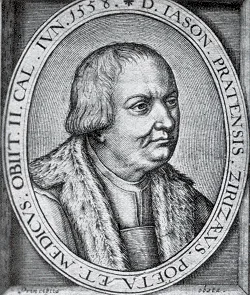
1549 PRATENSIS, Jason (1486 – 1558)
De cerebri morbis…
The first book devoted entirely to brain disorders, including tremor, tetanus, vertigo, epilepsy and hemicrania.
GMN 4511.02 · https://historyofmedicine.com/id/8896
1567 PARACELSUS, [Philippus Aureolus Theophrastus Bombastus von Hohenheim] (1493 – 1541)
Von den Kranckheyten so die vernunfft berauben als da sein S. Veyts Thantz…
In this work on the “diseases that deprive man of his reason” Paracelsus anticipated the descriptive method in psychiatry, giving a purely medical account of the clinical manifestations of epilepsy, mania, and hysteri…
GMN 4916.1 · https://historyofmedicine.com/id/6060
1614 PLATER, Felix [PLATTER] (1536 – 1614)
Observationum in hominis affectibus plerisque, corpori & animo, functionum laesione, dolore, aliave molestia & vitio incommodantibus, libri tres.
First known report of a case of death from hypertrophy of the thymus, in an infant, is reported on p. 172; it is reproduced on p. 239 of J. Ruhräh’s Pediatrics of the past, New York, 1925. Platter first described flex…
GMN 3789 · https://historyofmedicine.com/id/4706
1632 SEVERINO, Marco Aurelio [SEVERINUS] (1580 – 1656)
De recondita abscessuum natura.
The first textbook of surgical pathology. It treats of all kinds of swelling under the term “abscess” and describes neoplasms of the genital organs and sarcoma of bones. Tumors of the breast are classified into four g…
GMN 2273 · https://historyofmedicine.com/id/2841
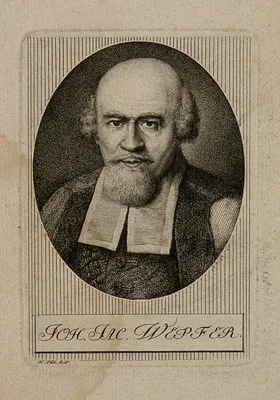
1658 WEPFER, Johann Jacob (1620 – 1695)
Observationes anatomicae, ex cadaveribus eorum, quos sustulit apoplexia.
Wepfer showed apoplexy to be a result of hemorrhage into the brain. He described four cases, with clinical and post mortem findings. He preceded Willis (No. 1378) in describing the “circle of Willis”. Partial English …
GMN 2703 · https://historyofmedicine.com/id/359
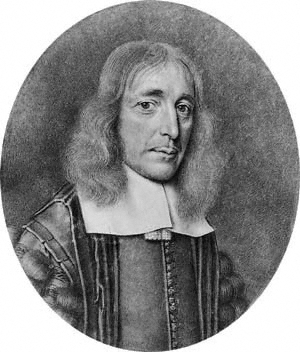
1664 WILLIS, Thomas (1621 – 1675)
Cerebri anatome: cui accessit nervorum descriptio et usus.
The most complete and accurate account of the nervous system which had hitherto appeared, and the work that coined the term, “neurology". In its preparation Willis was helped by his students Richard Lower and Thomas M…
GMN 1378 · https://historyofmedicine.com/id/1789
1670 WILLIS, Thomas (1621 – 1675)
Affectionum quae dicuntur hystericae e hypochondriacae pathologia spasmodica vindicata…
In this treatise on hysteria and hypochondria, Willis showed that hysteria was a nervous disease and not a uterine disorder as had been traditionally believed. He compared hysteria in women to hypochondria in men. He …
GMN 4839 · https://historyofmedicine.com/id/3606
1671 FEHR, Johannes Michael (1610 – 1688); SCHMIDT, Elias
Naturae genius, medicorum Celsus, Jason Argonautarum, Bauschius occubuit.
First authentic case of trigeminal neuralgia. It concerned J. L. Bausch, who died from the condition in 1665. The account is to be found in the unpaged part of the volume, starting at sig. d 3 and occupying the two fo…
GMN 4512 · https://historyofmedicine.com/id/8900
1672 WILLIS, Thomas (1621 – 1675)
De anima brutorum
Chap. XIV is devoted to the sense of hearing; in it Willis described the “paracusis of Willis” (p. 73). English translation, 1683. A probable description of myasthenia gravis is given in Pars. 2, Cap. IX. In Pars 2, C…
GMN 1544 · https://historyofmedicine.com/id/3644
1676 –1680 WILLIS, Thomas (1621 – 1675)
Opera omnia. 2 vols.
Willis was remarkable for his careful clinical observation. He was second only to Sydenham in his day. To him we owe the original descriptions of several conditions. Digital facsimile of the Lyon, 1681 edition from th…
GMN 62 · https://historyofmedicine.com/id/990
1684 WILLIS, Thomas (1621 – 1675); PORDAGE, Samuel (1633 – 1691)
Dr. Willis's practice of physick.
The only complete edition of Willis's works in English, translated by the poet Samuel Pordage. It contains the translations of all his works except his Affectionum quae dicuntur hystericae (1671). The collection inclu…
GMN 1311 · https://historyofmedicine.com/id/10280
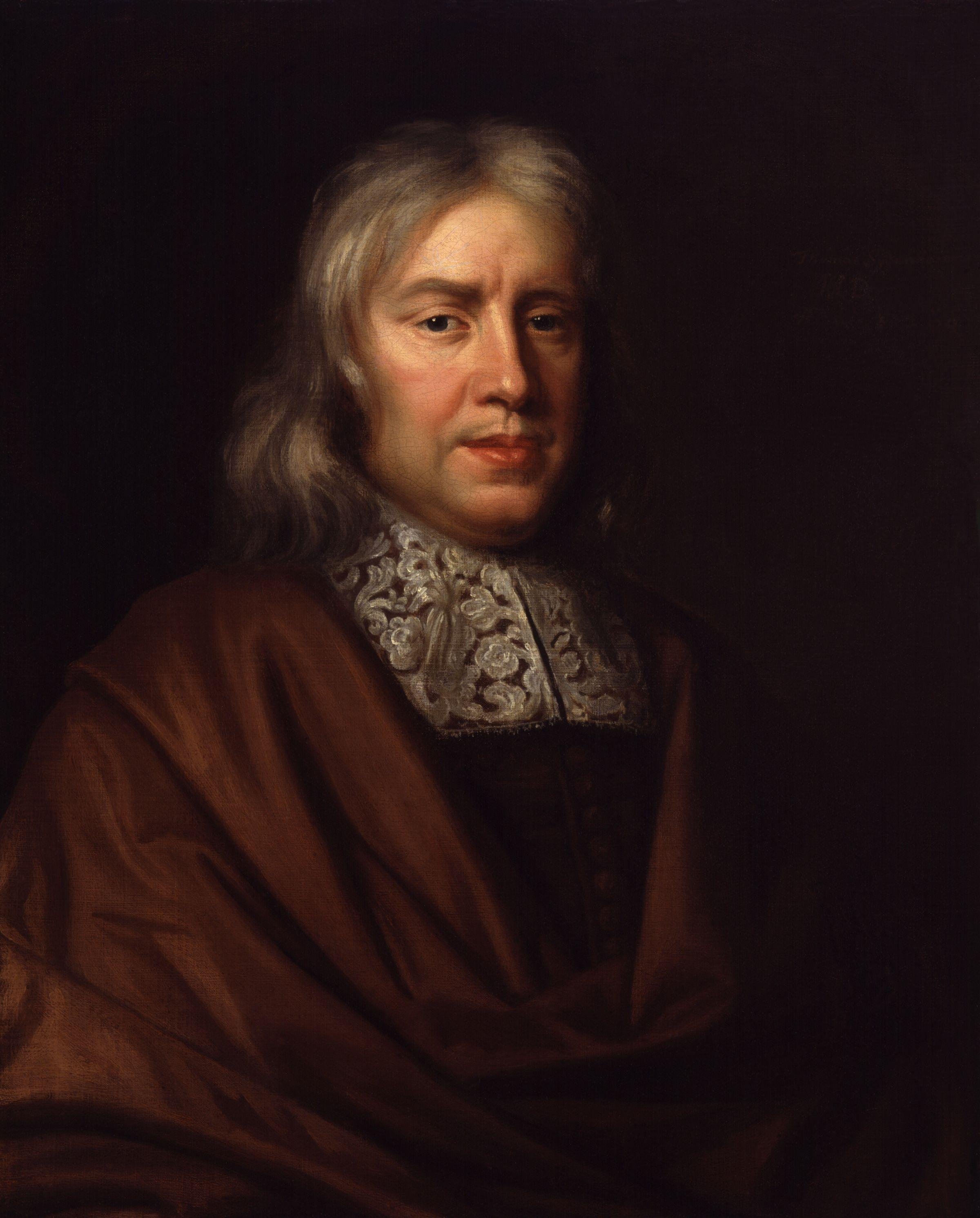
1686 SYDENHAM, Thomas (1624 – 1689)
Schedula monitoria de novae febris ingressu.
Includes (pp. 25-28) his classic description of chorea minor (“Sydenham’s chorea”). Reprinted in Med. Classics, 1939, 4, 327-53. In the Sydenham Society translation (see No. 64) the passage occurs in vol. 2, pp. 198-99.
GMN 4514 · https://historyofmedicine.com/id/361
1689 HARRIS, Walter (1647 – 1732)
De morbis acutis infantum.
Harris was physician to William and Mary. His book served for nearly a century as a standard work on pediatrics. He anticipated the modern treatment of tetany by using calcium salts in infantile convulsions. For a stu…
GMN 6321 · https://historyofmedicine.com/id/8089
1740 FREKE, John (1688 – 1756)
A case of extraordinary exostoses on the back of a boy.
Probably the earliest description of myositis ossificans progressiva. Freke was a friend of Fielding, who mentioned him in Tom Jones.
GMN 4731 · https://historyofmedicine.com/id/1271
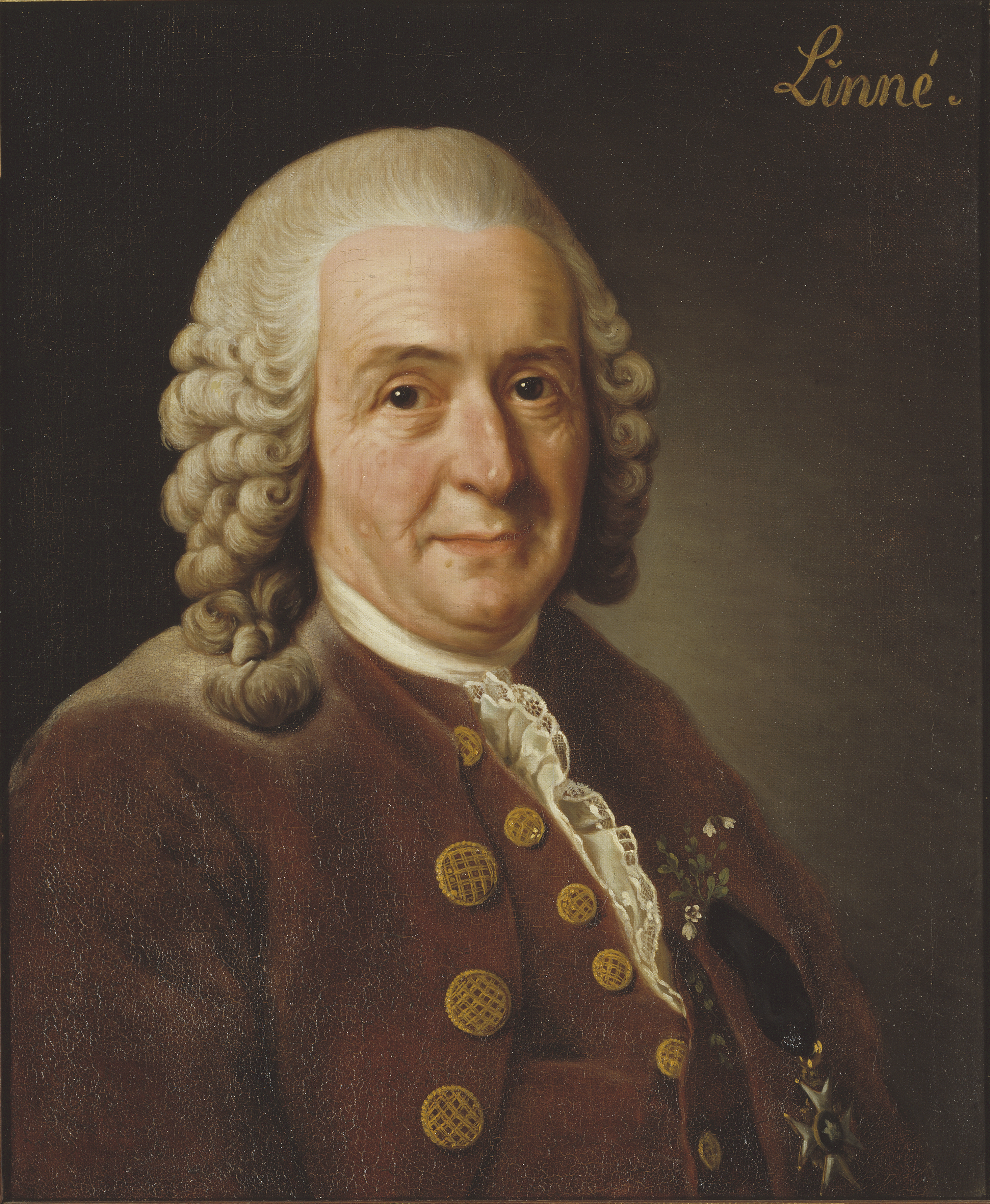
1745 LINNAEUS, Carl (Linné) (1707 – 1778)
Glömska af alla substantiva och i synnerhet namn.
Aphasia first described. Facsimile reproduction and English translation by H. R. Viets, Bull. Hist. Med., 1943, 13, 328-33.
GMN 4616 · https://historyofmedicine.com/id/646
1752 KNOLL, Johann Christian Friedrich (1726 – 1757)
Sendschreiben von den Wirkungen des Kafeetranks.
Discussing the consumption and reception of coffee from Britain to Turkey, Knoll dismissed criticisms of coffee, including that it reduced beauty and virility, or that it was contrary to Islam, instead promoting the m…
GMN 11719 · https://historyofmedicine.com/id/13920
1758 BUXTORF, Johann Ludwig (1736 – 1804)
Lethargus cum impotentia loquelae, tandem convulsivus et lethalis.
GMN 4617 · https://historyofmedicine.com/id/648
1764 COTUGNO, Domenico [COTUNNIUS] (1736 – 1822)
De ischiade nervosa commentarius.
Cotugno published a classic description of sciatica, which is useful even today. He recognized two types – arthritic and nervous; the latter has been called “Cotugno’s disease”, and his book is confined to that type. …
GMN 1382 · https://historyofmedicine.com/id/8632
1768 WHYTT, Robert (1714 – 1766)
Observations on the dropsy in the brain.
The first account of the clinical course of tuberculous meningitis in children. This work is notable for its fullness of detail and its accuracy. Whytt divided the disease into three stages, according to the character…
GMN 4634 · https://historyofmedicine.com/id/696
1768 AKENSIDE, Mark (1721 – 1770)
Observations on cancers.
First recorded description of multiple neurofibromatosis. Akenside was better known as a poet; he was caricatured as the republican doctor of Tobias Smollett's The Adventures of Peregrine Pickle.
GMN 4015.1 · https://historyofmedicine.com/id/5252
1776 FOTHERGILL, John (1712 – 1780)
Of a painful affection of the face.
Original description of facial neuralgia. Reprinted in Med. Classics, 1940, 5, 100-06.
GMN 4516 · https://historyofmedicine.com/id/363
1777 –1784 FOTHERGILL, John (1712 – 1780)
Remarks on that complaint commonly known under the name of the sick head-ach.
First accurate description of migraine.
GMN 4517 · https://historyofmedicine.com/id/8904
1781 VIGILIIS VON CREUTZENFELD, Stephan Hieronymus de (1750 – 1789)
Bibliotheca chirurgica. 2 vols.
Fulton (No. 6785) points out that this work contains the “most complete bibliographical study of the literature of head injury that had been brought together up to that time”. Digital facsimile from Google Books at th…
GMN 5000 · https://historyofmedicine.com/id/6549
1781 FOTHERGILL, John (1712 – 1780); ELLIOT, John (1747 – 1787)
A complete collection of the medical and philosophical works of John Fothergill. With an account of his life; and occasional notes, by John Elliot.
Digital facsimile from Google Books at this link.
GMN 11601 · https://historyofmedicine.com/id/13800
1784 UNDERWOOD, Michael (1737 – 1820)
A treatise on the diseases of children.
Underwood laid the foundation of modern pediatrics. His work was superior to anything that had previously appeared and remained the most important book on the subject for sixty years, passing through many editions. Th…
GMN 2734.4 · https://historyofmedicine.com/id/8101
1787 PUJOL, Alexis (1739 – 1804)
Essai sur la maladie de la face, nommée le tic douloureux; avec quelques réflexions sur la raptus caninus de Caelius Aurelianus.
The first monograph exclusively on trigeminal neuralgia, which Pujol called “tic douloureux”, or painful tic, as it had originally been designated by Caelius Aurelianus. Pujol provided a valuable description of the sy…
GMN 14359 · https://historyofmedicine.com/id/16689
1792 FRANK, Johann Peter (1745 – 1821)
De vertebralis columnae in morbis dignitate. In his Delectus opusculorum medicorum, 11, 1-50
Frank, best remembered for his great services to public health, was the first physician to emphasize the gravity of diseases of the spinal cord.
GMN 4518 · https://historyofmedicine.com/id/8907
1797 FRIEDREICH, Nicolaus Anton (1761 – 1836)
De paralysi musculorum faciei rheumatici.
Facial paralysis first described.
GMN 4519 · https://historyofmedicine.com/id/365
1798 HASLAM, John (1764 – 1844)
Observations on insanity.
Haslam was among the first to describe general paralysis; he recorded three cases (pp. 64, 67, 92, 120).
GMN 4794 · https://historyofmedicine.com/id/1541
1798 CRICHTON, Alexander (1763 – 1856)
An inquiry into the nature and origin of mental derangement: comprehending a concise system of the physiology and pathology of the human mind, and a history of the passions and their effects. 2 vols.
In chapter 2 of vol. 1, pp. 254-90, “On Attention and its Diseases” Crichton described a mental state much like the inattentive subtype of Attention Deficit Hyperactivity Disorder (ADHD). He did not mention any sympto…
GMN 7978 · https://historyofmedicine.com/id/10154
1801 HEBERDEN, William Jr. (1767 – 1845)
Observations on the increase and decrease of different disease, and particularly of the plague.
Heberden observed that the number of deaths from dysentery sharply decreased over the 18th century, but that deaths attributed to apoplexy increased. Digital facsimile from the Internet Archive at this link.
GMN 8372 · https://historyofmedicine.com/id/10549
1805 VIEUSSEUX, Gaspard (1746 – 1814)
Mémoire sur la maladie qui a régné à Genève au printemps de 1805.
First definite description of cerebrospinal meningitis. Partial English translation in No. 2241.
GMN 4674 · https://historyofmedicine.com/id/940
1808 CHEYNE, John (1777 – 1836)
An essay on hydrocephalus acutus, or dropsy in the brain.
Acute hydrocephalus first described.
GMN 4635 · https://historyofmedicine.com/id/699
1810 STRONG, Nathan (1781 – 1837)
An inaugural dissertation on the disease termed petechial, or spotted fever. Submitted to the Examining Committee of the Medical Society of Connecticut, for the county of Hartford.
This graduation dissertation was the first published brochure on cerebrospinal meningitis. Digital facsimile from U.S. National Library of Medicine at this link.
GMN 4675 · https://historyofmedicine.com/id/942
1810 THELWALL, John (1764 – 1834)
A letter to Henry Cline, Esq. on imperfect developements (sic) of the faculties mental and moral, as well as constitutional and organic; and on on the treatment of impediments of speech.
The first book on mental deficiency. Thelwall recognized that sensory deprivation could be a cause of apparent mental defect through his work with handicapped children. He established criteria for distinguishing betwe…
GMN 4969.2 · https://historyofmedicine.com/id/6384
1811 NORTH, Elisha (1771 – 1843)
A treatise on a malignant epidemic, commonly called spotted fever.
First book on cerebrospinal meningitis; in it North recommended the use of the clinical thermometer, not in general use until the time of Wunderlich. For more information on this book, see the article by F. L. Pleadwe…
GMN 4676 · https://historyofmedicine.com/id/944
1812 CHEYNE, John (1777 – 1836)
Cases of apoplexy and lethargy: with observations upon the comatose diseases.
Cheyne believed that cerebral anemia might be the cause of apoplexy, and described pathological cases of cerebral infarction and of cerebral hemorrhage. The work contains the first illustration of a subarachnoid hemor…
GMN 4519.1 · https://historyofmedicine.com/id/378
1815 CLARKE, John (1761 – 1815)
Commentaries on some of the most important diseases of children. Part the first.
First account of infantile tetany is given on pp. 86-97. Clarke died before this work was published. In it he also gave a clear description of laryngismus stridulus. This disease, which consists in a sudden onset of d…
GMN 4825 · https://historyofmedicine.com/id/1648
1815 –1818 GOELIS, Leopold Anton [GÖLIS] (1765 – 1827)
Praktische Abhandlungen über die vorzüglichen Krankheiten des Kindesalters. Vol. 1: Von der hitzigen Gehirnhöhlen-Wassersucht; Vol. 2: Vom inneren chronischen Wasserkopfe....
"In 1818, Leopold Anton Gölis (1765-1827, Austrian physician and pathologist), a paediatrician and dissector in the Institute for the Sick Children of the Poor in Vienna, described the clinical and autopsy findings of…
GMN 6329 · https://historyofmedicine.com/id/8112
1816 KELLIE, George (1770 – 1830)
Notes on the swelling of the tops of the hands and feet, and on a spasmodic affection of the thumbs and toes, which very commonly attends it.
In his early account of chronic tetany, Kellie referred to carpo-pedal spasm and spasms of the glottis as part of the syndrome.
GMN 4826 · https://historyofmedicine.com/id/1651
1817 PARKINSON, James (1755 – 1824)
An essay on the shaking palsy.
“Parkinson’s disease”–paralysis agitans. Reprinted in Med. Classics, 1938, 2, 946-97. Facsimile edition, with biography of Parkinson by Macdonald Critchley, London, 1955. Digital facsimile from the Internet Archive at…
GMN 4690 · https://historyofmedicine.com/id/972
1817 LOEWENHARDT, Sigismund Eduard (1796 – 1875)
De myelophthisi chronica vera et notha.
First important account of tabes dorsalis.
GMN 4772 · https://historyofmedicine.com/id/1442
1820 –1823 COOKE, John (1756 – 1838)
A treatise on nervous diseases.
“The earliest separate work on clinical neurology” (McHenry). Includes the Croonian lecture (1819) on apoplexy, and sections on palsy and epilepsy. The work includes the first history of neurological thought.
GMN 4519.2 · https://historyofmedicine.com/id/379
1821 BELL, Sir Charles (1774 – 1842)
On the nerves; giving an account of some experiments on their structure and functions, which lead to a new arrangement of the system.
“Bell’s palsy”. The facial paralysis ensuing upon lesion of the motor nerve of the face is described here for the first time. See also his later paper, with more detailed description, in the same journal, 1829, 119, 3…
GMN 1255 · https://historyofmedicine.com/id/381

![GALEN, [Κλαύδιος Γαληνός; Galen of Pergamon] (129 – 216)](/media/portraits/21)