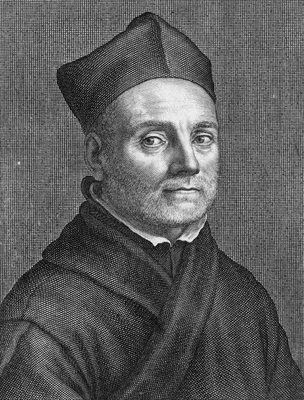
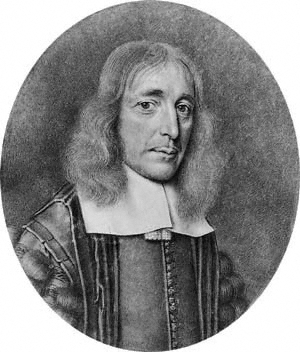
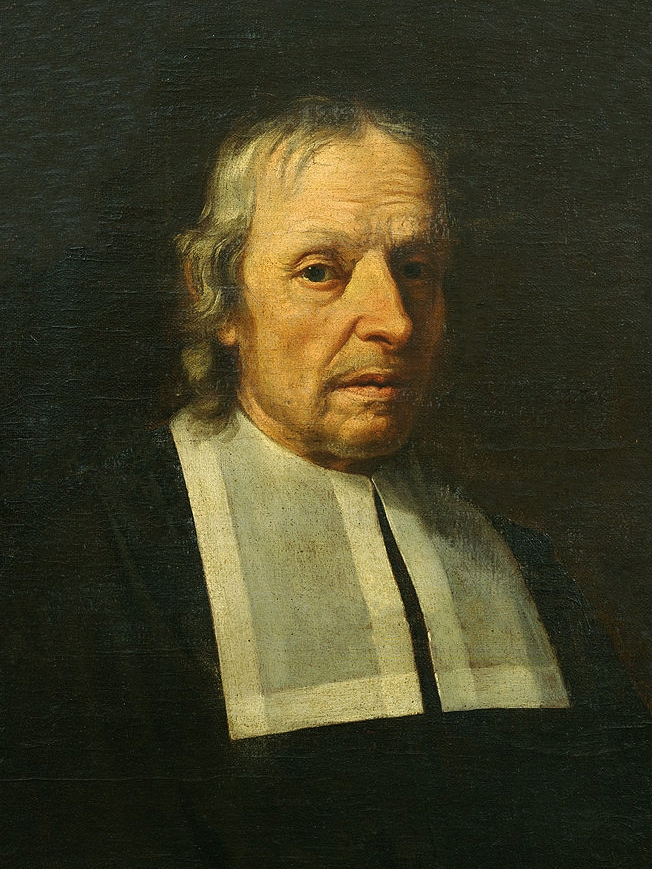
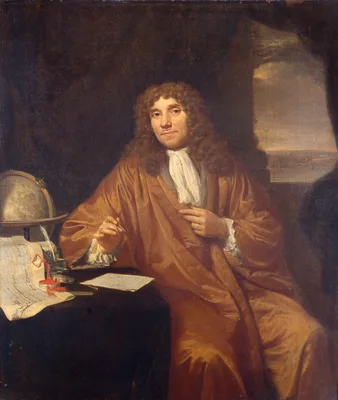
1644 ODIERNA, Giovanni Battista [Hodierna] (1597 – 1660)
l’Occhio della mosca In his: Opusculi…
The first microscopical section in biology is discussed and illustrated in Odierna’s study of the fly’s eye, which is also the first description of the faceted eye of an arthropod.
GMN 259.1 · https://historyofmedicine.com/id/8732
1653 BOREL, Pierre [BORELLUS.] (1620 – 1689)
Historiarum et observationum medico-physicarum centuria prima (-secunda).
The first work to apply microscopy to medicine. Borel described 200 observations and applications; he probably saw the blood corpuscles and Sarcoptes scabiei.
GMN 260 · https://historyofmedicine.com/id/8733
1658 KIRCHER, Athanasius (1602 – 1680)
Scrutinium physico-medicum contagiosae luis, quae pestis dicitur.
Kircher, a Jesuit scholar and polymath, not specifically trained in medicine, was probably the first to employ the microscope in investigating the cause of disease. He mentioned that the blood of plague patients was f…
GMN 2528.1 · https://historyofmedicine.com/id/3487
1659 WILLIS, Thomas (1621 – 1675)
Diatribae duae medico-philosophicae, quarum prior agit de fermentatione sive de motu intestino particularum in quovis corpore, altera de febribus sive de motu earundum in sanguine animalium.
Includes (De febribus, cap. X, XIV) first description of epidemic typhoid. English translation in his Practice of physick, 1684, Treatise II, 83-98, 1111-18. Contains the earliest suggestion that fermentation is an in…
GMN 2464 · https://historyofmedicine.com/id/6719
1661 MALPIGHI, Marcello (1628 – 1694)
De pulmonibus observations anatomicae.
Discovery of the capillary circulation. Malpighi demonstrated that the pulmonary tissues are vesicular in nature and showed that the trachea ends in bronchial filaments. His De pulmonibus includes his demonstration of…
GMN 760 · https://historyofmedicine.com/id/1747
1665 NEEDHAM, Marchamont [NEDHAM] (1620 – 1678)
Medela medicinae.
Needham, a physician better known for his work in journalism, was one of the earliest – if not the first – Englishman to write on the germ theory. In his book he included an account of Kircher’s experiments with the m…
GMN 2529 · https://historyofmedicine.com/id/3491
1669 MALPIGHI, Marcello (1628 – 1694)
Dissertatio epistolica de bombyce.
Malpighi’s work on the silkworm represents the first monograph on an invertebrate and records one of the most striking pieces of research work on his part. He dissected the silkworm under the microscope with great ski…
GMN 293 · https://historyofmedicine.com/id/8836
1674 LEEUWENHOEK, Antonie van (1632 – 1723)
Microscopical observations concerning blood, milk, bones, the brain, spittle, and cuticula, etc.
First really accurate description of the red blood corpuscles, which Swammerdam had noted in 1658.
GMN 860 · https://historyofmedicine.com/id/758
1675 –1679 MALPIGHI, Marcello (1628 – 1694)
Anatome plantarum.
Malpighi was the founder of microscopic anatomy and a pioneer in the study of plant development. He approached the subject through the study of plant tissues. His Appendix adds to the work on chick embryology Malpighi…
GMN 536 · https://historyofmedicine.com/id/156
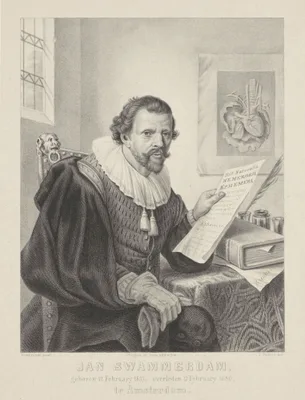
1675 SWAMMERDAM, Jan (1637 – 1680)
Ephemeri Vita. Of afbeeldingh van 's menschen leven, Vertoont in de Wonderbaarlijcke en nooyt gehoorde Historie van het vliegent ende een-dagh-levent Haft of Oever-aas. Een dierken, ten aansien van sijn naam, over al in Neerlandt bekent.
In his final publication Swammerdam studied the anatomy, development and behavior of the mayfly. Translated into English as Emphemeri vita: Or the natural history and anatomy of the ephemeron, a fly that lives but fiv…
GMN 13272 · https://historyofmedicine.com/id/15538
1684 LEEUWENHOEK, Antonie van (1632 – 1723)
An abstract of a letter…Sep. 17, 1683. Containing some microscopical observations, about animals in the scurf of the teeth.
Records discovery of bacteria in the mouth, with the first illustrations of the basic types – what were much later called cocci (round or oval), bacilli (rod-shaped) and spiriillum (spiral) forms. Although Leeuwenhoek…
GMN 2464.1 · https://historyofmedicine.com/id/5444
1686 –1718 LEEUWENHOEK, Antonie van (1632 – 1723)
Ontledingen en ontdekkingen.... 6 vols.
Leeuwenhoek, one of the first and also one of the greatest of the microbiologists, communicated many of his discoveries to the Royal Society in London. This set is a collection in Dutch of many contributions that van …
GMN 265 · https://historyofmedicine.com/id/1222
1714 COGROSSI, Carlo Francesco (1682 – 1769)
Nuovo idea del male contagioso de’ buoi.
In this study of an epizootic Cogrossi formulated much of the modern theory of infection. He speculated that infection might occur at the microscopic level, and argued that infected individuals should be isolated and …
GMN 2529.2 · https://historyofmedicine.com/id/3502
1718 LEEUWENHOEK, Antonie van (1632 – 1723)
Send-Brieven, zoo aan de Hoog-edele Heeren van de Koninklyke Societeit te Londen, als aan andere Aansienelyke en Geleerde Lieden....
In his letter of 2 March 1717 (letter XXXII) addressed to Abraham van Bleyswyk and first published in this edition, Leewenhoek provided the first morphologic description of nerve fibers accompanied by illustrations. “…
GMN 9494 · https://historyofmedicine.com/id/11679
1720 MARTEN, Benjamin (1690 – 1750)
A new theory of consumptions : more especially of a phthisis, or consumption of the lungs.
Marten believed that an infectious micro-organism was the cause of tuberculosis, thus forecasting the existence of the tubercle bacillus 162 years before its actual discovery. Though Leeuwenhoek reported seeing bacter…
GMN 3217 · https://historyofmedicine.com/id/4394
1737 –1738 BOERHAAVE, Herman (1668 – 1738); SWAMMERDAM, Jan (1637 – 1680); GAUBIUS, Hieronymus David (1705 – 1780)
Bybel der Natuure door Jan Swammerdam, Amsteldammer...Biblia naturae; sive historia insectorum, in classes certas redacta, nec non exemplis, et anatomico variorum animalculorum examine, aeneisque tabulis illustrata. Insertis numerosis rariorum naturae observationibus. Omnia lingua Batava, auctori vernacula, conscripta. Accedit praefatio, in qu vitam auctoris descripsit Hermannus Boerhaave... Latinam versionem adscriptsit Hieronimus David Gaubius. 2 vols.
Swammerdam's extensive collection of microscopical observations on insects was written in Dutch, and edited for publication 57 years after Swammerdam's death, with an extensive life of the author, by Herman Boerhaave.…
GMN 7472 · https://historyofmedicine.com/id/9644
1765 SPALLANZANI, Lazzaro (1729 – 1799)
Saggio di osservazioni microscopiche concernenti il sistema della generazione dei Signori de Needham e Buffon. IN: Dissertazione due… pp. [2]-87.
Spallanzani, a believer in preformation theory, found that he could prevent contamination by microorganisms in strongly heated infusions protected from aerial contamination, but he observed that as soon as air was all…
GMN 100 · https://historyofmedicine.com/id/8786
1778 GLEICHEN-RUSSWURM, Wilhelm Friedrich von (1717 – 1783)
Abhandlung fiber die Saamen- und Infusionsthierchen, und über die Erzeugung: nebst mikroskopischen Beobachtungen des Saamens der Thiere, und verschiedener Infusionen.
Gleichen was probably the first to attempt to stain bacteria; he used carmine and indigo.
GMN 2465 · https://historyofmedicine.com/id/3030
1786 MÜLLER, Otto Friedrich (1730 – 1784)
Animalcula infusoria fluviatilia et marina, quae detexit, systematice descripsit et ad vivum delineari.
Müller was the first to attempt a systematic classification of infusoria. He published several papers on the subject, the best being the above posthumous work. Muller described 8 species of the genus Vibrio (included …
GMN 2466 · https://historyofmedicine.com/id/3031
1810 APPERT, Nicolas (1742 – 1841)
L’Art de conserver, pendant plusieurs années, toutes les substances animales et végétales….
The first workable process for canning foods. In 1795 Appert began developing the process under Napoleon’s auspices as a way to maintain food on military expeditions. For strategic reasons he was not allowed to publis…
GMN 2467.1 · https://historyofmedicine.com/id/3037
1829 –1832 BROWN, Robert (1773 – 1858)
Observations on the organs and mode of fecundation in Orchideae and Asclepiadeae.
Discovery, in 1831, of the cell nucleus. First issued as a separate pamphlet: Observations on the Organs and Mode of Fecundation in orchideae and asclepiadeae ... [with:] Additional remarks ... London, [privately prin…
GMN 109 · https://historyofmedicine.com/id/1627
1830 EHRENBERG, Christian Gottfried (1795 – 1876)
Organisation, Systematik und geographische Verhältniss der Infusionsthierchen. Zwei Vorträge, in der Akademie der Wissenschaften zu Berlin gehalten in den Jahren 1828 und 1830.
In this work Ehrenberg first published his classification of infusioria, including the naming of bacteria for the first time. The work published two papers based on his expeditions. The first, read on January 10, 1828…
GMN 11452 · https://historyofmedicine.com/id/13651
1835 WAGNER, Rudolf Friedrich Johann Heinrich (Rudolph) (1805 – 1864)
Einige Bemerkungen und Fragen über das Keimbläschen (vesicula germinativa).
Wagner saw and described the nucleolus.
GMN 109.1 · https://historyofmedicine.com/id/1632
1835 –1836 BASSI, Agostino (1773 – 1856)
Del mal del segno calcinaccio o moscardino malattia che affligge i bachi da seta e sul modo di liberarne le bigattaje anche le piu infestate. 2 vols.
Bassi preceded Louis Pasteur in the discovery that microorganisms can be the cause of disease (the germ theory of disease). He discovered that the muscardine disease of silkworms--a disease that was destroying the sil…
GMN 2532 · https://historyofmedicine.com/id/3515
1836 DONNÉ, Alfred François (1801 – 1878)
Animalcules observés dans les matières purulentes et le produit des sécrétions des organes génitaux de l’homme et de la femme.
First description of Trichomonas vaginalis, which Donné at first believed to be the pernicious agent in gonorrhoea. He later recognized that the organism is a normal inhabitant of the female genital tract. By this wor…
GMN 5207 · https://historyofmedicine.com/id/7800
1837 SCHWANN, Theodor (1810 – 1882)
Vorlaüfige Mittheilung betreffend Versuche über die Weingährung und Fäulniss.
Proof that putrefaction is produced by living bodies. Independently of Cagniard-Latour, Schwann discovered the yeast cell. He is regarded as the founder of the germ theory of putrefaction and fermentation.
GMN 674 · https://historyofmedicine.com/id/719
1838 EHRENBERG, Christian Gottfried (1795 – 1876)
Die Infusionsthierchen als vollkommene Organismen. 1 vol. and atlas of 64 hand-colored engraved plates.
In this monumental work in folio format Ehrenberg extended Otto Friedrich Müller’s bacteriological classification. Like Müller, he made no distinction between protozoa and bacteria, classing them both as infusoria. Hi…
GMN 111 · https://historyofmedicine.com/id/1664
1838 SCHWANN, Theodor (1810 – 1882)
Ueber die Analogie in der Structur und dem Wachsthum der Thiere und Pflanzen.
Schwann’s three-part preliminary application of Schleiden’s “watch-glass” cell theory to the genesis of animal cells. Schleiden communicated the theory to him verbally. This paper actually pre-dates Schleiden’s first …
GMN 112.1 · https://historyofmedicine.com/id/1683
1838 –1857 MANDL, Louis (1812 – 1881)
Anatomie microscopique. Tome premier: Histologie. Atlas de cinquante-deux planches. Tome second: Histogénèse. Atlas de quarante planches. 2 vols.
This work was issued in parts over nearly 20 years. Parts concerned specific subjects and were sold separately. Digital facsimile from Google Books at this link, and at this link.
GMN 11117 · https://historyofmedicine.com/id/13313
1839 SCHWANN, Theodor (1810 – 1882)
Mikroskopische Untersuchungen über die Uebereinstimmung in der Struktur und dem Wachsthum der Thiere und Pflanzen.
Mainly devoted to the investigation of the elementary structure of animal tissues, Schwann’s Untersuchungen had an important bearing on the development of the doctrine of the cell structure of animal tissue. In this w…
GMN 113 · https://historyofmedicine.com/id/2028
1840 HENLE, Friedrich Gustav Jakob (1809 – 1885)
Von den Miasmen und Contagien. In his Pathologische Untersuchungen, pp. 1-82.
Bassi’s work on the muscardine disease of silkworms (see No. 2532), with its prophecy of the discovery of microbes as the causal agents of other diseases, inspired Henle to write this famous essay on miasms and contag…
GMN 2533 · https://historyofmedicine.com/id/3517
1841 DUJARDIN, Félix (1801 – 1860)
Histoire naturelle des zoophytes.
Further modification of and improvements in the classification of bacteria.
GMN 2470 · https://historyofmedicine.com/id/3045
1842 GOODSIR, John (1814 – 1867)
History of a case in which a fluid periodically ejected from the stomach contained vegetable organisms of an undescribed form.
First description of Sarcina ventriculi, discovered by Goodsir.
GMN 2471 · https://historyofmedicine.com/id/3048
1843 BARRY, Martin (1802 – 1855)
Spermatozoa observed within the mammiferous ovum.
Barry was the first to observe the spermatozoon within the ovum.
GMN 484.1 · https://historyofmedicine.com/id/1396
1844 –1845 DONNÉ, Alfred François (1801 – 1878); FOUCAULT, Jean Bernard Léon (1819 – 1868)
Cours de microscopie. 1 vol. and atlas.
Donne's and Foucault's work was the first biomedical textbook to be illustrated with images made from photomicrographs, in this case daguerreotypes of blood cells. Among its noteworthy images are the first microphotog…
GMN 267.1 · https://historyofmedicine.com/id/8743
1846 –1849 HASSALL, Arthur Hill (1817 – 1894)
The microscopic anatomy of the human body, in health and disease.
First English textbook on microscopical anatomy. His description of the concentric corpuscles of the thymus (p. 9) led to the term “Hassall’s corpuscles”.
GMN 544 · https://historyofmedicine.com/id/180
1852 REMAK, Robert (1815 – 1865)
Ueber extracelluläre Entstehung thierischer Zellen und über die Vermehrung derselben durch Theilung.
Remak was the first to point out that growth of new tissues was accomplished by the division of pre-existing cells.
GMN 116 · https://historyofmedicine.com/id/2042
1857 PASTEUR, Louis (1822 – 1895)
Mémoire sur la fermentation appelée lactique.
First demonstration of the connection between a specific fermentation and the activity of a specific living micro-organism. This paper is often considered the beginning of bacteriology as a modern science. The above w…
GMN 2472 · https://historyofmedicine.com/id/3052
1859 PASTEUR, Louis (1822 – 1895)
Nouveaux faits pour server à l’histoire de la levure lactique.
This and the preceding entry mark Pasteur’s commencement of the study of fermentation. This paper described Pasteur’s method of cultivating micro-organisms in a medium free of organic nitrogen to produce fermentations…
GMN 2473 · https://historyofmedicine.com/id/3059
1860 PASTEUR, Louis (1822 – 1895)
Expériences relatives aux générations dites spontanées.
GMN 2474 · https://historyofmedicine.com/id/3062
1861 SCHULTZE, Max Johann Sigismund (1825 – 1874)
Ueber Muskelkörperchen und das, was man eine Zelle zu nennen habe.
Schultze showed the cell to be a clump of nucleated protoplasm, stating that each muscle fibre or primitive muscle bundle was developed from a single myoblast by successive divisions of its cell or nucleus. His work s…
GMN 117 · https://historyofmedicine.com/id/2047
1861 PASTEUR, Louis (1822 – 1895)
Mémoire sur les corpuscles organisés qui existent dans l’atmosphère. Examen de la doctrine des générations spontanées.
In these easily reproducible experiments, prefaced by an important historical introduction, Pasteur demonstrated beyond dispute that fermentation is caused by the action of minute living organisms, and that if these a…
GMN 2475 · https://historyofmedicine.com/id/3067
1861 PASTEUR, Louis (1822 – 1895)
Animalcules infusoires vivant sans gaz oxygène libre et déterminant des fermentations.
The discovery of strict anaerobiosis, important for general biology since it shows that oxygen gas is not a requisite for life.
GMN 2475.1 · https://historyofmedicine.com/id/3069
1863 RECKLINGHAUSEN, Friedrich Daniel von (1833 – 1910)
Ueber Eiter- und Bindegewebskörperchen.
Recklinghausen described granular cells in the frog mesentery, later named “mast cells” by Ehrlich (No. 553.1).
GMN 548.1 · https://historyofmedicine.com/id/200
1863 SCHULTZE, Max Johann Sigismund (1825 – 1874)
Das Protoplasma der Rhizopoden und der Pflanzenzellen.
Schultze showed that protoplasm is practically identical in all living cells.
GMN 118 · https://historyofmedicine.com/id/2051
1863 PASTEUR, Louis (1822 – 1895)
Nouvel exemple de fermentation determinée par des animalcules infusoires pouvant vivre sans gaz oxygène libre, et en dehors de tout contact avec l’air de l’atmosphere.
Pasteur confirmed the fact, established by Schwann (No. 674) that putrefaction was a biological process.
GMN 2476 · https://historyofmedicine.com/id/3071
1863 PASTEUR, Louis (1822 – 1895)
Examen du rôle attribué au gaz oxygène atmosphérique dans la destruction des matières et végétales après la mort.
GMN 2477 · https://historyofmedicine.com/id/3073
1863 PASTEUR, Louis (1822 – 1895)
Recherches sur la putréfaction.
Pasteur was the first to differentiate between aerobic and anaerobic organisms. (See also Nos. 2476-77.)
GMN 2478 · https://historyofmedicine.com/id/3075
1868 PASTEUR, Louis (1822 – 1895)
Études sur le vinaigre.
Pasteur proved that a microorganism was essential to acetification and developed a patented method which greatly increased the efficiency of production.
GMN 2480 · https://historyofmedicine.com/id/3079
1870 PASTEUR, Louis (1822 – 1895)
Études sur la maladie des vers à soie. 2 vols.
This work saved the French silk industry, which had been crippled by the disease pébrine. After three years of research on the problem, Pasteur was able to show that the disease known as pébrine was caused by a parasi…
GMN 2481 · https://historyofmedicine.com/id/3081

![ODIERNA, Giovanni Battista [Hodierna] (1597 – 1660)](/media/portraits/9538)