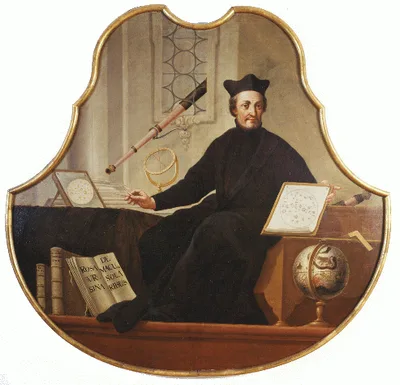
1619 SCHEINER, Christoph (1575 – 1650)
Oculus, hoc est: fundamentum opticum.
Scheiner, a Jesuit astronomer, was a pioneer in physiological optics. He demonstrated how images fall on the human retina, noting the change in curvature of the lens during accommodation, and devised the pin-hole test…
GMN 1480 · https://historyofmedicine.com/id/2465
1623 DAZA DE VALDÉS, Benito (1591 – 1634)
Uso del los antojos para todo genero de vistas, en que se enseña a conocer los grados que a cada uno le faltan de su vista, y los que tienen qualesquier antojos.
The earliest scientific work dealing with spectacles. It includes sight testing tables and points out the value of convex lenses after cataract operations. Digital facsimile from the Internet Archive at this link. Eng…
GMN 5821 · https://historyofmedicine.com/id/7039
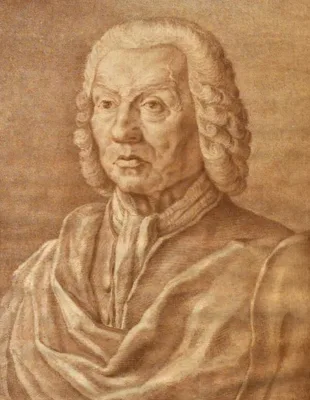
1738 MANNI, Domenico Maria (1690 – 1788)
Degli occhiali da naso inventati da Salvino Armati…
The first book on the history of spectacles. Manni gave credit for the invention to the Florentine Armati (fl. 1300).
GMN 5991.9 · https://historyofmedicine.com/id/7105
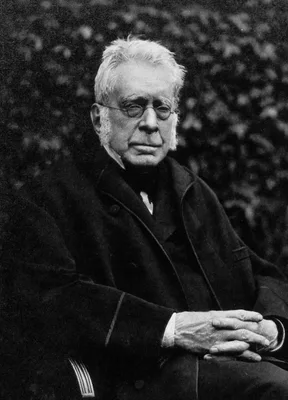
1827 AIRY, Sir George Biddell (1801 – 1892)
On a peculiar defect in the eye, and a mode of correcting it.
Airy, Britain's Astronomer Royal from 1835 to 1881, was the first to devise a sphereocylindrical lens for correcting astigmatism, a condition from which he himself suffered in his left eye. Airy's method is still used…
GMN 5847 · https://historyofmedicine.com/id/7171
1843 KÜCHLER, Heinrich (1811 – 1873)
Schriftnummerprobe für Gesichtsleidende.
Küchler introduced test readings of print at a distance, for examination of patients.
GMN 5858 · https://historyofmedicine.com/id/7214
1860 JÄGER VON JAXTHAL, Eduard (1818 – 1884)
Schriftskalen. 3te. Aufl.
Jaeger first introduced his test types in 1854; Emil Fuchs improved them in 1895.
GMN 5887 · https://historyofmedicine.com/id/7345
1862 DONDERS, Frans Cornelis (1818 – 1889)
Astigmatisme en cilindrische glazen.
Includes statement of “Donders’s law” – the rotation of the eye around the line of sight is not voluntary. French and German translations, 1862.
GMN 5889 · https://historyofmedicine.com/id/7354
1862 SNELLEN, Hermann (1834 – 1908)
Probebuchstaben zur Bestimmung der Sehschärfe.
Snellen’s test-types (“Optotypi”) which soon gained acceptance in all civilized countries. Digital facsimile from Google Books at this link.
GMN 5890 · https://historyofmedicine.com/id/7357
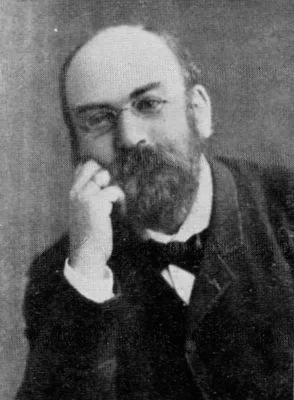
1867 JAVAL, Louis Émile (1839 – 1907)
Sur un nouvel instrument pour la détermination de l’astigmatisme.
Javal invented the astigmometer, and described it in the above paper.
GMN 5901 · https://historyofmedicine.com/id/7402
1873 –1874 CUIGNET, Ferdinand Louis Joseph (1823 – 1890)
Kératoscopie.
Introduction of the shadow test (retinoscopy), sometimes called “Cuignet’s method”.
GMN 5908 · https://historyofmedicine.com/id/6782
1874 HOLMGREN, Alarik Frithiof (1831 – 1897)
Om den medfödda, färgblindhetens diagnostic och teori.
Holmgren introduced the wool-skein test for the diagnosis of color-blindness.
GMN 5911 · https://historyofmedicine.com/id/6791
1879 THOMSON, William (1833 – 1907)
On astigmatism as a cause for persistent headache and other nervous symptoms.
Thomson was a pioneer in the study of refraction. He was much interested in color-blindness and modified Holmgren’s wool-skein test. Himself affected with hypermetropia, he made important investigations on this condit…
GMN 5917 · https://historyofmedicine.com/id/6819
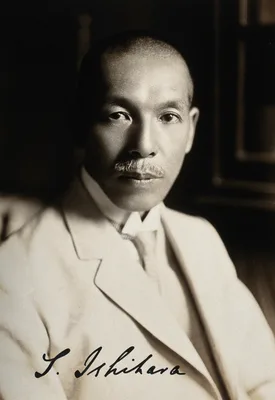
1917 ISHIHARA, Shinobu (1879 – 1963)
Tests for colour-blindness.
Ishihara’s color tests. 15th ed., 1960.
GMN 5966 · https://historyofmedicine.com/id/6997
1978 –1980 POULET, William
Atlas on the history of spectacles. 2 vols.
Vol. 1 catalogues spectacles from the collections of Carl Zeiss, Otto Hallauer, and Pierre Marly. Translated from the German by Frederick C. Blodi with an introduction by Wolfgang Pfeiffer, ‘A Short History of Spectac…
GMN 13656 · https://historyofmedicine.com/id/15937
1996 ROSENTHAL, J. William (1922 – 2007)
Spectacles and other vision aids: A history and guide to collecting.
The most comprehensive history of the development of spectacles and other vision aids in Europe, America, Japan, and China. With over 780 photographs, of which 310 are in color.
GMN 6907 · https://historyofmedicine.com/id/9071
2007 ILARDI, Vincent (1926 – 2009)
Renaissance vision from spectacles to telescopes.
Through an examination of original economic documents, as well as scientific documents, Ilardi discovered that Florence rather than Venice was the 15th-century center for making eye glasses and that lenses for farsigh…
GMN 7775 · https://historyofmedicine.com/id/9947