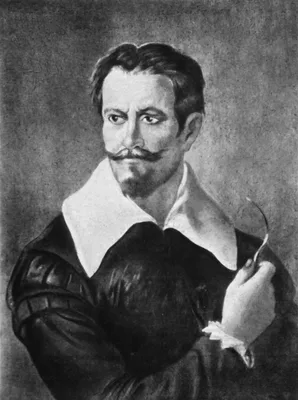
1477 SCOT, Michael [Michael Scotus] (1175 – 1232)
Liber phsionomiae [and other works].
"Composed between 1209 and 1226, the first of the two primary texts discusses human generation — anatomy, physiology, astrology, sexual behavior, conception and the health of the fetus. The second part, the Physiognom…
GMN 10725 · https://historyofmedicine.com/id/12919
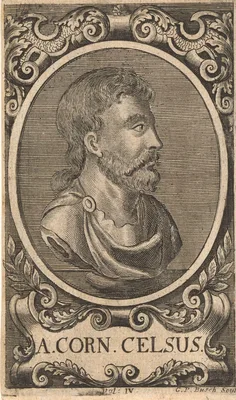
1478 CELSUS, Aulus Aurelius Cornelius (-25 – 50); FONTE, Bartolomeo della (Bartholomaeus Fontius) (1446 – 1513)
De medicina. Ed: Bartholomaeus Fontius.
De Medicina is the oldest Western medical document after the Hippocratic writings. Written about 30 CE, it remains the greatest medical treatise from ancient Rome, and the first Western history of medicine. Celsus’s s…
GMN 20 · https://historyofmedicine.com/id/4660
1483 GENTILI DA FOLIGNO, Gentile (Gentilis Fulginas; Gentilis de Flugineo) ( – 1348); GILLES DE CORBEIL, (Egidius de Corbolio; Egidius Corboliensis; Aegidius) (1140 – 1215); MUTIUS, Venantius, of Camerino
De urinis by Gilles de Corbeil, with commentary by Gentilis de Fulgineo. Edited by Venantius Mutius.
Gilles de Corbeil's medical poem De urinis was based on writings by Theophilus Protospatharius by way of the Articella. Poems such as this were intended as mnemonic aids for students, and they tended to be widely used…
GMN 8341 · https://historyofmedicine.com/id/10517
1490 AVENZOAR [IBN ZUHR (ARABIC: ابن زهر ] (1092 – 1162); AVERROËS [IBN RUSHD (ARABIC: ابن رشد), FULL NAME ʾABŪ L-WALĪD MUḤAMMAD IBN ʾAḤMAD IBN RUŠD] (1126 – 1198); PARAVICIUS, [Paravicinus, Patavinus] (1250 – ); JACOBUS HEBRAEUS (1250 – )
Liber Teisir, sive rectificatio medicationis et regiminis. Antidotarium. Translated from Arabic into Hebrew by Jacobus Hebraeus; into Latin by Paravicius. Add: Averroes: Colliget.
This is a Latin translation from a Hebrew version dating from 1280. Avenzoar, the greatest Muslim physician of the Western Caliphate, described the itch-mite, Sarcoptes scabiei, serous pericarditis, mediastinal absces…
GMN 47 · https://historyofmedicine.com/id/8768
1535 SANTO, Mariano (1488 – 1577)
De lapide renum curiosum opusculum nuperrime in lucem aeditum. Eiusdem De lapide vesicae per incisionem extrahendo sequitur aureus libellus.
Marianus Sanctus Barolitanus popularized the operation of lithotomy introduced by the father of Giovanni Vigo of Rapallo. This method passed on to Giovanni di Romani and from him to Marianus. It became known as the “M…
GMN 4278 · https://historyofmedicine.com/id/5302
1536 MASSA, Niccoló (1489 – 1569)
Liber introductorius anatomiae sive dissectionis corporis humani; in quo quam plurima membra, operationes, & utilitates tam ab antiquis, quam a modernis praetermissa manifestantur.
A practical manual for dissection, showing how to carry out an anatomy from the first incision onwards. Massa based his work on his experience gained from numerous dissections that he had undertaken in the hospital of…
GMN 1536 · https://historyofmedicine.com/id/2862
1551 LAGUNA DE SEGOVIA, Andrés [LACUNA] (1499 – 1559)
Methodus cognoscendi, extirpandique excrescentes in vesicae collo carunculas.
In the above work, Laguna, the "Spanish Galen," described a method of excising vesical caruncles for the first time. Digital facsimile from the Internet Archive at this link.
GMN 4159 · https://historyofmedicine.com/id/5945
1556 FRANCO, Pierre (1500 – 1561)
Petit traité contenant une des parties principalles de chirurgie, laquelle les chirurgiens hernieres exercent.
Clifford Allbutt considered Franco the best lithotomist of the 16th century. His skill in extracting the stone by the perineal route was of a high order; in 1556 he introduced the operation of suprapubic cystotomy in …
GMN 3573 · https://historyofmedicine.com/id/5304
1561 FRANCO, Pierre (1500 – 1561)
Traité des hernies... et autres excellentes parties de chirurgie assavior de la pierre, des cataractes des yeux, & autres maladies...
Greatly expanded second edition, including Franco's operations for cataract and urinary calculi. Digital facsimile from BnF Gallica at this link.
GMN 3574 · https://historyofmedicine.com/id/4161
1564 PARÉ, Ambroise (1510 – 1590)
Dix livres de la chirurgie avec le magasin des instruments necessaires à icelle.
Paré’s first general treatise on surgery, and the most comprehensive of his treatises before his collected works (1575). Dix livres included Paré's first description of the use of the ligature in amputations, one of h…
GMN 3668.1 · https://historyofmedicine.com/id/6937
1565 KENTMANN, Johannes (1518 – 1574)
Calculorum qui in corpore ac membris hominum innascuntur, genera XII. depicta descriptaque, cum historiis singulorum admirandis.
The first treatise to specifically on urinary calculi and gallstones, with each of the 12 chapters exploring a part of the human body where such stones are found (gall bladder, kidneys, bladder, etc.). Additionally, t…
GMN 11489 · https://historyofmedicine.com/id/13688
1586 DONATI, Marcello (1538 – 1602)
De medica historia mirabili.
An early history of diseases, with extensive sections on ophthalmology (ff. 66-77) and urology (ff. 260-271). Lib. IV, Cap. iii, page 196 contains the first recorded case of gastric ulcer. Lib. VI. cap. iii contains t…
GMN 3417 · https://historyofmedicine.com/id/5319
1588 DÍAZ, Francisco (1527 – 1590)
Tratado de todas las enfermedades de los riñones, vexiga, y carnosidades de la verga, y urina.
First treatise on diseases of the urinary tract. Also describes the high operation for stone. Diaz is sometimes called the “Father of Urology”.
GMN 4160 · https://historyofmedicine.com/id/5950
1637 BRIAN, Thomas (1637 – )
The pisse-prophet; or, certaine pisse-pot lectures. Wherein are newly discovered the old fallacies, deceit, and jugling of the pisse-pot science, used by all those… who pretend knowledge of diseases, by the urine….
Brian attacked the “pisse-mongers” and “pisse-prognosticators” hoping to eliminate the frauds of uromancy. He warned patients against diagnosis “prescribed only by the sight of the Urine”, and argued that uroscopy sho…
GMN 4160.1 · https://historyofmedicine.com/id/5954
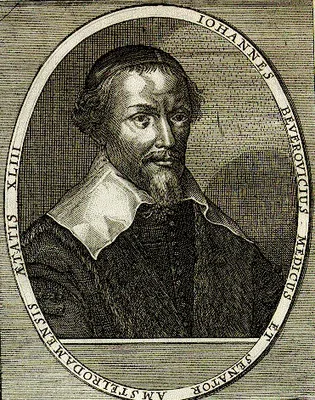
1638 BEVERWIJCK, Johan van (Johannes Beverovicius) (1594 – 1647)
De calculo renum & vesicae liber singularis. Cum epistolis & consultationibus magnorum virorum.
The first medical book to contain an endorsement of Harvey's theory of the circulation of the blood (originally published ten years earlier in 1628). Beverwijck began his work with a treatise on urinary and renal calc…
GMN 11647 · https://historyofmedicine.com/id/13848
1682 TOLET, François (1647 – 1724)
Traité de la lithotomie ou de l'extraction de la pierre hors la vessie.
In Tolet's day lithotomy was one of the major and most dangerous of operations. Tollet provided explicit directions for the operation in children as well as adults of both sexes. He particularly stressed the need for …
GMN 14336 · https://historyofmedicine.com/id/16664
1683 BELLINI, Lorenzo (1643 – 1704)
De urinis et pulsibus de missione sanguinis de febribus de morbis capitis, et pectoris.
Bellini began to develop his hydraulic iatromechanics in this work, in which he considered the blood as a physical fluid with simple mechanical and mathematicizable properties. He realized the value of the urine as an…
GMN 4162 · https://historyofmedicine.com/id/1845
1683 MOURÃO, Simão Pinheiro [Morão] (1620 – 1686)
Trattado unico das bexigas, e sarampo, offerecido a D. João de Sousa, composto por Romaõ Mõsia Reinhipo.
One of the first works on medicine practiced in Brazil, published by Mourão under the pseudonym Romaõ Mõsia Reinhipo. Mourão distinguished clearly between smallpox and measles. There was still much confusion in the se…
GMN 8934 · https://historyofmedicine.com/id/11112
1700 MÉRY, Jean (1645 – 1722)
Observations sur la maniere de tailler dans les deux sexes pour l'extraction de la pierre, pratiqué par Frere Jacques. Nouveau system de la circulation du sang pour le trou ovale dans le foetus humain, avec les réponses aux objections qui ont été faites contre cette hypothese.
"Méry became closely associated with the comparative-anatomical work led by Claude Perrault and J.-G. Duverney. As a member of this group, Méry made contributions to their joint publications, in which each man’s speci…
GMN 11894 · https://historyofmedicine.com/id/14099
1707 ALGHISI, Tommaso (1669 – 1713)
Litotomia…
A renowned specialist and pupil of Bellini, Alghisi was probably the first to use an indwelling urethral catheter to drain urine away from the wound after lithotomy. The inclined position of the patient with the head …
GMN 4279.1 · https://historyofmedicine.com/id/5306
1710 GROENVELDT, Jan [GREENFIELD (1647 – 1710)
A compleat treatise of the stone and gravel.
Groenveldt was a famous lithotomist, using the suprapubic technique. He also enjoyed a rather unsavoury reputation as a quack for his determination to promote the use of cantharides. He changed his name to Greenfield …
GMN 4280 · https://historyofmedicine.com/id/5308
1720 DOUGLAS, John (lithotomist) (1680 – 1743)
Lithotomia Douglassiana; or, an account of a new method of making the high operation, in order to extract the stone out of the bladder.
Douglas accused Cheselden of plagiarizing his work, although the latter had acknowledged his indebtedness to Douglas. It is possible that this was the reason which prompted Cheselden to drop the high operation in favo…
GMN 4281 · https://historyofmedicine.com/id/5311
1723 CHESELDEN, William (1688 – 1752)
A treatise on the high operation for the stone.
Cheselden was surgeon to St. Thomas’s Hospital and an outstanding figure in British surgery in the first half of the 18th century. The above work describes his method of performing suprapubic lithotomy, a method which…
GMN 4282 · https://historyofmedicine.com/id/5315
1727 COLOT, François (1630 – 1706)
Traité de l’opération de la taille.
François Colot was the last and best-known member of the Colot family, itinerant lithotomists.
GMN 4282.1 · https://historyofmedicine.com/id/5322
1730 LE DRAN, Henri François (1685 – 1770)
Parallèle des différentes manières de tirer la pierre hors de la vessie.
Le Dran, famous French lithotomist, improved the operation of lithotomy. Murphy credits him for originating the lateral lithotomy usually attributed to Cheselden, whose method he discusses. Le Dran was one of Haller’s…
GMN 4283 · https://historyofmedicine.com/id/5326
1743 LA PEYRONIE, François Gigot de (Lapeyronie) (1678 – 1747)
Mémoire sur quelques obstacles qui s’opposent à l’éjaculation naturelle de la semence.
“Peyronie’s disease”, a noncancerous condition resulting from fibrous scar tissue that develops on the penis and causes curved, and sometimes painful erections.
GMN 4163 · https://historyofmedicine.com/id/5965
1748 CHESELDEN, William (1688 – 1752); REID, Alexander (1719 – 1789)
A remarkable case of a person cut for the stone in the new way, commonly called the lateral, by William Cheselden, Surgeon to Her late Majesty; communicated to Martin Folkes, Pr. R. S
Cheselden’s lateral lithotomy first described in this brief paper by Alexander Reid. Digital facsimile from royalsocietypublishing.org at this link.
GMN 4284 · https://historyofmedicine.com/id/5336
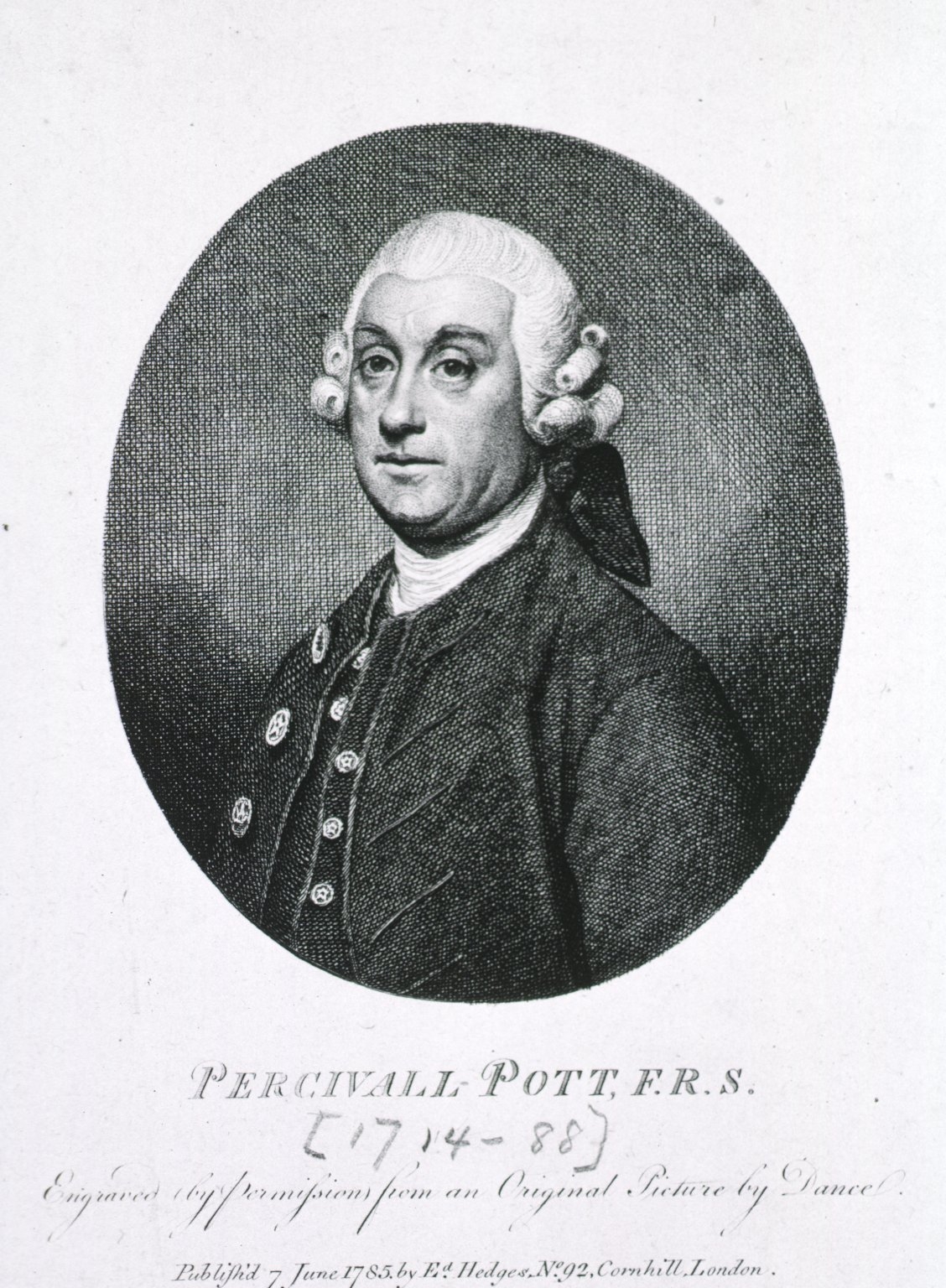
1762 POTT, Percivall (1714 – 1788)
Practical remarks on the hydrocele or watry rupture.
Classic description of hydrocele.
GMN 4164 · https://historyofmedicine.com/id/5969
1775 POTT, Percivall (1714 – 1788)
Chirurgical observations relative to the cataract, the polypus of the nose, the cancer of the scrotum, etc.
Includes the first description of occupational cancer. By describing chimney sweeps” cancer of the scrotum, Pott was the first to trace the origin of a type of cancer to a specific external cause. The above work also …
GMN 2122 · https://historyofmedicine.com/id/2635
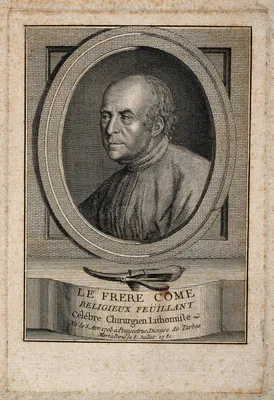
1779 BASEILHAC, Jean (1703 – 1781)
Nouvelle méthode d'extraire la pierre de la vessie urinaire par-dessus le pubis, qu'on nomme vulgairement le haut-appareil dans l'un & l'autre sexe, sans le secours d'aucun fluide retenu ni forcé dans la vessie: suivie de l'analyse des expériences de l'Academie Royale de Chirurgie de Paris, sur l'extraction de la pierre de la vessie urinaire de l'homme, par-dessous le pubis.
Frère Côme devised several new instruments for use in suprapubic lithotomy. This operation, placed in retirement when Cheselden adopted the lateral approach, was once more brought to the fore by Frère Côme. Digital fa…
GMN 4285 · https://historyofmedicine.com/id/5339
1784 CAMPER, Petrus (Pieter) (1722 – 1789)
Observationes circa mutationes quas subeunt calculi in vesica.
GMN 4286 · https://historyofmedicine.com/id/5342
1786 HUNTER, John (1728 – 1793)
A treatise on the venereal disease.
In Hunter's day venereal diseases were thought to be due to a single poison. To test this theory Hunter experimented with matter taken from a gonorrhoeal patient who, unknown to Hunter, also had syphilis. Hunter maint…
GMN 2377 · https://historyofmedicine.com/id/7782
1791 –1792 CHOPART, François (1743 – 1795)
Traité des maladies des voies urinaires. 2 vols.
Chopart and Desault were the founders of urological surgery, both emphasizing the importance of considering the urinary tract as a whole. “They were close friends and were both able clinicians, surgeons and teachers. …
GMN 4165.01 · https://historyofmedicine.com/id/5976
1796 WALTER, Johann Gottlieb (1734 – 1818); WALTER, Friedrich August (1764 – 1826)
Anatomisches museum. Gesammelt von Johann Gottlieb Walter. Beschrieben von Friedrich August Walter. 2 vols.
Includes fine hand-colored plates of kidney stones and gall stones. Digital facsimile from the Internet Archive at this link.
GMN 7723 · https://historyofmedicine.com/id/9895
1797 WOLLASTON, William Hyde (1766 – 1828)
On gouty and urinary concretions.
Wollaston showed that, in addition to stones consisting of uric acid, renal calculi might also consist of calcium phosphate, magnesium, ammonium phosphate, and calcium oxalate, or a mixture of these.
GMN 4287 · https://historyofmedicine.com/id/5346
1798 –1799 BICHAT, Marie François Xavier (1771 – 1802); DESAULT, Pierre-Joseph (1744 – 1795)
Oeuvres chirurgicales de P. J. Desault....ou tableau de sa doctrine & de sa pratique dans le traitement des maladies externes. Ouvrage publié par Xav. Bichat, son èlève. 3 vols.
Desault was one of the first professors at the École Pratique de Chirurgie, Paris. He made many suggestions regarding the treatment of fractures and dislocations and is one of the founders of modern vascular surgery. …
GMN 2927 · https://historyofmedicine.com/id/7007
1817 LANGSTAFF, George (1780 – 1846)
Cases of Fungus haematodes, with observations.
Prostatic carcinoma first reported (p. 279).
GMN 4258 · https://historyofmedicine.com/id/5207
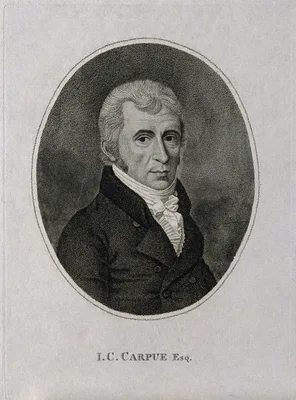
1819 CARPUE, Joseph Constantine (1764 – 1846)
A history of the high operation for the stone, by incision above the pubis; with observations on the advantages attending it; and an account of the various methods of lithotomy, from the earliest periods to the present time.
Carpue popularized suprapubic lithotomy, a procedure not often previously carried out.
GMN 4288 · https://historyofmedicine.com/id/5350
1822 ANDERSON, William; DURAND, Asher Brown (1796 – 1886)
System of surgical anatomy. Part first [all published]: On the structure of the groin, pelvis, and perineum. As connected with inguinal and femoral hernia; Tyeing the iliac arteries; and the operation of lithotomy. Illustrated by nine copper-plate engravings
Anderson trained at the Royal College of Surgeons in Edinburgh, emigrated to America in 1820 and, after delivering a series of anatomical lectures in New York under the patronage of Valentine Mott, became affiliated w…
GMN 13314 · https://historyofmedicine.com/id/15580
1826 CIVIALE, Jean (1792 – 1867)
Sur la lithotritie ou broiement de la pierre dans la vessie.
Civiale invented a lithotriteur for crushing stones inside the bladder and was responsible for putting the operation of lithotrity upon a sound basis. His claim to have introduced the operation was opposed by Leroy d’…
GMN 4289 · https://historyofmedicine.com/id/5353
1827 SÉGALAS D'ETCHÉPARE, Pierre Salomon (1792 – 1875)
Un moyen d’éclairer l’urètre et la vessie de manière à voir dans l’intérieur de ces organes.
Urethro-cystic speculum (endoscope).
GMN 4165.1 · https://historyofmedicine.com/id/5982
1830 COOPER, Sir Astley Paston (1768 – 1841)
Observations on the structure and diseases of the testis.
GMN 4166 · https://historyofmedicine.com/id/5984
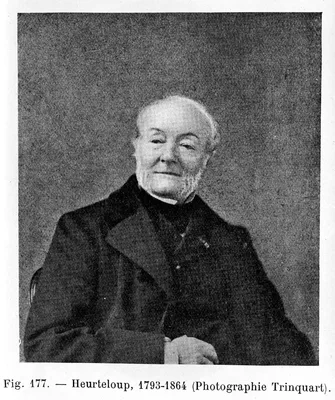
1833 HEURTELOUP, Charles Louis Stanislaus (1793 – 1864)
Lithotripsie. Mémoires sur la lithotripsie par percussion.
Heurteloup designed the best lithotrite of the time. He was one of several claimants to the distinction of having introduced modern lithotrity. See Lancet, 1831-32, 2, 567-70.
GMN 4290 · https://historyofmedicine.com/id/5357
1834 GUTHRIE, George James (1785 – 1856)
On the anatomy and diseases of the neck of the bladder, and of the urethra.
Guthrie was the first to describe non-prostatic obstruction at the neck of the bladder. On p. 252 of the above work is an account of Guthrie’s prostatic catheter for use in trans-urethral prostatectomy.
GMN 4167 · https://historyofmedicine.com/id/5986
1836 DUPUYTREN, Guillaume, Le Baron (1777 – 1835)
Mémoire sur une manière nouvelle de pratiquer l’opération de la pierre… Terminé et publié par J.L. Sanson et par L.J. Bégin…
Posthumously published by Sanson, whose method of rectovesical lithotomy is considered here along with the controversial method of lithotrity. Dupuytren tried both but dropped them in favor of continuing the method of…
GMN 4290.1 · https://historyofmedicine.com/id/5362
1839 STAFFORD, Richard Anthony (1801 – 1854)
A case of enlargement from melanoid tumour of the prostate gland, in a child of five years of age.
Sarcoma of the prostate was first recorded by Stafford.
GMN 4259 · https://historyofmedicine.com/id/5210
1841 MERCIER, Louis-Auguste (1811 – 1882)
Recherches anatomiques, pathologiques et thérapeutiques sur les maladies des organes urinaires et génitaux considerés specialement chez les hommes agés.
Mercier emphasized the importance of the muscle fibres around the bladder neck, “Mercier’s bar”, in prostatism.
GMN 4259.1 · https://historyofmedicine.com/id/5213
1845 MAISONNEUVE, Jacques Gilles Thomas (1809 – 1877)
Mémoire sur un moyen très simple et très sur de pratiquer le cathétérisme dans les cas même les plus difficiles.
Maisonneuve introduced a hair catheter.
GMN 4168 · https://historyofmedicine.com/id/5990
1845 MERCIER, Louis-Auguste (1811 – 1882)
Sur les cathéters coudés, sur la manière de les introduire et sur les avantages qu’on peut rétirer de leur emploi.
Mercier introduced the coudé catheter in 1836 and the bicoudé about 1841.
GMN 4168.1 · https://historyofmedicine.com/id/5993
1851 ADAMS, John (1806 – 1877)
The anatomy and diseases of the prostate gland.
Adams was the first to distinguish between hypertrophy and carcinoma of the prostate. Digital facsimile from the Internet Archive at this link.
GMN 4260 · https://historyofmedicine.com/id/5215

![SCOT, Michael [Michael Scotus] (1175 – 1232)](/media/portraits/12461)