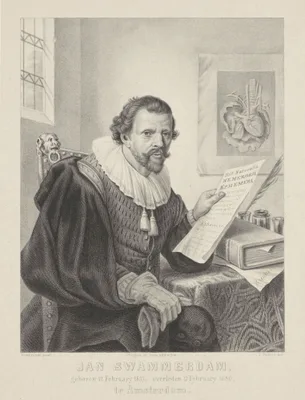
1667 –1673 BLASIUS, Gerard "Gerrit" Leendertszoon [Blaes] (162 – 1682); SWAMMERDAM, Jan (1637 – 1680); PRIVATE COLLEGE OF AMSTERDAM, (Collegium Privatum Amstelodamense)
Observationes anatomicae selectiores. [Part II: Observationum anatomicarum… pars altera]. 2 vols.
The only publications of one of the earliest scientific societies, active from 1664 to 1672. Founded by Gerard Blaes, and numbering Jan Swammerdam among its members, the college devoted itself to comparative anatomica…
GMN 292.1 · https://historyofmedicine.com/id/8835
1686 BOHN, Johannes (1640 – 1718)
Circulus anatomico-physiologicus.
Bohn's approach was mechanistic in that he grave predominately physical interpretations of vital processes. He experimented on the decapitated frog, declaring the reflex phenomena to be entirely material and mechanica…
GMN 1355 · https://historyofmedicine.com/id/1631
1768 WHYTT, Robert (1714 – 1766)
The works of Robert Whytt, M.D. Late physician to his Majesty.... Published by his son.
Digital facsimile from the Internet Archive at this link.
GMN 11733 · https://historyofmedicine.com/id/13934
1824 FLOURENS, Marie Jean Pierre (1794 – 1867)
Recherches expérimentales sur les propriétés et les fonctions du système nerveux, dans les animaux vertébrés.
Experimental proof that vision depends on the integrity of the cerebral cortex. See No. 1391 for his first paper on the subject. Partial English translation in von Bonin, Some papers on the cerebral cortex, Springfiel…
GMN 1493 · https://historyofmedicine.com/id/2568
1826 MÜLLER, Johannes Peter (1801 – 1858)
Zur vergleichenden Physiologie des Gesichtssinnes des Menschen und der Thiere.
Includes Müller’s law of specific nerve energies. For an English translation, see his Elements of physiology, transl. W. Baly, London, 1838, vol. 1, pp. 766-67. Includes (p. 73) his explanation of the color sensations…
GMN 1257 · https://historyofmedicine.com/id/2130
1826 MÜLLER, Johannes Peter (1801 – 1858)
Ueber die phantastischen Gesichtserscheinungen.
Müller’s early studies on specific nerve energies are included in the above work. Later he stated, in his Handbuch der Physiologie, Coblenz, 1840, 2, 258, his law of specific nerve energies – each nerve of special sen…
GMN 1456 · https://historyofmedicine.com/id/2355
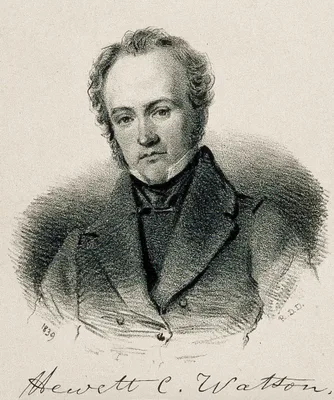
1836 WATSON, Hewett Cottrell (1804 – 1881)
What is the use of the double brain?
GMN 11645 · https://historyofmedicine.com/id/13846
1842 MAGENDIE, François (1783 – 1855)
Recherches physiologiques et cliniques sur le liquide céphalo-rachidien ou cérébro-spinal. 1 vol. and atlas.
“Foramen of Magendie” described.
GMN 1397 · https://historyofmedicine.com/id/1993
1844 BERNARD, Claude (1813 – 1878)
Recherches expérimentales sur les fonctions du nerf spinal, étudié spécialement dans ses rapports avec le pneumogastrique.
GMN 1264 · https://historyofmedicine.com/id/2188
1844 WIGAN, Arthur Ladbroke (1785 – 1847)
A new view of insanity: The duality of the mind proved by the structure, functions and diseases of the brain and by the phenomena of mental derangement and shown to be essential to moral responsibility. With an appendix: 1. On the influence of religion on insanity. 2. Conjectures on the nature of the mental operations. 3. On the management of lunatic asylums.
"From the seventeenth century there were shifts in some of the basic assumptions about how the brain and mind functioned, and there are some useful markers along the way to an era of more systematic studies. Descartes…
GMN 11646 · https://historyofmedicine.com/id/13847
1846 BURROWS, Sir George (1801 – 1887)
On the disorders of the cerebral circulation; and on the connection between affections of the brain and diseases of the heart.
"Burrows was the first to indicate that the effects of cerebral anemia could be produced not only by obvious anemia itself, but also from a fall in blood pressure. He carried out some of the earliest studies of the ph…
GMN 11558 · https://historyofmedicine.com/id/13757
1855 REMAK, Robert (1815 – 1865)
Ueber methodische Electrisirung gelähmter Muskeln.
Discovery of the motor points, the entry points of the nerves into the muscles – essential for stimulating the muscles by electricity.
GMN 1995.1 · https://historyofmedicine.com/id/1850
1855 PANIZZA, Bartolomeo (1785 – 1867)
Osservazioni sul nervo ottico.
Panizza was the first to attribute the vision function to the posterior cortex.
GMN 1511 · https://historyofmedicine.com/id/2600
1856 BERNARD, Claude (1813 – 1878)
Analyse physiologique des propriétés des systèmes musculaires et nerveux au moyen de curare.
Bernard paralysed motor nerve-endings with curare and demonstrated the independent excitability of muscle. He showed that curare acted by stopping the transmission of impulses from motor nerves to voluntary muscles.
GMN 2079 · https://historyofmedicine.com/id/499
1857 ZIEMSSEN, Hugo Wilhelm von (1829 – 1902)
Die Electricität in der Medicin.
Ziemssen confirmed Remak’s discovery of the motor points, established their exact location, and published exact instructions for finding the motor points for stimulating the various muscles of the body.
GMN 1996 · https://historyofmedicine.com/id/1855
1857 BERNARD, Claude (1813 – 1878)
Leçons sur les effets des substances toxiques et médicamenteuses.
Bernard included a summary of his experiments with curare in the Leçons to establish his priority in researching its effects. He demonstrated in these experiments the susceptibility of the nerve-muscle preparation to …
GMN 1863 · https://historyofmedicine.com/id/2419
1858 BERNARD, Claude (1813 – 1878)
Leçons sur la physiologie et la pathologie du système nerveux. 2 vols.
GMN 1399 · https://historyofmedicine.com/id/2000
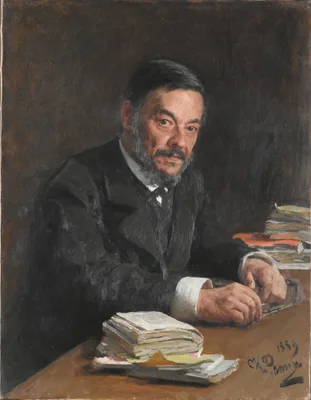
1863 SECHENOV, Ivan Mikhailovich (1829 – 1905)
Physiologische Studien über die Hemmungsmechanischen für die Reflexthätigkeit des Rückenmarks im Gehirn des Frosches.
Sechenov discovered the cerebral inhibition of spinal reflexes. He was Professor of Physiology at St. Petersburg and Moscow, and the “father of Russian physiology”.
GMN 1362 · https://historyofmedicine.com/id/1681
1868 HERING, Karl Ewald Konstantin (1834 – 1918)
Die Selbststeuerung der Athmung durch den Nervus vagus.
GMN 941 · https://historyofmedicine.com/id/192
1869 MITCHELL, Silas Weir (1829 – 1914)
Researches on the physiology of the cerebellum.
Mitchell, leading American neurologist of his time, performed over 350 experiments upon the cerebellum. He emphasized its co-ordinating function, first postulated by Flourens, and he proposed his “augmentor” theory of…
GMN 1404 · https://historyofmedicine.com/id/2043
1874 BARTHOLOW, Roberts (1831 – 1904)
Investigations into the functions of the human brain.
Bartholow confirmed in man the findings of Fritsch and Hitzig (No. 1405) that electrical stimulus of the cortex on one side stimulated muscles on the other side of the body.
GMN 1406.1 · https://historyofmedicine.com/id/2070
1882 GASKELL, Walter Holbrook (1847 – 1914)
On the rhythm of the heart of the frog, and on the nature of the action of the vagus nerve.
Croonian Lectures, 1881. Gaskell’s classical memoir on the muscles and nerves of the heart included a description of “Gaskell’s nerves”, the accelerator nerves of the heart. He showed that the motor impulses from the …
GMN 829 · https://historyofmedicine.com/id/309
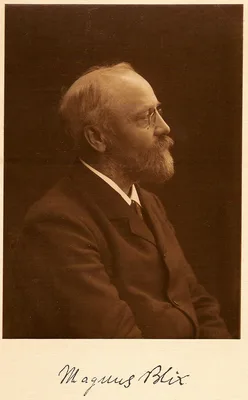
1884 BLIX, Magnus Gustav (1849 – 1904)
Experimentelle Beiträge zur Lösung der Frage über die specifische Energieder Hautnerven
Besides his investigation of the specific energies of cutaneous nerves, Blix is remembered for his work on the thermodynamics of muscular contraction; he designed a muscle indicator diagram; he was also the first to s…
GMN 1468 · https://historyofmedicine.com/id/2422
1884 GOLDSCHEIDER, Johannes Karl August Eugen Alfred (1858 – 1935)
Die spezifische Energie der Temperaturnerven.
GMN 1469 · https://historyofmedicine.com/id/2426
1884 MOSSO, Angelo (1846 – 1910)
La paura.
Mosso conducted experiments with special equipment, which he devised to suit the requirements of the studies. He pursued two main lines of research: the analysis of motor functions and the relationship between physiol…
GMN 10113 · https://historyofmedicine.com/id/12302
1885 BOWDITCH, Henry Pickering (1840 – 1911)
Note on the nature of nerve-force.
GMN 1281 · https://historyofmedicine.com/id/2296
1886 GASKELL, Walter Holbrook (1847 – 1914)
On the structure, distribution, and function of the nerves which innervate the visceral and vascular system.
Gaskell established the origin of the preganglionic neurons (white rami).
GMN 1329 · https://historyofmedicine.com/id/1356
1886 MITCHELL, Silas Weir (1829 – 1914); LEWIS, Morris James (1852 – 1928)
Physiological studies of the knee-jerk.
Demonstration that the knee-jerk can be reinforced by sensory stimulation.
GMN 1367 · https://historyofmedicine.com/id/1702
1887 ZIEHEN, Georg Theodor (1862 – 1950)
Sphygmographische Untersuchungen an Geisteskranken.
Ziehen, a student of Hermann Munk, wrote his habiltation thesis on sphygmographic studies of psychiatric patients. This was the first monograph on the subject.
GMN 12295 · https://historyofmedicine.com/id/14517
1888 HENSCHEN, Salomon Eberhard (1847 – 1930)
Kort öfversigt af läran om lokalisationen i hjernbarken.
Discovery of the cortical visual center.
GMN 1521 · https://historyofmedicine.com/id/2629
1888 CAJAL, Santiago Ramón y (1852 – 1934)
Estructura de los centros nerviosos de las aves.
"The foundational article of modern cellular neuroscience. . . . this is where Cajal first demonstrated with the Golgi method how neurons interact by contact not continuity in the adult central nervous system—in this …
GMN 7334 · https://historyofmedicine.com/id/9505
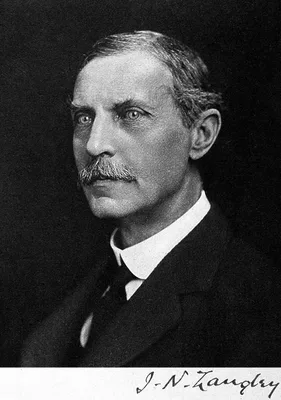
1889 LANGLEY, John Newport (1852 – 1925); DICKINSON, William Lee (1862 – 1904)
On the local paralysis of peripheral ganglia, and on the connexion of different classes of nerve fibres with them.
Langley and Dickinson studied the effect of nicotine on nerve fibers, and were able by this means to make a thorough investigation of the distribution of nerve fibers.
GMN 1329.1 · https://historyofmedicine.com/id/1372
1890 BOWDITCH, Henry Pickering (1840 – 1911)
Ueber den Nachweis der Unermüdlichkeit des Säugethiernerven.
Bowditch demonstrated the indefatigability of nerve (“Bowditch’s law”).
GMN 1282 · https://historyofmedicine.com/id/2300
1891 LUCIANI, Luigi (1840 – 1919)
Il cervelletto. Nuovi studi di fisiologia normale e patologica.
Luciani succeeded in keeping dogs alive after total extirpation of the cerebellum, and initiated the modern study of cerebellar function. Digital facsimile from Google Books at this link.
GMN 1421 · https://historyofmedicine.com/id/2144
1892 EWALD, Ernst Julius Richard (1855 – 1921)
Physiologische Untersuchungen über das Endorgan des Nervus octavus.
Ewald clarified the function of the eighth cranial nerve.
GMN 1472 · https://historyofmedicine.com/id/2437
1896 HILL, Sir Leonard Erskine (1866 – 1952)
The physiology and pathology of the cerebral circulation.
GMN 4585 · https://historyofmedicine.com/id/461
1898 –1900 SHARPEY-SCHAFER, Sir Edward Albert (1850 – 1935); SCHÄFER, Edward Albert (1850 – 1935); SHERRINGTON, Sir Charles Scott (1857 – 1952)
Text-book of physiology. Edited by Edward Schäfer. 2 vols.
A collective work and a classic textbook of physiology, edited by Schäfer using the original version of his last name. He was a pupil of Sharpey, and when that great man died without any known descendants Schäfer gave…
GMN 649 · https://historyofmedicine.com/id/608
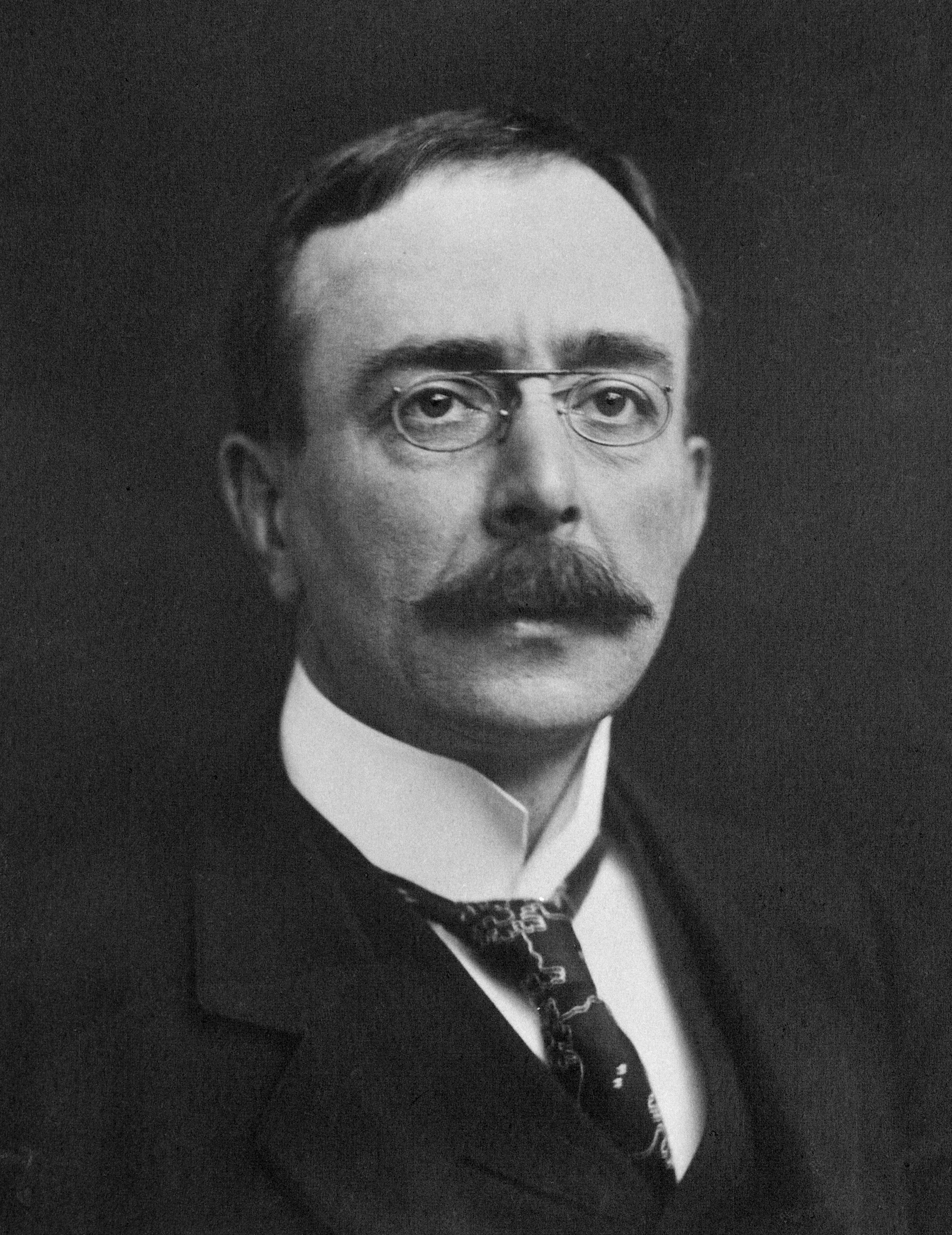
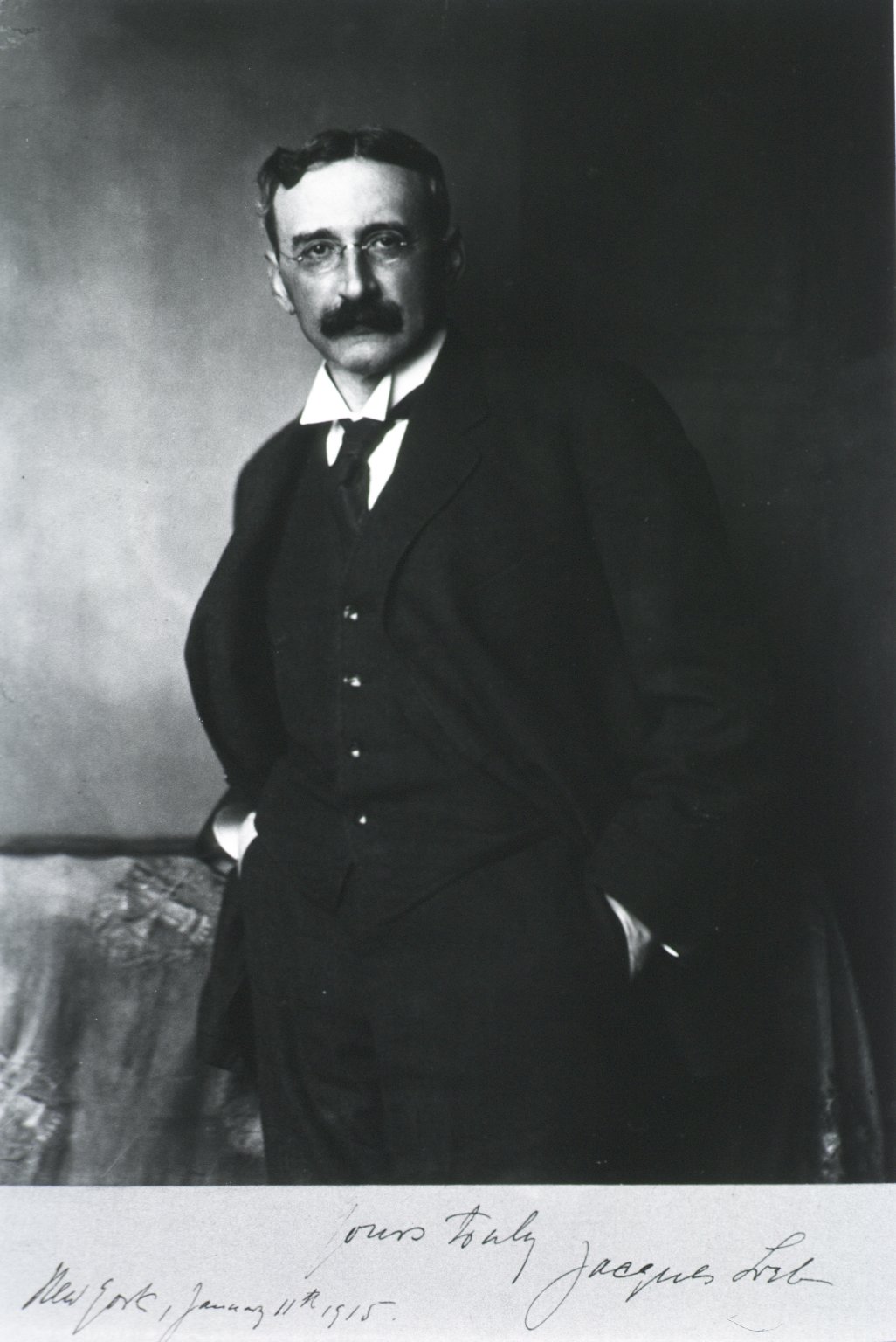
1899 LOEB, Jacques (1859 – 1924)
Einleitung in die vergleichende Gehirnphysiologie und vergleichende Psychologie.
GMN 1428 · https://historyofmedicine.com/id/2633
1899 BARKER, Lewellys Franklin (1867 – 1943)
The nervous system and its constituent neurones, Designed for the use of practitioners of medicine and of students of medicine and psychology.
Considered a masterpiece of compilation of the new scientific evidence for the neuron theory. "Also contains Gertrude Stein’s first publication, which consists of a quote and further description of her developmental w…
GMN 7336 · https://historyofmedicine.com/id/9507
1906 SHERRINGTON, Sir Charles Scott (1857 – 1952)
The integrative action of the nervous system.
Sherrington insisted that the essential function of the nervous system was the co-ordination of activities of the various parts of the organism. His work on the nervous system, especially his experimental studies of r…
GMN 1432 · https://historyofmedicine.com/id/2209
1907 WINKLER, Cornelis (1855 – 1941)
The central course of the nervus octavus and its influence on motility.
Winkler was Professor of Neurology and Psychiatry at Amsterdam and Utrecht. He published more than 200 papers, among the most important being that on the central pathways of the eighth nerve.
GMN 1476 · https://historyofmedicine.com/id/2454
1909 KARPLUS, Johann Paul (1866 – 1936); KREIDL, Alois (1864 – 1928)
Gehirn und Sympathicus.
First experimental studies on hypothalmic function
GMN 1436 · https://historyofmedicine.com/id/2233
1913 GOLDMANN, Edwin Allen (1862 – 1913)
Vitalfärbung am Zentralnervensystem. Beitrag zur Physio-pathologie des Plexus choroideus und der Hirnhäute.
Goldmann was the first to demonstrate the blood-brain barrier. "By the intravenous and intrathecal administration of trypan blue he found that the barrier was impermeable to its large molecules, and he concluded that …
GMN 9658 · https://historyofmedicine.com/id/11845
1916 GASKELL, Walter Holbrook (1847 – 1914)
The involuntary nervous system. Part 1.
This book sums up the life work of Gaskell, who laid the histological foundation of the modern study of the autonomic nervous system. No more published.
GMN 1331 · https://historyofmedicine.com/id/1424
1924 MAGNUS, Rudolf (1873 – 1927)
Körperstellung.
A classic work on muscle tone and posture, a subject upon which Magnus spent many years of study. He demonstrated among other things that the labyrinth is the one sense organ entirely concerned with posture and equili…
GMN 661 · https://historyofmedicine.com/id/537
1927 ADRIAN, Edgar Douglas (1889 – 1977); MATTHEWS, Rachel
The action of light on the eye.
On the electrical discharges from the vertebrate optic nerve.
GMN 1528 · https://historyofmedicine.com/id/2854
1928 –1941 PAVLOV, Ivan Petrovich (1849 – 1936)
Lectures on conditioned reflexes. 2 vols.
Besides his work on digestion, Pavlov is remembered for his investigations upon conditioned reflexes. An English translation of another work by Pavlov, entitled Conditioned reflexes, appeared in 1927.
GMN 1445 · https://historyofmedicine.com/id/2244
1933 VIALLI, Maffo (1897 – 1983); ERSPAMER, Vittorio (1909 – 1999)
Cellule enterocromaffini e cellule basigranulose acidofile nei vertebrati. (Ricerche istochimiche.)
Vialli and Erspamer reported “enteramine”, which Erspamer and B. Asero (Nature, Lond., 1952, 169, 800-01) found to be identical with 5-hydroxytryptamine, isolated and named serotonin by M. M. Rapport et al. in 1948 (J…
GMN 1924.2 · https://historyofmedicine.com/id/2713
1936 LOEWI, Otto (1873 – 1961)
Quantitative und qualitative Untersuchungen über den Sympathicusstoff*. Zugleich XIV. Mitteilung über humorale Übertragung der Herznervenwirkung Ausgeführt mit Unterstützung der -Stiftung.
In this paper Loewi proved that the cardioexcitatory neurotransmitter of the sympathetic nerves is adrenaline, or actually noradrenaline.
GMN 7346 · https://historyofmedicine.com/id/9518
1946 EULER, Ulf Svante Hansson von (1905 – 1983)
A specific sympathomimetic ergone in adrenergic nerve fibres (sympathin) and its relations to adrenaline and nor-adrenaline.
Noradrenaline shown to be the predominant transmitter of the effects of sympathetic nerve impulses. In 1970 Euler shared the Nobel Prize in Physiology or Medicine with Katz and Axelrod "for their discoveries concernin…
GMN 1354.1 · https://historyofmedicine.com/id/1612