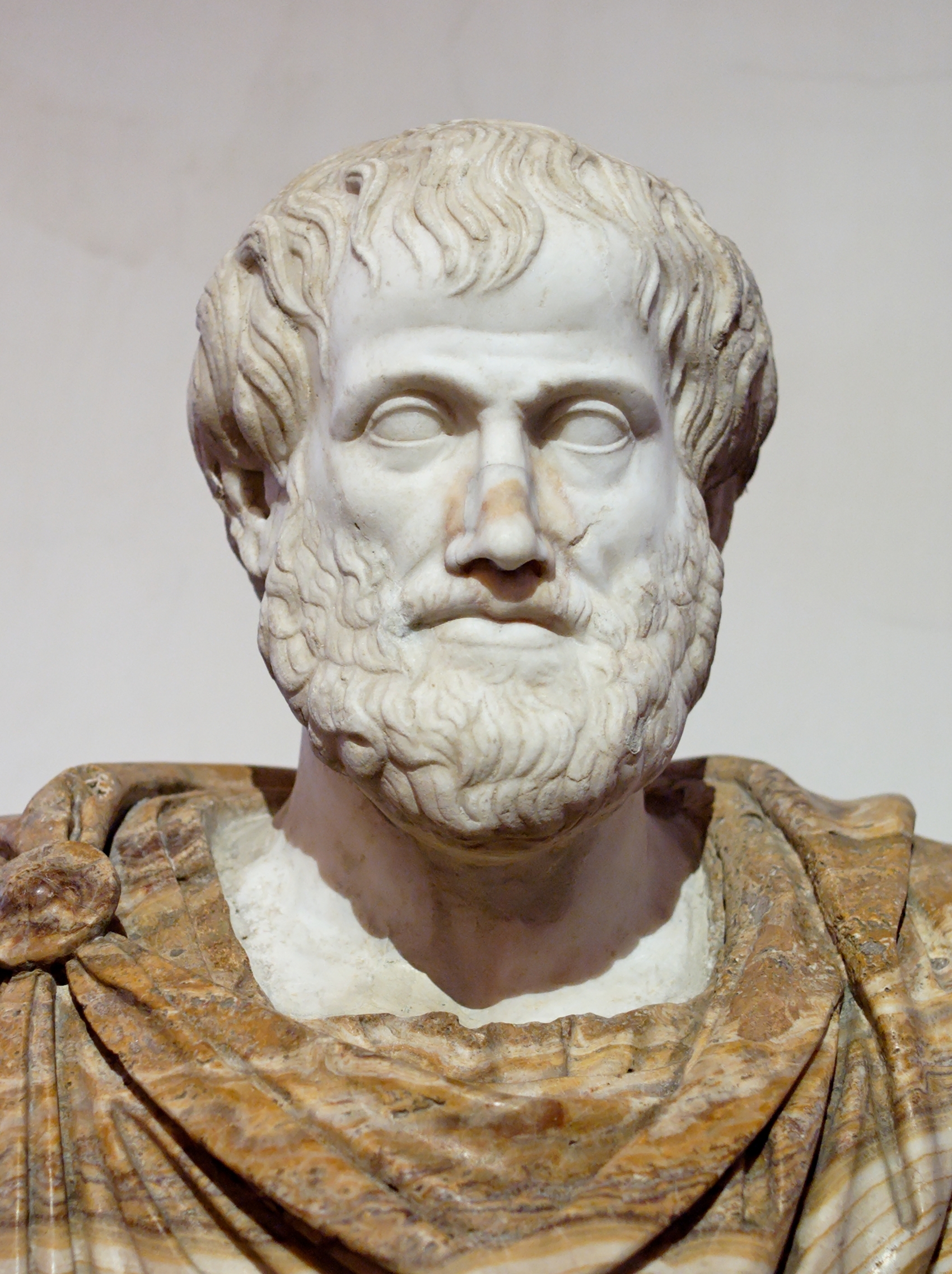
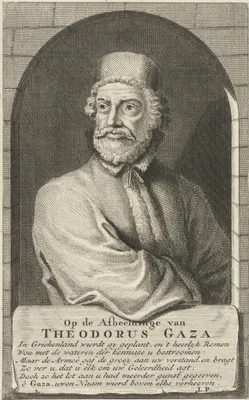
1476 ARISTOTLE (ἈΡΙΣΤΟΤΈΛΗΣ) (-384 – -322); PODOCATARO, Ludovico (Ludovicus Podocatharus) (1429 – 1504); GAZA, Theodorus (Θεόδωρος Γαζῆς) (1398 – 1475)
De animalibus. Translated by Theodorus Gaza. Edited by Ludovicus Podocarthus.
Includes Aristotle's De historia animalium, De partibus animalium, and De generatione animalium. Aristotle was the first scientist to gather empirical evidence about the biological world through observation. By his ca…
GMN 274 · https://historyofmedicine.com/id/14354
1477 SCOT, Michael [Michael Scotus] (1175 – 1232)
Liber phsionomiae [and other works].
"Composed between 1209 and 1226, the first of the two primary texts discusses human generation — anatomy, physiology, astrology, sexual behavior, conception and the health of the fetus. The second part, the Physiognom…
GMN 10725 · https://historyofmedicine.com/id/12919
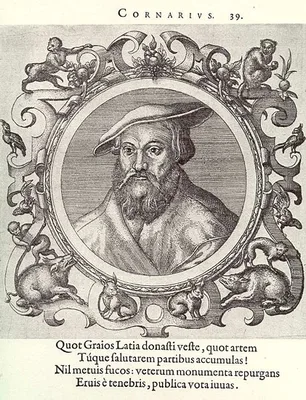
1536 GALEN, [Κλαύδιος Γαληνός; Galen of Pergamon] (129 – 216); MARCELLUS EMPIRICUS, (Marcellus Burdigalensis) (375 – 425); CORNARIUS, Janus (1500 – 1558)
De medicamentis empiricis physicis ac rationalibus liber.... Edited by Janus Cornarius. Item Claudii Galeni libri novem nunc primum Latini facti.... Jani Cornarii.
The Gallo-Roman physician Marcellus was born in Bordeaux. He may have served as magister officiorum under Theodosius I, or may have been royal physician. Sarton (Introduction to the history of science I, 391) consider…
GMN 10961 · https://historyofmedicine.com/id/13157
1564 ARANZI, Giulio Cesare [ARANZIO; ARANTIUS] (1530 – 1589)
De humano foetu.
According to Charles Singer, Aranzi gave the first adequate printed account of the gravid uterus, and finally dispelled the idea of a human cotyledonous placenta. He gave by far the best description of fetal anatomy u…
GMN 464 · https://historyofmedicine.com/id/1246
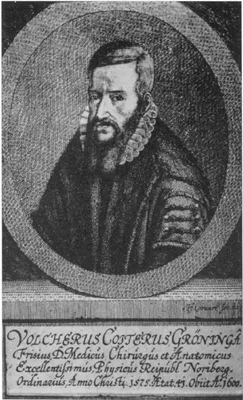
1572 –1573 COITER, Volcher (1534 – 1576)
Externarum et internarum principalium humani corporis partium tabulae.
Coiter made several important contributions to the study of human anatomy, and was the first to elevate comparative anatomy to the rank of an independent branch of biology. His Externarum et internarum principalium hu…
GMN 1539 · https://historyofmedicine.com/id/1251
1575 FALLOPPIO, Gabriele [FALLOPPIUS] (1523 – 1562); COITER, Volcher (1534 – 1576)
Lectiones Gabrielis Falloppi de partibus similaribus humani corporis, ex diversis exemplari eus a Volchero Coiter summa cum diligentia collecta. His accessere diversorum animalium sceletorum explicationes iconibus artificiosis, et genuinis illustratae.
Coiter, a pupil of Fallopius and Eustachius, became town physician of Nuremberg. His book on comparative osteology, contained in his edition of the lectures of Fallopius, extended his studies begun in his work of 1572…
GMN 284 · https://historyofmedicine.com/id/8820
1587 ARANZI, Giulio Cesare [ARANZIO; ARANTIUS] (1530 – 1589)
De humano foetu liber tertio editus, ac recognitus. Eiusdem anatomicarum observationum liber: ac De tumoribus secundum locos affectos liber nunc primum editi.
First edition of Aranzi's Anatomicarum observationum published with the third edition of De humano foetu. In the Anatomicarum observationum Aranzi pointed out that the eye muscles arise from the margin of the optic ca…
GMN 7337 · https://historyofmedicine.com/id/9508
1604 FABRIZIO, Girolamo [FABRICIUS AB AQUAPENDENTE] (1537 – 1619)
De formato foetu.
Fabricius wrote at great length on embryology, inventing many theories, some of which were false. His illustrations marked a great advance on previous work. Fabricius recorded for the first time the dissection of seve…
GMN 465 · https://historyofmedicine.com/id/1259
1621 FABRIZIO, Girolamo [FABRICIUS AB AQUAPENDENTE] (1537 – 1619)
De formatione ovi et pulli.
GMN 466 · https://historyofmedicine.com/id/1260
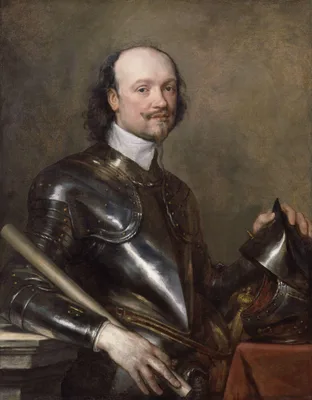
1644 DIGBY, Sir Kenelm (1603 – 1665)
Two treatises in the one of which the nature of bodies, in the other, the nature of mans soule is looked into in way of discovery of the immortality of reasonable soules.
"Digby's Two Treatises was intended to prove the immortality of the rational soul and its distinction from the material body, a dualistic view shared by many of his contemporaries. the work is noteworthy on several co…
GMN 11581 · https://historyofmedicine.com/id/13780
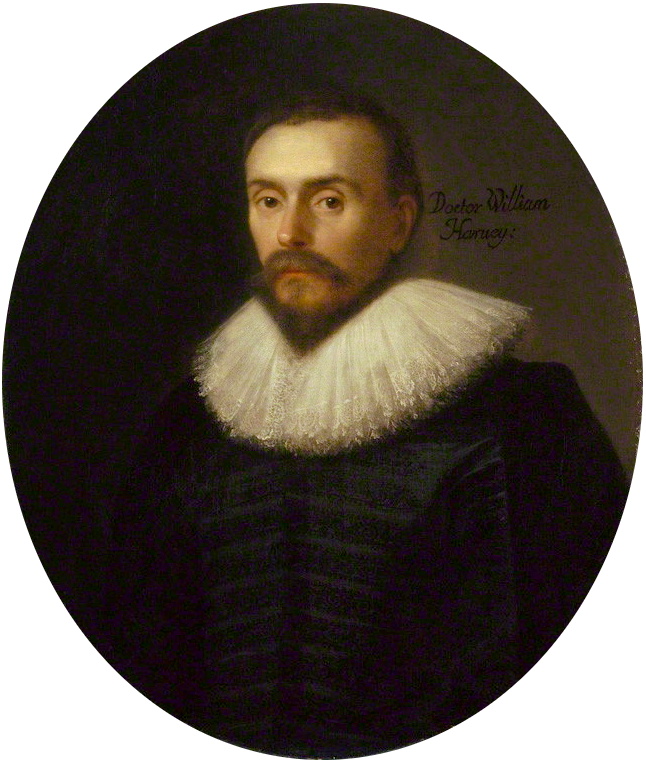
1651 HARVEY, William (1578 – 1657)
Exercitationes de generatione animalium.
Harvey was among the first to disbelieve the erroneous doctrine of the “preformation” of the fetus; he maintained that the organism derives from the ovum by the gradual building up and aggregation of its parts. The ch…
GMN 467 · https://historyofmedicine.com/id/1263
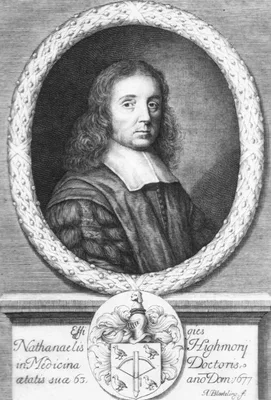
1651 HIGHMORE, Nathaniel (1613 – 1685)
The history of generation…
Highmore’s account of the development of the chick is the first embryological study based on microscopical examination, predating Malpighi (No. 468) by more than twenty years. This is also the first book in English to…
GMN 467.1 · https://historyofmedicine.com/id/1268
1667 NEEDHAM, Walter (1631 – 1691)
Disquisitio anatomica de formatu foetu.
Founding work of developmental chemical embryology, the first book to report chemical experiments on the developing mammalian embryo, and the first to give practical instructions on dissection of embryos. Needham was …
GMN 467.2 · https://historyofmedicine.com/id/1269
1673 MALPIGHI, Marcello (1628 – 1694)
De ovo incubato observationes.
First accurate description, from the microscopical point of view, of the chick embryo. See No. 467.1. English translation in No. 534.1
GMN 468 · https://historyofmedicine.com/id/1272
1673 MALPIGHI, Marcello (1628 – 1694)
Dissertatio epistolica de formatione pulli in ovo.
This and the De ovo incubato (No. 468) placed the study of embryology on a sound basis, surpassing in accuracy all other contemporary work on the subject and foreshadowing some of the more important general lines of r…
GMN 469 · https://historyofmedicine.com/id/1273
1675 –1679 MALPIGHI, Marcello (1628 – 1694)
Anatome plantarum.
Malpighi was the founder of microscopic anatomy and a pioneer in the study of plant development. He approached the subject through the study of plant tissues. His Appendix adds to the work on chick embryology Malpighi…
GMN 536 · https://historyofmedicine.com/id/156
1686 MALPIGHI, Marcello (1628 – 1694)
Opera omnia. 2 vols.
Malpighi was the founder of histology. In 1660 he was the first to see the capillary anastomosis between the arteries and the veins, thus contributing to the completion of Harvey’s work on the circulation. Malpighi wa…
GMN 66 · https://historyofmedicine.com/id/8778
1734 –1735 CASSEBOHM, Johann Friedrich (1699 – 1743)
Tractatus quatuor anatomici de aure humana. Tractatus quintus anatomicus de aure humana. Cui accedit tractatus sextus de aure monstri humani.
Important tracts on the anatomy and physiology of the ear. Cassebohm’s studies of the embryonic ear far surpassed his predecessors, including Valsalva and Morgagni, and were not themselves surpassed until the work of …
GMN 1547 · https://historyofmedicine.com/id/1280
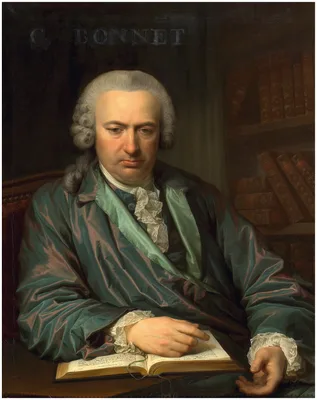
1745 BONNET, Charles (1720 – 1793)
Traité d’insectologie.
This pioneering work on experimental entomology incorporates Bonnet’s most important discovery–parthenogenetic reproduction–based on his study of aphids. Bonnet used the result of this and other discoveries as a basis…
GMN 308 · https://historyofmedicine.com/id/115
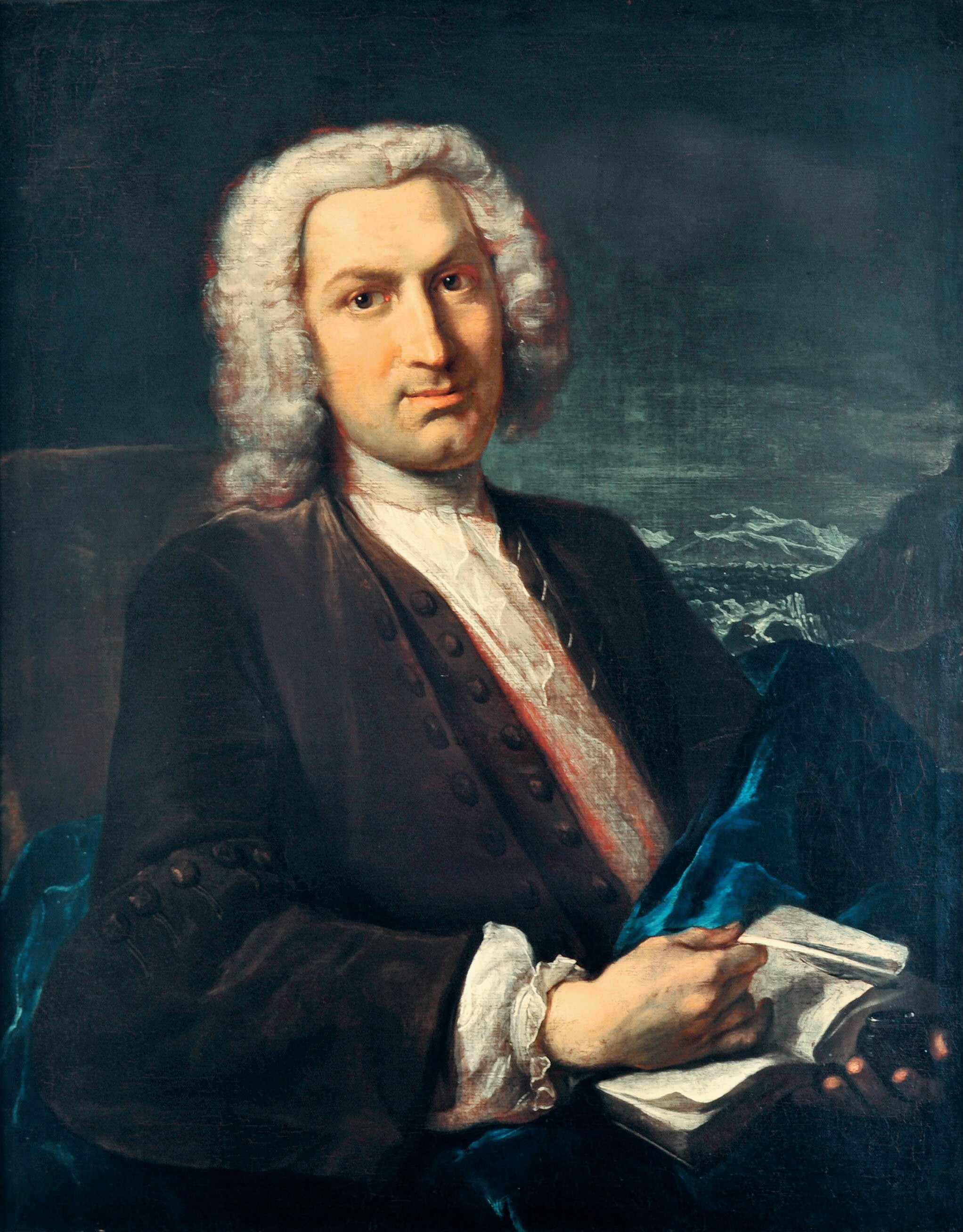
1758 HALLER, Albrecht von (1708 – 1777)
Sur la formation du coeur dans le poulet…2 vols.
Haller devised a numerical method to demonstrate the rate of growth of the fetus, showing that the rate of growth is relatively rapid in the earlier stages but that the tempo gradually decreases. He calculated the rat…
GMN 469.2 · https://historyofmedicine.com/id/1289
1759 WOLFF, Caspar Friedrich (1733 – 1794)
Theoria generationis.
Wolff observed in great detail the early processes of embryonic differentiation. He disposed of the “preformation” theory, substituting his view that the organs are formed from leaf-like (blastodermic) layers. He thus…
GMN 470 · https://historyofmedicine.com/id/1298
1762 BONNET, Charles (1720 – 1793)
Considérations sur les corps organisés. 2 vols.
Bonnet’s theory of generation offered the best synthesis of 18th century ideas of development and remained a leading authority until von Baer. Bonnet believed in the preformation of the embryo. He used many of Haller’…
GMN 472 · https://historyofmedicine.com/id/1309
1768 WOLFF, Caspar Friedrich (1733 – 1794)
De formatione intestinorum praecipue.
One of the acknowledged classics of embryology. Wolff’s description of the formation of the chick’s intestine by the rolling inwards of a leaf-like layer of the blastoderm was important as proving his theory of epigen…
GMN 471 · https://historyofmedicine.com/id/1304
1781 BLUMENBACH, Johann Friedrich (1752 – 1840)
Ueber den Bildungstrieb und das Zeugungsgeschäft.
Blumenbach, Professor of Medicine at Göttingen, was the founder of modern anthropology. In the above work he rejected the “preformation” theory and advanced the theory of epigenesis as the true explanation of the phen…
GMN 104 · https://historyofmedicine.com/id/1586
1799 SOEMMERRING, Samuel Thomas von (1755 – 1830)
Icones embryonum humanorum.
Soemmerring met William Hunter during a visit to London in 1778. The latter’s classic work on the pregnant uterus (No. 6157) dealt only with the latter half of pregnancy. Soemmerring therefore decided, in a supplement…
GMN 473 · https://historyofmedicine.com/id/1330
1816 TIEDEMANN, Friedrich (1781 – 1861)
Anatomie und Bildungsgeschichte des Gehirns im Foetus des Menschen: nebst einer vergleichenden Darstellung des Hirnbaues in den Thieren.
Digital facsimile from Universitätsbibliothek Heidelberg at this link.
GMN 11178 · https://historyofmedicine.com/id/13375
1817 PANDER, Heinrich Christian (1794 – 1865)
Dissertatio sistens historiam metamorphoseos, quam ovum incubatum prioribus quinque diebus subit.
Pander’s doctoral thesis (unillustrated) in which he announced his discovery of the trilaminar structure of the chick blastoderm, a term that he coined. Pander's discovery stimulated von Baer’s research. Also in 1817 …
GMN 474 · https://historyofmedicine.com/id/1335
1824 PRÉVOST, Jean-Louis (1790 – 1850); DUMAS, Jean-Baptiste André (1800 – 1884)
Deuxième mémoire sur la génération. Rapports de l’oeuf avec la liqueur fécondante. Phénomènes appréciables, résultant de leur action mutuelle. Développement de l’oeuf des Batraciens.
Prévost and Dumas proved that the frog egg is fertilized by the entry of spermatozoa.
GMN 474.1 · https://historyofmedicine.com/id/1343
1825 MÜLLER, Johannes Peter (1801 – 1858)
Ueber die Entwickelung der Eier im Eierstock bei den Gespenst-heuschrecken.
Discovery of the Müllerian duct.
GMN 475 · https://historyofmedicine.com/id/1352
1825 PURKYNĔ, Jan Evangelista [PURKINJE] (1787 – 1869)
Symbolae ad ovi ovium historiam ante incubationem.
First description of the germinal vesicle in the embryo, “Purkynĕ’s vesicle” This is located on the spot of the yolk where the embryo develops. Later identified with the cell nucleus, this formed a bridge between the …
GMN 476 · https://historyofmedicine.com/id/1358
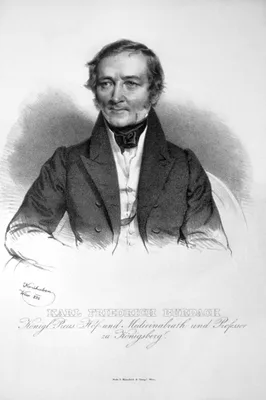
1826 –1840 MÜLLER, Johannes Peter (1801 – 1858); BURDACH, Karl Friedrich (1776 – 1847); BAER, Karl Ernst Ritter von (1792 – 1876); RATHKE, Martin Heinrich (1793 – 1860); WAGNER, Rudolf Friedrich Johann Heinrich (Rudolph) (1805 – 1864)
Die Physiologie als Erfahrungswissenschaft. Edited by Karl Friedrich Burdach. 6 vols.
Burdach’s great textbook of physiology was planned to run to 10 vols., but the death of his wife quenched his enthusiasm for the task. Parts of the text were written by von Baer, Rathke, Johannes Müller, R. Wagner and…
GMN 599 · https://historyofmedicine.com/id/433
1827 BAER, Karl Ernst Ritter von (1792 – 1876)
De ovi mammalium et hominis genesi.
Announces Baer’s discovery of the mammalian ovum, the culmination of a search begun by scientists at least as early as the work of de Graaf in the 17th century (No. 1209). The pamphlet was reprinted in facsimile in Is…
GMN 477 · https://historyofmedicine.com/id/1360
1827 PRÉVOST, Jean-Louis (1790 – 1850); DUMAS, Jean-Baptiste André (1800 – 1884)
Mémoire sur le développement du poulet dans l’oeuf.
First description of the segmentation of the frog’s egg.
GMN 478 · https://historyofmedicine.com/id/1361
1828 –1888 BAER, Karl Ernst Ritter von (1792 – 1876)
Ueber Entwicklungsgeschichte der Thiere. 2 vols.
Baer, the founder of modern embryology, definitely established the “germ-layer theory”, discovered the notochord and the human ovum, and postulated the law of corresponding stages in embryonic development. With Cuvier…
GMN 479 · https://historyofmedicine.com/id/1373
1828 SOEMMERRING, Samuel Thomas von (1755 – 1830); BURDACH, Karl Friedrich (1776 – 1847)
De foetu humano: Adnotationes anatomicae quibus praemissis viro perillustri Samueli Thomae de Soemmerring ... doctoratus in medicina impetrati semisaecularia gratulatur Universitas Literarum Regiomontana. Interprete Carlo Friderico Burdach.
Reproduction of a drawing by Soemmerring of the first stages of embryonic development visible with the naked eye, with a note by Burdach. Digital facsimile from Bayerische StaatsBibliothek at this link.
GMN 12937 · https://historyofmedicine.com/id/15184
1832 –1833 RATHKE, Martin Heinrich (1793 – 1860)
Abhandlungen zur Bildungs-und Entwicklungs-Geschichte der Menschen und der Thiere. 2 pts.
Rathke’s most notable discovery was of structures homologous with gill slits in bird and mammalian embryos. He discredited the vertebral theory of the skull.
GMN 480 · https://historyofmedicine.com/id/1377
1834 SCHWANN, Theodor (1810 – 1882)
De necessitate aëris atmosphaerici ad evolutionem pulli in ovo incubito. Dissertatio inauguralis physiologica....
Proof that air is necessary in the development of the embryo. Digital facsimile from Google Books at this link.
GMN 481 · https://historyofmedicine.com/id/1383
1837 REICHERT, Karl Bogislaus (1811 – 1883)
Ueber die Visceralbogen der Wirbelthiere.
First description of the visceral arches in vertebrates.
GMN 482 · https://historyofmedicine.com/id/1387
1839 ROSENTHAL, Joseph Ferdinand; PURKYNĔ, Jan Evangelista [PURKINJE] (1787 – 1869)
De formatione granulosa in nervis aliisque partibus organismi animalis.
In 1839 Purkynĕ was the first to use the term protoplasma, by which he described the embryonic ground substance. This fact is recorded in the inaugural dissertation of one of his students, J. Rosenthal.
GMN 541 · https://historyofmedicine.com/id/174
1839 RATHKE, Martin Heinrich (1793 – 1860)
Entwicklungsgeschichte der Natter (Coluber natrix).
“Rathke’s pouch”, a diverticulum from the embryonic buccal cavity.
GMN 483 · https://historyofmedicine.com/id/1390
1842 BISCHOFF, Theodor Ludwig Wilhelm von (1807 – 1882)
Entwickelungsgeschichte des Kaninchen-Eies.
Bischoff contributed important original work on the development of the rabbit.
GMN 484 · https://historyofmedicine.com/id/1393
1842 AMMON, Friedrich August von (1799 – 1861)
Die angeborenen chirurgischen Krankheiten des Menschen in Abbildungen dargestellt und durch erläuternden Text erklärt. Mit fünfhundert vierundsiebzig Figuren auf vierunddreissig Kupfertafeln in Folio. 2 vols.
A treatise on malformations of particular interest to surgeons, including facial clefts, urogenital anomalies, anorectal atresias, parasitic twins, and limb duplications. Digital facsimile of the text, without the vol…
GMN 14132 · https://historyofmedicine.com/id/16443
1847 HARVEY, William (1578 – 1657); WILLIS, Robert (1799 – 1878)
The works of William Harvey. Translated from the Latin, with a life of the author by Robert Willis.
See Sir Geoffrey Keynes’s Life of William Harvey, Oxford, 1966, (2nd printing, with corrections, 1978) and his Bibliography of the writings of William Harvey, 3rd ed., revised by Gweneth Whitteridge and Christine Engl…
GMN 61.1 · https://historyofmedicine.com/id/981
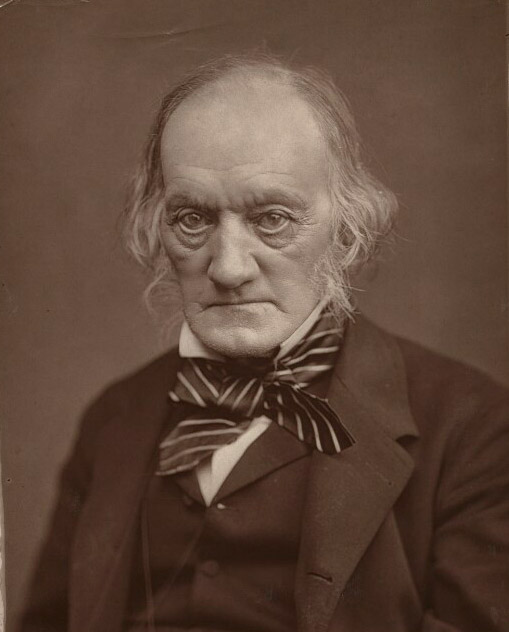
1849 OWEN, Sir Richard (1804 – 1892)
On parthenogenesis, or the successive production of procreating individuals from a single ovum. A discourse introductory to the Hunterian Lectures on Generation and Development for the year 1849, delivered at the Royal College of Surgeons of England.
Digital facsimile from Google Books at this link.
GMN 13704 · https://historyofmedicine.com/id/15988
1855 REMAK, Robert (1815 – 1865)
Untersuchungen überdie Entwickelungder Wirbelthiere.
Simplification of von Baer’s classification of the germ-layers.
GMN 485 · https://historyofmedicine.com/id/1398
1858 AMMON, Friedrich August von (1799 – 1861)
Die Entwicklungsgeschichte des menschlichen Auges.
"Ammon's Scleral Prominence - prominence of the postero-external aspect of the globe of the eye of the foetus which appears at the third month of foetal life." Jessie Dobson, eponyms, 2nd. Ed. (1962), p.13 . The artic…
GMN 13339 · https://historyofmedicine.com/id/15607
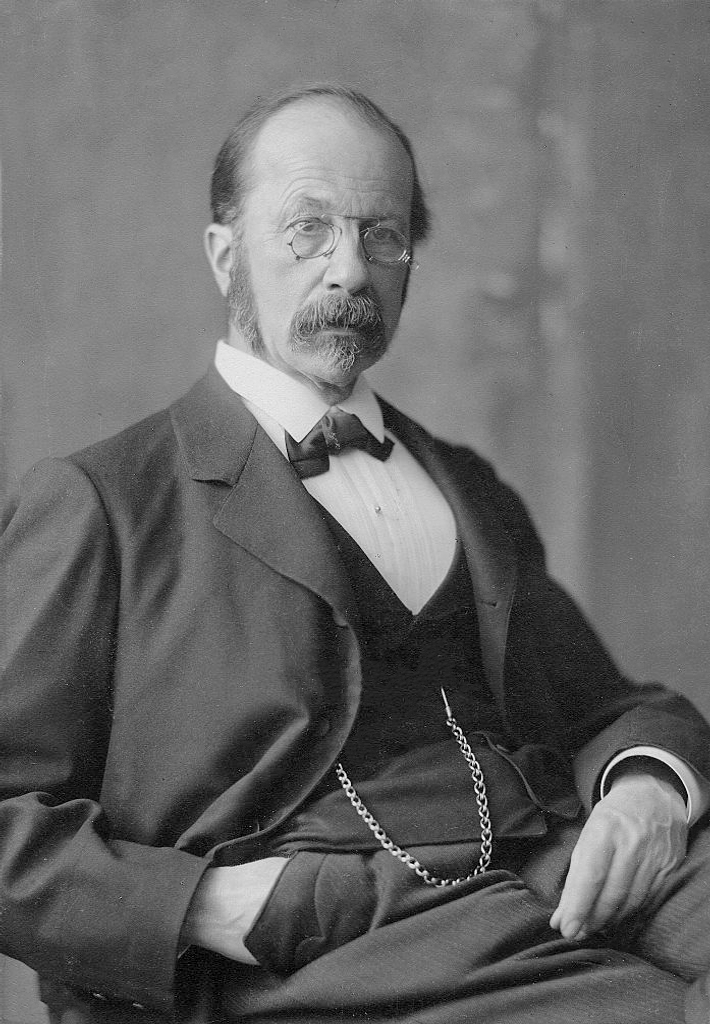
1861 GEGENBAUR, Karl (1826 – 1903)
Ueber den Bau und die Entwickelung der Wirbelthier-Eier mit partieller Dottertheilung.
Proof that the ovum is unicellular in all vertebrates.
GMN 486 · https://historyofmedicine.com/id/1401
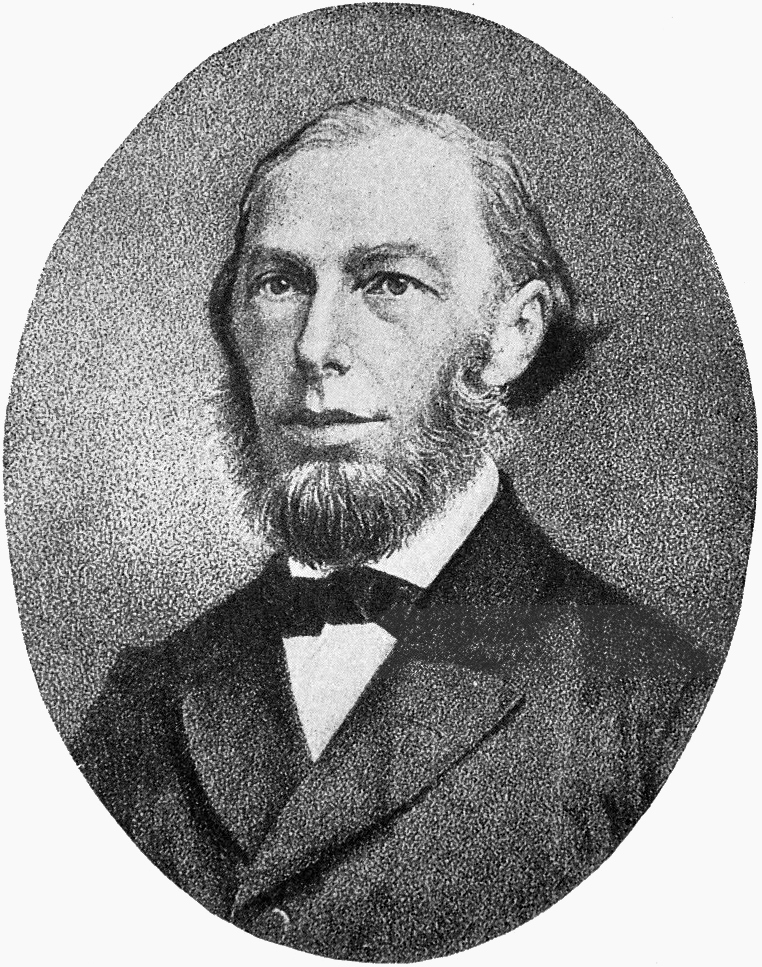
1861 KÖLLIKER, Rudolph Albert von (1817 – 1905)
Entwicklungsgeschichte des Menschen und der höheren Thiere.
First book on comparative embryology.
GMN 487 · https://historyofmedicine.com/id/1403
1863 SCHULTZE, Max Johann Sigismund (1825 – 1874)
Observationes nonnulae de ovorum ranarum segmentatione, quae “Furchungsprocess” dicitur.
Best contemporary description of the segmentation furrowing of the egg.
GMN 488 · https://historyofmedicine.com/id/1410
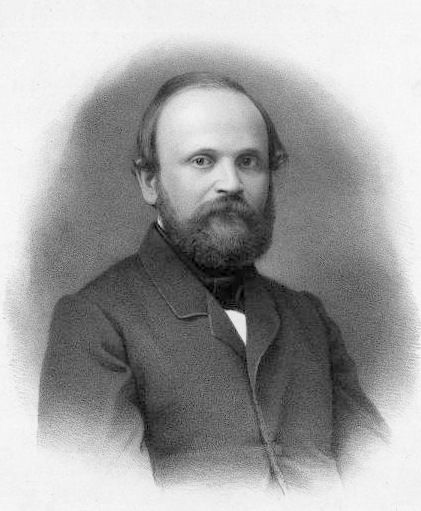
1865 HIS, Wilhelm Sr. (1831 – 1904)
Beobachtungen über den Bau des Säugethier-Eierstockes.
.
GMN 489 · https://historyofmedicine.com/id/1413

![SCOT, Michael [Michael Scotus] (1175 – 1232)](/media/portraits/12461)
![GALEN, [Κλαύδιος Γαληνός; Galen of Pergamon] (129 – 216)](/media/portraits/21)