1469 PLINIUS SECUNDUS, Gaius [Pliny the Elder] (23 – 79)
Historia naturalis, libri XXXVII.
The most ancient Western encyclopedia extant, Pliny’s Historia contained essentially all that was known in his time concerning geography, mineralogy, anthropology, botany, zoology and meteorology. Books XX-XXXII deal …
GMN 89 · https://historyofmedicine.com/id/51
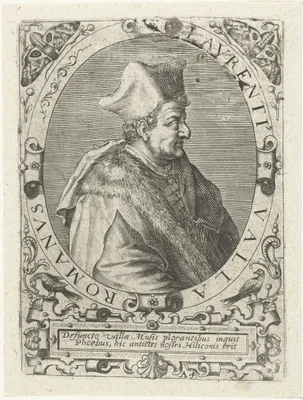
1474 HERODOTUS (ἩΡΌΔΟΤΟΣ) (484 – 425); BRUGNOLI, Benedetto (Benedictus Brognolus) (1427 – 1502); VALLA, Lorenzo (1407 – 1457)
Historiae. Tr: Laurentius Valla. Ed: Benedictus Brognolus. Add: Benedictus Brognolus: Epistola ad Nicolaum Donatum.
Born in Asia Minor, Herodotus travelled through Greece, Asia Minor and North Africa. His Historiae includes careful observations on the nature and habits of various peoples, and he may be regarded as the founder of an…
GMN 146 · https://historyofmedicine.com/id/9138
1497 RHAZES [MUHAMMAD IBN ZAKARIYĀ AL-RĀZĪ (PERSIAN: محمد زکریای رازی ] (854 – 925); HIPPOCRATES, [Ἱπποκράτης; Hippocrates of Kos] (-460 – -370); MAIMONIDES, (Moses ben Maimon; מֹשֶׁה בֶּן־מַימוֹן; Mōšeh bēn-Maymōn; موسى بن ميمون Mūsā bin Maymūn) (1135 – 1204); AVENZOAR [IBN ZUHR (ARABIC: ابن زهر ] (1092 – 1162); MESUE, Yuhanna ibn Masawaih (يوحنا بن ماسويه) (777 – 857)
Rhazes: Liber ad Almansorem sive Tractatus medicinae I-X. Liber divisionum. De aegritudinibus juncturarum. De aegritudinibus puerorum. De secretis sive aphorismi. Antidotarium. De praeservatione ab aegritudine lapidis; Introductorium medicinae. De sectionibus et ventosis. Synonyma. De animalibus. Add:Tabula de herbis medicis; Maimonides: Aphorismi; Mesue (the elder): Aphorismi; Hippocrates: Secreta; Prognosticatio secundum lunam; Capsula eburnea; De humana natura; De aere et aqua et regionibus; De pharmaciis; De insomniis; Avenzohar: De cura lapidis.
The best edition of the Opuscula of Rhazes, containing the second printing of the celebrated Liber ad Almansorem, not to be confused with Liber nonus ad Almansorem, as well as De aegritudine puerorum (No. 6313), and o…
GMN 39.1 · https://historyofmedicine.com/id/46
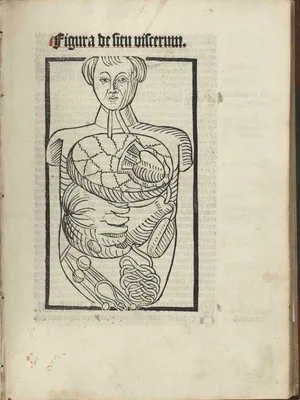
1501 HUNDT, Magnus (1449 – 1519)
Antropologium de ho[min]is dignitate, natura, et p[ro]prietatibus.
Includes the first illustrations of the viscera in a printed book. The four woodcuts are derived with modifications from Peyligk (No. 363.2). This work also contains the first mention ever of the word anthropology (in…
GMN 363.3 · https://historyofmedicine.com/id/337
1528 DÜRER, Albrecht (1471 – 1528)
Vier Bücher von menschlicher Proportion.
Written, designed, and illustrated by Dürer, this work is notable for its extraordinary series of anthropometrical woodcuts. The first two books deal with the proper proportions of the human form; the third changes th…
GMN 149 · https://historyofmedicine.com/id/2731
1586 PORTA, Giovanni Battista della (1536 – 1615)
De humana physiognomonia libri IIII.
Della Porta preceded Lavater in attempting to estimate human character by the features. This is one of the first works on the ancient “science” of physiognomy to be extensively illustrated.
GMN 150 · https://historyofmedicine.com/id/2735
1590 ACOSTA, José de (1539 – 1600)
Historia natural y moral de las Indias.
One of the earliest detailed and realistic descriptions of the New World. Acosta hypothesized that the indigenous peoples of Latin America had migrated from Asia. He also divided the native peoples into three barbaria…
GMN 2244 · https://historyofmedicine.com/id/3843
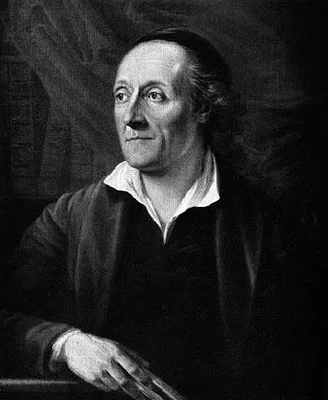
1632 JONSTON, John [Jan] (1603 – 1675)
Thaumatographia naturalis, in decem classes distincta, in quibus admiranda 1 Coeli. 2 Elementorum. 3 Meteororum. 4 Fossilium. 5 Plantarum. 6 Avium. 7 Quadrupedum. 8 Exanguium. 9 Piscium. 10 Hominis.
A unillustrated pocket guide, issued in duodecimo format on "admiranda" or wonders of nature organized in ten categories (heaven, earth, and topics relating to meteors, fossils or minerals, plants, birds, quadrupeds, …
GMN 287 · https://historyofmedicine.com/id/8827
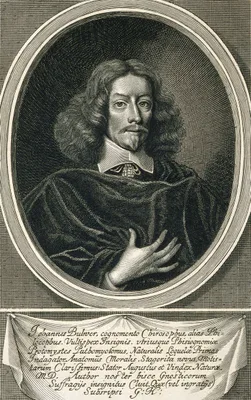
1650 BULWER, John (1606 – 1656)
Anthropometamorphosis: Man transform’d, or the artificial changeling. Historically presented, in the mad and cruel gallantry, foolish bravery, ridiculous beauty, filthy fineness, and loathesome loveliness of most Nations, fashioning & altering their bodies from the mould intended by nature. With a vindication of the regular beauty and honesty of nature, and an appendix of the pedigree of the English gallant.
Extensively illustrated treatise on varieties of body modifications, real or imagined, includes details on hair styles, tatoos, piercing, including sexual aspects. Digital facsimile of the 1653 edition from the Intern…
GMN 10490 · https://historyofmedicine.com/id/12683
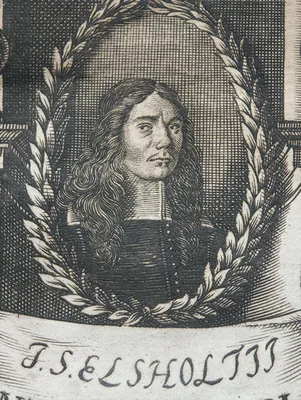
1654 ELSHOLTZ, Johann Sigmund (1623 – 1688)
Anthropometria.
Elsholtz was the first physician to study anthropometry and human proportion.
GMN 151 · https://historyofmedicine.com/id/2739
1655 LA PEYRÈRE, Isaac (1596 – 1576)
Prae-Adamitae, sive exercitatio super versibus duodecimo, decimotertio, & decimoquarto, capitis quinti Epistolae D. Pauli ad Romanos: Quibus inducuntur primi homines ante Adamum conditi.
"In his Prae-Adamitae, published in Latin in 1655 and in English as Men Before Adam in 1656, La Peyrère argued that Paul's words in Chapter 5, verses 12-14 of his Epistle to the Romans should be interpreted such that …
GMN 10146 · https://historyofmedicine.com/id/12335
1658 CARDANO, Girolamo [Gerolamo; Hieronymus Cardanus] (1501 – 1576)
Metoposcopia libris tredecim et octingentis faciei humanae eiconibus complexa.
Contains 800 illustrations of the human face. Cardan, Professor of Medicine at Padua as well as a celebrated mathematician and scientist, claimed to be able to draw horoscopes from the appearance of the face. A French…
GMN 152 · https://historyofmedicine.com/id/2744
1663 CARDANO, Girolamo [Gerolamo; Hieronymus Cardanus] (1501 – 1576)
Opera omnia: Tam hactenus excusa, hîc tamen aucta & emendata, quàm nunquam aliàs visa ac primùm ex auctoris ipsius autographis eruta curâ Caroli Sponii .... 10 vols.
Digital facsimile from the Università degli Studi di Milano at this link.
GMN 9576 · https://historyofmedicine.com/id/11763
1671 LA MARTINIÈRE, Pierre Martin de (1634 – 1690)
Voyage des pais septentrionaux: Dans lequel se void [sic] les moeurs, maniere de vivre, & superstitions des Norweguiens, Lappons, Kiloppes, Borandiens, Syberiens, Samojedes, Zembliens, & Islandois, enrichi de plusieurs figures.
Translated into English as A new voyage into the northern countries being a discription of the manners, customs, superstition, buildings, and habits of the Norwegians, Laponians, Kilops, Borandians, Siberians, Samojed…
GMN 10124 · https://historyofmedicine.com/id/12313
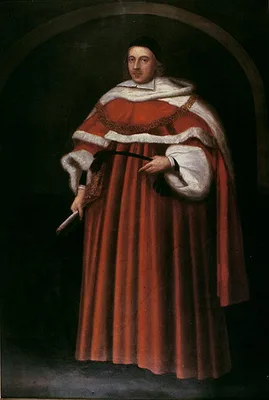
1677 HALE, Sir Matthew (1609 – 1676)
The primitive organization of mankind considered and examined according to the light of nature.
In response to Isaac de la Peyrere‘s theory of polygenesis, Hale, Chief Justice of the King’s Bench, advanced his own theory that the earth was not eternal, but rather had a spontaneous “beginning,” and defended “the …
GMN 215 · https://historyofmedicine.com/id/3967
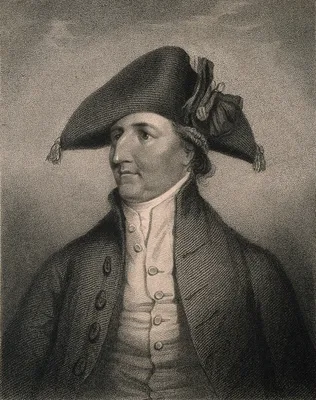
1726 BOYLSTON, Zabdiel (1679 – 1766)
An historical account of the small-pox inoculated in New-England, upon all sorts of persons, whites, blacks, and of all ages and constitutions: With some account of the nature of the infection in the natural and inoculated way, and their different effects on human bodies; with some short directions to the unexperienced in this method of practice .
Boylston was the first in America to inoculate for smallpox, at Boston on 26 June 1721. "During a smallpox outbreak in 1721 in Boston, he inoculated about 248 people[5] by applying pus from a smallpox sore to a small …
GMN 5415 · https://historyofmedicine.com/id/7324
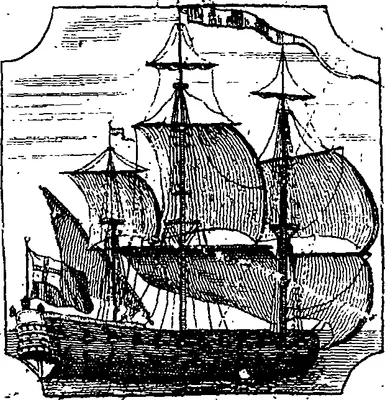
1735 ATKINS, John (1685 – 1757)
A voyage to Guinea, Brasil and the West Indies; in His Majesty's ships, the Swallow and Weymouth: Describing the several islands and Settlements, viz, Madeira, the Canaries, Cape de Verd, Sierraleon, Sesthos, Cape Apollonia, Cabo Corso, and others on the Guinea coast; Barbadoes, Jamaica, &c. in the West-Indies; the colour, diet, languages, habits, manners, customs, and religions of the respective natives, and inhabitants. With remarks on the gold, ivory, and slave-trade; and on the winds, tides and currents of the several coasts.
Atkins, surgeon on the voyage, included information about the slave trade and the natural history of the Gold Coast. "Atkins describes the manatee accurately, and tells much about fetish worship. He shows that there w…
GMN 8483 · https://historyofmedicine.com/id/10660
1769 BANCROFT, Edward (1774 – 1821)
Essay on the natural history of Guiana, in South America. Containing a description of many curious productions in the animal and vegetable systems of that country. Together with an account of the religion, manners, and customs of several tribes of its Indian inhabitants. Interspersed with a variety of literary and medical observations. In several letters....
Bancroft was an English physician who lived for many years in South America. He noted the transmission of yaws by flies (p. 385 of his book). Digital facsimile from the Internet Archive at this link.
GMN 5304 · https://historyofmedicine.com/id/6554
1772 LAVATER, Johann Caspar (1741 – 1801)
Von der Physiognomik.
Lavater was the last of the descriptive physiognomists. He expanded the above work into Physiognomische Fragmente zur Beförderung der Menschenkenntnis und Menschenliebe, 1775-78. This was translated into English by H.…
GMN 154 · https://historyofmedicine.com/id/2771
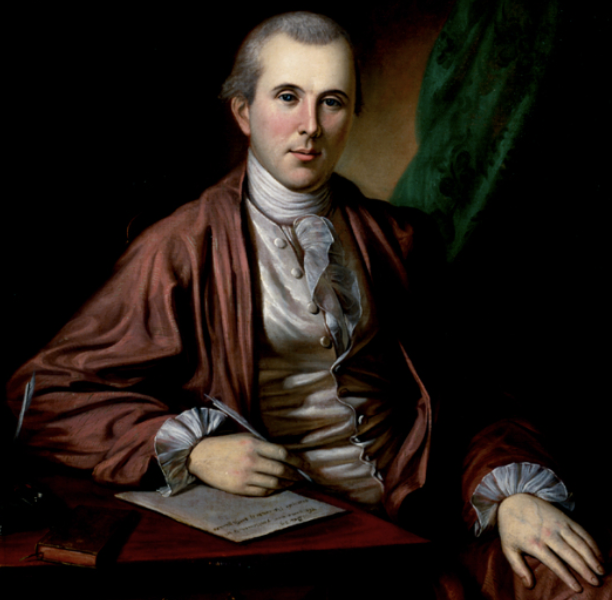
1774 RUSH, Benjamin (1745 – 1813)
An oration…containing an enquiry into the natural history of medicine among the Indians in North-America; and a comparative view of their diseases and remedies, with those of civilized nations.
Rush was the first American physician to publish a detailed study of native American medicine. Digital facsimile from the Medical Heritage Library, Internet Archive, at this link.
GMN 6451.90 · https://historyofmedicine.com/id/7588
1775 BLUMENBACH, Johann Friedrich (1752 – 1840)
De generis humani varietate nativa.
Blumenbach was the founder of anthropology. In this, his doctoral dissertation, he classified mankind into four races, based on selected combinations of head shape, skin color and hair form. In the second edition (178…
GMN 156 · https://historyofmedicine.com/id/3169
1775 ADAIR, James (1709 – 1793)
The history of the American Indians; particularly those nations adjoining to the Missisippi [sic] East and West Florida, Georgia, South and North Carolina, and Virginia: containing an account of their origin, language, manners, religious and civil customs, laws, form of government, punishments, conduct in war and domestic life, their habits, diet, agriculture, manufactures, diseases and method of cure... With observations on former historians, the conduct of our colony governors, superintendents, missionaries, & c. Also an appendix, containing a description of the Floridas, and the Missisippi [sic] lands, with their productions--the benefits of colonizing Georgiana, and civilizing the Indians--and the way to make all the colonies more valuable to the mother country....
The author characterized himself on the title page as "a Trader with the Indians and a Resident in their Country for Forty Years." Digital facsimile from the Internet Archive at this link.
GMN 7505 · https://historyofmedicine.com/id/9677
1777 WOLF, Elcan Isaac
Von den Krankheiten der Juden: seinen Brüdern in Deutschland gewidmet.
The earliest book devoted entirely to the health and illness of Jews, written by a Jewish physician. Digital facsimile from Google Books at this link.
GMN 10750 · https://historyofmedicine.com/id/12946
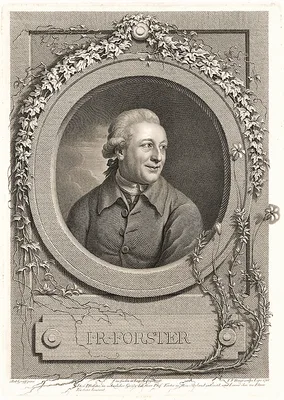
1778 FORSTER, Johann Reinhold (1729 – 1798)
Observations made during a voyage round the world, on physical geography, natural history, and ethic philosophy. Especially on 1. The earth and its strata, 2. Water and the ocean, 3. The atmosphere, 4. The changes of the globe, 5. Organic bodies, and 6. The human species.
The natural history of Captain James Cook's second voyage in the Pacific; Forster and his son Georg were appointed naturalists to the voyage after Joseph Banks withdrew from the position. Digital facsimile from Google…
GMN 7564 · https://historyofmedicine.com/id/9736
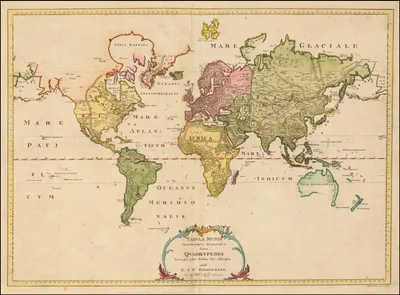
1778 –1793 ZIMMERMANN, Eberhard August Wilhelm von (1743 – 1815)
Geographische Geschichte des Menschen und der allgemein verbreiteten vierfüßigen Thiere: nebst einer hieher gehörigen Zoologischen Weltcharte. 3 vols.
Digital facsimile from the Bayerische StaatsBibliothek at this link.
GMN 8222 · https://historyofmedicine.com/id/10398
1784 –1790 CAMPER, Petrus (Pieter) (1722 – 1789)
Sämmtliche kleinere Schriften. 3 vols.
Camper, an artist of skill, made his mark as an anthropologist and craniologist. He discovered the processus vaginalis of the peritoneum and the fibrous structure of the eye, and made several other important contribut…
GMN 77 · https://historyofmedicine.com/id/1303
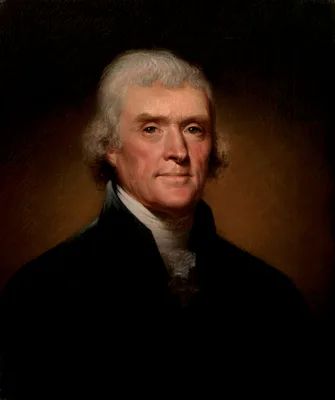
1785 JEFFERSON, Thomas (1743 – 1826)
Notes on the State of Virginia; written in the year 1781, somewhat corrected and enlarged in the winter of 1782, for the use of a foreigner of distinction, in answer to certain queries proposed by him.
Jefferson wrote Notes on the State of Virginia in response to a series of questions sent in 1781 to various members of the Continental Congress by François Barbé-Marbois, then secretary to the French legation at Phila…
GMN 11450 · https://historyofmedicine.com/id/13649
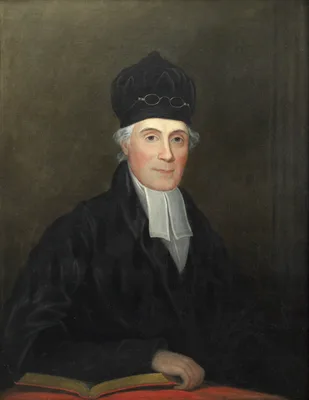
1787 SMITH, Samuel Stanhope (1750 – 1819)
An essay on the causes of the variety of complexion and figure in the human species.
In the first significant anthropological work produced in America, Smith argued that racial differences were produced by environment, contradicting the prevalent theories of separate creations of discrete and differen…
GMN 156.1 · https://historyofmedicine.com/id/3175
1790 –1811 BLUMENBACH, Johann Friedrich (1752 – 1840)
Beyträge zur Naturgeschichte. 2 pts.
English translation, London, 1865.
GMN 157 · https://historyofmedicine.com/id/3182
1790 –1828 BLUMENBACH, Johann Friedrich (1752 – 1840)
Decas collectionis suae craniorum diversarum gentium illustrata. 6 parts plus supplement.
Blumenbach was the founder of craniology, and his craniological collection served as the principal foundation for his investigations into the natural history of mankind. He used the norma verticalis, the shape of the …
GMN 198 · https://historyofmedicine.com/id/3536
1790 LEVER, Sir Ashton (1729 – 1788)
A companion to the museum, (Late Sir Ashton Lever's) removed to Albion Street, the Surry end of Black Friar's Bridge.
A room by room, case by case guide to Lever's celebrated museum of natural history and ethnography, authorshop of which is unidentified. Digital facsimile from Google Books at this link.
GMN 7657 · https://historyofmedicine.com/id/9829
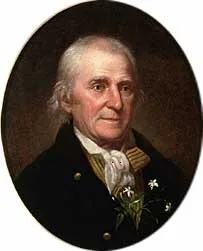
1791 BARTRAM, William (1739 – 1823)
Travels through North & South Carolina, George, East & West Florida, the Cherokee country, the extensive territories of the Muscogulges, or Creek confederacy, and the country of the Chactaws [sic]...
Digital facsimile of London, 1794 second edition from the Internet Archive at this link.
GMN 7770 · https://historyofmedicine.com/id/9942
1792 CAMPER, Petrus (Pieter) (1722 – 1789)
Ueber den natürlichen Unterschied der Gesichtszüge in Menschen verschiedener Gegenden und verschiedenen Alters.
This work on physiognomy includes Camper’s description of his craniometrical methods. Camper is chiefly remembered for the “facial angle” of his own invention. The book first appeared in Dutch in 1791. English transla…
GMN 158 · https://historyofmedicine.com/id/3184
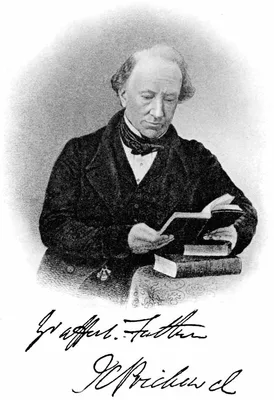
1813 PRICHARD, James Cowles (1786 – 1848)
Researches into the physical history of man.
Prichard, a Bristol physician, classified and systematized facts relating to the races of men better than any previous writer. His interest in anthropology was stimulated by one of the pressing questions of his day: D…
GMN 159 · https://historyofmedicine.com/id/3190
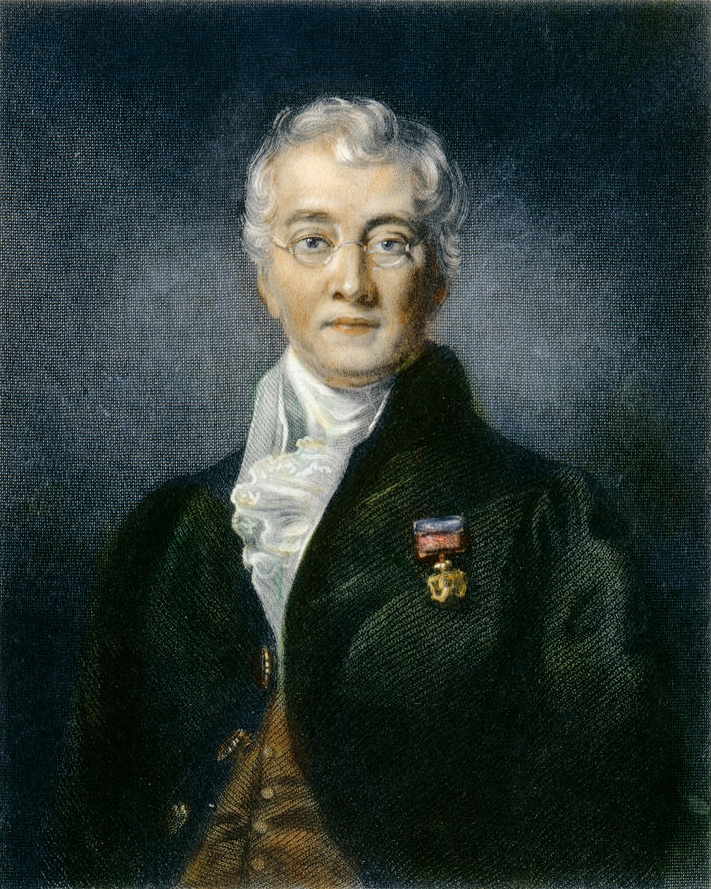
1818 WELLS, William Charles (1757 – 1817)
Two essays: upon single vision with two eyes; the other on dew…An account of a female of the white race of mankind, part of whose skin resembles that of a negro…
First statement of the theory of natural selection. Wells’s paper on a white woman with patchy brown discoloration of the skin contains an almost complete anticipation of Darwin’s theory of natural selection, although…
GMN 216.2 · https://historyofmedicine.com/id/4034
1819 LAWRENCE, Sir William (1783 – 1867)
Lectures on physiology, zoology and the natural history of man.
This work set forth Lawrence's then radical and remarkably advanced ideas concerning evolution and heredity. Arguing that theology and metaphysics had no place in science, Lawrence relied instead on empirical evidence…
GMN 11240 · https://historyofmedicine.com/id/13437
1820 –1821 BELL, Sir Charles (1774 – 1842)
Illustrations of the great operations of surgery, trepan, hernia, amputation, aneurism, and lithotomy.
One of the most dramatically and beautifully illustrated works in the entire literature of surgery. Hand-colored copies show more blood than is usual for surgical treatises of this period. From publication in fascicul…
GMN 5588 · https://historyofmedicine.com/id/7040
1821 NUTTALL, Thomas (1786 – 1859)
A journal of travels into the Arkansas territory, during the year 1819. With occasional observations on the manners of the aborigines. Illustrated by a map and other engravings.
Nuttall travelled from Philadelphia, down the Ohio and Mississippi rivers to the Arkansas. From there he travelled across Arkansas to the interior of the modern Oklahoma; returning via the Arkansas and Mississippi riv…
GMN 7772 · https://historyofmedicine.com/id/9944
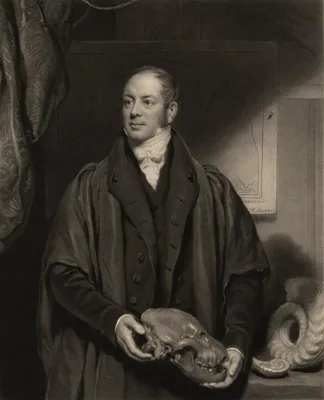
1823 BUCKLAND, William (1784 – 1856)
Reliquiae diluvianae; or, observations on the organic remains contained in caves, fissures, and diluvial gravel, and on other geological phenomena, attesting the action of an universal deluge.
Buckland’s elaborately illustrated Reliquiae diluvianae (Relics of the Flood) describes his geological and paleontological researches of the early 1820s, including his investigations of the Kirkdale and Paviland caves…
GMN 7254 · https://historyofmedicine.com/id/9423
1823 HUNTER, John Dunn (1788 – 1827)
Manners and customs of several Indian tribes located west of the Mississippi; including some account of the soil, climate, and vegetable productions, and the Indian materia medica: to which is prefixed the history of the author's life during a residence of several years among them.
Hunter claimed that as a child he had been captured by the Cherokee before they came to Texas. He adopted the name of an English benefactor, John Dunn, and later added the name "Hunter" given by the Indians because of…
GMN 8798 · https://historyofmedicine.com/id/10976
1826 DEVERGIE, Marie-Guillaume-Alphonse (1798 – 1879)
Clinique de la maladie syphilitique. Enrichie d’observations communiquées par messieurs Cullerier oncle, Cullerier neveu, Bard, Gama, Desruelles et autre médecins. Text and atlas.
Includes 126 hand-colored engraved plates from drawings by Dupont the elder, assisted by Delestre the younger and Verollot, engraved by Johann Theodor Susemihl, a German engraver working in Paris, known for his zoolog…
GMN 10529 · https://historyofmedicine.com/id/12722
1829 EDWARDS, William Frédéric (1776 – 1842)
Des caractères physiologiques des races humaines considérés dans leurs rapports avec l’histoire; lettre à M. Amédée Thierry . . .
A physiologist and anthropologist, Edwards established the subject of ethnology in France and pioneered the concept of “race” as determined by the shape of the face and head. He has been called the first anthropologis…
GMN 10716 · https://historyofmedicine.com/id/12910
1829 LESSON, René Primevère (1794 – 1849)
Voyage médicale autour du monde, exécuté sur la Corvette du Roi La Coquille commandée par M. L. I. Duperrey pendant les années 1822, 1823, 1824 et 1825; ou rapport sur l' état sanitaire de l'équipage pendant la durée de la campagne, avec quelques renseignemens sur des pratiques empiriques locales en usages dans plusieurs des contrées visitées par l'expédition; suivi d'un mémoire sur les races humaines répandues dans l'Océanie, la Malaisie et l'Australie.
Lesson who was naturalist and physician on the voyage of La Coquille was a prolific author of works concerning natural history. This was his account of the voyage from his point of view as a physician. Digital facsimi…
GMN 12479 · https://historyofmedicine.com/id/14712
1830 CALDWELL, Charles (1772 – 1853)
Thoughts on the original unity of the human race.
The first important American presentation of the case for polygenesis in support of slavery. Caldwell presented the first important American critique of the monogenist theories of human ancestry promoted by Samuel Sta…
GMN 13720 · https://historyofmedicine.com/id/16004
1833 –1834 SCHMERLING, Phillipe-Charles (1791 – 1836)
Recherches sur les ossemens fossiles découvertes dans les cavernes de la province de Liège. 2 vols. and atlas.
A physician from Delft, Schmerling found extensive human remains and artifacts associated with the remains of extinct animals in the caverns around Liège. These human remains were distinctively different anatomically …
GMN 203.8 · https://historyofmedicine.com/id/3638
1834 PETTIGREW, Thomas Joseph (1791 – 1865)
A history of Egyptian mummies, and an account of the worship and embalming of the sacred animals of the Egyptians; with remarks on the funeral ceremonies of different nations, and observations on the mummies of the Canary islands, of the ancient Peruvians, Burman priests, &c
"One of the most valuable works on the subject extant. It is a monument of exact observation, and considering the state of archaeological knowledge at the time, it is in every way admirable" (Dawson, Bibliography of w…
GMN 12275 · https://historyofmedicine.com/id/14494
1835 QUETELET, Lambert Adolphe Jacques (1796 – 1874)
Sur l’homme et le développement des facultés, ou essai de physique sociale. 2 vols.
Quetelet’s statistical researches on the development of the physical and intellectual qualities of man, and an exposition of his concept of the “average man”, which became the by-word of quantitative studies. "Quétele…
GMN 1698.1 · https://historyofmedicine.com/id/2457
1836 THOMSEN, Christian Jurgensen (1788 – 1865)
Ledetraad til Nordisk Oldkyndighed.
Thomsen's work established the "Three-Age system," according to which artifacts were first made of stone, then bronze, and then iron. This basic chronology underpins the archaeology of most of the "Old World.”
GMN 7374 · https://historyofmedicine.com/id/9546
1836 TIEDEMANN, Friedrich (1781 – 1861)
On the brain of the negro, compared with that of the European and the orang-outang.
In this very thoroughly researched, highly documented, and well-illustrated paper Tiedemann demonstrated that there are no significant anatomical differences between the brains and mental capacities of Black people an…
GMN 11309 · https://historyofmedicine.com/id/13507
1839 MORTON, Samuel George (1799 – 1851)
Crania Americana; or, A comparative view of the skulls of various aboriginal nations of North and South America. To which is prefixed an essay on the varieties of the human species.
In his day Morton was the most eminent craniologist in the United States. He had a collection of nearly 1,000 skulls. In this work, which described both modern and fossil skulls, Morton described fractures and anthrop…
GMN 201 · https://historyofmedicine.com/id/3545

![HIPPOCRATES, [Ἱπποκράτης; Hippocrates of Kos] (-460 – -370)](/media/portraits/50)
![CARDANO, Girolamo [Gerolamo; Hieronymus Cardanus] (1501 – 1576)](/media/portraits/7679)