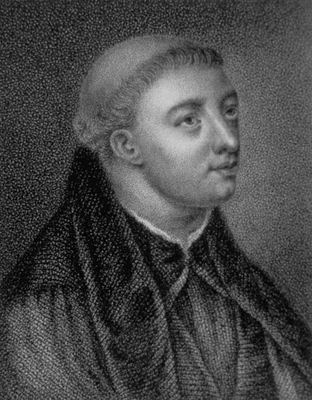
c. 850 GALEN, [Κλαύδιος Γαληνός; Galen of Pergamon] (129 – 216); SERGIUS OF RESHAINA ( – 536)
The Syriac Galen palimpsest.
This ninth century palimpsest codex contains as its undertext a text of Galen's On Simple Drugs in the Syriac translation by Sergius of Reshaina. It has not yet been formally published. For further information see the…
GMN 6900 · https://historyofmedicine.com/id/9064
1456
Aderlasskalender.
The Aderlasskalender for the year 1457, also known as the Laxierkalender, was issued in Mainz, printed in the type of the 36-line Bible, presumably in 1456. It survives in only one incomplete copy in the Bibliothèque …
GMN 6818 · https://historyofmedicine.com/id/8981
1465 SABUNCUOGLU (OTTOMAN TURKISH: شرف الدّین صابونجی اوغلی), Şerafeddin (1385 – 1468)
Cerrahiyyetu'l-Haniyye (Imperial Surgery)
In 1465, at the age of 80, Ottoman surgeon and physician Şerafeddin Sabuncuoğlu published in manuscript an illustrated atlas of surgery and dentistry. This was also the first medical textbook written in Turkish, proba…
GMN 6819 · https://historyofmedicine.com/id/8982
1467 MAURUS, Rabanus [Hrabanus; Rhabanus] (780 – 856)
De sermonum proprietate sive Opus de universo.
Also known as De rerum naturis. This dictionary or encyclopedia is the earliest known printed book to include a section dealing with medicine, and this brief section, Book 18, Chap. V concerning medicine and diseases,…
GMN 2190 · https://historyofmedicine.com/id/1380
1471 BARTHOLOMAEUS ANGLICUS (1203 – 1272)
De proprietatibus rerum.
A condensed encyclopedia of what was then understood by natural science. The work was probably written about the middle of the 13th century. It was one of the most widely read scientific works of the Middle Ages. Caxt…
GMN 91 · https://historyofmedicine.com/id/52
1471 NICOLAUS SALERNITANUS, (Nicolaus Praepostius) (1120 – )
Antidotarium. Add: Quid pro quo; Synonyma.
This work, which first circulated in manuscript in 1140, was the first formulary to be printed. It consists of 139 prescriptions and includes the original formula for the “anesthetic sponge” (spongia somnifera), the e…
GMN 1789 · https://historyofmedicine.com/id/1846
1471 MESUE, Yuhanna ibn Masawaih (يوحنا بن ماسويه) (777 – 857)
Opera medicinalia. Ed: Peregrinus Cavalcobovis, with a preface by Nicolaus Gupalatinus. Consisting of: Canones universales. De simplicibus. Grabadin. Practica.
This undated edition, which the ISTC im00508000 catalogues as "not before 18 May 1471", may be the earliest printed edition of the writings of the medieval Persian or Assyrian Nestorian Christian physician Yuhanna ibn…
GMN 10960 · https://historyofmedicine.com/id/13156
1471 ABULCASIS (ABU AL-QASIM KHALAF IBN AL-ABBAS AL-ZAHRAWI; أبو القاسم خلف بن العباس الزهراوي), [Albucasis] (936 – 1013); CORDO, Simone [Simon de Gènes; Januensis; Simone Genuense; Genuensis] (1270 – 1303); ABRAHAM TORTUOSIENSIS, [Abraham Judeus of Tortosa, Abraham ben Schem Tob]
Liber servitoris de praeparatione medicinarum simplicium. Translated by Abraham Tortuosiensis. Edited by Simon a Cordo.
Book 28 on drugs from the Al-Tasrif, a 30-volume Arabic encyclopaedia on medicine and surgery, written ca. 1000 CE by Abulcasis. ISTC No. ia00014000. Digital facsimile from the Württembergische Landesbibliothek Stuttg…
GMN 11287 · https://historyofmedicine.com/id/13484
1472 RHAZES [MUHAMMAD IBN ZAKARIYĀ AL-RĀZĪ (PERSIAN: محمد زکریای رازی ] (854 – 925); FERRARI DA GRADI, Giovanni Matteo [Ferrarius, Johannes Matthaeus, de Gradibus, de Grado] (1392 – 1472)
Opera medica, sive Practica cum textu noni ad Almansorem.
A commentary on Rhazes with notes and additions. For bibliographical and other details regarding this, the first large medical book to be printed, see the essay by Arnold C. Klebs in: Essays on the history of medicine…
GMN 2192 · https://historyofmedicine.com/id/1389
1472 ABANO, Pietro d' [Petrus de Abano] (1257 – 1316)
Conciliator differentiarum philosophorum et medicorum. Add: De venenis.
Includes the first printed book on toxicology; one of the more elegantly printed of medical incunabula, printed in folio format. For an English translation, see Ann. med. Hist., 1924, 6, 26-53. ISTC No. ip00431000. Di…
GMN 2070 · https://historyofmedicine.com/id/2492
1472 ISIDORE OF SEVILLE, (Isidorus Hispalensis) (570 – 636)
Etymologiae.
The principal work of Isidore of Seville, one of the greatest educationists of the Middle Ages. The Etymologiae, an encyclopedic work, presented the sum of contemporary knowledge on all branches of science. Book IV af…
GMN 6787 · https://historyofmedicine.com/id/8424
1473 METLINGER, Bartholomäus ( – 1491)
Regiment der jungen Kinder.
This work has very little originality, being mainly derived from the Arabic physicians of 500 years before, but is noteworthy as being the first book on pediatrics printed in German. It includes what is probably the f…
GMN 6316 · https://historyofmedicine.com/id/8074
1473 SIMON GENUENSIS, (Simon a Cordo; Simon Januensis; Simon of Genoa) (1250 – )
Synonyma medicinae, seu clavis sanationis.
The first printed medical dictionary. It was originally published at Ferrara, 1471-2?, of which the only recorded copy is a fragment of 21 leaves in the Bodleian Library. ISTC No. is00526000. “The great work of Simon …
GMN 6788 · https://historyofmedicine.com/id/8426
1473 AVICENNA, [Abū ʿAlī al-Ḥusayn ibn ʿAbd Allāh ibn Al-Hasan ibn Ali ibn Sīnā] (980 – 1037); GERARD OF CREMONA, (Gerardus Cremonensis) (1114 – 1187)
Canon medicinae [Latin] (Lib I-V) (Tr: Gerardus Cremonensis) (5 vols.)
Avicenna is said to have written more than 100 books, most of which have perished. He wrote on the etiology of epilepsy and described diabetes, noticing the sweetish taste of the urine. His Canon is one of the most fa…
GMN 43 · https://historyofmedicine.com/id/8764
c. 1474 VELASCUS DE TARENTA (VALESCO,VALASCUS) (1382 – 1426)
De epidemia et peste.
One of the earliest works written on public health, and one of the earliest printed medical books. It was first printed in Arnaldus de Villanova’s De arte cognoscendi venena (Padua, 1473; Mantua, 1473). Above is the f…
GMN 5113 · https://historyofmedicine.com/id/6077
1474 SALICETO, Guglielmo da [WILLIAM OF SALICETO] (1210 – 1277)
La ciroxia vulgarmente fata.
Saliceto was Professor of Surgery at Bologna about 1268; his treatise on surgery, written about 1275, was the leading work on the subject in the 13th century. William broke with tradition by claiming that pus formatio…
GMN 5552 · https://historyofmedicine.com/id/6859
1474 GRASSI, Benevenuto [Benevenutus Grassus] (1100 – )
De oculis eorumque egritudinibus et curis.
The earliest printed book on ophthalmology. Grassi was the most celebrated ophthalmic surgeon of the Middle Ages. English translation by Casey A. Wood, 1929. ISTC No. ig00352000.
GMN 5816 · https://historyofmedicine.com/id/7017
1474 SILVATICUS, Matthaeus [Mattheus Sylvaticus; Matteo Silvatico] (1280 – 1342)
Liber pandectarum medicinae.
An encyclopedia of medicines, mostly derived from plants, completed about the year 1317. The medicines are arranged in alphabetical order. Two printed editions were issued in 1474. The first, issued in Naples, appeare…
GMN 7151 · https://historyofmedicine.com/id/9318
1475 DONDI, Jacopo de' [Jacopo Dondi dell'Orologio] (1290 – 1359)
Aggregator, sive de medicinis simplicibus.
First printed edition of an encyclopedic dictionary of medicine, containing a large number of medical recipes based upon Greek and Arabic sources. Dondi completed the work in 1355. Manuscripts of his text are preserve…
GMN 6789 · https://historyofmedicine.com/id/8428
1475 MEGENBERG, Konrad von (1309 – 1374)
Buch der Natur.
The first printed book to contain illustrations of animals, and the first notable scientific book in German. It discusses animals, birds, fish, anatomy, physiology, plagues, the medicinal value of plants and stones, e…
GMN 276.1 · https://historyofmedicine.com/id/8810
1475 LIGNAMINE, Giovanni Filippo De [Johannes Philippus de Lignamine] (1428 – ); BENEDICT OF NURSIA, [Benedictus de Nursia, Benedetto da Norcia] (480 – 543)
De conservatione sanitatis. With additions by Johannes Philippus de Lignamine.
This medieval guide to health and hygiene is sometimes misattributed to Hugo Benzi. It was one of the earliest medical or health texts to appear in print, and is unusual in that the printer, who was not a physician, i…
GMN 9146 · https://historyofmedicine.com/id/11325
1476 RHAZES [MUHAMMAD IBN ZAKARIYĀ AL-RĀZĪ (PERSIAN: محمد زکریای رازی ] (854 – 925); NEGRIS, Salani de
Liber nonus ad Almansorem (cum expositione Silani de Negris).
The Almansor, so named after the prince to whom it was addressed, was a popular textbook and one of the first general medical texts to be printed. Rhazes ranks with Hippocrates and Galen as one of the founders of clin…
GMN 39 · https://historyofmedicine.com/id/45
1476 SALICETO, Guglielmo da [WILLIAM OF SALICETO] (1210 – 1277)
Summa conservationis et curationis. Chirurgia.
Contains (Cap. cxl) his classic account of renal edema: De duritie in renibus, an English translation of which is in Major, Classic descriptions of disease, 3rd ed., 1945, p. 527. ISTC no. is00032000.
GMN 4204 · https://historyofmedicine.com/id/6214
1476 GALEN, [Κλαύδιος Γαληνός; Galen of Pergamon] (129 – 216); HIPPOCRATES, [Ἱπποκράτης; Hippocrates of Kos] (-460 – -370); HUNAYN IBN ISHAQ [أبو زيد حنين بن إسحاق العبادي; ’ABŪ ZAYD ḤUNAYN IBN ’ISḤĀQ AL-‘IBĀDĪ], (Latin: Iohannitius) (809 – 873); THEOPHILUS PROTOSPATHARIUS, (Θεόφιλος Πρωτοσπαθάριος) (650 – ); PHILARETOS, (Philaretus) (820 – 1075)
Articella seu opus artis medicinae. Con: Johannitius: Isagoge ad tegni Galeni. Philaretus: De pulsibus; Theophilus Protospatharius: De urinis. Hippocrates: Aphorismi (comm: Galenus; tr: Constantinus Africanus); Prognostica (comm: Galenus); De regimine acutorum morborum (comm: Galenus; tr: Gerardus Cremonensis). Galenus: Liber Tegni, sive Ars medica (comm: Hali; tr: Gerardus Cremonensis).
A collection of Greek, Roman and Byzantine texts on medicine, written in Latin, that was mainly used as medical school textbook or reference manual between the 13th and 16th centuries. The Articella grew around a synt…
GMN 52 · https://historyofmedicine.com/id/8771
1477 ODO OF MEUNG, Odo Magdunensis [Macer Floridus] (1050 – )
De viribus herbarum carmen.
De viribus herbarum carmen has been attributed to Macer Floridus, a pseudonym of Odo of Meung, who lived in the Loire area of France towards the end of the eleventh century. Macer's unillustrated text described the me…
GMN 1791 · https://historyofmedicine.com/id/1876
c. 1477 ORTOLF VON BAIERLAND, (Ortolf von Würzburg) ( – 1290)
Artzneibuch.
The first German pharmacopeia, and a very early work written and published in the vernacular. The book was an important German text of popular medicine in its day. Digital facsimile from the Bayerische StaatsBibliothe…
GMN 1794 · https://historyofmedicine.com/id/1887
c. 1477 –c. 1483 ARNALD OF VILLANOVA, (Arnaldus de Villa Nova; Arnau de Vilanova; Arnaldus Villanovanus; Arnaud de Ville-Neuve; Arnaldo de Villanueva) (1240 – 1311)
Regimen sanitatis Salernitanum (With commentary by [Pseudo-Arnoldus de Villa Nova]). Add: Arnoldus de Villa Nova: Regimen sanitatis ad regem Aragonum.
Probably originating about 1160, the Regimen sanitatis from the medical school at Salerno (where medicine was first treated as a separate science) had greater popular influence than virtually any other medieval medica…
GMN 1959.3 · https://historyofmedicine.com/id/8802
1477 SCOT, Michael [Michael Scotus] (1175 – 1232)
Liber phsionomiae [and other works].
"Composed between 1209 and 1226, the first of the two primary texts discusses human generation — anatomy, physiology, astrology, sexual behavior, conception and the health of the fetus. The second part, the Physiognom…
GMN 10725 · https://historyofmedicine.com/id/12919
1478 MONDINO DE LUZZI, [MUNDINUS] (1270 – 1326)
Anatomia.
First dated printed edition of the first medieval book devoted solely to anatomy, written by Mondino for his students in 1316. An earlier, but undated edition, of which only 3 copies are recorded, appeared in Padua ab…
GMN 361 · https://historyofmedicine.com/id/316
1478 GUY DE CHAULIAC, (Guido de Cauliaco) (1298 – 1368); PANIS, Nicolaus
Chirurgia [French]. Translated by Nicolaus Panis.
Guy de Chauliac studied medicine and surgery in Montpellier and Paris, and served as the personal physician to Popes Clement VI, Innocent VI and Urban V. His Chirurgia magna, written in the early 1360s, remained a sta…
GMN 3666.83 · https://historyofmedicine.com/id/5376
1478 –1482 JACME, Jean [Johannes Jacobi] ( – 1384)
Tractatus de pestilentia.
The most widely disseminated of all plague tracts from the time of the Black Death, of which 33 printed editions appeared in the 15th century. A French rhymed version appeared in 1476, but this version is very differe…
GMN 5115 · https://historyofmedicine.com/id/6082
1478 ARNALD OF VILLANOVA, (Arnaldus de Villa Nova; Arnau de Vilanova; Arnaldus Villanovanus; Arnaud de Ville-Neuve; Arnaldo de Villanueva) (1240 – 1311); HIRNKOFEN, Wilhelm von (1450 – )
Von Bewahrung und Bereitung der Weine.
The first printed book on wine, its production and preservation, translated from the Latin by Wilhelm von Hirnkofen. It discusses the value of wine in diet and as a medication. Wine has been called the oldest document…
GMN 1959.2 · https://historyofmedicine.com/id/8798
1480 BERNARD DE GORDON, (Bernardus de Gordonio) (1250 – 1330)
Practica, seu Lilium medicinae.
Includes descriptions of plague, tuberculosis, scabies, epilepsy, anthrax, and leprosy. ISTC No. ib00447000.
GMN 8369 · https://historyofmedicine.com/id/10546
1480 D'ARGELATA, Pietro (Petrus de Argellata) ( – 1423); MORETUS, Matthaeus
Chirurgia. Edited by Matthaeus Moretus.
Argelata was a pupil of Guy de Chauliac, and professor at Bologna. He is supposed to have done the autopsy on Pope Alexander V, who died suddenly on May 3, 1410. ISTC No. ia00951000. Digital facsimile from U.S. Nation…
GMN 12984 · https://historyofmedicine.com/id/15232
1481 GALEN, [Κλαύδιος Γαληνός; Galen of Pergamon] (129 – 216); RHAZES [MUHAMMAD IBN ZAKARIYĀ AL-RĀZĪ (PERSIAN: محمد زکریای رازی ] (854 – 925); HIPPOCRATES, [Ἱπποκράτης; Hippocrates of Kos] (-460 – -370); MESUE, Yuhanna ibn Masawaih (يوحنا بن ماسويه) (777 – 857)
Liber ad Almansorem sive Tractatus medicinae I-X. Add: Liber divisionum; De aegritudinibus juncturarum; De aegritudinibus puerorum; De secretis sive aphorismi; De sectionibus et ventosis; Synonyma. Galenus: De medicinis experimentatis. Mesue (the elder): Aphorismi. Hippocrates: secreta; Capsula eburnea; De humana natura; De aere et aqua et regionibus; De pharmaciis. Tabula de herbis medicis.
Rhazes was the first to devote an entire treatise to diseases of children. Although he lived so many years before the advent of printing, he was still regarded as an authority in the 15th century and his works were am…
GMN 6313 · https://historyofmedicine.com/id/8065
c. 1481 –c. 1482 APULEIUS PLATONICUS, (Pseudo-Apuleius) (350 – )
Herbarium Apulei.
The first printed herbal with illustrations was an illustrated edition of the Herbarium Apulei by Apuleius Platonicus or Pseudo-Apuleius, originally compiled circa 400 CE or earlier, and issued in Rome by the printer …
GMN 6811 · https://historyofmedicine.com/id/8974
1481 MAIMONIDES, (Moses ben Maimon; מֹשֶׁה בֶּן־מַימוֹן; Mōšeh bēn-Maymōn; موسى بن ميمون Mūsā bin Maymūn) (1135 – 1204)
De regimine sanitatis ad Soldanum Babyloniae.
Maimonides wrote De regimine sanitatis in the 1190s in Arabic as a private manual of health for the Sultan Al-Afdal, son of Saladin. It was translated from Arabic into Hebrew in 1244 by Moses ibn Tibbon, and the Hebre…
GMN 13888 · https://historyofmedicine.com/id/16178
1482 AVERROËS [IBN RUSHD (ARABIC: ابن رشد), FULL NAME ʾABŪ L-WALĪD MUḤAMMAD IBN ʾAḤMAD IBN RUŠD] (1126 – 1198)
Colliget.
The Kitab-al-Kullyat or Colliget (Book of Universals) was an “attempt to found a system of medicine upon the neo-Platonic modification of Aristotle’s philosophy” (Garrison, p. 132). Averroës was the greatest Arab comm…
GMN 48 · https://historyofmedicine.com/id/8769
1482 BENZI, Ugo [Benci; Hugo Senensis; Bentius] (1360 – 1439); GOZADINIS, Laurentius de
Consilia ad diversas aegritudines. Ed: Laurentius de Gozadinis.
ISTC No. ih00538000.
GMN 9142 · https://historyofmedicine.com/id/11321
1483 JACME, Jean [Johannes Jacobi] ( – 1384)
Regimen contra pestilentiam [English] Treatise on the Pestilence.
The earliest medical work printed in English. It was published without printer's name or date, but has been attributed to the press of William Machlinia, in London, and estimated to have been published in 1483."Althou…
GMN 6812 · https://historyofmedicine.com/id/8975
1483 HIPPOCRATES, [Ἱπποκράτης; Hippocrates of Kos] (-460 – -370); GENTILI DA FOLIGNO, Gentile (Gentilis Fulginas; Gentilis de Flugineo) ( – 1348); ARGILAGNES, Franciscus (1450 – )
De divisione librorum Galeni IN: Articella seu Opus artis medicinae.
Considering the central importance of Galen's writings in medicine from the time he wrote well through the sixteenth and even the seventeenth century, and the need for physicians to make sense of such a large number o…
GMN 6813 · https://historyofmedicine.com/id/8976
1483 GENTILI DA FOLIGNO, Gentile (Gentilis Fulginas; Gentilis de Flugineo) ( – 1348); GILLES DE CORBEIL, (Egidius de Corbolio; Egidius Corboliensis; Aegidius) (1140 – 1215); MUTIUS, Venantius, of Camerino
De urinis by Gilles de Corbeil, with commentary by Gentilis de Fulgineo. Edited by Venantius Mutius.
Gilles de Corbeil's medical poem De urinis was based on writings by Theophilus Protospatharius by way of the Articella. Poems such as this were intended as mnemonic aids for students, and they tended to be widely used…
GMN 8341 · https://historyofmedicine.com/id/10517
1484 VELASCUS DE TARENTA (VALESCO,VALASCUS) (1382 – 1426)
Practica quae alias Philonium dicitur.
A general treatise on medical practice. ISTC No. iv00005800
GMN 12651 · https://historyofmedicine.com/id/14894
1485 SAVONAROLA, Giovanni Michele (1385 – 1468)
De balneis et thermis naturalibus omnibus Italiae.
The second printed book on balneology. Savonarola took a skeptical approach to the subject, relying on his own observations and rejecting the notion that baths owed their virtues to occult or supernatural properties. …
GMN 14113 · https://historyofmedicine.com/id/16424
1486 RHAZES [MUHAMMAD IBN ZAKARIYĀ AL-RĀZĪ (PERSIAN: محمد زکریای رازی ] (854 – 925); FERAGIUS SALERNITANUS; BUGATUS, Joannes
Rhazes: Liber Elhavi sive Ars medicinae. Translated by Feragius Salernitanus. Edited by Joannes Bugatus.
The Al-Hawi, or Continens, a great encyclopedia of medicine. The above first Latin translation by Feragius Salernitanus is the largest and heaviest of the medical incunabula. The original manuscript was in Arabic. IST…
GMN 40 · https://historyofmedicine.com/id/8762
1487 ISAAC JUDAEUS [ABU YA'QUB ISHAQ IBN SULAIMAN AL ISRA’ILI’], (Isaac Israeli ben Solomon) (832 – 932)
De particularibus diaetis.
The first separately printed treatise on diet was written by the Egyptian-Jewish physician and philosopher Isaac Judaeus who lived from about 832 to 932 CE. He was also known as Isaac Israeli ben Solomon and Abu Ya'qu…
GMN 1961 · https://historyofmedicine.com/id/8805
1489 RHAZES [MUHAMMAD IBN ZAKARIYĀ AL-RĀZĪ (PERSIAN: محمد زکریای رازی ] (854 – 925); HIPPOCRATES, [Ἱπποκράτης; Hippocrates of Kos] (-460 – -370); MAIMONIDES, (Moses ben Maimon; מֹשֶׁה בֶּן־מַימוֹן; Mōšeh bēn-Maymōn; موسى بن ميمون Mūsā bin Maymūn) (1135 – 1204); MESUE, Yuhanna ibn Masawaih (يوحنا بن ماسويه) (777 – 857); GERARD OF CREMONA, (Gerardus Cremonensis) (1114 – 1187); AEGIDIUS DE SCALABIS, [Aegidius Lusitanus] (1185 – 1265)
Maimonides: Aphorismi secundum doctrinam Galeni. Add: Mesue: Aphorismi. Rhasis: De secretis in medicina. Hippocrates: Capsula eburnea.
The most popular and influential medical work by Maimonides, the most famous of early Jewish physician/philosophers. This is a collection of about 1500 aphorisms derived from Galen, and divided into 24 treatises. In t…
GMN 6495.7 · https://historyofmedicine.com/id/8020
1490 LANFRANC OF MILAN, Guido [Lanfranchi, Lanfranco, Lanfrancus Mediolanensis] (1250 – 1306); YVOIRE, Guillaume (1450 – 1500)
La chirurgie da Lanfranc traduit du latin par Guillaume Yvoire.
Lanfranc, the founder of French surgery, was a pupil of William of Salicet. He enjoyed a great reputation for his lecturing and bedside teaching. His Chirurgia magna was completed in 1296. According to Hirsch and othe…
GMN 5553 · https://historyofmedicine.com/id/6866
1490 AVENZOAR [IBN ZUHR (ARABIC: ابن زهر ] (1092 – 1162); AVERROËS [IBN RUSHD (ARABIC: ابن رشد), FULL NAME ʾABŪ L-WALĪD MUḤAMMAD IBN ʾAḤMAD IBN RUŠD] (1126 – 1198); PARAVICIUS, [Paravicinus, Patavinus] (1250 – ); JACOBUS HEBRAEUS (1250 – )
Liber Teisir, sive rectificatio medicationis et regiminis. Antidotarium. Translated from Arabic into Hebrew by Jacobus Hebraeus; into Latin by Paravicius. Add: Averroes: Colliget.
This is a Latin translation from a Hebrew version dating from 1280. Avenzoar, the greatest Muslim physician of the Western Caliphate, described the itch-mite, Sarcoptes scabiei, serous pericarditis, mediastinal absces…
GMN 47 · https://historyofmedicine.com/id/8768
c. 1490 LYDGATE, John (1370 – 1451)
Governayle of helthe. Add: John Lydgate, Medicina stomachi.
Though it's exact publication date is uncertain, this is the first medical publication issued in English by William Caxton, the first English printer, who set up the first English press in Westminster Abbey. Only two …
GMN 13042 · https://historyofmedicine.com/id/15292

![GALEN, [Κλαύδιος Γαληνός; Galen of Pergamon] (129 – 216)](/media/portraits/21)
![AVICENNA, [Abū ʿAlī al-Ḥusayn ibn ʿAbd Allāh ibn Al-Hasan ibn Ali ibn Sīnā] (980 – 1037)](/media/portraits/9572)
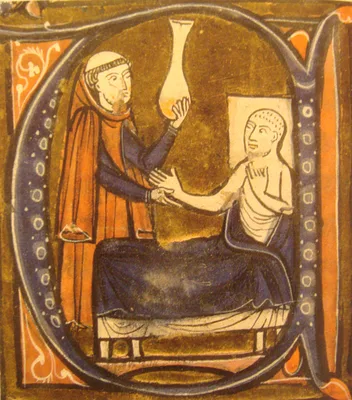
![SALICETO, Guglielmo da [WILLIAM OF SALICETO] (1210 – 1277)](/media/portraits/6798)
![HIPPOCRATES, [Ἱπποκράτης; Hippocrates of Kos] (-460 – -370)](/media/portraits/50)
![SCOT, Michael [Michael Scotus] (1175 – 1232)](/media/portraits/12461)