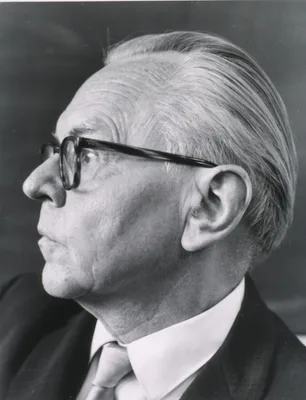
1908 LEVI, Giuseppe (1892 – 1965)
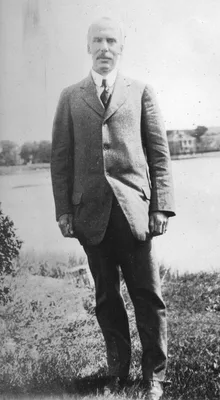
I ganglî cerebrospinali. Studi di istologia comparata e di istogenesi.
"Using comparative and developmental approaches he examined dorsal root ganglion cells in the embryos of 18 vertebrate species, and adults of 56 species—using a variety of histological stains, particularly those of Go…
GMN 7342 · https://historyofmedicine.com/id/9513
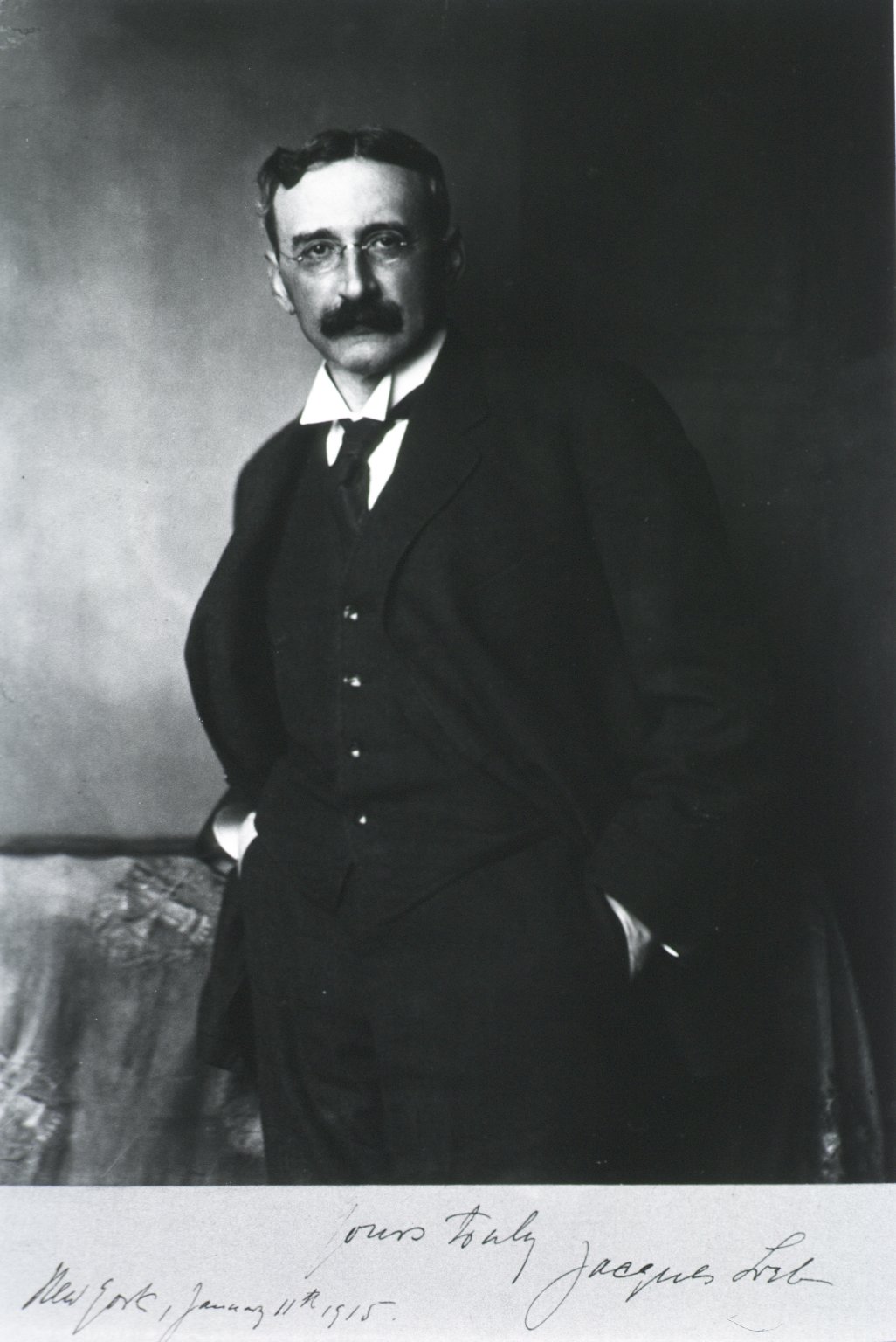
1909 LOEB, Jacques (1859 – 1924)
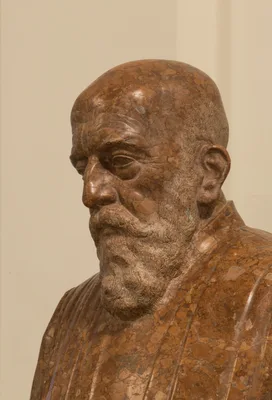
Die chemische Entwicklungserregung des tierischen Eies; künstiiche Parthenogenese.
Artificial parthenogenesis. For Loeb’s first paper on this subject see No. 515.1. Translated and revised in Loeb’s Artificial parthenogenesis and fertilization, 1913.
GMN 525 · https://historyofmedicine.com/id/1663
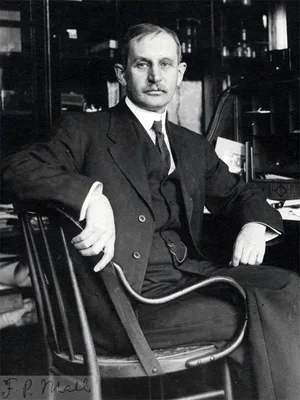
1910 –1912 KEIBEL, Franz Karl Julius (1861 – 1929); MALL, Franklin Paine (1862 – 1917)
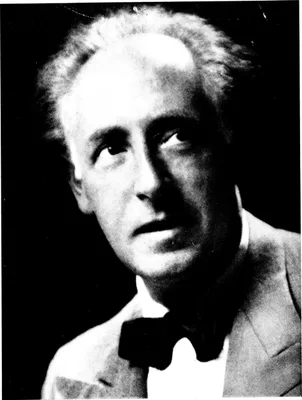
Manual of human embryology. Written by Charles R. Bardeen, Madison, Wis.; Herbert M. Evans, Baltimore, Md.; Walter Felix, Zurich; Otto Grosser, Prague; Franz Keibel, Freiburg i. Br.; Frederic T. Lewis, Boston, Mass.; Warren H. Lewis, Baltimore, Md.; J. Playfair McMurrich, Toronto; Franklin P. Mall, Baltimore, Md.; Charles S. Minot, Boston, Mass.; Felix Pinkus, Berlin; Florence R. Sabin, Baltimore, Md; George L. Streeter, Ann Arbor, Mich.; Julius Tandler, Vienna; Emil Zuckerkandl, Vienna. Edited by Franz Keibel and Franklin P. Mall. 2 vols.
The important studies on human embryos, originated by His, were carried on by his pupils, Keibel and Mall. This classic work written by American and German experts “has not yet been superseded” (D.S.B., late 20th cent…
GMN 526 · https://historyofmedicine.com/id/1670
1912 ROUX, Wilhelm (1850 – 1924)
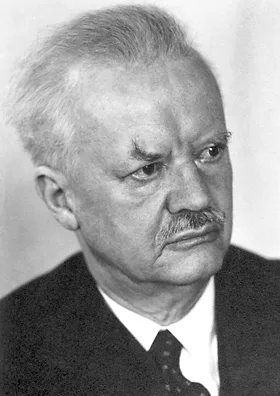
Terminologie der Entwicklungsmechanik.
GMN 527 · https://historyofmedicine.com/id/1675
1912 STREETER, George Linius (1873 – 1948)
The development of the nervous system. Keibel & Mall (eds.) Manual of human embryology, vol. 2, pp. 1-156.
GMN 11181 · https://historyofmedicine.com/id/13378
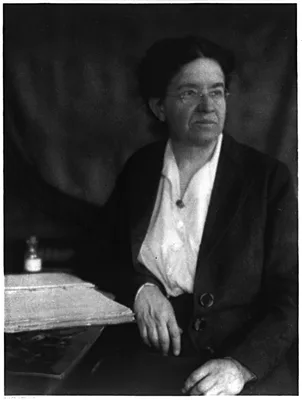
1913 SABIN, Florence Rena (1871 – 1953)
The origin and development of the lymphatic system.
GMN 1113 · https://historyofmedicine.com/id/1191
1913 LILLIE, Frank Rattray (1870 – 1947)
The mechanism of fertilization.
GMN 527.1 · https://historyofmedicine.com/id/1679
1916 CULLEN, Thomas Stephen (1868 – 1953); BRÖDEL, Max (1870 – 1941)
Embryology, anatomy, and diseases of the umbilicus together with diseases of the urachus
Contains the first reference to what would become known as “Cullen’s sign”, discoloration of the skin about the umbilicus, as a sign of ruptured ectopic gestation. This work contains extraordinary illustrations by Max…
GMN 6124.1 · https://historyofmedicine.com/id/7598
1919 PARKER, George Howard (1864 – 1955)
The elementary nervous system.
Important studies on the survival of primitive types of neuromuscular mechanism in some of the higher vertebrates.
GMN 528 · https://historyofmedicine.com/id/1682
1919 –1929 HOCHSTETTER, Ferdinand (1861 – 1954)
Beiträge zur Entwicklungsgeschichte des menschlichen Gehirns. 2 vols.
Considered the most extensive account of human cerebellar development. "Hochstetter carried out detailed work on the embryology of the human brain, and his beautiful figures have been reproduced in textbooks ever sinc…
GMN 7345 · https://historyofmedicine.com/id/9517
1920 GOLDSCHMIDT, Richard Benedict (1878 – 1958)
Mechanismus und Physiologie der Geschlechtsbestimmung.
Translated into English William J. Dakin as The Mechanism and Physiology of Sex Determination (London: Methuen & Co., 1923). Digital facsimile of the 1920 edition from Google Books at this link. Digital facsimile of t…
GMN 529 · https://historyofmedicine.com/id/1684
1922 –1931 KAHN, Fritz (1888 – 1968)
Das Leben des Menschen. Eine volkstümliche Anatomie, Biologie, Physiologie und Entwicklungsgeschichte des Menschen. 5 vols.
By developing a new infographics style of illustration in which physiological processes and other technical medical and biological concepts were often depicted as, or compared to machines, Kahn made medical and biolog…
GMN 7649 · https://historyofmedicine.com/id/9821
1924 SPEMANN, Hans (1869 – 1941); MANGOLD, Hilde (1898 – 1924)
Über Induktion von Embryonalanlagen durch Implantation artfremder Organisatoren.
This was Hilde Mangold's thesis. Spemann designed the experiment, and Mangold performed the work, and was the co-discoverer of the "organizer," the chemical that directs the embryonic development of tissues and organs…
GMN 530 · https://historyofmedicine.com/id/1687
1928 MANN, Ida Caroline (1893 – 1983)
The development of the human eye.
The first monograph on the subject, illustrated with drawings by the author.
GMN 7392 · https://historyofmedicine.com/id/9564
1929 FELL, Dame Honor Bridgett (1900 – 1986); ROBISON, Robert (1883 – 1941)
The growth, development and phosphatase activity of embryonic avian femora in limb-buds cultivated in vitro.
First modern organ cultures.
GMN 566.1 · https://historyofmedicine.com/id/298
1929 VOGT, Walter (1888 – 1941)
Gestaltungsanalyse am Amphibienkeim mit Örtlicher Vitalfärbung: II. Teil. Gastrulation und Mesodermbildung bei Urodelen und Anuren.
Modern fate mapping began in 1929 when Walter Vogt marked the groups of cells using a dyed agar chip and tracked them through gastrulation.
GMN 14096 · https://historyofmedicine.com/id/16407
1930 COLE, Francis Joseph (1872 – 1959)
Early theories of sexual generation.
GMN 532.9 · https://historyofmedicine.com/id/1706
1931 NEEDHAM, Joseph Terence Montgomery (1900 – 1995)
Chemical embryology. 3 vols.
GMN 531 · https://historyofmedicine.com/id/1690
1934 NEEDHAM, Joseph Terence Montgomery (1900 – 1995)
A history of embryology.
An exhaustive history of the subject. Deals with embryology from the earliest times to the beginning of the 19th century and includes a valuable bibliography and many illustrations. Second edition, with the assistance…
GMN 533 · https://historyofmedicine.com/id/1708
1937 MANN, Ida Caroline (1893 – 1983)
Developmental abnormalities of the eye.
GMN 5987 · https://historyofmedicine.com/id/7073
1938 BARBÉ, André
Recherches sur l'embryologie du système central de l'homme.
GMN 11179 · https://historyofmedicine.com/id/13376
1939 HOLTFRETER, Johannes (1901 – 1992)
Gewebeaffinität, ein Mittel der embryonalen Formbildung.
Tissue affinity as a means of embryonic morphogenesis. English translation in No. 534.3.
GMN 531.1 · https://historyofmedicine.com/id/1692
1939 MEYER, Arthur William (1873 – 1966)
The rise of embryology.
Includes a fine bibliography.
GMN 534 · https://historyofmedicine.com/id/1711
1942 ROCK, John A. (1890 – 1984); HERTIG, Arthur Tremain (1904 – 1990)
Some aspects of early human development.
Report of the youngest normal implanted fertilized human ovum, fertilization age about 7 1/2 days. Hertig and Rock published a more detailed study in Contr. Embryol. Carneg. Instn. 1945, 31, 65-84.
GMN 532 · https://historyofmedicine.com/id/1696
1944 ROCK, John A. (1890 – 1984); MENKIN, Miriam Friedman (1901 – 1992)
In vitro ferilization and cleavage of human ovarian eggs.
First in vitro fertilization of human eggs.
GMN 532.1 · https://historyofmedicine.com/id/1698
1944 FRANKLIN, Kenneth James (1897 – 1966); BARCLAY, Alfred Ernest (1876 – 1949); PRICHARD, Marjorie M. L.
The foetal circulation and cardiovascular system, and the changes that they undergo at birth.
The authors describe the first direct recording of the blood flow in an intact fetus, a fetal lamb. The authors performed this experiment cooperation with Sir Joseph Bancroft and Dr. D. H. Barron.
GMN 11548 · https://historyofmedicine.com/id/13747
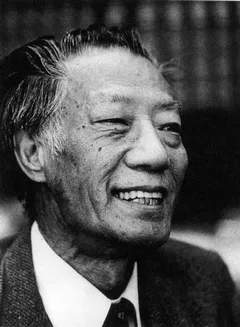
1951 CHANG, Min Chueh (1908 – 1991)
Fertilizing capacity of spermatozoa deposited into the Fallopian tubes.
Discovery that maturation of the sperm in the mammalian female tract is a necessary step in reproduction. This was co-discovered and called capacitation by Austin in the same year. See C.R. Austin, Observation on the …
GMN 532.2 · https://historyofmedicine.com/id/1700
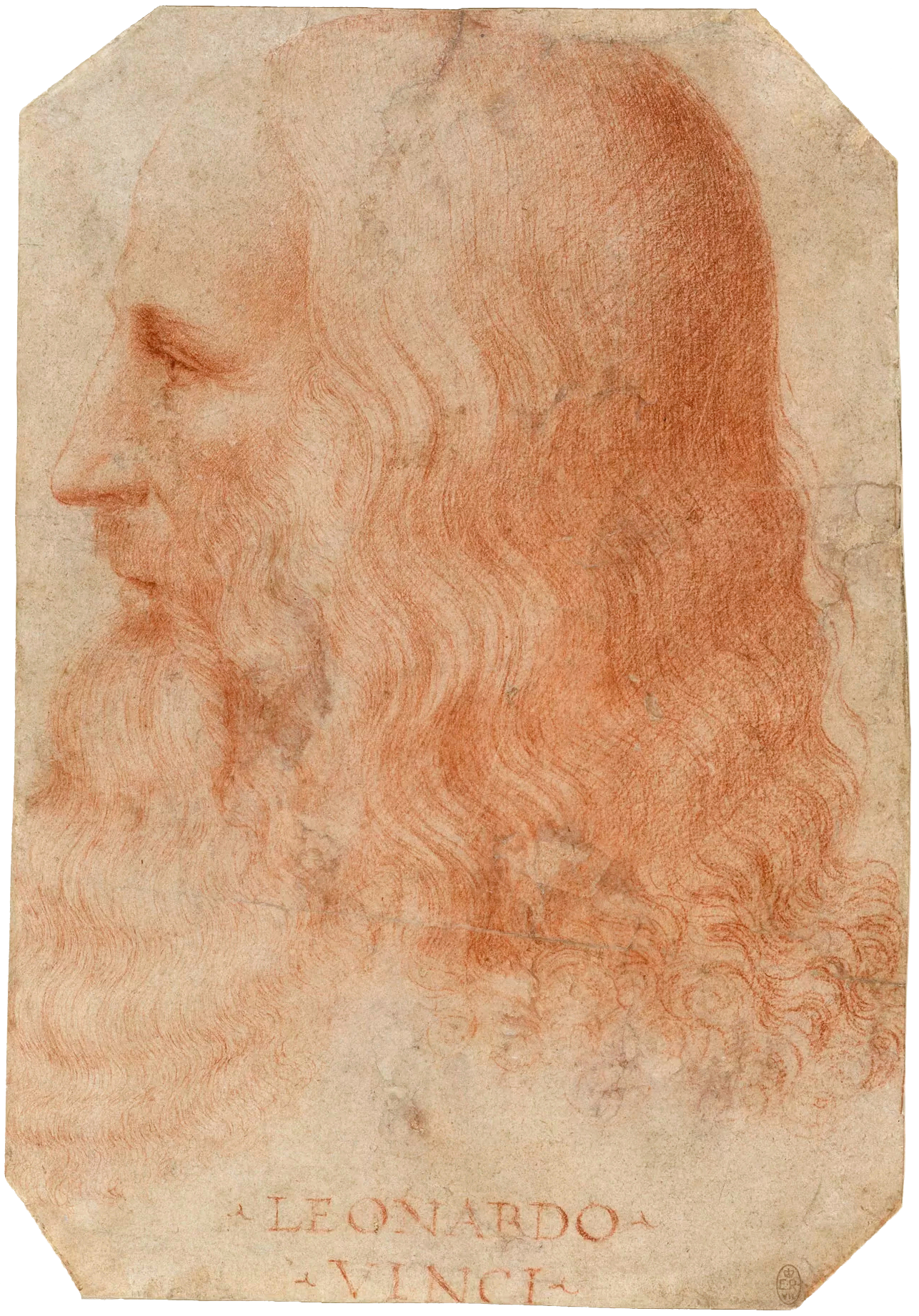
1952 LEONARDO DA VINCI (1452 – 1519); O’MALLEY, Charles Donald (1907 – 1970); SAUNDERS, John Bertrand deCusance Morant (1903 – 1991)
Leonardo da Vinci on the human body. The anatomical, physiological, and embryological drawings of Leonardo da Vinci. With translations, emendations, and biographical introduction by Charles D. O'Malley and J. B. de C. M. Saunders.
Includes 215 plates.
GMN 366 · https://historyofmedicine.com/id/430
1953 BRIGGS, Robert (1911 – 1983); KING, Thomas Joseph (1921 – 2000)
The transplantability of nuclei of arrested hybrid blastulae (R. pipiens female X R. catesbeiana male).
King and Briggs cloned a frog by nuclear transfer of embryonic cells. Their experiment was the first successful nuclear transplanation performed in metazoans. The same cloning technique, using somatic cells, was later…
GMN 13965 · https://historyofmedicine.com/id/16267
1959 CHANG, Min Chueh (1908 – 1991)
Fertilization of rabbit ova in vitro.
The birth of normal rabbits from in vitro fertilization and embryo transfer was the first proof that births resulting from this procedure are normal.
GMN 532.3 · https://historyofmedicine.com/id/1701
1966 MALPIGHI, Marcello (1628 – 1694); ADELMANN, Howard Bernhardt (1898 – 1988)
Marcello Malpighi and the evolution of embryology. 5 vols.
Vol. 1 is an exhaustive biography of Malpighi; the remaining 4 volumes provide an extensive account of the development of embryology, and annotated English translations of Nos. 468 & 469.
GMN 534.1 · https://historyofmedicine.com/id/1787
1966 GASKING, Elizabeth B.
Investigations into generation, 1651-1828.
GMN 534.2 · https://historyofmedicine.com/id/1788
1967 OPPENHEIMER, Jane Marion (1911 – 1996)
Essays in the history of embryology and biology.
GMN 534.3 · https://historyofmedicine.com/id/1790
1969 EDWARDS, Robert Geoffrey (1925 – 2013); BAVISTER, B. D.; STEPTOE, Patrick Christopher (1913 – 1988)
Early stages of fertilization in vitro of human oocytes.
First successful in-vitro fertilization of human oocytes. In 2010 Robert Edwards was awarded the Nobel Prize in Physiology or Medicine "for the development of in vitro fertilization."
GMN 532.4 · https://historyofmedicine.com/id/1703
1970 HAMILTON, William James (1903 – 1975); BOYD, J. B.
The human placenta.
An elegantly published and illustrated monograph with extensive historical material.
GMN 11112 · https://historyofmedicine.com/id/13308
1971 ROGER, Jacques (1920 – 1990)
Les sciences de la vie dans la pensée française du XVIIIe siècle. Genération des animaux de Descartes à l’Encyclopédie. 2e ed.
Translated into English by Robert Ellrich as The life sciences in eighteenth-century French thought, edited by Keith R. Benson, Stanford: Stanford University Press, 1998.
GMN 534.4 · https://historyofmedicine.com/id/1792
1974 OPPENHEIMER, Jane Marion (1911 – 1996); WILLIER, Benjamin Harris (1890 – 1972)
Foundations of experimental embryology. 2nd ed.
14 classic contributions to embryology (in English translations where appropriate) with historical commentaries.
GMN 534.41 · https://historyofmedicine.com/id/1794
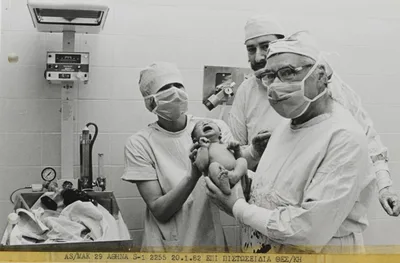
1978 EDWARDS, Robert Geoffrey (1925 – 2013); STEPTOE, Patrick Christopher (1913 – 1988)
Birth after the reimplantation of a human embryo. (Letter to the editor).
First successful human birth after in vitro fertilization and embryo transfer.
GMN 532.5 · https://historyofmedicine.com/id/1704
1981 EVANS, Sir Martin John (1941 – ); KAUFFMAN, Matthew H. (1942 – 2013)
Establishment in culture of pluripotential cells from mouse embryos.
Evans and Kauffman were the first to identify, isolate and successfully culture embryonic stem cells using mouse blastocysts. This discovery opened the doors to the creation of “murine genetic models” -- mice that hav…
GMN 13285 · https://historyofmedicine.com/id/15551
1984 SOLTER, Davor (1941 – ); MCGRATH, James
Completion of mouse embryogenesis requires both the maternal and paternal genomes.
Solter discovered mammalian genomic imprinting that causes parent-of-origin specific gene expression, with consequences for development and disease. "Genomic imprinting is an epigenetic phenomenon that causes genes to…
GMN 13991 · https://historyofmedicine.com/id/16295
1986 HORDER, T. J.; WITKOWSKI, Jan A.; WYLIE, Christopher Craig (1945 – )
A history of embryology. British Society for Developmental Biology Symposia 8. Edited by T. J. Horder, J. A. Wikowski and C. C. Wylie.
A survey of the history of developmental biology from 1880.
GMN 534.42 · https://historyofmedicine.com/id/1796
1987 O'RAHILLY, Ronan (1921 – 2018); MÜLLER, Fabiola
Developmental stages in human embryos. Including a revision of Streeter's "Horizons" and a survey of the Carnegie Collection.
Digital facsimile from embyrology.med.unsw.edu at this link .
GMN 11182 · https://historyofmedicine.com/id/13379
1991 GILBERT, Scott Frederick (1949 – )
A conceptual history of modern embryology. Edited by Scott F. Gilbert. Developmental biology: A comprehensive synthesis, vol. 7.
GMN 10767 · https://historyofmedicine.com/id/12963
1994 O'RAHILLY, Ronan (1921 – 2018); MÜLLER, Fabiola
The embryonic human brain: An atlas of developmental stages.
"The first work devoted to the staged, embryonic human brain."
GMN 11177 · https://historyofmedicine.com/id/13374
1996 HILL, Mark
Historic Embryology Papers.
https://embryology.med.unsw.edu.au/embryology/index.php/Historic_Embryology_Papers#Introduction "Introduction The linked papers are intended to give some historic background to Embryology. Historically, say pre-20th c…
GMN 11183 · https://historyofmedicine.com/id/13380
1997 WILMUT, Sir Ian (1944 – ); CAMPBELL, Keith Henry Stockman (1954 – 2012)
Viable offspring derived from fetal and adult mammalian cells.
Cloning of the lamb Dolly, the first mammal to be cloned from an adult cell. Her birth established that the nuclei of at least some adult cells can be used to produce sheep or other animals that are genetically identi…
GMN 7457 · https://historyofmedicine.com/id/9629
1998 THOMSON, James Alexander (1958 – ); ITSKOVITZ-ELDOR, Joseph; SHAPIRO, Sander S.; ET AL
Embryonic stem cell lines derived from human blastocysts.
Thomson and collaborators first isolated embryonic stem cells from human blastocysts. Order of authorship in original publication: Thomson, Itskovitz-Eldor, Shapiro et al. Available online from science.sciencemag.org …
GMN 13286 · https://historyofmedicine.com/id/15552
2002 HOPWOOD, Nick
Embryos in wax: Models from the Ziegler studio.
GMN 7673 · https://historyofmedicine.com/id/9845
2004 HWANG, Woo-suk (1953 – ); RYU, Young June; PARK, Jong Hyuk; ET AL
Evidence of a pluripotent human embryonic stem cell line derived from a cloned blastocyst.
The authors in Korea, led by Woo-suk Hwang, reported the cloning of a human blastocyst using somatic cell nuclear transfer, and deriving pluripotent embryonic stem cells from that cloned blastocyst. In doing so they c…
GMN 14205 · https://historyofmedicine.com/id/16521
2005 BLAZER, Shraga; ZIMMER, Etan Z.
The embryo: Scientific discovery and medical ethics. Edited by Shraga Blazer and Etan Z. Zimmer.
Addresses 1: The beginning of life, 2: Embryonic stem cells, 3: Societal, ethical and religious views on genetic intervention in humans, 4: Genetics-From in vitro to in vivo, 5: Fetal surgical and pharmacological inte…
GMN 12556 · https://historyofmedicine.com/id/14795