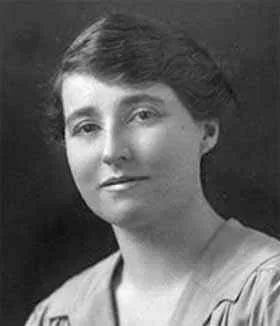
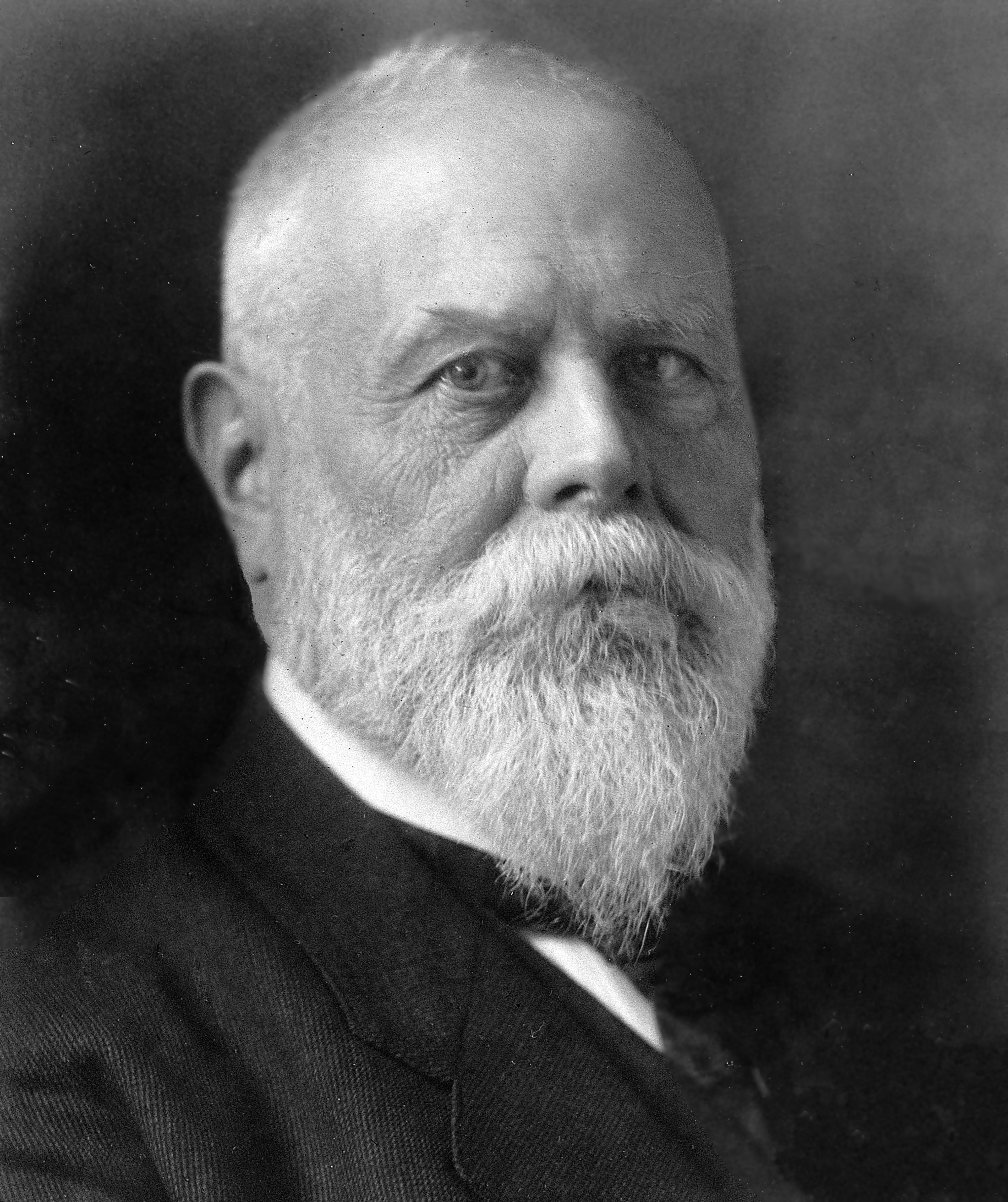
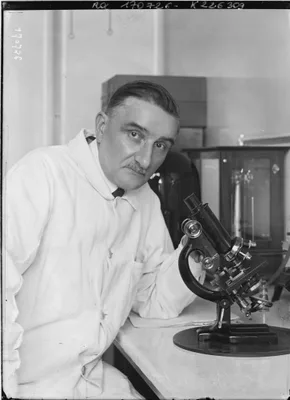
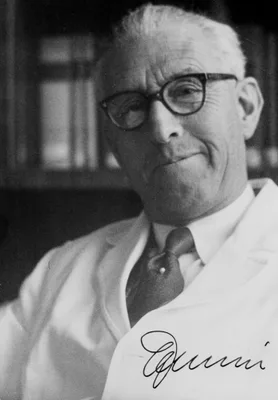
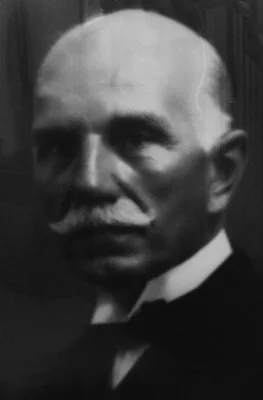
1898 POLAND, John (1855 – 1937)
Traumatic separation of the epiphyses.
Definitive and exhaustive study of growth plate fractures in children. Poland also published the series of x rays included in the above work as a separate atlas: Skiagraphic atlas showing the development of the bones …
GMN 4429.1 · https://historyofmedicine.com/id/6265
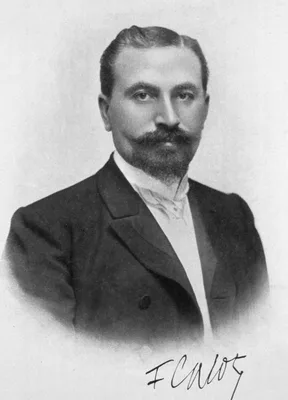
1900 CALOT, Jean François (1861 – 1944)
Les maladies qu’on soigne à Berck.
An account of the work of the Rothschild Hospital at Berck-sur-Mer, where Calot specialized in the treatment of surgical tuberculosis in children.
GMN 2336 · https://historyofmedicine.com/id/3076
1900 BUDIN, Pierre-Constant (1846 – 1907)
Le nourrisson. Alimentation et hygiène.
Pioneer treatise on the care and feeding of premature and newborn infants. Budin sponsored the idea that an infant should be given milk equal in amount to one-tenth of its body weight. English translation, London, 1907.
GMN 6344.1 · https://historyofmedicine.com/id/8177
1902 STILL, Sir George Frederic (1868 – 1941)
The Goulstonian lectures on some abnormal psychical conditions in children. Delivered before the Royal College of Physicians of London on March 4th, 6th, and 11th, 1902.
Considered by many historians to be the scientific starting point of the study of Attention Deficit Hyperactivity Disorder (ADHD). Digital facsimile of the separate offprint from the Internet Archive at this link.
GMN 7979 · https://historyofmedicine.com/id/10155
1903 –1906 HEUBNER, Johann Otto Leonhard (1843 – 1926)
Lehrbuch der Kinderheilkunde. 2 vols.
Heubner was professor of pediatrics at Berlin. With Rubner he determined the caloric requirement of infants and did other important work on infant feeding.
GMN 6343 · https://historyofmedicine.com/id/8166
1903 SELTER, Paul (1866 – 1941)
Ueber Trophodermatoneurose.
First clear description of infantile acrodynia (“pink disease”).
GMN 6344 · https://historyofmedicine.com/id/8175
1905 VOGT, Heinrich (1875 – 1936)
Über familiäre amaurotische Idiotie und verwandte Krankheitsbilder.
Spielmayer-Vogt disease, or Spielmeyer-Vogt-Sjögren-Batten disease, the juvenile form of cerebromacular degeneration.
GMN 4713.1 · https://historyofmedicine.com/id/1180
1906 FRIEDMANN, Max (1858 – 1925)
Ueber die nicht epileptischen Absencen oder kurzen narkoleptischen Anfälle.
First description of pyknolepsy.
GMN 4594.1 · https://historyofmedicine.com/id/483
1906 MORGAN, Harry de Riemer (1863 – 1931)
Upon the bacteriology of the summer diarrhoea of infants.
Morgan’s bacillus, Proteus morgani.
GMN 2518.1 · https://historyofmedicine.com/id/3281
1907 HUTCHISON, Sir Robert (1871 – 1960)
On suprarenal sarcoma in children with metastases in the skull.
Hutchison’s tumors.
GMN 3868 · https://historyofmedicine.com/id/4920
1908 PFANNENSTIEL, Hermann Johann (1862 – 1909)
Ueber den habituellen Ikterus de Neugeborenen.
First detailed description of familial icterus gravis neonatorum.
GMN 3080.1 · https://historyofmedicine.com/id/3740
1908 HERTER, Christian Archibald (1865 – 1910)
On infantilism from chronic intestinal infection; characterized by the overgrowth and persistence of flora of the nursling period.
“Herter’s infantilism”. Called also “Gee-Herter disease” (No. 3491).
GMN 3528 · https://historyofmedicine.com/id/4022
1908 LEINER, Karl (1871 – 1930)
Ueber Erythrodermia desquamativa, eine eigenartige universelle Dermatose der Brustkinder.
Desquamative erythroderma of nurslings (Leiner); apparently a toxic eruption peculiar to breast-fed children suffering from enteritis.
GMN 4145 · https://historyofmedicine.com/id/5809
1909 ESCHERICH, Theodor (1857 – 1911)
Die Tetanie der Kinder.
GMN 4835 · https://historyofmedicine.com/id/3590
1909 NICOLLE, Charles Jules Henri (1866 – 1936)
Le kala azar infantile.
Nicolle considered infantile kala-azar to be caused by a distinct species of Leishmania; to this he gave the name L. infantum.
GMN 5300 · https://historyofmedicine.com/id/6488
1910 ZAHORSKY, John (1871 – 1963)
Roseola infantilis.
Roseola (exanthema) subitum first described as a distinct entity.
GMN 5506 · https://historyofmedicine.com/id/6491
1910 –1912 PFAUNDLER, Meinhard von (1872 – 1947); SCHLOSSMANN, Arthur (1867 – 1932)
Handbuch der Kinderheilkunde. 2te. Aufl. 6 vols.
English translation, 1912-24.
GMN 6347 · https://historyofmedicine.com/id/8179
1910 HIRSHBERG, Leonard Keene (1877 – 1969); MENCKEN, Henry Louis (1880 – 1956)
What you ought to know about your baby by Leonard Keene Hirshberg. A text book for mothers on the care and feeding of babies, with questions and answers especially prepared by the editor.
Ghost-written by American journalist, satirist, cultural critic and scholar of American English H. L. Mencken except for the "questions and answers." In a copy that sold at auction at Christies in 1995, Mencken inscri…
GMN 8710 · https://historyofmedicine.com/id/10888
1910 HOAG, Ernest Bryant (1868 – 1924)
The health index of children.
Hoag was medical director of the public schools in Berkeley, California. As Hoag wrote in his introduction, the object of this work was "to show teachers and parents how to detect easily those ordinary physical defect…
GMN 11446 · https://historyofmedicine.com/id/13645
1911 WATERHOUSE, Rupert (1873 – 1958)
A case of suprarenal apoplexy.
Waterhouse–Friderichsen (WFS) syndrome (see also Nos. 4679, 4686).
GMN 4685 · https://historyofmedicine.com/id/8875
1911 PETERS, O. H.
Observations upon the natural history of epidemic diarrhoea.
Diarrhoea was one of the chief causes of child mortality in Great Britain at the turn of the century. Peters begins with a statistical study of age incidence, prevalence, and fatality of the condition and then in succ…
GMN 7762 · https://historyofmedicine.com/id/9934
1912 GHON, Anton (1866 – 1936)
Der primäre Lungenherd bei der Tuberkulose der Kinder.
Ghon described the anatomical distribution and development of the lesions in pulmonary tuberculosis among children – “Ghon’s primary focus”. His book was translated into English in 1916. See also No. 3224.
GMN 3233 · https://historyofmedicine.com/id/3854
1914 HESS, Alfred Fabian (1875 – 1933)
German measles (rubella): an experimental study.
Experimental proof that rubella is caused by a virus.
GMN 5506.1 · https://historyofmedicine.com/id/6494
1914 SWIFT, Harry (1858 – 1937)
Erythroedema.
Acrodynia (“pink disease”, “Swift’s disease”); first full description.
GMN 6348 · https://historyofmedicine.com/id/8180
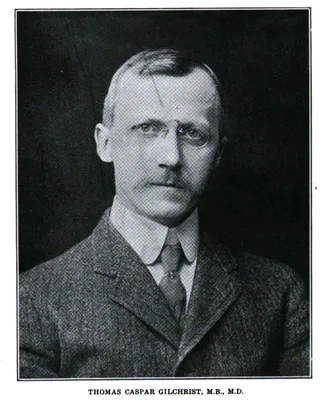
1915 GILCHRIST, Thomas Caspar (1862 – 1927)
Outline of common skin diseases including eruptive fevers. Also diet plans for children in use in the Department of Pediatrics, the Johns Hopkins Hospital.
Gilchrist was the first professor to concentrate on dermatology at Johns Hopkins, joining the faculty in 1898. His guide to the common skin diseases, published for the use of medical students at Hopkins, was printed l…
GMN 11753 · https://historyofmedicine.com/id/13953
1918 FRIDERICHSEN, Carl (1886 – 1982)
Nebennierenapoplexie bei kleinen Kindern.
See No. 4685.
GMN 4686 · https://historyofmedicine.com/id/963
1922 STEVENS, Albert Mason (1884 – 1945); JOHNSON, Frank Chambliss (1894 – 1934)
A new eruptive fever associated with stomatitis and ophthalmia; report of two cases in children.
“Stevens-Johnson syndrome”, a generalized eruption, continued fever, inflamed buccal mucosa, and severe purulent conjunctivitis. B.A. Thomas (Brit. med. J., 1950, 1, 1393) believes this to be merely a severe form of H…
GMN 4150 · https://historyofmedicine.com/id/5844
1922 HESS, Julius Hays (1876 – 1955)
Premature and congenitally diseased infants.
“The first book ever written dealing solely with premature and congenitally diseased infants” (Cone). Hess founded the first premature infant center in the United States at Michael Reese Hospital in Chicago.
GMN 6348.1 · https://historyofmedicine.com/id/8183
1922 BÓKAY, János (1858 – 1937)
Die Geschichte der Kinderheilkunde.
GMN 6352 · https://historyofmedicine.com/id/8192
1923 FEER, Emil (1864 – 1955)
Eine eigenartige Neurose des vegetativen Systems beim Kleinkinde.
Feer described a vegetative neurosis (“Feer’s disease”) affecting infants and characterized by cyanosis of the extremities, recurrent sweating, tremor, motor weakness, rapid pulse, and insomnia. It was first described…
GMN 6349 · https://historyofmedicine.com/id/8186
1923 GARRISON, Fielding Hudson (1870 – 1935)
History of pediatrics. In I. Abt, System of pediatrics, 1, 1-170.
Re-issued separately with an appendix on the history of pediatrics in recent times by A. F. Abt, Philadelphia, W. B. Saunders, 1965.
GMN 6353 · https://historyofmedicine.com/id/8194
1923 JONES, William Henry Samuel (1876 – 1963); HIPPOCRATES, [Ἱπποκράτης; Hippocrates of Kos] (-460 – -370)
The sacred disease. In [Works]…edited with an English translation by W.H.S. Jones. 2, 127-83
This includes the first mention of epilepsy in children. Hippocrates grouped all convulsive attacks together as ερα νο̂σος, the sacred disease. He did not employ the word έπίληψις, (which seems first to have been used…
GMN 4807 · https://historyofmedicine.com/id/8898
1923 ISSERLIS, Leon (1881 – 1966); WOOD, Frances Chick (1883 – 1919)
The relation between home conditions and the intelligence of school children. From data collected by the late Mrs. Frances Wood. Privy Council. Medical Report Council. Special reports series No. 74.
GMN 12588 · https://historyofmedicine.com/id/14827
1924 MARRIOTT, Williams McKim (1885 – 1936)
The food requirements of malnourished infants with a note on the use of insulin.
Marriott introduced the insulin-fattening method of treatment of malnutrition in infants.
GMN 6350 · https://historyofmedicine.com/id/8188
1925 RUHRÄH, John (1872 – 1935)
Pediatrics of the past: an anthology.
Contains sketches of the lives of the more important pediatricians of the past, with a comprehensive selection of their works, translated where necessary into English. Ruhräh has thrown much light on the important con…
GMN 6354 · https://historyofmedicine.com/id/8196
1925 SUDHOFF, Karl Friedrich Jakob (1853 – 1938)
Erstlinge der pädiatrischen Literatur.
Facsimile reproductions of the three earliest printed works on pediatrics: Bagellardo, Metlinger, and Roelans, together with a valuable prefatory essay on their importance.
GMN 6355 · https://historyofmedicine.com/id/8197
1927 CALMETTE, Léon Charles Albert (1863 – 1933); GUÉRIN, Camille (1872 – 1961); BOQUET, Alfred (1879 – 1947); NÈGRE, Léopold (1879 – 1961)
Sur la vaccination préventive des enfants nouveau-nés contre la tuberculose par le B.C.G.
GMN 2346 · https://historyofmedicine.com/id/3105
1927 COOLEY, Thomas Benton (1871 – 1945); ET AL
Anemia in children, with splenomegaly and peculiar changes in the bones.
“Cooley’s erythroblastic anemia”, thalassemia. With E. R. Witwer and O. P. Lee. An earlier brief account by Cooley and Lee appeared in Trans. Amer. Pediat. Soc.,1925, 37, 29.
GMN 3141 · https://historyofmedicine.com/id/3951
1927 FANCONI, Guido (1892 – 1979)
Familiäre infantile perniziösaartige Anämie (perniziöses Blutbild und Konstitution).
“Fanconi’s syndrome”, congenital hypoplasia of bone marrow with multiple congenital defects occurring as a familial disease.
GMN 3142 · https://historyofmedicine.com/id/3953
1927 ALEXANDER, Gustav (1873 – 1932)
Die Ohrenkrankheiten im Kindesalter mit Einschuss der Grenzgebiete.
The first work on pediatric ear diseases, dedicated to the author's teacher, Adam Politzer. Alexander "was assassinated on the street between his home and the Poliklinik by Johann Sokoup, a Czechoslovakian former pati…
GMN 7227 · https://historyofmedicine.com/id/9395
1929 MORQUIO, Luis (1867 – 1935)
Sur une forme de dystrophie osseuse familiale.
“Morquio’s disease”, eccentro-osteochondrodysplasia.
GMN 4397 · https://historyofmedicine.com/id/5998
1929 BRAILSFORD, James Frederick (1888 – 1961)
Chondro-osteo-dystrophy. Roentgenographic and clinical features of a child with dislocation of vertebrae.
Morquio–Brailsford disease (see No. 4397).
GMN 4397.1 · https://historyofmedicine.com/id/6001
1930 SCHLESINGER, Bernard (1896 – 1984)
The relationship of throat infection to acute rheumatism in childhood.
Schlesinger showed that hemolytic streptococcal infection was a cause of acute rheumatism in children.
GMN 4507 · https://historyofmedicine.com/id/100
1930 CAULFIELD, Ernest (1893 – 1972)
The infant welfare movement in the eighteenth century.
GMN 11324 · https://historyofmedicine.com/id/13522
1931 STILL, Sir George Frederic (1868 – 1941)
The history of paediatrics. The progress of the study of diseases of children up to the end of the XVIIIth century.
This work covers the whole field of pediatrics to the end of the 18th century. It is a very readable, interesting and accurate history of the subject. Reprinted Folkstone, 1965. See No. 4503.
GMN 6356 · https://historyofmedicine.com/id/8198
1932 DIAMOND, Louis Klein (1902 – 1999); BLACKFAN, Kenneth Daniel (1883 – 1941); BATY, James M.
Erythroblastosis fetalis and its association with universal edema of the fetus, icterus gravis neonatorum and anemia of the newborn.
The authors described and named this syndrome/illness of newborns for the first time, including pathological findings, clinical data, lab abnormalities, presentation and course of illness. Order of authorship in the o…
GMN 14087 · https://historyofmedicine.com/id/16398
1933 PARSONS, Sir Leonard Gregory (1879 – 1950)
Scurvy treated with ascorbic acid.
First case of infantile scurvy cured by the administration of ascorbic acid.
GMN 3725 · https://historyofmedicine.com/id/4497
1934 GOODPASTURE, Ernest William (1886 – 1960); JOHNSON, Claud D.
An investigation of the etiology of mumps.
Isolation of mumps virus.
GMN 5543 · https://historyofmedicine.com/id/6746
1934 GESELL, Arnold Lucius (1880 – 1961)
An atlas of infant behavior: A systematic delineation of the forms and early growth of human behavior patterns... illustrated with 3,200 action photographs. Vol. l: Normative series, in collaboration with Helen Thompson and Catherine S. Amatruda. Selected bibliographies (p. 45). Vol. 2: Naturalistic series, in collaboration with Alice V. Keliher, Frances L. Ilg, and Jessie J. Carlson. (2 vols.)
Gesell, who originated the Child Study Center at Yale University, was the founder of the study of child development in the United States. He is best known for his groundbreaking studies of normal child development: be…
GMN 10609 · https://historyofmedicine.com/id/12802
1936 FLEXNER, Abraham (1866 – 1959); HESS, Alfred Fabian (1875 – 1933)
Collected writings. With a biographical memoir by Abraham Flexner. 2 vols.
GMN 13044 · https://historyofmedicine.com/id/15295

![HIPPOCRATES, [Ἱπποκράτης; Hippocrates of Kos] (-460 – -370)](/media/portraits/50)