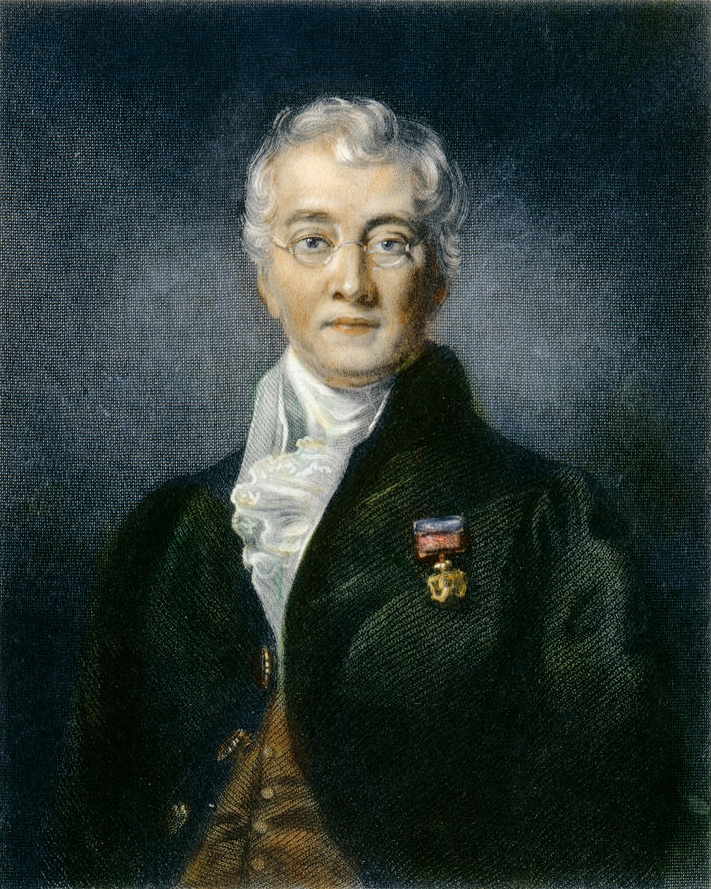
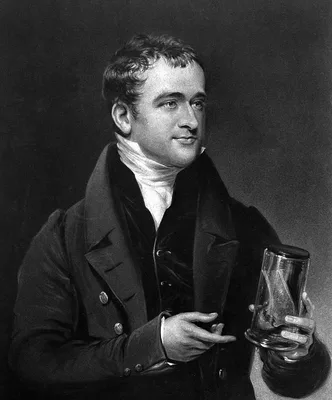
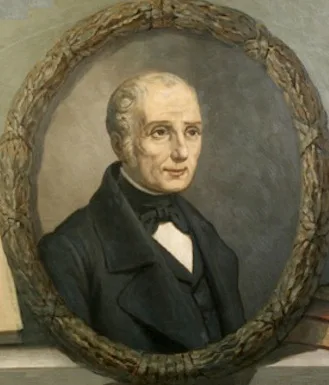
1821 BELL, Sir Charles (1774 – 1842)
On the nerves; giving an account of some experiments on their structure and functions, which lead to a new arrangement of the system.
“Bell’s palsy”. The facial paralysis ensuing upon lesion of the motor nerve of the face is described here for the first time. See also his later paper, with more detailed description, in the same journal, 1829, 119, 3…
GMN 1255 · https://historyofmedicine.com/id/381
1822 –1823 MAYO, Herbert (1796 – 1852)
Anatomical and physiological commentaries. Numbers I & II [All published].
Mayo discovered and described the functions of the Vth and VIIth cranial nerves on pp. 107-120 of Number I, and did much towards the clarification of the idea of reflex action. Reprinted, Metuchen, N.J., Scarecrow Pre…
GMN 1390 · https://historyofmedicine.com/id/1943
1822 MAGENDIE, François (1783 – 1855)
Expériences sur les fonctions des racines des nerfs rachidiens.
Magendie definitely discovered that the anterior root is motor and that the dorsal root is sensory, although Romberg, Flourens, Sherrington, and others credited the discovery to Charles Bell. In this paper Magendie an…
GMN 1256 · https://historyofmedicine.com/id/2122
1822 MAGENDIE, François (1783 – 1855)
Expériences sur les fonctions des racines des nerfs qui naissent de la moelle épinière.
Further experiments, including, most probably, “the first use of strychnine as part of a study of the localization of function in the nervous system as well as being a very early example of the rational use of a known…
GMN 1256.1 · https://historyofmedicine.com/id/2127
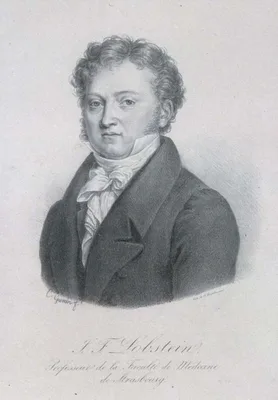
1823 LOBSTEIN, Jean Georges Chrétien Frédéric Martin (1777 – 1835)
De nervi sympathetici humani fabrica usu et morbis.
Includes description of “Lobstein’s ganglion”, an accessory ganglion of the sympathetic nerve above the diaphragm. English translation, 1831.
GMN 1317 · https://historyofmedicine.com/id/1264
1823 FLOURENS, Marie Jean Pierre (1794 – 1867)
Recherches physiques sur les propriétés et les fonctions du système nerveux dans les animaux vertébrés.
Flourens removed the cerebrum and cerebellum in pigeons, showing maintenance of reflexes with loss of cerebration in the former case and disturbance of equilibrium in the latter case. Thus he demonstrated that the cer…
GMN 1391 · https://historyofmedicine.com/id/1947
1825 MAGENDIE, François (1783 – 1855)
Mémoire sur un liquide qui se trouve dans le crâne et le canal vertebral de l’homme et des animaux mammifères.
First clear description of the cerebrospinal fluid.
GMN 1392 · https://historyofmedicine.com/id/1952
1825 ROLANDO, Luigi (1773 – 1831)
Osservazioni sul cervelletto.
Rolando was the first to investigate the functions of the cerebellum. His name is perpetuated in the “fissure of Rolando”, so named by F. Leuret, Anatomic comparée, 1839-57, whose attention had been drawn to it previo…
GMN 1393 · https://historyofmedicine.com/id/1957
1826 MÜLLER, Johannes Peter (1801 – 1858)
Zur vergleichenden Physiologie des Gesichtssinnes des Menschen und der Thiere.
Includes Müller’s law of specific nerve energies. For an English translation, see his Elements of physiology, transl. W. Baly, London, 1838, vol. 1, pp. 766-67. Includes (p. 73) his explanation of the color sensations…
GMN 1257 · https://historyofmedicine.com/id/2130
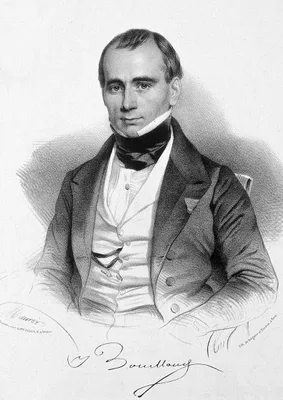
1827 BOUILLAUD, Jean Baptiste (1796 – 1881)
Recherches expérimentales tendant à prouver que le cervelet préside aux actes de la station et de la progression, et non à l’instinct de la propagation.
Bouillaud identified the anterior lobes as the speech center. Refuting Gall, he showed that the brain controls equilibration, station, and progression. Title of second paper varies. His earlier Traité clinique et phys…
GMN 1395 · https://historyofmedicine.com/id/1967
1829 ROLANDO, Luigi (1773 – 1831)
Della struttura degli emisferi cerebrali.
GMN 1394 · https://historyofmedicine.com/id/1962
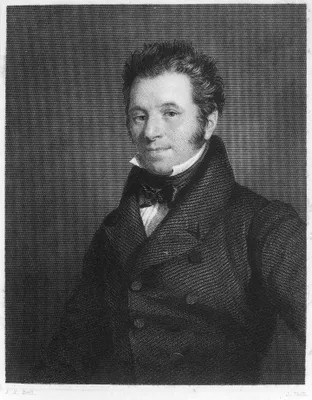
1830 BELL, Sir Charles (1774 – 1842)
The nervous system of the human body. [2nd ed.]
Records Bell’s demonstration that the fifth cranial nerve has a sensory-motor function, his discovery of “Bell’s nerve” and the motor nerve of the face, lesion of which causes facial paralysis (Bell’s palsy). Bell was…
GMN 1258 · https://historyofmedicine.com/id/2136
1831 MÜLLER, Johannes Peter (1801 – 1858)
Bestätigung des Bell’schen Lehrsatzes, das die doppelten Wurzeln der Rückenmarksnerven verschiedene Fuctionen haben, durch neue und Entscheidende Experimente.
Experimental proof of the Bell-Magendie law (see Nos. 1254 & 1256) of the spinal nerve roots.
GMN 1259 · https://historyofmedicine.com/id/2141
1833 HALL, Marshall (1790 – 1857)
On the reflex function of the medulla oblongata and medulla spinalis.
“Hall showed that reflex activity could be distinguished from other types of movement, that it produced what today we call ‘muscle tone,’ that it included sneezing coughing, and vomiting, and that it could be influenc…
GMN 1359 · https://historyofmedicine.com/id/1668
1836 REMAK, Robert (1815 – 1865)
Vorläufige Mittheilungen microscopischer Beobachtungen über den inner Bau der Cerebrospinalnerven und über die Entwickelung ihrer Formelemente.
Remak identified for the first time the myelinated fiber with its central “band of Remak” (the axon), and the unmyelinated axon or “fiber of Remak.” Fuller account in his Observationes anatomicae (No. 1262).
GMN 1260 · https://historyofmedicine.com/id/2145
1837 PURKYNĔ, Jan Evangelista [PURKINJE] (1787 – 1869)
Neueste Untersuchungen aus der Nerven-und Hirnanatomie.
Description of the “flask-shaped ganglionic bodies” known as “Purkinje cells”. Reprinted in his Opera Omnia, 1939, 3, 47-9. Also published in Oken’s Isis, 1838, pp. 582-84.
GMN 1396 · https://historyofmedicine.com/id/1980
1837 BURDACH, Ernst (1801 – 1876)
Beitrag zur mikroskopischen Anatomie der Nerven.
GMN 1261 · https://historyofmedicine.com/id/2156
1838 REMAK, Robert (1815 – 1865)
Observationes anatomicae et microscopicae de systematis nervosi structura.
See No. 1260.
GMN 1262 · https://historyofmedicine.com/id/2161
1839 –1840 STANLEY, Edward (1793 – 1862)
A case of disease in the posterior columns of the spinal cord.
Stanley was the first to describe disease of the posterior columns of the spinal cord.
GMN 4525 · https://historyofmedicine.com/id/386
1839 –1857 LEURET, François (1797 – 1851); GRATIOLET, Louis Pierre (1815 – 1865)
Anatomie comparée du système nerveux. 2 vols. and atlas.
The first comprehensive systematic investigation of the mammalian brain. Leuret wrote vol. 1 without Gratiolet, who later became his collaborator, publishing vol. 2 and the atlas after Leuret’s death.
GMN 1396.01 · https://historyofmedicine.com/id/1988
1840 BAILLARGER, Jules Gabriel François (1809 – 1890)
Recherches sur la structure de la couche cortical des circonvolutions du cerveau.
Baillarger demonstrated that the cortex is made up of layers and that fibers connect the cortex with the internal white matter. English translation in von Bonin, Some papers on the cerebral cortex, Springfield: Charle…
GMN 1396.1 · https://historyofmedicine.com/id/1991
1840 PACINI, Filippo (1812 – 1883)
Nuovi organi scoperti nel corpo humano.
“Pacini’s corpuscles”, end organs of sensory nerves, earlier described by Vater in 1717.
GMN 1263 · https://historyofmedicine.com/id/2164
1842 –1853 WAGNER, Rudolf Friedrich Johann Heinrich (Rudolph) (1805 – 1864)
Handwörterbuch der Physiologie … hrsg. von R. Wagner.
Wagner was professor at Göttingen. His literary output was enormous. In the above work he contributed the sections on sympathetic nerves, nerve-ganglia, and nerve-endings. This work contained 63 extensive review artic…
GMN 607 · https://historyofmedicine.com/id/466
1842 BIDDER, Friedrich Karl Heinrich von (1810 – 1894); VOLKMANN, Alfred Wilhelm (1800 – 1877)
Die Selbständigkeit des sympathischen Nervensystems durch anatomische Untersuchungen nachgewiesen.
These writers showed the sympathetic nervous system to consist largely of small, medullated fibers originating from the sympathetic and spinal ganglia.
GMN 1318 · https://historyofmedicine.com/id/1275
1842 MAGENDIE, François (1783 – 1855)
Recherches physiologiques et cliniques sur le liquide céphalo-rachidien ou cérébro-spinal. 1 vol. and atlas.
“Foramen of Magendie” described.
GMN 1397 · https://historyofmedicine.com/id/1993
1844 BERNARD, Claude (1813 – 1878)
Recherches expérimentales sur les fonctions du nerf spinal, étudié spécialement dans ses rapports avec le pneumogastrique.
GMN 1264 · https://historyofmedicine.com/id/2188
1846 BECK, Thomas Snow (1814 – 1877)
On the nerves of the uterus.
Beck showed that in man the thoracic sympathetic chain receives communications from the last cervical, thoracic, and upper 1 or 2 lumbar ganglia.
GMN 1319 · https://historyofmedicine.com/id/1300
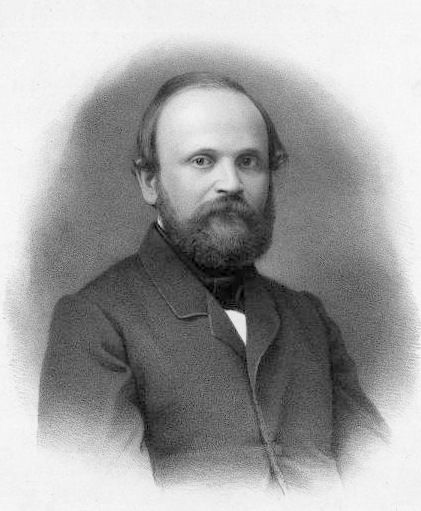
1847 SCHIFF, Moritz (1823 – 1896)
Die Ursache der Lungenveränderung nach Durchschneidung der pneumogastrischen Nerven.
Study of the effect of section of the vagus on respiration. See also No. 933.
GMN 931 · https://historyofmedicine.com/id/152
1850 HELMHOLTZ, Hermann Ludwig Ferdinand von (1821 – 1894)
Vorläufiger Bericht über die Fortpflanzungsgeschwindigkeit der Nervenreizung.
Helmholtz succeeded in measuring the velocity of the nervous impulse, by applying the knowledge and techniques of ballistics to the problem. In 1852, using a pendulum-myograph of his own invention, he measured the dur…
GMN 1265 · https://historyofmedicine.com/id/2192
1850 WALLER, Augustus Volney (1816 – 1870)
Experiments on the section of the glossopharyngeal and hypoglossal nerves of the frog, and observations of the alterations produced thereby in the structure of their primitive fibres.
The “law of Wallerian degeneration”. The experiments recorded in the above paper were the starting-point of the neuron theory. Waller showed that if glosso-pharyngeal and hypoglossal nerves are severed, the outer segm…
GMN 1266 · https://historyofmedicine.com/id/2196
1851 LUDWIG, Carl Friedrich Wilhelm (1816 – 1895)
Neue Versuche über die Beihilfe der Nerven zur Speichelabsonderung.
The innervation of the salivary glands first elucidated.
GMN 998 · https://historyofmedicine.com/id/747
1851 CLARKE, Jacob Augustus Lockhart (1817 – 1880)
Researches into the structure of the spinal cord.
Clarke made important researches on the spinal cord. He described the nucleus dorsalis. He introduced the method of mounting sections with Canada balsam.
GMN 1360 · https://historyofmedicine.com/id/1671
1851 WALLER, Augustus Volney (1816 – 1870)
Recherches sur la système nerveux.
GMN 1267 · https://historyofmedicine.com/id/2201
1851 TÜRCK, Ludwig (1810 – 1868)
Ueber den Zustand der Sensibilität nach theilweiser Trennung des Rückenmarkes.
Türck showed that degeneration in a nerve track corresponds to the direction in which it conducts nerve impulses – ascending tracks degenerate above the lesion and descending tracks below it.
GMN 1267.1 · https://historyofmedicine.com/id/2207
1851 BROWN-SÉQUARD, Charles Édouard (1817 – 1894)
De la transmission croisée des impressions sensitives par la moëlle épinière.
“Brown-Séquard’s paralysis”. Lesion of one lateral half of the spinal cord causes paralysis of motion on one side and of sensation on the other. See also the writer’s later paper on pp. 70-73 of the same volume.
GMN 4530 · https://historyofmedicine.com/id/8892
1852 BERNARD, Claude (1813 – 1878)
Influence du grand sympathique sur la sensibilité et sur la calorification.
Bernard discovered the existence of vasomotor nerves.
GMN 1320 · https://historyofmedicine.com/id/1307
1852 BROWN-SÉQUARD, Charles Édouard (1817 – 1894)
Experimental researches applied to physiology and pathology.
By applying a galvanic current to the superior part of the divided sympathetic nerve and causing vascular contraction and a fall in temperature, Brown-Séquard inferred that section of the sympathetic paralysed and dil…
GMN 1322 · https://historyofmedicine.com/id/1318
1852 BUDGE, Ludwig Julius (1811 – 1884)
Experimenteller Beweis, dass der Nervus sympathicus aus dem Rückenmark entspringt.
GMN 1323 · https://historyofmedicine.com/id/1328
1853 BERNARD, Claude (1813 – 1878)
Expérience sur les fonctions de la portion céphalique du grand sympathique.
GMN 1321 · https://historyofmedicine.com/id/1311
1853 FAIVRE, Ernest (1827 – 1879)
Des granulations méningiennes. Thèse pour le doctorat en médecine.
Digital facsimile from wellcomecollection.org at this link. See also his paper in Ann. Sci. nat., 1853, 20, 321-33 (Zool.).
GMN 1398 · https://historyofmedicine.com/id/1996
1854 BERNARD, Claude (1813 – 1878)
Recherches expérimentales sur le grand sympathique et spécialement sur l’influence que la section de ce nerf exerce sur la chaleur animal.
GMN 1324 · https://historyofmedicine.com/id/1333
1854 BROWN-SÉQUARD, Charles Édouard (1817 – 1894)
Note sur la découverte de quelques-uns des effets de la galvanisation du nerf grand sympathique au cou.
GMN 1325 · https://historyofmedicine.com/id/1337
1854 BROWN-SÉQUARD, Charles Édouard (1817 – 1894)
Sur les résultats de la section et de la galvanisation du nerf grand sympathique au cou.
GMN 1326 · https://historyofmedicine.com/id/1340
1854 VIRCHOW, Rudolf Ludwig Karl (1821 – 1902)
Ueber eine im Gehirn und Rückenmark des Menschen aufgefundene Substanz mit der chemischen Reaction der Cellulose.
Discovery of the neuroglia.
GMN 1268 · https://historyofmedicine.com/id/2211
1857 CAMPBELL, Henry Fraser (1824 – 1891)
Essays on the secretory and the excito-secretory system of nerves.
Campbell saw in the sympathetic a nervous system related to secretion and nutrition and having intimate connexion with the sensory nerves. He coined the ter “excito-secretory” to designate his theory; although this te…
GMN 1327 · https://historyofmedicine.com/id/1346
1858 BERNARD, Claude (1813 – 1878)
De l’influence de deux ordres de nerfs qui déterminent les variations de couleur du sang veineux dans les organes glondulaires.
Discovery of the vasoconstrictor and vasodilator nerves and description of their function of regulating the blood supply to the different parts of the body.
GMN 774 · https://historyofmedicine.com/id/1762
1858 BERNARD, Claude (1813 – 1878)
Leçons sur la physiologie et la pathologie du système nerveux. 2 vols.
GMN 1399 · https://historyofmedicine.com/id/2000
1859 PFLÜGER, Eduard Friedrich Wilhelm (1829 – 1910)
Untersuchungen über die Physiologie des Electrotonus.
One of the most interesting works of its time on the physiology of nerve. In it Pflüger first stated the laws governing the make and break stimulation of nerve with the galvanic current. Pflüger was a pupil of Müller …
GMN 621 · https://historyofmedicine.com/id/504
1860 GOLL, Friedrich (1829 – 1903)
Beiträge zur feineren Anatomie des menschlichen Rückenmarks.
Includes description of “Golls column” or “tract”, the posterior column of the spinal cord.
GMN 1361 · https://historyofmedicine.com/id/1677
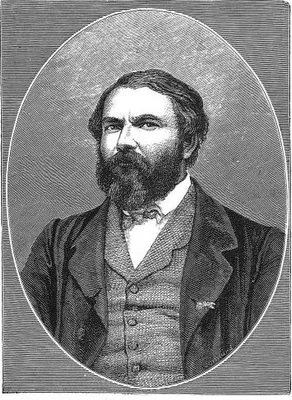
1861 BROCA, Pierre Paul (1824 – 1880)
Remarques sur le siège de la faculté du langage articulé, suivie d’une observation d’aphémie (perte de la parole).
Broca claimed the third left frontal convolution of the brain as the center of articulate speech – a point now disputed. He was first to trephine for a cerebral abscess diagnosed by this theory of localization of func…
GMN 1400 · https://historyofmedicine.com/id/2005