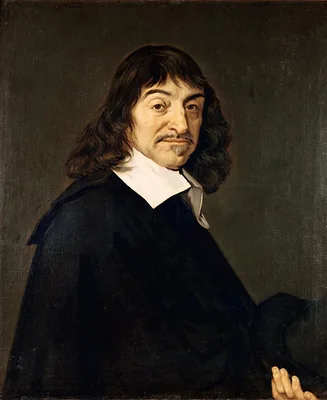
1662 DESCARTES, René (1596 – 1650)
De homine figuris et latinitate donatus a Florentio Schuyl.
Descartes considered the human body a material machine, directed by a rational soul located in the pineal body. This book was the first attempt to cover the whole field of “animal physiology”. The work is really a phy…
GMN 574 · https://historyofmedicine.com/id/352
1751 WHYTT, Robert (1714 – 1766)
An essay on the vital and other involuntary motions of animals.
Whytt, famous Edinburgh neurophysiologist, was the first to prove that the response of the pupils to light is a reflex action (“Whytt’s reflex”). He described this reflex at length and mentioned that its afferent path…
GMN 1381 · https://historyofmedicine.com/id/1795
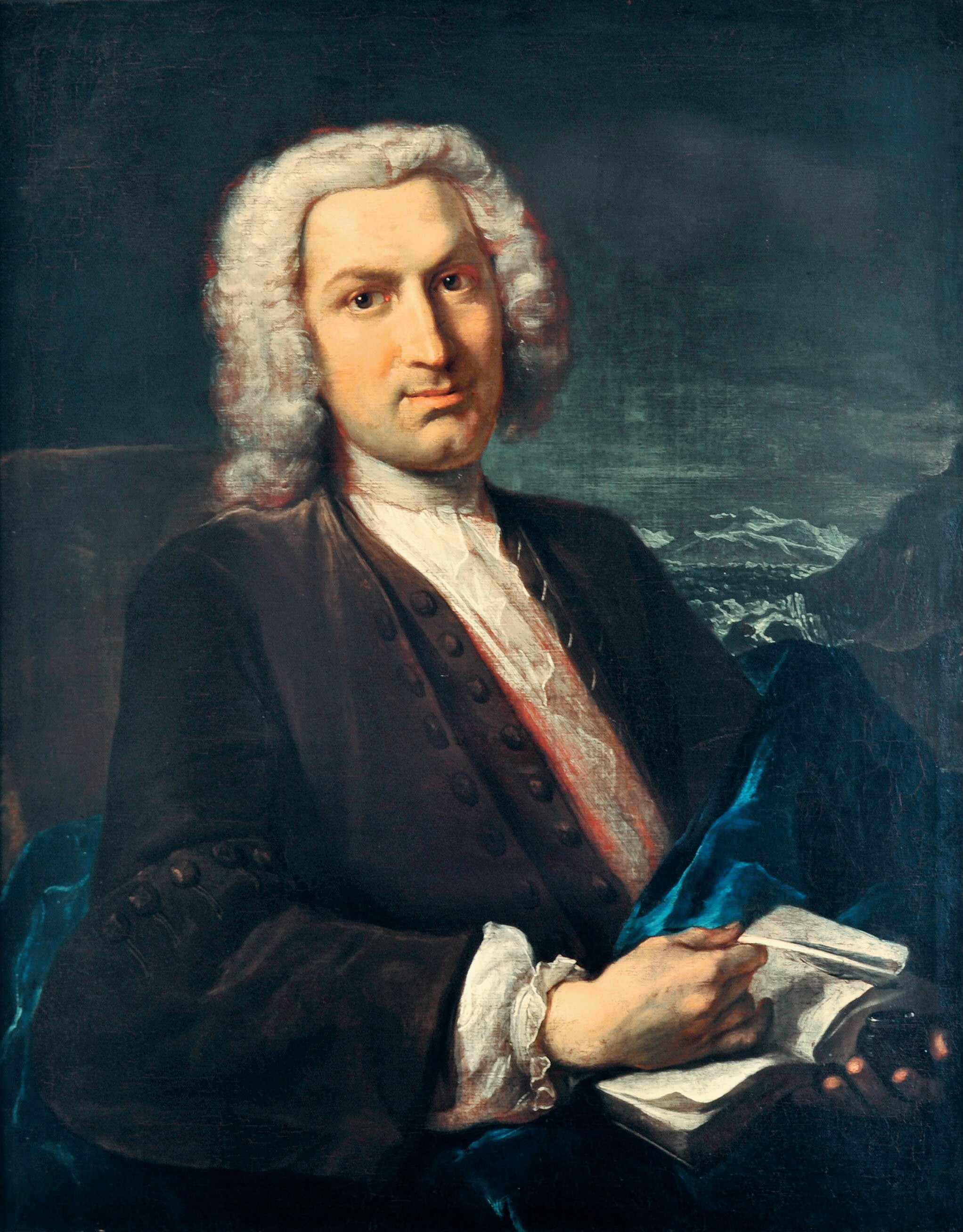
1753 HALLER, Albrecht von (1708 – 1777)
De partibus corporis humani sensibilibus et irritabilibus.
Glisson in 1677 had introduced the concept of “irritability” as a specific property of all tissues. Haller, in the above work, recorded his experimental proof of this, and distinguished between nerve impulse (sensibil…
GMN 587 · https://historyofmedicine.com/id/396
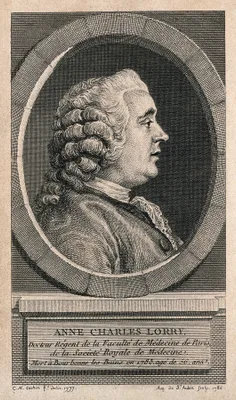
1760 LORRY, Anne-Charles (1726 – 1783)
Sur les mouvements du cerveau et de la dure-mere. Premier mémoire, sur le mouvement des parties contenues dans le crâne, considérées dans leur état naturel. Second mémoire. Sur les mouvements contre nature de ce viscère, & sur les organes qui sont le principe de son action.
Probably the first example in the literature of a definite localization of function in the brain. In the first memoir Lorry examined the normal movements of the brain; in the second memoir he set out specifically, sys…
GMN 6951 · https://historyofmedicine.com/id/9116
1812 LE GALLOIS, Julien Jean César (Legallois) (1770 – 1814)
Expériences sur le principe de la vie.
Le Gallois described the action of the vagus nerve on respiration. He showed that bilateral section of the vagus can produce fatal bronchopneumonia. The above work includes (p. 37) his location of the respiratory cent…
GMN 1389.2 · https://historyofmedicine.com/id/143
1822 MAGENDIE, François (1783 – 1855)
Expériences sur les fonctions des racines des nerfs rachidiens.
Magendie definitely discovered that the anterior root is motor and that the dorsal root is sensory, although Romberg, Flourens, Sherrington, and others credited the discovery to Charles Bell. In this paper Magendie an…
GMN 1256 · https://historyofmedicine.com/id/2122
1822 MAGENDIE, François (1783 – 1855)
Expériences sur les fonctions des racines des nerfs qui naissent de la moelle épinière.
Further experiments, including, most probably, “the first use of strychnine as part of a study of the localization of function in the nervous system as well as being a very early example of the rational use of a known…
GMN 1256.1 · https://historyofmedicine.com/id/2127
1831 MÜLLER, Johannes Peter (1801 – 1858)
Bestätigung des Bell’schen Lehrsatzes, das die doppelten Wurzeln der Rückenmarksnerven verschiedene Fuctionen haben, durch neue und Entscheidende Experimente.
Experimental proof of the Bell-Magendie law (see Nos. 1254 & 1256) of the spinal nerve roots.
GMN 1259 · https://historyofmedicine.com/id/2141
1842 –1853 WAGNER, Rudolf Friedrich Johann Heinrich (Rudolph) (1805 – 1864)
Handwörterbuch der Physiologie … hrsg. von R. Wagner.
Wagner was professor at Göttingen. His literary output was enormous. In the above work he contributed the sections on sympathetic nerves, nerve-ganglia, and nerve-endings. This work contained 63 extensive review artic…
GMN 607 · https://historyofmedicine.com/id/466
1847 SCHIFF, Moritz (1823 – 1896)
Die Ursache der Lungenveränderung nach Durchschneidung der pneumogastrischen Nerven.
Study of the effect of section of the vagus on respiration. See also No. 933.
GMN 931 · https://historyofmedicine.com/id/152
1850 HELMHOLTZ, Hermann Ludwig Ferdinand von (1821 – 1894)
Vorläufiger Bericht über die Fortpflanzungsgeschwindigkeit der Nervenreizung.
Helmholtz succeeded in measuring the velocity of the nervous impulse, by applying the knowledge and techniques of ballistics to the problem. In 1852, using a pendulum-myograph of his own invention, he measured the dur…
GMN 1265 · https://historyofmedicine.com/id/2192
1851 LUDWIG, Carl Friedrich Wilhelm (1816 – 1895)
Neue Versuche über die Beihilfe der Nerven zur Speichelabsonderung.
The innervation of the salivary glands first elucidated.
GMN 998 · https://historyofmedicine.com/id/747
1858 BERNARD, Claude (1813 – 1878)
De l’influence de deux ordres de nerfs qui déterminent les variations de couleur du sang veineux dans les organes glondulaires.
Discovery of the vasoconstrictor and vasodilator nerves and description of their function of regulating the blood supply to the different parts of the body.
GMN 774 · https://historyofmedicine.com/id/1762
1859 PFLÜGER, Eduard Friedrich Wilhelm (1829 – 1910)
Untersuchungen über die Physiologie des Electrotonus.
One of the most interesting works of its time on the physiology of nerve. In it Pflüger first stated the laws governing the make and break stimulation of nerve with the galvanic current. Pflüger was a pupil of Müller …
GMN 621 · https://historyofmedicine.com/id/504
1863 BROWN-SÉQUARD, Charles Édouard (1817 – 1894)
Recherches sur la transmission des impressions de tact, de chatouillement, de douleur, de température et de contraction (sens musculaire) dans la moëlle épinière.
Among Brown-Séquard’s best work was his study of the pathways of conduction in the spinal cord.
GMN 1465 · https://historyofmedicine.com/id/2405
1864 BERNARD, Claude (1813 – 1878)
Du rôle des actions réflexes paralysantes dans le phénomène des sécrétions.
Studies of the “paralytic secretions” occasioned by section of glandular nerves.
GMN 622 · https://historyofmedicine.com/id/505
1864 FICK, Adolph Eugen (1829 – 1901)
Untersuchungen über elektrische Nervenreizung.
Among the instruments introduced by Fick for the study of muscle and nerve physiology were the myotonograph, the cosine lever, and an improved thermopile.
GMN 623 · https://historyofmedicine.com/id/506
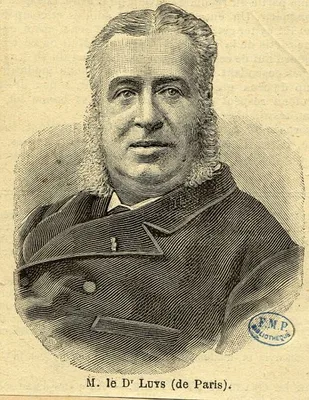
1865 LUYS, Jules Bernard (1828 – 1897)
Recherches sur le système nerveux cérébro-spinal; sa structure, ses fonctions, et ses maladies. 1 vol. and atlas.
The beginning of knowledge of thalamic function. This work contains Luys’s descriptions of the two structures which bear his name: the subthalamic nucleus and the center median of the thalamus.
GMN 1402 · https://historyofmedicine.com/id/2030
1867 LUDWIG, Carl Friedrich Wilhelm (1816 – 1895); CYON, Elias von (Elie de Cyon; Ilya Fadeyevich Tsion) (1842 – 1912)
Die Reflexe eines der sensiblen Nerven des Herzens auf die motorischen der Blutgefässe.
Discovery of the vasomotor reflexes.
GMN 819 · https://historyofmedicine.com/id/244
1867 DUCHENNE DE BOULOGNE, Guillaume Benjamin Armand (1806 – 1875)
Physiologie des mouvements demontrée à l’aide de l’expérimentation électrique et de l’observation clinique, et applicable à l’étude des paralysies et des déformations.
A monumental work, the result of twenty years’ study of electro-muscular stimulation “to determine the proper action which the muscles possess in life”. The book contains an excellent record of the kinesiology of the …
GMN 624 · https://historyofmedicine.com/id/507
1868 BREUER, Josef (1842 – 1925)
Die Selbststeuerung der Athmung durch den Nervus vagus.
“Hering-Breuer reflex”; see also the previous entry. English translation of both papers in R. Porter (ed.), Hering–Breuer Centenary Symposium, London, Churchill, 1970. Digital facsimile of the 1868 edition from the Ba…
GMN 942 · https://historyofmedicine.com/id/195
1868 TÜRCK, Ludwig (1810 – 1868)
Ueber die Haut-Sensibilitätsbezirke der einzelnen Rückenmarks-nervenpaare.
Investigation of the cutaneous distribution of the separate pairs of spinal nerves.
GMN 1466 · https://historyofmedicine.com/id/2408
1876 STRICKER, Salomon (1834 – 1898)
Untersuchungen über die Gefässernerven-Wurzeln des Ischiadicus.
Stricker was the first to describe vasodilatation on stimulation of the posterior nerve roots.
GMN 782 · https://historyofmedicine.com/id/1892
1880 MOSSO, Angelo (1846 – 1910)
Sulla circolazione del sangue nel cervello dell’uomo. Ricerche sfigmografiche.
In this work Angelo Mosso reported his discovery that blood circulation in the brain increases in certain discrete areas during mental activity, and published the records of this activity produced by the machine he in…
GMN 6838 · https://historyofmedicine.com/id/9002
1883 –1884 GASKELL, Walter Holbrook (1847 – 1914)
On the innervation of the heart, with special reference to the heart of the tortoise.
Gaskell showed that the efferent vasoconstrictor fibers of the heart originated from the lateral horn of the spinal cord.
GMN 830 · https://historyofmedicine.com/id/312
1885 GOLDSCHEIDER, Johannes Karl August Eugen Alfred (1858 – 1935)
Neue Thatsachen über die Hautsinnesnerven.
Goldscheider recorded important investigations on the nerves conveying the sensation of temperature and on the nerves of cutaneous sensation
GMN 1470 · https://historyofmedicine.com/id/2431
1890 TARCHANOFF, Ivan Romanovich [TARKHANOFF] (1848 – 1909)
Ueber die galvanischen Erscheinungen in der Haut des Menschen bei Reizungen der Sinnesorgane und bei verschiedenen Formen der psychischen Thätigkeit.
Psycho-galvanic reflex described.
GMN 1471 · https://historyofmedicine.com/id/2434
1897 NEUBURGER, Max (1868 – 1955)
Die historische Entwicklung der experimentellen Gehirn- und Rückenmarksphysiologie vor Flourens.
Unsurpassed coverage of the experimental physiology of the brain and spinal cord up to the work of Flourens. The best edition is the extensively annotated English translation as The historical development of experimen…
GMN 1574 · https://historyofmedicine.com/id/1319
1899 SOURY, Jules (1842 – 1915)
Le système nerveux centrale structure et fonctions. Histoire critique des théories et des doctrines. 2 vols.
Massive history of the anatomy and physiology of the nervous system from ancient Greece to the end of the 19th century, limited in its historical analysis. The second volume is a survey of end of 19th century opinions…
GMN 1574.1 · https://historyofmedicine.com/id/1323
1901 HALLIBURTON, William Dobinson (1860 – 1931)
The Croonian Lectures on the chemical side of nervous activity. Delivered before the Royal College of Physicians of London, in June, 1901.
First edition in book form, expanded from the journal publications, London: Bale, 1901. Digital facsimile of the book-form edition from the Internet Archive at this link.
GMN 1295 · https://historyofmedicine.com/id/2352
1924 HERING, Heinrich Ewald (1866 – 1948)
Die Aenderung der Herzschlagzahl durch Aenderung des arteriellen Blutdruckes erfolgt aus reflektorischem Wege; gleichzeitig eine Mitteilung über die Funktion des Sinus caroticus, beziehungsweise der Sinusnerven.
First description of the structure and function of the sinus nerve and the reflex character of carotid pressure.
GMN 795 · https://historyofmedicine.com/id/572
1930 FEARING, Franklin (1892 – 1962)
Reflex action. A study in the history of physiological psychology.
Reprinted, New York, Hafner, 1964.
GMN 1577 · https://historyofmedicine.com/id/1334
1936 LOEWI, Otto (1873 – 1961)
Quantitative und qualitative Untersuchungen über den Sympathicusstoff*. Zugleich XIV. Mitteilung über humorale Übertragung der Herznervenwirkung Ausgeführt mit Unterstützung der -Stiftung.
In this paper Loewi proved that the cardioexcitatory neurotransmitter of the sympathetic nerves is adrenaline, or actually noradrenaline.
GMN 7346 · https://historyofmedicine.com/id/9518
1938 FULTON, John Farquhar (1899 – 1960)
Physiology of the nervous system.
Includes excellent bibliography.
GMN 1248 · https://historyofmedicine.com/id/2067
1939 HODGKIN, Sir Alan Lloyd (1914 – 1998); HUXLEY, Sir Andrew Fielding (1917 – 2012)
Action potentials recorded from inside a nerve fibre.
Hodgkin and Huxley were the first to succeed in inserting electrodes into a living giant nerve fiber and to measure directly the action potential within it. In 1963 Hodgkin and Huxley shared the Nobel Prize in Physiol…
GMN 1310.1 · https://historyofmedicine.com/id/1165
1939 YOUNG, John Zachary (1907 – 1997)
Fused neurons and synaptic contacts in the giant nerve fibers of cephalopods.
Young discovered the squid giant synapse, a chemical synapse found in squid, and the largest chemical junction in nature.
GMN 7158 · https://historyofmedicine.com/id/9325
1948 WIENER, Norbert (1894 – 1964)
Cybernetics: or control and communication in the animal and the machine.
Foundation of "the science of control and communication theory, named ‘cybernetics’ by Wiener, from the Greek word ‘kubernetes’ or steersman. Automation, information feedback, regulators in engineering and biology, an…
GMN 4991.1 · https://historyofmedicine.com/id/6492
1953 CRITCHLEY, MacDonald (1900 – 1997)
The parietal lobes.
Defines for the first time the various functions of the parietal lobes.
GMN 4615.3 · https://historyofmedicine.com/id/644
1959 HUBEL, David Hunter (1926 – 2013); WIESEL, Torsten Nils (1924 – )
Receptive fields of single neurones in the cat's striate cortex.
Also: Hubel & Wiesel, Receptive fields, binocular interaction and functional architecture in the cat's visual cortex, J. Physiol., 160, 1962, 106-154. In 1981 Hubel and Wiesel shared half of the Nobel Prize in Physiol…
GMN 14242 · https://historyofmedicine.com/id/16561
1961 AXELROD, Julius (1912 – 2004); HERTTING, Georg (1925 – 2014)
Fate of tritiated noradrenaline at the sympathetic nerve endings.
Using electron microscopy and tritiated norepinephrine, the authors discovered the area in the nerve endings in which the catecholamines were concentrated, and also observed enhanced radioactive catecholamine release …
GMN 14281 · https://historyofmedicine.com/id/16604
1962 LURIA, Aleksandr Romanovich (Алекса́ндр Рома́нович Лу́рия) (1902 – 1977)
Высшие корковые функции и их нарушение при локальных поражениях мозга.
First English translation: Higher cortical functions in man. New York: Basic Books, 1966.
GMN 7207 · https://historyofmedicine.com/id/9374
1965 COHEN, Stanley (1922 – 2020)
The stimulation of epidermal proliferation by a specific protein (EGF).
Discovery of Epidermal Growth Factor (EGF). In 1986 Cohen shared the Nobel Prize in Physiology or Medicine with Rita Levi-Montalcini "for their discoveries of growth factors."
GMN 14244 · https://historyofmedicine.com/id/16563
1974 BELL, Sir Charles (1774 – 1842); MAGENDIE, François (1783 – 1855); CRANEFIELD, Paul Frederick (1925 – 2003)
The way in and the way out. François Magendie, Charles Bell and the roots of the spinal nerves. With a facsimile of Charles Bell’s annotated copy of his Idea of a new anatomy of the brain. Edited by Paul Cranefield.
An annotated bibliography of the literature documenting the history of this controversy together with reproductions of the texts of the crucial papers. See Nos. 1254-1259.
GMN 1588.14 · https://historyofmedicine.com/id/1538
1985 JEANNEROD, Marc (1935 – 2011)
The brain machine: The development of neurophysiological thought.
Translation of Le cerveau-machine: physiologie de la volonté, Paris, 1983.
GMN 1588.21 · https://historyofmedicine.com/id/1617
1987 CLARKE, Edwin Sisterton (1919 – 1996); JACYNA, L. Stephen
Nineteenth century origins of neuroscientific concepts.
Detailed analysis, emphasizing first half of 19th century, with detailed bibliographies, and bibliographical notes.
GMN 1588.24 · https://historyofmedicine.com/id/1645
1989 ECCLES, Sir John Carew (1903 – 1997)
Evolution of the brain: Creation of the self.
A pioneering work on the evolution of the human mind. Eccles synthesized comparative anatomy--especially brain anatomy--with evidence from paleontology and archaeology, and brain physiology (especially the physiology …
GMN 7071 · https://historyofmedicine.com/id/9238
1996 O’MALLEY, Charles Donald (1907 – 1970); CLARKE, Edwin Sisterton (1919 – 1996)
The human brain and spinal cord: A historical study illustrated by writings from antiquity to the twentieth century. Second edition, revised and enlarged with a new preface by Edwin Clarke.
Massive anthology of primary source material on neuroanatomy and neurophysiology. Excellent commentaries and bibliographies. First edition, 1968.
GMN 1588.4 · https://historyofmedicine.com/id/1478
1998 GREENGARD, Paul (1925 – 2019); ET AL
DARPP-32: Regulator of the efficacy of dopaminergic neurotransmission.
"Greengard's research focused on events inside the neuron caused by neurotransmitters. Specifically, Greengard and his fellow researchers studied the behavior of second messenger cascades that transform the docking of…
GMN 14251 · https://historyofmedicine.com/id/16570