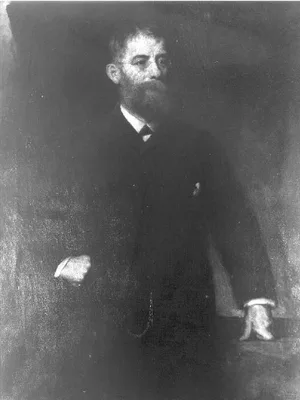
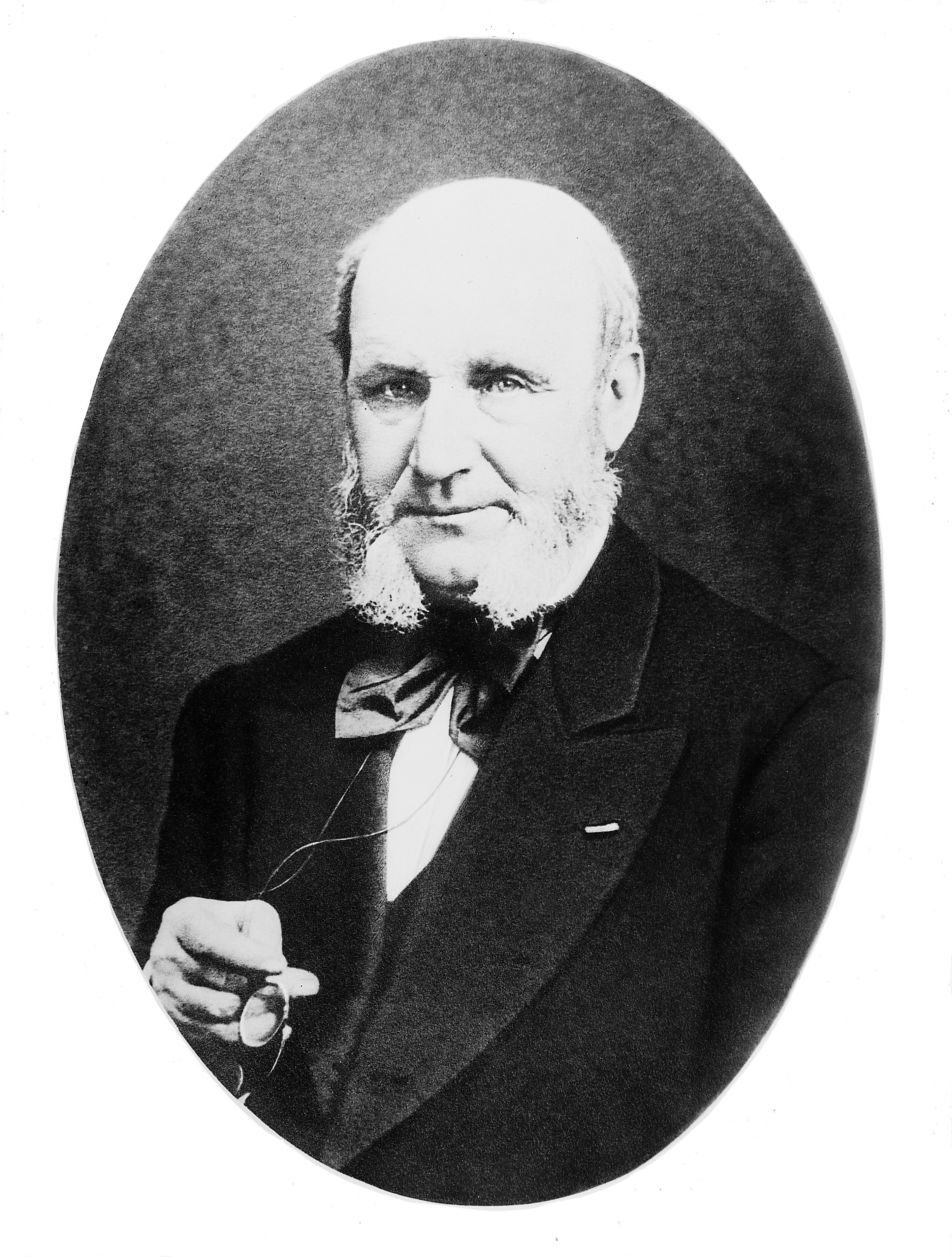
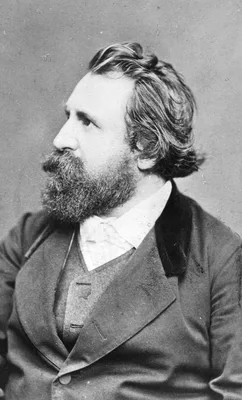
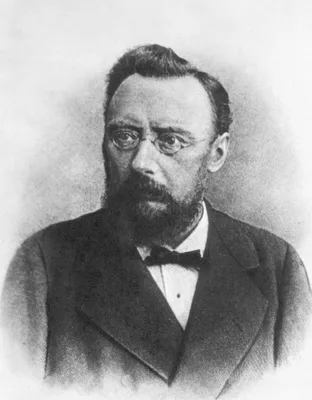
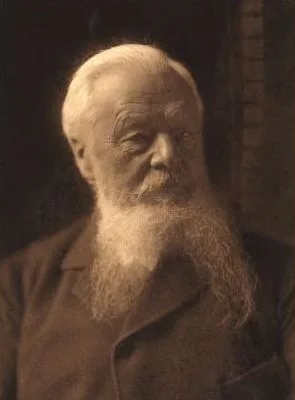
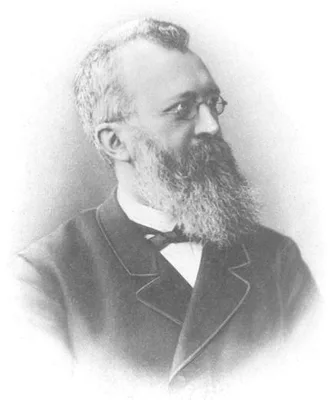
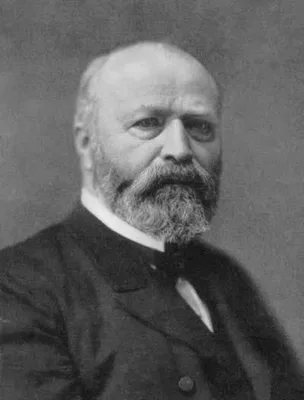
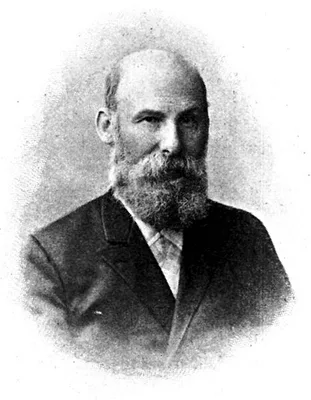
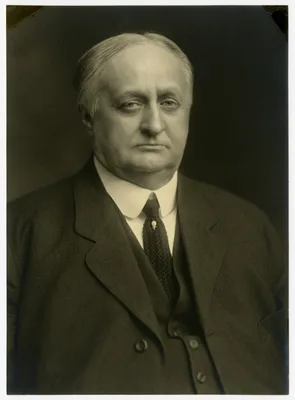
1861 DALTON, John Call (1825 – 1889)
On the cerebellum, as the centre of co-ordination of the voluntary movements.
GMN 1401 · https://historyofmedicine.com/id/2010
1862 KÜHNE, Wilhelm Friedrich (1837 – 1900)
Ueber die peripherischen Endorgane der motorischen Nerven.
Kühne described the neuromuscular end organ (“Kühne’s spindle”) and introduced the term “telolemma” for the outer covering of its sheath.
GMN 1269 · https://historyofmedicine.com/id/2214
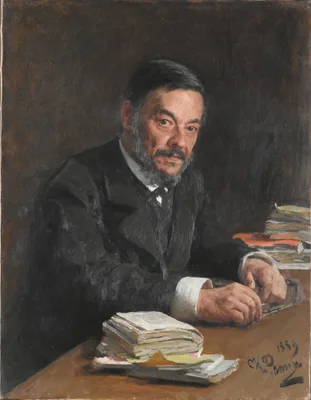
1863 SECHENOV, Ivan Mikhailovich (1829 – 1905)
Physiologische Studien über die Hemmungsmechanischen für die Reflexthätigkeit des Rückenmarks im Gehirn des Frosches.
Sechenov discovered the cerebral inhibition of spinal reflexes. He was Professor of Physiology at St. Petersburg and Moscow, and the “father of Russian physiology”.
GMN 1362 · https://historyofmedicine.com/id/1681
1863 AUBURTIN, Simon Alexandre Ernest (1825 – 1893)
Considérations sur les localisations cérébrales et en particulier sur le siège de la faculté du langage articulé.
Auburtin did much to establish the principle of cerebral localization. He demonstrated on a patient whose frontal lobe was exposed following a gunshot wound that merely touching the uninjured lobe with a spatula would…
GMN 1401.1 · https://historyofmedicine.com/id/2018
1863 KÜHNE, Wilhelm Friedrich (1837 – 1900)
Die Muskelspindeln. Ein Beitrag zur Lehre von der Entwickelung der Muskeln und Nervenfasem.
The best early description of proprioceptive receptors in muscles.
GMN 1270 · https://historyofmedicine.com/id/2221
1863 BROWN-SÉQUARD, Charles Édouard (1817 – 1894)
Recherches sur la transmission des impressions de tact, de chatouillement, de douleur, de température et de contraction (sens musculaire) dans la moëlle épinière.
Among Brown-Séquard’s best work was his study of the pathways of conduction in the spinal cord.
GMN 1465 · https://historyofmedicine.com/id/2405
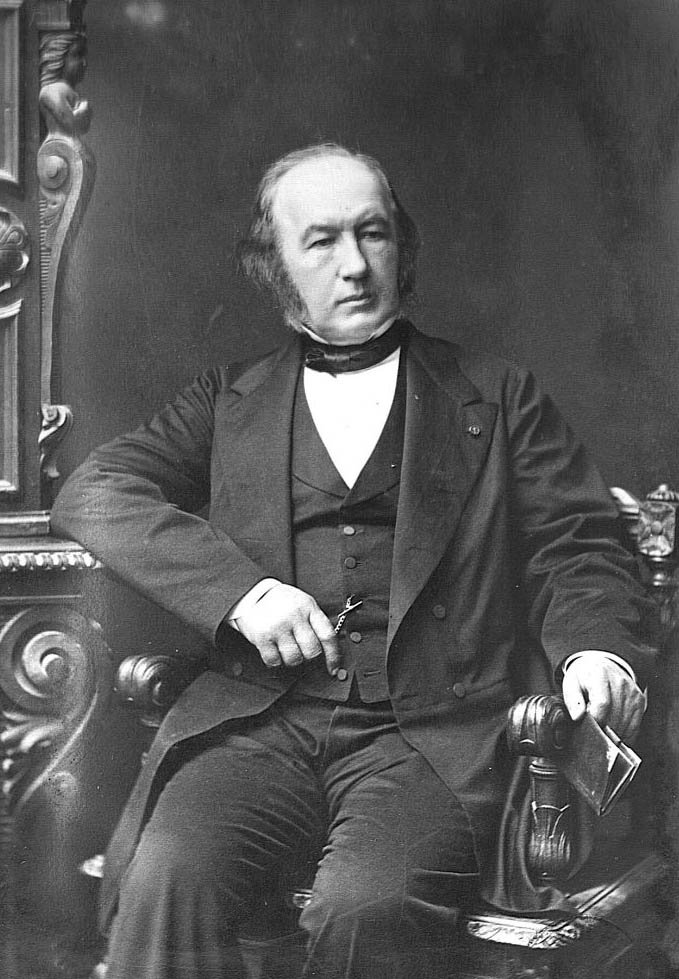
1864 BERNARD, Claude (1813 – 1878)
Du rôle des actions réflexes paralysantes dans le phénomène des sécrétions.
Studies of the “paralytic secretions” occasioned by section of glandular nerves.
GMN 622 · https://historyofmedicine.com/id/505
1864 FICK, Adolph Eugen (1829 – 1901)
Untersuchungen über elektrische Nervenreizung.
Among the instruments introduced by Fick for the study of muscle and nerve physiology were the myotonograph, the cosine lever, and an improved thermopile.
GMN 623 · https://historyofmedicine.com/id/506
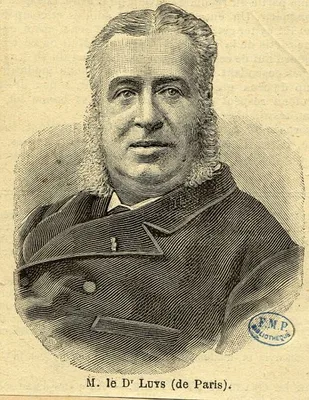
1865 LUYS, Jules Bernard (1828 – 1897)
Recherches sur le système nerveux cérébro-spinal; sa structure, ses fonctions, et ses maladies. 1 vol. and atlas.
The beginning of knowledge of thalamic function. This work contains Luys’s descriptions of the two structures which bear his name: the subthalamic nucleus and the center median of the thalamus.
GMN 1402 · https://historyofmedicine.com/id/2030
1865 SCHULTZE, Max Johann Sigismund (1825 – 1874); DEITERS, Otto Friedrich Carl (1834 – 1863)
Untersuchungen über Gehirn und Rückenmark des Menschen und der Säugethiere. Nach dem Tode des Verfassers Herausgegeben und Bevortwortet von Max Schultze.
Deiters showed that each nerve-cell possesses an axis-cylinder or nerve-fiber process. His name is perpetuated in “Deiters’ cells” and “nucleus”. Dieters died of typhus in 1863 at the age of 29; his book was edited fr…
GMN 1271 · https://historyofmedicine.com/id/2224
1865 BISCHOFF, Ernst Phllipp Eduard
Mikroskopischische Analyse der Anastomosen der Kopfnerven: gekrönte Beantwortung der von der medizinischen Fakultät zu München im Jahre 1863 ausgesetzten Preisfrage. Mit 43 Steindrucktafeln.
Bischoff demonstrated conclusively that there are many interconnections between the trigeminal, facial, nervus intermedius, acoustico-vestibular complex, glosso-pharyngeal, vagus, spinal-accessory, hypoglossal and the…
GMN 1271.1 · https://historyofmedicine.com/id/2228
1866 LOVÉN, Otto Christian (1835 – 1904)
Ueber die Erweiterung von Arterien in Folge einer Nervenerregung.
The “Lovén reflex”, vasodilatation of an organ when its afferent nerve is stimulated.
GMN 1363 · https://historyofmedicine.com/id/1685
1867 LUDWIG, Carl Friedrich Wilhelm (1816 – 1895); CYON, Elias von (Elie de Cyon; Ilya Fadeyevich Tsion) (1842 – 1912)
Die Reflexe eines der sensiblen Nerven des Herzens auf die motorischen der Blutgefässe.
Discovery of the vasomotor reflexes.
GMN 819 · https://historyofmedicine.com/id/244
1867 DUCHENNE DE BOULOGNE, Guillaume Benjamin Armand (1806 – 1875)
Physiologie des mouvements demontrée à l’aide de l’expérimentation électrique et de l’observation clinique, et applicable à l’étude des paralysies et des déformations.
A monumental work, the result of twenty years’ study of electro-muscular stimulation “to determine the proper action which the muscles possess in life”. The book contains an excellent record of the kinesiology of the …
GMN 624 · https://historyofmedicine.com/id/507
1867 MEYNERT, Theodor Hermann (1833 – 1892)
Der Bau der Gross-Hirnrinde und seine örtlichen Verschiedenheiten, nebst einem pathologisch-anatomischen Corollarium.
Meynert noticed regional variations in the histological structure of different parts of the gray matter in the cerebral hemispheres. He is credited with beginning the study of cytoarchitecture. Meynert described the f…
GMN 1403 · https://historyofmedicine.com/id/2035
1868 BREUER, Josef (1842 – 1925)
Die Selbststeuerung der Athmung durch den Nervus vagus.
“Hering-Breuer reflex”; see also the previous entry. English translation of both papers in R. Porter (ed.), Hering–Breuer Centenary Symposium, London, Churchill, 1970. Digital facsimile of the 1868 edition from the Ba…
GMN 942 · https://historyofmedicine.com/id/195
1868 TÜRCK, Ludwig (1810 – 1868)
Ueber die Haut-Sensibilitätsbezirke der einzelnen Rückenmarks-nervenpaare.
Investigation of the cutaneous distribution of the separate pairs of spinal nerves.
GMN 1466 · https://historyofmedicine.com/id/2408
1869 HORNER, Johann Friedrich (1831 – 1886)
Ueber eine Form von Ptosis.
“Horner’s syndrome”, due to lesion of the cervical sympathetic. The same syndrome was evoked in animals by Pourfour du Petit in 1727 (see No. 1313). It is a proof that the sympathetic governs the pupillary, vasomotor,…
GMN 1328 · https://historyofmedicine.com/id/1354
1869 GOLTZ, Friedrich Leopold (1834 – 1902)
Beiträge zur Lehre von den Functionen der Nervencentren des Frosches.
Goltz made important observations on the decerebrate frog. He showed it to possess no volitional powers except after stimulation, no memory and no intelligence. His experiments on frogs deprived of their spinal cords …
GMN 1364 · https://historyofmedicine.com/id/1686
1869 MITCHELL, Silas Weir (1829 – 1914)
Researches on the physiology of the cerebellum.
Mitchell, leading American neurologist of his time, performed over 350 experiments upon the cerebellum. He emphasized its co-ordinating function, first postulated by Flourens, and he proposed his “augmentor” theory of…
GMN 1404 · https://historyofmedicine.com/id/2043
1869 DICKINSON, William Howship (1832 – 1913)
On the changes in the nervous system which follow the amputation of limbs.
Demonstration that the proximal end of a severed nerve eventually atrophies.
GMN 1272 · https://historyofmedicine.com/id/2267
1869 ROBERTSON, Douglas Moray Cooper Lamb Argyll (1837 – 1909)
On an interesting series of eye symptoms in a case of spinal disease, with remarks on the action of belladonna on the iris.
“Argyll Robertson pupil” first described. See also his later paper in the same journal, 1869, 15, 487-93. Reprinted in Med. Classics, 1937, 1, 851-76.
GMN 4540 · https://historyofmedicine.com/id/8902
1870 FRITSCH, Gustav Theodor (1838 – 1891); HITZIG, Eduard (1838 – 1907)
Ueber die elektrische Erregbarkeit des Grosshirns.
These workers showed that electrical stimulation of the frontal cortex in various experimental animals caused movements of the extremities of the opposite side of the body, thus proving the existence of a motor area i…
GMN 1405 · https://historyofmedicine.com/id/2049
1870 GUDDEN, Bernhard Aloys von (1824 – 1886)
Experimentaluntersuchungen über das peripherische und centrale Nervensystem.
Modern study of the functions of the thalamus began with the important investigations of Gudden. He is remembered eponymically by “Gudden’s commissure” and “Gudden’s atrophy” – specific thalamic nuclei degenerate when…
GMN 1406 · https://historyofmedicine.com/id/2052
1871 BERNSTEIN, Julius (1839 – 1917)
Untersuchungen über den Erregungsvorgang im Nerven- und Muskelsysteme.
GMN 1273 · https://historyofmedicine.com/id/2268
1873 LUYS, Jules Bernard (1828 – 1897)
Iconographie photographique des centres nerveux.
Contains 70 photographs of brain sections taken by Luys himself, with 64 lithographed schemas based on his drawings. Luys undertook this work when the evidence of his lithographs published in 1865 (No. 4012) was dispu…
GMN 1406.01 · https://historyofmedicine.com/id/2066
1873 FERRIER, Sir David (1843 – 1928)
Experimental researches in cerebral physiology and pathology.
Using a variety of experimental animals, Ferrier demonstrated that various neurologic functions were controlled by separate parts of the cerebrum and that damage or loss of that part created an irrevocable and particu…
GMN 7803 · https://historyofmedicine.com/id/9975
1874 GOLTZ, Friedrich Leopold (1834 – 1902)
Ueber die Functionen des Lendenmarks des Hundes.
GMN 1365 · https://historyofmedicine.com/id/1694
1874 BARTHOLOW, Roberts (1831 – 1904)
Investigations into the functions of the human brain.
Bartholow confirmed in man the findings of Fritsch and Hitzig (No. 1405) that electrical stimulus of the cortex on one side stimulated muscles on the other side of the body.
GMN 1406.1 · https://historyofmedicine.com/id/2070
1874 BETZ, Vladimir Alexeyevich (1834 – 1894)
Anatomischer Nachweis zweier Gehirncentra.
Discovery of the giant pyramidal cells of the motor cortex.
GMN 1407 · https://historyofmedicine.com/id/2072
1874 HITZIG, Eduard (1838 – 1907)
Untersuchungen über das Gehirn.
Hitzig accurately defined the limits of the motor area in the cerebral cortex of the dog and the monkey.
GMN 1408 · https://historyofmedicine.com/id/2075
1875 CATON, Richard (1842 – 1926)
The electric currents of the brain.
Caton succeeded in leading off action potentials from the brains of animals, a first step towards the development of the electroencephalograph. See also Brit. med. J., 1877, 1, Suppl. 62-75.
GMN 1408.1 · https://historyofmedicine.com/id/2077
1875 –1876 RETZIUS, Magnus Gustaf (1842 – 1919); KEY, Axel (1832 – 1901)
Studien in der Anatomie des Nervensystems und des Bindegewebes. Erste Hälfte und zweite Hälfte, erste und zweite Abtheilung. 2 vols.
One of the most strikingly beautiful neuroanatomies ever published, with exquisite reproductions of the color dye injection experiments. The authors confirmed the existence of the foramina of Magendie and Luschka, and…
GMN 1408.2 · https://historyofmedicine.com/id/2079
1876 STRICKER, Salomon (1834 – 1898)
Untersuchungen über die Gefässernerven-Wurzeln des Ischiadicus.
Stricker was the first to describe vasodilatation on stimulation of the posterior nerve roots.
GMN 782 · https://historyofmedicine.com/id/1892
1876 FERRIER, Sir David (1843 – 1928)
The functions of the brain.
Ferrier may be said to have laid the foundations of our knowledge concerning the localization of cerebral function. His book includes his earlier work published in the West Riding Lunatic Asylum Reports. Digital facsi…
GMN 1409 · https://historyofmedicine.com/id/2082
1876 FLECHSIG, Paul Emil (1847 – 1929)
Die Leitungsbahnen im Gehirn und Rückenmark des Menschen auf Grund entwicklungsgeschichtlicher Untersuchungen dargestellt.
Flechsig mapped out the motor and sensory areas of the cerebral cortex, and named the “pyramidal tract”. See Clarke & O'Malley, The human brain and spinal cord, p. 857, and pp. 277-81. Digital facsimile from Bayerisch…
GMN 1410 · https://historyofmedicine.com/id/2083
1877 FOREL, Auguste Henri (1848 – 1931)
Untersuchungen über die Haubenregion und ihre oberen Verknüpfungen im Gehirne des Menschen und einiger Säugethiere, mit Beiträgen zu den Methoden der Gehirnuntersuchung.
Forel elucidated the subthalamic region, “campus Foreli”.
GMN 1411 · https://historyofmedicine.com/id/2086
1877 BERNSTEIN, Julius (1839 – 1917)
Ueber die Ermüdung und Erholung der Nerven.
After successfully tetanizing a nerve-muscle preparation, Bernstein inferred, from this and additional data, that nerve is exhausted in the process. This conflicted with the findings of Bowditch (No. 1281-82) and Vved…
GMN 1274 · https://historyofmedicine.com/id/2270
1878 LEWIS, William Bevan (1847 – 1929)
On the comparative structure of the cortex cerebri.
Lewis described the giant cells of the precentral convolution.
GMN 1412 · https://historyofmedicine.com/id/2090
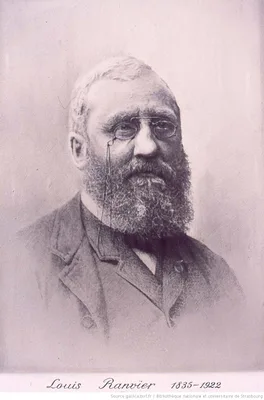
1878 RANVIER, Louis-Antoine (1835 – 1922)
Leçons sur l’histologie du système nerveux. 2 vols.
Includes his description of the “nodes of Ranvier”, interruptions of the medullary nerve sheaths.
GMN 1276 · https://historyofmedicine.com/id/2273
1880 GOWERS, Sir William Richard (1845 – 1915)
The diagnosis of diseases of the spinal cord.
Gowers demonstrated the dorsal spinocerebellar tract, “Gowers’s tract”, and introduced the terms myotatic and knee-jerk, which he elicited with the rubber edge of his stethoscope or a percussion hammer.
GMN 4562 · https://historyofmedicine.com/id/427
1880 GOLGI, Camillo (1844 – 1926)
Sulla struttura delle fibre nervosa midollate periferiche e centrali.
“Golgi cells” first described.
GMN 1277 · https://historyofmedicine.com/id/2276
1880 TIGERSTEDT, Robert Adolf Armand (1853 – 1923)
Studien über mechanische Nervenreizung.
Contains important work on the effects of mechanical stimulation of nerve.
GMN 1278 · https://historyofmedicine.com/id/2279
1880 MOSSO, Angelo (1846 – 1910)
Sulla circolazione del sangue nel cervello dell’uomo. Ricerche sfigmografiche.
In this work Angelo Mosso reported his discovery that blood circulation in the brain increases in certain discrete areas during mental activity, and published the records of this activity produced by the machine he in…
GMN 6838 · https://historyofmedicine.com/id/9002
1881 EXNER, Sigmund (Siegmund Ritter Exner von Ewarten) (1846 – 1926)
Untersuchungen über die Localisation der Funktionen in der Grosshirnrinde des Menschen.
Exner identified the superficial tangential fibers of the molecular layer of the cerebral cortex, known eponymically as “Exner’s plexus”. Exner’s book of 1881 on cortical localization contained maps based on the clini…
GMN 1413 · https://historyofmedicine.com/id/2094
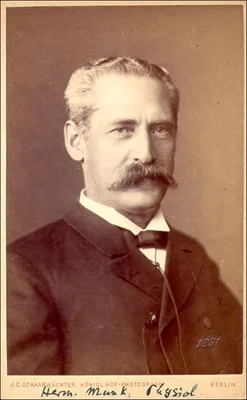
1881 MUNK, Hermann (1839 – 1912)
Ueber die Functionen der Grosshirnrinde.
Munk made important investigations on the functions of the temporal lobes.
GMN 1414 · https://historyofmedicine.com/id/2095
1882 BRAMWELL, Sir Byrom (1847 – 1931)
The diseases of the spinal cord.
GMN 4565 · https://historyofmedicine.com/id/431
1883 –1884 GASKELL, Walter Holbrook (1847 – 1914)
On the innervation of the heart, with special reference to the heart of the tortoise.
Gaskell showed that the efferent vasoconstrictor fibers of the heart originated from the lateral horn of the spinal cord.
GMN 830 · https://historyofmedicine.com/id/312
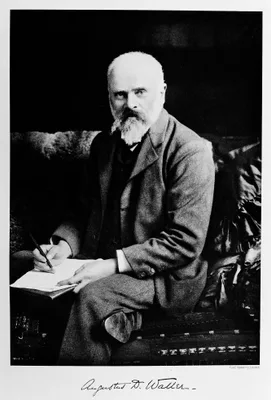
1883 WALLER, Augustus Désiré (1856 – 1922); WATTEVILLE, Armand de (1846 – 1925)
On the influence of the galvanic current on the excitability of the motor nerves of man.
GMN 1279 · https://historyofmedicine.com/id/2282
1884 OTT, Isaac (1847 – 1916)
The relation of the nervous system to the temperature of the body.
Ott studied the nervous regulation of body temperature. His papers on the heat-center in the brain and on the thermoinhibitory apparatus were published in the same journal, 1887, 14, 150-62, 428-38; 1888, 15, 85-104.
GMN 1415 · https://historyofmedicine.com/id/2098