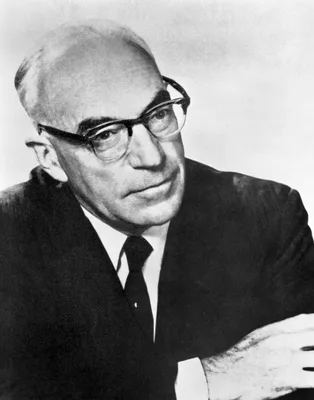
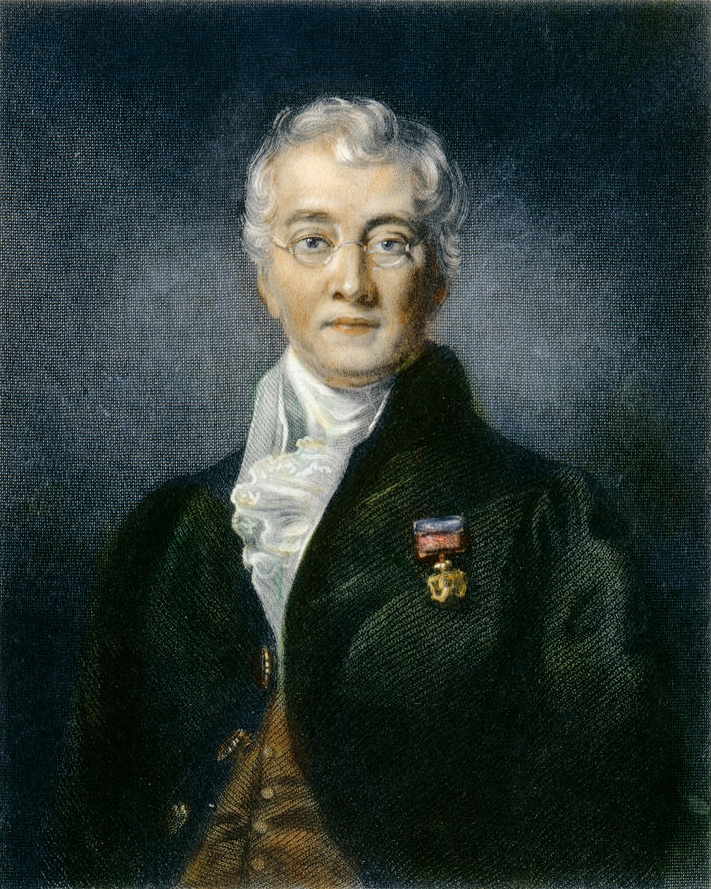
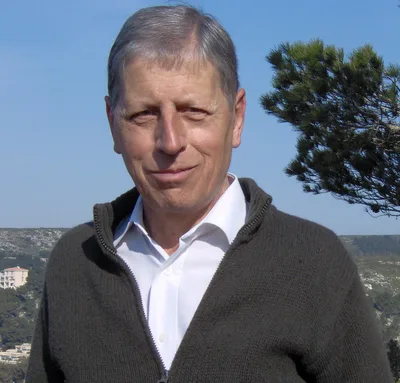
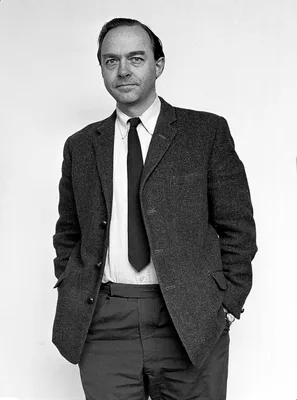
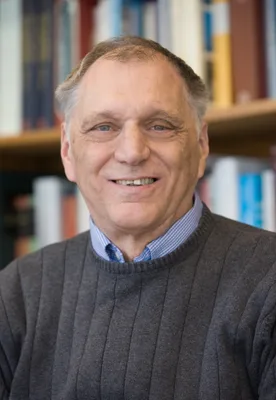
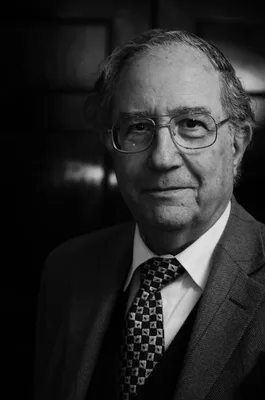
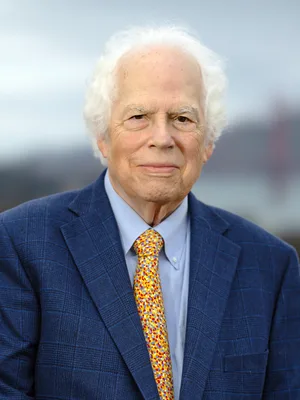
1963 ECCLES, Sir John Carew (1903 – 1997)
The ionic mechanism of postsynaptic inhibition. IN: Prix Nobel in 1963, pp. 261-83.
Eccles shared the Nobel Prize with A. L. Hodgkin and A. F. Huxley in 1963. See No. 1310.1.
GMN 1310.2 · https://historyofmedicine.com/id/1182
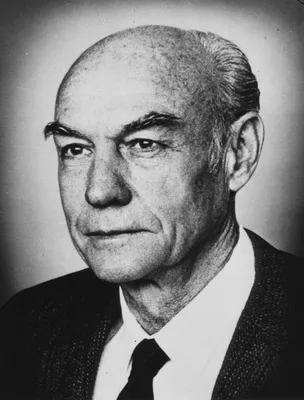
1963 SPERRY, Roger Wolcott (1913 – 1994)
Chemoaffinity in the orderly growth of nerve fiber patterns and connections.
Sperry's chemoaffinity hypothesis, which states that neurons make connections with their targets based on interactions with specific molecular markers[1] and, therefore, that the initial wiring diagram of an organism …
GMN 9647 · https://historyofmedicine.com/id/11834
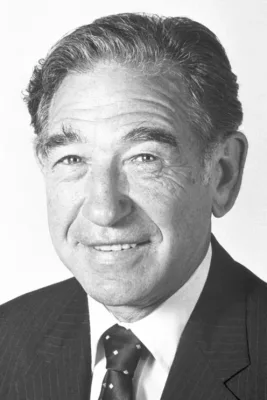
1965 COHEN, Stanley (1922 – 2020)
The stimulation of epidermal proliferation by a specific protein (EGF).
Discovery of Epidermal Growth Factor (EGF). In 1986 Cohen shared the Nobel Prize in Physiology or Medicine with Rita Levi-Montalcini "for their discoveries of growth factors."
GMN 14244 · https://historyofmedicine.com/id/16563
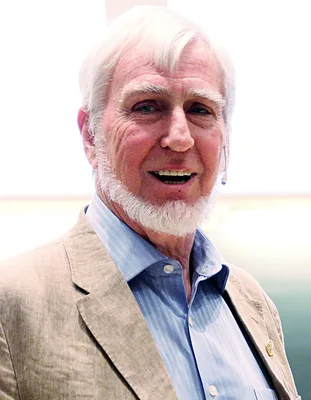
1971 O'KEEFE, John (1939 – ); DOSTROVSKY, Jonathan
The hippocampus as a spatial map. Preliminary evidence from unit activity in the freely-moving rat.
See also: O'Keefe, "Place units in the hippocampus of the freely moving rat," Experimental Neurology, 51 (1976) 78–109. O’Keefe and his student Jonathan Dostrovsky discovered place cells in the hippocampus, and that t…
GMN 14258 · https://historyofmedicine.com/id/16579
1974 BELL, Sir Charles (1774 – 1842); MAGENDIE, François (1783 – 1855); CRANEFIELD, Paul Frederick (1925 – 2003)
The way in and the way out. François Magendie, Charles Bell and the roots of the spinal nerves. With a facsimile of Charles Bell’s annotated copy of his Idea of a new anatomy of the brain. Edited by Paul Cranefield.
An annotated bibliography of the literature documenting the history of this controversy together with reproductions of the texts of the crucial papers. See Nos. 1254-1259.
GMN 1588.14 · https://historyofmedicine.com/id/1538
1985 JEANNEROD, Marc (1935 – 2011)
The brain machine: The development of neurophysiological thought.
Translation of Le cerveau-machine: physiologie de la volonté, Paris, 1983.
GMN 1588.21 · https://historyofmedicine.com/id/1617
1987 CLARKE, Edwin Sisterton (1919 – 1996); JACYNA, L. Stephen
Nineteenth century origins of neuroscientific concepts.
Detailed analysis, emphasizing first half of 19th century, with detailed bibliographies, and bibliographical notes.
GMN 1588.24 · https://historyofmedicine.com/id/1645
1989 ECCLES, Sir John Carew (1903 – 1997)
Evolution of the brain: Creation of the self.
A pioneering work on the evolution of the human mind. Eccles synthesized comparative anatomy--especially brain anatomy--with evidence from paleontology and archaeology, and brain physiology (especially the physiology …
GMN 7071 · https://historyofmedicine.com/id/9238
1991 BOULTON, Charles P.
Neurolinguistics: Historical and theoretical perspectives. Translated by Terence MacNamee.
GMN 11791 · https://historyofmedicine.com/id/13993
1991 PECHURA, Constance M.; MARTIN, Joseph Boyd (1938 – )
Mapping the brain and its functions: Integrating enabling technologies into neuroscience research. Edited by Constance M. Pechura and Joseph B. Martin. Committee on a National Neural Circuitry Database....
The digital edition is available from nap.edu at this link.
GMN 12938 · https://historyofmedicine.com/id/15185
1995 BOS, Gerrit; IBN AL JAZZĀR, Ahmed Bin Jaafar Bin Brahim (Algizar) (895 – 979)
Ibn al-Jazzār on forgetfulness and its treatment. Critical edition of the Arabic text and the Hebrew translations with commentary and translation into English by Gerrit Bos.
GMN 8244 · https://historyofmedicine.com/id/10420
1996 O’MALLEY, Charles Donald (1907 – 1970); CLARKE, Edwin Sisterton (1919 – 1996)
The human brain and spinal cord: A historical study illustrated by writings from antiquity to the twentieth century. Second edition, revised and enlarged with a new preface by Edwin Clarke.
Massive anthology of primary source material on neuroanatomy and neurophysiology. Excellent commentaries and bibliographies. First edition, 1968.
GMN 1588.4 · https://historyofmedicine.com/id/1478
1996 –2018 ALBRIGHT, Thomas D.; SQUIRE, Larry Ryan (1941 – )
The history of neuroscience in autobiography, edited by Tom Albright and Larry R. Squire. 10 vols.
"The History of Neuroscience in Autobiography is a collection of autobiographical chapters, edited by Tom Albright and Larry R. Squire, that details the lives and discoveries of eminent senior neuroscientists. "During…
GMN 12939 · https://historyofmedicine.com/id/15186
1996 KANDEL, Eric Richard (1929 – ); BAILEY, Craig Harrison; BARTSCH, Dusan
Toward a molecular definition of long-term memory storage.
"Abstract: The storage of long-term memory is associated with a cellular program of gene expression, altered protein synthesis, and the growth of new synaptic connections. Recent studies of a variety of memory process…
GMN 14252 · https://historyofmedicine.com/id/16572
1998 GREENGARD, Paul (1925 – 2019); ET AL
DARPP-32: Regulator of the efficacy of dopaminergic neurotransmission.
"Greengard's research focused on events inside the neuron caused by neurotransmitters. Specifically, Greengard and his fellow researchers studied the behavior of second messenger cascades that transform the docking of…
GMN 14251 · https://historyofmedicine.com/id/16570
2002 FINGER, Stanley
Origins of neuroscience: A history of explorations into brain function.
GMN 13461 · https://historyofmedicine.com/id/15735
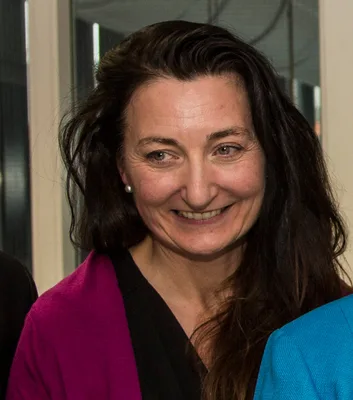
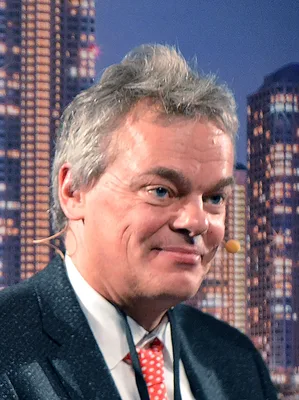
2005 MOSER, May-Britt (1963 – ); MOSER, Edvard Ingjald; HAFTING, Torkel; FYHN, Marianne Hafting (1973 – ); MOLDEN, Sturla
Microstructure of a spatial map in the entorhinal cortex.
May-Britt Moser and Edvard Moser and colleagues discovered grid cells, specialized types of neurons that respond to specific locations in space. They are main components of the brain's GPS. Order of authorship in the …
GMN 14259 · https://historyofmedicine.com/id/16580
2008 HANSON, Marta E.
"Hand mnemonics in classical Chinese medicine: Texts, earliest images, and arts of memory," Festschrift issued in honor of Nathan Sivin, Asia Major series 3, 21.1, 325-357.
GMN 9489 · https://historyofmedicine.com/id/11673
2008 BENNETT, Maxwell Richard (1939 – ); HACKER, Peter Michael Stephan (1939 – )
History of cognitive neuroscience.
GMN 11544 · https://historyofmedicine.com/id/13743
2009
The Human Connectome Project.
In 2009 The National Instiututes of Health announced that it would fund a five year program called the Human Connectome Project to build a "network map" (connectome) to will shed light on the anatomical and functional…
GMN 12740 · https://historyofmedicine.com/id/14986
2012 SEUNG, Hyunjune Sebastian
Eyewire: A game to map the brain.
https://eyewire.org/explore Eyewire is a game to map the brain from Sebastian Seung's Lab at Princeton University. This citizen science human-based computation game challenges players to map retinal neurons. Eyewire l…
GMN 12751 · https://historyofmedicine.com/id/14997
2014 PRUSINER, Stanley Benjamin (1942 – )
Madness and memory: The discovery of prions- a new biological principle of disease.
Prusiner discovered prions, the agent causing scrapie in sheep and goats, mad cow disease, and Creutzfeldt-Jakob disease in humans.
GMN 7624 · https://historyofmedicine.com/id/9796
2015 SWANSON, Larry William (1945 – ); BOTA, Mihail; SPORNS, Olaf (1963 – )
Architecture of the cerebral cortical association connectome underlying cognition.
"Significance "Connections between cerebral cortex regions are known as association connections, and neural activity in the network formed by these connections is thought to generate cognition. Network analysis of mic…
GMN 12736 · https://historyofmedicine.com/id/14982
2017 LEBLANC, Richard
Fearful asymmetry: Bouillaud, Dax, Broca, and the localization of language, Paris, 1825-1879.
GMN 11793 · https://historyofmedicine.com/id/13995
2017 SWANSON, Larry William (1945 – ); SPORNS, Olaf (1963 – ); HAHN, Joel D.
Organizing principles for the cerebral cortex network of commissural and association connections.
"Significance "The cerebral cortex supports cognition and is a structure common to all mammals. The major cortical subdivisions (its gray matter regions) are connected by a complex network of axonal connections that i…
GMN 12737 · https://historyofmedicine.com/id/14983
2018 SWANSON, Larry William (1945 – ); SPORNS, Olaf (1963 – ); HAHN, Joel D.; JEUB, Lucas G. S.; FORTUNATO, Santo
Subsystem organization of axonal connections within and between right and left cerebral cortex and cerebral nuclei (endbrain).
"Significance "The right and left cerebral hemispheres (together forming the endbrain) support cognition and affect, and, structurally, each hemisphere consists of a cortical sheet and set of deep nuclei (often called…
GMN 12738 · https://historyofmedicine.com/id/14984
2019 COOK, Steven J.; JARRELL, Travis A.; EMMONS, Scott W.; ET AL
Whole-animal connectomes of both Caenorhabditis elegans sexes.
The first whole-animal connectomes for both adult sexes of a single species. "As none of the EM series cover an entire single animal, to generate whole animal connectomes, data from different reconstruction series wer…
GMN 12970 · https://historyofmedicine.com/id/15218