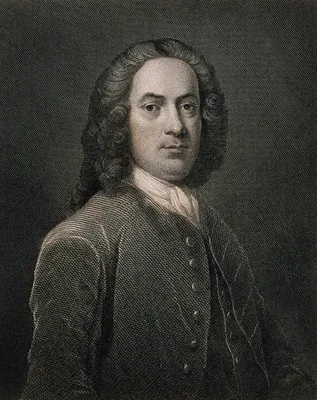
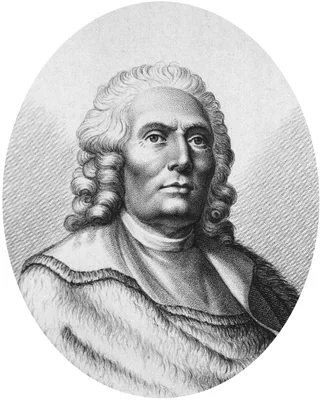
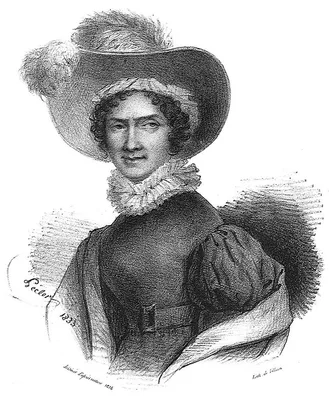
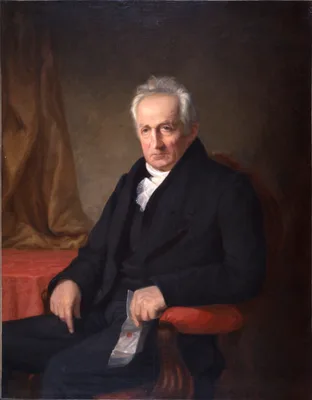
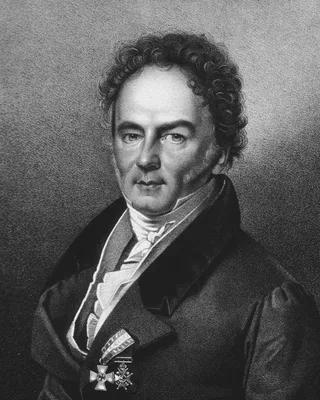
1747 LEVRET, André (1703 – 1780)
Observations sur les causes et les accidens de plusieurs accouchemens laborieux.
Levret, who improved the obstetric forceps, was a famous teacher in Paris.
GMN 6152 · https://historyofmedicine.com/id/7716
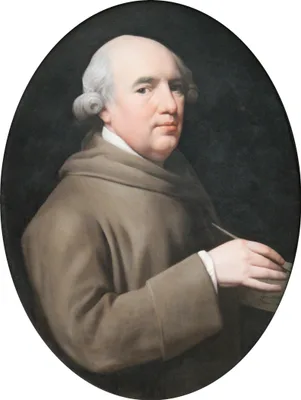
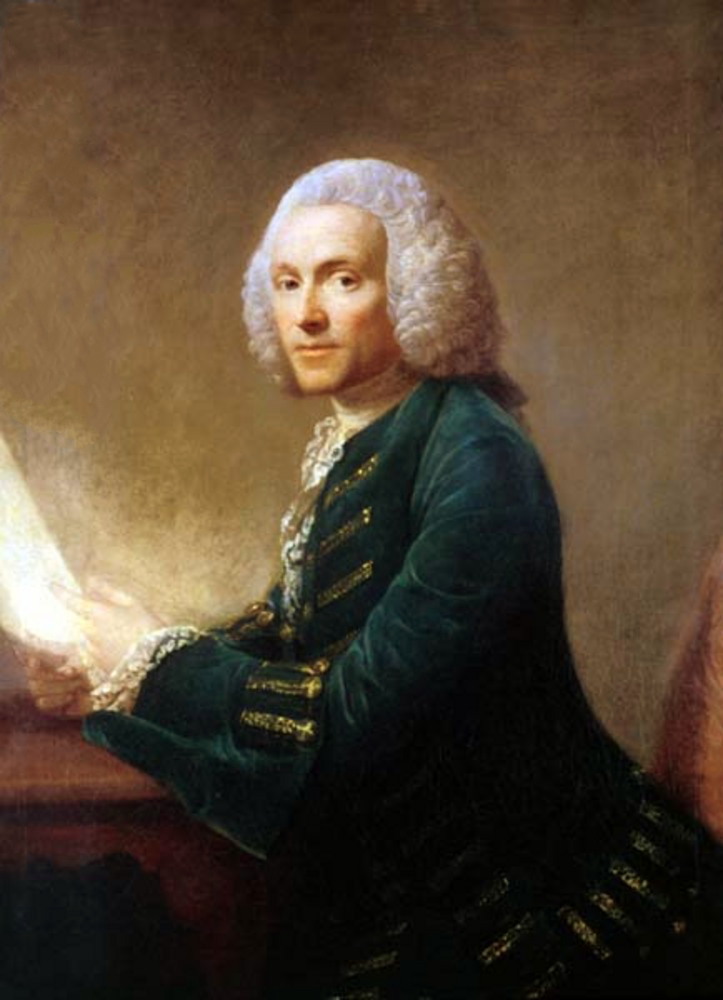
1751 STUBBS, George (1724 – 1806); BURTON, John (1697 – 1771)
An essay towards a complete new system of midwifery, theoretical and practical.
Burton was the first to suggest that puerperal fever is contagious, and the first to give a detailed discussion of Caesarean section. Laurence Steme satirized him as “Dr. Slop” in The life and opinions of Tristram Sha…
GMN 6268 · https://historyofmedicine.com/id/7976
1752 EISENMANN, George Heinrich (1693 – 1768)
Tabulae anatomicae quatuor uteri duplicis.
Atlas of bipartite and double uterus.
GMN 6018 · https://historyofmedicine.com/id/7219
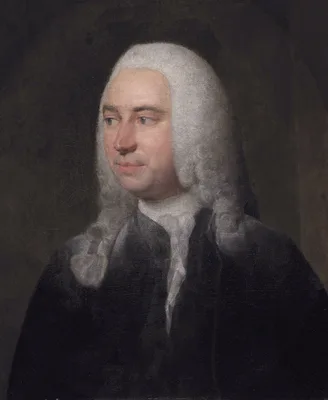
1752 SMELLIE, William (1697 – 1763)
A treatise on the theory and practice of midwifery.
Smellie contributed more to the fundamentals of obstetrics than virtually any individual. In his Treatise he described more accurately than any previous writer the mechanism of parturition, stressing the importance of…
GMN 6154 · https://historyofmedicine.com/id/7719
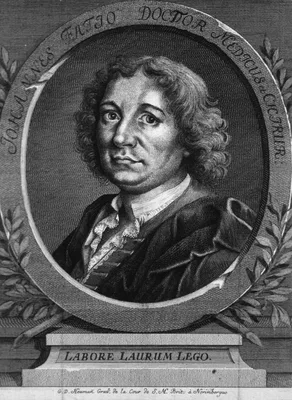
1752 FATIO, Johannes (1649 – 1691)
Der Arzney Doctor, Helvetisch-Vernünftige Wehe-Mutter, oder Gründlicher Unterricht, wie mit den Schwangern, Gebährenden, Kindbetterinnen und neugebohrnen Kindern umzugehen, selbige gebührend zu verpflegen, und in allerhand ihnen zustossenden Kranckheiten zu begegnen seye: Samt einer ausführlichen Beschreibung von Fortpflanzung des menschlichen Geschlechts, und aller weiblichen Leibes-Theilen, auch der Empfängniß, Formir- und Bildung der Frucht im Mutterleibe. Nebst des Verfassers curiösen Anmerckungen, selbst-bewährten Handgriffen, Curen und dazu dienlichen Arzney-Mitteln. Dem löblichen Frauenzimmer, geschwohrnen Weibern, und andern ehrbaren Frauen zu Nutz, mit besonderm Fleisse in fünf Abschnitte eingetheilt. Mit vielen Kupfern und dreyen Registern.
Fatio was probably the first surgeon to study and treat surgical conditions of children in a systematic fashion. His book, first published over 60 years after his death, is divided into five parts: 1) the anatomy of w…
GMN 6357.51 · https://historyofmedicine.com/id/8217
1753 LEVRET, André (1703 – 1780)
L’art des accouchemens.
Besides introducing a curved forceps (see No. 6152) Levret invented several other obstetric instruments and made fundamental observations on pelvic anomalies. His book covered the whole field of obstetrics and remaine…
GMN 6153 · https://historyofmedicine.com/id/7718
1754 SMELLIE, William (1697 – 1763)
A sett [sic] of anatomical tables, with explanations, and an abridgment, of the practice of midwifery…
The celebrated atlas for No. 6154, which is a complete work in itself. The 39 superb engravings include 26 after drawings by Jan van Rymsdyk, which are preserved in the Hunterian Collection at the University of Glasgo…
GMN 6154.1 · https://historyofmedicine.com/id/7722
1757 JENTY, Charles Nicholas (1720 – 1770)
The demonstrations of a pregnant uterus of a woman at her full term.
Atlas of six superb life-size mezzotint plates after paintings by Jan van Rymsdyk. A separate 16-page text was published in octavo.
GMN 6156.4 · https://historyofmedicine.com/id/7734
1759 COUDRAY, Angélique Marguerite Le Boursier du (1712 – 1794)
Abregé de l'art des accouchements, dans lequel on donne les préceptes nécessaires pour le mettre heureusement en pratique, et auquel on a joint plusieurs observations intéressantes sur des cas singuliers.
After ten years as a midwife in Paris, Madame du Coudray was hired by King Louis XV to travel across France to better train rural midwives.There were political motivations for this; Louis wanted to boost a “declining”…
GMN 6848 · https://historyofmedicine.com/id/9012
1761 –1765 ASTRUC, Jean (1684 – 1766)
Traité des maladies des femmes. 6 vols.
Mettler considers this “the most pretentious gynecologic work of the [eighteenth] century… chiefly useful for its historical orientation”. English translation, 3 vols., London, 1762-67.
GMN 6019 · https://historyofmedicine.com/id/7222
1762 HUNTER, William (1718 – 1783)
A singular case of the separation of the ossa pubis.
A case of osteomalacic pelvis was reported to Hunter by a country practitioner.
GMN 6254 · https://historyofmedicine.com/id/7948
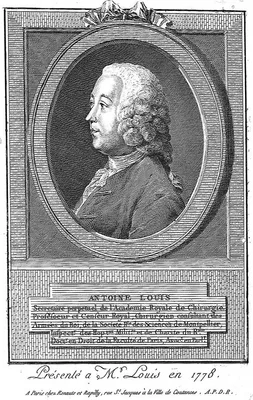
1764 LOUIS, Antoine (1723 – 1792)
Mémoire contre la légitimité des naissances prétendues tardives.
An attempt to set the minimum and maximum time limits of duration of human pregnancy. Supplement published in 1764.
GMN 1731 · https://historyofmedicine.com/id/3034
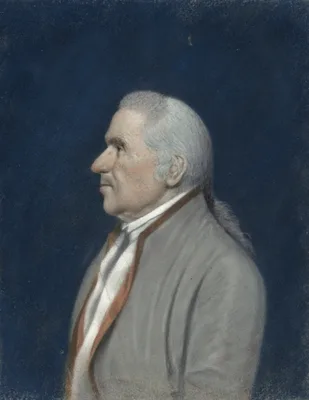
1764 BARD, John (1716 – 1799)
A case of extra-uterine foetus.
This description of an abdominal pregnancy, successfully operated on by Bard was “the first scientific paper on a surgical subject to come from the North American Colonies” (Earle). John Bard was the father of Samuel …
GMN 6155 · https://historyofmedicine.com/id/7725
1767 HARVIE, John (1710 – 1770)
Practical directions, shewing a method of preserving the perinaeum in birth, and delivering the placenta without violence.
Harvie, Smellie’s successor, advocated external expression of the placenta instead of traction on the cord, anticipating Credé in this connection by almost a century (see No. 6183). Reprinted in H. Thoms: Classic cont…
GMN 6156 · https://historyofmedicine.com/id/7727
1771 HUNTER, William (1718 – 1783)
Appendix to Lynn’s The history of a fatal inversion of the uterus.
First accurate description of retroversion of the uterus.
GMN 6020 · https://historyofmedicine.com/id/8962
1772 LEAKE, John (1729 – 1792)
Practical observations on the child-bed fever.
Leake insisted on the contagious nature of puerperal fever. Reprinted, London, Sydenham Society, 1949.
GMN 6269 · https://historyofmedicine.com/id/7978
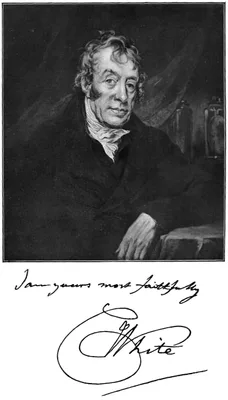
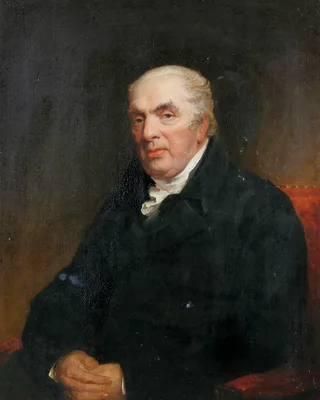
1773 WHITE, Charles (1728 – 1813)
A treatise on the management of pregnant and lying-in women, and the means of curing, but more especially of preventing the principal disorders to which they are liable. Together with some new directions concerning the delivery of the child and placenta in natural births. illustrated with cases.
White was the first to state clearly in a text on midwifery the necessity of absolute cleanliness in the lying-in chamber, the isolation of infected patients, and adequate ventilation. He instituted the principle of u…
GMN 6270 · https://historyofmedicine.com/id/7980
1774 HUNTER, William (1718 – 1783)
Anatomia uteri humani gravidi tabulis illustrata. The anatomy of the human gravid uterus exhibited in figures.
Hunter originally trained as Smellie’s assistant. Once he achieved brilliant professional and financial success he became a great collector of rare books and manuscripts, coins, paintings, minerals, shells, and antiqu…
GMN 6157 · https://historyofmedicine.com/id/7736
1775 RIGBY, Edward (1747 – 1821)
An essay on the uterine haemorrhage, which precedes the delivery of the full grown foetus: illustrated with cases.
Rigby differentiated between premature separation of the normal placenta (accidental hemorrhage) and placenta praevia (unavoidable hemorrhage).
GMN 6158 · https://historyofmedicine.com/id/7740
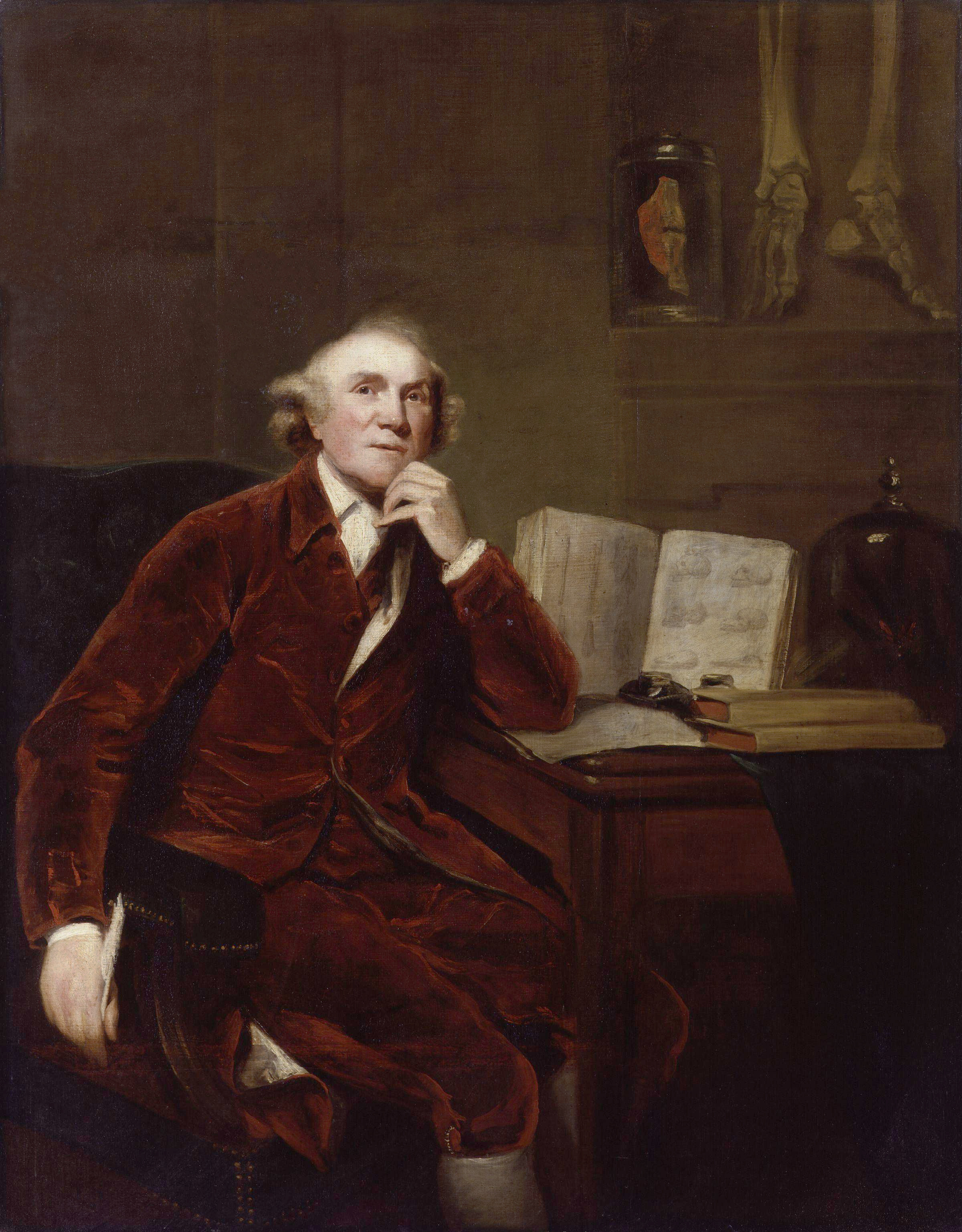
1780 HUNTER, John (1728 – 1793)
Account of a woman who had the smallpox during pregnancy, and who seemed to have communicated the same disease to the foetus.
GMN 5421 · https://historyofmedicine.com/id/7344
1781 BAUDELOCQUE, Jean-Louis (1746 – 1810)
L’art des accouchemens. 2 vols.
Baudelocque invented a pelvimeter and advanced the knowledge of pelvimetry and of the mechanism of labor. The external conjugate diameter is known as “Baudelocque’s diameter”. English translation, London, 1790.
GMN 6255 · https://historyofmedicine.com/id/7950
1783 DENMAN, Thomas (1733 – 1815)
Aphorisms in the application and use of the forceps and vectis, on preternatural labours, on labours attended with hemorrhage and with convulsions.
Denman "was the first physician whose authority made the practice general in England of inducing premature labour in cases of narrow pelvis and other conditions, in which the mother's life is imperilled by the attempt…
GMN 12164 · https://historyofmedicine.com/id/14374
1784 WHITE, Charles (1728 – 1813)
An inquiry into the nature and cause of that swelling, in one or both of the lower extremeties, which sometimes happens to lying-in-women.
First clinical description of phlegmasia alba dolens. White ascribed it to destruction of the lymphatics due to pressure of the foetal head.
GMN 6271 · https://historyofmedicine.com/id/7982
1786 SMELLIE, William (1697 – 1763); NORMAN, John (1748 – 1817)
The first American edition, An abridgement of the practice of midwifery: and a set of anatomical tables.
An abridgement of Smellie's obstetrical writings, with plates engraved by the editor and publisher, John Norman, was the first medical book with engraved illustrations published in North America, and also the first bo…
GMN 11534 · https://historyofmedicine.com/id/13733
1787 DENMAN, Thomas (1733 – 1815)
A collection of engravings, tending to illustrate the generation and parturition of animals, and of the human species.
An idiosyncratic collection of rarely reproduced images with explanatory commentaries in English and French, concerning reproduction and obstetric complications in animals and humans. Topics include: The Funis of a nu…
GMN 12163 · https://historyofmedicine.com/id/14373
1789 BAILLIE, Matthew (1761 – 1823)
An account of a particular change of structure in the human ovarium.
Matthew Baillie’s notable anatomico-pathological studies on dermoid cysts of the ovary. Also published in Lond. med. J., 1789, 10, 322-32.
GMN 6021 · https://historyofmedicine.com/id/7229
1791 –1806 BÖER, Lucas Johann [BOOGERS] (1751 – 1835)
Abhandlungen und Versuche geburtshilflichen Inhalts. 2 vols.
Böer, a pioneer of “natural childbirth”, was the founder of the Viennese school of obstetrics.
GMN 6160 · https://historyofmedicine.com/id/7743
1791 MOHRENHEIM, Joseph Jacob von (1759 – 1797)
Abhandlung über die Entbindungskunst.
This work was edited by order of Catherine II of Russia, to whom von Mohrenheim was accoucheur. Its importance lies mainly in its splendid engravings, some of which were taken from Smellie (see No. 6154.1). It include…
GMN 6161 · https://historyofmedicine.com/id/7744
1793 SOEMMERRING, Samuel Thomas von (1755 – 1830)
Ueber die Wirkungen der Schnürbrüste.
Soemmerring enumerated the bad effects of tight corsets on the internal organs of women. His book created much interest and resulted in a great decline in the fad of tight lacing and hoop skirts. This is the second ed…
GMN 6022 · https://historyofmedicine.com/id/7232
1794 BAILLIE, Matthew (1761 – 1823); HUNTER, William (1718 – 1783)
An anatomical description of the human gravid uterus and its contents.
Hunter’s text for No. 6157, edited and published by Matthew Baillie after William Hunter's death. Digital facsimile from Google Books at this link.
GMN 6157.1 · https://historyofmedicine.com/id/7738
1795 GORDON, Alexander (1752 – 1799)
A treatise on the epidemic puerperal fever of Aberdeen.
Gordon was the first to advance as a definite hypothesis the contagious nature of puerperal fever, thus preceding Holmes and Semmelweis by half a century. He also advocated the disinfection of the clothes of the docto…
GMN 6272 · https://historyofmedicine.com/id/7984
1798 BARLOW, James (1767 – 1839)
A case of the caesarean operation performed, and the life of the woman preserved. IN: Medical records and researches selected from the papers of a private medical association, pp. 154-163.
This is apparently the first Caesarean section in England from which the mother recovered. It was performed on 27 November 1793. Barlow’s account is reproduced by Young (No. 6307), pp. 54-58. A note on Barlow is in Pr…
GMN 6236.1 · https://historyofmedicine.com/id/7885
1799 HOME, Sir Everard (1756 – 1832)
Account of the dissection of an hermaphrodite dog.
Home records (p. 162) that John Hunter suggested artificial insemination. The actual insemination was performed by the patient’s husband with a syringe.
GMN 6162 · https://historyofmedicine.com/id/7745
1801 SCHMITT, Wilhelm Joseph (1760 – 1827)
Drey Wahmehmungen von Schwangerschaften ausserhalb der Gebähr-mutter.
Interstitial pregnancy first reported.
GMN 6163 · https://historyofmedicine.com/id/7747
1807 BARD, Samuel (1742 – 1821)
A compendium of the theory and practice of midwifery.
First significant textbook on obstetrics written by an American. Bard gave an excellent description of the mechanism of labor, and of pre-eclampsia. Woodcut illustrations were engraved by American physician and illust…
GMN 6163.1 · https://historyofmedicine.com/id/7749
1808 STEARNS, John (1770 – 1848)
Accounts of the pulvis parturiens, a remedy for quickening child-birth.
The first use of ergot in the induction of labor in America. Reprinted in H. Thoms: Classic Contributions to Obstetrics and Gynecology, 1935, pp. 21-23.
GMN 6164 · https://historyofmedicine.com/id/7751
1812 BOIVIN, Marie Anne Victoire (1773 – 1841)
Mémorial de l’art des accouchements.
Mme Boivin was one of the most famous of the Paris midwives. She improved the speculum and wrote intelligently on hydatidiform mole.
GMN 6165 · https://historyofmedicine.com/id/7752
1817 MCDOWELL, Ephraim (1771 – 1830)
Three cases of extirpation of diseased ovaria.
McDowell was a pioneer ovariotomist. Although not the first to perform this operation, he deserves credit for putting it upon a permanent basis. The above records his first ovariotomy, performed in 1809, together with…
GMN 6023 · https://historyofmedicine.com/id/7235
1817 KING, John (1774 – 1840)
Case of an extra-uterine foetus, produced alive through an incision made into the vagina of the mother, who recovered after delivery, without any alarming symptoms.
Reports the first successful vaginotomy for abdominal pregnancy, as opposed to an abdominal laparotomy.
GMN 6166 · https://historyofmedicine.com/id/7754
1818 KING, John (1774 – 1840)
An analysis of the subject of extrauterine foetation and of the retroversion of the gravid uterus.
Expansion of No. 6166. First book on the subject.
GMN 6167 · https://historyofmedicine.com/id/7756
1818 WENZEL, Carl (1769 – 1827)
Allgemeine geburtshülfliche Betrachtungen und über die künstliche Frühgeburt.
Artificial induction of premature labour.
GMN 6168 · https://historyofmedicine.com/id/7758
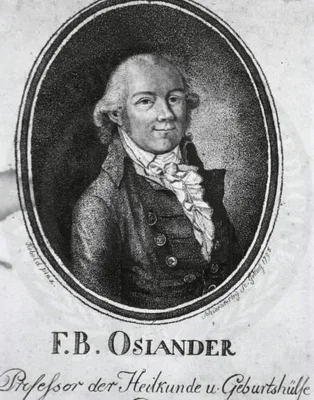
1818 –1825 OSIANDER, Friedrich Benjamin (1759 – 1822)
Handbuch der Entbindungskunst. 3 vols. in 5.
Includes (Bd. 2, Abt II, p. 302) description of Osiander’s lower-segment Caesarean operation.
GMN 6237 · https://historyofmedicine.com/id/7888
1819 NAEGELE, Franz Karl (1778 – 1851)
Ueber den Mechanismus der Geburt.
Best work of its time on the mechanism of labor. English translation, London, 1829.
GMN 6169 · https://historyofmedicine.com/id/7760
1821 –1825 DUGÈS, Antoine Louis (1798 – 1838); LACHAPELLE, Marie-Louise (1769 – 1821)
Pratique des accouchemens…par Marie Louise La Chapelle. Publiés par Antoine Dugès. 3 vols.
Mme La Chapelle was a famous midwife and a colleague of Baudelocque. She supervised 5,000 deliveries and her vast experience enabled her to write her book. She reduced the 94 theoretical presentations suggested by Bau…
GMN 6170 · https://historyofmedicine.com/id/7762
1821 GARDANNE, Charles-Pierre-Louis de (1788 – )
De la ménopause, ou de l'age critique des femmes; Traité dans lequel sont exposés du description anatomique et physiologique de l'utérus à la ménopause, les changemens que cette époque opère tant sur le physique que sur le moral de la femme, les moyens hygiéniques qui doivent être alors employés, enfin les maladies qui surviennent ordinairement à l'âge critique. Seconde edition.
In this work, a revised second edition of Gardanne's Avis aux femmes qui entrent dans l'age critique (1816), Gardanne coined the term menopause. Digital facsimile of the 1816 edition from the Internet Archive at this …
GMN 10546 · https://historyofmedicine.com/id/12739
1822 SMITH, Nathan (1762 – 1829)
Case of ovarian dropsy, successfully removed by a surgical operation.
Smith was the first in the U.S.A. after McDowell to perform ovariotomy, for ovarian edema. Smith was apparently without knowledge of the previous operations of McDowell.
GMN 6024 · https://historyofmedicine.com/id/7239
1822 KERGARADEC, Jean Alexandre le Jumeau, vicomte de (1787 – 1877)
Mémoire sur l’auscultation appliquée à l’étude de la grossesse.
Although not the first to record the auscultation of the fetal heart sound, Le Jumeau (Kergaradec), a pupil of Laennec, brought the importance of this diagnostic procedure to the notice of the medical profession. Laen…
GMN 6171 · https://historyofmedicine.com/id/7764
1823 DAVIS, David Daniel (1777 – 1841)
An essay on the proximate cause of the disease called phlegmasia dolens.
Davis was the first to state that phlegmasia alba dolens was due to inflammation of the veins. He was physician-accoucheur at the birth of Queen Victoria.
GMN 6273 · https://historyofmedicine.com/id/7986
1824 SIEBOLD, Adam Elias Von (1775 – 1826)
Ueber den Gebärmutterkrebs, dessen Entstehung und Verhütung.
Classic account of cancer of the uterus.
GMN 6025 · https://historyofmedicine.com/id/7241
1825 LIZARS, John (1794 – 1860)
Observations on extraction of diseased ovaria.
Lizars performed the first (unsuccessful) ovariotomy in Britain. His book made generally known the practical possibility of this operation.
GMN 6026 · https://historyofmedicine.com/id/7246