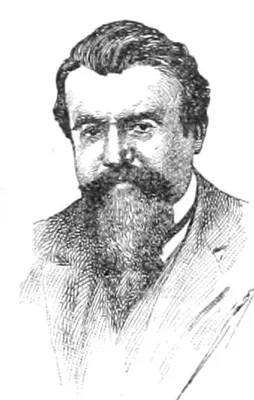
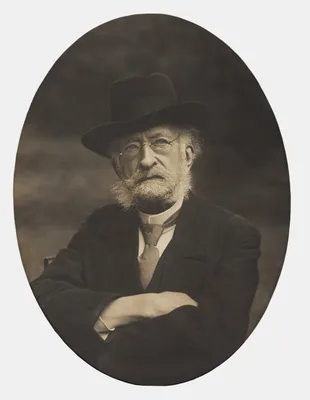
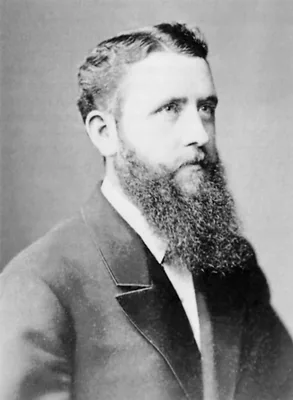
1652 TULP, Nicolaes (1593 – 1674)
Observationes medicae.
One of the earliest accounts of beri-beri is on pp. 300-05 of this work. Tulp, notable as the demonstrator in Rembrandt’s “Anatomy Lesson”, was among the first, in the same book, to describe the ileo-caecal valve (“Tu…
GMN 3737 · https://historyofmedicine.com/id/4530
1655 LA PEYRÈRE, Isaac (1596 – 1576)
Prae-Adamitae, sive exercitatio super versibus duodecimo, decimotertio, & decimoquarto, capitis quinti Epistolae D. Pauli ad Romanos: Quibus inducuntur primi homines ante Adamum conditi.
"In his Prae-Adamitae, published in Latin in 1655 and in English as Men Before Adam in 1656, La Peyrère argued that Paul's words in Chapter 5, verses 12-14 of his Epistle to the Romans should be interpreted such that …
GMN 10146 · https://historyofmedicine.com/id/12335
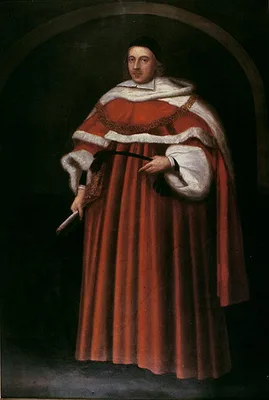
1677 HALE, Sir Matthew (1609 – 1676)
The primitive organization of mankind considered and examined according to the light of nature.
In response to Isaac de la Peyrere‘s theory of polygenesis, Hale, Chief Justice of the King’s Bench, advanced his own theory that the earth was not eternal, but rather had a spontaneous “beginning,” and defended “the …
GMN 215 · https://historyofmedicine.com/id/3967
1715 BAGFORD, John (1650 – 1716)
A letter to the publisher, written by the ingenious Mr. John Bagford, in which are many curious remarks relating to the city of London, and some things about Leland. In: John Leland, Joannis Lelandi antiquarii de rebus britannicis collectanea, ed. Thomas Hearne, I, pp. lviii-lxxxvi.
Includes an account of the discovery by Bagford’s friend and fellow antiquarian John Conyers of a flint handaxe in London, unearthed circa 1680 near the bones of what was then thought to be an elephant, as neither the…
GMN 7303 · https://historyofmedicine.com/id/9473
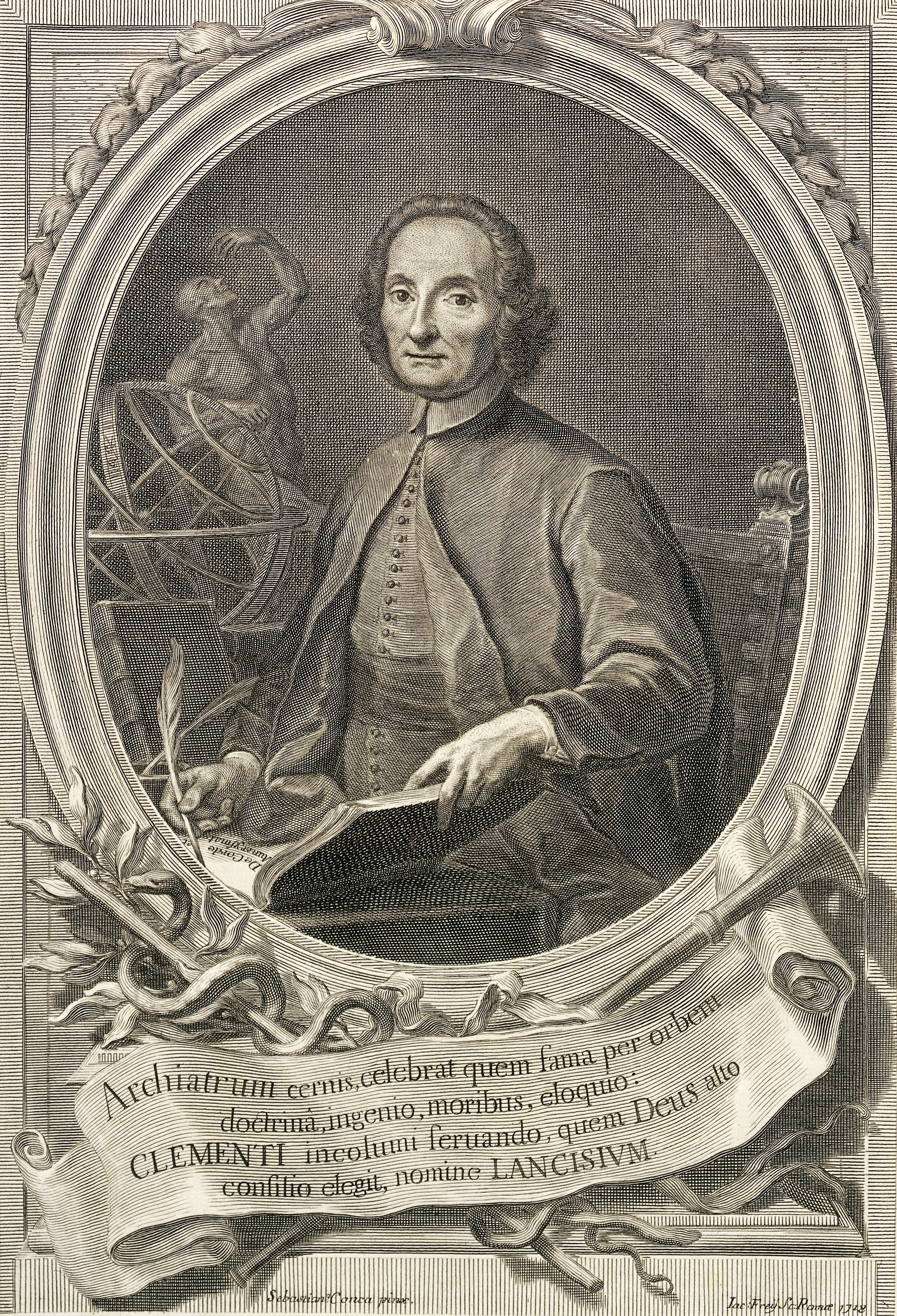
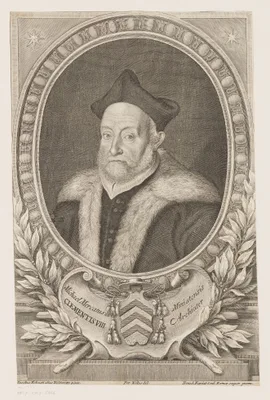
1717 LANCISI, Giovanni Maria (1654 – 1720); MERCATI, Michele (1541 – 1593)
Metallotheca opus posthumum, auctoritate, & munificentia Clementis undecimi pontificis maximi e tenebris in lucem eductum; opera autem, & studio Ioannis Mariae Lancisii archiatri pontificii illustratum.
In 1717 papal physician Giovanni Maria Lancisi published the catalogue of the Vatican "armaria" series housing the natural history museum collected by one of his predecessors at the Vatican, the 16th century papal phy…
GMN 11515 · https://historyofmedicine.com/id/13714
1774 ESPER, Johann Friedrich (1732 – 1781)
Ausfürliche Nachricht von neuentdeckten Zoolithen, unbekannter vierfüsiger Thiere…
Esper was the first to record the finding, in Gailenreuth Cave, of human bones alongside the remains of unknown and probably extinct animals. The implications of this dramatic observation published in a color plate bo…
GMN 203.7 · https://historyofmedicine.com/id/3834
1799 CUVIER, Jean Léopold Chrétien Frédéric "Georges" (1769 – 1832)
Mémoire sur les espèces d’éléphans vivantes et fossiles.
Using comparative anatomy, Cuvier demonstrated that the African elephant was a separate species from the Indian elephant, and that the fossil or “mammoth” elephant was yet another species distinct from the two living …
GMN 7292 · https://historyofmedicine.com/id/9462
1800 FRERE, John (1740 – 1807)
Account of flint weapons discovered at Hoxne in Suffolk.
Frere described the discovery of several flint artifacts, which he believed to be “weapons of war,” associated with “some extraordinary bones, particularly a jaw-bone of enormous size of some unknown animal” (p. 204).…
GMN 7291 · https://historyofmedicine.com/id/9461
1819 LAWRENCE, Sir William (1783 – 1867)
Lectures on physiology, zoology and the natural history of man.
This work set forth Lawrence's then radical and remarkably advanced ideas concerning evolution and heredity. Arguing that theology and metaphysics had no place in science, Lawrence relied instead on empirical evidence…
GMN 11240 · https://historyofmedicine.com/id/13437
1823 BUCKLAND, William (1784 – 1856)
Reliquiae diluvianae; or, observations on the organic remains contained in caves, fissures, and diluvial gravel, and on other geological phenomena, attesting the action of an universal deluge.
Buckland’s elaborately illustrated Reliquiae diluvianae (Relics of the Flood) describes his geological and paleontological researches of the early 1820s, including his investigations of the Kirkdale and Paviland caves…
GMN 7254 · https://historyofmedicine.com/id/9423
1829 CHRISTOL, Jules Marie Gabriel de (1802 – 1861)
Notice sur les ossemens humains fossiles des cavernes du Département du Gard, présentée à l’Académie des Sciences le 29 juin 1829.
Christol excavated of the caverns of Pondres and Souvignarges, northeast of Montpellier in the department of Gard. These caverns, which showed no evidence of accidental disturbance, contained human remains intermixed …
GMN 7293 · https://historyofmedicine.com/id/9463
1833 –1834 SCHMERLING, Phillipe-Charles (1791 – 1836)
Recherches sur les ossemens fossiles découvertes dans les cavernes de la province de Liège. 2 vols. and atlas.
A physician from Delft, Schmerling found extensive human remains and artifacts associated with the remains of extinct animals in the caverns around Liège. These human remains were distinctively different anatomically …
GMN 203.8 · https://historyofmedicine.com/id/3638
1836 THOMSEN, Christian Jurgensen (1788 – 1865)
Ledetraad til Nordisk Oldkyndighed.
Thomsen's work established the "Three-Age system," according to which artifacts were first made of stone, then bronze, and then iron. This basic chronology underpins the archaeology of most of the "Old World.”
GMN 7374 · https://historyofmedicine.com/id/9546
1837 LARTET, Édouard (1801 – 1871)
Note sur les ossements fossiles des terrains tertiaires de Simorre, de Sansan, etc., dans le département du Gers, et sur la découverte récente d’une mâchoire de singe fossile.
First published account of the discovery of the first anthropomorphic fossil ape. Lartet's discovery, made in 1836 at Sansan, was the first to challenge Cuvier’s assertion that both humans and apes were products of th…
GMN 7311 · https://historyofmedicine.com/id/9481
1841 GREY, Sir George (1812 – 1898)
Journals of two expeditions of discovery in North-West and Western Australia, during the years 1837, 38, and 39...describing many new discovered, important, and fertile districts, with observations on the moral and physical conditions of the aboriginal inhabitants, &c. &c. 2 vols.
"In 1837, at the age of 25, Grey led an ill-prepared expedition that explored North-West Australia. British settlers in Australia at the time knew little of the region and only one member of Grey's party had been ther…
GMN 13014 · https://historyofmedicine.com/id/15264
1844 MIDDLETON, J.
Comparative analysis of recent and fossil bones.
The presence of fluorine in fossil bones was first reported in 1803 by Italian chemist Domenico Morichini, and by the 1840s scientists had determined that (a) fluorine occurs in teeth and bone; (b) the fluorine conten…
GMN 7300 · https://historyofmedicine.com/id/9470
1847 –1864 BOUCHER DE CRÈVECOEUR DE PERTHES, Jacques (1788 – 1868)
Antiquités celtiques et antédiluviennes. Mémoire sur l'industrie primitive et les arts à leur origine. 3 vols.
Customs inspector at Abbéville and a prolific writer on diverse subjects, Boucher de Perthes found extensive deposits of flint implements in association with the bones of mammoths and other fossil animals. His work pr…
GMN 203.9 · https://historyofmedicine.com/id/3842
1847 LUND, Peter Wilhelm (1801 – 1880)
Notice sur des ossements humains fossiles, trouvés dans une caverne du Brésil.
Lund, a student of Cuvier, excavated extensively in the region of Lagoa Santa, an area rich in caves and karst formations comprising the northern part of Greater Belo Horizonte in Brazil. Between 1835 and 1843 he coll…
GMN 7305 · https://historyofmedicine.com/id/9475
1855 –1856 DUVERNOY, George Louis (1777 – 1855)
Des caractères anatomiques des grands singes pseudo-anthropomorphes.
With 16 lithographed plates, this continues to be one of the most frequently cited of all works in the history of primate anatomy.
GMN 10884 · https://historyofmedicine.com/id/13080
1857 SCHAAFHAUSEN, Hermann (1816 – 1893); FUHLROTT, Johann Carl (1804 – 1877)
[On the Feldhofer Neanderthal.]
The first account of the Neanderthal remains (Neanderthal 1), discovered in 1856 in the the Feldhofer cave of the Neander valley. The remains, which consist of a partial skull, pelvis and assorted long bones, were sen…
GMN 7250 · https://historyofmedicine.com/id/9419
1858 SCHAAFHAUSEN, Hermann (1816 – 1893)
Zur Kenntniss der ältesten Rassenschädel.
The first comprehensive description of the Neanderthal skull, following Schaaffhausen’s and Fuhlrott’s preliminary announcements of the discovery in the Verhandlungen des naturhistorischen Vereines der preussischen Rh…
GMN 204 · https://historyofmedicine.com/id/3844
1859 FUHLROTT, Johann Carl (1804 – 1877)
Menschliche Ueberreste aus einer Felsengrotte des Düssenthals. Ein Beitrag zur Frage über die Existenz fossiler Menschen.
Fuhlrott’s first detailed account of the “Neanderthal 1” skeleton discovered in 1856 in the Kleine Feldhofer Grotte, located in the Düssel River gorge in southwestern Germany.
GMN 7251 · https://historyofmedicine.com/id/9420
1860 PRESTWICH, Joseph (1812 – 1896)
On the occurrence of flint-implements, associated with the remains of animals of extinct species in beds of a late geological period, in France at Amiens and Abbeville, and in England at Hoxne.
This paper is a key record of the early recognition of the antiquity of man by the scientific establishment. Having returned from a visit to Abbeville, France, in May 1859, where he viewed the evidence for the antiqui…
GMN 7262 · https://historyofmedicine.com/id/9431
1860 EVANS, John (1823 – 1908)
On the occurrence of flint implements in undisturbed beds of gravel, sand, and clay.
In the spring of 1859, in the company of Joseph Prestwich, Evans visited Abbeville to view Boucher de Perthes’ collection of flint artifacts and to observe a hand-axe in situ at St. Acheul in a deposit containing the …
GMN 11344 · https://historyofmedicine.com/id/13542
1861 LARTET, Édouard (1801 – 1871)
Nouvelles recherches sur la coexistence de l’homme et des grands mammifères fossiles réputés caractéristiques de la dernière période géologique.
In this lengthy paper of nearly 80 pages Lartet proposed the first chronological framework into which both human skeletal and cultural remains could be fitted, based on fossil animal bones recovered from French cave s…
GMN 12983 · https://historyofmedicine.com/id/15231
1863 HUXLEY, Thomas Henry (1825 – 1895)
Evidence as to man’s place in nature.
Huxley showed that in the visible characters man differs less from the higher apes than do the latter from lower members of the same order of primates. He also provided the first thorough and detailed comparative desc…
GMN 165 · https://historyofmedicine.com/id/3242
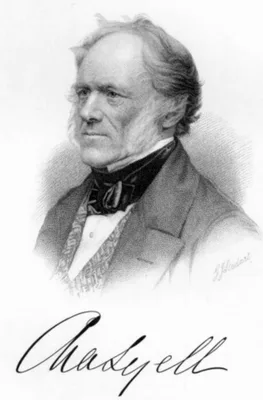
1863 LYELL, Sir Charles (1797 – 1875)
The geological evidences of the antiquity of man with remarks on theories of the origin of species by variation.
Lyell’s summary discussion of the evidence for human antiquity “introduced a wide readership to the new view and to the facts that supported it, thus laying the synthetic foundation for future work” (Grayson). This wo…
GMN 204.1 · https://historyofmedicine.com/id/3847
1864 LARTET, Édouard (1801 – 1871); CHRISTY, Henry (1810 – 1865)
Cavernes du Périgord. Objets gravés et sculptés des temps pré-historiques dans l’Europe occidentale.
In 1863 Lartet and Christy began systematically examining the caves in the Périgord (Dordogne) region of France. This study of mobiliary or portable art, such as carved stones, carved ivory, carved bones, or carved re…
GMN 7258 · https://historyofmedicine.com/id/9427
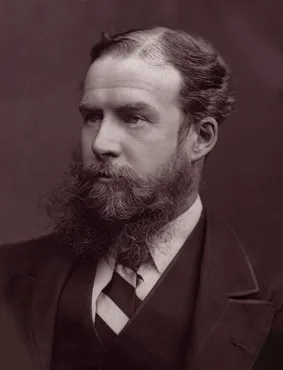
1865 LUBBOCK, John (1834 – 1913)
Pre-historic times, as illustrated by ancient remains, and the manners and customs of modern savages.
Lubbock introduced the terms "Paleolithic" and "Neolithic". His work addressed not only the topic of human antiquity but also the lives and cultures of people in the Stone Age. In contrast to researchers who focused o…
GMN 7257 · https://historyofmedicine.com/id/9426
1868 HAECKEL, Ernest Heinrich Philipp August (1834 – 1919)
Natürliche Schöpfungsgeschichte. Gemeinverständlich wissenschaftliche Vorträge über die Entwickelungslehre im Allgemeinen und diejenige von Darwin, Goethe und Lamarck im Besonderen, über die Anwendung derselben auf den Ursprung des Menschen . . .
Haeckel constructed the first of the now commonplace ancestral trees, depicting the evolution of life from the simplest organisms through 21 stages of development to modern man – the 22nd and final stage. Within this …
GMN 224 · https://historyofmedicine.com/id/4402
1868 LARTET, Louis (1840 – 1899)
Mémoire sur une sépulture des anciens troglodytes du Périgord.
In March 1868, railway workers clearing away debris from a rock shelter known locally as the Abri de Crô-Magnon (shelter of Crô-Magnon) at Les Eyzies, Dordogne, noticed stone tools and pieces of skeleton imbedded in t…
GMN 7252 · https://historyofmedicine.com/id/9421
1868 MURCHISON, Charles (1830 – 1879); FALCONER, Hugh (1808 – 1865)
Palaeontological memoirs and notes of the late Hugh Falconer. For many years superintendent of the H.E.I. Company's botanical gardens at Suharunpoor and Calcutta. With a biographical sketch of the author. Compiled and edited by Charles Murchison. Vol. 1. Fauna Antiqua Sivalensis. Vol. II. Mastodon, elephant, rhinoceros, ossiferous caves, primeval man and his cotemporaries. 2 vols.
Falconer's writings on human antiquity appear in Vol. 2 of his Palaeontogical memoirs. Together with William Pengelly, Falconer was one of the first two scientists to visit Brixham Cave after its discovery in 1858, an…
GMN 14093 · https://historyofmedicine.com/id/16404
1870 WALLACE, Alfred Russel (1823 – 1913)
Contributions to the theory of natural selection.
Reprints, with important revisions and additions, nine important papers concerning natural selection, which had previously appeared in journals, and publishes for the first time a major paper on The limits of natural …
GMN 228 · https://historyofmedicine.com/id/4412
1871 –1888 BROCA, Pierre Paul (1824 – 1880)
Mémoires d’anthropologie. 5 vols.
Most often remembered for his contributions to neurology, Broca was also among the greatest of the French anthropologists. He originated modern craniometry and in that connection devised many craniometric and craniosc…
GMN 169 · https://historyofmedicine.com/id/3253
1871 DARWIN, Charles Robert (1809 – 1882)
The descent of man, and selection in relation to sex. 2 vols.
This is really two works. The first demolished the theory that the universe was created for humans while in the second Darwin presented a mass of evidence in support of his earlier hypothesis regarding sexual selectio…
GMN 170 · https://historyofmedicine.com/id/3255
1872 MORTILLET, Louis Laurent Gabriel de (1821 – 1898)
Diverses périodes de l'age de la pierre.
Mortillet rejected the fauna-based cultural subdivisions of the Pleistocene (cave bear, mammoth, reindeer) that had been introduced by Edouard Lartet in favor of a system based on tools and artifacts (“données industr…
GMN 7373 · https://historyofmedicine.com/id/9545
1872 VILANOVA Y PIERA, Juan (1821 – 1893)
Origen, naturaleza y antigüedad del hombre.
The first book on human origins or human evolution published in Spanish. Digital facsimile from Google Books at this link.
GMN 7609 · https://historyofmedicine.com/id/9781
1873 RIVIÈRE, Émile (1835 – 1922)
Découverte d’un squelette humain de l’époque paléolithique dans les cavernes des Baoussé-Roussé dites grottes de Menton.
In March 1872 Rivière discovered an entire fossil human skeleton in a cave at Menton, in the south of France near the Italian border. The skeleton, later known as “Menton man,” closely resembles the Cro-Magnon remains…
GMN 11333 · https://historyofmedicine.com/id/13531
1875 LARTET, Édouard (1801 – 1871); CHRISTY, Henry (1810 – 1865); JONES, Thomas Rupert (1819 – 1911)
Reliquiae Aquitanicae; being contributions to the archaeology and palaeontology of Périgord and the adjoining provinces of southern France. Edited by Thomas Rupert Jones.
This beautiful and bibliographically complicated work was issued in 17 parts from 1865 to 1875. It includes 82 tinted lithographic plates, and is the first visually spectacular large extensively illustrated publicatio…
GMN 9492 · https://historyofmedicine.com/id/11677
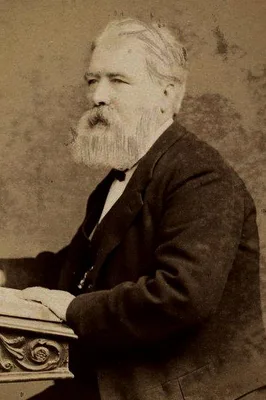
1880 SANZ DE SAUTUOLA, Marcelino [Marcelino DE SAUTUOLA] (1831 – 1888)
Breves apuntes sobre algunos objetos prehistóricos de la provincia de Santander
Privately printed pamphlet asserting the prehistoric origin of cave paintings discovered in the cave of Altamira, Cantabria, Spain by Maria Sanz de Sautuola, daughter of the author. These were first prehistoric cave p…
GMN 7287 · https://historyofmedicine.com/id/9457
1881 LE BARON, Jules Prosper (1855 – 1902)
Lésions osseuses de l'homme préhistorique en France et en Algérie.
Le Baron attempted diagnosis and predicted etiology on thousands of bones collected at the Musée Broca, the Musée Dupuytren, and the Musée d'Histoire Naturelle.. Digital facsimile from BnF Gallica at this link.
GMN 7707 · https://historyofmedicine.com/id/9879
1881 MORTILLET, Louis Laurent Gabriel de (1821 – 1898); MORTILLET, Adrien de (1853 – 1931)
Musée préhistorique
This atlas of 100 plates containing roughly 800 individual images, with accompanying text, was both a comprehensive atlas of then-known prehistoric artifact types and an attempt at their classification. Until 1902 the…
GMN 11334 · https://historyofmedicine.com/id/13532
1882 QUATREFAGES DE BRÉAU, Jean Louis Armand de (1810 – 1892); HAMY, Ernest Théodore Jules (1842 – 1908)
Crania ethnica. Les crânes des races humaines décrits et figurés d 'après les collections du Muséum d'Histoire Naturelle de Paris, de la Société d'Anthropologie de Paris et les principales collections de la France et de l'étranger par A. de Quatrefages et Ernest T. Hamy: Ouvrage accompagné de planches lithographiées d'après nature par H. Formant et illustré de nombreuses figures intercalées. 2 vols.
Digital facsimile from the Bayerische StaatsBibliothek at this link.
GMN 203.2 · https://historyofmedicine.com/id/3584
1890 HILLIER, Alfred Peter (1858 – 1911)
The antiquity of man in South Africa, and evolution.
The first separately published work on human origins published in the continent of Africa. Hillier's text was read on his behalf before the Eastern Province Literary and Scientific Society in Grahamstown, Eastern Cape…
GMN 11449 · https://historyofmedicine.com/id/13648
1894 DUBOIS, Marie Eugène François Thomas (1858 – 1940)
Pithecanthropus erectus. Eine menschenähnliche Uebergangsform aus Java.
Privately issued first report on Homo erectus. In 1891 Dubois discovered remains of what he described as "a species in between humans and apes" at Trinil, Java. He called his finds Pithecanthropus erectus ("ape-human …
GMN 210 · https://historyofmedicine.com/id/3848
1895 RIVIÈRE, Émile (1835 – 1922)
Sur la grotte de la Mouthe (Dordogne).
The first report on the discovery and excavation of La Grotte de la Mouthe. This cave, found in 1894 and excavated by Rivière in 1895, was the fourth paleolithic cave art site discovered, after Altamira, Chabot and Pa…
GMN 11345 · https://historyofmedicine.com/id/13543
1902 CARTAILHAC, Émile (1845 – 1921)
Les cavernes ornées de dessins. La grotte d’Altamira, Espagne. “Mea culpa” d’un sceptique.
Cartailhac’s famous retraction of his opposition to the concept of paleolithic cave wall art, published over 20 years after Sanz de Sautuola’s discovery of the Altamira cave paintings in northern Spain. Cartailhac, on…
GMN 11402 · https://historyofmedicine.com/id/13601
1908 SCHOETENSACK, Otto (1850 – 1912)
Der Unterkiefer des Homo heidelbergensis aus den Sanden von Mauer bei Heidelberg. Ein Beitrag zur Paläontologie des Menschens.
First report on the Mauer jaw discovered by Schoetensack in a sandpit or quarry in the environs of Heidelberg. This was the first fossil specimen unearthed of an extinct hominin species which Schoetensack named Homo h…
GMN 7253 · https://historyofmedicine.com/id/9422
1908 ADLOFF, Paul Max Eugen (1870 – 1944)
Das Gebiss des Menschen und der Anthropomorphen. Vergleichend anatomische Untersuchungen.
GMN 11329 · https://historyofmedicine.com/id/13527
1908 BOUYSSONIE, Jean Marie Paul (1877 – 1955); BOUYSSONIE, Amédée (1867 – 1958); BARDON, Lucien
Découverte d'un squelette humain moustérien à La Chapelle-aux-Saints (Corrèze).
On August 3, 1908 the brothers Amédée and Jean Bouyssonie and Lucien Bardon, three French priests with a keen interest in paleontology, unearthed a Neanderthal skeleton in the limestone bedrock of the Bouffia Bonneval…
GMN 12896 · https://historyofmedicine.com/id/15143

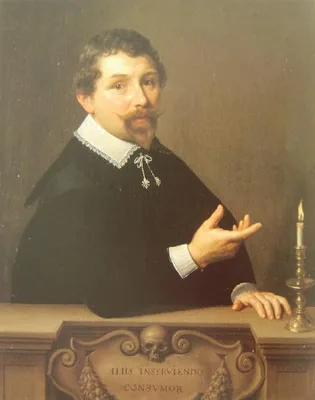
![SANZ DE SAUTUOLA, Marcelino [Marcelino DE SAUTUOLA] (1831 – 1888)](/media/portraits/10315)