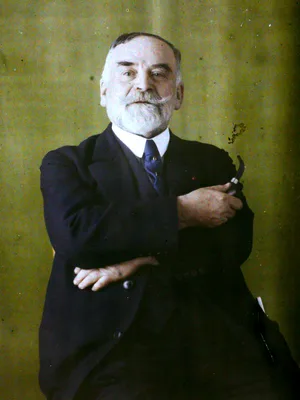
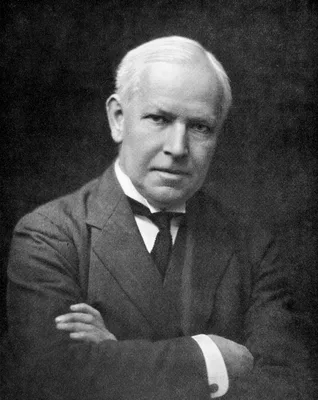
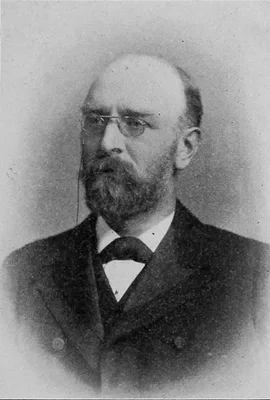
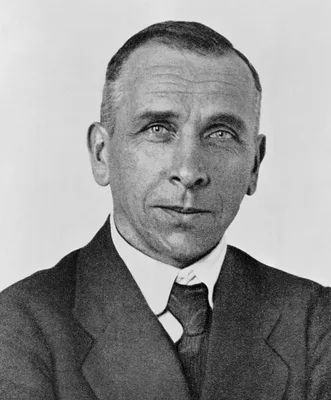
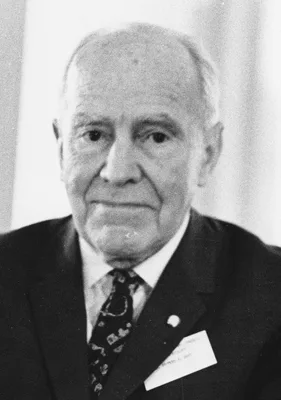
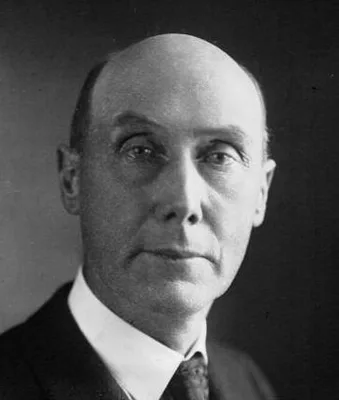
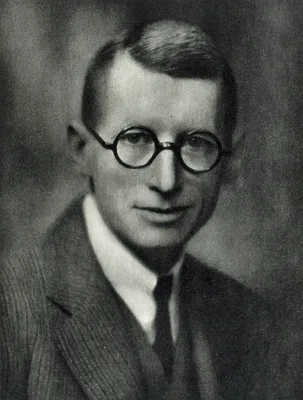
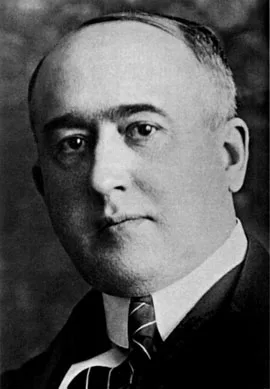
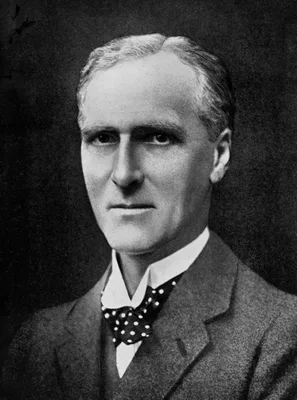
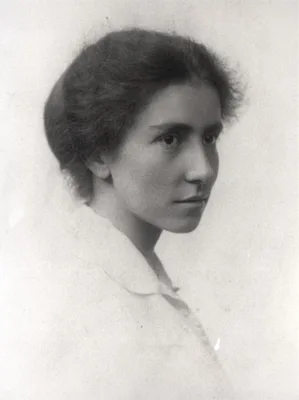
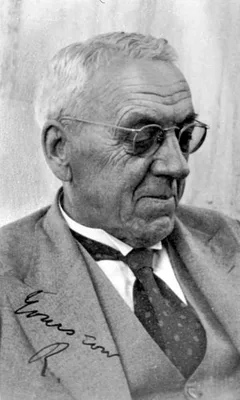
1911 –1913 BOULE, Marcellin (1861 – 1942)
L'homme fossile de La Chapelle-aux-Saints.
Originally published in four parts in Vols. 6-8 (1911-13) of the Annales de paléontologie. The La Chapelle-aux-Saints skeleton (La Chapelle-aux-Saints 1), discovered in 1908, was the most complete single Neanderthal s…
GMN 12897 · https://historyofmedicine.com/id/15144
1912 SCHMIDT, Robert Rudolf (1882 – 1950)
Die diluviale Vorzeit Deutschlands. Archäologischer Teil, von R. R. Schmidt; II. Geologischer Teil, von Ernest Koken, Die Geologie und Tierweld der paläolithischen Kulturstätten Deutschlands; III. Anthropologischer Teil von A. Schliz, Die diluvialen Menschenreste Deutschlands.
This splendidly produced and illustrated large folio volume was the first major book on paleolithic research published in Germany. Schmidt described systematic investigations of the caves in the Swabian Alps, and was …
GMN 11254 · https://historyofmedicine.com/id/13451
1913 SMITH, Sir Grafton Elliot (1871 – 1937); DAWSON, Charles (1864 – 1916); WOODWARD, Arthur Smith (1864 – 1944)
On the discovery of a palaeolithic skull and mandible in a flint-bearing gravel overlying the Wealden (Hastings Beds) at Piltdown, Fletching (Sussex). With appendix by Grafton Elliot Smith.
Order of authorship in the original publication: Dawson, Woodward. The first "scientific" report on “Piltdown man” (Eoanthropus dawsoni,) one of the longest-lasting and most influential hoaxes ever perpetrated in scie…
GMN 211 · https://historyofmedicine.com/id/3866
1921 WOODWARD, Arthur Smith (1864 – 1944)
A new cave man from Rhodesia, South Africa.
The first fossil human discovered in Africa: Homo rhodesiensis, commonly referred to as the Broken Hill Skull or the Kabwe Cranium.The skull, which most current experts classify as Homo heidelbergensis, was discovered…
GMN 7309 · https://historyofmedicine.com/id/9479
1922 SMITH, Sir Grafton Elliot (1871 – 1937)
The Rhodesian skull.
Description of the skull found at Broken Hill, Rhodesia, in 1921.
GMN 212 · https://historyofmedicine.com/id/3875
1922 GREGORY, William King (1897 – 1970)
The origin and evolution of the human dentition.
Reprinted with revisions and new index from J. dent. Res., 1920, 2, 89-175, 215-426, 604-717; 1921, 3, 87-228.
GMN 3691.1 · https://historyofmedicine.com/id/5728
1924 KÖPPEN, Wladimir Peter (1846 – 1940); WEGENER, Alfred Lothar (1880 – 1930)
Die Klimate der geologischen Vorzeit.
Translated as The climates of the geological past. Die Klimate der geologischen Vorzeit. Reproduction of the original German edition and complete English translation. Faksimile-Nachdruck der deutschen Originalausgabe …
GMN 9919 · https://historyofmedicine.com/id/12107
1924 SONNTAG, Charles F. (1887 – 1925)
The morphology and evolution of the apes and man. With a foreward by Professor G. Elliot Smith.
As far as I able to determine in 2024, Sonntag's book was the first attempt to write a general treatise on what eventually came to be called "human evolutionary anatomy," in the sense of studying the relationship betw…
GMN 14287 · https://historyofmedicine.com/id/16610
1925 DART, Raymond Arthur (1893 – 1988)
Australopithecus africanus: The man-ape of South Africa.
First report on Dart's discovery in 1924 of the first member of the genus Australopithecus, the first hominin found in Africa. In their 150th anniversary issue published on November 4, 2019 the editors of Nature inclu…
GMN 211.1 · https://historyofmedicine.com/id/3871
1926 MACCURDY, George Grant (1863 – 1947)
Human origins: A manual of prehistory. 2 vols.
A detailed and extensively illustrated summary, with detailed bibliographical references, of the state of knowledge of prehistory in Europe as of 1926. Appendix 1: "Stratigraphic Study of Paleolithic Sites" is a very …
GMN 7307 · https://historyofmedicine.com/id/9477
1927 BLACK, Davidson (1884 – 1934)
The lower molar hominid tooth from the Chou Kou Tien deposit.
In this report on a single hominid tooth found by Swedish archeologist Birger Bohlin at the Zhoukoudian site in 1927 Black named a new genus and species of hominid, Sinanthropus pekinensis. He characterized the specim…
GMN 7255 · https://historyofmedicine.com/id/9424
1930 MILANKOVIČ, Milutin (Milankovitch) (1879 – 1958)
Mathematische Klimalehre und astronomische Theorie der Klimaschwankungen. Handbuch der Klimatologie, Bd. 1, Teil A.
Milankovitch cycles, first exposition (176 pages). Milankovitch theorized that variations in eccentricity, axial tilt, and precession of the Earth's orbit determined climatic patterns on Earth through orbital forcing,…
GMN 7308 · https://historyofmedicine.com/id/9478
1931 SMITH, Sir Grafton Elliot (1871 – 1937)
Sinanthropus – Peking Man, its discovery and significance.
Elliot Smith visited Peking to view the skull of Sinanthropus pekinensis, discovered by W. C. Pei on December 2, 1929. A preliminary description by Pei is to be found in Bull. geol. Soc. China, 1929, 8, 3.
GMN 213 · https://historyofmedicine.com/id/3877
1936 QUENSTEDT, Werner (1893 – 1960)
Hominidae fossiles. Edited by W. Quenstedt.
Fossilium catalogus, I: Animalia (ed. W. Quenstedt), part 74. “This volume has been prepared under the critical editorship of Dr. Werner Quenstedt, as a work in cooperation with the Cenozoic Research Laboratory of the…
GMN 11502 · https://historyofmedicine.com/id/13701
1937 –1939 KEITH, Sir Arthur (1866 – 1955); GARROD, Dorothy Annie Elizabeth (1892 – 1968); BATE, Dorothea Minola Alice (1878 – 1951); MCCOWN, Theodore Doney (1908 – 1969)
The stone age of Mount Carmel. Volume I: Excavations at the Wady el-Mughara. Volume II: The fossil remains from the Lavalloiso-Mousterian.
Garrod carried out her landmark excavations of the el-Wad, el-Tabun and es-Skhul caves on the hills of Mount Carmel, close to Wadi el-Mugharah (Valley of the Caves) between 1929 and 1934. Her monograph on the subject …
GMN 7259 · https://historyofmedicine.com/id/9428
1938 BROOM, Robert (1866 – 1951)
The Pleistocene anthropoid apes of South Africa.
Paranthropus robustus, discovered by Broom in Kromdraal, South Africa, in 1938. The species is generally dated from about 2 million to 1.2 million years before present.
GMN 7281 · https://historyofmedicine.com/id/9451
1940 –1993 SOCIETY OF VERTEBRATE PALEONTOLOGY
Bibliography of fossil vertebrates: The indexed published literature of vertebrate paleontology, 1509-1993.
http://vertpaleo.org/Publications/Bibliography-of-Fossil-Vertebrates.aspx "The Bibliography of Fossil Vertebrates (BFV) aimed to index the world literature of vertebrate paleontology. Although no compilation can ever …
GMN 10743 · https://historyofmedicine.com/id/12939
1940 BREUIL, Henri Édouard Prosper [Abbé Breuil] (1877 – 1961)
Découverte d'une remarkable grotte ornée, au domaine de Lascaux, Montignac (Dordogne).
Lascaux, which has been called "The Sistine Chapel of the Paleolithic", was discovered on September 12, 1940 by 18-year-old Marcel Ravidat when his dog, Robot, fell into a hole. Ravidar returned to the cave with three…
GMN 11401 · https://historyofmedicine.com/id/13600
1943 WEIDENREICH, Franz (1873 – 1948)
The skull of Sinanthropus pekinensis: A comparative study on a primitive hominid skull.
Digital facsimile from the Internet Archive at this link.
GMN 214 · https://historyofmedicine.com/id/8936
1946 BROOM, Robert (1866 – 1951); SCHEPERS, Gerrit Willem Hendrik (1914 – )
Pretoria: The South African fossil ape-men. The Australopithecinae. Part I. The occurrence and general structure of the South African ape-men.
With this comprehensive report Broom presented his case to the scientific establishment that Australopithecus probably represented the stock from which mankind had evolved.
GMN 214.1 · https://historyofmedicine.com/id/3948
1949 LIBBY, Willard Frank (1908 – 1980)
Age determinations by radiocarbon content: checks with samples of known age.
Introduction of radiocarbon dating for dating organic materials, including fossils (maximum 50,000 to 60,000 years old). With J. R. Arnold.
GMN 7297 · https://historyofmedicine.com/id/9467
1953 WEINER, Joseph Sidney (1915 – 1982)
The Piltdown Forgery.
Fiftieth anniversary edition with a new introduction and afterward by Chris Stringer (Oxford University Press, 2003).
GMN 7264 · https://historyofmedicine.com/id/9434
1953 CLARK, Sir Wilfrid Edward Le Gros (1895 – 1971); OAKLEY, Kenneth Page (1911 – 1981); WEINER, Joseph Sidney (1915 – 1982)
The solution of the Piltdown problem.
Exposure of the Piltdown fraud. Weiner, Oakley and Le Gros Clark found ample evidence of forgery in the Piltdown remains, including the use of artificial abrasion and staining; they also applied fluorine and nitrogen …
GMN 7301 · https://historyofmedicine.com/id/9471
1959 LEAKEY, Louis Seymour Bazett (1903 – 1972)
A new fossil from Olduvai.
In 1959 Mary Leakey discovered the "Zinj" skull (OH 5) at Olduvai Gorge. This became the type specimen for Paranthropus boisei, arguably the most famous early human fossil from Olduvai in Northern Tanzania. The specie…
GMN 7288 · https://historyofmedicine.com/id/9458
1961 LEAKEY, Louis Seymour Bazett (1903 – 1972); ET AL
Age of Bed I, Olduvai Gorge, Tanganyika.
Introduction of the potassium-argon dating method to paleoanthropology, showing that lava at the base of the site of Olduvai Gorge was about 1.8 million years old, and proving that fossils, Australopithecus (Zinjanthr…
GMN 214.2 · https://historyofmedicine.com/id/8937
1964 OAKLEY, Kenneth Page (1911 – 1981)
The problem of man's antiquity. An historical survey.
GMN 7263 · https://historyofmedicine.com/id/9433
1964 LEAKEY, Louis Seymour Bazett (1903 – 1972); TOBIAS, Phillip Valentine (1925 – 2012); NAPIER, John Russell (1917 – 1987)
A new species of the genus Homo from Olduvai Gorge.
First report on Homo habilis.
GMN 7270 · https://historyofmedicine.com/id/9440
1966 MERRIHUE, Craig Morris (1933 – 1965); TURNER, Grenville (1936 – )
Potassium-Argon dating by activation with fast neutrons.
Argon 40-argon 39 dating (Argon-argon dating). Astrophysicist Merrihue died in a mount-climbing accident at the age of 32.
GMN 7299 · https://historyofmedicine.com/id/9469
1966 SAHLY, Ali
Les main mutilées dans l'art prehistorique.
A comprehensive study by a physician of the numerous tracings and impressions of mutilated hands that appear in prehistoric painted caves or parietal art.
GMN 11090 · https://historyofmedicine.com/id/13286
1968 COPPENS, Yves (1934 – ); ARAMBOURG, Camille (1885 – 1969)
Sur la decouverte dans le Pleistocene inferieur de la valle de l'Omo (Ethiopie) d'une mandibule d'Australopithecien.
In 1967 Arambourg and Coppens discovered Omo 18, the first specimen of Paranthropus aethiopicus, also known as Paraustralopithecus aethiopicus; however it's classification as a new species was initially dismissed. In …
GMN 7282 · https://historyofmedicine.com/id/9452
1975 IKEYA, Motoji (1940 – 2006)
Dating a stalactite by electron paramagnetic resonance.
Ikeya introduced electron spin resonance dating; the first application dated a speleothem in Akiyoshi Cave, Japan. See R. Grün and C. B. Stringer, "Electron spin resonance dating and the evolution of modern humans," A…
GMN 7302 · https://historyofmedicine.com/id/9472
1976 JOHANSON, Donald Carl (1943 – ); TAIEB, Maurice (1935 – )
Plio-Pleistocene hominid discoveries in Hadar, Ethiopia.
Report on the Afar fossils (formally classified and named Australopithiecus afaranesis in 1998) representing a minimum of 35 and a maximum of 65 individuals, all about 3,000,000 years old. The most famous of these, AL…
GMN 214.3 · https://historyofmedicine.com/id/8938
1978 JOHANSON, Donald Carl (1943 – ); WHITE, Timothy Douglas (1950 – ); COPPENS, Yves (1934 – )
A new species of the genus Australopithecus (Primates: Hominidae) from the Pliocene of Eastern Africa.
Johanson and colleagues formally named the species Afarensis of the genus Australopithecus in 1978.
GMN 7277 · https://historyofmedicine.com/id/9447
1980 YUNIS, Jorge Jose (1933 – ); SAWYER, Jeffrey R.; DUNHAM, Kelly
The striking resemblance of high-resolution G-banded chromosomes of man and chimpanzee.
Chimpanzees are the closest primates genetically to humans. In this paper the authors demonstrated the genetic changes that differentiated humans from chimpanzees. By comparing human and chimpanzee chromosomes the aut…
GMN 14108 · https://historyofmedicine.com/id/16419
1983 GRAYSON, Donald K.
The establishment of human antiquity.
The most complete historical treatment of the pre-1900 literature.
GMN 214.91 · https://historyofmedicine.com/id/3963
1984 SPENCER, Frank (1941 – 1999); SMITH, Fred H.
The origins of modern humans: A world survey of the fossil evidence.
An historical and analytical review of the literature up to 1984, with detailed bibliographies, by several outstanding authorities, edited by Smith and Spencer. Includes, pp. 411-483, Milford H. Wolpott, Wu Xin Zhi, a…
GMN 7272 · https://historyofmedicine.com/id/9442
1985 TOBIAS, Phillip Valentine (1925 – 2012)
History of physical anthropology in Southern Africa.
GMN 7273 · https://historyofmedicine.com/id/9443
1985 BROWN, Frank Harold (1943 – 2017); HARRIS, John W. K.; LEAKEY, Richard Erskine Frere (1944 – )
Early Homo erectus skeleton from west Lake Turkana, Kenya.
The Turkana Boy, (KNM-WT 15000) now called Nariokotome Boy, a Homo erectus fossil which was in 2016 the most complete early human skeleton found. It is a nearly complete skeleton of a hominin youth believed to be 1.5 …
GMN 7284 · https://historyofmedicine.com/id/9454
1986 SPENCER, Frank (1941 – 1999)
Ecce Homo: An annotated bibliographic history of physical anthropology.
GMN 6979 · https://historyofmedicine.com/id/9145
1986 ALEKSEYEV, Valery Pavlovich (ALEXEEV) (1929 – 1991)
The origin of the human race.
First publication in English by Alekseyev of Homo rudolfensis, primarily known from KNM-ER 1470, discovered in Koobi Fora in the Lake Turkana basin, Kenya. Alekseyev (Alexeev) first proposed the species in 1978, initi…
GMN 7283 · https://historyofmedicine.com/id/9453
1987 CANN, Rebecca Louise (1951 – )
Mitochondrial DNA and human evolution.
Cann's discovery that all living humans are genetically descended from a single African mother, known as Mitochrondrial Eve, who lived
GMN 7256 · https://historyofmedicine.com/id/9425
1994 GROENEN, Marc
Pour une histoire de la préhistoire. Le paléolithique.
GMN 6980 · https://historyofmedicine.com/id/9146
1994 WHITE, Timothy Douglas (1950 – ); SUWA, Gen (1954 – ); ASFAW, Berhane (1954 – )
Australopithecus ramidus, a new species of early hominid from Aramis, Ethiopia.
Between 1992 and 1994 White and his team discovered the first Ardipithecus ramidus fossils in the Middle Awash area of Ethiopia. They named their discovery Ardipithecus ramidus (‘ramid’ means ‘root’ in the Afar langua…
GMN 7276 · https://historyofmedicine.com/id/9446
1994 CAVALLI-SFORZA, Luigi Luca (1922 – ); MENOZZI, Paolo; PIAZZA, Alberto (1941 – )
The history and geography of human genes.
The first full-scale attempt to reconstruct where human populations originated and the paths by which they spread throughout the world, using genetic data integrated with data from geography, ecology, archaeology, phy…
GMN 8538 · https://historyofmedicine.com/id/10715
1995 LEAKEY, Meave G. (1942 – ); FEIBEL, Craig S.
New four-million-year-old hominid species from Kanapoi and Allia Bay, Kenya.
In 1965, a research team led by Bryan Patterson from Harvard University discovered a single arm bone (KNM-KP 271) of an early human at Kanapoi in northern Kenya, but without additional fossils Patterson could not conf…
GMN 7278 · https://historyofmedicine.com/id/9448
1995 ROEBROEKS, Wil (1955 – ); KOLFSCHOTEN, Matthijs van (1952 – )
The earliest occupation of Europe. Proceedings of the European Science Foundation workshop at Tautavel (France) 1993.
The first effort to present summaries of the evidence for earliest occupation in all the regions of Europe including Russia, edited by Roebroeks and van Kolfschoten.
GMN 7525 · https://historyofmedicine.com/id/9697
1995 DELLUC, Brigitte (1936 – ); DELLUC, Gilles (1934 – )
La nutrition préhistorique.
GMN 9929 · https://historyofmedicine.com/id/12117
1997 SPENCER, Frank (1941 – 1999)
History of physical anthropology: An encyclopedia edited by Frank Spencer. 2 vols.
GMN 6978 · https://historyofmedicine.com/id/9144
1997 CARBONELL, Eudald (1953 – ); ARSUAGA, Juan Luis (1954 – ); BERMÚDEZ DE CASTRO Y RISUEÑO, José María (1952 – ); ET AL
A hominid from the Lower Pleistocene of Atapuerca, Spain: possible ancestor to Neandertals and modern humans.
Homo antecessor, an extinct human species (or subspecies) dating from 1.2 million to 800,000 years ago, discovered in the Sierra de Atapuerca region of Northern Spain. With A. Rosas, I Martinez and M. Mosquera.
GMN 7285 · https://historyofmedicine.com/id/9455
1998 MOSER, Stephanie
Ancestral images: The iconography of human origins.
GMN 7269 · https://historyofmedicine.com/id/9439