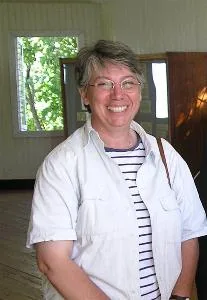
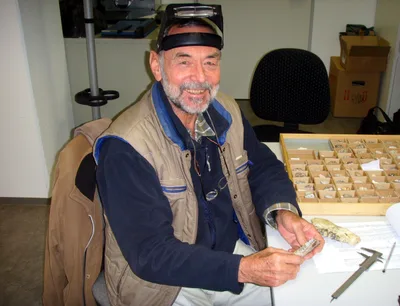
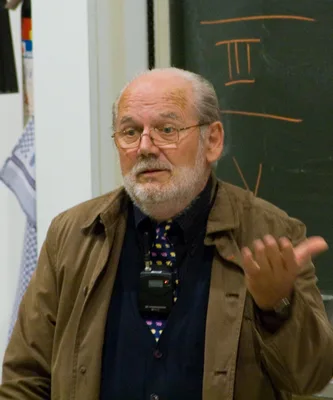
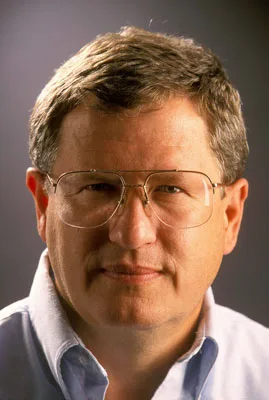
2001 SENUT, Brigitte (1954 – ); PICKFORD, Martin (1943 – )
'Millennium Ancestor', a 6-million-year-old bipedal hominid from Kenya - Recent discoveries push back human origins by 1.5 million years.
Living around 6 million years ago, in the Tugen hills region of central Kenya, this species, named Orrorin tugenensis, had small teeth with thick enamel similar to modern humans. It climbed trees, but also probably wa…
GMN 7275 · https://historyofmedicine.com/id/9445
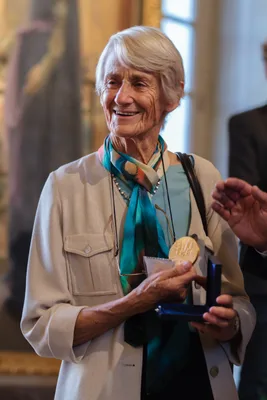
2001 LEAKEY, Meave G. (1942 – )
New hominin genus from eastern Africa shows diverse middle Pliocene lineages.
In 1998 and 1999, working in the Lake Turkana region of northern Kenya, Meave Leakey and her team found a cranium and other fossil remains of a 3.5 million year old hominin with a mixture of features unseen in other e…
GMN 7279 · https://historyofmedicine.com/id/9449
2002 HARTWIG, Walter Carl (1964 – )
The primate fossil record.
A comprehensive collaborative study edited by Hartwig. Includes an extensive historical bibliography.
GMN 7271 · https://historyofmedicine.com/id/9441
2002 BRUNET, Michel (1940 – )
A new hominid from the Upper Miocene of Chad, central Africa.
The first paper on Sahelanthropus tchadensis, dating from between 7 and 6 million years ago in West Central Africa (northern Chad). This species had a combination of ape-like and human-like features. Ape-like elements…
GMN 7274 · https://historyofmedicine.com/id/9444
2002 –2005 SCHWARTZ, Jeffrey Hugh (1948 – ); TATTERSALL, Ian (1945 – ); HOLLOWAY, Ralph Leslie Jr. (1935 – ); BROADFIELD, Douglas C.; YUAN, Michael S.
The human fossil record. 4 vols.
Vol. 1: Terminology and Craniodental Morphology of Genus Homo (Europe). Vol. 2: Craniodental morphology of Genus Homo (Africa and Asia). Vol. 3: Brain endocasts—the paleoneurological evidence. Vol. 4: Crandiodental mo…
GMN 11243 · https://historyofmedicine.com/id/13440
2002 AIELLO, Leslie Crum (1946 – ); DEAN, M. Christopher
An introduction to human evolutionary anatomy.
GMN 14288 · https://historyofmedicine.com/id/16611
2003 SPOOR, Fred; HUBLIN, Jean-Jacques (1953 – ); ZONNEFELD, Frans W.
The bony labyrinth of Neanderthals.
Computed tomography of the inner ear of 20 Neanderthal specimens directed by Spoor showed that the Neanderthal semicircular canal is subtly distinct in size, shape, and orientation from that of modern humans. With Mar…
GMN 7261 · https://historyofmedicine.com/id/9430
2004 BROWN, Peter; MORWOOD, Michael John (1950 – 2013)
A new small-bodied hominin from the Late Pleistocene of Flores, Indonesia.
In 2003 a joint Indonesian-Australian research team led by Michael Morwood found LB-1—a nearly complete female skeleton of a tiny human that lived about 80,000 years ago—in Liang Bua cave on the island of Flores, Indo…
GMN 7286 · https://historyofmedicine.com/id/9456
2007 O'CONNOR, Anne
Finding time for the old stone age: A History of palaeolithic archaeology and quaternary geology in Britain, 1860-1960.
GMN 7295 · https://historyofmedicine.com/id/9465
2007 AUFRÈRE, Léon (1889 – 1977)
Le cercle d'Abbeville: Paléontologie et préhistoire dans la France romantique. Edition établie par Marie-Françoise Aufrère.
In May 1940 the Boucher de Perthes Museum in Abbeville was destroyed by bombing. However, in the years before the war Leon Aufrère made copies of archives and correspondence, which became the source material for this …
GMN 7296 · https://historyofmedicine.com/id/9466
2008 RUDWICK, Martin John Spencer (1932 – )
Worlds before Adam: The reconstruction of geohistory in the age of reform.
GMN 7298 · https://historyofmedicine.com/id/9468
2009 WHITE, Timothy Douglas (1950 – ); ASFAW, Berhane (1954 – ); HAILE-SELASSIE, Yohannes (1961 – ); BEYENE, Yonas; ET AL
Ardipithecus ramidus and the paleobiology of early hominids.
The authors provide evidence that Ardipithecus may be the beginning of the evolutionary pathway that eventually led to hominids. This pathway was distinct from the evolutionary pathway that led to extant African apes.…
GMN 14083 · https://historyofmedicine.com/id/16394
2010 BERGER, Lee Rogers (1960 – )
Australopithecus sediba: A New Species of Homo-Like Australopith from South Africa.
Matthew Berger, the young son of Lee Berger, discovered the first specimen of Australopithecus sediba, the right clavicle of MH1, on the 15th of August in 2008. This species of Australopithecus dates to about 2 millio…
GMN 7280 · https://historyofmedicine.com/id/9450
2010 PÄÄBO, Svante (1955 – ); KRAUSE, Johannes (1980 – )
The complete mitochondrial DNA genome of an unknown hominin from southern Siberia.
Svante Pääbo and collaborators reconstructed the genome of the Denisova hominins and announced that they were a new species, that they interbred with our species, and that the DNA results suggest that they had dark ha…
GMN 7290 · https://historyofmedicine.com/id/9460
2011 READER, John
Missing links: In search of human origins.
An entertaining and superbly illustrated, but carefully documented account of the major fossil finds from Neanderthal to Ardipithecus ramidus.
GMN 214.9 · https://historyofmedicine.com/id/3957
2012 MCNABB, John
Dissent with modification. Human origins, palaeolithic archaeology and evolutionary anthropology in Britain 1859-1901
GMN 7267 · https://historyofmedicine.com/id/9437
2012 DIOGO, Rui; WOOD, Bernard A. (1945 – )
Comparative anatomy and phylogeny of primate muscles and human evolution.
1027pp. The most comprehensive review of the comparative anatomy, homologies and evolution of the head, neck, pectoral and upper limb muscles of primates. The format is unusual with the text occupying the first 134pp.…
GMN 10865 · https://historyofmedicine.com/id/13061
2014 PÄÄBO, Svante (1955 – )
The complete genome sequence of a Neanderthal from the Altai Mountains.
First complete sequence of a Neanderthal genome. With more than 20 co-authors. In 2022 Pääbo was awarded the Nobel Prize in Physiology or Medicine "for his discoveries concerning the genomes of extinct hominins and hu…
GMN 7289 · https://historyofmedicine.com/id/9459
2014 OWSLEY, Douglas W. (1951 – ); JANTZ, Richard L.
Kennewick man: The scientific investigation of an ancient American skeleton. Edited by Douglas W. Owsley and Richard L. Jantz.
" This volume resents the results of the most comprehensive scientific study of one of the most complete ancient human skeletons ever found in North America" (from the introduction). "Kennewick Man is the name general…
GMN 10087 · https://historyofmedicine.com/id/12276
2014 CECCHI, Jacopo Moggi; STANYON, Roscoe
Il Museo di storia naturale dell'Università degli studi di Firenze. Vol. 5, Le collezioni antropologiche ed etnologiche.
GMN 13210 · https://historyofmedicine.com/id/15473
2015 MELTZER, David J. (1955 – )
The great paleolithic war: How science forged an understanding of America's ice age past.
A masterful synthesis of the history of the study of human origins in North America with a comprehensive bibliography.
GMN 9829 · https://historyofmedicine.com/id/12017
2018 REICH, David (1973 – )
Who we are and how we got here: Ancient DNA and the new science of the human past.
GMN 10145 · https://historyofmedicine.com/id/12334
2020 HERRIES, Andy I. R.; MARTIN, Jesse M.; LEECE, A. B.; MENTER, Colin G.; ET AL
Contemporaneity of Australopithecus, Paranthropus,and early Homo erectus in South Africa.
Order of authorship in the original publication: Herries, Martin, Leece....Menter. Summary: "Understanding the extinction of Australopithecus and origins of Paranthropus and Homo in South Africa has been hampered by t…
GMN 12105 · https://historyofmedicine.com/id/14314
2020 MONCEL, Marie-Hélène (1959 – ); HARDY, Bruce L.; ET AL
Direct evidence of Neanderthal fibre technology and its cognitive and behavioral implications.
"Abstract "Neanderthals are often considered as less technologically advanced than modern humans. However, we typically only find faunal remains or stone tools at Paleolithic sites. Perishable materials, comprising th…
GMN 12181 · https://historyofmedicine.com/id/14391