1478 GUY DE CHAULIAC, (Guido de Cauliaco) (1298 – 1368); PANIS, Nicolaus
Chirurgia [French]. Translated by Nicolaus Panis.
Guy de Chauliac studied medicine and surgery in Montpellier and Paris, and served as the personal physician to Popes Clement VI, Innocent VI and Urban V. His Chirurgia magna, written in the early 1360s, remained a sta…
GMN 3666.83 · https://historyofmedicine.com/id/5376
1493 RHAZES [MUHAMMAD IBN ZAKARIYĀ AL-RĀZĪ (PERSIAN: محمد زکریای رازی ] (854 – 925); ARCOLANI, Giovanni [Arculanus] (1390 – 1460); SURIANUS, Hieronymus (Girolamo Suriano) ( – 1522); SANSEVERINUS, Elyanorus
Practica. IN: Liber nonus ad Almansorem (cum expositione Joannis Arculani). Ed: Hieronymus Surianus and Elyanorus Sanseverinus.
Arcolani's Practica, published in this edition of Rhazes with Arcolani's commentary, includes the first documentation for the use of gold for filling diseased teeth. There are also several chapters on diseases of the …
GMN 3666.84 · https://historyofmedicine.com/id/5385
1563 –1564 EUSTACHI, Bartolomeo [EUSTACHIUS] (1510 – 1574)
Opuscula anatomica.
Eustachius is credited with several anatomical discoveries, among them the tensor tympani muscle and the Eustachian tube, published in his chapter entitled De auditus organis. In the last respect, however, he was anti…
GMN 1093 · https://historyofmedicine.com/id/159
1689 GAGLIARDI, Domenico (1660 – 1745)
Anatome ossium novis inventis illustrata.
Gagliardi, a papal physician, fiirst described the lamellar structure of the bones. He also carried out some tests and comparative research between human and calf bones, and probably first described a case of bone tub…
GMN 12782 · https://historyofmedicine.com/id/15028
1714 EUSTACHI, Bartolomeo [EUSTACHIUS] (1510 – 1574)
Tabulae anatomicae.
A romantic history attaches to this fine collection of plates, drawn by Eustachius himself and completed in 1552. They remained unprinted and forgotten in the Vatican Library until discovered in the early 18th century…
GMN 1312 · https://historyofmedicine.com/id/631
1754 LÉCLUSE DU THILLOY, Louis (1711 – 1792)
Nouveaux élémens d’odontologie, contenant l’anatomie de la bouche ou la description de toutes les parties qui la composent et de leur usage; et la pratique abrégée du dentiste.
Lecluse treated in a succinct but correct manner the anatomy of the mouth; invented some and perfected other instruments, the most important of which is the elevator that still bears his name, and . . . he frequently …
GMN 12848 · https://historyofmedicine.com/id/15095
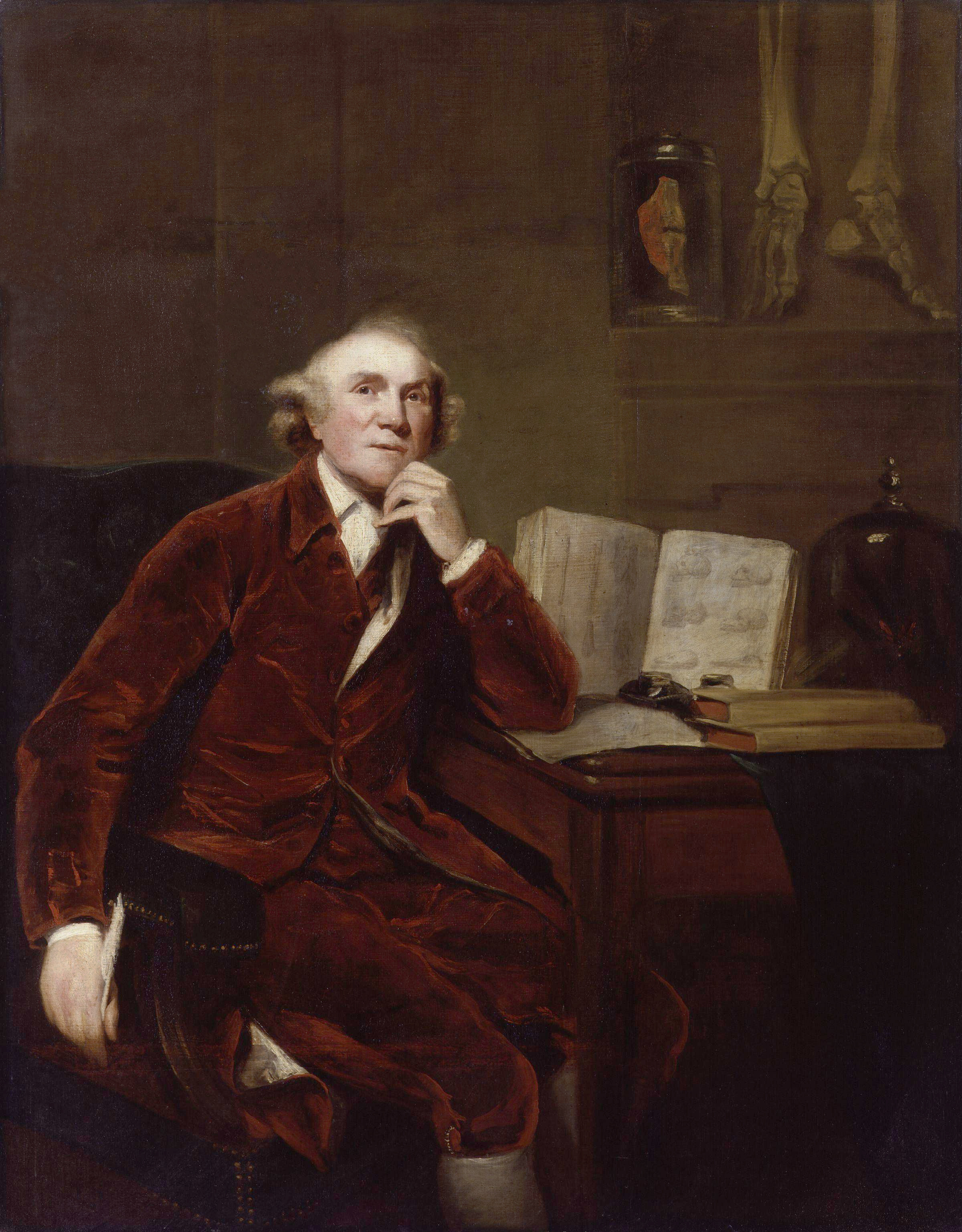
1771 HUNTER, John (1728 – 1793)
The natural history of the human teeth.
This is a detailed study of the mouth, jaws and teeth with exceptionally accurate plates. Hunter correctly understood the growth and development of the jaws and their relation to the muscles of mastication. He coined …
GMN 3675 · https://historyofmedicine.com/id/5499
1817 SERRES, Antoine Étienne Renaud Augustin (1786 – 1868)
Essai sur l'anatomie et la physiologie des dents, ou nouvelle théorie de la dentition.
In this work Serres described the glands of Serres, epithelial remnants of the dental lamina. These have the capicity to form small cysts (Bohn's nodules). Serres believed that gingival crevicular fluid was secreted f…
GMN 12858 · https://historyofmedicine.com/id/15105
1839 NASMYTH, Alexander (1789 – 1848)
On the structure, physiology, and pathology of the persistent capsular investments and pulp of the tooth.
“Nasmyth’s membrane”, or persistent dental capsule.
GMN 3681 · https://historyofmedicine.com/id/5630
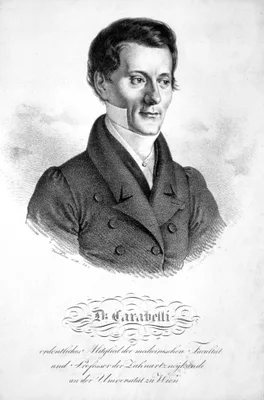
1842 –1844 CARABELLI, Georg Edler von Lunkaszprie (1787 – 1842)
Systematisches Handbuch der Zahnheilkunde. Bd. 2: Anatomie des Mundes.
Original description (p. 107) of “Carabelli’s cusp”, tuberculus anomalus, sometimes found on the lingual surface of the upper permanent molars. It was first illustrated on Tab. XI, Fig. 4e, and Tab. XIV, Fig. 4, of Ku…
GMN 3682 · https://historyofmedicine.com/id/5654
1844 GODDARD, Paul Beck (1811 – 1866); PARKER, Joseph E.
The anatomy, physiology and pathology of the human teeth; with the most approved methods of treatment; including operations, and the method of making and setting artificial teeth. With thirty plates
Probably the first comprehensive and comprehensively illustrated general treatise on dentistry published in the United States. It is prefaced with a rather comprehensive historical summary. Digital facsimile from Goog…
GMN 12895 · https://historyofmedicine.com/id/15142
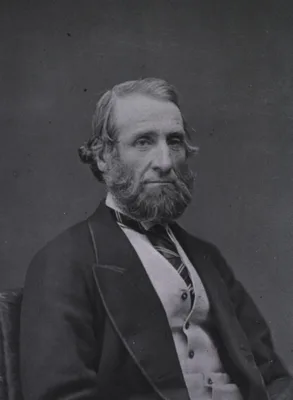
1848 TOMES, Sir John (1815 – 1895)
A course of lectures on dental physiology and surgery.
Tomes invented a set of anatomically correct forceps for tooth extraction, thereby elevating this device, which had been previously neglected, to dentistry’s most important extraction instrument. This book was revised…
GMN 3683 · https://historyofmedicine.com/id/5658
1856 TOMES, Sir John (1815 – 1895)
On the presence of fibrils of soft tissue in the dentinal tubes.
Tomes described and drew the protoplasmic processes from the odontoblasts, which are known as “Tomes’s fibrils”. These had been previously seen by Johannes Müller and others.
GMN 3683.1 · https://historyofmedicine.com/id/5663
1857 MAGITOT, Émile (1833 – 1897)
Étude sur le développement des dents humaines. Thèse pour le doctorat en médecine.
GMN 12921 · https://historyofmedicine.com/id/15168
1894 WALKHOFF, Friedrich Otto (1860 – 1934)
Microphotographischer Atlas der normalen Histologie menschliecher Zähne.
Walkhoff was one of the first to employ microphotography to illustrate dental histology.
GMN 12986 · https://historyofmedicine.com/id/15234
1908 ADLOFF, Paul Max Eugen (1870 – 1944)
Das Gebiss des Menschen und der Anthropomorphen. Vergleichend anatomische Untersuchungen.
GMN 11329 · https://historyofmedicine.com/id/13527
1919 MUMMERY, John Howard (1847 – 1926)
The microscopic anatomy of the teeth.
Digital facsimile of the 1919 edition from Biodiversity Heritage Library at this link. Mummery substantially expanded and retitled the second edition of this work as The microscopic & general anatomy of the teeth huma…
GMN 12507 · https://historyofmedicine.com/id/14741
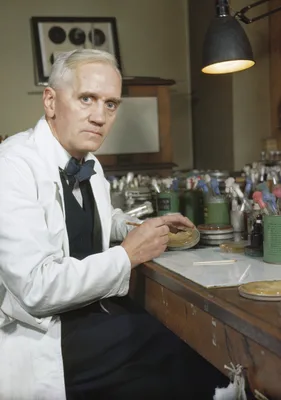
1922 FLEMING, Sir Alexander (1881 – 1955)
On a remarkable bacteriolytic element found in secretions and tissues.
Lysozyme, an antimicrobial enzyme that is a component of secretions such as tears and saliva. Digital facsimile from royalsocietypublishing.org at this link
GMN 1910.1 · https://historyofmedicine.com/id/2667
1922 GREGORY, William King (1897 – 1970)
The origin and evolution of the human dentition.
Reprinted with revisions and new index from J. dent. Res., 1920, 2, 89-175, 215-426, 604-717; 1921, 3, 87-228.
GMN 3691.1 · https://historyofmedicine.com/id/5728
1925 ZÜRCHER, Ernst; HESS, Walter (1885 – 1980)
The anatomy of the root-canals of the teeth of the permanent dentition. By Walter Hess. [with] The anatomy of the root-canals of the teeth of the deciduous dentition and of the first permanent molars
GMN 12935 · https://historyofmedicine.com/id/15182