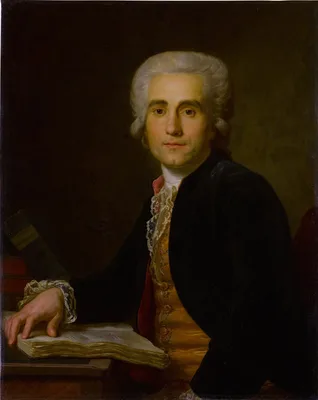
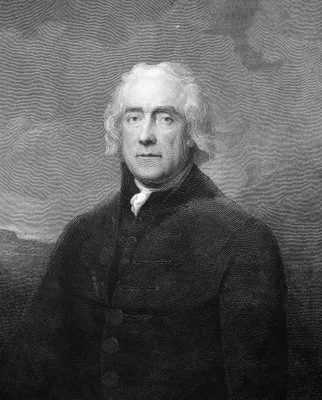
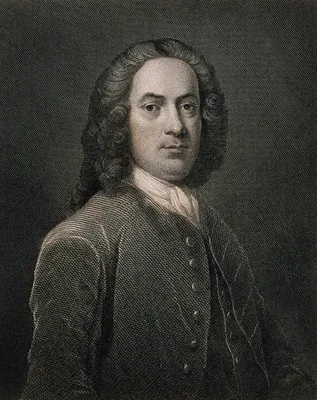
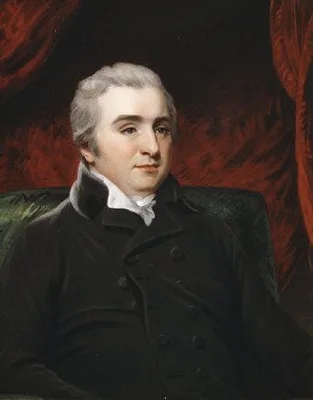
1772 LEAKE, John (1729 – 1792)
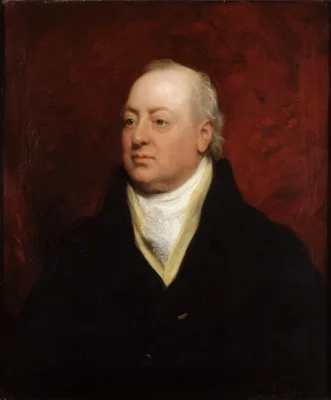
Practical observations on the child-bed fever.
Leake insisted on the contagious nature of puerperal fever. Reprinted, London, Sydenham Society, 1949.
GMN 6269 · https://historyofmedicine.com/id/7978
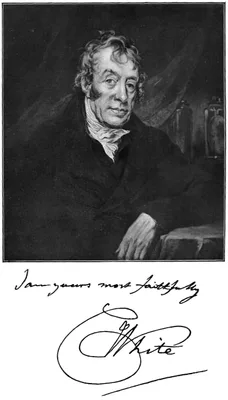
1773 WHITE, Charles (1728 – 1813)
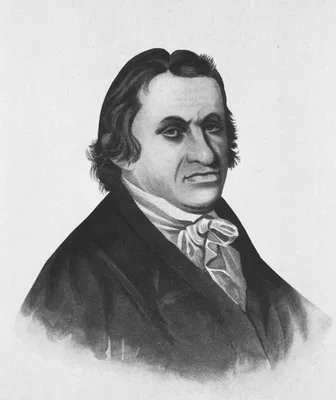
A treatise on the management of pregnant and lying-in women, and the means of curing, but more especially of preventing the principal disorders to which they are liable. Together with some new directions concerning the delivery of the child and placenta in natural births. illustrated with cases.
White was the first to state clearly in a text on midwifery the necessity of absolute cleanliness in the lying-in chamber, the isolation of infected patients, and adequate ventilation. He instituted the principle of u…
GMN 6270 · https://historyofmedicine.com/id/7980
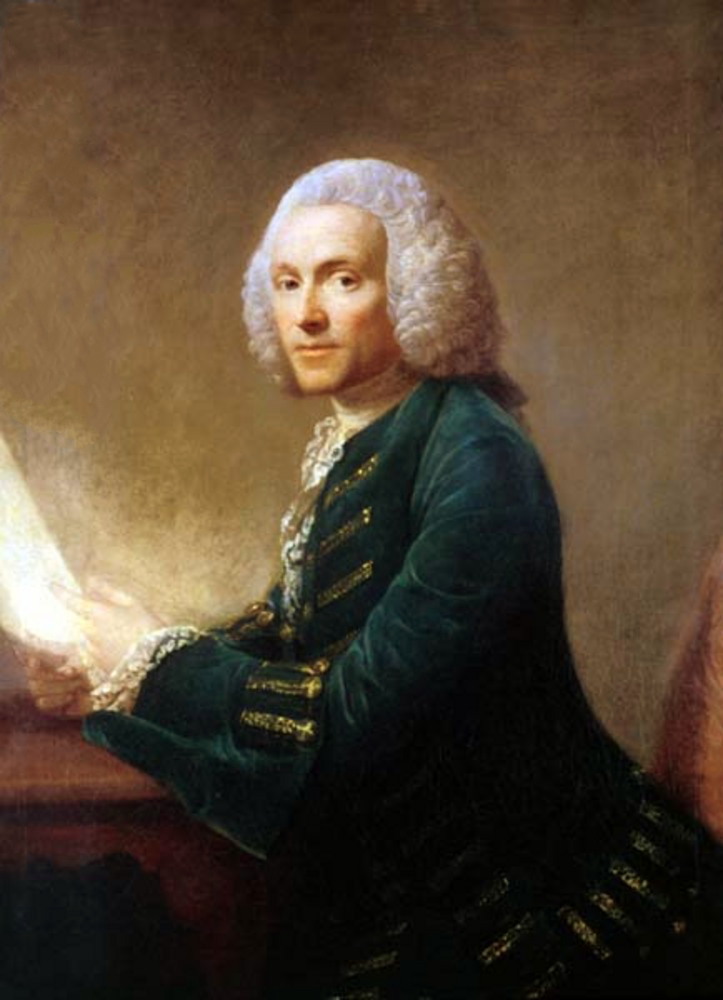
1774 HUNTER, William (1718 – 1783)
Anatomia uteri humani gravidi tabulis illustrata. The anatomy of the human gravid uterus exhibited in figures.
Hunter originally trained as Smellie’s assistant. Once he achieved brilliant professional and financial success he became a great collector of rare books and manuscripts, coins, paintings, minerals, shells, and antiqu…
GMN 6157 · https://historyofmedicine.com/id/7736
1775 RIGBY, Edward (1747 – 1821)
An essay on the uterine haemorrhage, which precedes the delivery of the full grown foetus: illustrated with cases.
Rigby differentiated between premature separation of the normal placenta (accidental hemorrhage) and placenta praevia (unavoidable hemorrhage).
GMN 6158 · https://historyofmedicine.com/id/7740
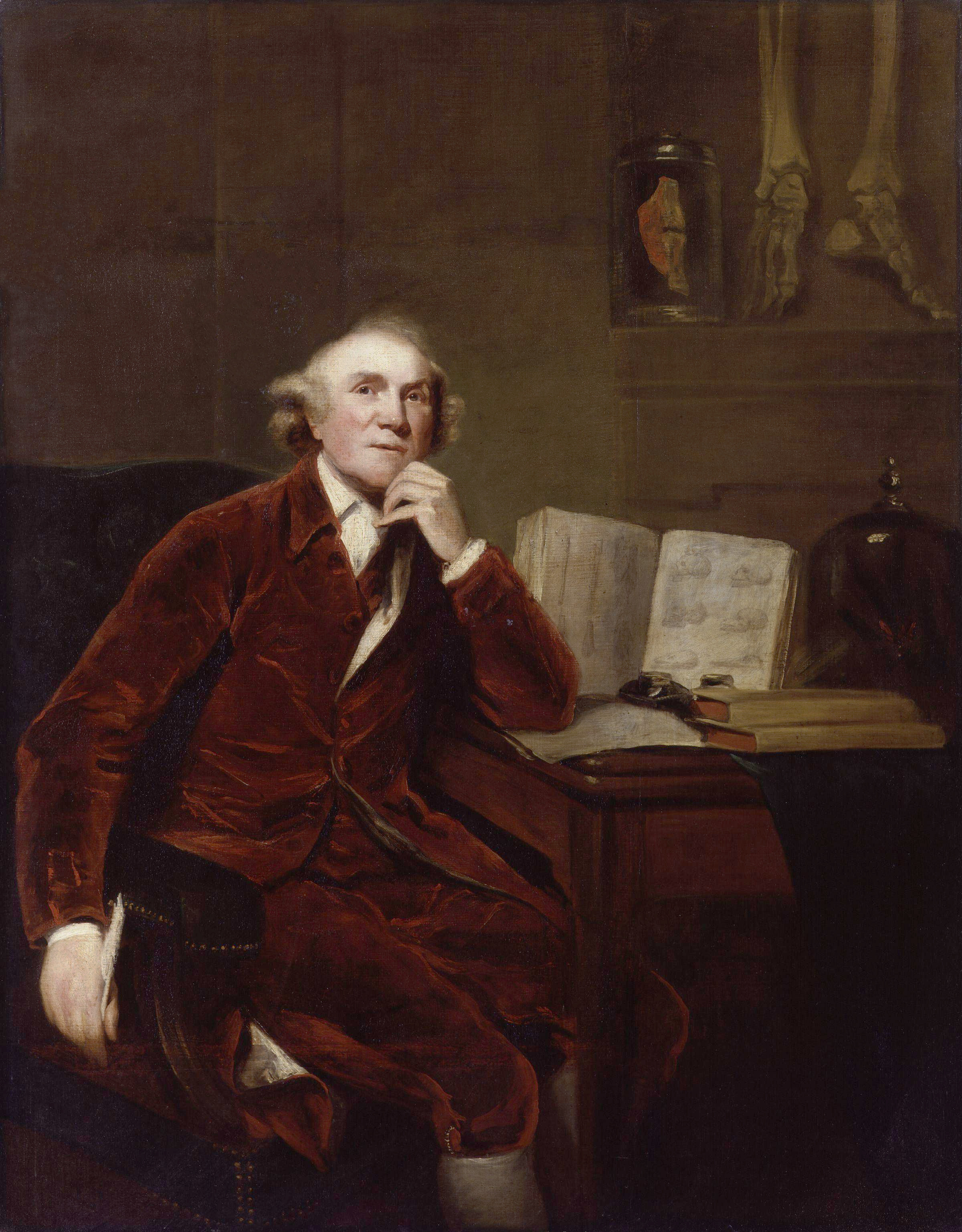
1780 HUNTER, John (1728 – 1793)
Account of a woman who had the smallpox during pregnancy, and who seemed to have communicated the same disease to the foetus.
GMN 5421 · https://historyofmedicine.com/id/7344
1781 BAUDELOCQUE, Jean-Louis (1746 – 1810)
L’art des accouchemens. 2 vols.
Baudelocque invented a pelvimeter and advanced the knowledge of pelvimetry and of the mechanism of labor. The external conjugate diameter is known as “Baudelocque’s diameter”. English translation, London, 1790.
GMN 6255 · https://historyofmedicine.com/id/7950
1783 DENMAN, Thomas (1733 – 1815)
Aphorisms in the application and use of the forceps and vectis, on preternatural labours, on labours attended with hemorrhage and with convulsions.
Denman "was the first physician whose authority made the practice general in England of inducing premature labour in cases of narrow pelvis and other conditions, in which the mother's life is imperilled by the attempt…
GMN 12164 · https://historyofmedicine.com/id/14374
1784 WHITE, Charles (1728 – 1813)
An inquiry into the nature and cause of that swelling, in one or both of the lower extremeties, which sometimes happens to lying-in-women.
First clinical description of phlegmasia alba dolens. White ascribed it to destruction of the lymphatics due to pressure of the foetal head.
GMN 6271 · https://historyofmedicine.com/id/7982
1786 SMELLIE, William (1697 – 1763); NORMAN, John (1748 – 1817)
The first American edition, An abridgement of the practice of midwifery: and a set of anatomical tables.
An abridgement of Smellie's obstetrical writings, with plates engraved by the editor and publisher, John Norman, was the first medical book with engraved illustrations published in North America, and also the first bo…
GMN 11534 · https://historyofmedicine.com/id/13733
1787 DENMAN, Thomas (1733 – 1815)
A collection of engravings, tending to illustrate the generation and parturition of animals, and of the human species.
An idiosyncratic collection of rarely reproduced images with explanatory commentaries in English and French, concerning reproduction and obstetric complications in animals and humans. Topics include: The Funis of a nu…
GMN 12163 · https://historyofmedicine.com/id/14373
1791 –1806 BÖER, Lucas Johann [BOOGERS] (1751 – 1835)
Abhandlungen und Versuche geburtshilflichen Inhalts. 2 vols.
Böer, a pioneer of “natural childbirth”, was the founder of the Viennese school of obstetrics.
GMN 6160 · https://historyofmedicine.com/id/7743
1791 MOHRENHEIM, Joseph Jacob von (1759 – 1797)
Abhandlung über die Entbindungskunst.
This work was edited by order of Catherine II of Russia, to whom von Mohrenheim was accoucheur. Its importance lies mainly in its splendid engravings, some of which were taken from Smellie (see No. 6154.1). It include…
GMN 6161 · https://historyofmedicine.com/id/7744
1794 BAILLIE, Matthew (1761 – 1823); HUNTER, William (1718 – 1783)
An anatomical description of the human gravid uterus and its contents.
Hunter’s text for No. 6157, edited and published by Matthew Baillie after William Hunter's death. Digital facsimile from Google Books at this link.
GMN 6157.1 · https://historyofmedicine.com/id/7738
1795 GORDON, Alexander (1752 – 1799)
A treatise on the epidemic puerperal fever of Aberdeen.
Gordon was the first to advance as a definite hypothesis the contagious nature of puerperal fever, thus preceding Holmes and Semmelweis by half a century. He also advocated the disinfection of the clothes of the docto…
GMN 6272 · https://historyofmedicine.com/id/7984
1798 BARLOW, James (1767 – 1839)
A case of the caesarean operation performed, and the life of the woman preserved. IN: Medical records and researches selected from the papers of a private medical association, pp. 154-163.
This is apparently the first Caesarean section in England from which the mother recovered. It was performed on 27 November 1793. Barlow’s account is reproduced by Young (No. 6307), pp. 54-58. A note on Barlow is in Pr…
GMN 6236.1 · https://historyofmedicine.com/id/7885
1799 HOME, Sir Everard (1756 – 1832)
Account of the dissection of an hermaphrodite dog.
Home records (p. 162) that John Hunter suggested artificial insemination. The actual insemination was performed by the patient’s husband with a syringe.
GMN 6162 · https://historyofmedicine.com/id/7745
1801 SCHMITT, Wilhelm Joseph (1760 – 1827)
Drey Wahmehmungen von Schwangerschaften ausserhalb der Gebähr-mutter.
Interstitial pregnancy first reported.
GMN 6163 · https://historyofmedicine.com/id/7747
1807 BARD, Samuel (1742 – 1821)
A compendium of the theory and practice of midwifery.
First significant textbook on obstetrics written by an American. Bard gave an excellent description of the mechanism of labor, and of pre-eclampsia. Woodcut illustrations were engraved by American physician and illust…
GMN 6163.1 · https://historyofmedicine.com/id/7749
1808 STEARNS, John (1770 – 1848)
Accounts of the pulvis parturiens, a remedy for quickening child-birth.
The first use of ergot in the induction of labor in America. Reprinted in H. Thoms: Classic Contributions to Obstetrics and Gynecology, 1935, pp. 21-23.
GMN 6164 · https://historyofmedicine.com/id/7751
1812 BOIVIN, Marie Anne Victoire (1773 – 1841)
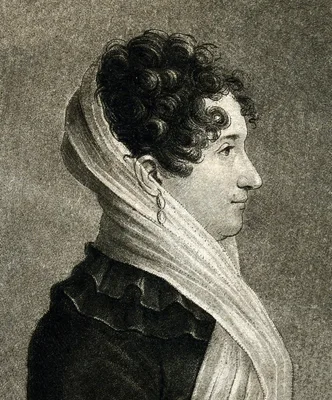
Mémorial de l’art des accouchements.
Mme Boivin was one of the most famous of the Paris midwives. She improved the speculum and wrote intelligently on hydatidiform mole.
GMN 6165 · https://historyofmedicine.com/id/7752
1817 KING, John (1774 – 1840)
Case of an extra-uterine foetus, produced alive through an incision made into the vagina of the mother, who recovered after delivery, without any alarming symptoms.
Reports the first successful vaginotomy for abdominal pregnancy, as opposed to an abdominal laparotomy.
GMN 6166 · https://historyofmedicine.com/id/7754
1818 KING, John (1774 – 1840)
An analysis of the subject of extrauterine foetation and of the retroversion of the gravid uterus.
Expansion of No. 6166. First book on the subject.
GMN 6167 · https://historyofmedicine.com/id/7756
1818 WENZEL, Carl (1769 – 1827)
Allgemeine geburtshülfliche Betrachtungen und über die künstliche Frühgeburt.
Artificial induction of premature labour.
GMN 6168 · https://historyofmedicine.com/id/7758
1818 –1825 OSIANDER, Friedrich Benjamin (1759 – 1822)
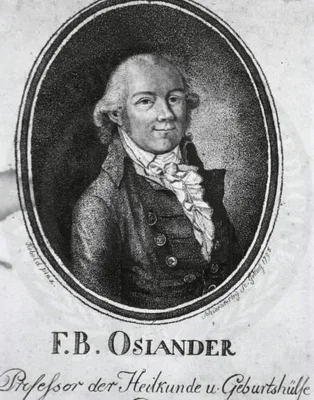
Handbuch der Entbindungskunst. 3 vols. in 5.
Includes (Bd. 2, Abt II, p. 302) description of Osiander’s lower-segment Caesarean operation.
GMN 6237 · https://historyofmedicine.com/id/7888
1819 NAEGELE, Franz Karl (1778 – 1851)
Ueber den Mechanismus der Geburt.
Best work of its time on the mechanism of labor. English translation, London, 1829.
GMN 6169 · https://historyofmedicine.com/id/7760
1821 –1825 DUGÈS, Antoine Louis (1798 – 1838); LACHAPELLE, Marie-Louise (1769 – 1821)
Pratique des accouchemens…par Marie Louise La Chapelle. Publiés par Antoine Dugès. 3 vols.
Mme La Chapelle was a famous midwife and a colleague of Baudelocque. She supervised 5,000 deliveries and her vast experience enabled her to write her book. She reduced the 94 theoretical presentations suggested by Bau…
GMN 6170 · https://historyofmedicine.com/id/7762
1822 KERGARADEC, Jean Alexandre le Jumeau, vicomte de (1787 – 1877)
Mémoire sur l’auscultation appliquée à l’étude de la grossesse.
Although not the first to record the auscultation of the fetal heart sound, Le Jumeau (Kergaradec), a pupil of Laennec, brought the importance of this diagnostic procedure to the notice of the medical profession. Laen…
GMN 6171 · https://historyofmedicine.com/id/7764
1823 DAVIS, David Daniel (1777 – 1841)
An essay on the proximate cause of the disease called phlegmasia dolens.
Davis was the first to state that phlegmasia alba dolens was due to inflammation of the veins. He was physician-accoucheur at the birth of Queen Victoria.
GMN 6273 · https://historyofmedicine.com/id/7986
1825 RITGEN, Ferdinand August Marie Franz (1787 – 1867)
Geschichte eines mit ungünstigem Erfolge verrichteten Bauchscheidenschnitts und Folgerung daraus.
Ritgen first performed extraperitoneal Caesarean section in 1821.
GMN 6238 · https://historyofmedicine.com/id/7890
1825 NAEGELE, Franz Karl (1778 – 1851)
Das weibliche Becken.
GMN 6256 · https://historyofmedicine.com/id/7951
1827 BOIVIN, Marie Anne Victoire (1773 – 1841)
Nouvelles recherches sur l’origine, la nature et le traitement de la mole vésiculaire ou grossesse hydatique.
Classic description of hydatidiform mole.
GMN 6172 · https://historyofmedicine.com/id/7766
1834 DELACOUX, Alexis
Biographie des sages-femmes célèbres, anciennes, modernes et contemporaines. Avec 20 portraits.
Digital facsimile from Google Books at this link.
GMN 11151 · https://historyofmedicine.com/id/13348
1834 GRANVILLE, Augustus Bozzi (1783 – 1872)
Graphic illustrations of abortion and the diseases of menstruation. Consisting of twelve plates from drawings engraved on stone, and coloured by Mr. J. Perry, and two copperplates from the Philosophical transactions, coloured by the same artist. The whole representing forty-five specimens of aborted ova and adventitious productions of the uterus, with preliminary observations, explanations of the figures, and remarks anatomical and physiological.
Concerns miscarriage and aberrant gestation rather than removal or expulsion of embryo or fetus. Digital facsimile from wellcomecollection.org at this link.
GMN 14017 · https://historyofmedicine.com/id/16324
1837 MONTGOMERY, William Fetherston (1797 – 1859)
An exposition of the signs and symptoms of pregnancy.
“Montgomery’s glands”, the sebaceous glands of the areola, were previously described by Morgagni. They are described, with his “tubercles” (the secondary areola seen in pregnancy) in the above work.
GMN 6173 · https://historyofmedicine.com/id/7768
1838 SORANUS OF EPHESUS (ΣΩΡΑΝΌΣ) (100 – 150); DIETZ, Friedrich Reinhold (1805 – 1836)
De arte obstetricia morbisque mulierum quae supersunt. Ex apographo Friderici Reinholdi Dietz, nuper fato perfuncti primum edita.
Greek editio princeps of Soranus, based on manuscripts Dietz discovered in Paris and Rome, and published after the early death of the editor. Soranus was the leading authority on the gynecology and obstetrics of antiq…
GMN 6008 · https://historyofmedicine.com/id/7178
1838 JACQUEMIER, Jean Marie (1806 – 1879)
Recherches d’anatomie et de physiologie sur le système vasculaire sanguin de l’utérus humain pendant la gestation, et plus spécialement sur les vaisseaux utero-placentaires.
Jacquemier’s sign, diagnostic of pregnancy.
GMN 6174 · https://historyofmedicine.com/id/7770
1838 NAEGELE, Hermann Franz Joseph (1810 – 1858)
Die geburtshülfiche Auscultation
Pioneering work on obstetric auscultation, including the sounds of the foetal heart. English translation by C. West, London, 1839.
GMN 6175 · https://historyofmedicine.com/id/7772
1839 NAEGELE, Franz Karl (1778 – 1851)
Das schräg verengte Becken nebst einem Anhange über die wichtigsten Fehler des weiblichen Beckens überhaupt.
First description of the obliquely contracted pelvis, or “Naegele pelvis”. Because of its rarity and the difficulty of recognizing it clinically in living subjects, the obliquely contracted pelvis, with its most often…
GMN 6257 · https://historyofmedicine.com/id/7953
1839 ROKITANSKY, Carl Freiherr von (1804 – 1878)
Beyträge zur Kenntniss der Rückgrathskrümmungen, und der mit demselben zusammentreffenden Abweichungen des Brustkorbes und Beckens.
Original description of spondylolisthesis.
GMN 6258 · https://historyofmedicine.com/id/7956
1841 MATTSON, Morris
The American vegetable practice, or, a new and improved guide to health: Designed for the use of families. : In six Parts. Part I. Concise view of the human body, with engraved and wood-cut illustrations. Part II. Glance at the old school practice of physic. Part III. Vegetable materia medica, with colored Illustrations. Part IV. Compounds. Part V. Practice of medicine, based upon what are deemed correct physiological and pathological principles. Part VI. Guide for women, containing a simplified treatise on childbirth, with a description of the diseases peculiar to females and infant. 2 vols.
The first American book with chromolithographed illustrations printed in America. The chromolithographed images depict American medicinal plants. Digital facsimile from Google Books at this link.
GMN 10723 · https://historyofmedicine.com/id/12917
1842 –1843 HOLMES, Oliver Wendell Sr. (1809 – 1894)
The contagiousness of puerperal fever.
Oliver Wendell Holmes was the first to establish the contagious nature of puerperal fever. His essay on the subject took a strong line against the opinions then prevailing, stirring up violent opposition among the obs…
GMN 6274 · https://historyofmedicine.com/id/7989
1843 LEVER, John Charles Weaver (1811 – 1858)
Cases of puerperal convulsions, with remarks.
Lever, of Guy’s Hospital, was the first to report the finding of albuminous urine in connection with puerperal convulsions.
GMN 6176 · https://historyofmedicine.com/id/7773
1844 HALMAGRAND, Charles-Nicolas (1803 – 1892)
Considérations médico-légales sur l'avortement suivies de quelques réflexions sur la liberté de l'enseignement médical à propos d'un procès en cour d'assises, mémoire adressé a l'Académie Royale de Médecine de Paris.
Digital facsimile from BnF Gallica at this link.
GMN 13608 · https://historyofmedicine.com/id/15888
1847 –1848 SEMMELWEIS, Ignaz Philipp (Ignác Fülöp) (1818 – 1865)
Höchst wichtige Erfahrungen über die Aetiologie der in Gebäranstalten epidemischen Puerperalfieber.
Semmelweis, pioneer of antisepsis in obstetrics, was the first to recognize that puerperal fever is a septicemia. He concluded that the doctors and students of Vienna’s First Obstetrical Clinic carried the infection o…
GMN 6275 · https://historyofmedicine.com/id/7990
1847 LOHMAN, Ann Trow (Madam Restell) (1812 – 1878); LOHMAN, Charles M.
The married woman's private medical companion, embracing the treatment of menstruation, or monthly turns, during their stoppage, irregularity, or entire suppression, pregnancy, and how it may be determined, with the treatment of its various diseases. Discovery to prevent pregnancy, its great and important necessity where malformation or inability exists to give birth. To prevent miscarriage or abortion when proper and necessary, to effect miscarriage when attended with entire safety. Causes and mode of cure of barrenness or sterility
Published pseudonymously by radical printer Charles Lohman who was married to the abortionist/entrpreneur Ann Lohman known as "Madame Restell." The Lohmans also sold condoms. Digital facsimile from U.S. National Libra…
GMN 13469 · https://historyofmedicine.com/id/15743
1849 MEIGS, Charles Delucena (1792 – 1869)
The heart-clot.
Meigs drew attention to embolism as a cause of sudden death in childbed. Previously such deaths had been attributed to syncope.
GMN 6177 · https://historyofmedicine.com/id/7774
1851 NÉLATON, Auguste (1807 – 1873)
Leçons sur l’hématocèle rétro-utérine.
Classic description of pelvic hematocele.
GMN 6178 · https://historyofmedicine.com/id/7775
1851 MICHAELIS, Gustav Adolf (1798 – 1848)
Das enge Becken: nach eigenen Beobachtungen und Untersuchungen.
First important work dealing with pelvic deformities since the time of van Deventer. It is a pioneer work in the literature dealing with pelvic architecture; Michaelis was one of the first to differentiate between the…
GMN 6259 · https://historyofmedicine.com/id/7958
1852 DUBOIS, Paul Anton (1795 – 1871)
Considérations sur l’avortement provoqué dans les cas de vomissements.
Classic description of hyperemesis gravidarum.
GMN 6179 · https://historyofmedicine.com/id/7503
1852 TALIAFERRO, Valentine Ham (1831 – 1888)
Rigidity of the soft parts – delivery effected by incision in the perineum.
First episiotomy in America, 2 December 1851.
GMN 6180 · https://historyofmedicine.com/id/7505