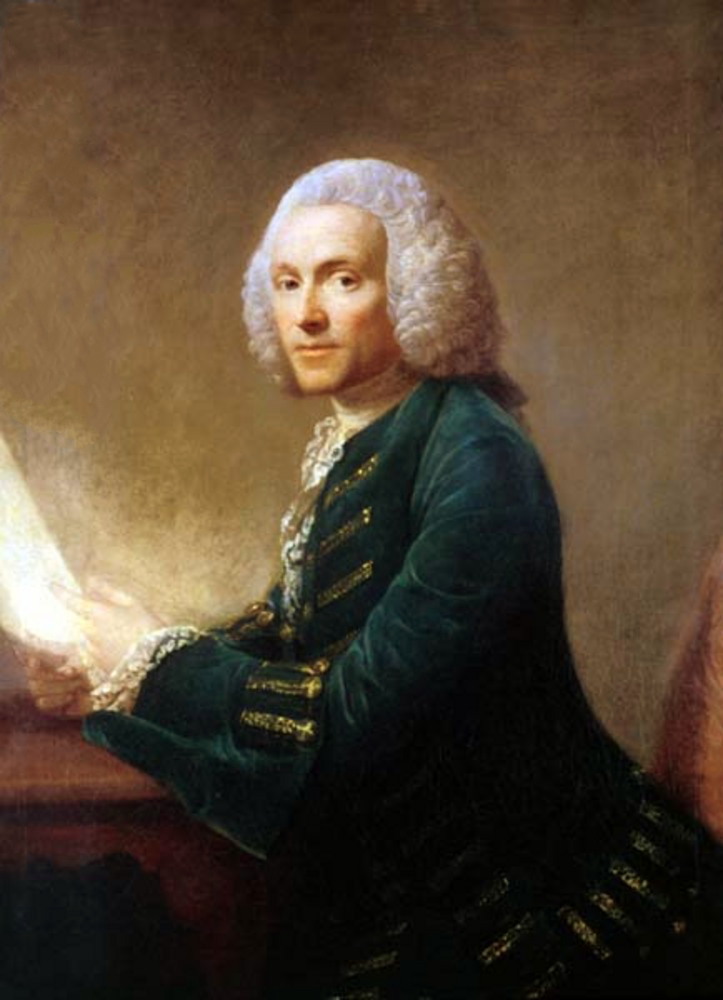
1701 DEVENTER, Hendrik van (1651 – 1724)
Manuale operatien, I. deel zijnde een neiuw ligt voor vroed-meesters en vroed-vrouen.
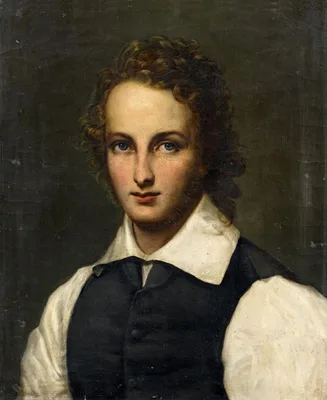
This work gives the first accurate description of the female pelvis and its deformities, and the effect of the latter in complicating labor. The first edition contains a relatively unattractive frontispiece portrait o…
GMN 6253 · https://historyofmedicine.com/id/7946
1762 HUNTER, William (1718 – 1783)
A singular case of the separation of the ossa pubis.
A case of osteomalacic pelvis was reported to Hunter by a country practitioner.
GMN 6254 · https://historyofmedicine.com/id/7948
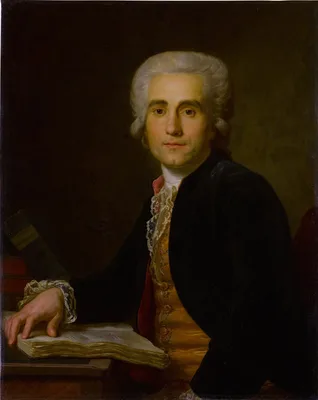
1781 BAUDELOCQUE, Jean-Louis (1746 – 1810)
L’art des accouchemens. 2 vols.
Baudelocque invented a pelvimeter and advanced the knowledge of pelvimetry and of the mechanism of labor. The external conjugate diameter is known as “Baudelocque’s diameter”. English translation, London, 1790.
GMN 6255 · https://historyofmedicine.com/id/7950
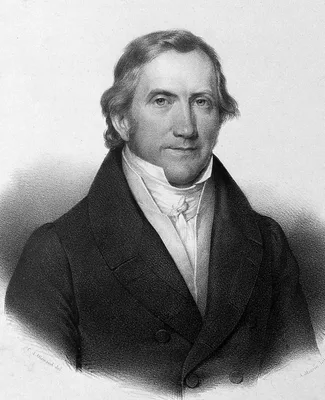
1825 NAEGELE, Franz Karl (1778 – 1851)
Das weibliche Becken.
GMN 6256 · https://historyofmedicine.com/id/7951
1839 NAEGELE, Franz Karl (1778 – 1851)
Das schräg verengte Becken nebst einem Anhange über die wichtigsten Fehler des weiblichen Beckens überhaupt.
First description of the obliquely contracted pelvis, or “Naegele pelvis”. Because of its rarity and the difficulty of recognizing it clinically in living subjects, the obliquely contracted pelvis, with its most often…
GMN 6257 · https://historyofmedicine.com/id/7953
1839 ROKITANSKY, Carl Freiherr von (1804 – 1878)
Beyträge zur Kenntniss der Rückgrathskrümmungen, und der mit demselben zusammentreffenden Abweichungen des Brustkorbes und Beckens.
Original description of spondylolisthesis.
GMN 6258 · https://historyofmedicine.com/id/7956
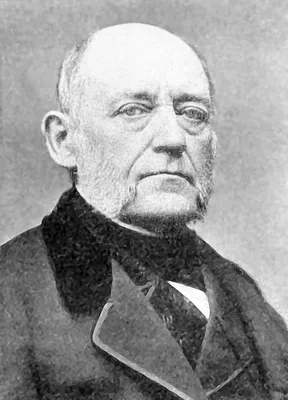
1851 MICHAELIS, Gustav Adolf (1798 – 1848)
Das enge Becken: nach eigenen Beobachtungen und Untersuchungen.
First important work dealing with pelvic deformities since the time of van Deventer. It is a pioneer work in the literature dealing with pelvic architecture; Michaelis was one of the first to differentiate between the…
GMN 6259 · https://historyofmedicine.com/id/7958
1853 LITZMANN, Carl Conrad Theodor (1815 – 1890)
Das schräg-ovale Becken.
Litzmann (see also No. 6263) described in this work the coxalgic, scoliotic and kyphoscoliotic forms of pelvis.
GMN 6260 · https://historyofmedicine.com/id/7961
1854 KILIAN, Hermann Friedrich (1800 – 1863)
Schilderungen neuer Beckenformen und ihres Verhaltens im Leben.
First description of pelvis spinosa.
GMN 6261 · https://historyofmedicine.com/id/7963
1854 KILIAN, Hermann Friedrich (1800 – 1863)
De spondylolisthesi gravissimae pelvangustiae causa nuper detecta.
An important study of the spondylolisthetic pelvis, which Kilian called “pelvis obtecta”.
GMN 6262 · https://historyofmedicine.com/id/7964
1861 LITZMANN, Carl Conrad Theodor (1815 – 1890)
Die Formen des Beckens, insbesondere des engen weiblichen Beckens.
Litzmann devised a clinical classification of pelves which was for many years generally used, and he described various deformities of the female pelvis.
GMN 6263 · https://historyofmedicine.com/id/7967
1871 LITZMANN, Carl Conrad Theodor (1815 – 1890)
Ueber die hintere Scheitelbeinstellung, eine nicht selten Art von fehlerhafter Einstellung des Kopfes unter der Geburt.
“Litzmann’s obliquity” or posterior parietal presentation.
GMN 6263.1 · https://historyofmedicine.com/id/7969
1885 NEUGEBAUER, Franz Ludwig [Franciszek Ludwik Neugebauer] (1856 – 1914)
Neuer Beitrag zur Aetiologie und Casuistik der Spondyl-olisthesis.
GMN 6264 · https://historyofmedicine.com/id/7971
1900 –1904 BREUS, Carl (1852 – 1914); KOLISKO, Alexander (1847 – 1918)
Die pathologischen Beckenformen.
Classic description and classification of pelvic deformities.
GMN 6265 · https://historyofmedicine.com/id/7972
1933 CALDWELL, William Edgar (1880 – 1943); MOLOY, Howard Carman (1903 – 1953)
Anatomical variations in the female pelvis and their effect in labor, with a suggested classification.
The modern classification of the female pelvis is based on the work of Caldwell and Moloy.
GMN 6266 · https://historyofmedicine.com/id/7974