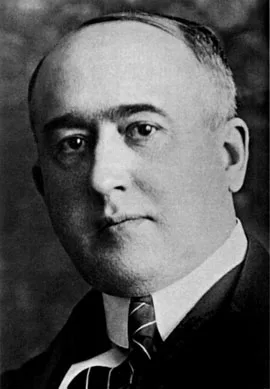
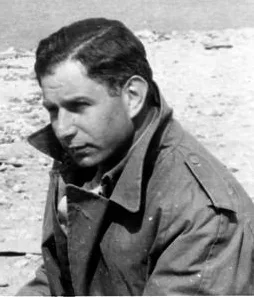
1882 QUATREFAGES DE BRÉAU, Jean Louis Armand de (1810 – 1892); HAMY, Ernest Théodore Jules (1842 – 1908)
Crania ethnica. Les crânes des races humaines décrits et figurés d 'après les collections du Muséum d'Histoire Naturelle de Paris, de la Société d'Anthropologie de Paris et les principales collections de la France et de l'étranger par A. de Quatrefages et Ernest T. Hamy: Ouvrage accompagné de planches lithographiées d'après nature par H. Formant et illustré de nombreuses figures intercalées. 2 vols.
Digital facsimile from the Bayerische StaatsBibliothek at this link.
GMN 203.2 · https://historyofmedicine.com/id/3584
1883 ROMANES, George John (1848 – 1894); DARWIN, Charles Robert (1809 – 1882)
Mental evolution in animals. With a posthumous essay on instinct by Charles Darwin.
Includes the first editon of Darwin's most significant contribution to psychology. This was part of Chapter 10 of Darwin's unpublished "big book" on the origin of species. Romanes attempted, with Darwin, to develop a …
GMN 7945 · https://historyofmedicine.com/id/10120
1890 HILLIER, Alfred Peter (1858 – 1911)
The antiquity of man in South Africa, and evolution.
The first separately published work on human origins published in the continent of Africa. Hillier's text was read on his behalf before the Eastern Province Literary and Scientific Society in Grahamstown, Eastern Cape…
GMN 11449 · https://historyofmedicine.com/id/13648
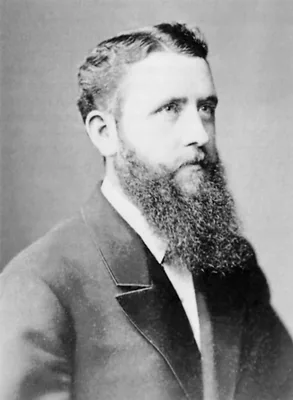
1891 WEISMANN, August Friedrich Leopold (1834 – 1914)
Amphimixis, oder die Vermischung der Individuen.
By “amphimixis” Weismann meant the union of the two parent germs, which he considered the principal source of heritable variation in evolution by natural selection. English translation in Weismann’s Essays upon Heredi…
GMN 234 · https://historyofmedicine.com/id/8338
1892 WEISMANN, August Friedrich Leopold (1834 – 1914)
Aufsätze über Vererbung und verwandte biologische Fragen.
Weismann produced experimental evidence that acquired characters are not transmitted.
GMN 235 · https://historyofmedicine.com/id/8340
1894 DUBOIS, Marie Eugène François Thomas (1858 – 1940)
Pithecanthropus erectus. Eine menschenähnliche Uebergangsform aus Java.
Privately issued first report on Homo erectus. In 1891 Dubois discovered remains of what he described as "a species in between humans and apes" at Trinil, Java. He called his finds Pithecanthropus erectus ("ape-human …
GMN 210 · https://historyofmedicine.com/id/3848
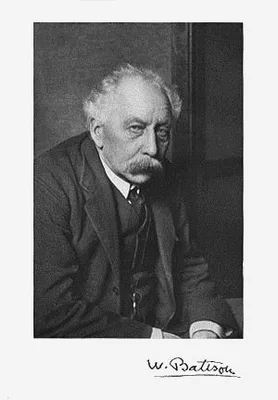
1894 BATESON, William (1861 – 1926)
Materials for the study of variation treated with especial regard to discontinuity in the origin of species.
Bateson was convinced that discontinuity was the more important type of variation among animals and plants “in some unknown way a part of their nature and not directly dependent upon natural selection at all”. He show…
GMN 237 · https://historyofmedicine.com/id/8353
1895 RIVIÈRE, Émile (1835 – 1922)
Sur la grotte de la Mouthe (Dordogne).
The first report on the discovery and excavation of La Grotte de la Mouthe. This cave, found in 1894 and excavated by Rivière in 1895, was the fourth paleolithic cave art site discovered, after Altamira, Chabot and Pa…
GMN 11345 · https://historyofmedicine.com/id/13543
1896 WILSON, Edmund Beecher (1856 – 1939)
The cell in development and inheritance.
Wilson emphasized the function of cytology in the study of embryology, heredity, evolution and general physiology. The above work has been called the single most influential treatise on cytology of the 20th century. T…
GMN 238 · https://historyofmedicine.com/id/8354
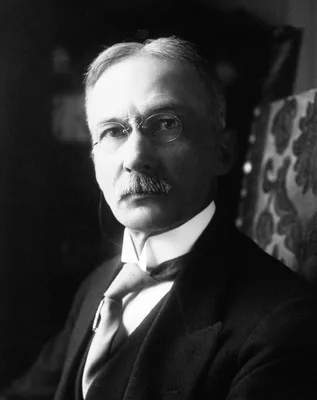
1896 BALDWIN, James Mark (1861 – 1934)
A new factor in evolution.
The Baldwin effect. "In evolutionary biology, the Baldwin effect describes the effect of learned behavior on evolution. In brief, James Mark Baldwin suggested that an organism's ability to learn new behaviors (e.g. to…
GMN 9319 · https://historyofmedicine.com/id/11501
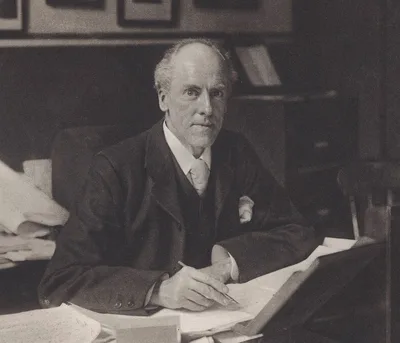
1897 PEARSON, Karl (1857 – 1936)
The chances of death and other studies in evolution. 2 vols.
GMN 1706 · https://historyofmedicine.com/id/2514
1898 –1903 HUXLEY, Thomas Henry (1825 – 1895); LANKESTER, Sir Edwin Ray (1847 – 1929); FOSTER, Sir Michael (1836 – 1907)
The scientific memoirs of Thomas Henry Huxley. Edited by Professor Michael Foster... and by Professor E. Ray Lankester. 5 vols.
Presents virtually all of Huxley's scientific papers arranged in chronological order, as well as reports of his Royal Institution Friday Evening Discourses. The final supplemental volume contains the remainder of Huxl…
GMN 7450 · https://historyofmedicine.com/id/9622
1899 DAVENPORT, Charles Benedict (1866 – 1944)
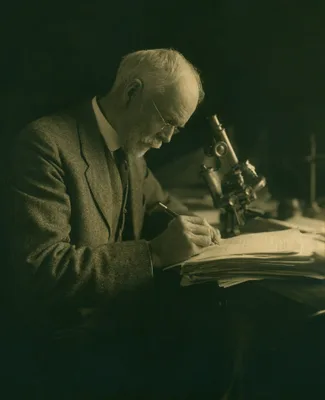
Statistical methods, with special reference to biological variation.
Davenport introduced statistical methods into American evolutionary studies.
GMN 1707 · https://historyofmedicine.com/id/2518
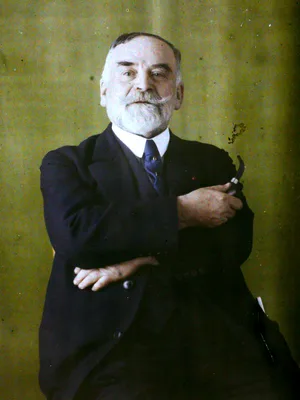
1902 CARTAILHAC, Émile (1845 – 1921)
Les cavernes ornées de dessins. La grotte d’Altamira, Espagne. “Mea culpa” d’un sceptique.
Cartailhac’s famous retraction of his opposition to the concept of paleolithic cave wall art, published over 20 years after Sanz de Sautuola’s discovery of the Altamira cave paintings in northern Spain. Cartailhac, on…
GMN 11402 · https://historyofmedicine.com/id/13601
1903 JOHANNSEN, Wilhelm Ludvig (1857 – 1927)
Ueber Erblichkeit in Populationen und in reinen Linien.
More support for the Mendelian law of inheritance was provided by Johannsen, a Danish botanist, who showed that in certain self-fertilizing plants a pure line of descendants can be maintained indefinitely, in which ca…
GMN 242 · https://historyofmedicine.com/id/8664
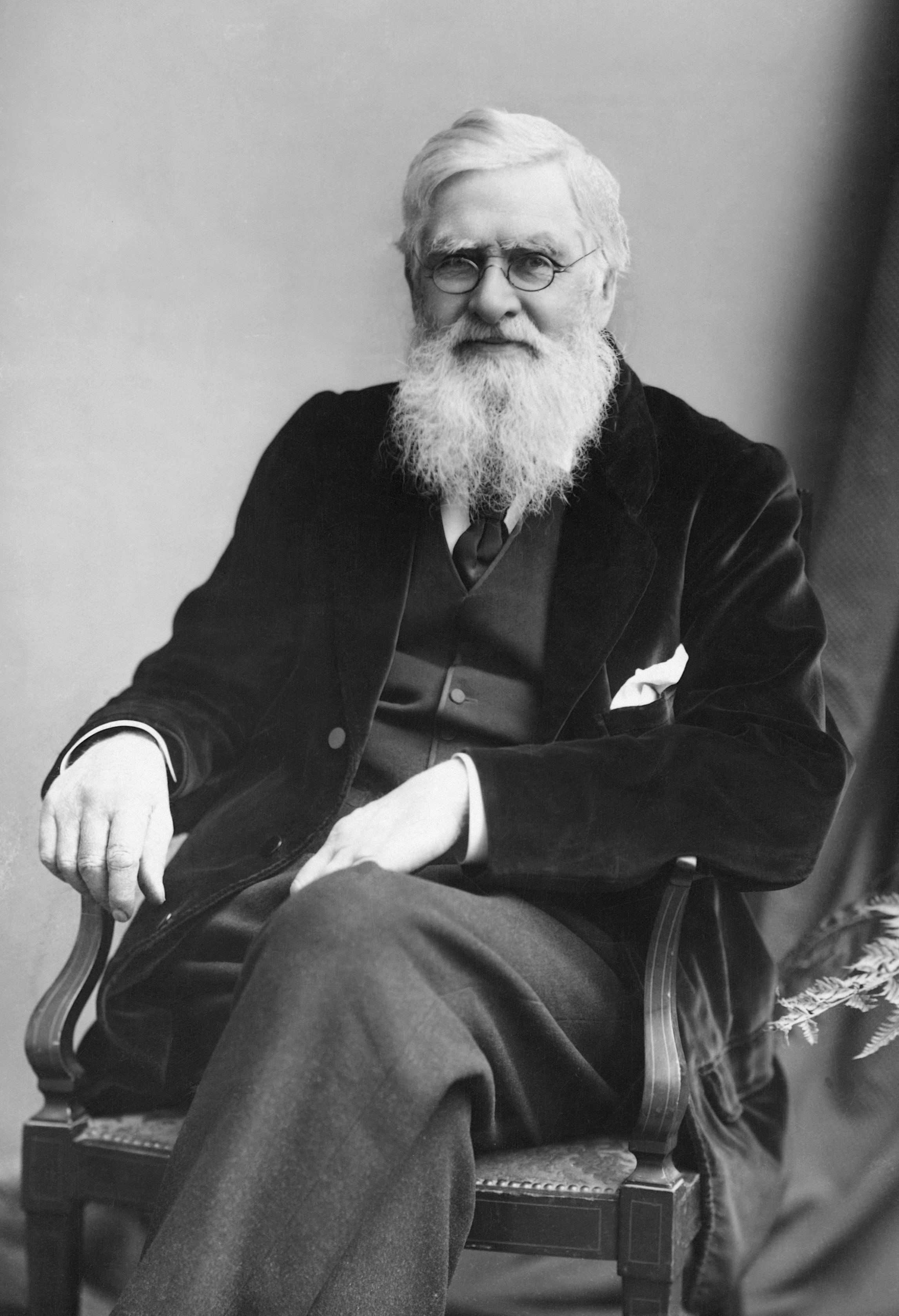
1905 WALLACE, Alfred Russel (1823 – 1913)
My life: A record of events and opinions. 2 vols.
GMN 7441 · https://historyofmedicine.com/id/9613
1908 DARWIN, Charles Robert (1809 – 1882)
Catalogue of the Library of Charles Darwin now in the Botany School, Cambridge, compiled by H. W. Rutherford, with an introduction by Francis Darwin.
See also the digital edition and virtual reconstruction of the surviving books owned by Charles Darwin from the Biodiversity Heritage Library at this link. This BHL special collection draws on original copies and surr…
GMN 7094 · https://historyofmedicine.com/id/9261
1908 SCHOETENSACK, Otto (1850 – 1912)
Der Unterkiefer des Homo heidelbergensis aus den Sanden von Mauer bei Heidelberg. Ein Beitrag zur Paläontologie des Menschens.
First report on the Mauer jaw discovered by Schoetensack in a sandpit or quarry in the environs of Heidelberg. This was the first fossil specimen unearthed of an extinct hominin species which Schoetensack named Homo h…
GMN 7253 · https://historyofmedicine.com/id/9422
1908 ADLOFF, Paul Max Eugen (1870 – 1944)
Das Gebiss des Menschen und der Anthropomorphen. Vergleichend anatomische Untersuchungen.
GMN 11329 · https://historyofmedicine.com/id/13527
1908 BOUYSSONIE, Jean Marie Paul (1877 – 1955); BOUYSSONIE, Amédée (1867 – 1958); BARDON, Lucien
Découverte d'un squelette humain moustérien à La Chapelle-aux-Saints (Corrèze).
On August 3, 1908 the brothers Amédée and Jean Bouyssonie and Lucien Bardon, three French priests with a keen interest in paleontology, unearthed a Neanderthal skeleton in the limestone bedrock of the Bouffia Bonneval…
GMN 12896 · https://historyofmedicine.com/id/15143
1909 JOHANNSEN, Wilhelm Ludvig (1857 – 1927)
Elemente der exacten Erblichkeitslehre.
In this work Johannsen coined the term “gene” as the “underlying structure in the organism, that which was transmitted during hybridzation.” He also coined the term "phenotype" to express what is actually observed and…
GMN 6844 · https://historyofmedicine.com/id/9008
1909 REICHERT, Edward Tyson (1855 – 1931); BROWN, Amos Peaslee (1864 – 1917)
The differentiation and specificity of corresponding proteins and other vital substances in relation to biological classification and organic evolution: The crystallography of hemoglobins.
This massive work with 100 plates including 600 images, was the first large-scale investigation of species differences at the molecular level. Digital facsimile from the Internet Archive at this link.
GMN 6845 · https://historyofmedicine.com/id/9009
1911 –1913 BOULE, Marcellin (1861 – 1942)
L'homme fossile de La Chapelle-aux-Saints.
Originally published in four parts in Vols. 6-8 (1911-13) of the Annales de paléontologie. The La Chapelle-aux-Saints skeleton (La Chapelle-aux-Saints 1), discovered in 1908, was the most complete single Neanderthal s…
GMN 12897 · https://historyofmedicine.com/id/15144
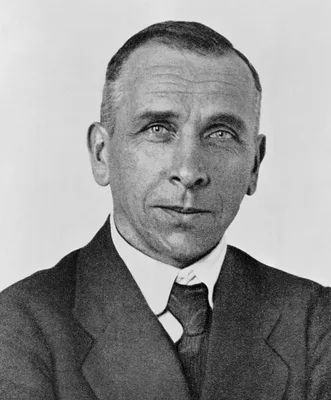
1912 WEGENER, Alfred Lothar (1880 – 1930)
Die Entstehung der Kontinente.
Wegener originated the theory of continental drift in this paper on the origin of continents, which he conceived after being struck by the apparent correspondence in the shapes of the coastlines on the west and east s…
GMN 8153 · https://historyofmedicine.com/id/10329
1912 SCHMIDT, Robert Rudolf (1882 – 1950)
Die diluviale Vorzeit Deutschlands. Archäologischer Teil, von R. R. Schmidt; II. Geologischer Teil, von Ernest Koken, Die Geologie und Tierweld der paläolithischen Kulturstätten Deutschlands; III. Anthropologischer Teil von A. Schliz, Die diluvialen Menschenreste Deutschlands.
This splendidly produced and illustrated large folio volume was the first major book on paleolithic research published in Germany. Schmidt described systematic investigations of the caves in the Swabian Alps, and was …
GMN 11254 · https://historyofmedicine.com/id/13451
1913 SMITH, Sir Grafton Elliot (1871 – 1937); DAWSON, Charles (1864 – 1916); WOODWARD, Arthur Smith (1864 – 1944)
On the discovery of a palaeolithic skull and mandible in a flint-bearing gravel overlying the Wealden (Hastings Beds) at Piltdown, Fletching (Sussex). With appendix by Grafton Elliot Smith.
Order of authorship in the original publication: Dawson, Woodward. The first "scientific" report on “Piltdown man” (Eoanthropus dawsoni,) one of the longest-lasting and most influential hoaxes ever perpetrated in scie…
GMN 211 · https://historyofmedicine.com/id/3866
1915 PUNNETT, Reginald Crundall (1875 – 1967)
Mimicry in butterflies.
GMN 13114 · https://historyofmedicine.com/id/15367
1916 RUSSELL, Edward Stuart (1887 – 1954)
Form and function: a contribution to the history of animal morphology.
Digital facsimile from Biodiversity Heritage Library at this link.
GMN 353.1 · https://historyofmedicine.com/id/284
1918 ADAMI, John George (1862 – 1926)
Medical contributions to the study of evolution.
"Part I: Adaptation and disease". The Croonian Lectures delivered in June 1917. Includes "Adaptation in the bacteria and the evolution of the infectious diseases" and "Adaptation to disease-producing agencies in the h…
GMN 12079 · https://historyofmedicine.com/id/14288
1921 WOODWARD, Arthur Smith (1864 – 1944)
A new cave man from Rhodesia, South Africa.
The first fossil human discovered in Africa: Homo rhodesiensis, commonly referred to as the Broken Hill Skull or the Kabwe Cranium.The skull, which most current experts classify as Homo heidelbergensis, was discovered…
GMN 7309 · https://historyofmedicine.com/id/9479
1922 CARR-SAUNDERS, Sir Alexander Morris (1886 – 1966)
The population problem: A study in human evolution.
GMN 1713 · https://historyofmedicine.com/id/2540
1922 SMITH, Sir Grafton Elliot (1871 – 1937)
The Rhodesian skull.
Description of the skull found at Broken Hill, Rhodesia, in 1921.
GMN 212 · https://historyofmedicine.com/id/3875
1922 GREGORY, William King (1897 – 1970)
The origin and evolution of the human dentition.
Reprinted with revisions and new index from J. dent. Res., 1920, 2, 89-175, 215-426, 604-717; 1921, 3, 87-228.
GMN 3691.1 · https://historyofmedicine.com/id/5728
1924 KÖPPEN, Wladimir Peter (1846 – 1940); WEGENER, Alfred Lothar (1880 – 1930)
Die Klimate der geologischen Vorzeit.
Translated as The climates of the geological past. Die Klimate der geologischen Vorzeit. Reproduction of the original German edition and complete English translation. Faksimile-Nachdruck der deutschen Originalausgabe …
GMN 9919 · https://historyofmedicine.com/id/12107
1924 SONNTAG, Charles F. (1887 – 1925)
The morphology and evolution of the apes and man. With a foreward by Professor G. Elliot Smith.
As far as I able to determine in 2024, Sonntag's book was the first attempt to write a general treatise on what eventually came to be called "human evolutionary anatomy," in the sense of studying the relationship betw…
GMN 14287 · https://historyofmedicine.com/id/16610
1925 DART, Raymond Arthur (1893 – 1988)
Australopithecus africanus: The man-ape of South Africa.
First report on Dart's discovery in 1924 of the first member of the genus Australopithecus, the first hominin found in Africa. In their 150th anniversary issue published on November 4, 2019 the editors of Nature inclu…
GMN 211.1 · https://historyofmedicine.com/id/3871
1925 ALLEN, Leslie H.
Bryan and Darrow at Dayton. The Record and documents of the "Bible-Evolution Trial." Edited and compiled by Leslie H. Allen.
Key documents from the Scopes Trial. Digital facsimile from the Hathi Trust at this link.
GMN 10615 · https://historyofmedicine.com/id/12808
1926 MACCURDY, George Grant (1863 – 1947)
Human origins: A manual of prehistory. 2 vols.
A detailed and extensively illustrated summary, with detailed bibliographical references, of the state of knowledge of prehistory in Europe as of 1926. Appendix 1: "Stratigraphic Study of Paleolithic Sites" is a very …
GMN 7307 · https://historyofmedicine.com/id/9477
1927 BLACK, Davidson (1884 – 1934)
The lower molar hominid tooth from the Chou Kou Tien deposit.
In this report on a single hominid tooth found by Swedish archeologist Birger Bohlin at the Zhoukoudian site in 1927 Black named a new genus and species of hominid, Sinanthropus pekinensis. He characterized the specim…
GMN 7255 · https://historyofmedicine.com/id/9424
1928 TILNEY, Frederick (1875 – 1938); RILEY, Henry Alsop (1887 – 1966)
The brain from ape to man: A contribution to the study of the evolution and development of the human brain by Frederick Tilney. With chapters on the reconstruction of the gray matter in the primate brain stem by Henry Alsop Riley. 2 vols.
Classic study of the evolution of the central nervous system in the higher mammals. Digital facsimile from the Internet Archive at this link.
GMN 350 · https://historyofmedicine.com/id/269
1930 FISHER, Sir Ronald Aylmer (1890 – 1962)
The genetical theory of natural selection.
The first coherent general algebraic analysis of Mendelian population behavior. The work contains Fisher’s rigorous development of his “fundamental theorem of natural selection”–”the rate of increase in fitness of any…
GMN 253 · https://historyofmedicine.com/id/8682
1930 MILANKOVIČ, Milutin (Milankovitch) (1879 – 1958)
Mathematische Klimalehre und astronomische Theorie der Klimaschwankungen. Handbuch der Klimatologie, Bd. 1, Teil A.
Milankovitch cycles, first exposition (176 pages). Milankovitch theorized that variations in eccentricity, axial tilt, and precession of the Earth's orbit determined climatic patterns on Earth through orbital forcing,…
GMN 7308 · https://historyofmedicine.com/id/9478
1931 SMITH, Sir Grafton Elliot (1871 – 1937)
Sinanthropus – Peking Man, its discovery and significance.
Elliot Smith visited Peking to view the skull of Sinanthropus pekinensis, discovered by W. C. Pei on December 2, 1929. A preliminary description by Pei is to be found in Bull. geol. Soc. China, 1929, 8, 3.
GMN 213 · https://historyofmedicine.com/id/3877
1931 WRIGHT, Sewall Green (1889 – 1988)
Evolution in Mendelian populations.
First detailed presentation of Wright’s quantitative theory of the effects of mutation, migration, selection, and population size on changes in gene frequencies in populations. Digital facsimile from Genetics.org at t…
GMN 253.1 · https://historyofmedicine.com/id/8683
1932 ZUCKERMAN, Solly, Baron Zuckerman (1904 – 1993)
The social life of monkeys and apes.
A study of the relationship of Man to the other primates, from the physiological and biochemical standpoint. Zuckerman’s work is considered the first adequate interpretation of simian society. 2nd ed., 1980.
GMN 351 · https://historyofmedicine.com/id/274
1932 HALDANE, John Burdon Sanderson (1892 – 1964)
The causes of evolution.
Haldane’s summary of his mathematical theory of natural selection. The detailed mathematical theory appeared as Mathematical theory of natural and artificial selection, first published (Pt. I) in Trans. Camb. philos. …
GMN 254 · https://historyofmedicine.com/id/8685
1934 GAUSE, George Francis (Georgiĭ Frantsevich) (1910 – 1986)
The struggle for existence.
Gause developed the concept of competitive exclusion as formulated by Volterra.
GMN 145.66 · https://historyofmedicine.com/id/2699
1936 LOVEJOY, Arthur Oncken (1873 – 1962)
The great chain of being: A study of the history of an idea.
GMN 258 · https://historyofmedicine.com/id/8717
1936 QUENSTEDT, Werner (1893 – 1960)
Hominidae fossiles. Edited by W. Quenstedt.
Fossilium catalogus, I: Animalia (ed. W. Quenstedt), part 74. “This volume has been prepared under the critical editorship of Dr. Werner Quenstedt, as a work in cooperation with the Cenozoic Research Laboratory of the…
GMN 11502 · https://historyofmedicine.com/id/13701
1937 DOBZHANSKY, Theodosius Grygorovych (1900 – 1975)
Genetics and the origin of species.
Dobzhansky, an emigrant from the Soviet Union to the United States, and a postdoctoral worker in Thomas Hunt Morgan's fruit fly lab, was one of the first to apply genetics to natural populations. He worked mostly with…
GMN 254.2 · https://historyofmedicine.com/id/8687