1905 MELTZER, Samuel James (1851 – 1920); AUER, John (1875 – 1948)
Physiological and pharmacological studies of magnesium salts.
A study of the anesthetic and other effects of magnesium salts.
GMN 1894 · https://historyofmedicine.com/id/2542
1905 MACKENZIE, Sir James (1853 – 1925)
New methods of studying affections of the heart.
Mackenzie established the remarkable action of digitalis in auricular fibrillation.
GMN 2819 · https://historyofmedicine.com/id/3501
1905 THOMAS, Harold Wolferstan (1875 – 1931); BREINL, Anton (1880 – 1944)
Report on trypanosomes, trypanosomiasis, and sleeping sickness, being an experimental investigation into their pathology and treatment.
Thomas and Breinl discovered that arsanilic acid, was more potent in the treatment of laboratory trypanosomiasis than arsenic in inorganic form. As a crystalline powder it was introduced medically as Atoxyl. Thomas an…
GMN 5279 · https://historyofmedicine.com/id/8592
1906 –1914 DIOSCORIDES, Pedanius [Πεδάνιος Διοσκουρίδης] (40 – 90); WELLMANN, Max (1863 – 1933); KRATEUAS, [Kratevas, Crateuas, Cratevas; Κρατεύας ὁ Ῥιζότομος] ( – 95)
De materia medica. Edidit Max Wellmann. 3 vols.
Dioscorides’ work is the authoritative source on the materia medica of antiquity. He described over 600 plants and plant principles. The above edition by Wellman is the definitive Greek text. It also contains the Frag…
GMN 1786 · https://historyofmedicine.com/id/1853
1906 DALE, Sir Henry Hallett (1875 – 1968); BARGER, George (1878 – 1939); ET AL
An active alkaloid from ergot.
Isolation of ergotoxine. With F. H. Carr.
GMN 1895 · https://historyofmedicine.com/id/2543
1906 NICOLLE, Maurice (1862 – 1932); MESNIL, Félix (1868 – 1938)
Traitement des trypanosomiases par les “couleurs de benzidine”.
Introduction of trypan-blue in the treatment of trypanosomiasis. Second paper by Mesnil and Nicolle.
GMN 5280 · https://historyofmedicine.com/id/6339
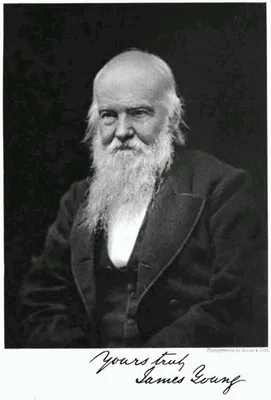
1906 YOUNG, James (1811 – 1883); FERGUSON, John (1837 – 1916)
Bibliotheca chemica: A catalogue of the alchemical, chemical and pharmaceutical books in the collection of the late James Young of Kelly and Durris....by John Ferguson. 2 vols.
One of the great landmarks of descriptive scientific bibliography. With bibliographical details of each work, biographical notices of each writer, and exhaustive lists of references in chronological order, its scope a…
GMN 8473 · https://historyofmedicine.com/id/10650
1906 GEORGIADÈS, Nicolas (1875 – )
La pharmacie en Egypte.
Digital facsimile from the Internet Archive at this link.
GMN 13137 · https://historyofmedicine.com/id/15395
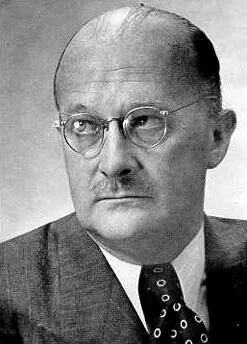
1907 WINDAUS, Adolf Otto Reinhold (1876 – 1959); VOGT, Karl (1880 – )
Synthese des Imidazolyläthylamins.
Synthesis of histamine.
GMN 1895.1 · https://historyofmedicine.com/id/2545
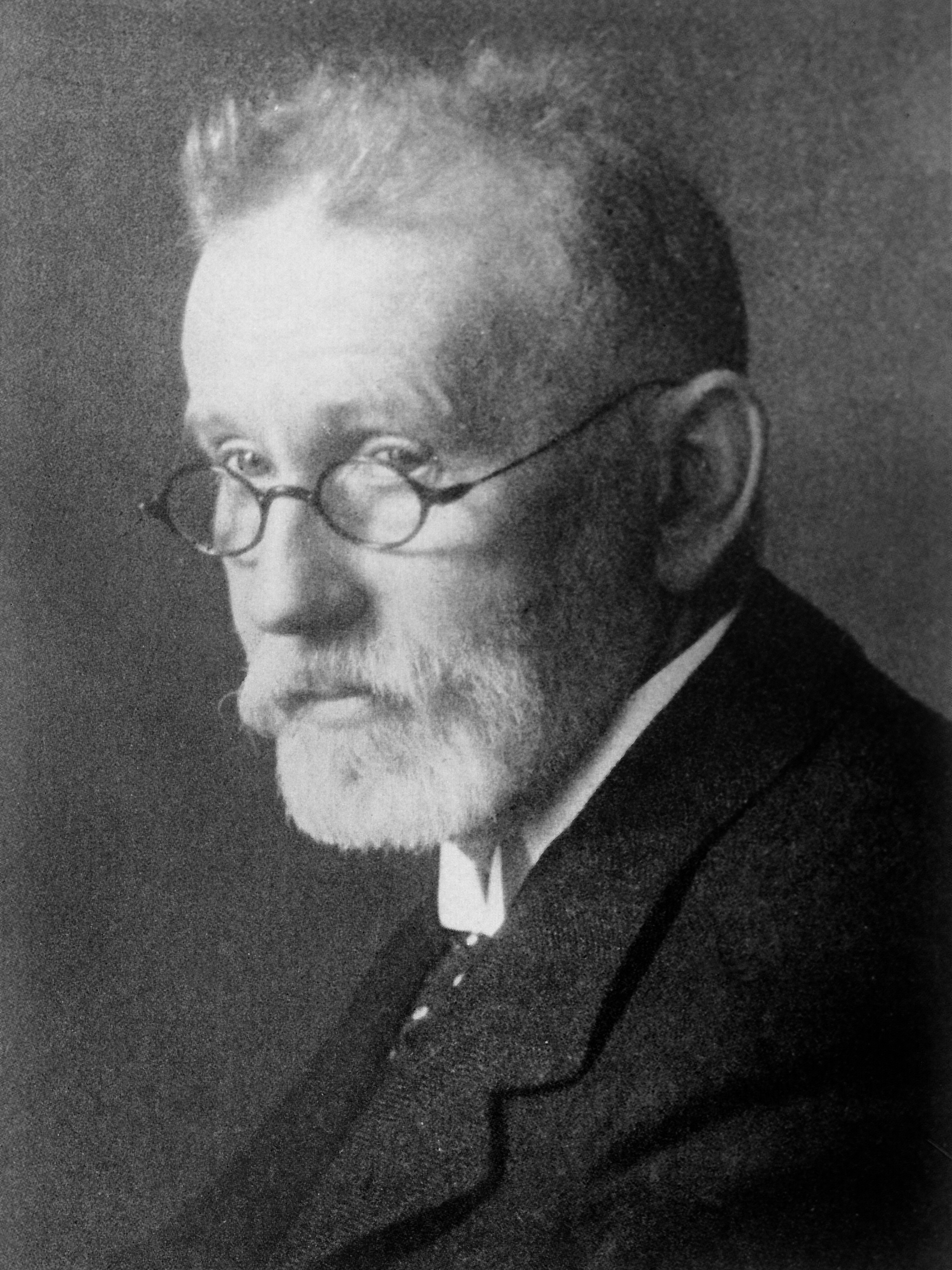
1907 EHRLICH, Paul (1854 – 1915)
Chemotherapeutische Trypanosomen-Studien.
The first account of induced microbial drug resistance. Ehrlich encountered induced drug resistance in microbes while researching arsenical preparations as cures for sleeping sickness and other trypanosome-caused illn…
GMN 5281 · https://historyofmedicine.com/id/6342
1908 GELMO, Paul (1879 – 1961)
Ueber Sulfamide der p-Amidobenzolsulfonsäure.
Para-aminobenzenesulfonamide (sulphanilamide) first prepared.
GMN 1948 · https://historyofmedicine.com/id/2822
1908 PLIMMER, Henry George (1856 – 1918); THOMSON, John D.
Further results of the experimental treatment of trypanosomiasis in rats.
Trial of antimony in the treatment of trypanosomiasis.
GMN 5282 · https://historyofmedicine.com/id/6343
1909 HUNT, Reid (1870 – 1948); TAVEAU, René de Mortemer (1876 – )
On the relation between the toxicity and chemical constitution of a number of derivatives of choline and analogous compounds.
GMN 1897 · https://historyofmedicine.com/id/2638
1909 BRITISH MEDICAL ASSOCIATION
Secret remedies, what they cost and what they contain. Based on analyses made for the British Medical Association.
This exposé of useless or dangerous drugs was followed in 1912 by More secret remedies. What they cost & what they contain. Based on analyses made for the British Medical Association. Digital facsimile of the 1909 wor…
GMN 12411 · https://historyofmedicine.com/id/14641
1910 WOOTTON, A. C. (1843 – 1910)
Chronicles of pharmacy. 2 vols.
From antiquity to time of writing, with chapters on pharmacy in mythology, in Shakespeare, in the Bible, and in popularmedicine.
GMN 2045 · https://historyofmedicine.com/id/2231
1910 DALE, Sir Henry Hallett (1875 – 1968); LAIDLAW, Sir Patrick Playfair (1881 – 1940)
The physiological action of β-iminoazolylethylamine.
Study of the effect of histamine.
GMN 1899 · https://historyofmedicine.com/id/2642
1910 MEYER, Hans Horst (1853 – 1939); GOTTLIEB, Rudolf (1864 – 1924)
Die experimentelle Pharmakologie als Grundlage der Arzneibehandlung.
GMN 1900 · https://historyofmedicine.com/id/2643
1910 EHRLICH, Paul (1854 – 1915); HATA, Sahachiro (1873 – 1938)
Die experimentelle Chemotherapie der Spirillosen (Syphilis, Rückfallfieber, Hühnerspirillose, Frambösie).
After many experiments on the action of synthetic drugs upon spirochetal diseases, Ehrlich and Hata in 1909 discovered Arsphenamine (Salvarsan, "the arsenic that saves", also known as “606”), an effective treatment fo…
GMN 2403 · https://historyofmedicine.com/id/3366
1910 HUCHARD, Henri (1844 – 1910); FIESSINGER, Charles Albert (1857 – 1942)
La thérapeutique en vingt médicaments.
Huchard and Fiessinger suggested that actual drug therapy should be limited to 20 medicaments.
GMN 1975 · https://historyofmedicine.com/id/3761
1910 FONAHN, Adolf Mauritz (1873 – 1940)
Zur Quellenkunde der persischen Medizin.
Comprehensive analysis, with thorough bibliographical citations, of classic writings and scholarship in this field, to 1910. Besides medicine and pathology, Includes pharmacy, veterinary medicine, and "medical works i…
GMN 6511 · https://historyofmedicine.com/id/8078
1911 –1912 ABEL, John Jacob (1857 – 1938); MACHT, David Israel (1882 – 1961)
Two crystalline pharmacological agents obtained from the tropical toad Bufo agua.
Isolation of bufagin. Preliminary communication in J. Amer. med. Assoc., 1911, 56, 1531-35.
GMN 1901 · https://historyofmedicine.com/id/2645
1911 DALE, Sir Henry Hallett (1875 – 1968); BARGER, George (1878 – 1939)
β-iminazolylethylamine a depressor constituent of intestinal mucosa.
Isolation of histamine from animal tissues.
GMN 1901.1 · https://historyofmedicine.com/id/2647
1911 HARTWICH, Carl (1851 – 1917)
Die menschlichen Genussmittel. Ihre Herkunft, Verbreitung, Geschichte, Anwendung, Bestandteile und Wirkung.
A monumental encyclopedia of ethnopharmacology.
GMN 1901.2 · https://historyofmedicine.com/id/2648
1911 BECKER, Georg
Die bakteriologische Blutuntersuchung beim Milzbrand des Menschen.
Salvarsan first used in the treatment of anthrax.
GMN 5172 · https://historyofmedicine.com/id/6263
1911 VEDDER, Edward Bright (1878 – 1952)
Experiments undertaken to test the efficacy of the ipecac treatment of dysentery.
Vedder demonstrated the amoebicidal action of emetine; his work led to the general adoption of emetine in the treatment of amoebic dysentery.
GMN 5189 · https://historyofmedicine.com/id/6337
1911 CHAMBERLIN, Ralph Vary (1879 – 1967)
The ethno-botany of the Gosiute Indians of Utah.
Digital facsimile from the Internet Archive at this link.
GMN 9347 · https://historyofmedicine.com/id/11529
1911 –1936 CRAMP, Arthur Joseph (1872 – 1951)
Nostrums and quackery: Articles on the nostrum evil and quackery reprinted from the Journal of the American Medical Association. 3 vols.
Cramp was director of the AMA's Propaganda for Reform Department. "In 1911, Cramp published the first of three volumes called Nostrums and Quackery,[3] which would become "a veritable encyclopedia on the nostrum evil …
GMN 12412 · https://historyofmedicine.com/id/14642
1912 EHRLICH, Paul (1854 – 1915)
Ueber Laboratoriumsversuche und klinische Erprobung von Heilstoffen.
Introduction of neoarsphenamine (neosalvarsan).
GMN 2405 · https://historyofmedicine.com/id/3371
1912 HATA, Sahachiro (1873 – 1938)
Salvarsantherapie der Rattenbisskrankheit in Japan.
Salvarsan first used in the treatment of rat-bite fever.
GMN 5324 · https://historyofmedicine.com/id/6624
1912 HOLLINGWORTH, Harry Levi (1880 – 1956)
The influence of caffeine on mental and motor efficiency. Columbia Contributions to Philosophy and Psychology, Vol. XX, No. 4.
"The Coca-Cola Company, facing a lawsuit from the federal government under the Pure Food and Drug Act, approached Hollingworth (after James McKeen Cattell and several other psychologists turned them down)[4] about inv…
GMN 13522 · https://historyofmedicine.com/id/15797
1913 ABEL, John Jacob (1857 – 1938)
On the action of drugs and the function of the anterior lymph hearts in cardiectomized frogs.
Abel was one of America’s most distinguished pharmacologists. See A. M. Harvey. "Pharmacology’s giant," Johns Hopk. med. J., 1974, 135, 245-58.
GMN 849 · https://historyofmedicine.com/id/645
1913 BOURQUELOT, Émile (1851 – 1921)
La synthèse des glucosides par les ferments.
Bourquelot did important work on the synthesis of glucosides; several more papers followed the one given above.
GMN 1903 · https://historyofmedicine.com/id/2650
1913 HENRY, Thomas Anderson (1873 – 1958)
The plant alkaloids.
Digital facsimile from the Internet Archive at this link.
GMN 1903.1 · https://historyofmedicine.com/id/2652
1913 ORTA, Garcia de [Garcia d'Orta] (1501 – 1568); BREYNER, Francesco Manuel de Melo, Conde de Ficalho (1837 – 1903); MARKHAM, Sir Robert Clements (1830 – 1916)
Garci da Orta: Colloquies on the simples & drugs of India. New edition (Lisbon, 1895) edited and annotated by the Conde de Ficalho. Translated with an introduction and index by Sir Clements Markham.
Digital facsimile from the Internet Archive at this link.
GMN 8974 · https://historyofmedicine.com/id/11153
1913 HÜBOTTER, Franz (1881 – 1967)
Beiträge zur kenntnis der chinesischen sowie der tibetisch-mongolischen pharmakologie.
Contributions to the history of pharmacology in China, Tibet and Mongolia. Digital facsimile from the Internet Archive at this link.
GMN 12743 · https://historyofmedicine.com/id/14989
1914 ABEL, John Jacob (1857 – 1938); TURNER, Benjamin Bernard (1871 – 1945)
On the influence of the lymph hearts upon the action of convulsant drugs in cardiectomized frogs. II.
GMN 850 · https://historyofmedicine.com/id/650
1914 EWINS, Arthur James (1882 – 1957)
Acetylcholine, a new active principle of ergot.
Isolation of acetylcholine in ergot.
GMN 1341 · https://historyofmedicine.com/id/1470
1914 WENCKEBACH, Karel Frederik (1864 – 1940)
Die unregelmässige Herztätigkeit und ihre klinische Bedeutung.
Wenckebach was the first to demonstrate (pp. 173-75) the value of quinine (“Wenckebach’s pills”) in the treatment of paroxysmal fibrillation. The same work contains a number of excellent descriptions of various forms …
GMN 2844 · https://historyofmedicine.com/id/3605
1915 DAKIN, Henry Drysdale (1880 – 1952)
On the use of certain antiseptic substances in the treatment of infected wounds.
Eusol and chloramine-T. “Dakin’s solution” was employed by Carrel (No. 5642) in the Carrel–Dakin method of irrigation of wounds.
GMN 1903.2 · https://historyofmedicine.com/id/2653
1915 ARTIGAS Y CUERVA, Manuel (1866 – 1925)
Bibliografía médico-farmacéutica de Filipinas. Con biografías de los profesionales extranjeros de nota que han estado en el país, y con especialidad las de los filipinos.
GMN 13858 · https://historyofmedicine.com/id/16148
1916 STRAUB, Walter (1874 – 1944)
Digitaliswirkung am isolierten Vorhof des Frosches.
An important analysis of the action of digitalis on the isolated heart.
GMN 1904 · https://historyofmedicine.com/id/2654
1916 ROBBINS, Wilfred William (1884 – 1952); HARRINGTON, John Peabody (1884 – 1961); FREIRE-MARRECO, Barbara (1879 – 1967)
Ethnobotany of the Tewa Indians. Bureau of American Ethnology Bulletin 55.
Digital facsimile from the Internet Archive at this link.
GMN 9346 · https://historyofmedicine.com/id/11528
1917 TRENDELENBURG, Paul (1884 – 1931)
Physiologische und pharmakologische Versuche über die Dünndarmperistaltik.
"Trendelenburg preparation", a preparation used in determining the actions of pharmacological agents on peristalsis.
GMN 1034 · https://historyofmedicine.com/id/1007
1917 BROWNING, Carl Hamilton (1881 – 1972); ET AL
Flavine and brilliant green, powerful antiseptics with low toxicity to the tissues: their use in the treatment of infected wounds.
Introduction of acriflavine. With R. Gulbransen, E. L. Kennaway, and L. H. D. Thomton.
GMN 1905 · https://historyofmedicine.com/id/2656
1917 –1927 TSCHIRCH, Alexander (1856 – 1939)
Handbuch der Pharmakognosie. 3 vols, and Register.
Includes detailed accounts of the history of each drug.
GMN 1906 · https://historyofmedicine.com/id/2658
1918 FREY, Walter (1884 – 1972)
Ueber Vorhofflimmern beim Menschen und seine Beseitigung durch Chinidin.
Following Wenckebach’s discovery of the efficacy of quinine in the restoration of normal rhythm in auricular fibrillation. Frey showed that quinidine was the most effective of the cinchona alkaloids in this respect.
GMN 2848 · https://historyofmedicine.com/id/3617
1918 SCHMIEDEBERG, Johann Ernst Oswald (1838 – 1921)
Ueber die Pharmaka in der Ilias und Odyssee.
Medicines and poisons in the Iliad and Odyssey.
GMN 9986 · https://historyofmedicine.com/id/12175
1919 JACOBS, Walter Abraham (1883 – 1967); HEIDELBERGER, Michael (1888 – 1991)
Chemotherapy of trypanosome and spirochete infections. Chemical series. I. N-phenylglycineamide-p-arsonic acid.
Introduction of tryparsamide.
GMN 1907 · https://historyofmedicine.com/id/2660
1919 YOUNG, Hugh Hampton (1870 – 1945); ET AL
A new germicide for use in the genito-urinary tract; “mercurochrome-220”.
Introduction of mercurochrome. With E. C. White and E. O. Swartz.
GMN 1908 · https://historyofmedicine.com/id/2661
1920 HEFFTER, Karl Wilhelm Arthur (1859 – 1925)
Handbuch der experimentellen Pharmakologie … Hrsg. von A. HEFFTER. Vol. 1-.
GMN 1909 · https://historyofmedicine.com/id/2662

![DIOSCORIDES, Pedanius [Πεδάνιος Διοσκουρίδης] (40 – 90)](/media/portraits/2028)
![ORTA, Garcia de [Garcia d'Orta] (1501 – 1568)](/media/portraits/2236)