c. 512 DIOSCORIDES, Pedanius [Πεδάνιος Διοσκουρίδης] (40 – 90); NICANDER OF COLOPHON (ΝΊΚΑΝΔΡΟΣ Ὁ ΚΟΛΟΦΏΝΙΟΣ; NIKANDER) (-125 – ); KRATEUAS, [Kratevas, Crateuas, Cratevas; Κρατεύας ὁ Ῥιζότομος] ( – 95)
Vienna Dioscorides. Codex Vindobonensis Med. Gr. 1.
The oldest surviving copy of Pedanius Dioscorides's treatise on medical botany and pharmacology, De materia medica, is an illuminated Byzantine manuscript produced about 512 CE. Dioscorides, a Greek physician, who may…
GMN 6816 · https://historyofmedicine.com/id/8979
c. 850 GALEN, [Κλαύδιος Γαληνός; Galen of Pergamon] (129 – 216); SERGIUS OF RESHAINA ( – 536)
The Syriac Galen palimpsest.
This ninth century palimpsest codex contains as its undertext a text of Galen's On Simple Drugs in the Syriac translation by Sergius of Reshaina. It has not yet been formally published. For further information see the…
GMN 6900 · https://historyofmedicine.com/id/9064
1471 MESUE, Yuhanna ibn Masawaih (يوحنا بن ماسويه) (777 – 857)
Opera medicinalia. Ed: Peregrinus Cavalcobovis, with a preface by Nicolaus Gupalatinus. Consisting of: Canones universales. De simplicibus. Grabadin. Practica.
This undated edition, which the ISTC im00508000 catalogues as "not before 18 May 1471", may be the earliest printed edition of the writings of the medieval Persian or Assyrian Nestorian Christian physician Yuhanna ibn…
GMN 10960 · https://historyofmedicine.com/id/13156
1471 ABULCASIS (ABU AL-QASIM KHALAF IBN AL-ABBAS AL-ZAHRAWI; أبو القاسم خلف بن العباس الزهراوي), [Albucasis] (936 – 1013); CORDO, Simone [Simon de Gènes; Januensis; Simone Genuense; Genuensis] (1270 – 1303); ABRAHAM TORTUOSIENSIS, [Abraham Judeus of Tortosa, Abraham ben Schem Tob]
Liber servitoris de praeparatione medicinarum simplicium. Translated by Abraham Tortuosiensis. Edited by Simon a Cordo.
Book 28 on drugs from the Al-Tasrif, a 30-volume Arabic encyclopaedia on medicine and surgery, written ca. 1000 CE by Abulcasis. ISTC No. ia00014000. Digital facsimile from the Württembergische Landesbibliothek Stuttg…
GMN 11287 · https://historyofmedicine.com/id/13484
1473 GALEN, [Κλαύδιος Γαληνός; Galen of Pergamon] (129 – 216); CORDO, Simone [Simon de Gènes; Januensis; Simone Genuense; Genuensis] (1270 – 1303); SERAPION THE YOUNGER (1150 – 1250); ABRAHAM TORTUOSIENSIS, [Abraham Judeus of Tortosa, Abraham ben Schem Tob]
Liber Serapionis agregatus in medicinis simplicibus. Translatio Symois Januensis interprete Abraa iudeo tortuosiesi de arabico in latinu. Add: Galenus: De virtute centaureae.
"Serapion the Younger ... is called "the Younger" to distinguish him from Serapion the Elder, aka Yahya ibn Sarafyun, an earlier medical writer with whom he was often confused. Serapion the Younger's Simple Medicament…
GMN 12809 · https://historyofmedicine.com/id/15055
1474 SILVATICUS, Matthaeus [Mattheus Sylvaticus; Matteo Silvatico] (1280 – 1342)
Liber pandectarum medicinae.
An encyclopedia of medicines, mostly derived from plants, completed about the year 1317. The medicines are arranged in alphabetical order. Two printed editions were issued in 1474. The first, issued in Naples, appeare…
GMN 7151 · https://historyofmedicine.com/id/9318
1477 ODO OF MEUNG, Odo Magdunensis [Macer Floridus] (1050 – )
De viribus herbarum carmen.
De viribus herbarum carmen has been attributed to Macer Floridus, a pseudonym of Odo of Meung, who lived in the Loire area of France towards the end of the eleventh century. Macer's unillustrated text described the me…
GMN 1791 · https://historyofmedicine.com/id/1876
c. 1477 ORTOLF VON BAIERLAND, (Ortolf von Würzburg) ( – 1290)
Artzneibuch.
The first German pharmacopeia, and a very early work written and published in the vernacular. The book was an important German text of popular medicine in its day. Digital facsimile from the Bayerische StaatsBibliothe…
GMN 1794 · https://historyofmedicine.com/id/1887
1478 ARNALD OF VILLANOVA, (Arnaldus de Villa Nova; Arnau de Vilanova; Arnaldus Villanovanus; Arnaud de Ville-Neuve; Arnaldo de Villanueva) (1240 – 1311); HIRNKOFEN, Wilhelm von (1450 – )
Von Bewahrung und Bereitung der Weine.
The first printed book on wine, its production and preservation, translated from the Latin by Wilhelm von Hirnkofen. It discusses the value of wine in diet and as a medication. Wine has been called the oldest document…
GMN 1959.2 · https://historyofmedicine.com/id/8798
1478 DIOSCORIDES, Pedanius [Πεδάνιος Διοσκουρίδης] (40 – 90); ABANO, Pietro d' [Petrus de Abano] (1257 – 1316)
De materia medica. Ed: Petrus de Abano. Comm: Petrus de Abano.
The first printed edition of Dioscorides, translator unidentified. A Greek physician from Anazarbus in Cilicia (now Turkey), Dioscorides traveled to the Greek mainland, to Crete, Egypt and Petra. He is believed to hav…
GMN 6934 · https://historyofmedicine.com/id/9099
1481 GALEN, [Κλαύδιος Γαληνός; Galen of Pergamon] (129 – 216); RHAZES [MUHAMMAD IBN ZAKARIYĀ AL-RĀZĪ (PERSIAN: محمد زکریای رازی ] (854 – 925); HIPPOCRATES, [Ἱπποκράτης; Hippocrates of Kos] (-460 – -370); MESUE, Yuhanna ibn Masawaih (يوحنا بن ماسويه) (777 – 857)
Liber ad Almansorem sive Tractatus medicinae I-X. Add: Liber divisionum; De aegritudinibus juncturarum; De aegritudinibus puerorum; De secretis sive aphorismi; De sectionibus et ventosis; Synonyma. Galenus: De medicinis experimentatis. Mesue (the elder): Aphorismi. Hippocrates: secreta; Capsula eburnea; De humana natura; De aere et aqua et regionibus; De pharmaciis. Tabula de herbis medicis.
Rhazes was the first to devote an entire treatise to diseases of children. Although he lived so many years before the advent of printing, he was still regarded as an authority in the 15th century and his works were am…
GMN 6313 · https://historyofmedicine.com/id/8065
c. 1481 –c. 1482 APULEIUS PLATONICUS, (Pseudo-Apuleius) (350 – )
Herbarium Apulei.
The first printed herbal with illustrations was an illustrated edition of the Herbarium Apulei by Apuleius Platonicus or Pseudo-Apuleius, originally compiled circa 400 CE or earlier, and issued in Rome by the printer …
GMN 6811 · https://historyofmedicine.com/id/8974
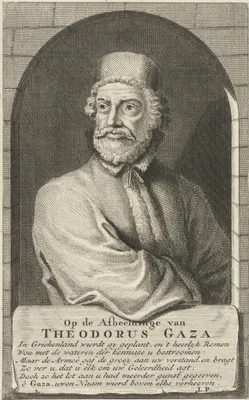
1483 THEOPHRASTUS OF ERESOS (ΘΕΌΦΡΑΣΤΟΣ) (371 – 287); MERULA, Georgius (1430 – 1494); GAZA, Theodorus (Θεόδωρος Γαζῆς) (1398 – 1475)
De historia et causis plantarum. Edited, with a table, by Georgius Merula. Translated by Theodorus Gaza.
A student of Aristotle, Theophrastus succeeded his teacher as head of the Athens Peripatetic School. This is the earliest work of scientific botany, a subject not addressed in any of the writings of Aristotle. Theophr…
GMN 1783 · https://historyofmedicine.com/id/8782
1484 KAUB, Johann Wonnecke von (1430 – 1503)
Herbarius latinus.
The first herbal printed in Germany, and the prototype for most of the herbals printed during the remainder of the 15th century. It also contains some fanciful pictures of animals. With text in Latin and with German s…
GMN 1795 · https://historyofmedicine.com/id/8785
1485 KAUB, Johann Wonnecke von (1430 – 1503)
Gart der Gesundheit. Ed. Johann von Cube.
The first herbal written and printed in a modern language, sometimes called the "German Herbarius” and Gart der Gesundheit. Like the Herbarius latinus issued the previous year, the text of this work was compiled by Jo…
GMN 1796 · https://historyofmedicine.com/id/1898
c. 1486 –1488
Arbolayre... Le grant herbier en francois.
GRANT HERBIER
The “Grant herbier” or Arbolayre, the only medieval herbal printed in French, was probably derived from Platearius (No. 1790). Its authorship remains unknown. The “Grete Herball” (No. 1802) is a translation of it. It …
GMN 1801 · https://historyofmedicine.com/id/1938
1488 ASCULO, Saladinus de (Saladin d'Ascoli) (1425 – )
Compendium aromatariorum.
ISTC No. is00020000. Also issued in Bologna: [Henricus de Harlem and Johannes Walbeck, for] Benedictus Hectoris, 12 Mar. 1488. ISTC No. is00019000. Digital facsimile of the Bologna edition from BnF Gallica at this link.
GMN 9398 · https://historyofmedicine.com/id/11581
1491
Hortus sanitatis.
HORTUS SANITATIS
First edition of an herbal and general treatise on natural history which became very popular; based on the unusually large number of surviving copies in institutions it must have also been a bestseller. The plant illu…
GMN 1797 · https://historyofmedicine.com/id/1481
1492 LEONICENO, Niccolò [Nicolaus Leonicenus] (1428 – 1524)
De Plinii et plurium aliorum in medicina erroribus.
A correction of the botanical errors of Pliny. Remembering the times in which Leoniceno lived, Garrison considers this work “a feat of the rarest intellectual courage”. It was accepted by later botanists and thus made…
GMN 1798 · https://historyofmedicine.com/id/1924
1497 GALEN, [Κλαύδιος Γαληνός; Galen of Pergamon] (129 – 216); ALEXANDER OF TRALLES [ἈΛΈΞΑΝΔΡΟΣ Ὁ ΤΡΑΛΛΙΑΝΌΣ; ALEXANDER TRALLIANUS] (525 – 605); PLATEARIUS, Matthaeus (1130 – 1180); SERAPION, Johannes (Yahya ibn Sarafyun) The Elder (850 – ); SERAPION THE YOUNGER (1150 – 1250); SIMON GENUENSIS, (Simon a Cordo; Simon Januensis; Simon of Genoa) (1250 – ); ABRAHAM TORTUOSIENSIS, [Abraham Judeus of Tortosa, Abraham ben Schem Tob]; PLATEARIUS, Johannes (1050 – 1120)
Breviarium medicinae. Tr: Gerardus Cremonensis. Add: Serapion the Younger: In medicinis simplicibus. Tr: Simon a Cordo Januensis and Abraham Judaeus Tortuosiensis. Galenus: De virtute centaureae; Johannes Platearius: Practica brevis; Matthaeus Platearius: De simplici medicina "Circa instans".
Serapion the Elder and Serapion the Younger were Syrian Christians who wrote in Arabic. Breviarum medicinae was an abridgement of the opinions of the Greek and Arabic physicians concerning diseases and their treatment…
GMN 1790 · https://historyofmedicine.com/id/1872
1499 DIOSCORIDES, Pedanius [Πεδάνιος Διοσκουρίδης] (40 – 90); NICANDER OF COLOPHON (ΝΊΚΑΝΔΡΟΣ Ὁ ΚΟΛΟΦΏΝΙΟΣ; NIKANDER) (-125 – )
Dioscorides, De materia medica [Greek]. Add: Pseudo- Dioscorides, De venenis, De venenatis animalibus [Greek]; Add: Nicander, Theriaca; Add: Alexipharmaca; Scholia [Greek].
Nicander was a Greek poet and physician. His Theriaca, in 958 hexameters, dealt with the symptoms and treatment of poisoning by the bites of poisonous animals; the Alexipharmaca considered intoxications through animal…
GMN 2069 · https://historyofmedicine.com/id/2486
1509 PLINIUS SECUNDUS, Gaius [Pliny the Elder] (23 – 79); PSEUDO-PLINY ( – 350)
Medicinae Pliniae libri quinque finiunt foeliciter.
The Medicina Plinii was an anonymous compilation of remedies dating to the early 4th century CE ."The excerptor, saying that he speaks from experience, offers the work as a compact resource for travelers in dealing wi…
GMN 8445 · https://historyofmedicine.com/id/10622
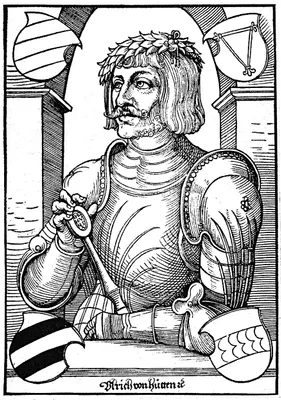
1519 HUTTEN, Ulrich von (1488 – 1523)
De guaiaci medicina et morbo gallico liber unus.
The German scholar, poet, satirist and reformer von Hutten issued a remarkably widely published and influential account of his suffering from syphilis and his treatment with gum from Guaiacum wood. This is considered …
GMN 9847 · https://historyofmedicine.com/id/12035
1525
Here begynnyth a new mater, the whiche sheweth and treateth of ye vertues & proprytes of herbes, the whiche is called an Herball.
BANCKES' HERBAL
Earliest English printed herbal. Published anonymously, it is usually referred to as “Banckes’ Herbal”, after its publisher, Rycharde Banckes. The text was derived from a medieval manuscript, and although the work had…
GMN 1799 · https://historyofmedicine.com/id/1928
1525 OVIEDO Y VALDÉS, Gonzalo Fernández de (1478 – 1557)
Sumario de la natural historia de las Indias.
First known description of the medicinal plants of Central America. Oviedo first described chigoe (“jiggers”?) in this book. "The book is divided into 86 chapters, focused mostly on American flora and fauna. It begins…
GMN 1800 · https://historyofmedicine.com/id/1933
1526
The grete herball whiche geveth parfyt knowlege and understandyng of all maner of herbes and there gracyous vertues.
GRETE HERBAL
The first illustrated English herbal. It was mainly a translation of the French “Grant Herbier”.
GMN 1802 · https://historyofmedicine.com/id/1941
1528 SCRIBONIUS LARGUS (1 – 50)
De compositionibus medicamentorum liber unus
Written in 47 CE, this is an important compilation of drugs and prescriptions. Among the 271 remedies are the first use of electrotherapy (for headaches) using the shock of the torpedo fish. and it records the drinkin…
GMN 1785 · https://historyofmedicine.com/id/8816
1530 –1536 BRUNFELS, Otto (1488 – 1534); BOCK [TRAGUS], Hieronymus (1498 – 1554); FUCHS, Leonhart (1501 – 1566); WEIDITZ, Hans The Younger (1495 – 1537)
Herbarum vivae eicones ad naturae imitationem, summa cum diligentia & artificio effigiatae, una cum effectibus earundem, in gratiam veteris illius, & jamjam renascentis herbariae medicinae ... Quibus adjecta ad calcem, appendix isagogica de usu & administratione simplicium. 3 vols.
Brunfels published the first two volumes of Herbarum vivae eicones ad nature imitationem, sum[m]a cum diligentia et artificio effigiatae. . .. in 1530 and 1532; the third volume was edited by Michael Heer and publishe…
GMN 1803 · https://historyofmedicine.com/id/1945
1530 GALEN, [Κλαύδιος Γαληνός; Galen of Pergamon] (129 – 216); GUINTER VON ANDERNACH, Johannes [Johannes Guinterius; Johannes Winter; Jean Guenther] (1505 – 1574); ALCIATO, Andrea (1492 – 1550)
De compositione medicamentorum... lib VII per Ioannem Guinterium Andernacum imprimum latinitate donati. Eiusdem De ponderibus & mensuris liber, D. Andrea Alciato interprete.
First separate edition in Latin of Galen's De compositione medicamentorum, On the Composition of medicines, translated by Johann Winter of Andernach, to which was added Galen's treatise on weights and measures transla…
GMN 11083 · https://historyofmedicine.com/id/13279
1531 IBN BUTLĀN, Abuʾl-Ḥasan Al-Mukhtār Ibn ʿAbdūn Ibn SaʿDūn. ابو الحسن المختار ابن عبدون ابن بطلان (Elluchasem Elimithar) ( – 1068); IBN AL-WAFID, Ali Ibn al-Husain (Abenguefit) (997 – 1074); AL-KINDĪ, Abu Yūsuf Yaʻqūb ibn ʼIsḥāq aṣ-Ṣabbāḥ ;أبو يوسف يعقوب بن إسحاق الصبّاح الكندي ( Alkindus) (801 – 873); WEIDITZ, Hans The Younger (1495 – 1537)
Tacuini sanitatis Elluchasem Elimithar Medici de Baldath, de sex rebus non naturalibus, earum naturis, operationibus, & rectificationibus, publico omnium usui, conseruandae sanitatis, recens exarati. Albengnefit De uirtutibus medicinarum, & ciborum. Iac. Alkindus De rerum gradibus.
A Christian physician of Baghdad, Ibn Butlān traveled widely, eventually settling in Antioch. His treatise on hygiene and dietetics, Taqwām al-sihhah (The Almanac of Health) presented a guide to medical regimen in tab…
GMN 7627 · https://historyofmedicine.com/id/9799
1531 BRUNFELS, Otto (1488 – 1534); PAUL OF AEGINA (ΠΑΥ͂ΛΟΣ ΑἸΓΙΝΉΤΗΣ; PAULUS AEGINETA) (625 – 690); KOPP, Wilhelm (1461 – 1532)
Pharmaca simplicia, Othone Brunfelsio interprete. Idem De ratione victus Guilelmo Copo Basilensi interprete.
First edition in Latin of Paul of Aegina's treatise on pharmacological simples, the ingredients for preparing medicines. This describes the properties of about 750 plants and minerals, listing them in alphabetical ord…
GMN 12807 · https://historyofmedicine.com/id/15053
1533 PEDERSEN, Christiern (1480 – 1554)
En nyttelig laegebog for fattige og rige, unge og gamle.
Pedersen, a Danish canon, humanist scholar, writer, printer and publisher, wrote and published the earliest medical book issued in Scandanavia by a Scandanavian writer. Translated as "A useful doctor book for poor and…
GMN 9863 · https://historyofmedicine.com/id/12051
1533 RÖSSLIN, Eucharius (Rhodion; Roesslin) der Jüngere ( – 1554)
Kreutterbuch von allem Erdtgewächs. Anfenglich von Doctor Johan Cuba zusamen bracht/ Jietz widerum(m) new Corrigirt/ und auß den bestberümptsten Artzten/ auch täglicher erfarnuß/ gemehrt. Mit warer Abconterfeiung aller Kreuter. Distillirbuch Hieronymi Braunschwig/ von aller kreuter außgebren(n)ten Wassern/ hiemit füglich ingeleibt.
An illustrated and enhanced version of the Gart der Gesundheit (1485) and the Kleinen Destillierbuchs of Hieronymus Brunschwig (1500). Contents include animals, including imaginery animals, a bit of human anatomy, min…
GMN 12763 · https://historyofmedicine.com/id/15009
1534 PEDERSEN, Christiern (1480 – 1554)
Om UrteVand.
Petersen issued a second book, "On herbal extracts" in 1534. According to Stokker, Remedies and rituals: Folk medicine in Norway and the new land (2007) p. 111, Pedersen's two works together contained "250 medical her…
GMN 9864 · https://historyofmedicine.com/id/12052
1536 GALEN, [Κλαύδιος Γαληνός; Galen of Pergamon] (129 – 216); MARCELLUS EMPIRICUS, (Marcellus Burdigalensis) (375 – 425); CORNARIUS, Janus (1500 – 1558)
De medicamentis empiricis physicis ac rationalibus liber.... Edited by Janus Cornarius. Item Claudii Galeni libri novem nunc primum Latini facti.... Jani Cornarii.
The Gallo-Roman physician Marcellus was born in Bordeaux. He may have served as magister officiorum under Theodosius I, or may have been royal physician. Sarton (Introduction to the history of science I, 391) consider…
GMN 10961 · https://historyofmedicine.com/id/13157
1538 TURNER, William (1508 – 1568)
Libellus de re herbaria novus.
An alphabetical catalogue of plants and medicines made from them. Turner, the “Father of English Botany”, treated plants as simples, and did not attempt to show their relationships. He was a much travelled man and a f…
GMN 1805 · https://historyofmedicine.com/id/1954
1539 BOCK [TRAGUS], Hieronymus (1498 – 1554)
New Kreütter Buch.
Bock was the first to describe the local flora of Germany, discovering many new species. His work gave a fresh impetus to plant description, With Brunfels and Fuchs he was one of the three “German fathers of botany”. …
GMN 1806 · https://historyofmedicine.com/id/1959
1539 ACTUARIUS, Joannes Zacharias [Aktouarios] (1275 – 1330); RUEL, Jean (Ruelle; Ioannes Ruellius) (1474 – 1537)
Actuarius de medicamentorum compositione. Ruellio interprete.
The 5th and 6th books of Actuarius's De methodo medendi, concerning materia medica. Digital facsimile from the Internet Archive at this link.
GMN 9016 · https://historyofmedicine.com/id/11195
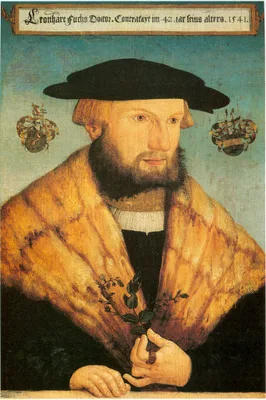
1542 FUCHS, Leonhart (1501 – 1566)
De historia stirpium commentarii.
Illustrated with full-page woodcut illustrations drawn by Albrecht Meyer, copied onto the blocks by Heinrich Füllmaurer and cut by Veit Rudolf Speckle; the artists' self-portraits appear on the final leaf. Describing …
GMN 1808 · https://historyofmedicine.com/id/1969
1542 MESUE, Yuhanna ibn Masawaih (يوحنا بن ماسويه) (777 – 857); DUBOIS, Jacques [Jacobus Sylvius] (1478 – 1555)
Joannis Mesuae Damasceni De re medica libri tres Jacobo Sylvio medico interprete.
Dubois, better known as Sylvius, produced a new translation of the complete works of Mesue, which became the standard text, and was reprinted 21 times. Digital facsimile from Google Books at this link.
GMN 9415 · https://historyofmedicine.com/id/11598
1544 DIOSCORIDES, Pedanius [Πεδάνιος Διοσκουρίδης] (40 – 90); MATTIOLI, Pietro Andrea Gregorio (Matthiolus) (1500 – 1577)
Di Pedacio Dioscoride Anazarbeo Libri cinque della historia, et materia medicinale tradotti in lingua volgare italiana da M. Pietro Andrea Matthiolo Sanese Medico, con amplissimi discorsi, et comenti, et dottissime annotationi, et censure del medesimo interprete.
Mattioli's translation and commentary on Dioscorides provided much new botanical information. As Mattioli continued to expand the commentary, adding new botanical and pharmacological information, through editions in L…
GMN 7820 · https://historyofmedicine.com/id/9992
1546 VESALIUS, Andreas (1514 – 1564)
Epistola, rationem modumque propinandi radicis Chynae decocti…
In this work on the discovery and therapeutic use of the china root (Smilax china) in the treatment of syphilis, Vesalius described the first attempt to formulate methods of identification of an exotic drug. He also o…
GMN 1810.1 · https://historyofmedicine.com/id/1983
1546 SMID, Henrik (Smyth, Smith) (1495 – 1563)
Skøn lystig ny Urtegaard.
Smid was one of the first writers on medicine in Scandinavia who was trained in medicine, but according to Stokker, Remedies and rituals: folk medicine in Norway and the new land (2007) p. 111 "had trouble succeeding …
GMN 9865 · https://historyofmedicine.com/id/12053
1548 TURNER, William (1508 – 1568)
The names of herbes in Greke, Latin, English, Duche & Frenche wyth the commune names that herbaries and apotecaries use.
A much-expanded English translation of Turner’s Libellus (No. 1805). That and the above work mark the beginning of scientific botany in England. They contain the first records of the occurrence of some 238 species of …
GMN 1810.2 · https://historyofmedicine.com/id/1987
1549 MYREPSOS, Nicolas (Nicolaus Myrepsus, Νικόλαος Μυρεψός) (1240 – ); FUCHS, Leonhart (1501 – 1566)
Medicamentorum opus in sectiones quadragintaocto digestum, hactenus in Germania non uisum, omnibus tum medicis, tum seplasiarns mirum in modum utile, a Leonharto Fuchsio...
The “Antidotarium magnum” by the Byzantine physician Nicolaus Myrepsus. It was the largest strictly pharmaceutical work that had appeared up to the time of its writing (about 1270-1280); it contained more than 2,500 p…
GMN 1793 · https://historyofmedicine.com/id/1884
1551 –1568 TURNER, William (1508 – 1568)
A new herball. 3 vols.
The first original scientific herbal written by an Englishman, and the first scientific herbal published in the English language. The illustrations were taken from the blocks cut for the 8vo edition of Fuchs (1546). T…
GMN 1811 · https://historyofmedicine.com/id/1999
1554 DODOENS, Rempert [DODONAEUS] (1517 – 1585)
Cruÿdeboeck.
Dodoens was the first Belgian botanist of international repute. Drawing on the illustrations of Fuchs, but preparing his own text, Dodoens improved on the alphabetical Fuchs organization scheme by grouping plants acco…
GMN 1812 · https://historyofmedicine.com/id/2012
1555 –1556 FUCHS, Leonhart (1501 – 1566)
Le benefice commun de tout le monde, ou commodité de vie d’vn chascun, pour la conseruation de santé: Remedes segretz tirées des plantes contre toutes maladies. 3 vols.
A vernacular guide for living a healthy life compiled from the writings of Fuchs. Includes herbal and dietary remedies, recipes for oils, pills and other preparations to treat maladies such as fever, plague and wounds.
GMN 9773 · https://historyofmedicine.com/id/11961
1555 LAGUNA DE SEGOVIA, Andrés [LACUNA] (1499 – 1559); DIOSCORIDES, Pedanius [Πεδάνιος Διοσκουρίδης] (40 – 90)
Acerca de la materia medicinal, y de los venenos mortiferos, traduzido de lengua griege, en la vulgar castellana, & illustrado con claras y substantiales annotationes, y con las figuras de innumeras plantas exquisitas y raras, por el Doctor Andres de Laguna....
Laguna' translation of Dioscorides into Spanish included commentaries and additions that double the original text. It included very beautiful botanical woodcuts of plants and animals, and is considered one of the best…
GMN 13125 · https://historyofmedicine.com/id/15381
1561 ANGUILLARA, Luigi (1512 – 1570); MARINELLO, Giovanni
Semplici dell’eccellente … liquali in piu pareri à diversi nobili huomini scritti appaiono, et nuovamente da G. Marinello mandati in luce.
Anguillara was one of the best of many commentators on Dioscorides. Digital facsimile from Google Books at this link.
GMN 1813 · https://historyofmedicine.com/id/2019

![DIOSCORIDES, Pedanius [Πεδάνιος Διοσκουρίδης] (40 – 90)](/media/portraits/2028)
![GALEN, [Κλαύδιος Γαληνός; Galen of Pergamon] (129 – 216)](/media/portraits/21)
![HIPPOCRATES, [Ἱπποκράτης; Hippocrates of Kos] (-460 – -370)](/media/portraits/50)