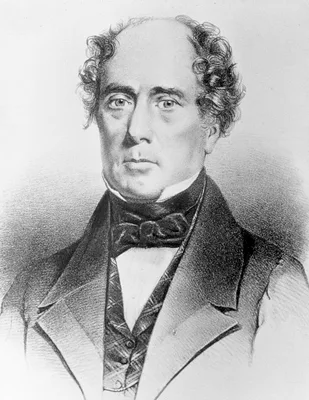
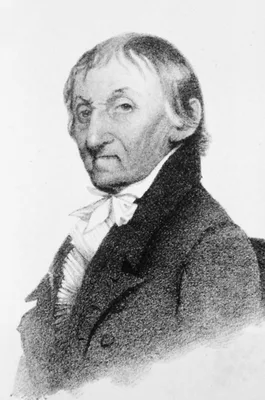
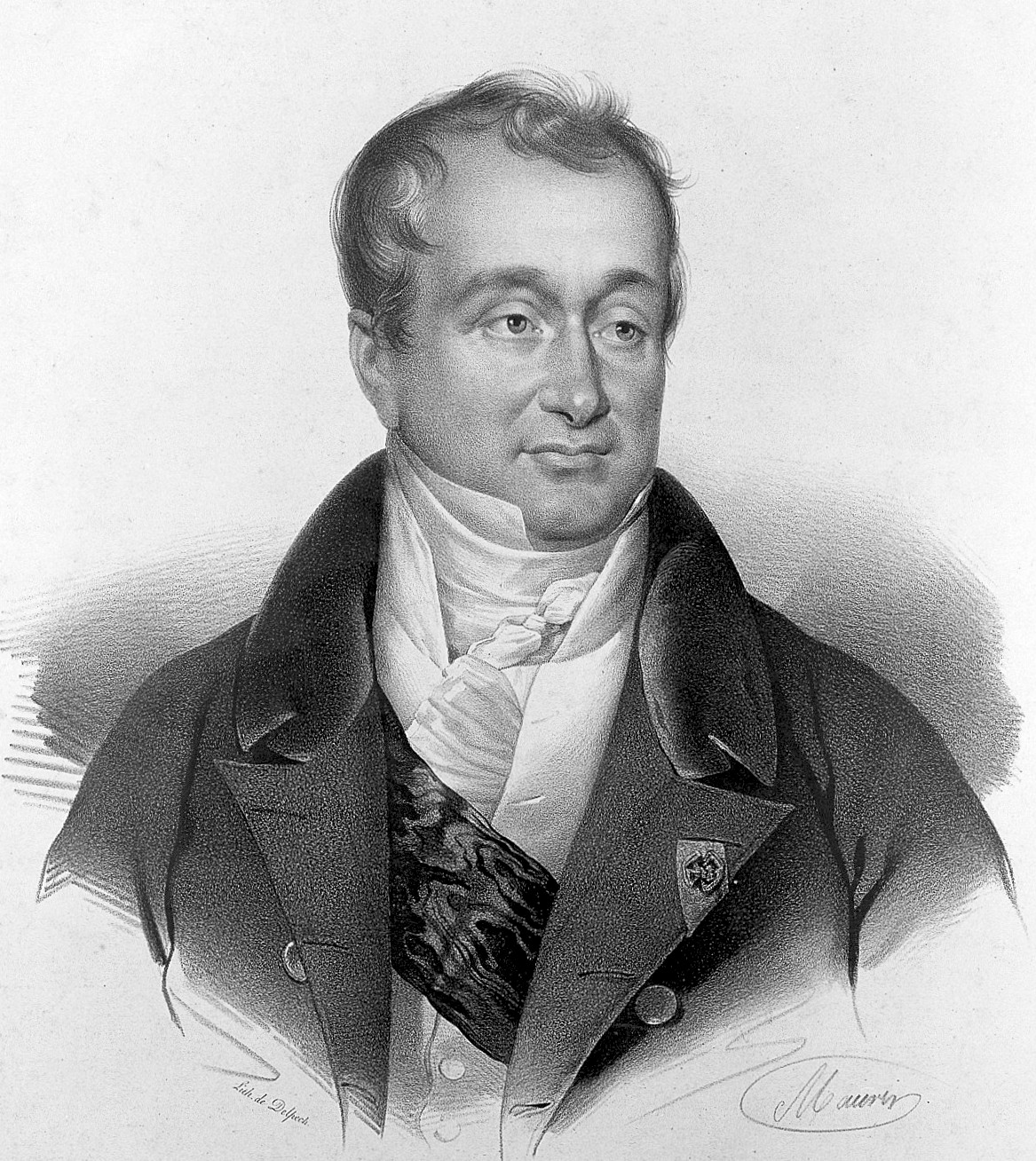
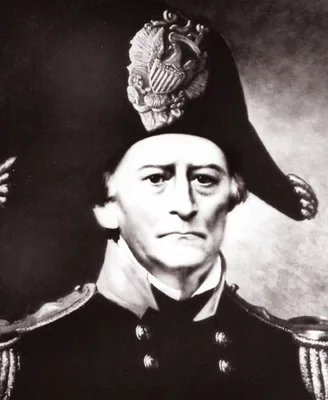
1807 CURTIS, Charles
An account of the diseases of India, as they appeared in the English fleet, and in the naval hospital at Madras, in 1782 and 1783; with observations on ulcers, and the hospital sores of that country, &c. & c. To which is prefixed a view of the diseases of an expedition and passage of a fleet and armament to India, in 1781.
Digital facsimile from Google Books at this link.
GMN 8814 · https://historyofmedicine.com/id/10992
1808 GILBERT, Nicolas-Pierre (1751 – 1814)
Tableau historique des maladies internes de mauvais caractère qui ont affligé la grande armée dans la campagne de Prusse et de Pologne, et notamment de celles qui ont été observées dans les hôpitaux militaires et les villes de Thorn, Bromberg, Fordon et Culm, dans l'hiver de 1806 à 1807, le printems et l'été de 1807, suivi de réflexions sur les divers modes de traitement de ces maladies adoptés par les médecins français et allemands.
Digital facsimile from biusante.parisdescartes.fr at this link.
GMN 13355 · https://historyofmedicine.com/id/15626
1810 APPERT, Nicolas (1742 – 1841)
L’Art de conserver, pendant plusieurs années, toutes les substances animales et végétales….
The first workable process for canning foods. In 1795 Appert began developing the process under Napoleon’s auspices as a way to maintain food on military expeditions. For strategic reasons he was not allowed to publis…
GMN 2467.1 · https://historyofmedicine.com/id/3037
1810 PERCY, Pierre François (1754 – 1825)
Pyrotechnie chirurgicale-pratique, ou l'art d'appliquer le feu en chirurgie.
GMN 13885 · https://historyofmedicine.com/id/16175
1812 –1817 LARREY, Dominique Jean (1766 – 1842)
Mémoires de chirurgie militaire, et campagnes. (Vol. 5 entitled Relation médicale de campagnes et voyages.) 5 vols.
Larrey was the greatest military surgeon in history. Of him Napoleon said: “C’est l’homme le plus vertueux que j’ai connu”. He was present at all Napoleon’s great battles and one of the few who stood by him on his abd…
GMN 2160 · https://historyofmedicine.com/id/888
1812 ASSALINI, Paolo (1759 – 1846)
Manuale di chirurgia del cavaliere.
Assalini served as a military surgeon with the Napoleonic armies in Egypt, Spain, Germany, and Russia, taking part in 60 battles and 400 combats. He was wounded three times, and was eventually appointed First Surgeon …
GMN 12052 · https://historyofmedicine.com/id/14260
1812 FRANK, Louis (1761 – 1825)
Collection d'opuscules de médecine pratique, avec un mémoire sur le commerce des nègres au Kaire.
Frank was with Napoleon in Egypt; this volume contains numerous reports on aspects of medicine during that campaign. Digital facsimile from Google Books at this link.
GMN 12196 · https://historyofmedicine.com/id/14406
1815 GUTHRIE, George James (1785 – 1856)
On gun-shot wounds of the extremities, requiring the different operations of amputation, with their after treatment.
Guthrie was the leading British military surgeon during the first half of the 19th century. He served in the Napoleonic Wars; his book is one of the most important in the history of the subject.
GMN 2161 · https://historyofmedicine.com/id/898
1815 TILTON, James (1745 – 1822)
Economical observations on military hospitals; and the prevention and cure of diseases incident to an army. In three parts: addressed I. To ministers of state and legislatures, II. To commanding officers, III. To the medical staff.
When this was published Tilton was serving as the first Surgeon General of the Army. On the title page of his book he characterized himself as "Physician and Surgeon in the Revolutionary Army of the United States." Di…
GMN 9206 · https://historyofmedicine.com/id/11387
1815 MACGRIGOR, Sir James (1771 – 1858)
Sketch of the medical history of the British Armies in the Peninsula of Spain and Portugal, during the late campaigns.
Digital facsimile from Google Books at this link.
GMN 10805 · https://historyofmedicine.com/id/13001
1816 MANN, James (1759 – 1832)
Medical sketches of the campaigns of 1812, 13, 14. To which are added, surgical cases, observations on military hospitals; and flying hospitals attached to a moving army.
The primary record of medicine during the War of 1812.
GMN 2161.1 · https://historyofmedicine.com/id/905
1816 GUTHRIE, George James (1785 – 1856)
Case of a wound of the peroneal artery successfully treated by a ligature.
On July 2, 1815, Guthrie successfully ligated the peroneal artery of a German soldier wounded at the Battle of Waterloo.
GMN 2937 · https://historyofmedicine.com/id/4969
1816 BURNETT, William Sir (1779 – 1861)
A practical account of the Mediterranean fever, as it appeared in the ships and hospitals of His Majesty's fleet on that station: With cases and dissections. To which are added facts and observations, illustrative of the causes, symptoms and treatment comprehending the history of the fever in the fleet, during the years 1810, 1811, 1813, and of the Gibraltar and Carthagena fevers.
"Burnett in 1816 described an epidemic of a short term fever occurring among the Naval Forces engaged in the Siege of Malta in 1799, and this fever was almost certainly phlebotomus" (Coulter, The Royal Naval Medical S…
GMN 11143 · https://historyofmedicine.com/id/13340
1817 MORICHEAU-BEAUPRÉ, Pierre-Jean (1778 – 1857)
Des effets et des propriétés du froid, avec un aperçu historique et médical sur la campagne de Russie.
Relative to the suffering of Napoleon's soldiers during the bitter cold of Russian winters, includes methodology of resucitation of victims of freezing. Digital facsimile of thesis issue of the 1817 edition from the I…
GMN 11154 · https://historyofmedicine.com/id/13351
1818 HENNEN, John (1779 – 1828)
Observations on some important points in the practice of military surgery.
“A valuable surgical record of the Napoleonic period” (Garrison).
GMN 2162 · https://historyofmedicine.com/id/992
1818 BALLINGALL, Sir George (1780 – 1855)
Practical observations on fever, dysentery and liver complaints as they occur amongst European troops in India. With introductory remarks on the disadvantages of selecting boys for Indian military service.
Ballingall distinguished between amoebic and bacillary dysentery. Digital facsimile from the Internet Archive at this link.
GMN 5182.1 · https://historyofmedicine.com/id/6307
1819 DOUGLAS, John (1788 – 1861)
Medical topography of Upper Canada.
The only book on the War of 1812 by a British or Canadian surgeon, and the first medical book on the Province of Ontario, Canada. This and the work of Mann (No. 2161.1) are the only books on medicine in the War of 181…
GMN 2162.1 · https://historyofmedicine.com/id/1005
1820 GUTHRIE, George James (1785 – 1856)
A treatise on gun-shot wounds. 2nd. ed.
Successful amputation at the hip-joint, after the battle of Waterloo, 7 July, 1815.
GMN 4445 · https://historyofmedicine.com/id/6350
1823 THACHER, James (1754 – 1844)
A military journal during the American Revolutionary War, from 1775-1783…
The first American medical historian, Thacher gave the best contemporary account of medicine during the Revolutionary War, as well as an important history of the war in general. See No. 6710.
GMN 6584.9 · https://historyofmedicine.com/id/8495
1825 ANTOMMARCHI, Francesco (1789 – 1838)
The last days of the Emperor Napoleon by Doctor F. Antommarchi, his physician. 2 vols.
An account of Napoleon's final illness and the medical care that Napoleon received while emprisoned on the island of Saint Helena, by his physician. English and French language versions of this work were published in …
GMN 11508 · https://historyofmedicine.com/id/13707
1829 –1836 LARREY, Dominique Jean (1766 – 1842)
Clinique chirurgicale, exercée particulièrement dans les camps et les hôpitaux militaires depuis 1792 jusqu’en 1829. 5 vols. plus atlas to vols. 1-3, and atlas to vol. 5.
Larrey’s most comprehensive surgical treatise, and the only one of his works that is extensively illustrated. Many of the plates concern surgical pathology.
GMN 5589.1 · https://historyofmedicine.com/id/7048
1830 GUTHRIE, George James (1785 – 1856)
On the diseases and injuries of arteries, with the operations required for their cure.
"Guthrie's experiences during the Peinsular War enabled him to make considerable improvements in practical surgery. These included introducing the practice of ligaturing both ends of a divided artery.... Guthrie made …
GMN 11604 · https://historyofmedicine.com/id/13804
1832 FORGET, Charles-Polydore (1800 – 1861)
Médecine navale ou nouveaux éléments d'hygiène, de pathologie et de thérapeutique médico-chirurgicales, à l'usage des officiers de santé de la marine de l'Etat et du commerce. 2 vols.
Digital facsimile from the Internet Archive at this link
GMN 13618 · https://historyofmedicine.com/id/15898
1834 DUPUYTREN, Guillaume, Le Baron (1777 – 1835)
Traité théorique et pratique des blessures par armes de guerre. 2 vols.
GMN 2163 · https://historyofmedicine.com/id/1013
1840 –1856 LAWSON, Thomas (1789 – 1861); COOLIDGE, Richard Henry (1816 – 1866)
Statistical report on the sickness and mortality in the Army of the United States. Vol. 1 (1819-1839), Vol. 2 (1839-1855), Vol. 3 (1855-1860).
UNITED STATES. War Dept. Surgeon General's Office
Vol.1 by Thomas Lawson; Vols 2 & 3 by Richard H. Coolidge. Digital facsimiles from the Internet Archive at this link.
GMN 2163.1 · https://historyofmedicine.com/id/1025
1843 MACGREGOR, William Lewis (1801 – 1853)
Practical observations on the principal diseases affecting the health of the European and native soldiers in the north-western provinces of India with a supplement on dysentery.
Digital facsimile from the Internet Archive at this link.
GMN 8807 · https://historyofmedicine.com/id/10985
1843 GREAT BRITAIN. ARMY MEDICAL DEPARTMENT
Catalogue of Reptiles contained in the Museum of the Medical Department of the Army, Fort Pitt, Chatham.
Chiefly specimens collected by medical officers stationed in Canada, Australia, and India, as well as other colonies. Digital facsimile from the Internet Archive at this link.
GMN 10377 · https://historyofmedicine.com/id/12569
1846 WILSON, John (1788 – 1870)
Medical notes on China.
Wilson served as Inspector of Hospitals and Fleets from 1841 to 1843 onboard the Minden, a British hospital ship deployed in China at Chusan and Hong Kong at the end of 1841 to treat casualties in the First Opium War …
GMN 13739 · https://historyofmedicine.com/id/16023
1855 STROMEYER, Georg Friedrich Ludwig (1804 – 1876)
Maximen der Kriegsheilkunst.
A landmark in military surgery, written by the founder of modern military surgery in Germany. Stromeyer, surgeon-general to the army of Hanover, is also notable for his important contributions to orthopedics. See Nos.…
GMN 2164 · https://historyofmedicine.com/id/1034
1855 BENDZ, Jacob Christian (1802 – 1858)
Quelques considérations sur la nature de l’ophthalmie dite militaire, par rapport à son apparition dans l’armée danoise depuis 1851.
Description of trachoma.
GMN 5876 · https://historyofmedicine.com/id/7272
1856 TAYLOR, Frances Margaret (1832 – 1900)
Eastern hospitals and English nurses; the narrative of twelve months' experience in the hospitals of Koulali and Scutari by a lady volunteer. 2 vols.
Taylor accompanied Florence Nightingale to Scutari, and worked as nurse in the military hospitals. She provided one of the first eye-witness acounts of military hospitals at Scutari and Koulali, and wrote about the ma…
GMN 7809 · https://historyofmedicine.com/id/9981
1856 FONSSAGRIVES, Jean-Baptiste (1823 – 1884)
Traité d'hygiène navale, ou de l'influence des conditions physiques et morales dans lesquelles l'homme de mer est appelé à vivre et des moyens de conserver sa santé.
One of the first naval manuals to include discussions of zootoxicology. Digital facsimile from BnF Gallica at this link. Much expanded second edition (1877); digital facsimile from BnF Gallica at this link.
GMN 9667 · https://historyofmedicine.com/id/11854
1857 SOYER, Alexis Bénoit (1810 – 1858)
Soyer's culinary campaign. Being historical reminiscences of the late war. With the plain art of cookery for military and civil institutions, the army, navy, public, etc., etc.
During the Crimean War, Soyer, probably the most famous English celebrity chef of his time, joined the troups at his own expense to advise the army on cooking and diet. "Later he was paid his expenses and wages equiva…
GMN 8981 · https://historyofmedicine.com/id/11160
1857 WILLIAMSON, George (1818 – 1865)
Observations on the human crania contained in the Museum of the Army Medical Department, Fort Pitt, Chatham.
Reprinted from the Dublin Quarterly Journal of Medical Science, May and August, 1857. Digital facsimile from the Internet Archive at this link.
GMN 10376 · https://historyofmedicine.com/id/12568
1858
Medical and surgical history of the British Army which served in Turkey and the Crimea during the war against Russia, in the years 1854-56. 2 vols.
GREAT BRITAIN. War Office. Medical Services
First official medical and surgical history of a war.
GMN 2165 · https://historyofmedicine.com/id/1041
1858 NIGHTINGALE, Florence (1820 – 1910)
Notes on matters affecting the health, efficiency, and hospital administration of the British Army. Founded chiefly on the experience of the late war. Presented by request to the Secretary of State for War.
This privately printed pamphlet contained a color statistical graphic entitled "Diagram of the causes of mortality in the Army of the East" which showed that epidemic disease, which was responsible for more British de…
GMN 7481 · https://historyofmedicine.com/id/9653
1858 MACLEOD, Sir George Husband Baird (1828 – 1892)
Notes on the surgery of the war in the Crimea, with remarks on the treatment of gunshot wounds.
Digital facsimile from Google Books at this link. Reprinted in Richmond, Virginia in 1862 during the American Civil War for the Confederate States Army by J. W. Randolph; digital facsimile of the Richmond edition from…
GMN 9312 · https://historyofmedicine.com/id/11494
1859 BILLROTH, Christian Albert Theodor (1829 – 1894)
Historische Studien über die Beurtheilung und Behandlung der Schusswunden vom fünfzehnten Jahrhundert bis auf die neueste Zeit.
English translation in Yale J. Biol. Med., 1931, 4, 16-36, 119-48, 225-57; reprinted in book form, New Haven, 1933.
GMN 2181 · https://historyofmedicine.com/id/1279
1859 NIGHTINGALE, Florence (1820 – 1910)
Notes on hospitals.
Includes four plans of hospitals. A third edition, completely revised, was published by Longmans, Green & Co., London, 1863.
GMN 1611 · https://historyofmedicine.com/id/1907
1859 APPIA, Louis Paul Amédée (1818 – 1898)
Le chirurgien à l'ambulance ou quelques études pratiques sur les plaies par armes à feu suivies de lettres à un collègue sur les blessés de Palestro, Magenta, Marignan et Solferino.
Appia became one of the original five founders of what was later named the International Committee of the Red Cross. English translation as The ambulance surgeon or practical observations on gunshot wounds, edited by …
GMN 13606 · https://historyofmedicine.com/id/15886
1860 NIGHTINGALE, Florence (1820 – 1910)
Notes on nursing: what it is, and what it is not.
After receiving training in Germany and France, Florence Nightingale had some nursing experience in England. The Crimean war gave her an opportunity to demonstrate the value of trained nurses. Within a few months of h…
GMN 1612 · https://historyofmedicine.com/id/1912
1861 TRIPLER, Charles Stuart (1806 – 1865); BLACKMAN, George Curtis (1819 – 1871)
Handbook for the military surgeon: Being a compendium of the duties of the medical officer in the field, the sanitary management of the camp, the preparation of food, etc.; with forms for the requisitions for supplies, returns, etc.; the diagnosis and treatment of camp dysentery; and all the important points in war surgery: Including gunshot wounds, amputation, wounds of the chest, abdomen, arteries and head, and the use of chloroform.
Digital facsimile of second edition (1861) from Google Books at this link.
GMN 7735 · https://historyofmedicine.com/id/9907
1861 CHISOLM, Julian John (1830 – 1903)
A manual of military surgery: for the use of surgeons in the Confederate army: with an appendix of the rules and regulations of the medical department of the Confederate army.
Digital facsimile from the U.S. National Library of Medicine at this link.
GMN 7811 · https://historyofmedicine.com/id/9983
1861 SCHUPPERT, Moritz (1817 – 1887)
A treatise on gun-shot wounds: written for and dedicated to the surgeons of the Confederate States Army.
Digital facsimile from the Hathi Trust at this link.
GMN 7814 · https://historyofmedicine.com/id/9986
1861 GROSS, Samuel David (1805 – 1884)
A manual of military surgery: or, hints on the emergencies of field, camp and hospital practice.
Digital facsimile of the second edition (1862) from the Hathi Trust at this link. Notably in 1862 this small work written for Union surgeons was reprinted in Richmond, Virginia for the use of Confederate surgeons. The…
GMN 7815 · https://historyofmedicine.com/id/9987
1862 DUNANT, Jean Henri (1828 – 1910)
Un souvenir de Solferino.
Dunant’s account of the great sufferings endured by the wounded at Solferino inspired the creation of the International Committee of the Red Cross (ICRC) in 1863, and resulted in the Geneva Convention of 1864. In 1901…
GMN 2166 · https://historyofmedicine.com/id/1099
1862 BILL, Joseph Howland (1835 – 1885)
Notes on arrow wounds.
The definitive work on American Indian arrow wounds suffered by U. S. troops and settlers in frontier warfare during the Western expansion of the United States. Bill eventually developed a "Forceps for the Extraction …
GMN 2166.1 · https://historyofmedicine.com/id/1101
1862 WOODWARD, Joseph Janvier (1833 – 1884)
The hospital steward's manual; for the instruction of hospital stewards, wardmasters, and attendants, in their several duties; prepared in strict accordance with existing regulations and the customs of service in the armies of the United States of America, and rendered authoritative by order of the Surgeon-General.
Digital facsimile from the Internet Arhive at this link.
GMN 7737 · https://historyofmedicine.com/id/9909
1862 MOORE, Samuel Preston (1813 – 1889)
Regulations for the Medical Department of the C. S. Army.
Electronic edition from unc.edu, Documenting the American South, at this link.
GMN 7817 · https://historyofmedicine.com/id/9989
1863 MOORE, Samuel Preston (1813 – 1889)
A manual of military surgery, prepared for the use of the Confederate States Army by order of the Surgeon-General [Samuel P. Moore].
". . . confined to those affections most intimately connected with gun-shot wounds and operations, as Shock, Tetanus, Hospital Gangrene, Pyaemia, &c." (from the preface). This is the only extensively illustrated Confe…
GMN 7736 · https://historyofmedicine.com/id/9908