1833 BELL, Sir Charles (1774 – 1842)
The hand: Its mechanism and vital endowments as evincing design.
Classic work on the anatomy, physiology, bio-mechanics, comparative anatomy, and adaptive importance of the hand. Issued as a volume in a series entitled the "Bridgewater Treatises." The first edition has 288pp. An en…
GMN 411.1 · https://historyofmedicine.com/id/917
1835 –1837 HUNTER, John (1728 – 1793)
The works of John Hunter. With notes. Edited by J.F. Palmer. 4 vols. and atlas.
Hunter gave a great impetus to the study of morbid anatomy; he was the veritable founder of experimental and surgical pathology. He was responsible for the commencement of some of the greatest medical museums; the Hun…
GMN 78 · https://historyofmedicine.com/id/1314
1837 LARTET, Édouard (1801 – 1871)
Note sur les ossements fossiles des terrains tertiaires de Simorre, de Sansan, etc., dans le département du Gers, et sur la découverte récente d’une mâchoire de singe fossile.
First published account of the discovery of the first anthropomorphic fossil ape. Lartet's discovery, made in 1836 at Sansan, was the first to challenge Cuvier’s assertion that both humans and apes were products of th…
GMN 7311 · https://historyofmedicine.com/id/9481
1839 MÜLLER, Johannes Peter (1801 – 1858)
Ueber die Compensation der physischen Kräfte am menschlichen Stimmorgan, mit Bemerkungen über die Stimme der Säugethiere, Vögel und Amphibien.
GMN 1458 · https://historyofmedicine.com/id/2371
1840 MÜLLER, Johannes Peter (1801 – 1858)
Ueber die Lymphherzen der Schildkröten.
GMN 328 · https://historyofmedicine.com/id/176
1840 –1845 OWEN, Sir Richard (1804 – 1892)
Odontography, or, a treatise on the comparative anatomy of the teeth. 2 vols.
Owen’s first large-scale original work covered the whole range of the toothed vertebrates, living and fossil, and discussed in detail the micrsocopic structure of the teeth and the physiology of dentition. Includes 16…
GMN 329 · https://historyofmedicine.com/id/178
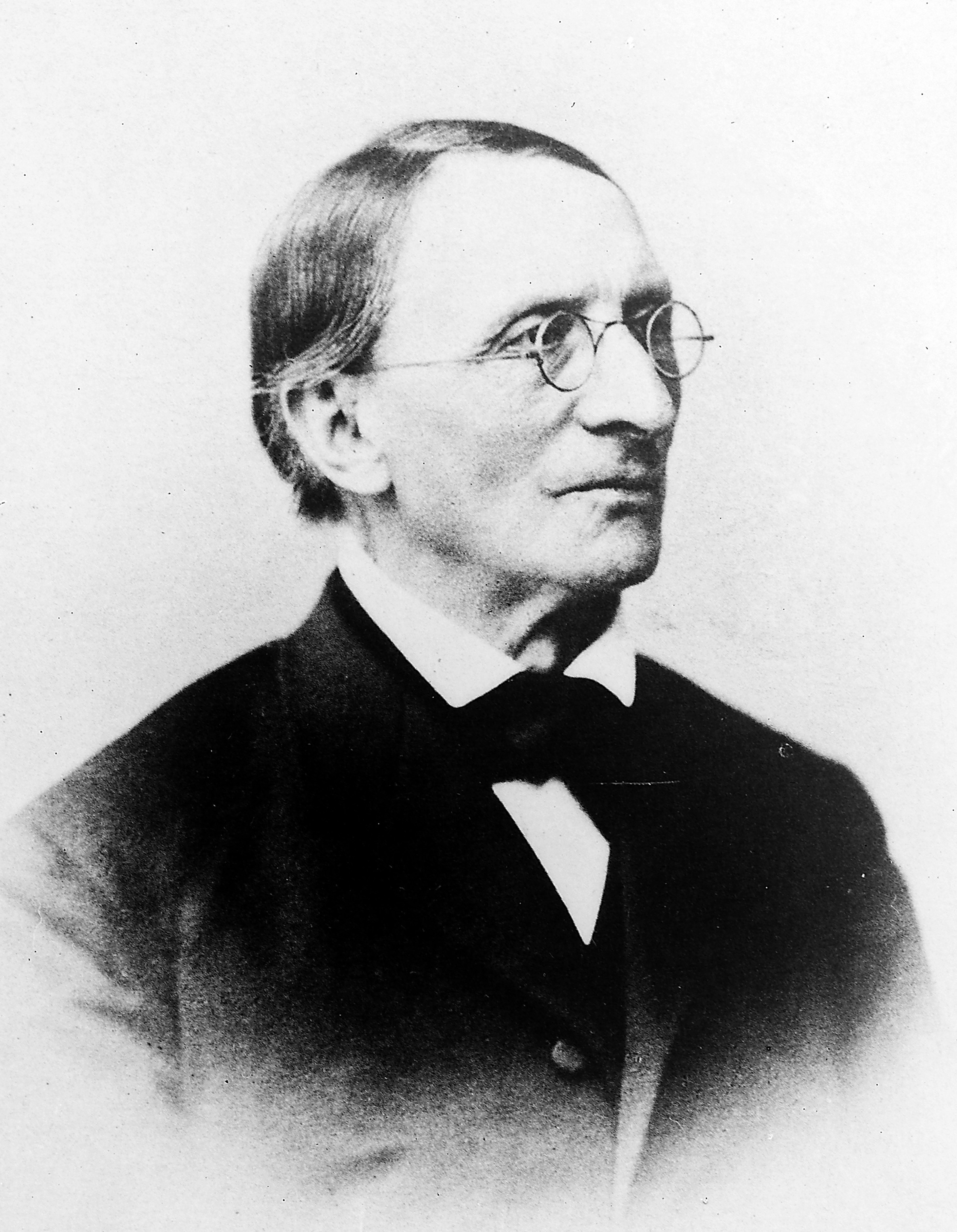
1846 –1848 STANNIUS, Hermann Friedrich (1808 – 1883); SIEBOLD, Carl Theodor Ernst von [Karl] (1804 – 1885)
Lehrbuch der vergleichenden Anatomie. 2 vols.
Vol. 2 was published in 1846; Vol. 1 in 1848. Digital facsimiles of both vols. from Biodiversity Heritage Library at this link. Siebold was the author of Vol. 1, on invertebrates; he introduced the taxa Arthropoda and…
GMN 331 · https://historyofmedicine.com/id/215
1846 HEWSON, William (1739 – 1774); GULLIVER, George (1804 – 1882)
The works. Edited with an introduction and notes by George Gulliver.
Hewson was a pupil of the Hunters. In 1769 his memoir on the lymphatics in fishes won for him the Copley Medal of the Royal Society. See also Nos. 863, 1102. The editor of this edition provided a detailed historical i…
GMN 79 · https://historyofmedicine.com/id/1371
1847 SAVAGE, Thomas Staughton (1804 – 1880); WYMAN, Jeffries (1814 – 1874)
A description of the characters and habits of troglodytes gorilla, a new species of orang from the Gaboon River, by Thomas S. Savage; Osteology of the same by Jeffries Wyman.
First description of the gorilla. Savage, an American physician/clergyman, worked extensively as a missionary physician in Africa. Digital facsimile from Google Books at this link.
GMN 329.1 · https://historyofmedicine.com/id/185
1848 LUDWIG, Carl Friedrich Wilhelm (1816 – 1895)
Über die Herznerven des Frosches.
GMN 809 · https://historyofmedicine.com/id/196
1848 OWEN, Sir Richard (1804 – 1892)
On the archetype and homologies of the vertebrate skeleton.
Owen’s vertebral theory of the origin of the skull, later refuted by Thomas Huxley and others. "Owen began working systematically on problems of transcendental morphology in 1841, as part of his curatorial task to arr…
GMN 330 · https://historyofmedicine.com/id/210
1852 OWEN, Sir Richard (1804 – 1892)
On the anatomy of the Indian rhinoceros (Rh. unicornis L.).
Owen was the first to describe the parathyroids, which he observed in his dissection of a Great Indian Rhinoceros that had lived at the Zoological Society of London from 1834 to 1849. See B. Modarai, A. Sawyer, & H. E…
GMN 1126.1 · https://historyofmedicine.com/id/1254
1855 –1856 DUVERNOY, George Louis (1777 – 1855)
Des caractères anatomiques des grands singes pseudo-anthropomorphes.
With 16 lithographed plates, this continues to be one of the most frequently cited of all works in the history of primate anatomy.
GMN 10884 · https://historyofmedicine.com/id/13080
1857 –1877 AGASSIZ, Louis Jean Rodolphe (1807 – 1873); AGASSIZ, Alexander Emmanuel Rodolphe (1835 – 1910)
Contributions to the natural history of the United States. 5 vols.
Vols. 1-4 by Louis Agassiz were published from 1857-1862; Vol. 5, North American starfishes by Alexander Agassiz, appeared in 1877. Louis Agassiz was, for his time, the leading comparative anatomist in America and a v…
GMN 333 · https://historyofmedicine.com/id/217
1863 HUXLEY, Thomas Henry (1825 – 1895)
Evidence as to man’s place in nature.
Huxley showed that in the visible characters man differs less from the higher apes than do the latter from lower members of the same order of primates. He also provided the first thorough and detailed comparative desc…
GMN 165 · https://historyofmedicine.com/id/3242
1865 VROLIK, Willem (1801 – 1863)
Catalogue de la superbe bibliothèque d'ethnographie, de zoologie, d'anatomie comparée, etc....
The auction catalogue of Vrolik's library, sold two years after his death, organized by subject. Prefaced by an essay about Vrolik's life and work by J. van der Hoeven, and a chronological list of Vrolik's publication…
GMN 6938 · https://historyofmedicine.com/id/9103
1866 –1868 OWEN, Sir Richard (1804 – 1892)
On the anatomy and physiology of the vertebrates. 3 vols.
Vol. 1. Fishes and reptiles; Vol. 2. Birds; Vol. 3. Mammals. The most important work on the subject after Cuvier, based entirely on personal observations. Owen entitled his 40th and concluding chapter "Derivative hypo…
GMN 336 · https://historyofmedicine.com/id/224
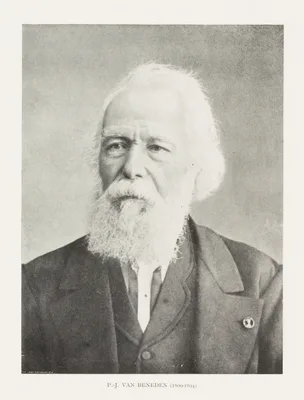
1869 –1880 BENEDEN, Pierre-Joseph van (1809 – 1894); GERVAIS, François Louis Paul (1816 – 1879)
Ostéographie des cétacés vivants et fossiles, comprenant la description et l'iconographie du squelette et du système dentaire de ces animaux, ainsi que des documents relatifs à leur histoire naturelle. Folio atlas + 3 vols. text.
Digital facsimile from Biodiversity Heritage Library at this link.
GMN 10292 · https://historyofmedicine.com/id/12483
1870 GEGENBAUR, Karl (1826 – 1903)
Grundzüge der vergleichenden Anatomie der Wirbelthiere.
Gegenbaur’s best work. He stressed the value of comparative anatomy as the basis of the study of descent, considering that knowledge of the relations of corresponding parts in different animals was more important even…
GMN 337 · https://historyofmedicine.com/id/229
1871 HUXLEY, Thomas Henry (1825 – 1895)
A manual of the anatomy of vertebrated animals.
Huxley was among those who refuted Owen’s theory of the vertebral skull.
GMN 338 · https://historyofmedicine.com/id/242
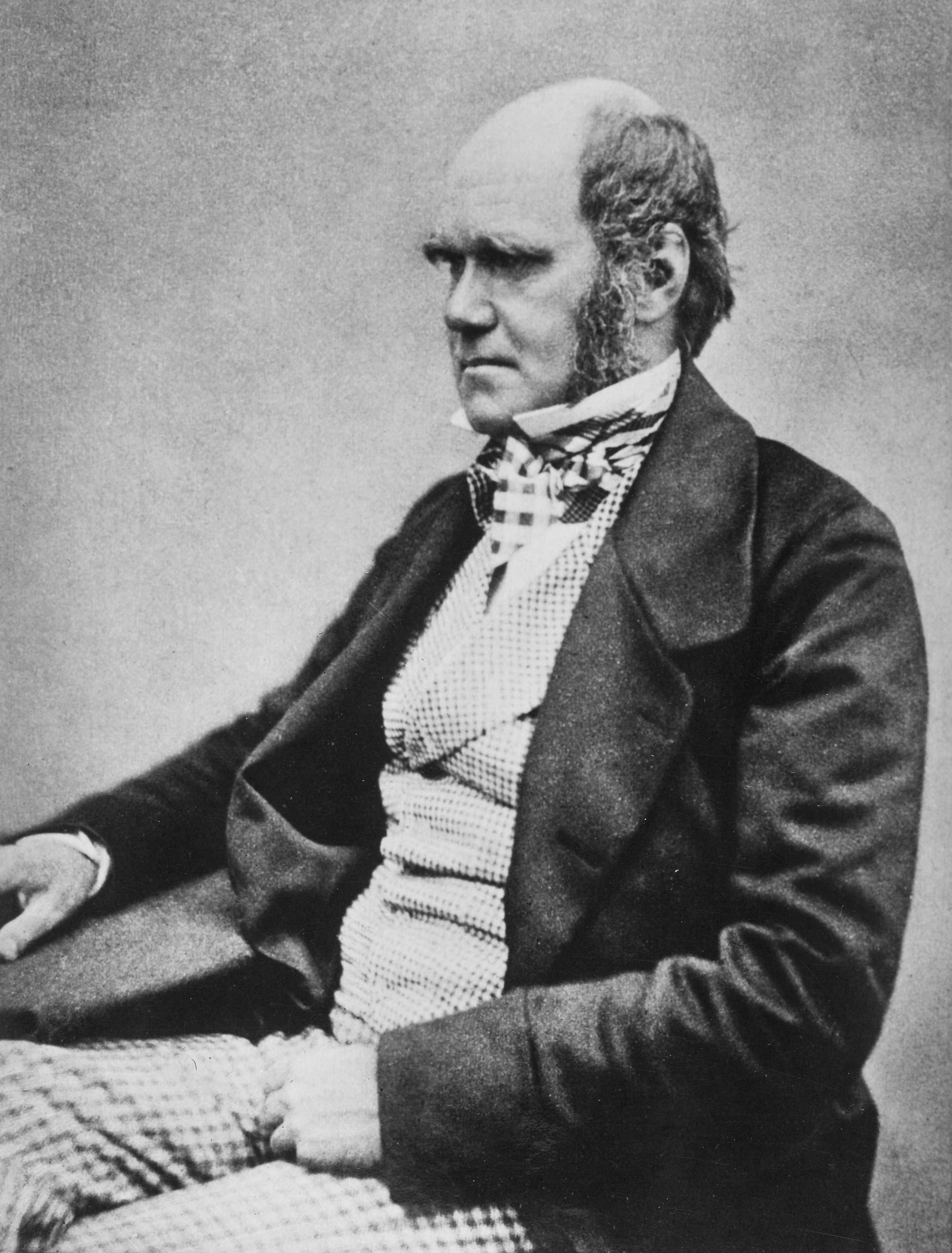
1871 DARWIN, Charles Robert (1809 – 1882)
The descent of man, and selection in relation to sex. 2 vols.
This is really two works. The first demolished the theory that the universe was created for humans while in the second Darwin presented a mass of evidence in support of his earlier hypothesis regarding sexual selectio…
GMN 170 · https://historyofmedicine.com/id/3255
1874 PYE-SMITH, Philip Henry
Catalogue of the preparations of comparative anatomy in the Museum of Guy's Hospital.
Digital facsimile from the Internet Archive at this link.
GMN 7498 · https://historyofmedicine.com/id/9670
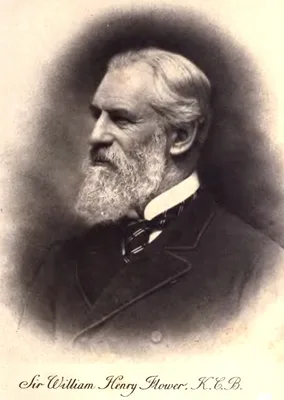
1879 –1891 HUNTER, John (1728 – 1793); FLOWER, William Henry (1831 – 1899); SHARPE, Richard Bowdler (1847 – 1909)
Catalogue of the specimens illustrating the osteology and dentition of vertebrated animals, recent and extinct, contained in the Museum of the Royal College of Surgeons of England. 3 vols.: Part 1. Man: Homo sapiens.... Part II: Class Mammalia, other than man... Part III: Class Aves.
Parts 1 and 2 by Flower; part 3 by Sharpe. Digital facsimile of Part 1 from the Biodiversity Heritage Library at this link, of Part 2 at this link, and Part 3 at this link.
GMN 7591 · https://historyofmedicine.com/id/9763
1881 –1884 RETZIUS, Magnus Gustaf (1842 – 1919)
Das Gehörorgan der Wirbelthiere. 2 vols.
The most magnificent of all comparative anatomical studies of the ear, and the most beautiful studies of the ear after those of Casseri (No.1540). Retzius described the “Retzius bodies” in the labyrinth.
GMN 1566 · https://historyofmedicine.com/id/1237
1883 WIEDERSHEIM, Robert Ernst Eduard (1848 – 1923)
Lehrbuch der vergleichenden Anatomie der Wirbelthiere.
English translation, London, 1886. Digital facsimile of the 1883 edition from the Biodiversity Heritage Library, Internet Archive, at this link.
GMN 343 · https://historyofmedicine.com/id/246
1888 BROCA, Pierre Paul (1824 – 1880)
Mémoires sur le cerveau de l’homme et des primates publiés avec un introduction et des notes par Le docteur S. Pozzi.
Digital facsimile from the Biodiversity Heritage Library at this link.
GMN 344 · https://historyofmedicine.com/id/249
1888 FÜRBRINGER, Max Carl Anton (1846 – 1920)
Untersuchungen zur Morphologie und Systematik der Vögel, zugleich ein Beitrag zur Anatomie der Stütz- und Bewegungsorgane. 2 vols.
Fürbringer specialized in avian morphology and classification; he undertook the first major phylogenetic ordering of bird groups based on a large scale study of skeletal, morphological and anatomical characteristics. …
GMN 9328 · https://historyofmedicine.com/id/11510
1891 CLARKE, James Jackson (1860 – 1940)
Descriptive catalogue of the Pathological Museum of St. Mary's Hospital.
Based on manuscript catalogue begun by Charles Murchison in 1855 and continued by subsequent curators, including Dr. Broadbent.--Preface, p. [3. ]Digital facsimile from the Internet Archive at this link.
GMN 10365 · https://historyofmedicine.com/id/12557
1898 –1903 HUXLEY, Thomas Henry (1825 – 1895); LANKESTER, Sir Edwin Ray (1847 – 1929); FOSTER, Sir Michael (1836 – 1907)
The scientific memoirs of Thomas Henry Huxley. Edited by Professor Michael Foster... and by Professor E. Ray Lankester. 5 vols.
Presents virtually all of Huxley's scientific papers arranged in chronological order, as well as reports of his Royal Institution Friday Evening Discourses. The final supplemental volume contains the remainder of Huxl…
GMN 7450 · https://historyofmedicine.com/id/9622
1903 CUYER, Édouard (1852 – 1900)
Anatomie artistique des animaux.
Translated into English by George Haywood as Artistic anatomy of animals (London: Baillière, Tindall & Cox., 1904. Digital facsimile of the 1903 edition from the Hathi Trust at this link, of the English translation fr…
GMN 10101 · https://historyofmedicine.com/id/12290
1904 DUCKWORTH, Wynfrid Laurence Henry (1870 – 1956)
Morphology and anthropology. A handbook for students.
Digital facsimile from Google Books at this link.
GMN 347 · https://historyofmedicine.com/id/257
1906 GALEN, [Κλαύδιος Γαληνός; Galen of Pergamon] (129 – 216); SIMON, Max
Sieben Bücher Anatomie des Galen: ... zum ersten Male veröffentlicht nach den Handschriften einer arabischen Übersetzung des 9. Jahrh. n. Chr. / ins Deutsche Übertragen und Kommentiert von Max Simon. 2 vols.
First printed edition of the final six and one-half books (the second half of book 9, and books 10-15) of Galen's De anatomicis administrationibus, which were lost in the Greek original. In 1714 the Bodleian Library a…
GMN 360 · https://historyofmedicine.com/id/313
1906 RETZIUS, Magnus Gustaf (1842 – 1919)
Cerebra simiarum illustrata. Das Affenhirn in bildlicher Darstellung.
Describes and illustrates with photographs the cerebral cortex of over 50 species of primate, including prosimians, monkeys, and apes..
GMN 7340 · https://historyofmedicine.com/id/9511
1907 –1908 GRAY, Albert Alexander (1869 – 1936)
The labyrinth of animals. 2 vols.
“An important and elaborate work designed to give the anatomy of the labyrinth, or inside of the ears of vertebrates, with the exception of fishes” (Casey Wood). Illustrated with stereoscopic photographs.
GMN 1569.2 · https://historyofmedicine.com/id/1276
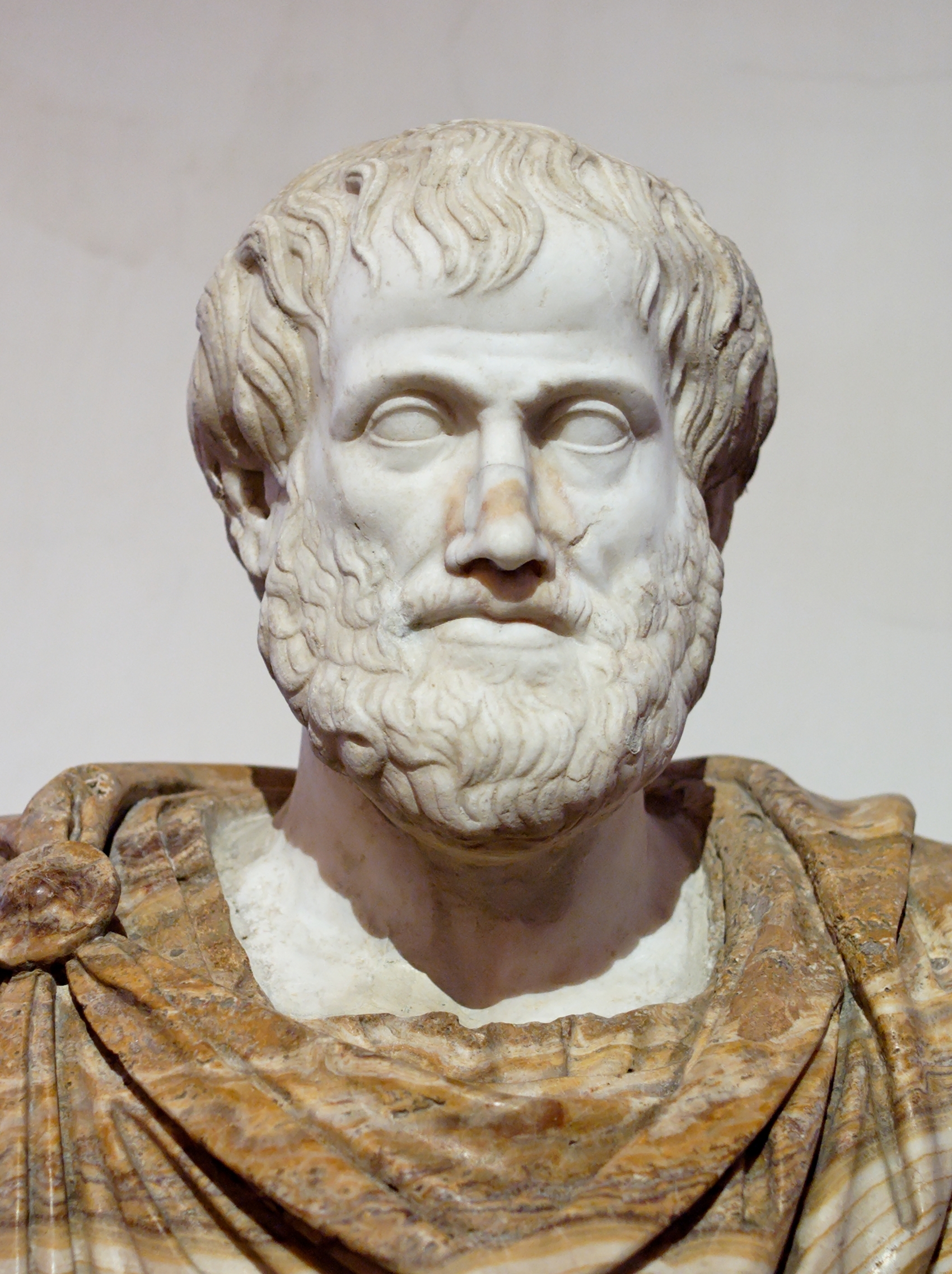
1908 –1952 ARISTOTLE (ἈΡΙΣΤΟΤΈΛΗΣ) (-384 – -322); SMITH, John Alexander (1863 – 1939); ROSS, Willliam David (1877 – 1971)
The works of Aristotle translated into English. Edited by J.A. Smith and W.D. Ross. 12 vols.
De motu animalium. De incessu animalium. In his Works, edited by J.A. Smith and W.D. Ross, 5, 698a-714b., Oxford, 1912. De Anima. In his Works… translated into English. Edited by J. A. Smith and W. D. Ross. 3, 402a-35…
GMN 18 · https://historyofmedicine.com/id/4491
1910 KEITH, Sir Arthur (1866 – 1955)
Illustrated guide to the museum of the Royal College of Surgeons.
Vistor's guide to the museum, including the collections formed by John Hunter, when it was intact, before the destruction it suffered in World War II. Digital facsimile from the Internet Archive at this link.
GMN 10364 · https://historyofmedicine.com/id/12556
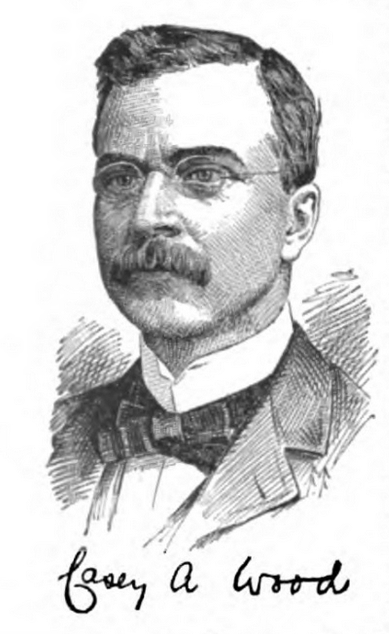
1917 WOOD, Casey Albert (1856 – 1942)
The fundus oculi of birds especially as viewed by the ophthalmoscope. A study in comparative anatomy and physiology. Illustrated by 143 drawings... also by sixty-one colored paintings prepared for this work by Arthur W. Head.
Digital facsimile from the Biodiversity Heritage Library, Internet Archive, at this link.
GMN 7116 · https://historyofmedicine.com/id/9283
1928 TILNEY, Frederick (1875 – 1938); RILEY, Henry Alsop (1887 – 1966)
The brain from ape to man: A contribution to the study of the evolution and development of the human brain by Frederick Tilney. With chapters on the reconstruction of the gray matter in the primate brain stem by Henry Alsop Riley. 2 vols.
Classic study of the evolution of the central nervous system in the higher mammals. Digital facsimile from the Internet Archive at this link.
GMN 350 · https://historyofmedicine.com/id/269
1941 POLYAK, Stephen Lucian (1889 – 1955)
The anatomy and the histology of the retina in man, ape, and monkey.
A scholarly tour-de-force with a bibliography of over 700 references.
GMN 1533.1 · https://historyofmedicine.com/id/2860
1944 COLE, Francis Joseph (1872 – 1959)
A history of comparative anatomy: From Aristotle to the eighteenth century.
Reprinted, Dover Publications, 1978.
GMN 356 · https://historyofmedicine.com/id/291
1969 –1975 COLE, Francis Joseph (1872 – 1959); EALES, Nellie Barbara (1889 – 1989)
The Cole Library of early medicine and zoology. Catalogue of books and pamphlets. 2 parts.
The library of F.J. Cole (see No. 356). Part 1: 1472-1800 to the present day and Supplement to Part 1.
GMN 6786.15 · https://historyofmedicine.com/id/8371
1975 STUBBS, George (1724 – 1806); DOHERTY, Terence
The anatomical works of George Stubbs.
Reproduces all of the known anatomical drawings of the painter, George Stubbs (1724-1806), together with his midwifery illustrations and the text and plates for his work on anatomy of the horse. (No. 308.1).
GMN 6610.11 · https://historyofmedicine.com/id/8599
1992 OWEN, Sir Richard (1804 – 1892)
The Hunterian Lectures in comparative anatomy May-June, 1837. Edited, and with an introductory essay and commentary by Phillip Reid Sloan.
GMN 7611 · https://historyofmedicine.com/id/9783
1992 CUVIER, Jean Léopold Chrétien Frédéric "Georges" (1769 – 1832); SMITH, Jean Chandler (1918 – 1999)
Georges Cuvier: An annotated bibliography of his published works
GMN 11214 · https://historyofmedicine.com/id/13411
1995 NYHART, Lynn K.
Biology takes form: Animal morphology and the German universities 1800-1900.
GMN 11900 · https://historyofmedicine.com/id/14105
2002 HARTWIG, Walter Carl (1964 – )
The primate fossil record.
A comprehensive collaborative study edited by Hartwig. Includes an extensive historical bibliography.
GMN 7271 · https://historyofmedicine.com/id/9441
2002 ARISTOTLE (ἈΡΙΣΤΟΤΈΛΗΣ) (-384 – -322); LENNOX, James G. (1948 – )
Aristotle: On the parts of the animals I-IV. Translated with commentary by James G. Lennox.
GMN 9078 · https://historyofmedicine.com/id/11257
2010 CUNNINGHAM, Andrew
The anatomist anatomis'd: An experimental discipline in Enlightenment Europe.
History of the practice and teaching of anatomy, and comparative anatomy, in the 18th century, mainly in Europe, but also touching on the introduction of Western methods of studying and teaching anatomy into Japan.
GMN 8593 · https://historyofmedicine.com/id/10770
2011 WHALLEY, Angelina (1960 – )
Animal inside out: A Body Worlds production.
Applying the technique and theatricality of plastination to the anatomy of animals including animals as large as elephants.
GMN 10236 · https://historyofmedicine.com/id/12426
2012 DIOGO, Rui; WOOD, Bernard A. (1945 – )
Comparative anatomy and phylogeny of primate muscles and human evolution.
1027pp. The most comprehensive review of the comparative anatomy, homologies and evolution of the head, neck, pectoral and upper limb muscles of primates. The format is unusual with the text occupying the first 134pp.…
GMN 10865 · https://historyofmedicine.com/id/13061

![SIEBOLD, Carl Theodor Ernst von [Karl] (1804 – 1885)](/media/portraits/231)
![GALEN, [Κλαύδιος Γαληνός; Galen of Pergamon] (129 – 216)](/media/portraits/21)