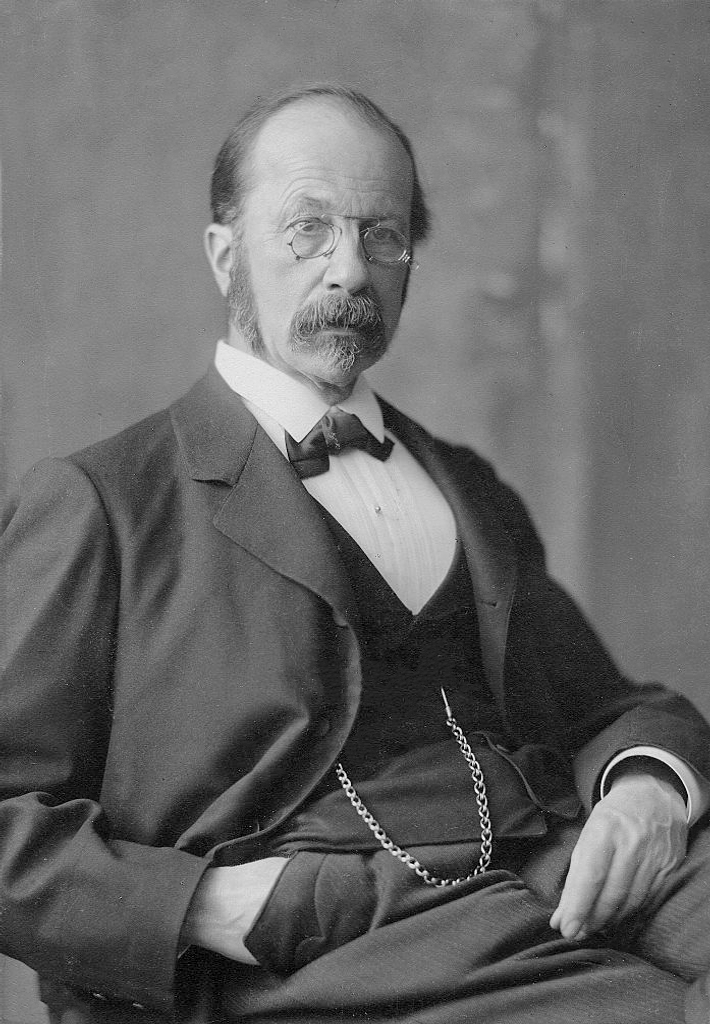
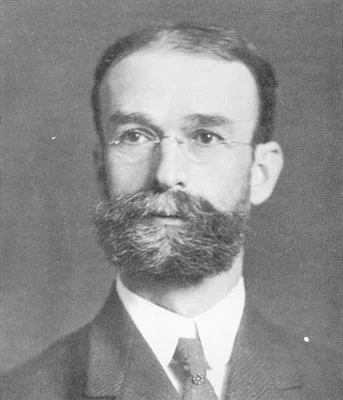
1870 HIS, Wilhelm Sr. (1831 – 1904)
Beschreibung eines Mikrotoms.
His was, more than any other person, responsible for the introduction of the microtome, although Ranvier and other French people had earlier employed microtomes of simpler types.
GMN 268 · https://historyofmedicine.com/id/8744
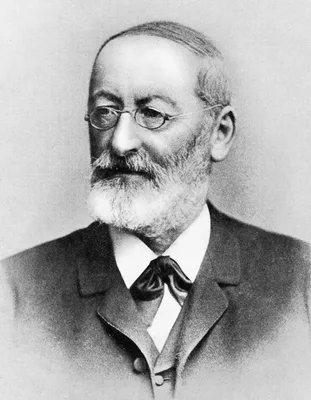
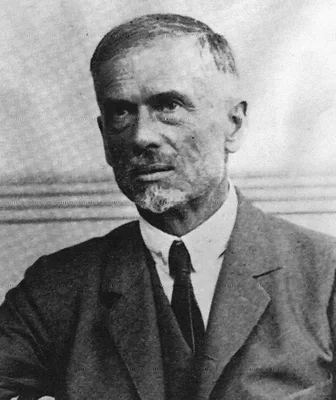
1871 WEIGERT, Carl (1845 – 1904)
Ueber Bakterien in der Pockenhaut.
Weigert was the first to stain bacteria. He introduced many of the best staining methods in use today. Weigert discovered bacteria in hemorrhagic smallpox. In the same paper is described how carmine will color cocci.
GMN 2482 · https://historyofmedicine.com/id/3084
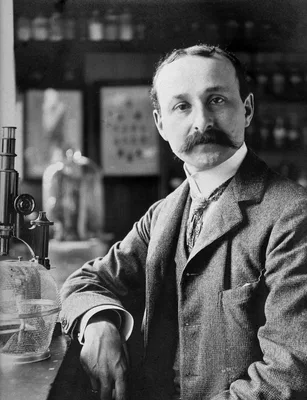
1872 COHN, Ferdinand Julius (1828 – 1898)
Untersuchungen über Bacterien.
Cohn’s morphological classification of bacteria. He founded the Beiträge.
GMN 2483 · https://historyofmedicine.com/id/3087
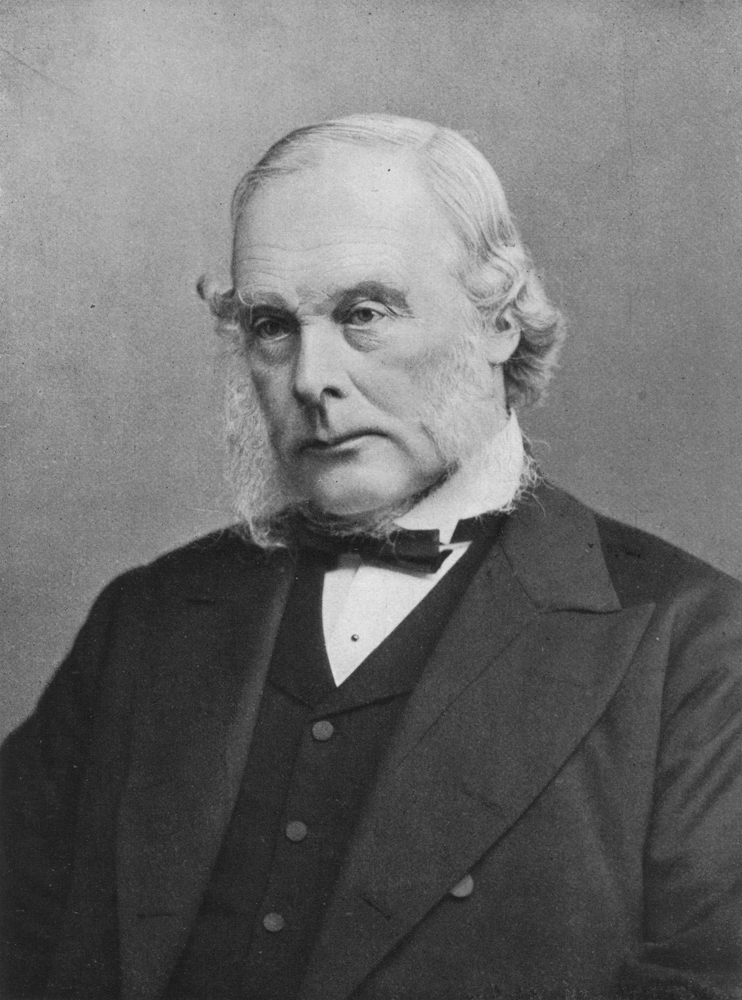
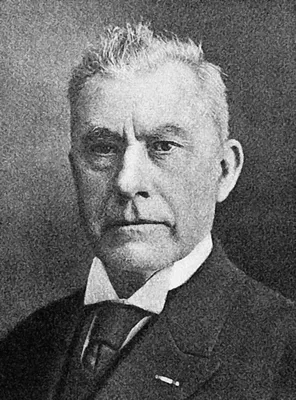
1873 LISTER, Joseph, 1st Baron Lister (1827 – 1912)
A further contribution to the natural history of bacteria and the germ theory of fermentative changes.
Isolation of Bacterium lactis, the specific micro-organism responsible for the lactic acid fermentation of milk.
GMN 2484 · https://historyofmedicine.com/id/3092
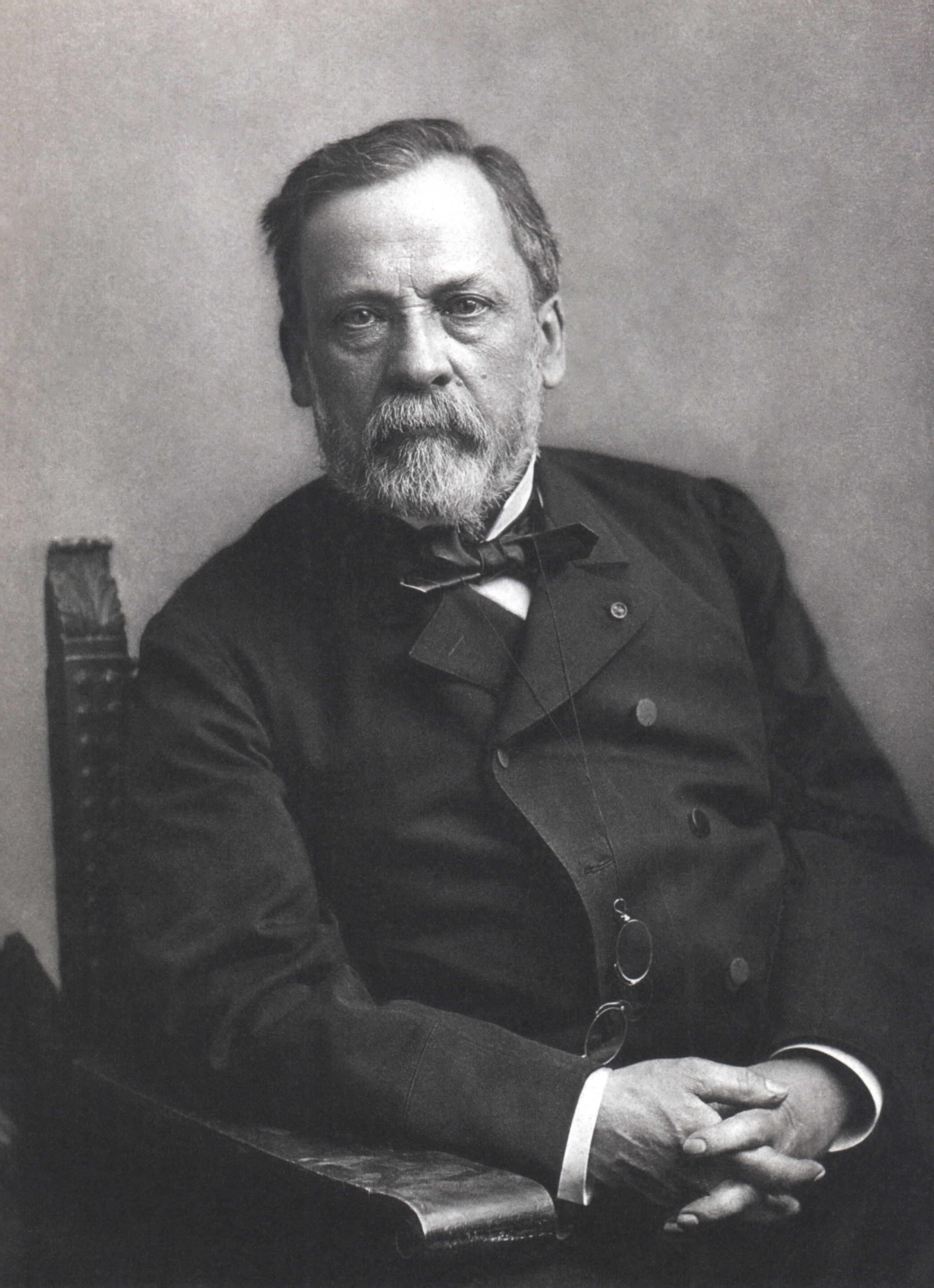
1876 PASTEUR, Louis (1822 – 1895)
Études sur la bière, ses maladies, causes qui les provoquent, procédé pour la rendre inaltérable; avec une théorie nouvelle de la fermentation.
Pasteur resumed his studies on fermentation in 1876, and in this book took into account the developments in this field since his previous publications on the subject. He described a new and perfected method of prepari…
GMN 2485 · https://historyofmedicine.com/id/3095
1876 WEIGERT, Carl (1845 – 1904)
Ueber eine Mykose bei einem neugeborenen Kinde (Bakterienfärbung mit Anilinfarben).
In this paper Weigert showed that methyl violet will reveal cocci in tissues.
GMN 2486 · https://historyofmedicine.com/id/3098
1877 EHRLICH, Paul (1854 – 1915)
Beitrag zur Kenntnis der Anilinfärbungen und ihrer Verwendung in der mikroskopischen Technik.
Ehrlich’s first paper on the staining of specific granulation in white blood corpuscles by means of aniline dyes. His work immensely affected subsequent technical methods of staining.
GMN 2487 · https://historyofmedicine.com/id/3104
1877 KOCH, Robert Heinrich Hermann (1843 – 1910)
Verfahrungen zur Untersuchung, zum Conserviren und Photographiren der Bacterien.
Koch greatly improved staining methods; he laid the foundations of the technical procedures employed in bacteriology today. In the above paper he described his method of slide preparation, making films of bacteria on …
GMN 2488 · https://historyofmedicine.com/id/3111
1877 –1878 LISTER, Joseph, 1st Baron Lister (1827 – 1912)
On the lactic fermentation and its bearings on pathology.
Lister was the first to obtain a pure culture of a bacterium (Bact. lactis). Lister first presented the results of this research in an address to the Royal Society on December 18, 1877. Because of its historic signifi…
GMN 2489 · https://historyofmedicine.com/id/3115
1877 TYNDALL, John (1820 – 1893)
Fermentation and its bearings on the phenomena of disease.
See No. 2495.
GMN 2491 · https://historyofmedicine.com/id/3138
1878 SÉDILLOT, Charles Emmanuel (1804 – 1883)
De l'influence des découvertes de M. Pasteur sur les progrès de la chirurgie.
Sedillot, a surgeon, first used the word "microbe" on p. 634, third paragraph, of this paper. He coined the term after consulting with lexicographer Émile Littré, to ascertain etymological appropriateness. Shortly the…
GMN 11078 · https://historyofmedicine.com/id/13274
1880 PASTEUR, Louis (1822 – 1895)
De l’extension de la théorie des germes à l’étiologie de quelques maladies communes.
In this study of furunculosis (“boils”) and osteomyelitis Pasteur left the first recognizable descriptions of staphylococcus and streptococcus. The term streptococcus had been coined by Billroth in 1874; however, Past…
GMN 2492.1 · https://historyofmedicine.com/id/3143
1881 OGSTON, Sir Alexander (1844 – 1929)
Report upon micro-organisms in surgical diseases.
Ogston showed that micrococci are constantly present in acute and chronic abscesses. He discovered Staphylococcus aureus. Ogston named staphylococcus in his paper, "Micrococcus poisoning," J. Anat. Physiol., 1882, 16,…
GMN 2494 · https://historyofmedicine.com/id/3152
1881 TYNDALL, John (1820 – 1893)
Essays on the floating-matter of the air in relation to putrefaction and infection.
Tyndall interested himself in atmospheric germs and dust. His experiments on sterilization by heat led him to the discovery in 1877 of fractional sterilization (Tyndallization). His work on the subject is included in …
GMN 2495 · https://historyofmedicine.com/id/3157
1881 KOCH, Robert Heinrich Hermann (1843 – 1910)
Zur Untersuchungen von pathogenen Organismen.
Koch’s description of his methods of growing bacterial cultures in gelatine solutions, making films of bacteria on cover slips and fixing them by gentle heat, and staining slides differentially by aniline. These metho…
GMN 2495.1 · https://historyofmedicine.com/id/3161
1882 KOCH, Robert Heinrich Hermann (1843 – 1910)
Die Aetiologie der Tuberkulose.
Discovery of the tubercle bacillus announced March 24, 1882. This paper also contains a statement of “Koch’s postulates”. See also Nos. 2536 and 5167. Koch published a fuller account as "Die Aetiologie der Tuberkulose…
GMN 2331 · https://historyofmedicine.com/id/3057
1882 FEHLEISEN, Friedrich (1854 – 1924)
Ueber Erysipel.
Discovery of Strep pyogenes, infectious agent of scarlet fever and other streptococcal illnesses. Fehleisen cultured it from perierysipelas lesions on humans. English translation, 1886.
GMN 2496 · https://historyofmedicine.com/id/3168
1882 GESSARD, Carle (1850 – 1925)
Sur les colorations bleue et verte des linges à pansements.
Isolation of Pseudomonas aeruginosa (Ps. pyocyanea).
GMN 2497 · https://historyofmedicine.com/id/3173
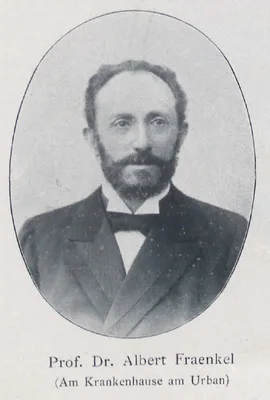
1886 FRAENKEL, Albert (1848 – 1916)
Die Mikrococcen der Pneumonie.
Fraenkel showed definitely that the organism found by Pasteur (No. 3172) and Sternberg (No. 3173) was a cause of pneumonia.
GMN 3175 · https://historyofmedicine.com/id/4165
1887 PETRI, Richard Julius (1852 – 1921)
Eine kleine Modification des Koch’schen Plattenverfahrens.
Petri dish. A similar dish was described by Cornil and Babès (see No. 2501) and by Nicati and Rietsch, Arch. Physiol. norm. path., 1885, 6, 72. Petri was an assistant of Koch.
GMN 2505.1 · https://historyofmedicine.com/id/3220
1888 GÄRTNER, August Anton Hieronymous (1848 – 1934)
Ueber die Fleischvergiftung in Frankenhausen. a.K. und den Erreger derselben.
Discovery of Salmonella enteritidis, a cause of food poisoning.
GMN 2506 · https://historyofmedicine.com/id/3223
1889 VUILLEMIN, Jean Paul (1861 – 1932)
Antibiose et symbiose.
Villemin coined the term antibiosis and advanced the term from an evolutionary viewpoint. Though he presented the concept Villemin did not apply this concept to fight disease. (Thanks to Juan Weiss for this reference.)
GMN 10786 · https://historyofmedicine.com/id/12982
1889 SMITH, Theobald (1859 – 1934)
Preliminary observations on the microorganism of Texas fever.
First report on the discovery of a Babesia, cause of Babesiosis. Smith first observed the microscopic organism in the summer of 1886, but mentioned Babes's work in this paper, perhaps resulting in Babes being credited…
GMN 10885 · https://historyofmedicine.com/id/13081
1890 WINOGRADSKY, Sergei Nikolaievich
Sur les organisms de la nitrification.
In his research on nitrifying bacteria Winogradsky discovered the first known form of chemoautotrophy in which organisms obtain energy by oxidation of electron donors in their environments without the intervention of …
GMN 12303 · https://historyofmedicine.com/id/14525
1891 NORDTMEYER, H
Ueber Wasserfiltration durch Filter aus gebrannter Infusorienerde.
Berkefeld kieselguhr filter.
GMN 2506.1 · https://historyofmedicine.com/id/3225
1892 DÖDERLEIN, Albert Siegmund Gustav (1860 – 1941)
Das Scheidensekret und seine Bedeutung für das Puerperalfieber.
Döderlein's study of the vaginal secretion in relation to puerperal fever includes the first description of “Döderlein’s bacillus” (Lactobacillus). Döderlein introduced the concept of normal body bacteria or "normal b…
GMN 6279 · https://historyofmedicine.com/id/7999
1895 –1896 NUTTALL, George Henry Falkiner (1862 – 1937); THIERFELDER, Hans (1858 – 1930)
Thierisches Leben ohne Bakterien im Verdauungskanal.
Proof that healthy life and perfect digestion are possible without the presence of bacteria in the digestive tract.
GMN 1020 · https://historyofmedicine.com/id/902
1897 KRÖNIG, Claus Ludwig Theodor Bernhard (1863 – 1918); MENGE, Karl (1864 – 1945)
Bakteriologie des weiblichen Genital-Kanales. 2 vols.
GMN 6106 · https://historyofmedicine.com/id/7541
1901 BEIJERINCK, Martinus Willem (1851 – 1931)
Über oligonitrophile Mikroben.
Discovery of nitrogen fixation, the process by which diatomic nitrogen gas is converted to ammonium ions and becomes available to plants. Bacteria perform nitrogen fixation, dwelling inside root nodules of certain pla…
GMN 12789 · https://historyofmedicine.com/id/15035
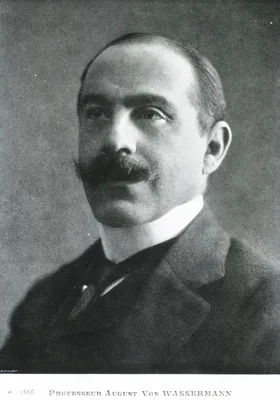
1903 –1909 WASSERMANN, August von (1866 – 1925); KOLLE, Wilhelm (1868 – 1935)
Handbuch der pathogenen Mikroorganismen. 6 vols.
Third edition, 10 vols. [in 19], 1929-31.
GMN 2517 · https://historyofmedicine.com/id/3271
1906 METCHNIKOFF, Élie [MECHNIKOV] (1845 – 1916)
Quelques remarques sur le lait aigri.
Metchnikoff researched the effect of lactic acid produced by Lactobacilli on other non-desirable bacteria in the digestive tract. He thus expanded Döderlein's (No. 6279) concept of "normal flora" beyond the vagina. Tr…
GMN 2563 · https://historyofmedicine.com/id/3690
1907 BECHHOLD, Heinrich (1866 – 1937)
Kolloidstudien mit der Filtrationsmethode.
Bechhold devised ultrafiltration methods for studies in microbiology.
GMN 2518.2 · https://historyofmedicine.com/id/3285
1912 KOCH, Robert Heinrich Hermann (1843 – 1910); GAFFKY, Georg Theodor August (1850 – 1918); SCHWALBE, Julius (1866 – 1930); PFUHL, Ernst (1876 – 1940)
Gesammelte Werke von Robert Koch. Unter Mitwirkung von G. Gaffky and E. Pfuhl. Herausgegeben von J. Schwalbe. 2 vols. [in 3).
For his work on tuberculosis Koch received the Nobel Prize in 1905. Digital facsimile from the Internet Archive at this link. See T.D. Brock, Robert Koch: A life in medicine and bacteriology, Madison, WS: Science-Tech…
GMN 86 · https://historyofmedicine.com/id/1437
1917 D'HÉRELLE, Félix Hubert (1873 – 1949)
Sur une microbe invisible antagoniste des bacilles dysentérique.
d'Herrelle discovered a microbe-eating virus that he called "bacteriophage." He made his discovery independently of the work of Frederick Twort, which was published two years earlier. (See No. 2571).
GMN 2572 · https://historyofmedicine.com/id/3687
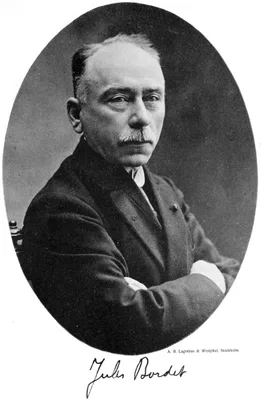
1920 BORDET, Jules Jean Baptiste Vincent (1870 – 1961); CIUCÃ, Mihai (1883 – 1969)
Exsudats leucocytaires et autolyse microbienne transmissible.
Lysogeny
GMN 2572.1 · https://historyofmedicine.com/id/3693
1922 –1939 PASTEUR, Louis (1822 – 1895); VALLERY-RADOT, Joseph Louis Pasteur (1886 – 1970)
Œuvres de Pasteur, réunies par Pasteur Vallery-Radot. 7 vols.
One of the founders of bacteriology, Pasteur's work on fermentation, the doctrine of spontaneous generation (which he exploded), virus diseases and preventive vaccinations, was fundamental. Digital facsimile of the co…
GMN 83 · https://historyofmedicine.com/id/1399
1924 WOLBACH, Simeon Burt (1880 – 1954); HERTIG, Marshall (1893 – 1978)
Studies on Rickettsia-like micro-organisms in insects.
Hertig and Wolbach first described the parasitic microbe Wolbachia in the common house mosquito in 1924. In 1936 Hertig formally described the species as Wolbachia pipientis. Since then the genus Wolbachia has become …
GMN 10943 · https://historyofmedicine.com/id/13139
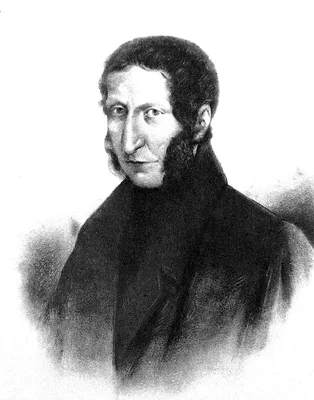
1925 BASSI, Agostino (1773 – 1856)
Opere di Agostino Bassi n. a Mairago 1778-m. a Lodi 1856- scelte e pubblicate a cura del comitato nazionale per la ristampa auspice la Società medico-chirurgica di Pavia.
GMN 11108 · https://historyofmedicine.com/id/13304
1925 GRATIA, André (1893 – 1950)
Sur un remarquable example d'antogonisme entre deux souches de colibacille.
Discovery of bacteriocins. Gratia called his discovery a colicine because bacteriocins killed E. coli.
GMN 11479 · https://historyofmedicine.com/id/13678
1925 CHATTON, Édouard (1883 – 1947)
Pansporella perplexa. Réflexions sur la biologie et la phylogénie des protozoaires.
Chatton was the first to characterize the distinction between the eukaryotic and prokaryotic systems of cellular organization. See Jan Sapp, "The prokaryote-Eukaryote dichtomy: meanings and mythology," Microbiol. Mol.…
GMN 12035 · https://historyofmedicine.com/id/14243
1928 GRIFFITH, Frederick (1879 – 1941)
The significance of pneumococcal types.
Griffith’s experiments on transforming type II pneumococci into type III were repeated by Avery who was able sixteen years later (No. 255.3) to demonstrate that DNA was the transforming material.
GMN 251.2 · https://historyofmedicine.com/id/8681
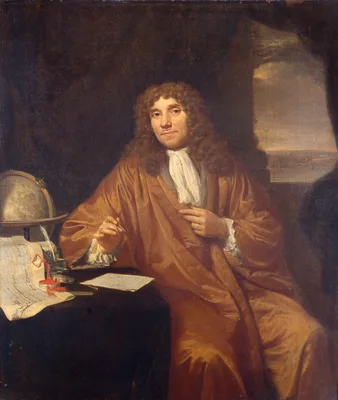
1939 –2015 LEEUWENHOEK, Antonie van (1632 – 1723)
The collected letters of Antoni Van Leeuwenhoek / Alle de Brieven van Antoni Van Leeuwenhoek. Edited, illustrated & annotated by a committee of Dutch scientists. 17 vols. through 2015.
GMN 12964 · https://historyofmedicine.com/id/15211
1943 BAKER, John Randal (1900 – 1984)
The discovery of the uses of colouring agents in biological microtechnique.
GMN 567 · https://historyofmedicine.com/id/308
1956 –1960 EHRLICH, Paul (1854 – 1915); HIMMELWEIT, Fred (1902 – 1977)
Collected papers of Paul Ehrlich. Compiled and edited by F. Himmelweit. 3 vols.
Vol. I: Histology, biochemistry, and pathology, Vol. 2: Immunology and cancer research; Vol. 3: Chemotherapy. Most texts are in German. English translations are also published when available. The set includes new Engl…
GMN 86.4 · https://historyofmedicine.com/id/1453
1958 EISEMAN, Ben (1917 – 2012); BASCOM, George S. (1927 – 1993); SILEN, W.; ET AL
Fecal enema as an adjunct in the treatment of pseudomembranous enterocolitis.
Order of authorship in the original publication: Eiseman, Silen, Bascom.... Report of the first "fecal transplant / fecal therapy," also known as "faecal microbiota transplanation," for recurrent / resistant C. diffic…
GMN 11458 · https://historyofmedicine.com/id/13657
1960 DOETSCH, Raymond Nicholas (1920 – 2017)
Microbiology. Historical contributions from 1776-1908.
GMN 2581.2 · https://historyofmedicine.com/id/4328
1961 BROCK, Thomas Dale (1926 – )
Milestones in microbiology.
Readings from primary sources, with commentary.
GMN 2581.3 · https://historyofmedicine.com/id/4339
1962 STANIER, Roger Yate (1916 – 1982); NIEL, Cornelis Bernardus van (1897 – 1985)
The concept of a bacterium.
Order of authorship in the original publication: Stanier, Niel. For much of the 20th centurty prokaryotes were regarded as a single group of organisms, classified on the basis of their biochemistry, morphology and met…
GMN 12034 · https://historyofmedicine.com/id/14242
1965 LECHEVALIER, Hubert Arthur (1926 – 2015); SOLOTOROVSKY, Morris
Three centuries of microbiology.
GMN 2581.5 · https://historyofmedicine.com/id/4342
1966 BAUER, Alfred W.; KIRBY, W. M. M.; SHERRIS, John C.; ET AL
Antibiotic susceptibility testing by a standardized single disk method.
The disk diffusion test, or agar diffusion test, or Kirby–Bauer test (disc-diffusion antibiotic susceptibility test, disc-diffusion antibiotic sensitivity test, KB test), for the antibiotic sensitivity of bacteria. (T…
GMN 11105 · https://historyofmedicine.com/id/13301