1582 RAUWOLF, Leonhard (1535 – 1596)
Aigentlich Beschreibung der Raiss, so er vor diser Zeit gegen Auffgang inn die Morgenländer, fürnemlich Syriam, Iudaeam, Arabiam, Mesopotamiam, Babyloniam, Assyriam, Armeniam etc....
Rauwolf provided the first modern descriptions of the flora of the area east of the Levantine coast. He was also the first to describe the riparian flora of the Euphrates, and the first European to publish an account …
GMN 7327 · https://historyofmedicine.com/id/9498
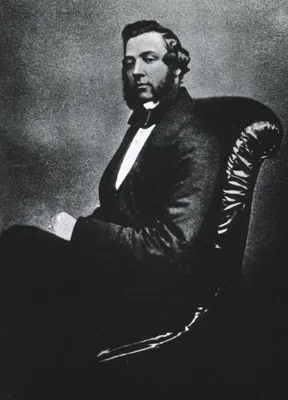
1845 MOREAU, Jacques-Joseph [Moreau de Tours] (1804 – 1884)
Du hachische et de l’aliénation mentale: Études psychologiques.
Moreau's experments may have been the first medical experiments with a psychotropic agent in the treatment of mental illness. English translation by G. J. Barnett as Hashish and mental illness (New York: Raven Press, …
GMN 2077.2 · https://historyofmedicine.com/id/2551
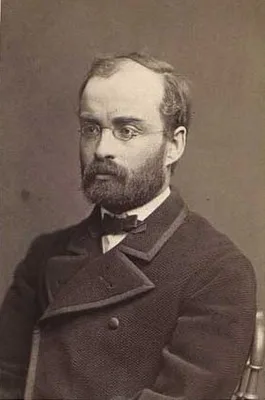
1867 THUDICHUM, Johann Ludwig Wilhelm (1829 – 1901)
On researches intended to promote an improved chemical identification of diseases.
Discovery of the first porphyrin, hematoporphyrin (p. 227). Hematoporphyrin has also been used as an antidepressant and antipsychotic since the 1920s,
GMN 3914.1 · https://historyofmedicine.com/id/5328
1869 LIEBREICH, Oscar (1839 – 1908)
Das Chloral, ein neues Hypnoticum.
Demonstration of the value of chloral hydrate as a hypnotic. See also his monograph Das Chloralhydrat, Berlin, 1869.
GMN 1869 · https://historyofmedicine.com/id/2453
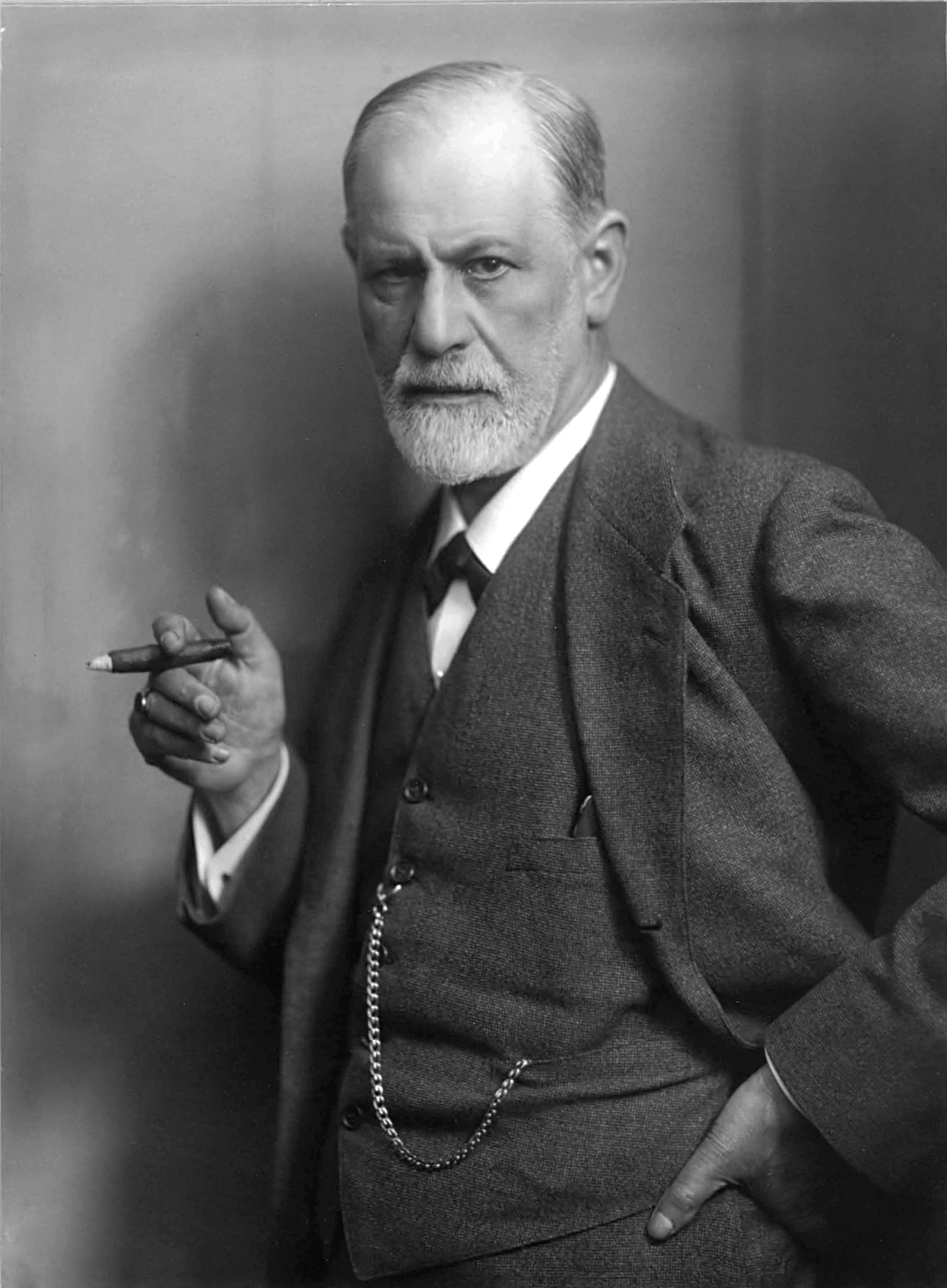
1884 FREUD, Sigmund (1856 – 1939)
Ueber coca.
Freud described his observations (with himself as subject) on the effects of cocaine, including its abolition of hunger and fatigue, the “exhilaration and lasting euphoria”. He also described its supposed non-addictiv…
GMN 1880.1 · https://historyofmedicine.com/id/2515
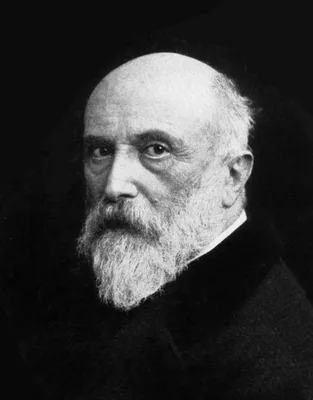
1886 LANGE, Carl Georg (1834 – 1900)
Om Periodiske Depressionstilstande og deres Patogenese.
Lange was the first to use a mixture of drugs containing lithium carbonate for the preventive treatment of periodic depression. This work contains the “first unequivocal account of prophylactic drug treatment for an e…
GMN 1883.01 · https://historyofmedicine.com/id/2534
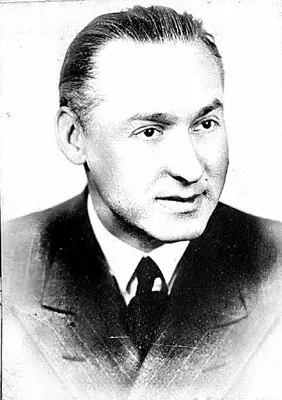
1887 EDELEANU, Lazăr (1861 – 1941)
Über einige Derivate der Phenylmethacrylsäure und der Phenylisobuttersäure.
Synthesis of phenylisopropylamine, later known as amphetamine. Its stimulant effects were unknown until it was independently resynthesized by Gordon Alles.
GMN 7917 · https://historyofmedicine.com/id/10090
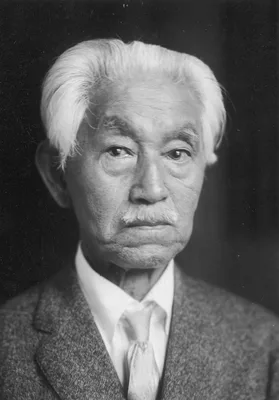
1893 NAGAYOSHI, Nagai (1844 – 1929)
Kanyaku maou seibun kenkyuu seiseki (zoku).
Nagai synthesized methamphetamine from ephedrine.
GMN 7019 · https://historyofmedicine.com/id/9186
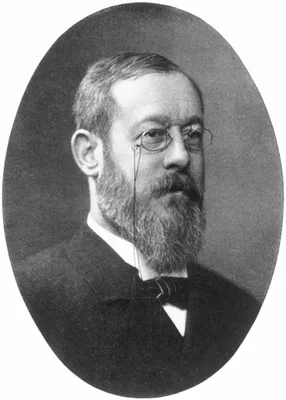
1898 HEFFTER, Karl Wilhelm Arthur (1859 – 1925)
Ueber Pellote. Beiträge zur chemischen und pharmakologischen Kenntniss der Cacteen. Zweite Mitteilung.
Isolation of mescaline, the active agent in peyote. One of the first scientific investigations of a psychedelic drug.
GMN 1890.1 · https://historyofmedicine.com/id/2517
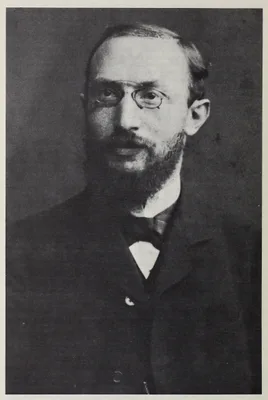
1903 FISCHER, Hermann Emil Louis (1852 – 1919); MERING, Joseph von (1849 – 1908)
Ueber eine neue Klasse von Schlafmitteln.
Synthesis of barbitone (Barbitol), the first available barbiturate.
GMN 1892 · https://historyofmedicine.com/id/2530
1908 EWENS, George Francis William
Insanity in India: Its symptoms and diagnosis; with reference to the relation of crime and insanity.
Includes considerable discussion of the psychoactive effects of cannabis. Digital facsimile from the Hathi Trust at this link.
GMN 8246 · https://historyofmedicine.com/id/10422
1919 SPÄTH, Ernst (1886 – 1946)
Über die Anhalonium-Alkaloide I. Anhalin und Mezcalin
Synthesis of mescaline.
GMN 8795 · https://historyofmedicine.com/id/10973
1924 LEWIN, Louis (1850 – 1929)
Phantastica.
The classic of psychoactive drug classification. Lewin established the following categories: Euphorics, Phantastics, Inebriants, Hypnotics, and Excitants. English translation, 1931.
GMN 2086 · https://historyofmedicine.com/id/2565
1927 BERINGER, Kurt (1893 – 1949)
Der Meskalinrausch. Seine Geschichte und Erscheinungsweise.
The most comprehensive treatise on peyote and its active agent, mescaline, which was synthesized in 1919.
GMN 2086.1 · https://historyofmedicine.com/id/2567
1928 CRITCHLEY, MacDonald (1900 – 1997); KLÜVER, Heinrich (1897 – 1979)
Mescal: The "divine" plant and its psychological effects. With an introduction by Macdonald Critchley.
The first study of the psychological effects of mescaline.
GMN 8796 · https://historyofmedicine.com/id/10974
1929 ZERFAS, Leon Grotius (1897 – 1978); ET AL
Induction of anesthesia in man by intravenous injection of sodium isoamyl-ethyl barbiturate.
Sodium amytal (Amobarbitol). With J. T. C. McCallum, H. A. Shonle, E. E. Swanson, J. B. Scott, and G. H. A. Clowes.
GMN 5712 · https://historyofmedicine.com/id/6428
1930 ALLES, Gordon A. (1901 – 1963)
Clinical observations on phenylethanolamine sulfate.
In 1929 Alles discovered the sympathomimetic properties of beta-phenyl-isopropylamine (amphetamine). With G. Piness and H. Miller.
GMN 7918 · https://historyofmedicine.com/id/10091
1931 SEN, Ganneth; BOSE, Katrick Chandra
Rauwolfia serpentina, a new Indian drug for insanity and high blood pressure.
Introduction of reserpine in the treatment of psychoses.
GMN 4959 · https://historyofmedicine.com/id/6306
1933 CHOPRA, Ram Nath (1882 – 1973); ET AL
The pharmacological action of an alkaloid obtained from Rauwolfia serpentina Benth. A preliminary note.
R. N. Chopra, J. C. Gupta, and B. Mukherjee demonstrated the sedative and hypotensive effect of an alkaloid isolated from Rauwolfia serpentina (reserpine).
GMN 1923 · https://historyofmedicine.com/id/2706
1934 SAKEL, Manfred Joshua (1900 – 1957)
Schizophreniebehandlung mittels Insulin-Hypoglykämie sowie hypoglykämischer Schocks.
Insulin shock therapy of schizophrenia. Sakel wrote several subsequent papers on this subject in the same journal. English version in Amer. J. Psychiat., 1937, 93, 829-41.
GMN 4960 · https://historyofmedicine.com/id/6311
1935 MEDUNA, Ladislas Joseph (1896 – 1964)
Versuche über die biologische Beeinflussung des Ablaufes der Schizophrenic. 1. Campher-und Cardiazolkrämpfe.
Cardiazol (metrazol) convulsion therapy of schizophrenia was introduced by Meduna in 1934.
GMN 4961 · https://historyofmedicine.com/id/6315
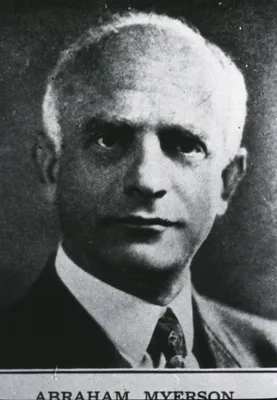
1936 MYERSON, Abraham (1881 – 1948)
Effect of Benzedrine sulfate on mood and fatigue in normal and neurotic persons.
Myerson, an American neurologist, psychiatrist, clinician, pathologist, and researcher, funded by Benedrine manufacturer Smith, Kline and French, promoted Benzedrine (i.e. amphetamine) as an anti-depressant, leading t…
GMN 7919 · https://historyofmedicine.com/id/10092
1936 CASTETTER, Edward Franklin (1896 – 1978); OPLER, Morris Edward (1907 – 1996)
The ethnobiology of the Chiricahua and Mescalero Apache: A. the use of plants for food, beverages and narcotics. Ethnobiological studies in the American Southwest, Vol. 3. Biological series (Vol. 4, No. 5); Bulletin, University of New Mexico, whole, (No. 297).
GMN 9304 · https://historyofmedicine.com/id/11486
1937 BRADLEY, Charles (1902 – 1979)
Behavior of children receiving benzedrine.
Bradley showed that racemic amphetamine, that is, the 50:50 mixture of d- and l-amphetamine isomers (Benzedrine®), was shown to reduce the impulsivity, distractibility, and inattention characteristic of Attention Defi…
GMN 7980 · https://historyofmedicine.com/id/10156
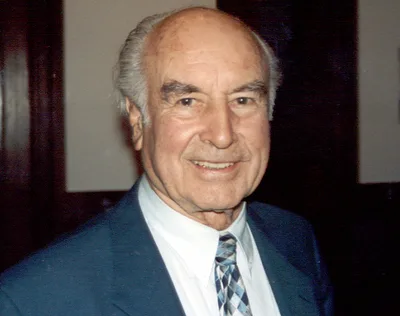
1943 STOLL, Arthur (1887 – 1971); HOFMANN, Albert (1906 – 2008)
Partialsynthese von Alkaloiden vom Typus des Ergobasins.
Synthesis of lysergic acid diethylamide (LSD).
GMN 1928.1 · https://historyofmedicine.com/id/2727
1949 CADE, John Frederick Joseph (1912 – 1980)
Lithium salts in the treatment of psychotic excitement.
The first clinical trial of lithium.
GMN 1930.1 · https://historyofmedicine.com/id/2748
1952 MÜLLER, J. M.; ET AL
Reserpin, der sedative Wirkstoff aus Rauwolfia serpentina Benth.
Isolation of reserpine. With E. Schlittler and H. J. Bein.
GMN 1931 · https://historyofmedicine.com/id/2750
1952 DELAY, Jean (1907 – 1987); DENIKER, Pierre (1917 – 1998)
Trente-huit cas de psychoses traitées par la cure prolongée et continue de 4560 R. P. C. R. Congr. Alien, et Neurol, de Langue Franç.
Introduction of chlorpromazine in the treatment of psychosis. Chlorpromazine was later marketed in the United States as Thorazine.
GMN 4962.3 · https://historyofmedicine.com/id/6332
1953 COURVOISIER, Simone; ET AL
Propriétés pharmacodynamiques du chlorhydrate de chloro-3 (diméthylamino-3’propyl) -10 phénothiazine (4.560 R.P.).
Chlorpromazine. With J. Foumel, R. Ducrot, M. Kolsky, and P. Koetschet. Chloropromazine was later marketed in the United States as Thorazine.
GMN 1931.1 · https://historyofmedicine.com/id/2752
1954 BERGER, Frank Milan (1913 – 2008)
The pharmacological properties of 2-methyl-2-m-propyl-1, 3-propanediol dicarbamate (Miltown), a new interneuronal blocking agent.
Introduction of meprobamate, later used for the treatment of anxiety. Miltown was the first widely prescribed psychotropic drug.
GMN 4962.4 · https://historyofmedicine.com/id/6335
1954 MEIER, R; GROSS, F; TRIPOD, J
Ritalin, a new synthetic compound with specific analeptic components.
The authors identified Methylphenidate as a stimulant. It is sold under the trade name Ritalin, and other names.
GMN 7981 · https://historyofmedicine.com/id/10157
1960 RANDALL, Lowell Orlando (1910 – 2005); ET AL
The psychosedative properties of methaminodiazepoxide.
Librium. With four co-authors.
GMN 1931.3 · https://historyofmedicine.com/id/2756
1968 WASSON, Robert Gordon (1898 – 1986)
Soma: Divine mushroom of immortality.
Ethnomycologist and banker Wasson provided evidence for the important role that hallucinogenic mushrooms - in particular the ubiquitous mushroom Amanita muscaria (fly agaric) - play in various ancient and modern cultu…
GMN 9848 · https://historyofmedicine.com/id/12036
1970 AYD, Frank J. Jr. (1920 – 2008); BLACKWELL, Barry (1934 – )
Discoveries in biological psychiatry.
Proceedings of an international symposium sponsored by the Taylor Manor Hospital in Baltimore in 1970, including first person accounts by those who discovered the original drugs in each of the major categories of psyc…
GMN 7010 · https://historyofmedicine.com/id/9176
1971 MARRIOTT, Alice Lee (1910 – 1992); RACHLIN, Carol King (1919 – 2013)
Peyote: an account of the origins and growth of the Peyote religion.
"The Peyote religion is a medico-religious cult. In considering native American medicines, one must always bear in mind the difference between the aboriginal concept of a medicinal agent and that of our modern Western…
GMN 10857 · https://historyofmedicine.com/id/13053
1971 GUERRA PÉREZ-CARRAL, Francisco (1916 – 2011)
The pre-Columbian mind: A study into the aberrant nature of sexual drives, drugs affecting behaviour and the attitude towards life and death, with a survey of psychotherapy in pre-Columbian America.
GMN 10858 · https://historyofmedicine.com/id/13054
1971 GRINSPOON, Lester (1928 – 2000)
Marijuana reconsidered.
A cultural classic on the understanding of the marijuana experience, and reform of prohibitions against marijuana use by a professor of psychiatry at Harvard Medical School. Besides describing marijuana's psychologica…
GMN 14298 · https://historyofmedicine.com/id/16622
1973 HARNER, Michael James (1929 – 2018)
Hallucinogens and Shamanism edited by Michael Harner.
Includes Harner's "The Role of Hallucinogenic Plants in European Witchcraft".
GMN 10735 · https://historyofmedicine.com/id/12929
1974 WONG, David T. (1936 – )
A selective inhibitor of serotonin uptake: Lilly 110140, 3-(p-Trifluoromethylphenoxy)-n-methyl-3-phenylpropylamine.
The first paper on the anti-depressant fluoxetine, marketed under the trade name Prozac. With Jong S. Horng, Frank P. Bymaster, Kenneth. L. Hauser, and Bryan B. Molloy. doi:10.1016/0024-3205(74)90345-2. PMID 4549929
GMN 6935 · https://historyofmedicine.com/id/9100
1974 SWAZEY, Judith P. (1939 – )
Chlorpromazine in psychiatry: A study of therapeutic innovation.
Chlorpromazine (CPZ) was the first drug in Western medicine found to have specific psychotropic effects agains a range of mental disease symtomatologies, particularly those associated with schizophrenia. It was market…
GMN 7009 · https://historyofmedicine.com/id/9175
1976 OTT, Jonathan (1949 – )
Hallucinogenic plants of North America.
GMN 11035 · https://historyofmedicine.com/id/13231
1977 CLAASSEN, V.; DAVIES, J. E.; HERTTING, Georg (1925 – 2014); PLACHETA, P.
Fluvoxamine, a specific 5-hydroxytryptamine uptake inhibitor.
Fluvoxamine, an antidepressant of the selective serotonin reuptake inhibitor (SSRI) class, used primarily for the treatment of major depressive disorder and obsessive-compulsive disorder (OCD). It is also used to trea…
GMN 13698 · https://historyofmedicine.com/id/15980
1978 HOFMANN, Albert (1906 – 2008); WASSON, Robert Gordon (1898 – 1986); RUCK, Carl A. P. (1935 – )
The road to Eleusis: Unveiling the secret of the mysteries.
Argues that the psycho-active ingredient in the secret kykeion potion used in the Eleusinian mysteries was most likely the ergotism causing fungus Claviceps purpurea. Furthermore the book introduced the term "entheoge…
GMN 10168 · https://historyofmedicine.com/id/12357
1980 HOFMANN, Albert (1906 – 2008); SCHULTES, Richard Evans (1915 – 2001); KLÜVER, Heinrich (1897 – 1979)
The botany and chemistry of hallucinogens. By Richard Schultes and Albert Hofmann. With a forward by Heinrich Klüver. Revised and enlarged second edition.
GMN 8794 · https://historyofmedicine.com/id/10972
1980 HARNER, Michael James (1929 – 2018)
The way of the shaman: A guide to power and healing.
GMN 10736 · https://historyofmedicine.com/id/12930
1983 KOE, Billie Kenneth (1925 – 2015); WELCH, Willard M.; WEISSMAN, Albert
Sertraline, 1S,4S-N-methyl-4-(3,4-dichlorophenyl)-1,2,3,4-tetrahydro-1-naphthylamine, a new uptake inhibitor with selectivity for serotonin.
Sertraline hydrochloride, an antidepressant of the selective serotonin reuptake inhibitor (SSRI) class, developed by the authors of this paper at Pfizer, and marketed under the tradename Zoloft. With R. G. Browne.
GMN 7210 · https://historyofmedicine.com/id/9377
1984 JOHNSON, F. Neil
The history of lithium therapy.
GMN 2068.20 · https://historyofmedicine.com/id/2471
1989 ESCOHOTADO, Antonio (1941 – )
Historia general de las drogas.
The following works were issued separately and added as appendices to later editions: El libro de los venenos (1990), Para una fenomenología de las drogas (1992) and Aprendiendo de las drogas (1995). English translati…
GMN 10757 · https://historyofmedicine.com/id/12953
1992 HOFMANN, Albert (1906 – 2008); SCHULTES, Richard Evans (1915 – 2001)
Plants of the gods: Their sacred, healing and hallucinogenic powers.
GMN 10856 · https://historyofmedicine.com/id/13052
1993 WILBERT, Johannes
Tobacco and shamanism in South America.
A comprehensive ethnography of magico-religious, medicinal, and recreational tobacco use among native South American societies, based on a survey of nearly three hundred societies.
GMN 9017 · https://historyofmedicine.com/id/11196

![MOREAU, Jacques-Joseph [Moreau de Tours] (1804 – 1884)](/media/portraits/2779)