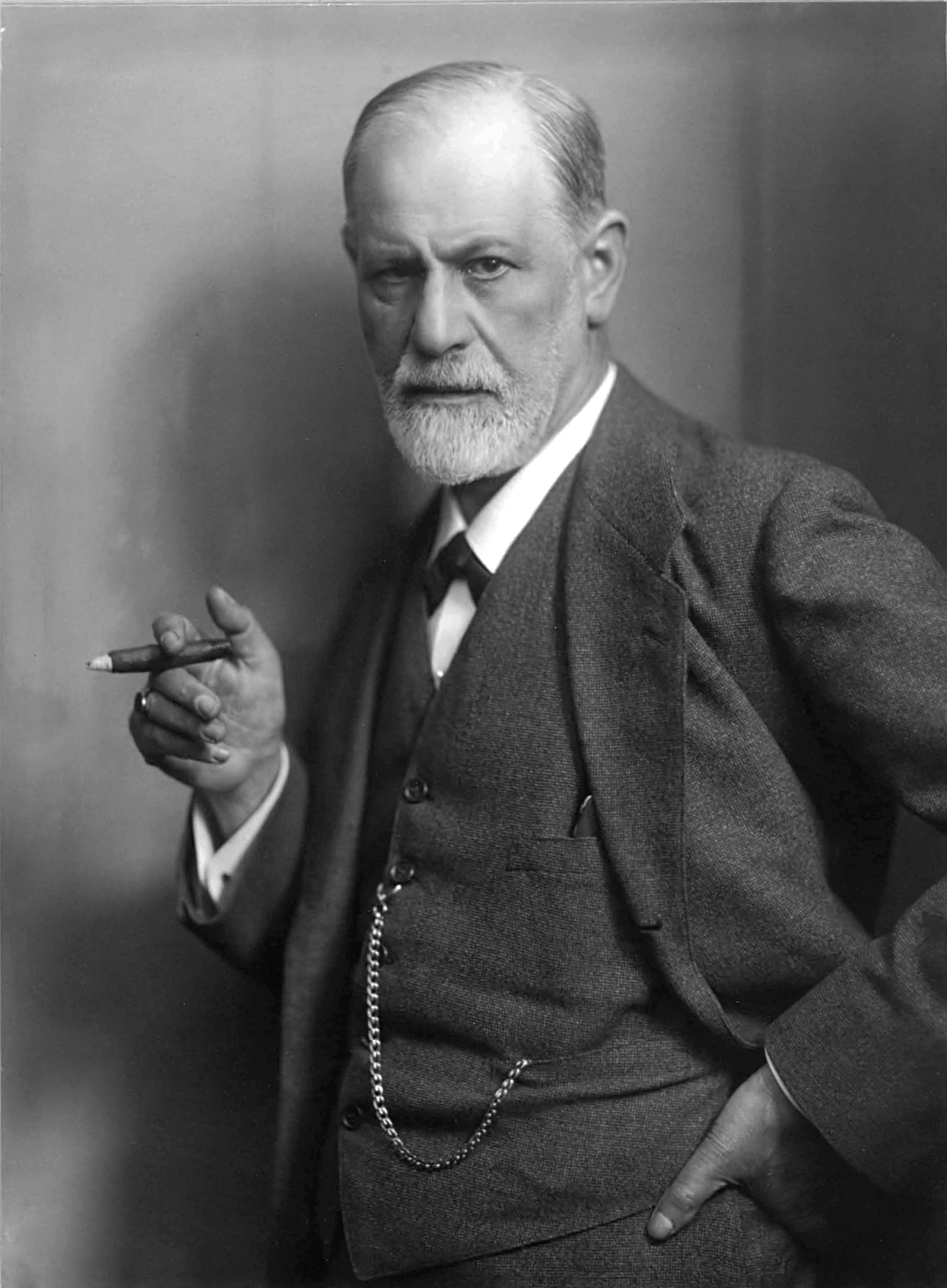
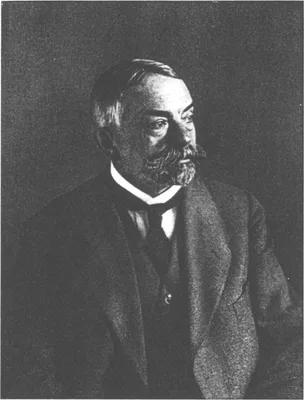
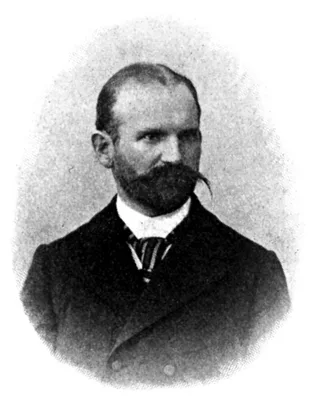
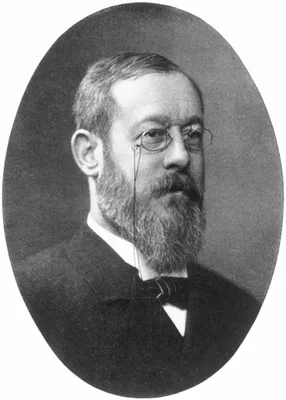
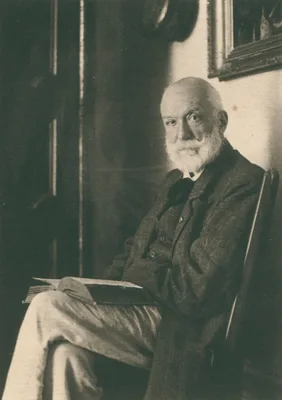
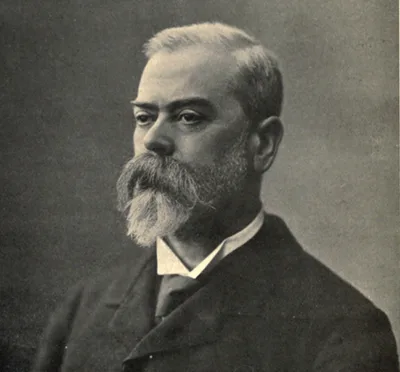
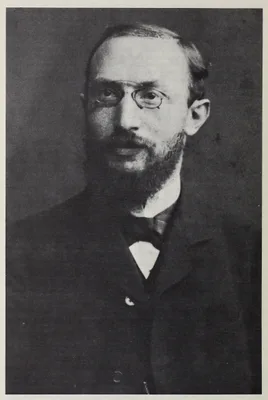
1884 FREUD, Sigmund (1856 – 1939)
Ueber coca.
Freud described his observations (with himself as subject) on the effects of cocaine, including its abolition of hunger and fatigue, the “exhilaration and lasting euphoria”. He also described its supposed non-addictiv…
GMN 1880.1 · https://historyofmedicine.com/id/2515
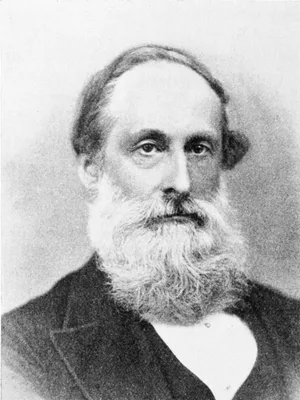
1884 ALLBUTT, Sir Thomas Clifford (1836 – 1925)
On visceral neuroses.
Gulstonian Lectures.
GMN 4847 · https://historyofmedicine.com/id/3631
1885 RIBOT, Théodule-Armand (1839 – 1916)
Les maladies de la personnalité.
GMN 4943 · https://historyofmedicine.com/id/6224
1885 TUKE, Daniel Hack (1827 – 1895)
The insane in the United States and Canada.
The first history of psychiatry in the United States and Canada. Chapter 5 is the first survey of psychiatry in Canada.
GMN 5003.1 · https://historyofmedicine.com/id/6563
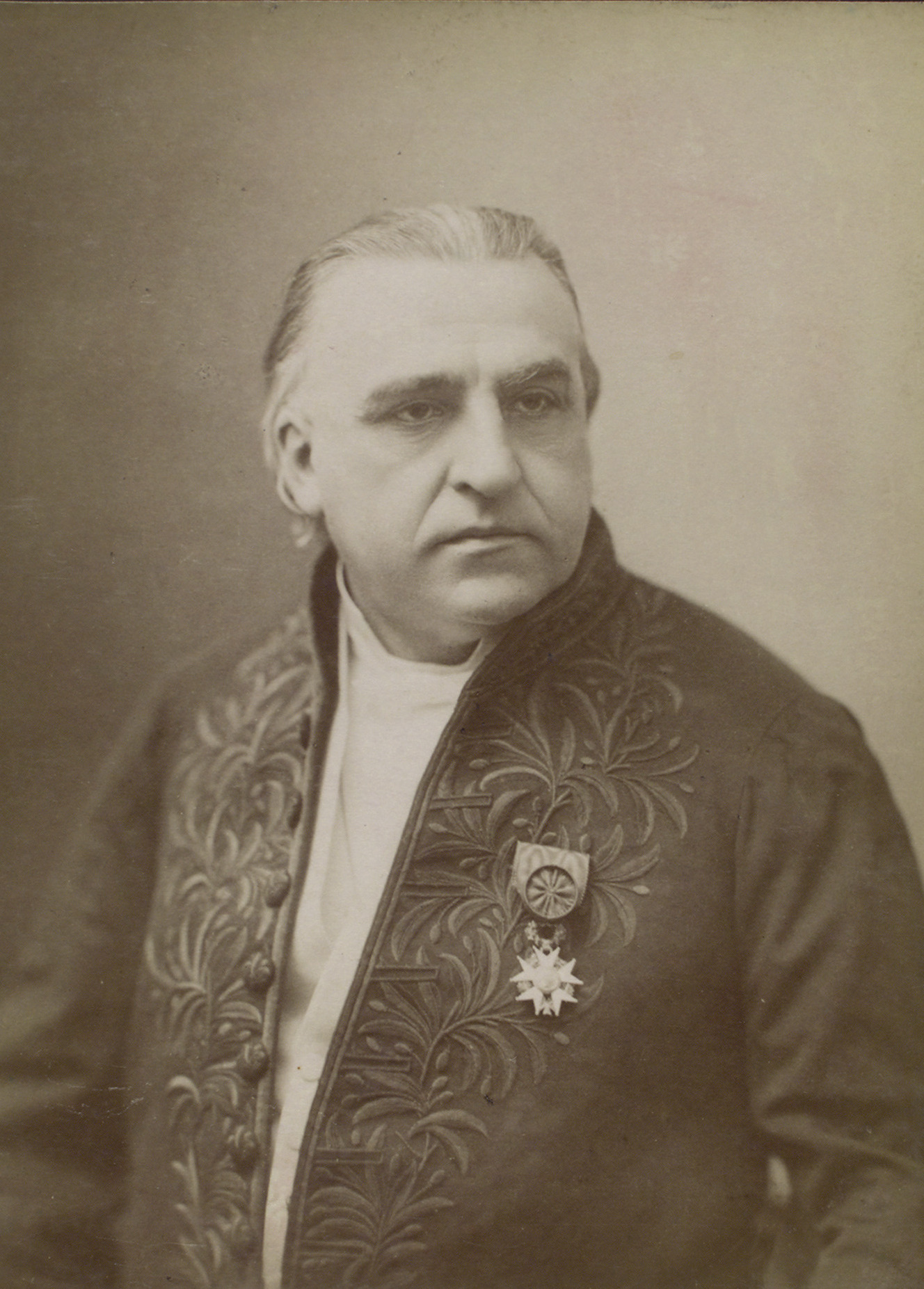
1886 –1891 CHARCOT, Jean Martin (1825 – 1893); BOURNEVILLE, Désiré-Magloire (1840 – 1909)
Œuvres complètes ed J.-M. Charcot. Recueillies et publiées par D. M. Bourneville [and others]. 9 vols.
Charcot, famous teacher at La Salpêtrière, created there the greatest neurological clinic of his time. He was a pioneer of psychotherapy and left many memorable descriptions of nervous disorders. Pierre Marie, who die…
GMN 84 · https://historyofmedicine.com/id/1404
1886 LANGE, Carl Georg (1834 – 1900)
Om Periodiske Depressionstilstande og deres Patogenese.
Lange was the first to use a mixture of drugs containing lithium carbonate for the preventive treatment of periodic depression. This work contains the “first unequivocal account of prophylactic drug treatment for an e…
GMN 1883.01 · https://historyofmedicine.com/id/2534
1886 KRAFFT-EBING, Richard Freiherr von (1840 – 1902)
Psychopathia sexualis; eine klinisch-forensische Studie.
Krafft-Ebing revised the book through 12 editions. Digital facsimile of the first edition from wellcomecollection.org at this link. English translation as Psychopathia sexualis, with special reference to contrary sexu…
GMN 4944 · https://historyofmedicine.com/id/6228
1887 KORSAKOFF, Sergei Sergeievich (1853 – 1900)
Disturbance of psychic activity in alcoholic paralysis.
“Korsakoff’s psychosis” or syndrome – alcoholic polyneuritis with loss and falsification of memory. A second paper on the subject in Ezhened. klin. Gaz., 1889, 9, 85, 115, 136, is translated into English in Neurology,…
GMN 4945 · https://historyofmedicine.com/id/6233
1887 WAGNER VON JAUREGG, Julius (1857 – 1940)
Ueber die Einwirking fieberhafter Erkrankungen auf Psychosen.
Wagner von Jauregg’s first studies of the effect of fevers upon psychotic conditions. See also No. 4806.
GMN 4946 · https://historyofmedicine.com/id/6241
1887 EMMINGHAUS, Hermann (1845 – 1904)
Die psychischen Störungen des Kindesalters. IN: Carl Gerhardt's Handbuch der Kinderkrankheiten, Nachtrag II.
The first systematic monograph on child psychiatry. Digital facsimile from the Hathi Trust at this link.
GMN 7796 · https://historyofmedicine.com/id/9968
1887 EDELEANU, Lazăr (1861 – 1941)
Über einige Derivate der Phenylmethacrylsäure und der Phenylisobuttersäure.
Synthesis of phenylisopropylamine, later known as amphetamine. Its stimulant effects were unknown until it was independently resynthesized by Gordon Alles.
GMN 7917 · https://historyofmedicine.com/id/10090
1887 SEAMAN, Elizabeth Cochran [Nelly Bly] (1864 – 1922)
Ten days in a mad-house.
By newspaper reporter Nellie Bly, this book was initially published as a series of articles for the New York World newspaper. The book collected Bly's reportage while on an undercover assignment in which she feigned i…
GMN 9121 · https://historyofmedicine.com/id/11300
1887 ZIEHEN, Georg Theodor (1862 – 1950)
Sphygmographische Untersuchungen an Geisteskranken.
Ziehen, a student of Hermann Munk, wrote his habiltation thesis on sphygmographic studies of psychiatric patients. This was the first monograph on the subject.
GMN 12295 · https://historyofmedicine.com/id/14517
1888 –1918 CHARCOT, Jean Martin (1825 – 1893); RICHER, Paul Marie Louis Pierre (1849 – 1933); GILLES DE LA TOURETTE, Georges Albert Édouard Brutus (1857 – 1904); LONDE, Albert (1858 – 1917)
NOUVELLE Iconographie de la Salpêtriere. 28 vols.
Henry Meige, Richer, and other pupils of Charcot published many valuable studies of the constitutional aspects of nervous diseases in the above work, a series unique in the history of medicine and of great value for t…
GMN 4575 · https://historyofmedicine.com/id/8973
1889 JANET, Pierre Marie Félix (1859 – 1947)
L’Automatisme psychologique.
Janet argued that “hysterical symptoms are due to subconscious fixed ideas that have been isolated and usually forgotten. Split off from consciousness – ‘dissociated’ – they embody painful experiences, but become auto…
GMN 4976.1 · https://historyofmedicine.com/id/6397
1892 WESTPHAL, Carl Friedrich Otto (1833 – 1890)
Gesammelte Abhandlungen, edited by A. Westphal. 2 vols.
Westphal was Professor of Psychiatry at Berlin; at this time was common for physicians to practice both psychiatry and neurology. Vol. 1: psychiatry; Vol. 2: neurology.
GMN 4579 · https://historyofmedicine.com/id/452
1892 TUKE, Daniel Hack (1827 – 1895)
A dictionary of psychological medicine. 2 vols.
GMN 4947 · https://historyofmedicine.com/id/6245
1892 –1896 BRAMWELL, Sir Byrom (1847 – 1931)
Atlas of clinical medicine. 3 vols.
Published at the end of the 19th century, and employing the wide variety of illustration technologies then available, including color lithography, lithography, and photography, this work testifies to the breadth and d…
GMN 10621 · https://historyofmedicine.com/id/12814
1893 BREUER, Josef (1842 – 1925); FREUD, Sigmund (1856 – 1939)
Über den psychischen Mechanismus hysterischer Phänomene. (Vorläufige Mittheilung.)
The preliminary announcement of the results of the collaboration that was the starting point of psychoanalysis. It described work begun several years previously. See No. 4978.
GMN 4977.3 · https://historyofmedicine.com/id/6399
1893 LAEHR, Bernhard Heinrich (1820 – 1905)
Gedenktage der Psychiatrie und ihrer Hülfsdisciplinen in allen Ländern. 4te. Aufl.
A history of the subject, arranged in calendar form.
GMN 5004 · https://historyofmedicine.com/id/6565
1893 NAGAYOSHI, Nagai (1844 – 1929)
Kanyaku maou seibun kenkyuu seiseki (zoku).
Nagai synthesized methamphetamine from ephedrine.
GMN 7019 · https://historyofmedicine.com/id/9186
1895 BREUER, Josef (1842 – 1925); FREUD, Sigmund (1856 – 1939)
Studien über Hysterie.
The foundation of psychoanalysis. Using what they called the cathartic method, in which hysterical patients were made to describe the manifestations of their symptoms in detail, with or without hypnosis, Breuer and Fr…
GMN 4978 · https://historyofmedicine.com/id/6401
1896 KRAEPELIN, Emil (1856 – 1926)
Der psychologische Versuch in der Psychiatrie.
GMN 4950 · https://historyofmedicine.com/id/6258
1898 HEFFTER, Karl Wilhelm Arthur (1859 – 1925)
Ueber Pellote. Beiträge zur chemischen und pharmakologischen Kenntniss der Cacteen. Zweite Mitteilung.
Isolation of mescaline, the active agent in peyote. One of the first scientific investigations of a psychedelic drug.
GMN 1890.1 · https://historyofmedicine.com/id/2517
1898 GANSER, Sigbert Joseph Maria (1853 – 1931)
Ueber einen eigenartigen hysterischen Dämmerzustand.
“Ganser’s syndrome” – an acute hallucinatory mania.
GMN 4849 · https://historyofmedicine.com/id/8909
1899 SOMMER, Robert (1864 – 1937)
Lehrbuch der psychopathologischen Untersuchungsmethoden.
Sommer introduced new methods in psychopathological investigation.
GMN 4951 · https://historyofmedicine.com/id/6261
1899 MARINESCU, Gheorghe [Georges Marinesco] (1863 – 1938)
Les troubles de la marche dans l'hémiplégie organique étudiés à l'aide du cinématographe.
Between July 1898 and 1902 Romanian neurologist Gheorghe Marinescu (Georges Marinesco) made the world's first documentary films in his clinic in Bucharest. "Marinescu perfected the use of cinematography as a research …
GMN 11293 · https://historyofmedicine.com/id/13490
1900 FREUD, Sigmund (1856 – 1939)
Die Traumdeutung.
Freud’s greatest work, the influence of which has been felt far beyond the psychiatric and medical community. Here he refined his understanding of the operation of the unconscious, interpreted dreams on the basis of w…
GMN 4980 · https://historyofmedicine.com/id/6402
1900 LAEHR, Bernhard Heinrich (1820 – 1905)
Die Literatur der Psychiatrie, Neurologie und Psychologie von 1459-1799. 3 vols.
GMN 5005 · https://historyofmedicine.com/id/6567
1901 KRAEPELIN, Emil (1856 – 1926)
Einführung in die psychiatrische Klinik.
Kraepelin evolved a new classification of insanity. He introduced the concepts “dementia praecox” and “manic-depressive insanity”. (Regarding the latter, see also No. 4932.)
GMN 4952 · https://historyofmedicine.com/id/6267
1902 ZIEHEN, Georg Theodor (1862 – 1950)
Die Geisteskrankheiten des Kindesalters mit besonderer Berücksichtigung des schulpflichtigen Alters.
The first systematic work on child psychiatry in Germany. Digital facsimile from Google Books at this link.
GMN 12294 · https://historyofmedicine.com/id/14515
1903 FISCHER, Hermann Emil Louis (1852 – 1919); MERING, Joseph von (1849 – 1908)
Ueber eine neue Klasse von Schlafmitteln.
Synthesis of barbitone (Barbitol), the first available barbiturate.
GMN 1892 · https://historyofmedicine.com/id/2530
1903 FOREL, Auguste Henri (1848 – 1931)
Hygiene der Nerven und des Geistes im gesunden und kranken Zustande.
English translation, New York, 1907.
GMN 4953 · https://historyofmedicine.com/id/6270
1903 JANET, Pierre Marie Félix (1859 – 1947)
Les obsessions et la psychasthénie.
Janet was the first to describe psychasthenia.
GMN 4954 · https://historyofmedicine.com/id/6274
1903 BRAMWELL, John Milne (1852 – 1925)
Hypnosis: Its history, practice and theory.
An unexcelled “scholarly, critical, and detailed analysis of hypnosis” (Bliss).
GMN 5005.1 · https://historyofmedicine.com/id/6573
1904 FREUD, Sigmund (1856 – 1939)
Zur Psychopathologie des Alltagslebens.
An exposition of psychoanalytic theory for a popular audience. Includes description and examples of the well-known “Freudian slip”. English translation, London, 1914.
GMN 4982 · https://historyofmedicine.com/id/6405
1905 FREUD, Sigmund (1856 – 1939)
Drei Abhandlungen zur Sexualtheorie.
The work which Freud considered second in importance only to his Die Traumdeutung. Freud’s epochal theory of infantile sexuality linked the forces motivating the development of body and mind from earliest infancy. Inf…
GMN 4983 · https://historyofmedicine.com/id/6406
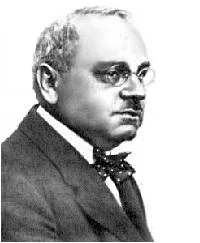
1907 ADLER, Alfred (1870 – 1937)
Studie über Minderwertigkeit von Organen.
Adler, a disciple of Freud, introduced the concept of the inferiority complex and the method of compensation needed to overcome it.
GMN 4984 · https://historyofmedicine.com/id/6407
1908 EWENS, George Francis William
Insanity in India: Its symptoms and diagnosis; with reference to the relation of crime and insanity.
Includes considerable discussion of the psychoactive effects of cannabis. Digital facsimile from the Hathi Trust at this link.
GMN 8246 · https://historyofmedicine.com/id/10422
1908 BLEULER, Paul Eugen (1857 – 1939)
Die Prognose der Dementia praecox (Schizophreniegruppe).
At the annual meeting of the Deutschen Verein für Psychiatrie in Berlin on the 24th and 25th of April, 1908 Bleuler introduced the term schizophrenia, by which he denoted a group of psychotic reactions rather than one…
GMN 9477 · https://historyofmedicine.com/id/11661
1908 BEERS, Clifford Whittingham (1876 – 1943)
A mind that found itself.
In 1900 Beers was confined to a private mental institution for depression and paranoia. He was later confined to another private hospital as well as a state institution. During those periods he experienced and witness…
GMN 9724 · https://historyofmedicine.com/id/11911
1911 BLEULER, Paul Eugen (1857 – 1939)
Dementia praecox Oder die Gruppe der Schizophrenien.
Bleuler introduced the concept of schizophrenia. He showed that Kraepelin’s “dementia praecox” (No. 4952) should include all the schizophrenic disorders. Translated into English by Joseph Zinkin as Dementia praecox or…
GMN 4957 · https://historyofmedicine.com/id/6296
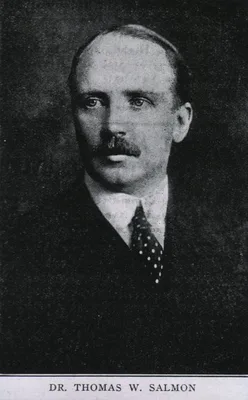
1913 ROSENAU, Milton Joseph (1869 – 1946); WHIPPLE, George Chandler (1866 – 1924); WILBUR, Cressy Livingstone (1865 – 1928); SALMON, Thomas William (1876 – 1927)
Preventive medicine and hygiene by Milton J. Rosenau. With chapters on sewage and garbage by George C. Whipple...Vital statistics by Cressy L. Wilbur...The prevention of mental diseases by Thomas W. Salmon.
Digital facsimile of the 1913 edition from the Internet Archive at this link. There were numerous later revised editions.
GMN 1641 · https://historyofmedicine.com/id/2085
1916 –1917 HURD, Henry Mills (1843 – 1927); BLUMER, George Alder (1857 – 1940); BURGESS, Thomas Joseph Workman (1849 – 1926); PILGRIM, Charles Winfield (1855 – 1934); DREWRY, William Francis (1860 – 1934); DEWEY, Richard (1845 – 1933)
The institutional care of the insane in the United States and Canada. Edited by Henry M. Hurd. 4 vols.
Hurd was Professor of Psychiatry at Johns Hopkins University. The work includes his history of American psychiatry. Digital facsimile from the Hathi Trust at this link.
GMN 5006 · https://historyofmedicine.com/id/6576
1917 LEWIS, Sir Thomas (1881 – 1945)
Report upon soldiers returned as cases of “disordered action of the heart” (D.A.H.) or “valvular disease of the heart” (V.D.H.).
Medical Research Committee Special Rept. No. 8. Sir Thomas Lewis described as “effort syndrome” the condition of disordered action of the heart known as “Da Costa’s syndrome”.
GMN 2847 · https://historyofmedicine.com/id/3615
1918 KRAEPELIN, Emil (1856 – 1926)
Hundert Jahre Psychiatrie.
English translation, New York, 1962.
GMN 5007 · https://historyofmedicine.com/id/6579
1919 SPÄTH, Ernst (1886 – 1946)
Über die Anhalonium-Alkaloide I. Anhalin und Mezcalin
Synthesis of mescaline.
GMN 8795 · https://historyofmedicine.com/id/10973
1923 JANET, Pierre Marie Félix (1859 – 1947)
La médecine psychologique.
Janet’s summary of his work with hypnosis, including one of the most detailed histories of hypnosis available. English translation, as Psychological healing, 2 vols., 1925.
GMN 4990 · https://historyofmedicine.com/id/6480
1924 LEWIN, Louis (1850 – 1929)
Phantastica.
The classic of psychoactive drug classification. Lewin established the following categories: Euphorics, Phantastics, Inebriants, Hypnotics, and Excitants. English translation, 1931.
GMN 2086 · https://historyofmedicine.com/id/2565
1927 BERINGER, Kurt (1893 – 1949)
Der Meskalinrausch. Seine Geschichte und Erscheinungsweise.
The most comprehensive treatise on peyote and its active agent, mescaline, which was synthesized in 1919.
GMN 2086.1 · https://historyofmedicine.com/id/2567